Backpacking Stoves
Best Alcohol Stoves for Backpacking: Four Lightweight Systems Compared
Four alcohol stove systems for backpacking, from bare burners to a pot-fitted cone setup, with the trade-offs worth weighing before you buy.
Introduction
Canister stoves are the default for a reason. They screw onto an isobutane canister, light with a click, sit stable on their base, and behave consistently in wind, rain, and cold. For a lot of backpackers, that plug-and-play reliability is the whole point.
Alcohol stoves ask for a little more attention and give back something different. Fuel is cheap and easy to find, whether you buy denatured alcohol or a yellow-bottle fuel from a gas station, and you can carry only the amount your trip actually needs. A weekend of boiled meals might take five and a half to six ounces. A canister, by contrast, usually holds far more fuel than a short trip requires, which is why so many people end up shaking a half-empty canister and packing a second one just in case.
That trade-off, less convenience for less weight and less wasted fuel, is what makes alcohol worth a serious look. What follows is a practical look at four systems, from a bare burner to a pot-specific integrated cone.
What Matters in an Alcohol Stove Setup
The first thing to untangle is the difference between a burner and a stove. A burner is only the fuel vessel. Set a pot directly on top of one and you snuff the flame, so a burner needs a separate pot stand to hold the pot at the right height, plus a windscreen to keep the flame concentrated rather than blown around and wasting fuel. A stove routes the flame around the outside of its body, which means a pot can sit straight on top with no stand at all.
Beyond that, three things decide how a system behaves in camp. Stability comes first, because a tipped pot or spilled alcohol is the worst possible outcome at dinner time. Fuel capacity comes second, since the goal is to carry exactly what your meals require and nothing more. Packed bulk comes third: the best alcohol setups disappear into a small pot, taking up no more room in a pack than the water they boil.
Weight is where alcohol systems separate themselves from canisters. There are no moving parts to fail, no valve to seize, and very little that can break. A burner is a single piece of metal that would have to be crushed to stop working, and the whole kit, burner, stand, windscreen, and lighter, can live inside the pot you are already carrying.
TOAKS Siphon: A Minimal Metal Burner
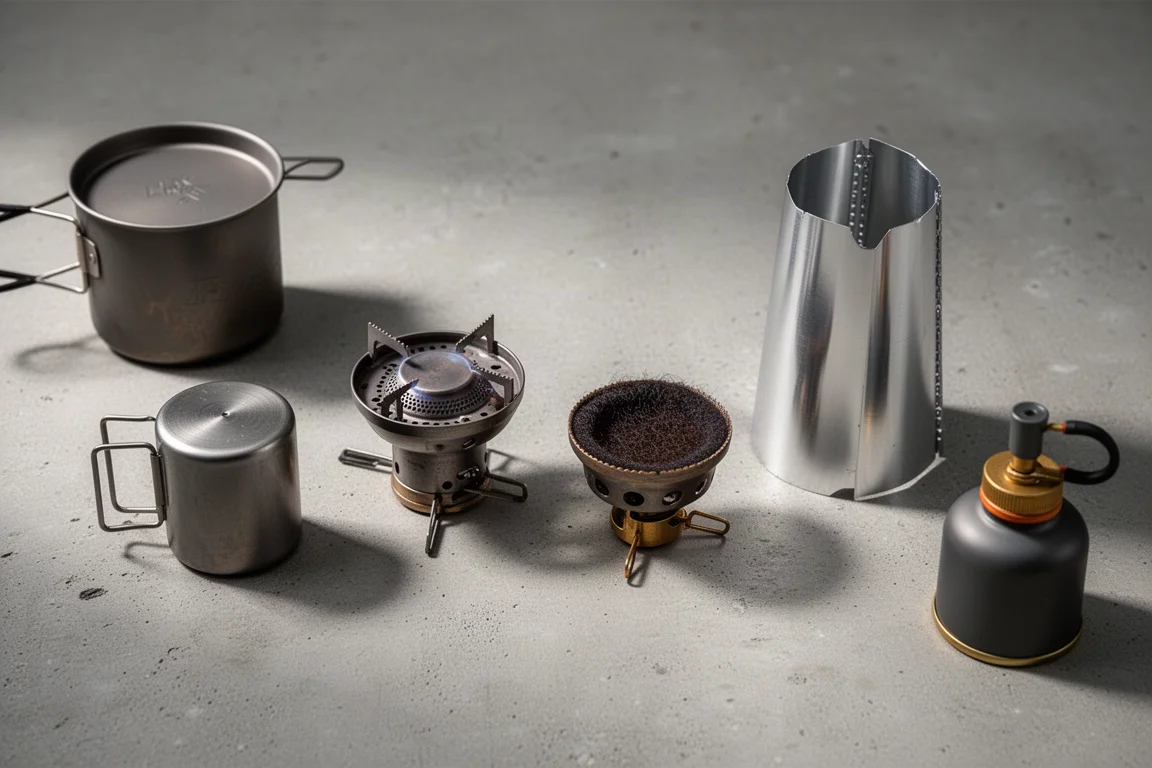
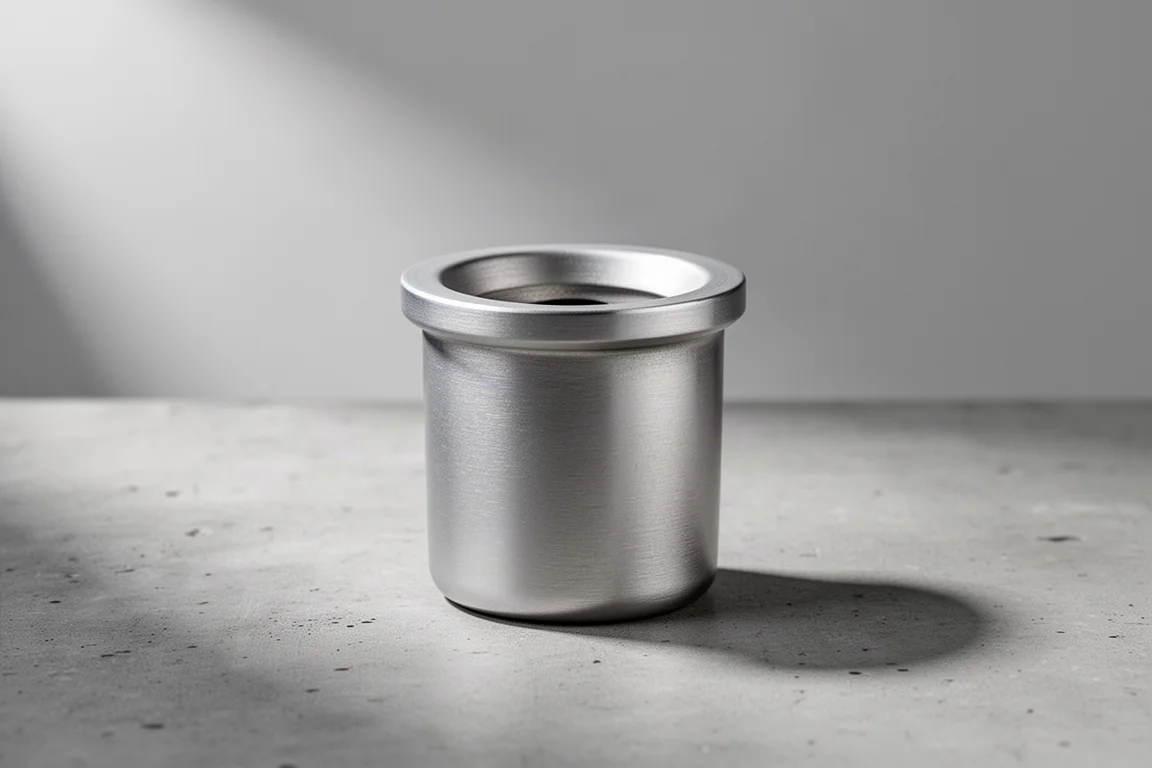
The TOAKS Siphon is about as simple as an alcohol burner gets. It is a small, low vessel with a row of flame ports around its rim and essentially nothing else: no valve, no threads, no assembly. That simplicity is the appeal, but it also defines the limits. Because a pot placed directly on top extinguishes the flame, the Siphon needs a pot stand to create the correct gap between burner and pot base, and it needs a windscreen to protect the flame.
Where it earns its place is in a compact kitchen. A 550 ml pot holds roughly two cups of water, which covers most dehydrated meals, and the entire Siphon setup, windscreen and lighter included, fits inside it. With a canister setup, that same pot will usually take either the canister or the stove, but rarely both.
Batchstovez Gram Weenie Pro: Flame Around the Rim
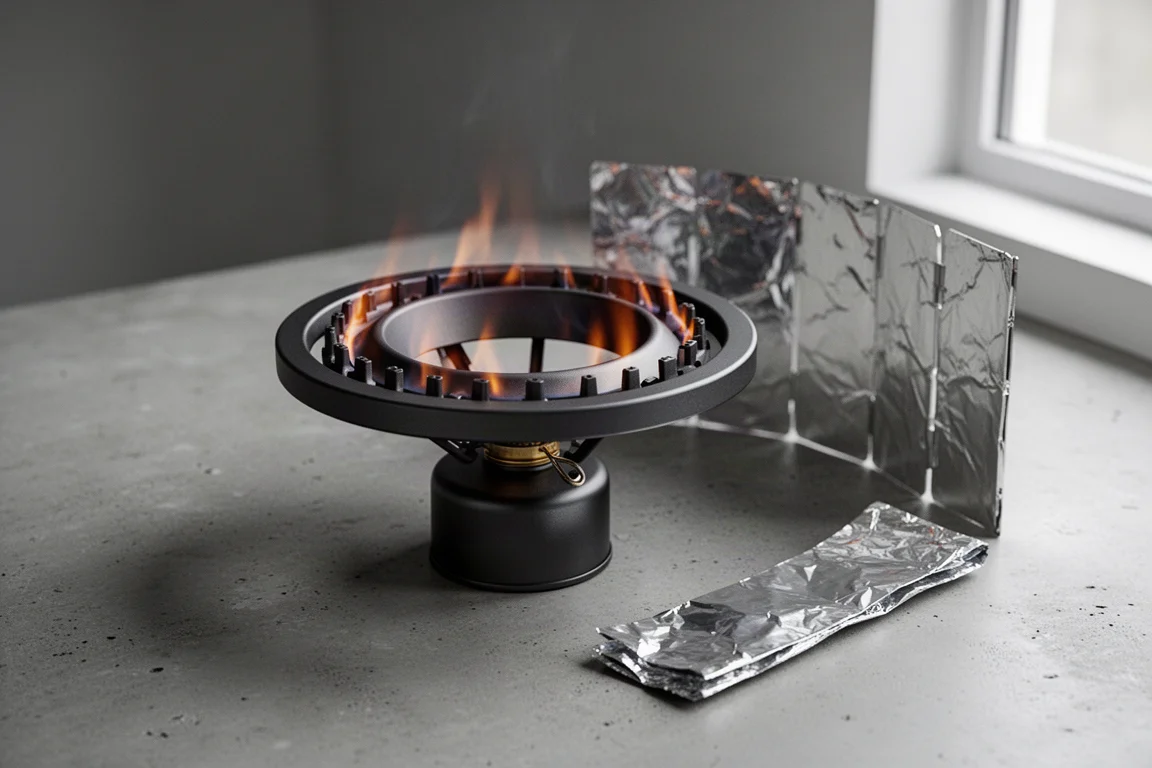
The Gram Weenie Pro belongs to the other category. Its flame comes out around the outside of the body rather than from a central opening, so a pot can rest directly on top with no pot stand in between. That single design decision removes a piece from your kit and one more thing to assemble in the dark.
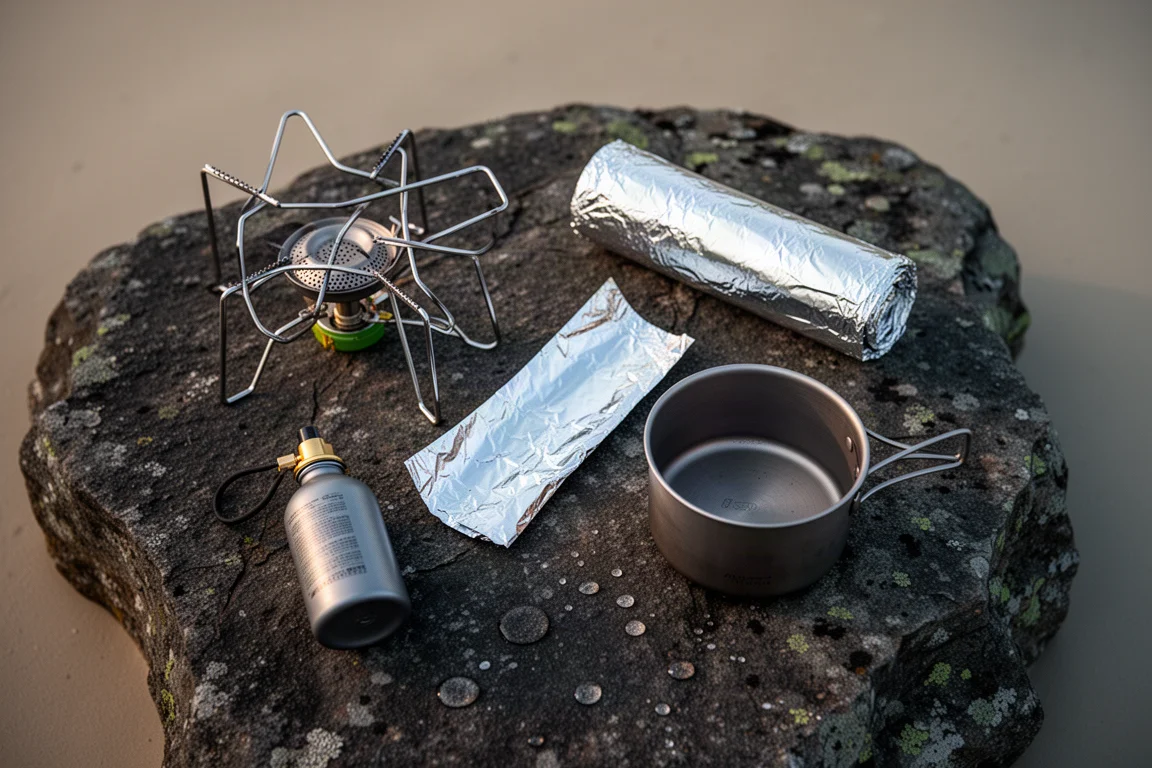
It also simplifies wind protection. A small piece of aluminium foil wrapped loosely around the stove is enough, and it weighs close to nothing. The result is a compact, quiet setup that is easy to manage, which matters more than it sounds: canister stoves are loud enough that cooking with a group becomes a noisy affair, while an alcohol flame is close to silent.
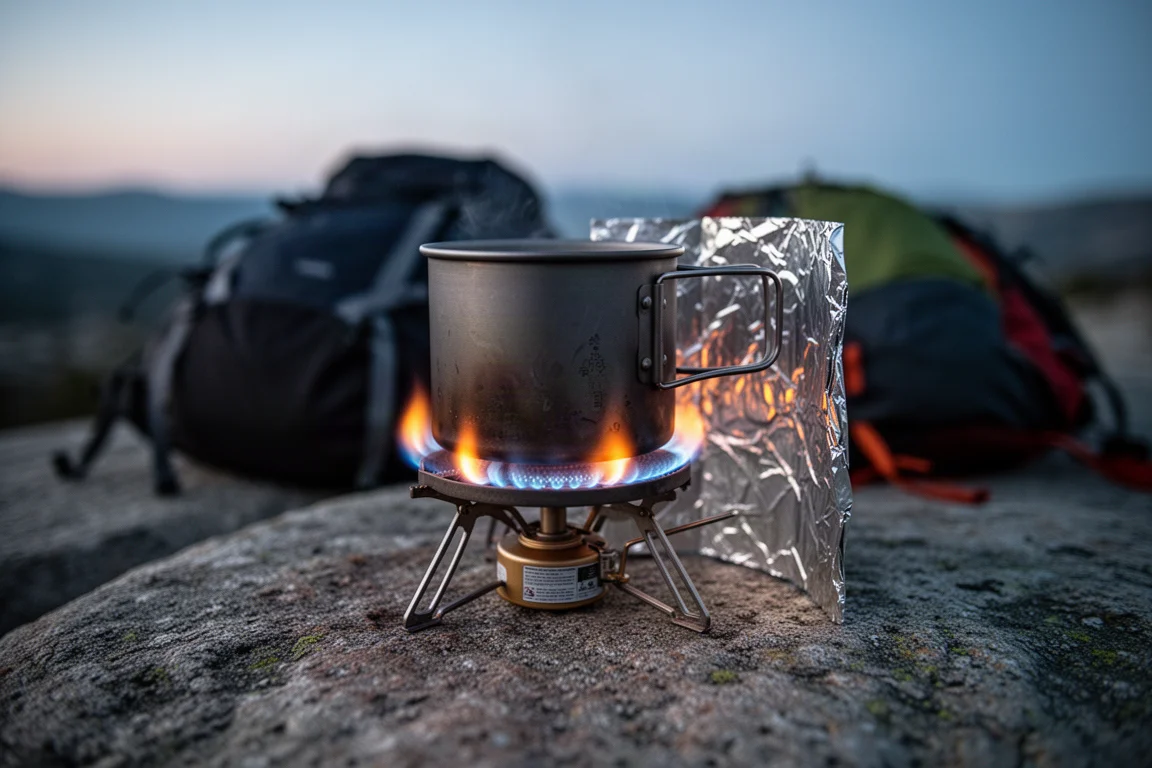
Because the pot sits on the stove itself, there is less to line up and less to go wrong when you are tired at the end of a long day. Pair it with a small pot, and the whole system packs down to something that takes up very little room.
Trail Designs Kojin: Built to Resist Spills
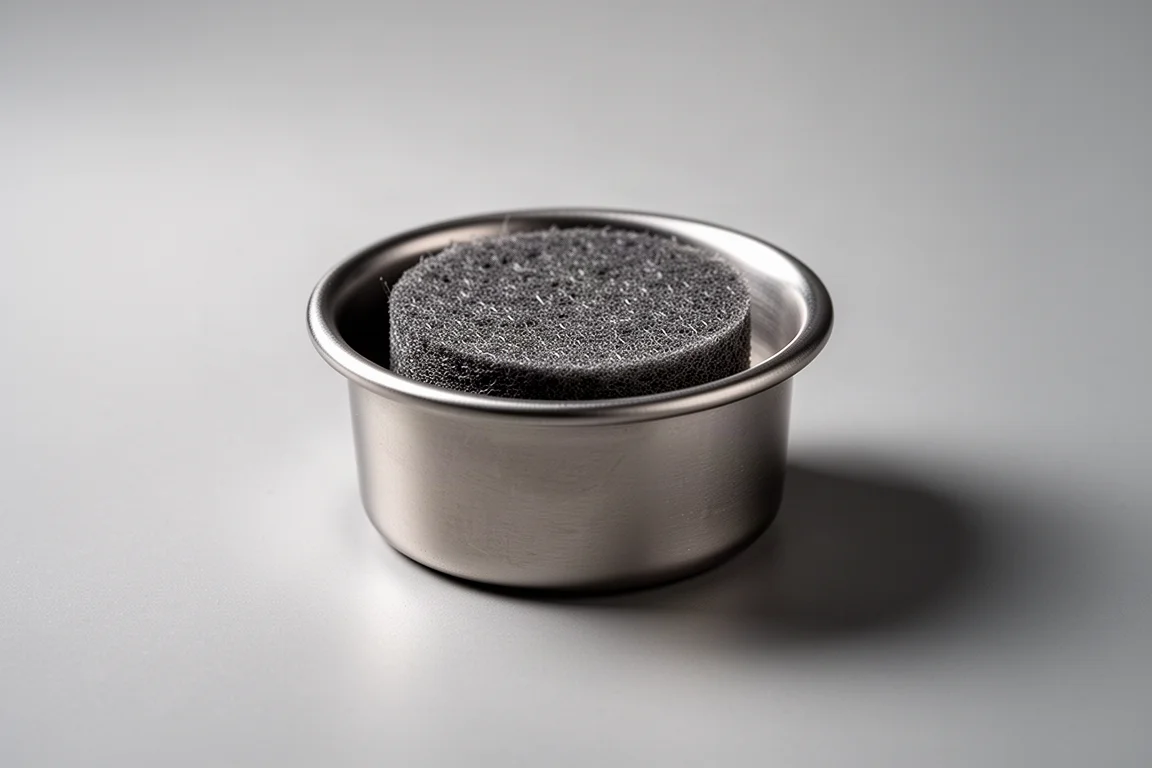
Spilled fuel is the main hazard of alcohol cooking, and the Kojin approaches it directly. Inside the burner is a fibrous, fiberglass-like material that soaks up the alcohol you pour in, so the fuel does not slosh out if the stove is knocked or tipped before it is lit. Once the flame is going, it burns normally.
That absorbent core has a second benefit. Because the fuel is held in the material rather than pooled in an open cup, leftover alcohol can be saved for another meal instead of being burned off or discarded. For anyone who has watched fuel spread across a granite slab, that is a meaningful difference.
Trail Designs Caldera Cone: An Integrated Pot and Windscreen System
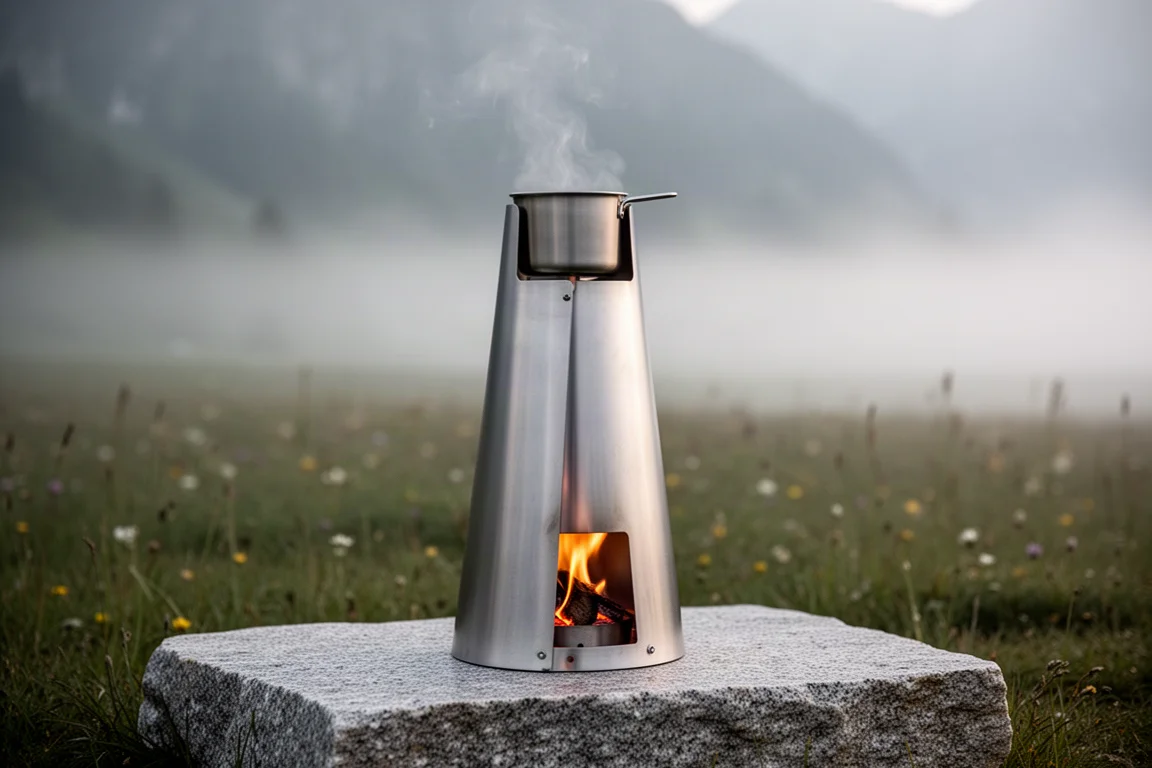
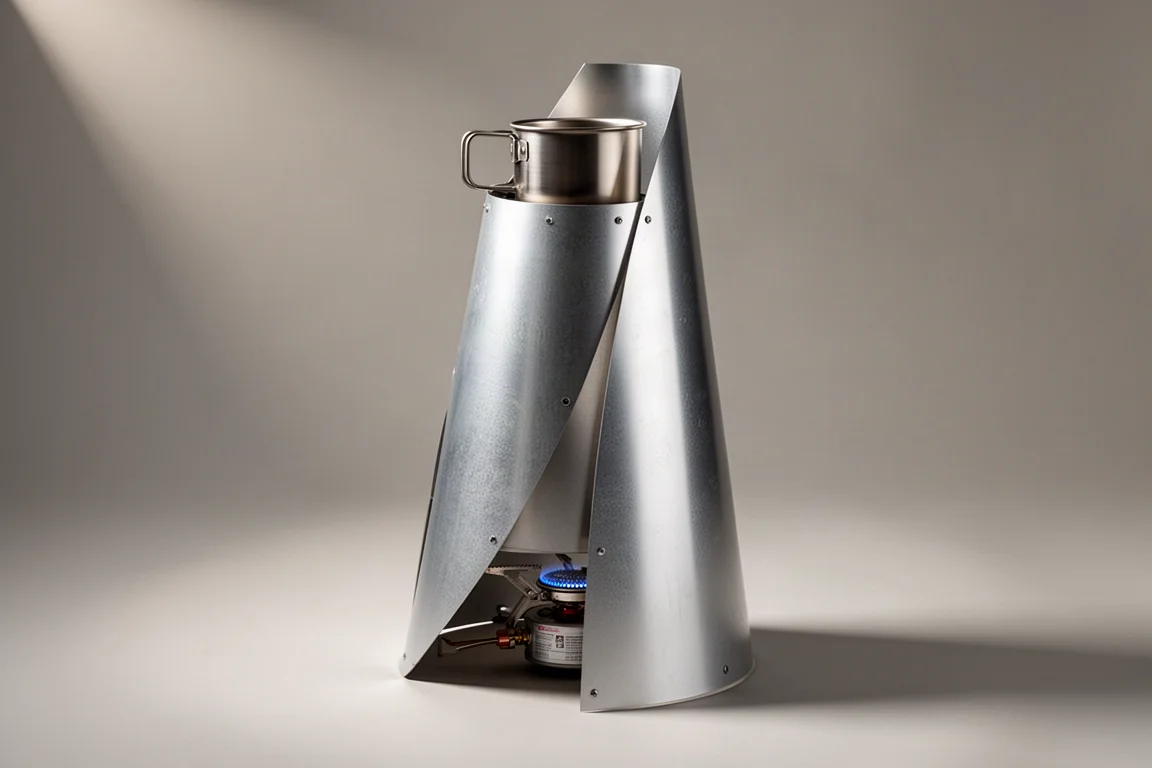
The Caldera Cone takes a different approach again. Instead of a windscreen that wraps around a stove, it is a cone shaped to fit one specific pot. The 550 ml version sits over a matching pot and creates a tall, sheltered space around the burner, protecting the flame from wind and holding the burner at the correct distance below the pot base.
The stability is the real story. With a cone, the pot is supported by a wide, grounded structure rather than balanced on top of a stove. Compare that with a larger 900 ml pot perched on a canister stove that is itself sitting on a rock: the taller the stack, the more likely a pot slides off, and a pot of boiling water hitting the ground is a genuinely bad moment.
The trade-off is commitment. A Caldera Cone is built around a particular pot, so it is not a system you swap between cookware on a whim. Choose it and you are choosing a matched pot, burner, and cone that work together as one unit.
Fuel, Pots, and Packing Notes
Fuel is the practical argument for alcohol. Denatured alcohol and yellow-bottle fuel are inexpensive and stocked in most places you would pass through, and bottles come in a range of sizes, from about three and a half to four ounces up to eight ounces, so you can match capacity to the trip rather than carrying a fixed canister.
Packing is the other quiet advantage. A 550 ml pot swallows an entire alcohol kit: burner, windscreen, lighter, and the small bottle. That same pot will hold a canister or a stove from a canister setup, but rarely both, which is part of why alcohol systems feel tidier in a pack.
The one non-negotiable is where you cook. Alcohol needs a level, stable surface, well away from anything that can catch, and the burner should be settled and steady before it is lit.
Buying Advice
Match the system to how much fiddling you are willing to do. If you want the lightest possible kit and do not mind assembling a stand and a windscreen, a bare burner like the Siphon delivers exactly that. If you would rather drop a pot straight onto the stove and carry almost nothing in the way of extra parts, the Gram Weenie Pro and its rim-burning design is the simpler answer.
If spilling fuel is your main worry, the Kojin’s absorbent core removes most of that risk and lets you save what you do not burn. And if stability and wind protection matter more than flexibility, the Caldera Cone’s pot-matched design is the most confidence-inspiring option of the four, provided you are happy to commit to one pot.
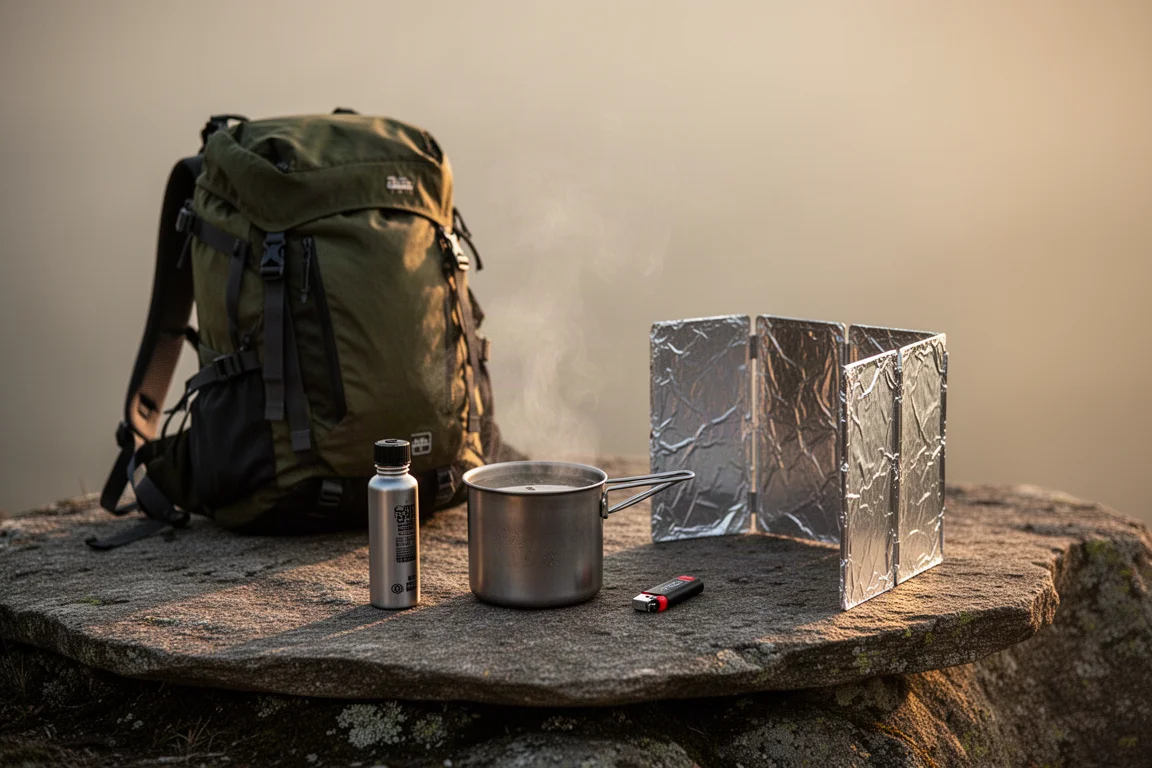
Whichever you choose, the cost of fuel stays low and the amount you carry stays honest: measure what your meals need, fill a small bottle, and leave the rest at home.
Conclusion
Alcohol stoves are not a replacement for canister stoves, and they are not trying to be. They are a lighter, quieter, cheaper way to boil water, with the trade-off being that you have to pay attention to stability and wind. For backpackers who mostly boil water for dehydrated meals, that trade is easy to accept.
The four systems here cover the spectrum: the Siphon as a minimal burner for a compact kitchen, the Gram Weenie Pro as a pot-on-top stove with almost no extra parts, the Kojin as the spill-resistant option, and the Caldera Cone as the most stable and most sheltered setup of the group. Pick the one whose compromises you can live with, and the canister can stay home on the trips where it is not needed.
Further reading
Related Reviews
Backpacking Stoves
Best Backpacking Stove and Pot Combinations: Budget to Premium
A practical look at fourteen backpacking stoves and cook pots, from inexpensive starter pairings to windproof all-in-one systems that cost close to $200.
Backpacking Stoves
Best Backpacking Stove Systems: Five Canister Stoves Compared
Five canister stove and pot systems compared on wind resistance, boil speed, packed size, and cooking control, from a bare titanium burner to a fully integrated cook system.
Backpacking Stoves
Best Backpacking Stoves 2026: Six Stove Types Compared and Ranked
A practical comparison of canister, white gas, wood burning, solid fuel, and alcohol backpacking stoves, ranked on speed, weight, fuel availability, and cost.