Hi-Fi Speakers
Best Affordable Speaker Alternatives 2026: Six High-End Sounds for Less
Six high-end speakers and the more affordable models that carry forward the same character, plus a plain-English guide to warm, bright, exciting and mid-range forward sound.
Introduction
Some of the most rewarding speakers are rewarding precisely because they have a personality of their own. They do not all sound alike, and those differences are a large part of what makes them worth owning.
The difficulty is that personality often comes with a price tag. The six designs below sit at or near the top of their categories, and each one has a more affordable counterpart that carries much of the same character. A less expensive speaker will not match a far more expensive one note for note, but the ethos behind the flagship, the reason it is enjoyable in the first place, often survives the price drop.
Working out whether that character suits your taste starts with the vocabulary used to describe sound. Warm, bright, exciting, dynamic and mid-range forward all mean something specific, and they are the fastest way to tell one speaker’s personality from another.
Once those terms are clear, the pairings below are much easier to judge on their own merits rather than by price alone.
How to Read a Speaker’s Personality
Tonality is the first thing that separates one speaker from another. Two designs can sit in the same price bracket and still leave completely different impressions, because how a speaker sounds is what decides whether it feels special.
A warm speaker rolls off the top end slightly. Treble information such as cymbals is still there, but it sits further back in the mix. An exciting speaker does the opposite, pushing a great deal of energy into the top end, into vocals and into percussion.
Bright is the term that deserves the most caution. In this vocabulary, bright describes a boost somewhere in the 1 to 2 kHz region, which is where a large amount of vocal information lives. It is not a lift at 4 kHz or 10 kHz, even though many listeners assume it is. A bright speaker tends to sound impressive straight out of the box, but after a couple of hours at a healthy volume, somewhere around 75 dB, it can become fatiguing and listeners start wanting a break.
A mid-range forward speaker is effectively a flat one, with the top end and the bass sitting at roughly the same level as the mid-range. Plenty of listeners chase exactly that response, even though it is rarely the most immediately thrilling sound in a shop demo.
Dynamic is about range and punch. A dynamic speaker has weight at the bottom, sparkle at the top, and the ability to move from quiet to loud without losing composure, which is what a large-scale orchestral piece demands. It should stay powerful in the bass while still resolving detail in the mids and the top end.
Looks and build quality matter as well, even though they have little effect on the sound itself. A speaker that is well made and pleasant to live with simply makes for a better ownership experience.
Warmth and Weight: Wharfedale Linton and ELAC Debut 3
The Wharfedale Linton is a three-way design in a larger cabinet with a vintage look, the sort of speaker that could plausibly have been built in the 1980s or 1990s. It is not an especially exciting speaker, and it is not dark or warm either. It sits in the middle, with a touch of extra warmth in the mid-range, a big soundstage, and a realistic timbre that makes voices sound like voices. Pairs have been arriving around $1,500, down from roughly $2,000.
Wharfedale Linton
For listeners who want a large, easy-going three-way that fills a room and gets vocal tone right, the Linton remains one of the most likeable designs at its price. Its mid-range warmth and wide soundstage are the reasons it has held its reputation for so long.
ELAC Debut 3
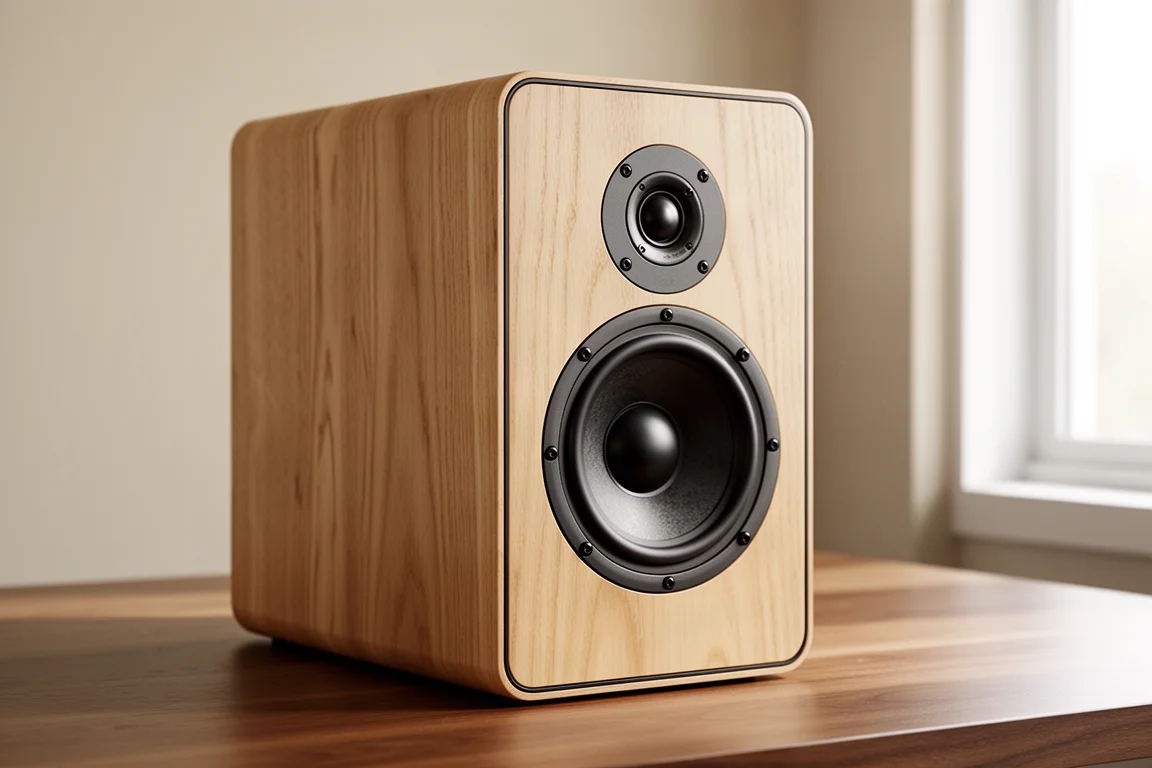
The ELAC Debut 3, introduced this year, is the affordable route to a similar experience. It is a little darker than the Linton, with less happening at the very top, and it is physically smaller. What it shares is the substance: both speakers can deliver serious bass weight, and both handle loud playback without falling apart. At roughly $450, a third to a quarter of the Linton’s price, it is the obvious starting point for listeners who want that sound on a tighter budget, and it is the sort of model that tends to appear in sales.
Scale and Clarity: DALI Opticon 6 Mark 2 and Emotiva XT1
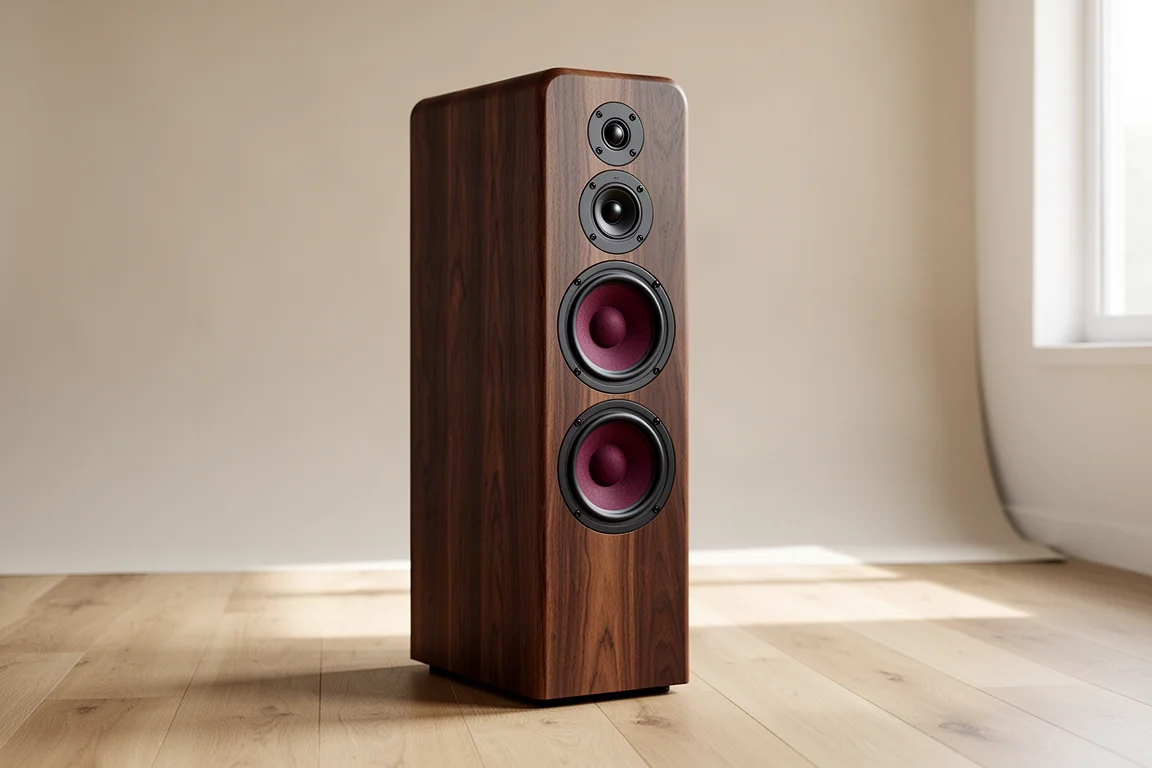
The DALI Opticon 6 Mark 2 is a floorstanding design with a ribbon tweeter working alongside a soft dome tweeter, plus a pair of 6.5-inch woofers. Pairs are currently on sale at around $2,000, which is not a casual purchase but is far from the top of the market.
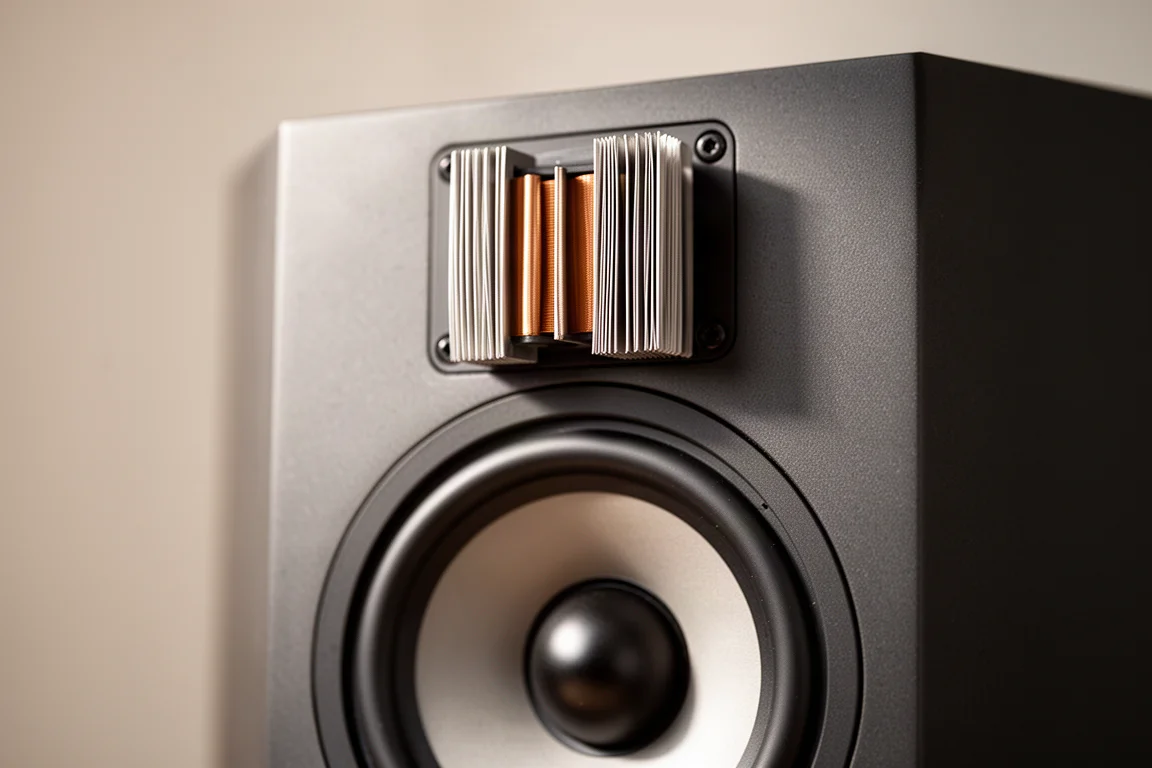
The Emotiva XT1 follows a similar blueprint for less money. It is also a floorstander, and it uses an AMT tweeter with a dedicated mid-range driver and two 6-inch woofers. Ribbon and AMT tweeters share a trait that soft dome and aluminium dome designs generally cannot match: a level of clarity and detail at the top end that is genuinely distinctive. If that airy, articulate treble is what you are chasing, both of these speakers are built around it.
DALI Opticon 6 Mark 2
The Opticon 6 Mark 2 combines its ribbon and dome tweeter pairing with two 6.5-inch woofers in a floorstanding cabinet, and it is the more refined of the two designs here. It is also the more expensive, even at its current sale price.
Emotiva XT1
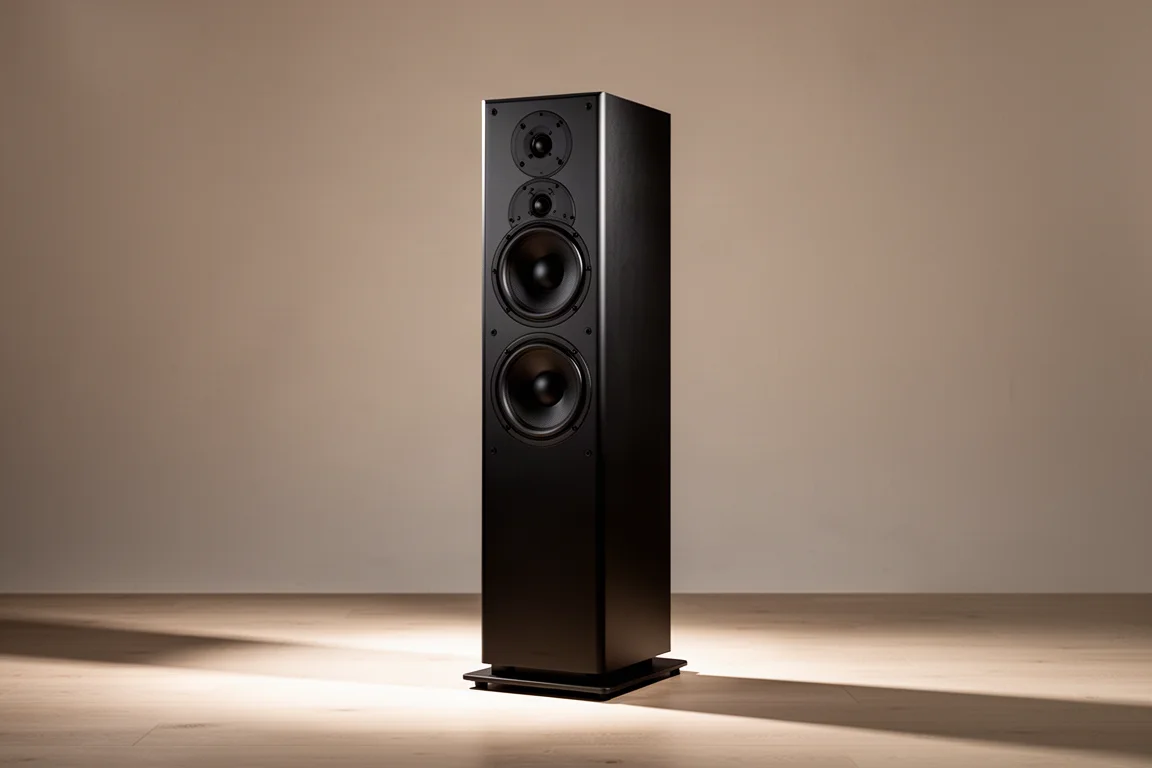
The XT1 lists at $1,000, and Emotiva has been running a promotion that brings it down to about $800. For that you get an AMT tweeter, a mid-range driver and two 6-inch woofers in a floorstanding cabinet. Top-end clarity is the headline, and it is the reason this speaker belongs in a conversation alongside designs costing considerably more.
Natural Tonality: Sonus Faber Lumina II Amator, Q Acoustics 5020 and Sony SSCS5
The Sonus Faber Lumina II Amator is a two-way bookshelf speaker made in Italy, slim and small, built around a 5.25-inch woofer. Its signature is a natural tonality that still keeps a nice top end, so it is neither rolled off at the top nor pushed forward in the mid-range. It punches when the music calls for it without ever sounding aggressive, and pairs come in at $1,500.
Sonus Faber Lumina II Amator
For anyone who wants a compact speaker that gets timbre right while still having life at the top, this is the reference point in this group. It is a design that rewards long listening sessions rather than a quick demonstration.
Q Acoustics 5020
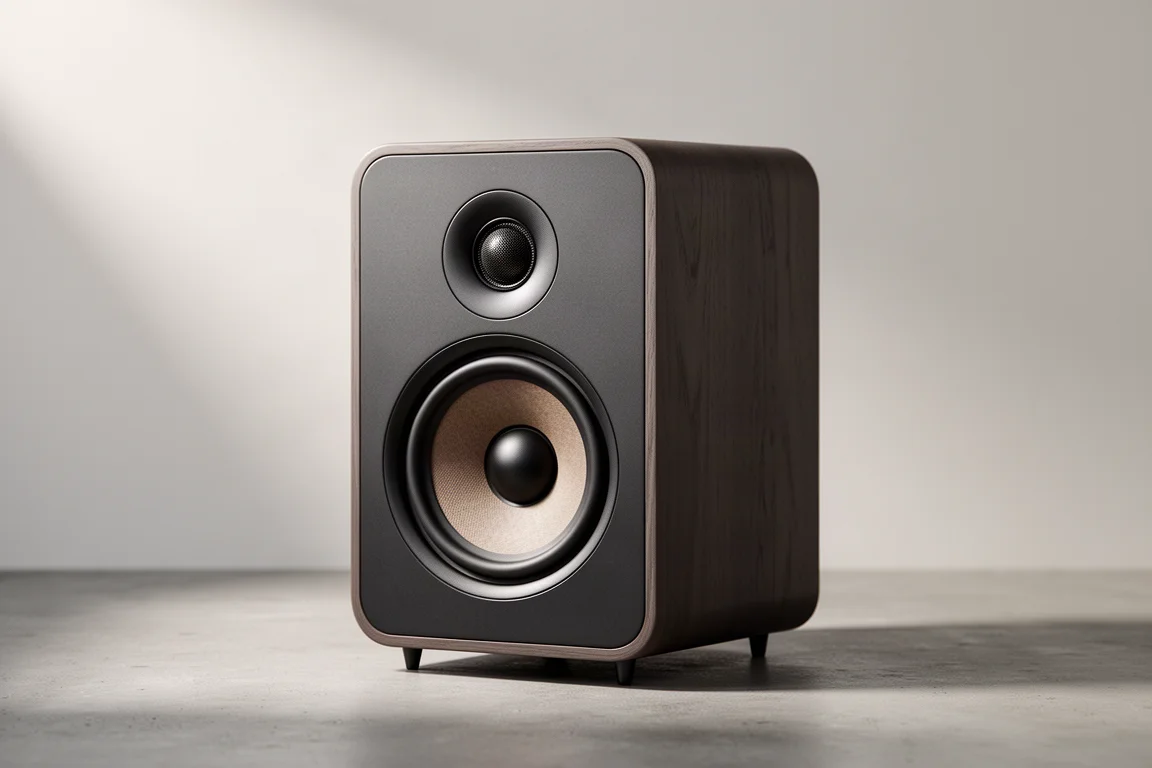
The Q Acoustics 5020 uses a 5.25-inch woofer and a 1-inch soft dome tweeter, so it is very close in size to the Lumina II Amator even though it looks quite different. What it delivers is the same natural tonality, and in some cases it can sound slightly better. At roughly half the price, it is the value pick of the pair, and a blind comparison between the two would leave plenty of listeners guessing.
Sony SSCS5
The Sony SSCS5 is the cheapest way into this group, and it is worth being clear about what changes at this level. The natural tonality of the Sonus Faber and Q Acoustics designs is not there. What the Sony does offer is a bit of oomph at the bottom, a decent mid-range and a nice top end, which is a lot for the money as long as you know what you are trading away.
Big and Exciting: Klipsch Cornwall III and JBL Stage 2
The Klipsch Cornwall III is the hardest speaker here to characterise precisely, and that is worth stating plainly. Impressions of it come from hearing it in someone else’s room, with different music and different electronics, and it is a speaker that depends heavily on the amplification in front of it. New Cornwall IV pairs are listed around $6,600, and some pairs turn up nearer $5,000.
The JBL Stage 2 is a much simpler proposition. Its mid-range is exciting and slightly forward, and it pulls an enormous amount of detail out of percussion, cymbals and vocals, with vocal clarity that stands out immediately. It does not sound identical to the Cornwall, but it shares enough of the same personality to work as a stand-in.
Klipsch Cornwall III
The Cornwall III’s appeal is its scale and its very particular presentation, and buyers should go in expecting to experiment with amplification to get the most from it. Pricing is genuinely difficult to pin down and the model has been superseded, so used examples are the realistic route.
JBL Stage 2
The Stage 2 is new, and it is the speaker that gets closest to the Cornwall’s character without the size or the cost. Lively mids, exceptional vocal clarity and a lot of low-level detail make it an engaging listen, particularly with percussion-heavy material.
Detail and Drive: KEF LS50 and RSL CG23M
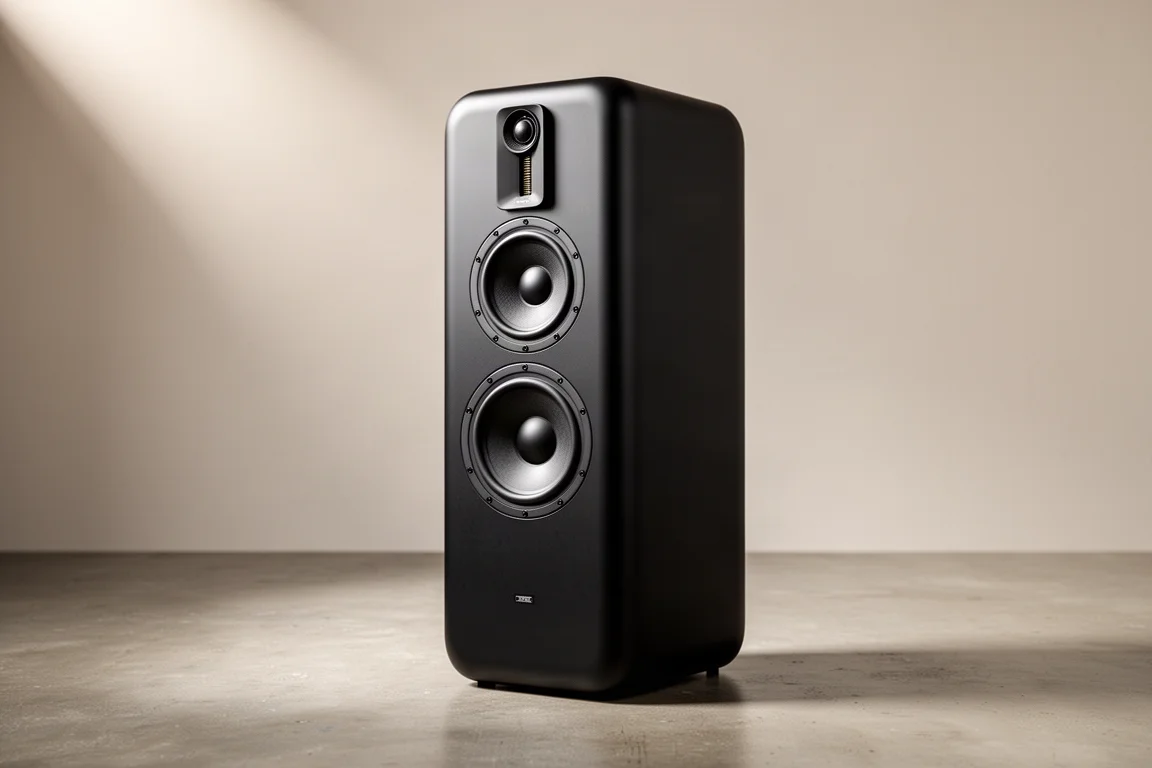
The KEF LS50 comes in around $1,300 and has one of the largest followings in modern hi-fi. Its presentation is flat and slightly mid-range forward, and it is known for being demanding of the amplifier behind it. It is a speaker many listeners aspire to rather than start with.
KEF LS50
The LS50’s neutral, slightly mid-range forward balance and its detailed way with vocals are the reasons it has such a devoted audience. It is not an easy load, so it rewards being paired with an amplifier that can drive it properly.
RSL CG23M
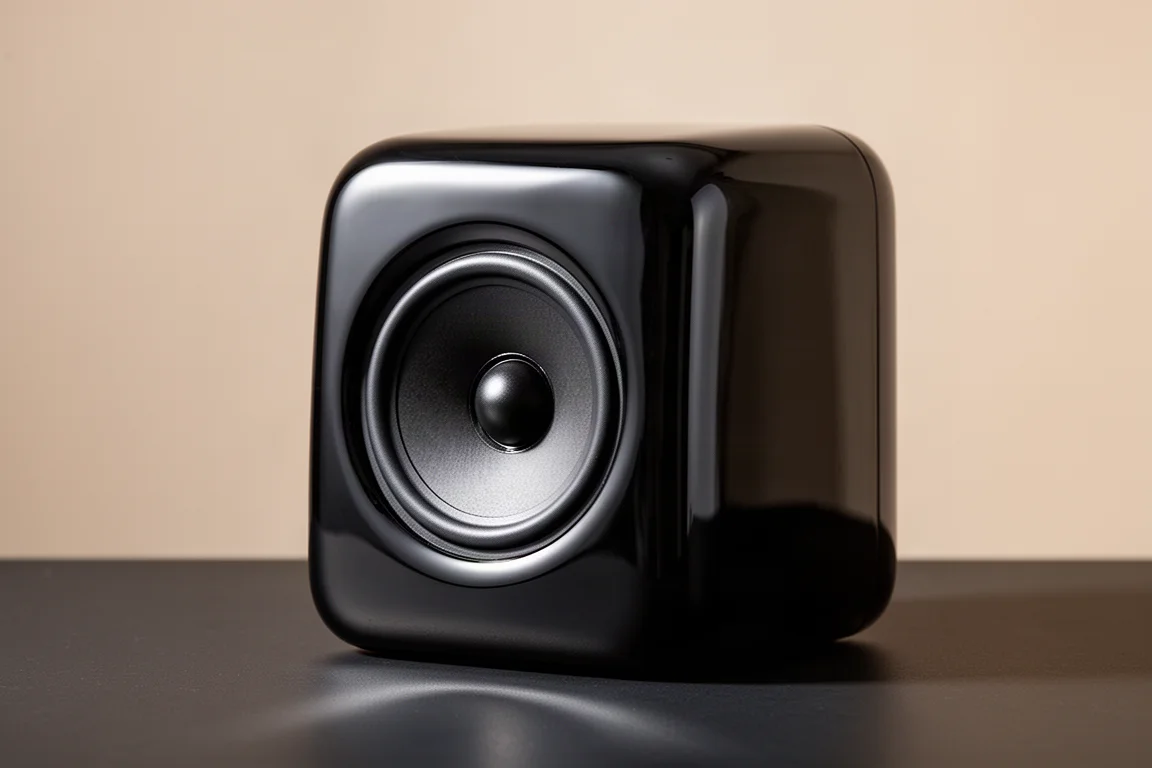
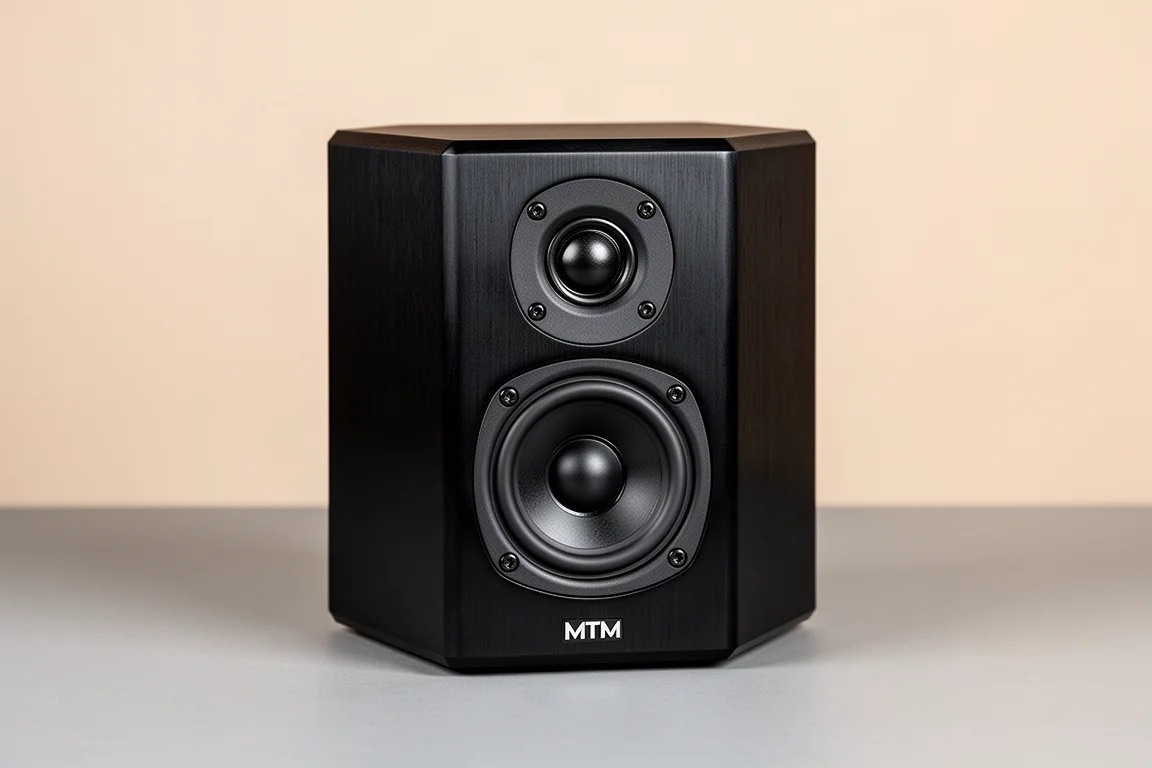
The RSL CG23M is a small MTM design at $150 each, or about $300 for a pair, which works out at less than a quarter of the LS50’s price. It offers a similar flat, slightly mid-range forward balance with plenty of vocal detail, and it is far easier to drive. For listeners who have always been curious about the LS50 sound but not about its price, this is the pragmatic way in.
Reference Ambition: Focal Utopia and SVS Evolution
The Focal Utopia sits at the extreme end of the market at well over $100,000, and most listeners will only ever encounter it at a show. That makes any comparison with it necessarily a loose one.
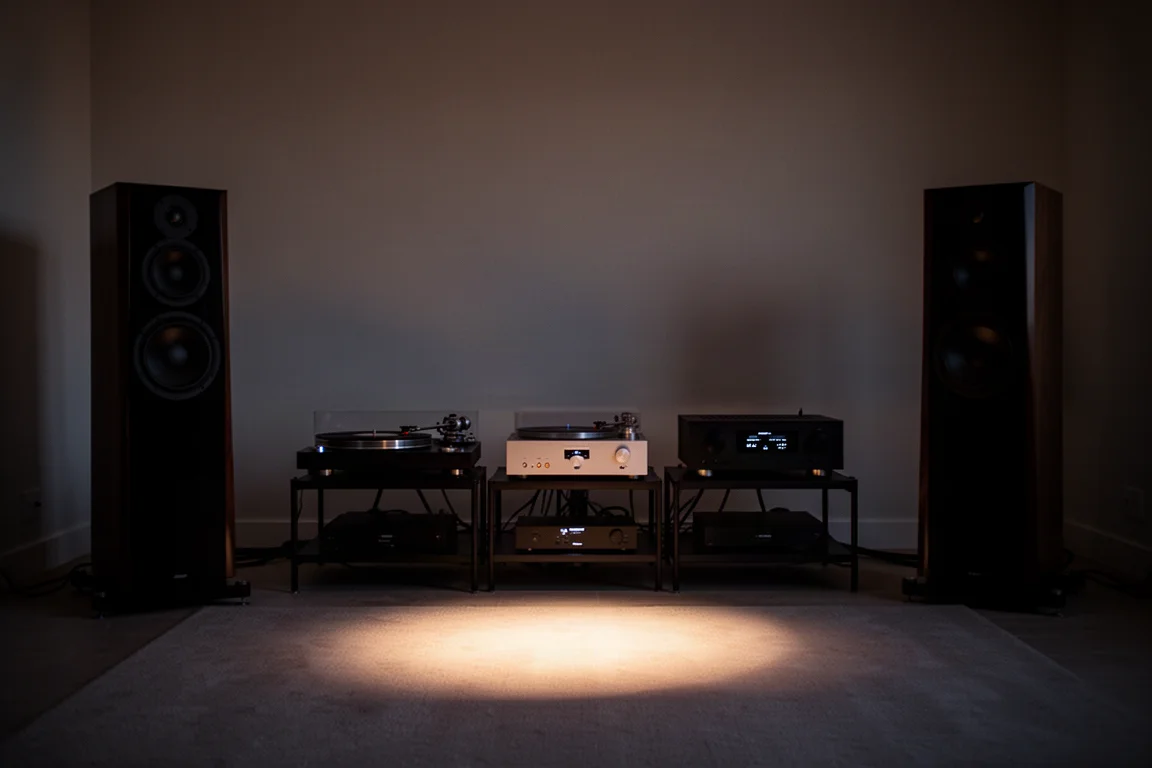
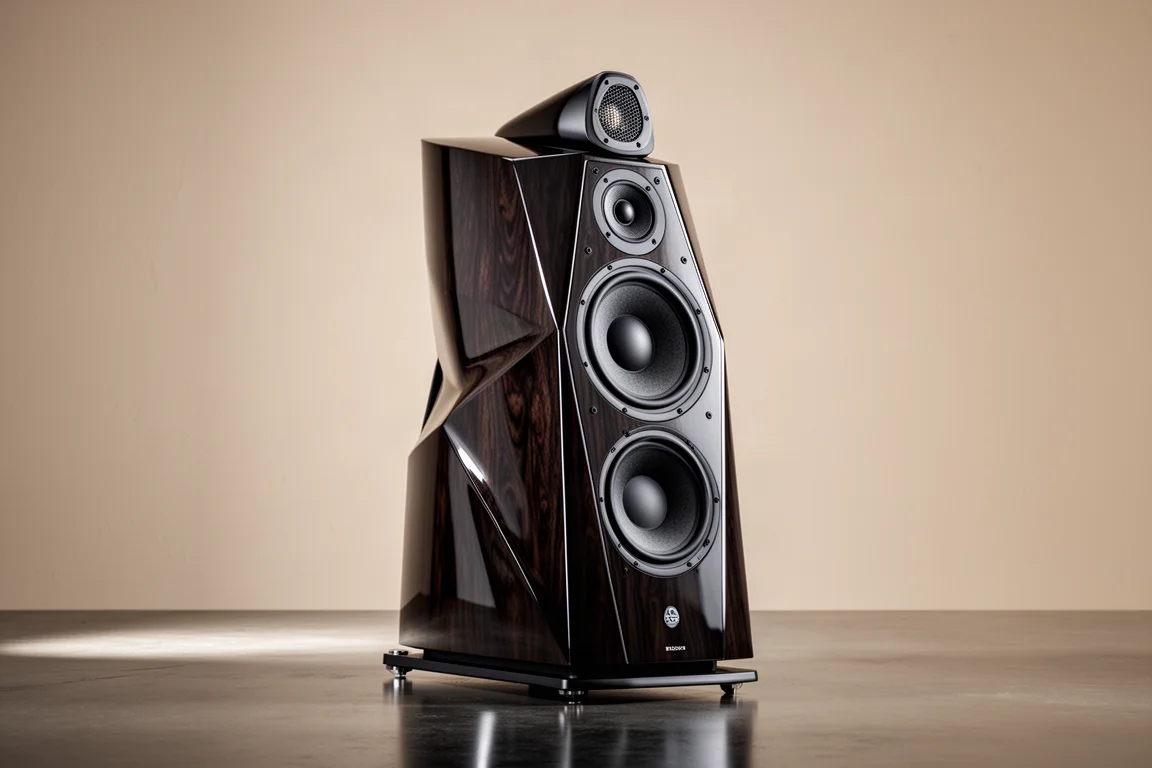
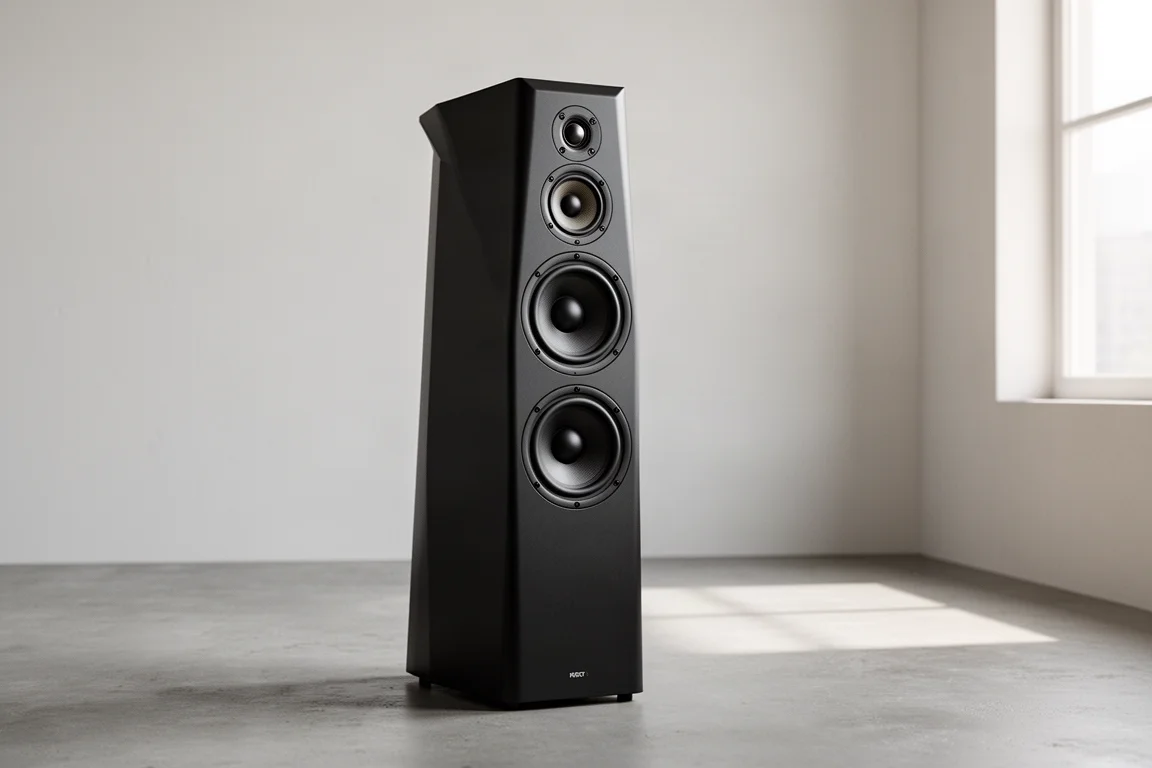
The SVS Evolution is a very different proposition in practical terms, and it even looks broadly similar in the way it presents itself. It is articulate and revealing, but it is also strongly dependent on the electronics in front of it and on the recording being played. That pickiness is not a flaw. A speaker that reacts noticeably to how well a recording is made is usually a speaker that is resolving a great deal.
Focal Utopia
The Utopia is a statement design at a price that puts it out of reach for almost everyone. It is included here as the reference point for a particular kind of articulate, high-resolution presentation rather than as a realistic purchase.
SVS Evolution
The Evolution is the practical route to that flavour of sound. It is articulate, it responds to well-made recordings, and it asks for electronics that can do it justice. Buyers who want a revealing speaker should plan the rest of the system around it rather than the other way round.
Buying Advice
The pattern across all six pairings is consistent: a speaker’s character is rarely exclusive to one model or one price. The practical question is which character you actually want.
If you want warmth, weight and a big soundstage, the Wharfedale Linton and the ELAC Debut 3 are the natural starting point, and the ELAC is the sensible entry when the budget is tight.
If top-end clarity is what draws you in, ribbon and AMT tweeters are the technology to look for, which puts the DALI Opticon 6 Mark 2 and the Emotiva XT1 on the shortlist.
If you value natural tonality above all else, the Sonus Faber Lumina II Amator and the Q Acoustics 5020 are close enough in character that the Q Acoustics makes far more financial sense, with the Sony SSCS5 as the compromise option.
If you want energy and detail through the mid-range, the JBL Stage 2 is the affordable expression of the Cornwall’s personality.
If you want a neutral, slightly mid-range forward speaker, the RSL CG23M gets you close to the KEF LS50 for a fraction of the cost, and it is easier to drive.
And if you want maximum resolution, the SVS Evolution is the realistic way to approach the kind of articulation the Focal Utopia represents.
Two practical points apply to all of them. First, every speaker in this guide rewards being matched with an amplifier that suits it, and the more revealing the speaker, the more that matters. Second, a speaker’s character is a matter of taste rather than quality. A warm speaker is not better than a bright one, and a flat speaker is not more accurate than an exciting one, unless it happens to match what you enjoy.
Conclusion
Speakers do not need to sound the same, and the ones with a strong personality are often the most memorable. The good news is that personality is not restricted to flagship pricing. Across all six pairings here, the character that makes the expensive speaker worth admiring is available further down the market, sometimes for a third of the price and sometimes for far less.
The differences are real, and a cheaper speaker will always give something up, whether that is top-end extension, cabinet size or outright resolution. What it rarely gives up is the reason you wanted the more expensive speaker in the first place.
Further reading
Related Reviews
Hi-Fi Speakers
1723 THX Tower vs 1528 Bookshelf: Which Speaker Fits Your Room?
Two speakers at roughly the same price, built very differently. How the 1723 THX tower and the 1528 bookshelf compare on construction, bass, power needs, and sound.
Hi-Fi Speakers
Acoustic Energy AE 300 Review: Deep Bass From a Compact Standmount
A two-way standmount with real wood veneer, surprising low-end weight, and a warm, easygoing character. Here is what to know before buying.
Hi-Fi Speakers
Acoustic Energy AE1 40th Anniversary Review: A Modern Take on a British Classic
A compact standmount that revives a 1980s favorite with all-new parts, a warm mid-centric balance, and a price of £1,499 per pair.