Hi-Fi Amplifiers
Best Affordable Hi-Fi Amplifiers: Four Standout Picks Compared
Four affordable amplifiers compared on sound, flexibility, and value, from a budget class D bargain to a versatile integrated amp that grows with your system.
Introduction
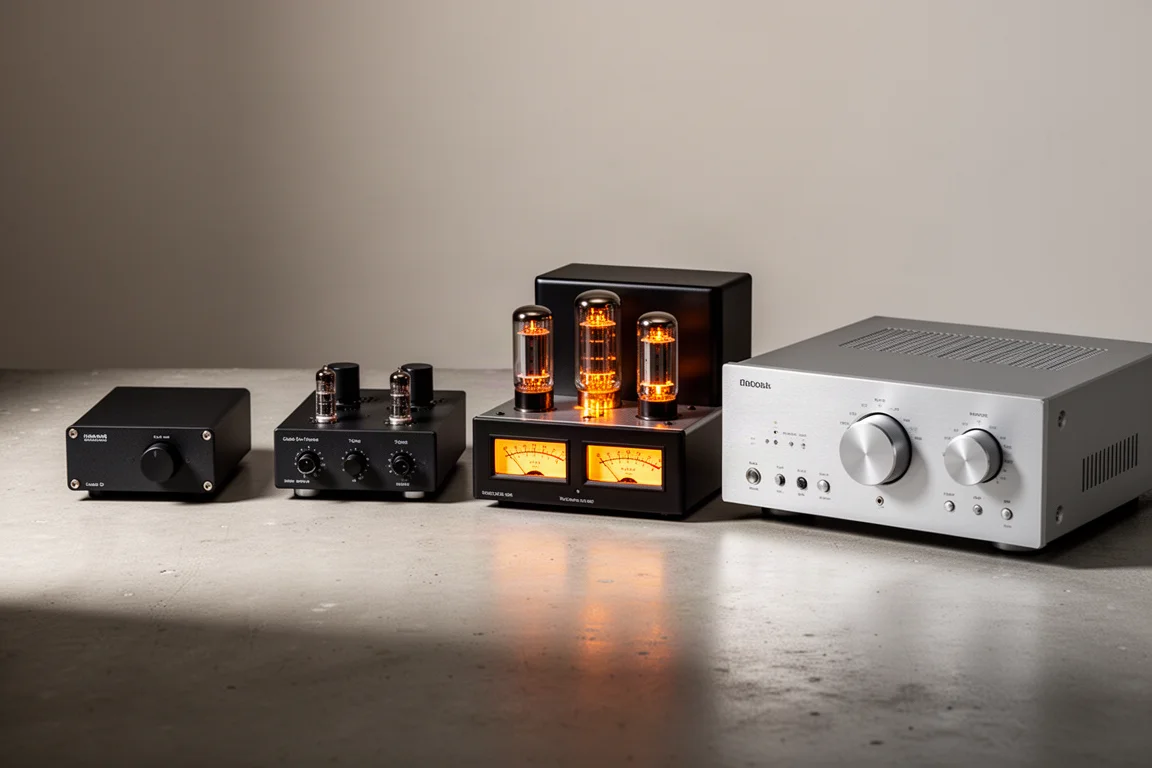
Affordable amplification has never been more competitive. A handful of compact class D designs now deliver the kind of detail and control that once required spending several times as much, while a few traditional integrated amplifiers still hold their ground on flexibility. The four amplifiers below sit between roughly $70 and $350, and each one earns its place for a different reason: outright value, clean sound, desktop character, or long-term versatility.
This guide focuses on what each amplifier genuinely does well, where it makes compromises, and which kind of listener it suits best.
How These Four Amplifiers Compare
Four things separate a satisfying budget amplifier from a frustrating one. The first is the amplification platform. Several of these designs build on the widely used TI 3255 class D chipset, which is capable of excellent results when the surrounding circuit and power supply are done properly. The second is the power supply itself, because a noisy or undersized supply can undo the benefits of a good chip.
The third is control. Tone controls, loudness compensation, and subwoofer integration determine how easily an amplifier fits a real room and a real pair of speakers. The fourth is the upgrade path: whether you can roll tubes, change a power supply, or otherwise grow the system later.
Price is not the same as performance here. One of the least expensive amplifiers in this group is also one of the cleanest, and the most expensive earns its price through flexibility rather than outright sound quality.
AIYIMA A08 Pro: Clean Sound with Bluetooth On Board
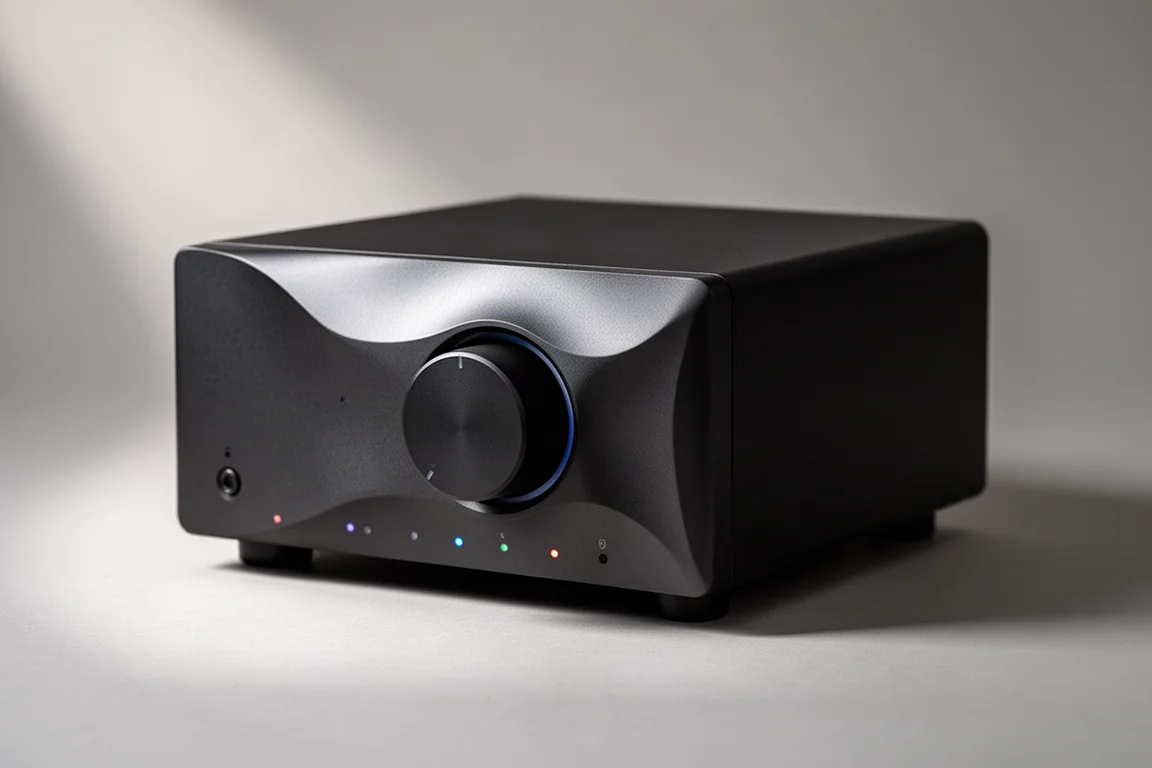
The A08 Pro takes the compact class D formula and dresses it up. It is a distinctive looking little amplifier, and that design will divide opinion: some listeners will enjoy having something unusual on the desk, while others will prefer a plainer box. What is not in question is the sound, which comes across as very clean and a touch more refined than the Fosi Audio TB10D.
Power delivery feels stronger than the price suggests. The power supply is beefier on paper than what you get with the most affordable class D amps, and that shows up as a little more headroom when the music gets demanding.
The trade-offs are price and flexibility. At around $130, with coupon pricing appearing from time to time, it costs noticeably more than simpler amplifiers, and the main gains are Bluetooth and that more striking design. Subwoofer integration is possible through the variable output, but subwoofer level follows the main volume knob rather than having a control of its own. If you plan to modify it, the power supply is the more sensible first target than the op amps.
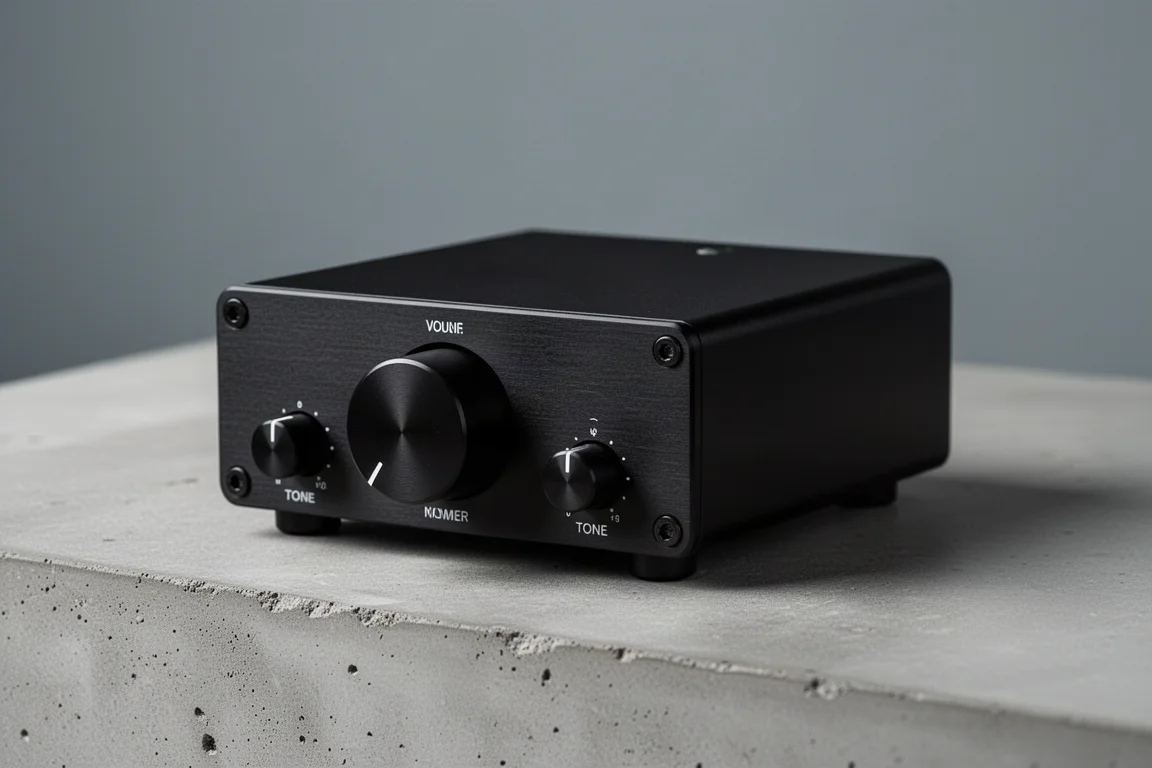
Fosi Audio TB10D: Tone Controls Without the Noise
At around $72 with coupon pricing, the TB10D is the value champion of this group. It uses the TI 3255 chipset, and the current version is a clear step forward from the first generation, which suffered from a noisy power supply and tone controls that did more harm than good.
The current version is detailed, clean, and open, with a wide soundstage and solid imaging for the money. The tone controls are no longer heavy-handed, and the quality of the pots makes them pleasant to use rather than something to work around. Functionally there is very little to complain about: an RCA input, two speaker outputs, and a power input keep things simple and predictable.
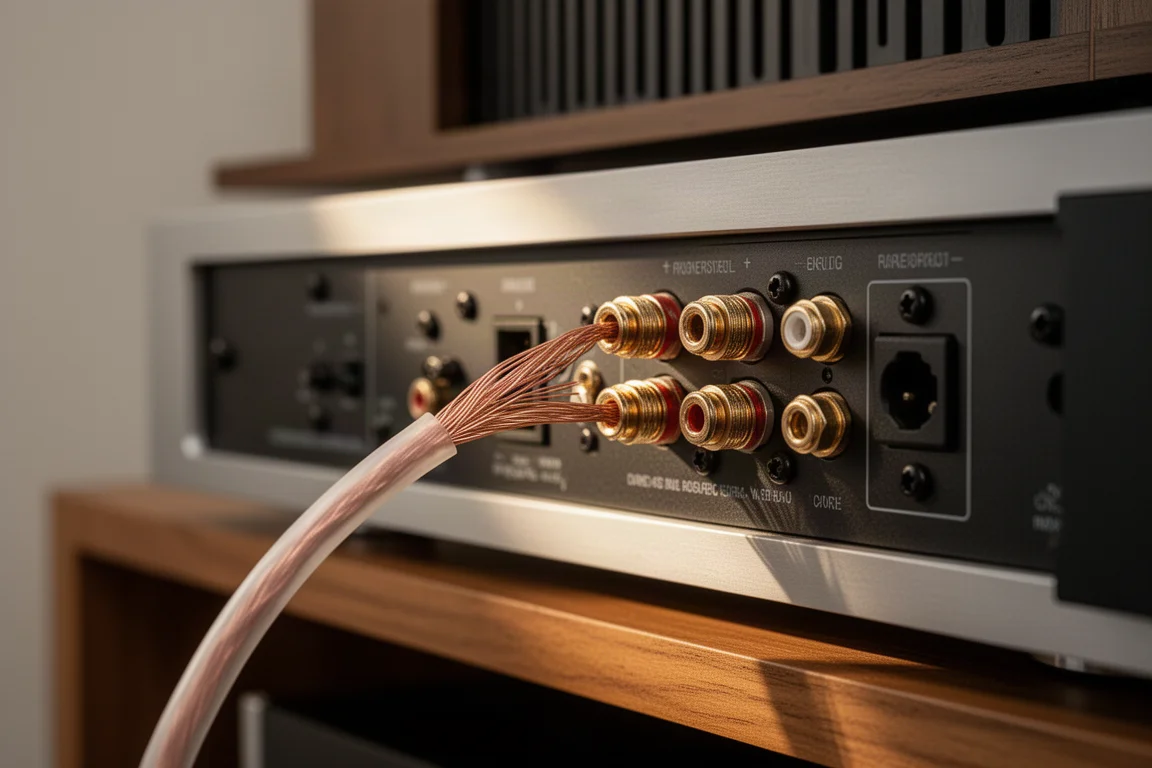
Connectivity is where you make a choice. There is no dedicated subwoofer output, so a subwoofer with speaker level inputs is the practical route, fed from the speaker terminals. If you ever need more output, the power supply can be upgraded to a more capable unit, which is an easy way to extend the life of an inexpensive amplifier.
AIYIMA T9: Tube Warmth and VU Meters for the Desktop
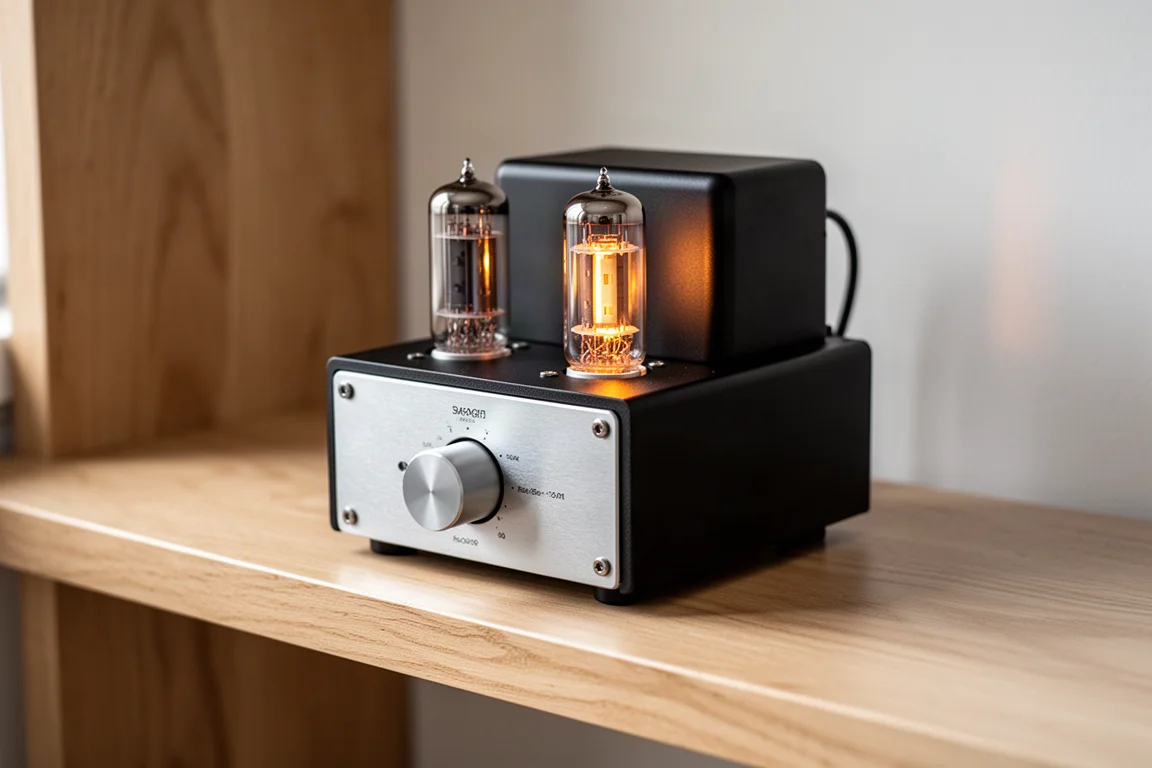
Around $120 buys something you rarely see at this price: a tube amplifier with two glowing VU meters and a remote control. The T9 is one of the most striking desktop amplifiers around, and it doubles as an excellent soundbar replacement when it sits near a television with the lights down.
Sound quality is the surprise. Out of the box the tubes sound remarkable, with no sense of a veiled midrange, harsh treble, or thin bass. Different tubes can be rolled in if you want a little more space and air, but it is not necessary to enjoy the amplifier. Bass can get slightly loose with very inexpensive speakers, which is a fair limitation at this price.
Flexibility is genuinely good. There is a 3.5mm auxiliary output for a subwoofer, a single RCA input, and the option to run the T9 as a preamp or as a power amp, which means it can sit at the front of a system now and stay useful as the rest of the setup grows.
Yamaha A-S301: A Versatile Integrated Amplifier
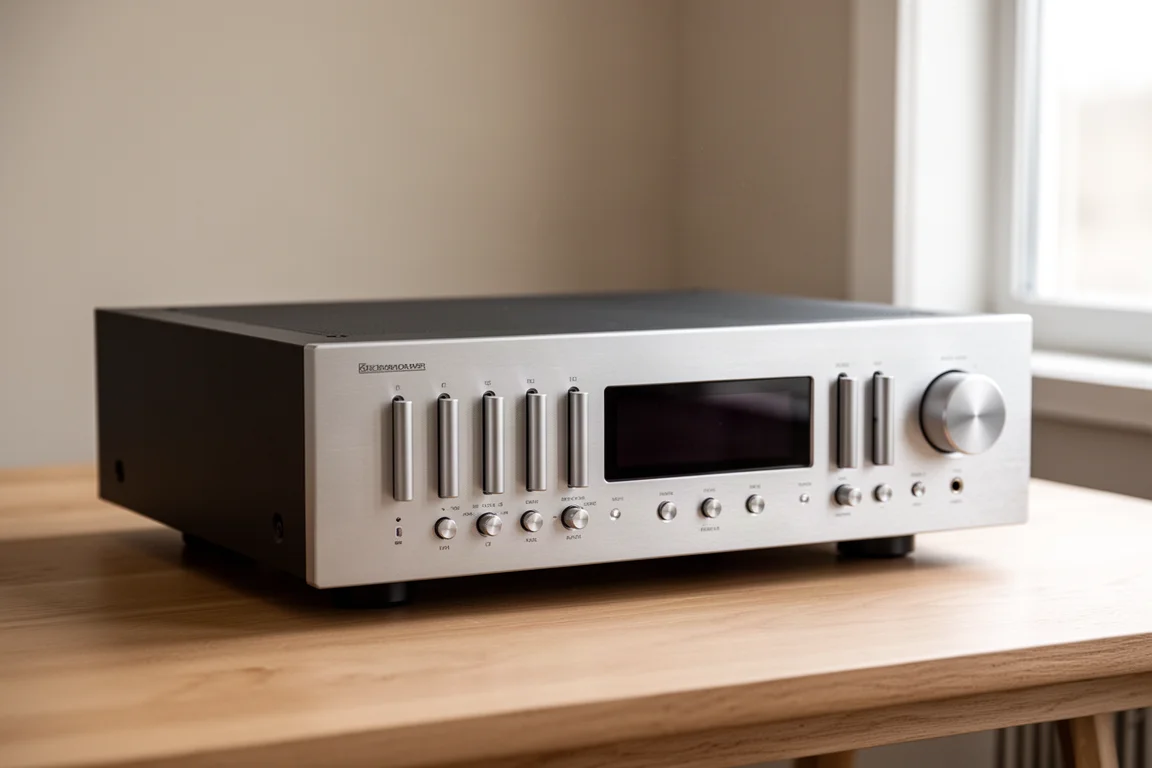
At around $350, with open-box listings appearing near $300 from time to time, the A-S301 is the most conventional amplifier here and also the most versatile. It delivers 60 watts per channel, which should be plenty for most listeners, and it offers the connectivity and controls of a proper integrated amplifier.
The variable loudness control and the tone controls are the heart of its appeal. They behave more like shelf controls, lifting or lowering broad ranges of frequencies rather than targeting a single narrow band, which makes them effective at shaping the sound to a room. That matters, because the A-S301 is a touch forward in the upper midrange and the top end by default, and those controls let you pull it back to taste.
Against a well-regarded vintage receiver, the A-S301 gives up some grip in the bass and a little spaciousness, but it is far more flexible and it can be tuned to suit almost any preference. Add a compact streamer and the system is complete, which makes the price easier to justify.
Pairing Notes: Speakers, Subwoofers, and Sources
Subwoofer integration separates these amplifiers more than raw wattage does. The T9 is the simplest to pair with an active subwoofer thanks to its 3.5mm output, while the TB10D works with a subwoofer that accepts a speaker level input from its speaker terminals. The A08 Pro can drive a subwoofer from its variable output, with level tied to the main volume knob.
Source options also differ. The A08 Pro includes Bluetooth for wireless playback, the T9 adds a remote control that suits living-room use, and the A-S301 is built to accept several sources at once and to be expanded with a separate streamer.
Speakers deserve a share of the budget in every case. Even the least expensive amplifier here benefits noticeably from a decent pair of bookshelf speakers, and the T9’s slightly loose bass is most obvious with budget models.
Buying Advice: Which Amplifier Fits Your Setup
If the lowest possible price is the priority, the Fosi Audio TB10D is the obvious pick. It is clean, detailed, and well behaved, and its tone controls are useful rather than a liability.
If you want Bluetooth and a desktop amplifier that does not look like everything else, the AIYIMA A08 Pro is the better fit, and the extra money buys a cleaner presentation and a stronger power supply.
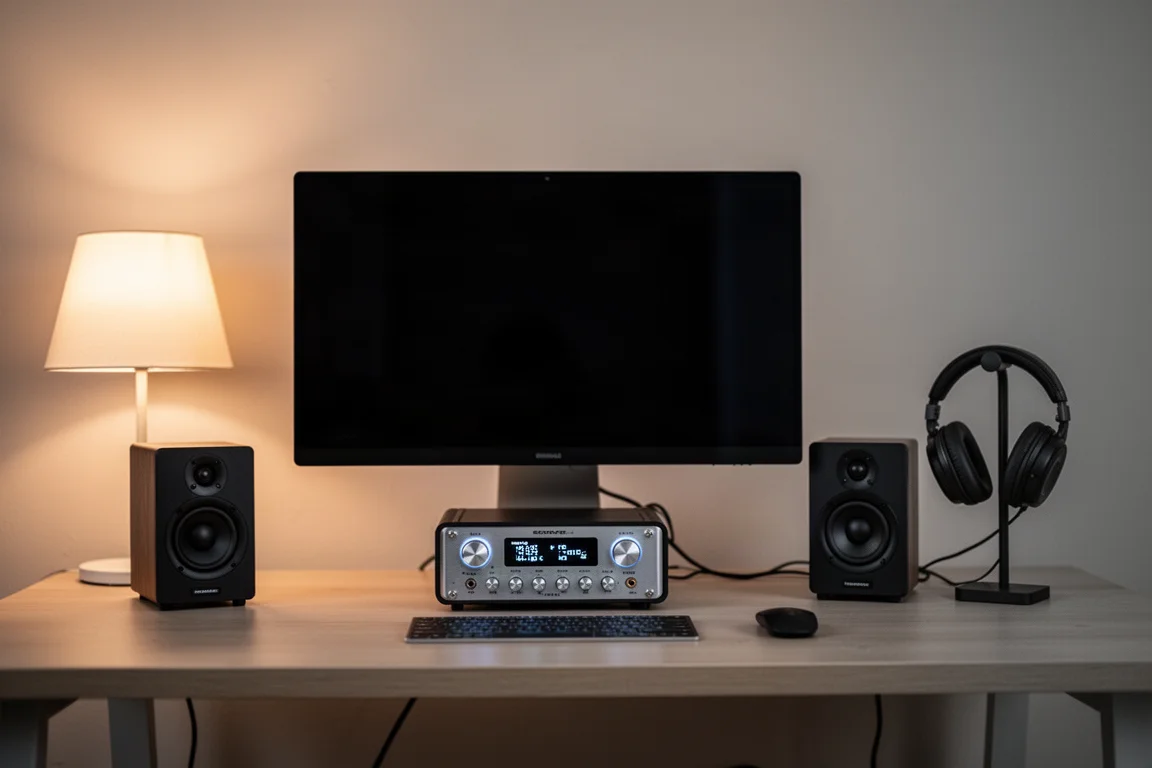
For a desk or a soundbar replacement where character matters as much as measured performance, the AIYIMA T9 is hard to beat at its price, especially with a subwoofer connected through its auxiliary output.
Finally, if you want one amplifier to handle multiple sources, tune the sound to your room, and stay in the system for years, the Yamaha A-S301 justifies its higher price through sheer flexibility.
Conclusion
Each of these four amplifiers earns its place. The Fosi Audio TB10D delivers the best value, the AIYIMA A08 Pro pairs clean sound with Bluetooth, the AIYIMA T9 brings tubes and VU meters to the desktop at a very approachable price, and the Yamaha A-S301 offers the versatility of a full integrated amplifier. Match the amplifier to your speakers, your sources, and the way you actually listen, and any of them will serve you well.
Further reading
Related Reviews
Hi-Fi Amplifiers
Accuphase E-280 Review: Entry-Level Accuphase With Flagship Attention to Detail
A close look at the Accuphase E-280 integrated amplifier, covering its champagne build, AAVA volume control, sound quality, and the speakers and sources that suit it best.
Hi-Fi Amplifiers
Advance Paris A10 Classic vs Yamaha A-S301: Two Integrated Amplifiers Compared
A practical comparison of a $350 integrated amplifier and a $2,500 reference model, covering the differences that matter and the ones that do not.
Hi-Fi Amplifiers
Affordable Chinese Amplifiers Worth Buying: Five Budget Hi-Fi Amps Compared
A practical look at five affordable amplifiers, what each one does well, and the trade-offs to weigh before you buy.