Astrophotography
Best 86-90mm Refractors for Astrophotography: Four Telescopes Compared
Four refractors from $300 to $2,300 face off in a one-night deep sky shootout targeting the Pinwheel Galaxy, including a newly bright supernova.
Introduction
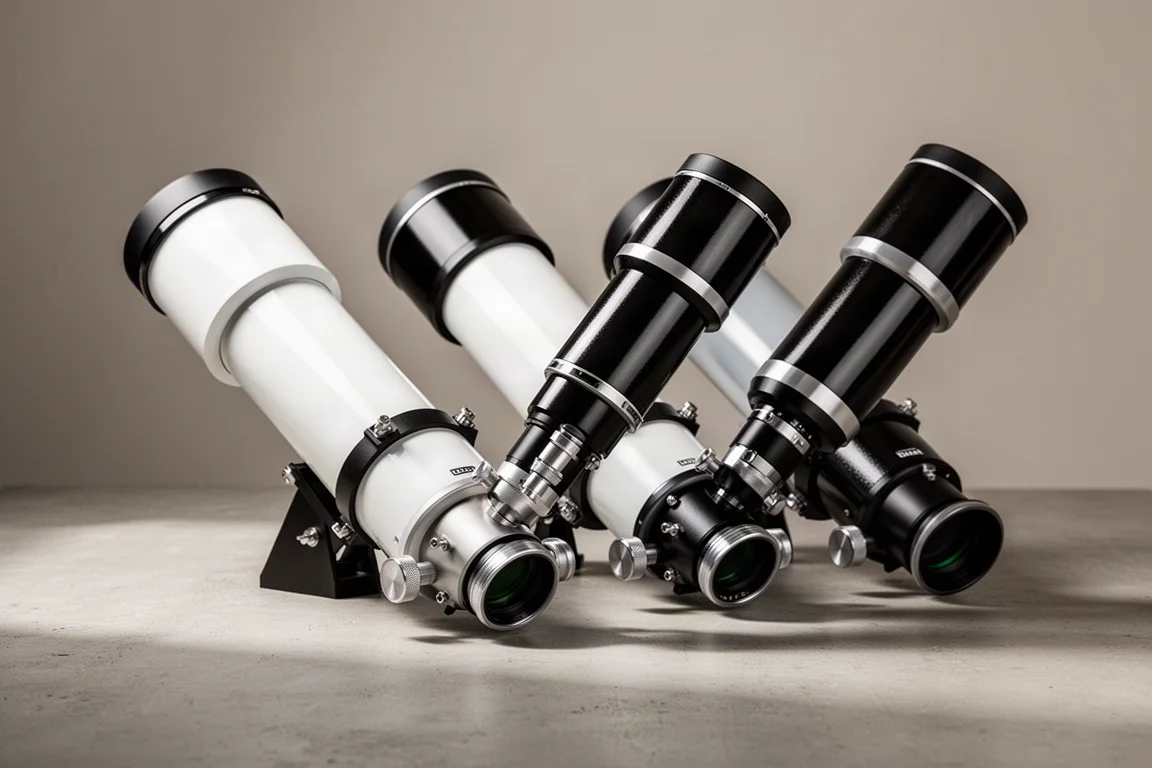
Apertures between 86 and 90 millimeters are a sweet spot for astrophotographers who mostly shoot nebulae but also want the reach to go after brighter galaxies. All four telescopes compared here are refractors in that range, with focal lengths between 464 and 560 millimeters, and prices from $300 to $2,300 for the optical tubes alone.
Keep in mind that the price figures here cover only the telescopes themselves. To capture deep sky objects you also need a quality motorized mount, a camera, an auto-guiding system, and assorted cables and a computer. If you are completely new to the hobby, a general overview of complete rigs at different price points is a better starting point than this comparison.
How the Four Scopes Were Tested
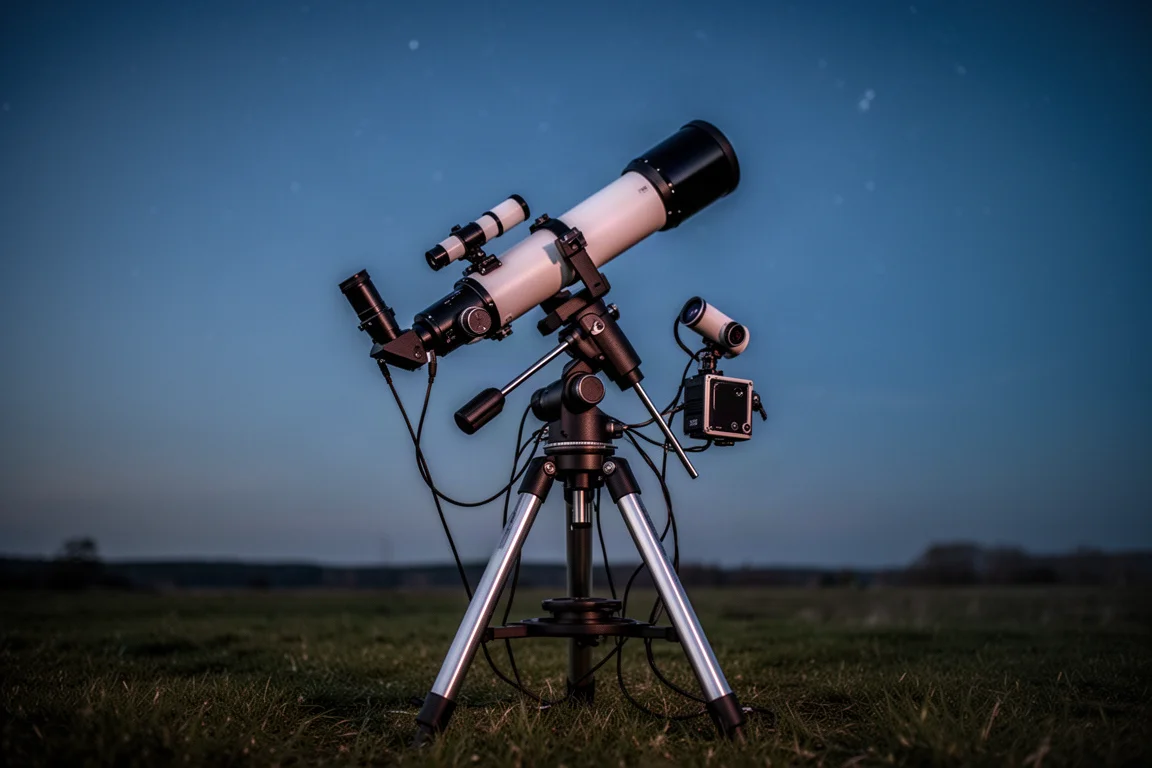
The test target was Messier 101, the Pinwheel Galaxy, shot under a new moon. Each telescope used the same supporting equipment: a Sky-Watcher EQ6-R mount, a crop-sensor ASI 2600 MC camera at gain 100, and guiding with an ASI 290 mini and a William Optics 50mm guide scope. Each image combined five 5-minute exposures for 25 minutes of total integration per telescope.
Small integrations like this reveal optical issues such as chromatic aberration more clearly than single exposures, while averaging out some night-to-night variability.
Optical Designs Compared
The Svbony SV48P 90mm is the budget entry at $300. It is an achromatic doublet with two glass elements, neither of them ED glass, so expect some violet halos around bright stars. It has no field flattener included and none could be found for sale from Svbony for this telescope, so it was tested as-is. Specs are a 90mm aperture, 500mm focal length, and a fast f/5 ratio well suited to deep sky work.
The Founder Optics FOT86, at $1,400, is an apochromatic triplet with two of three elements made of ED glass, spaced widely in a design reminiscent of the famous Takahashi TOA line. The company states a well-corrected 44mm image circle for full-frame sensors, and a field flattener is included in the package. The aperture is 86mm with a 560mm focal length, giving f/6.5, and a 0.8x reducer is listed on the company website.
The Apertura 90mm Triplet, at $1,900, is an apochromatic triplet with FPL-53 ED glass from Ohara. It also states a 44mm image circle for full-frame imaging and includes a 1x field flattener. The aperture is 90mm with a 540mm focal length, putting it at f/6. An optional 0.8x reducer flattener is available.
The Stellarvue SVQ86, at $2,300, is a quadruplet apochromatic astrograph with corrector elements built in, so no separate field flattener is needed. The stated image circle was around 60mm, which is plenty large. It has an 86mm aperture, a 464mm focal length, and a focal ratio of f/5.4. Note that this scope is discontinued: only a small batch was made, so it is only findable on the used market today.
Build Quality and Hardware
Physically, the scopes differ considerably. The Svbony SV48P weighs 2.3 kg (5 lb 1 oz) with a bare-bones design, a basic two-speed focuser that works but feels a little slow and sticky, 70mm of focuser travel, a Synta-style finder shoe, and a screw-on metal front cap. Newer versions add rings and branding. It ships in a silver hard case with custom foam, which is generous for a $300 telescope.
The Founder Optics FOT86 weighs 4.8 kg (10 lb 8 oz) assembled and impresses with top-notch mechanics: a silky smooth two-inch focuser with 95mm travel, 360-degree rotation, a large and easy-to-find focus lock knob, and a unique roto-lock compression system that grips accessories securely. Swapping between photography and visual use is unusually quick since the flattener simply lifts out for a diagonal. The package includes M48 and M42 camera connections, an individual inspection report with optical test data for the specific unit, a manual, and a hard case.
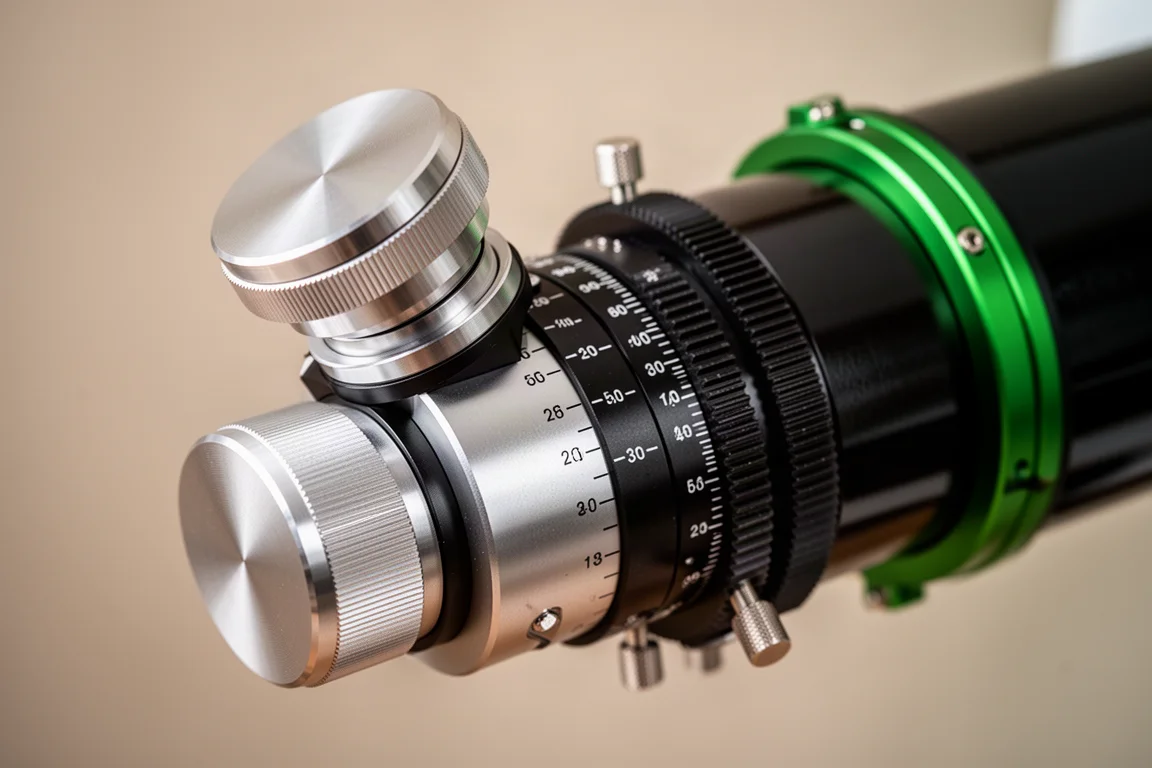
The Apertura 90mm Triplet also weighs 4.8 kg and comes with a Losmandy-style plate, a multifunction top handle with mounting points for a guide scope, a 360-degree rotating dual-speed focuser with 95mm travel and markings for repeatable focus, screw holes for an electronic focuser, and a guide scope with rings and finder base included. The included case is substantial enough to hold the fully assembled telescope.
The Stellarvue SVQ86 is the heaviest at 6.3 kg (13 lb 5 oz), with a three-inch hand-configured focuser, rear-position rotation, felt-lined dew shield, and Stellarvue’s solid metal riser blocks that help clear filter wheels. With wide-opening adapters, the roughly 60mm image circle means the telescope itself introduces essentially no vignetting on full frame. This reviewer’s unit, serial number 003, has been the most-used scope on the channel.
Optical Test Results
On field illumination, the Apertura 90 was the standout, showing a very flat, evenly illuminated field. The Founder Optics FOT86 showed the most vignetting in raw screen-stretched frames, likely related to its two-inch flattener and focuser design, though this corrects easily with flats or background extraction. The Svbony and Stellarvue fell in between with mild corner darkening.
Corner star shapes told a clearer story. The Svbony’s corners looked poor, as expected without a flattener, though the center was decent aside from some chromatic aberration. The Founder Optics showed near-perfect corners and edges on a crop sensor, with only slight elongation in one corner that suggests tilt, potentially correctable with a tilt adjuster. The Apertura and Stellarvue both produced clean star fields.

After processing, the violet halos on the Svbony were the most obvious difference. They can be reduced with a minus-violet or fringe killer filter, or processed out, though the brightest halos tend to leave enlarged stars behind. Zoomed out, the processed Svbony image still looked respectable, a reminder that a $300 scope can produce good results with skilled processing.
The three more expensive scopes were remarkably similar in processed center crops, with the Apertura getting a slight edge thanks to its larger aperture and slightly faster ratio. The practical takeaway: at this level of telescope, optical performance differences are small, so features, mechanics, and price should drive the decision.
Which One Should You Buy?
If budget is the priority, the Svbony SV48P is genuinely capable for the money, provided you accept the violet halos and plan your processing around them. If you want flexibility, both the Founder Optics FOT86 and Apertura 90mm Triplet offer a 1x flattener plus an optional 0.8x reducer, effectively giving two focal lengths from one telescope, and both are beautifully built.
If you prefer simplicity, a quadruplet astrograph like the SVQ86 removes back-focus hassles entirely, though you will need to hunt the used market. Any of the three premium scopes will do the job when paired with a good camera and mount, so choose based on the fine details that matter to your workflow.
Conclusion
The 86 to 90mm refractor range rewards buyers at every price point, from the surprisingly capable Svbony doublet to the refined Founder Optics and Apertura triplets and the discontinued but excellent Stellarvue quadruplet. And if you image the Pinwheel Galaxy this season, keep an eye out for Supernova SN 2023ixf, a rare type II explosion in M101 that briefly outshone the galaxy’s core and is the closest such event in about a dozen years.
Product link
View more details for Svbony SV48P 90mm
This product is mentioned in the review. Check the specifications, options, and compatibility before buying.
View more details for Svbony SV48P 90mmFurther reading
Related Reviews
Astrophotography
ASKAR FRA400C Review: A Versatile 400mm Refractor for Astrophotography and More
The ASKAR FRA400C is a compact 72mm refractor that balances reach, versatility, and portability for astrophotographers and visual observers.
Astrophotography
Askar SQA106 Review: A Premium 106mm Astrograph With Exceptional Optics
The Askar SQA106 is a premium 106mm quintuplet astrograph with impressive sharpness across full-frame sensors, though its price and weight demand careful consideration.
Astrophotography
Astro Imaging Gear 2026: Eight New Products Worth Watching
A look at the most interesting new astrophotography and astronomy products announced this year, from fast telescopes to smart cameras and wireless accessories.