Camping Tents
Best 6-Person Tents 2026: 7 Family Camping Tents Tested and Compared
We tested seven 6-person tents for setup, space, ventilation, weather protection, and build quality. Here are the standout picks for families and groups.
Introduction
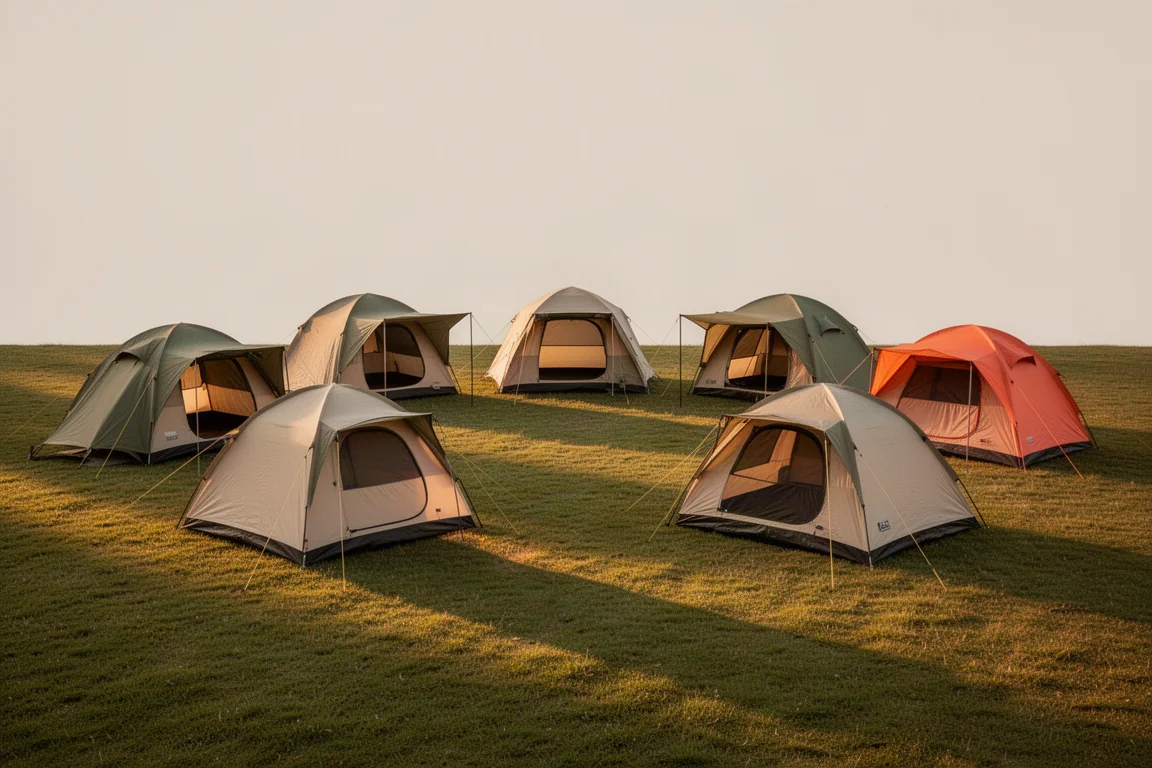
Choosing a six-person tent often comes down to balancing interior space, weather protection, and how much effort it takes to pitch and pack away. We tested seven popular six-person tents across multiple criteria: ease of use, spaciousness, comfort and features, ventilation, weather protection, quality, and portability. Each tent was pitched and packed solo, exposed to heavy rain, and evaluated over several weeks. This guide covers what stood out, where each tent falls short, and which models make the most sense for different camping styles.
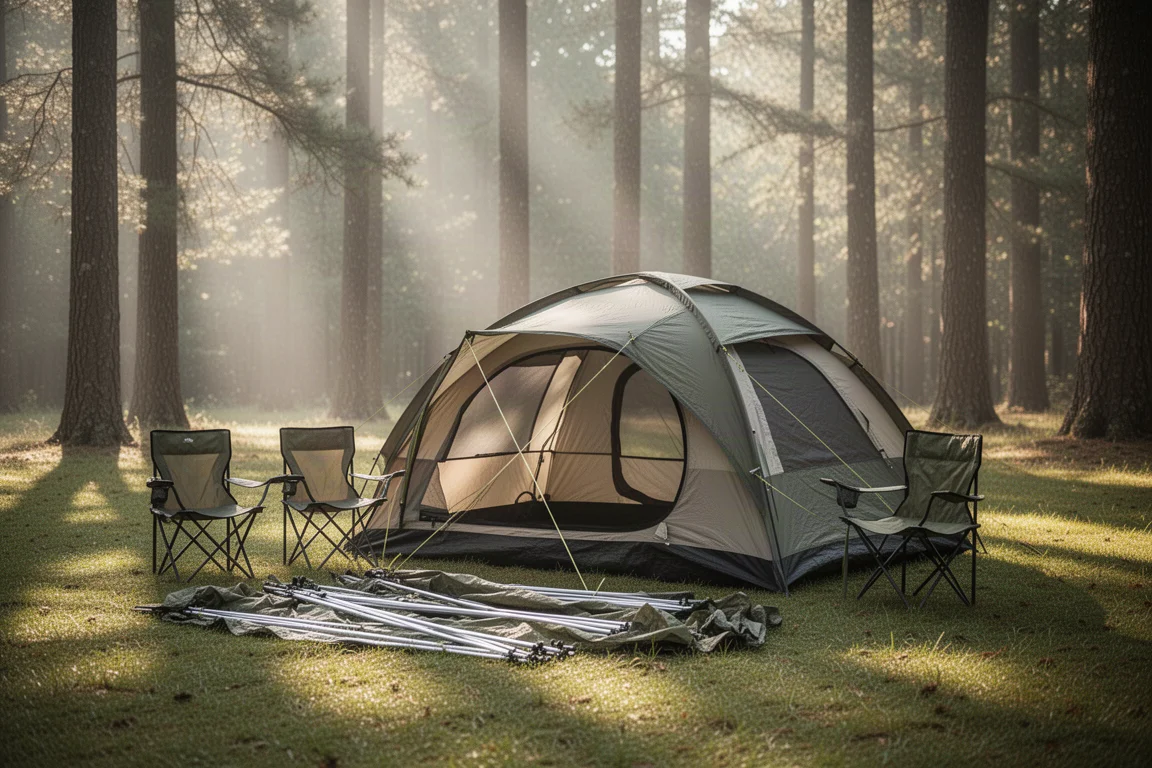
All seven tents can fit six single sleeping pads, though floor space becomes tight once everyone is inside. Only one tent in the group fits two actual queen beds. Two tents include vestibules. Setup times ranged from under ten minutes to considerably longer, and rain performance varied widely. We purchased every tent at full retail and did not return them after testing.
How We Evaluated These 6-Person Tents
Our evaluation focused on seven categories. Ease of use covered setup and pack-away times, including staking and guying out. Spaciousness considered peak height, wall slope, livability, and base area. Comfort and features looked at door quality, storage pockets, and extras like room dividers and e-ports. Ventilation was split between hot-day airflow and rainy-day options. Weather protection involved a one-hour heavy rain test for most tents, with one tent subjected to three hours of pouring rain and flooding. Quality reviewed flooring, tent body fabric, poles, zippers, mesh, seam stitching, and seam taping. Portability compared packed weight and size. Finally, we assigned overall scores across all categories.
Caddis Rapid 6
The Caddis Rapid 6 is the only instant tent in this group. Its poles are pre-attached, so setup involves unfolding the tent, extending each pole upward, and securing the rainfly. It was the fastest tent to pitch and the easiest to pack away. The carry bag is generously sized, and the thick flooring and tent body are noticeably more substantial than some pricier tents.
As a cabin-style tent, the Caddis Rapid 6 offers near-vertical walls and enough standing height to move around upright. The lowest interior height is about 68 inches. Hot-day ventilation is good thanks to large windows on every wall and a generous amount of ceiling mesh. However, the ceiling mesh does not extend down the sides, and there is only one door, which limits cross-ventilation.
The single door is the tent’s weakest point. It was the snaggiest door in the group, and the tent uses no-brand zippers despite otherwise high-quality materials. In heavy rain testing, the corner seams leaked after one hour. Instant tents also tend to pack longer than standard cabin tents, and the Caddis Rapid 6 is about 70 percent longer than the Eureka Copper Canyon LX 6 when packed.
Coleman Sundome 6
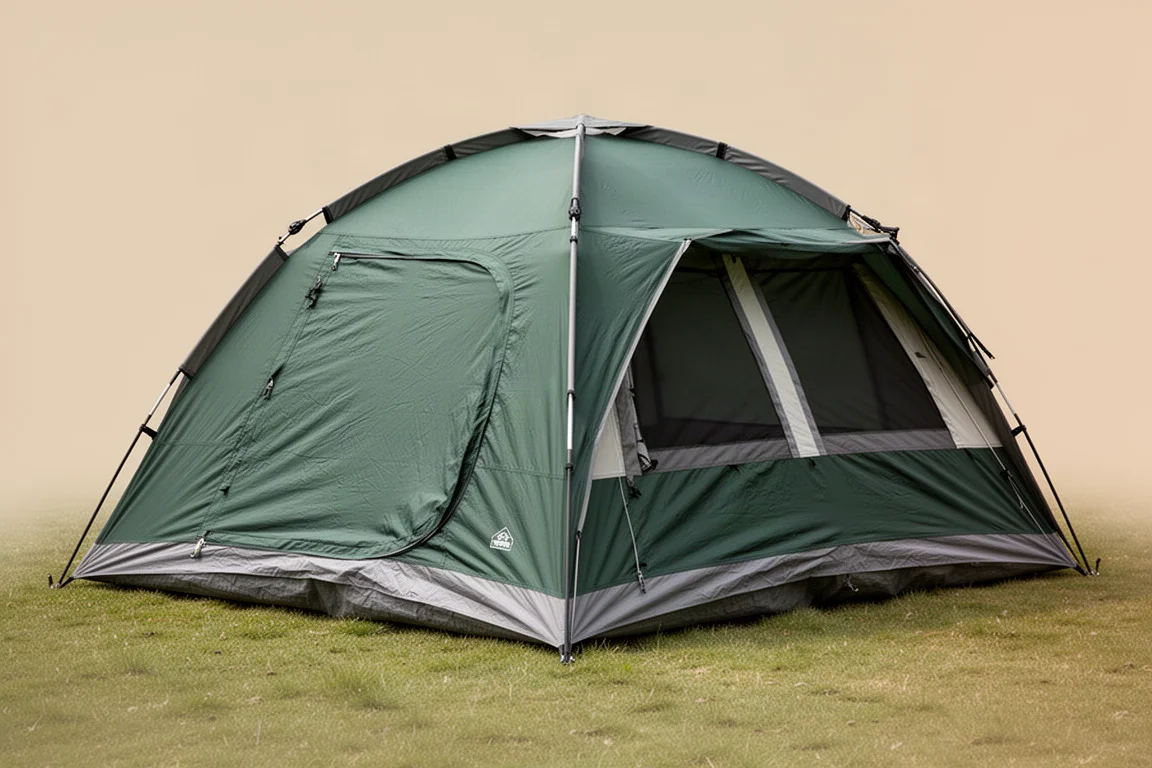
The Coleman Sundome 6 is a straightforward three-pole dome tent. Two poles crisscross for the main body, and a third supports the rainfly. Setup is simple and quick, and pack-away is easy because the tent has fewer features and less material than most others. The top-loading carry bag has a decently sized opening.
For hot-day ventilation, the Sundome 6 has two large mesh walls and two windows. Its standout strength is rainy-day ventilation. With the rainfly in place, the two mesh walls become huge vents spanning the width of the tent. A small ground vent adds a third airflow path, and the slightly overhanging rainfly pole lets you crack the windows open in light wind.
The trade-offs are typical of a budget tent. The flooring is polyethylene, the tent body is 68D polyester, and seam taping is lacking. In heavy rain testing, the Sundome 6 started leaking after about 35 to 40 minutes. Storage is minimal, with only two pockets and one loop at the top. Still, among the two most affordable tents here, the Sundome 6 outperformed the NTK Cherokee 6 in almost every test.
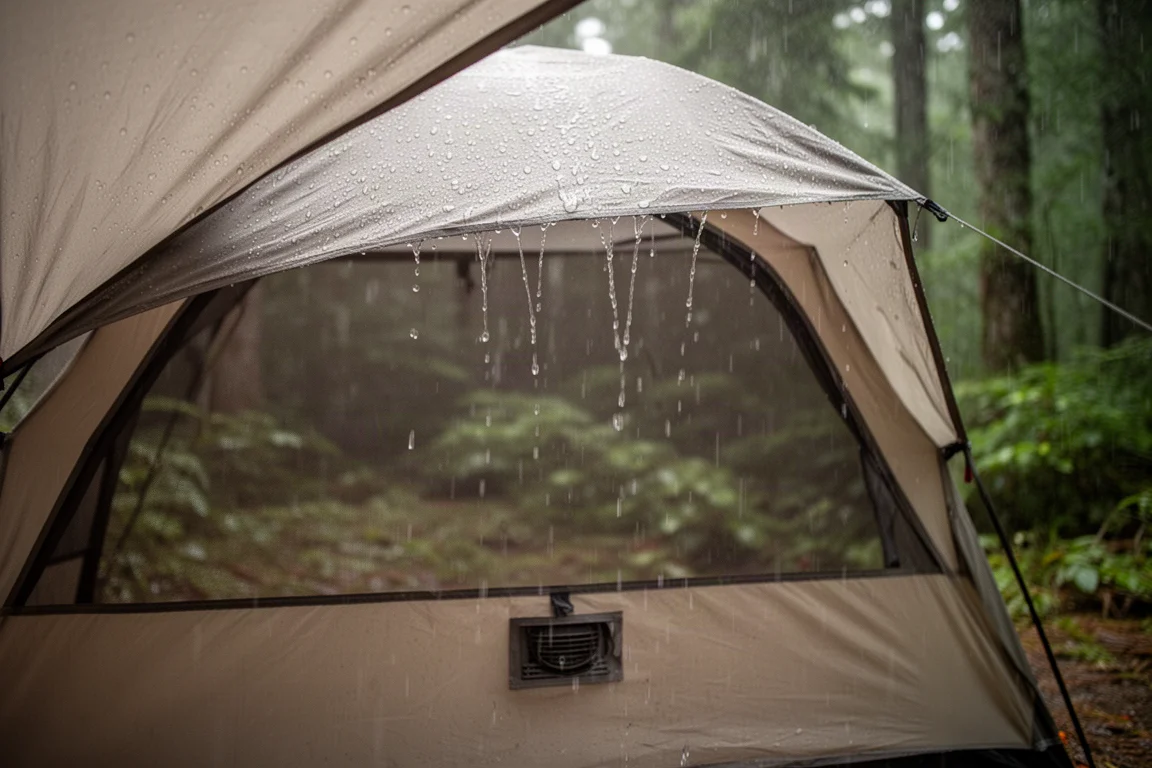
The Sundome 6 makes the most sense for fair-weather campers who want a simple, low-cost tent that handles summer heat well and can manage short rain showers. It is not built for prolonged storms.
NTK Cherokee 6
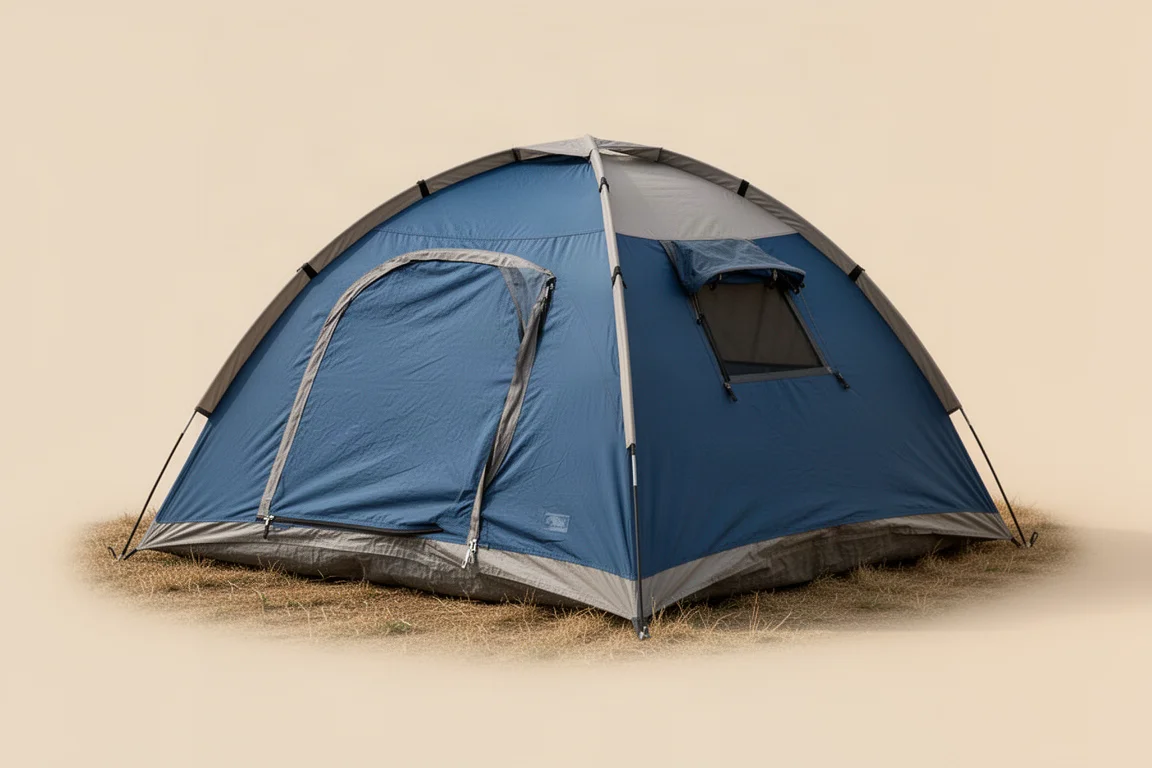
The NTK Cherokee 6 uses the same three-pole layout as the Sundome 6, with two poles for the body and one for the rainfly. The key difference is the rainfly attachment. Instead of user-friendly Velcro strips, the Cherokee 6 uses straps that must be tied, which made setup noticeably slower.
Hot-day ventilation comes from two mesh walls, one window, and small mesh panels. For rainy days, the Cherokee 6 has only two mesh wall vents, fewer options than the Sundome 6. The tent body is 68D polyester throughout, and like the Sundome 6, it lacks robust seam taping. In heavy rain testing, it began leaking after roughly 35 to 40 minutes. Storage is also limited. The Cherokee 6 does include an e-port, which the higher-end tents in this group lack.
Given the similar price and feature set, the Sundome 6 is the stronger budget choice. The Cherokee 6 is a reasonable option only if it is significantly less expensive or if the Sundome 6 is unavailable.
Eureka Copper Canyon LX 6
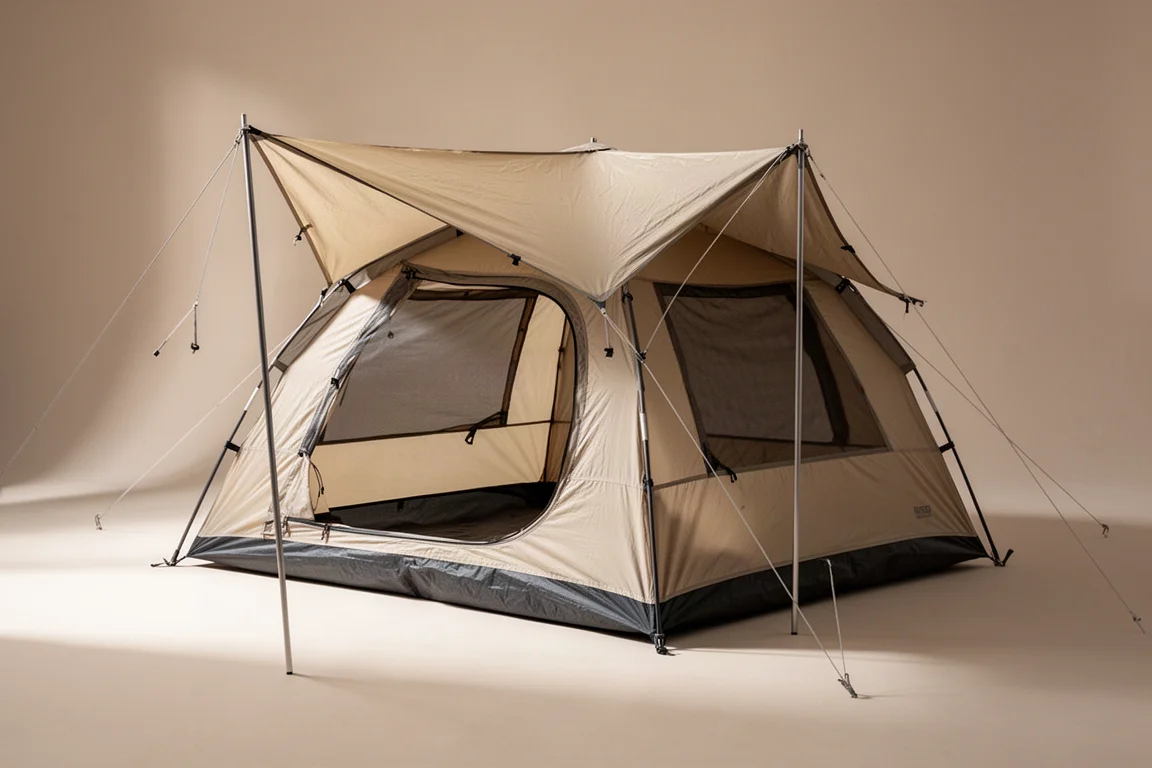
The Eureka Copper Canyon LX 6 is a cabin tent with a standard six-pole setup. Two fiberglass poles form the roof, and four steel leg poles support the walls. Setup takes longer than a simple dome tent because there are more poles to manage. Pack-away is helped by a top-loading carry bag with Velcro and zips, though the extra poles still add time.
Spaciousness is the Eureka’s headline feature. It has a full seven-foot peak height, and you can stand upright at the corners and walk around without ducking. The side walls are almost vertical, with the lowest interior height around 66 inches. Hot-day ventilation is strong, with large windows on every wall and ceiling mesh. However, there is only one door, so cross-ventilation is limited compared to tents with two doors.
Rain protection is average. In a one-hour heavy rain test, the vertical seams leaked. The Eureka also has no vents for rainy-day ventilation, and only the front window can be cracked open slightly. The door was very tight on the first setup, though it broke in after a few days. The flooring is 75D polyester, which is thinner than expected for a tent in this class. Like other cabin tents, it is not ideal in wind, and it blew over in a light breeze once the stakes were removed.
REI Base Camp 6
The REI Base Camp 6 is a more complex dome tent with five poles. Two blue poles crisscross to form the main body, and two black poles intersect them for reinforcement. A fifth pole helps shape the front vestibule. Setup takes longer than a basic dome, and the side-loading carry bag makes packing more of a struggle because the opening is smaller.
Interior livability is better than a basic dome. Pole clips and buckles pull the tent fabric outward, so you get more usable space. When sitting up at the sides, your head does not touch the wall. The Base Camp 6 also has two vestibules. The front vestibule is large enough for two camping chairs, but the back vestibule cannot fit even one chair. Storage is excellent, with huge pockets running around the tent and loops on every wall.
Hot-weather ventilation is limited. There is only a tiny skylight, two not-quite-half-door windows, and two tiny mesh panels. On hot summer days, the tent can feel stuffy, especially with the full rainfly on. Rainy-day ventilation is better: two roof vents and two floor vents are the only vents in this group that can be opened and shut from inside. In weather testing, the Base Camp 6 stayed completely dry through a one-hour hose test, which is heavier than average rain. However, the floor seams are not taped, only inverted. When water was sprayed directly onto the tent body and dripped onto those seams, it leaked after an hour.
The doors are large, but not as tall as the Wonderland’s, so you have to tilt your head slightly when entering. Unzipping is snag-free and can be done one-handed, but zipping sometimes requires two hands to pull past a bend because there are no extra stake loops beneath the door. The REI Base Camp 6 uses YKK zippers on the doors and no-brand zippers on the windows. Its regular aluminum poles are not as strong as DAC MX. This is a strong shoulder-season tent and a solid runner-up to the Wawona 6, especially if it is on sale or if the Wawona is out of stock.
If you camp mainly in summer heat, the Base Camp 6 is not the best fit unless you leave doors or windows open for cross-ventilation. For cooler shoulder-season trips, its weather protection and storage make it a compelling choice.
REI Wonderland 6
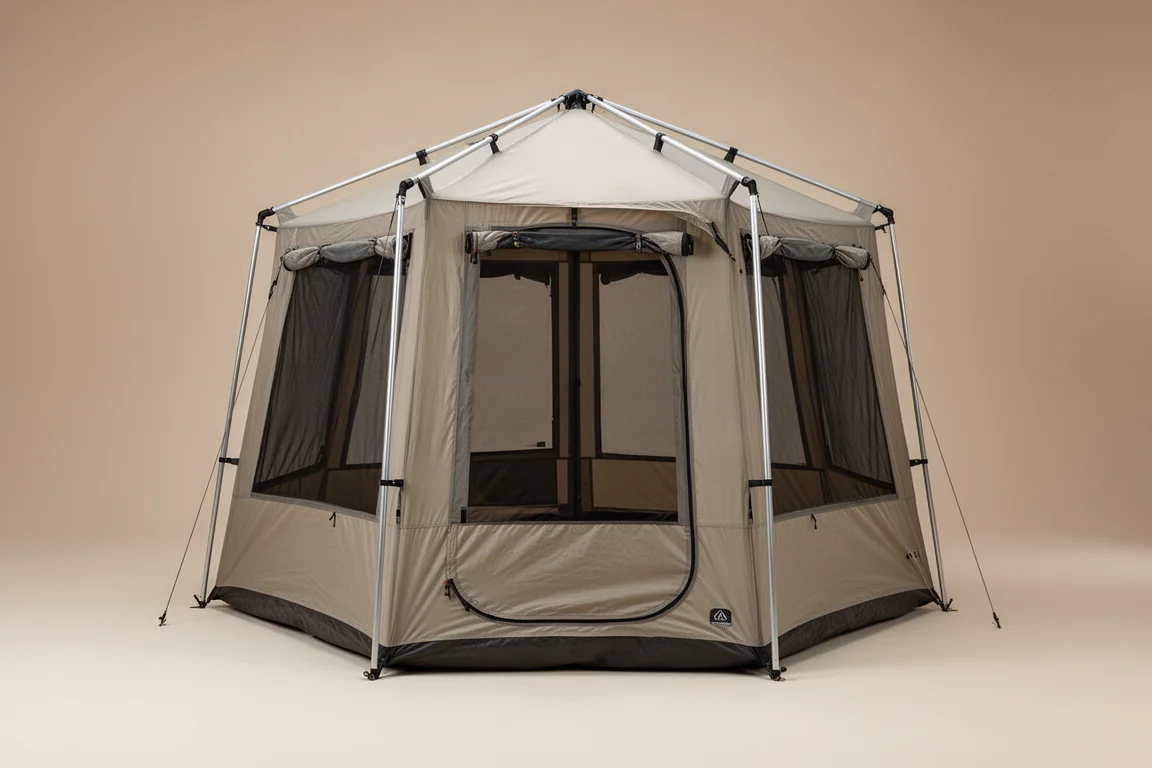
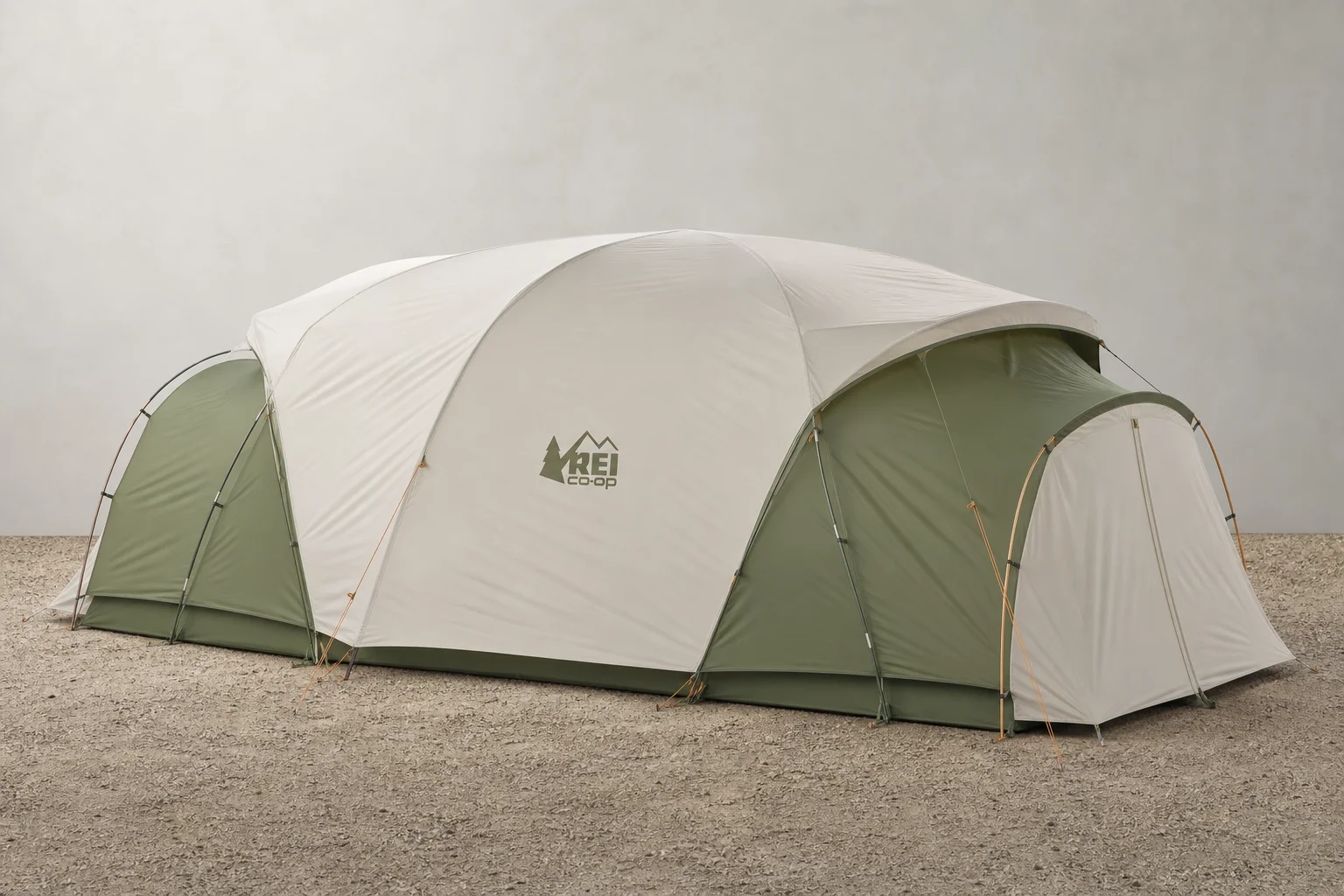
The REI Wonderland 6 is a cabin tent with a unique five-pole design. One pole runs the full length of the tent at the top, and four poles support the walls. Setup is a little more complex than a standard cabin tent because of the shape, and the side-loading carry bag makes packing harder than a top-loading design.
Spaciousness is where the Wonderland 6 excels. Its left and right side walls are completely vertical, unlike most cabin tents whose leg poles angle inward. The peak height runs nearly the entire length of the tent. The rectangular base area is the only one in this group that can fit two actual queen beds. The doors are exceptional: two huge doors take up almost the entire wall, you never have to duck, and each door zips or unzips one-handed in about three seconds without snagging. Door fabric tucks into pockets beside the door.
Hot-day ventilation is the best in the group. With the rainfly removed, more than half the tent is mesh, extending from the roof down the sides. Two half-door windows and two bottom windows provide 360-degree views, and the two doors create strong cross-ventilation. Rainy-day ventilation is more limited: only two windows can be cracked open under awnings, and the above-door vents are too small to help much. In heavy rain testing, the Wonderland 6 leaked at the seams of the divider loops at the bottom after one hour. It comes with a room divider.
The Wonderland 6 uses YKK zippers on the doors and no-brand zippers on the windows. Its regular aluminum poles bent after some use. For hot-weather camping and maximum interior space, it is the best cabin tent in this group. For heavy rain or wind, other options are stronger.
The North Face Wawona 6
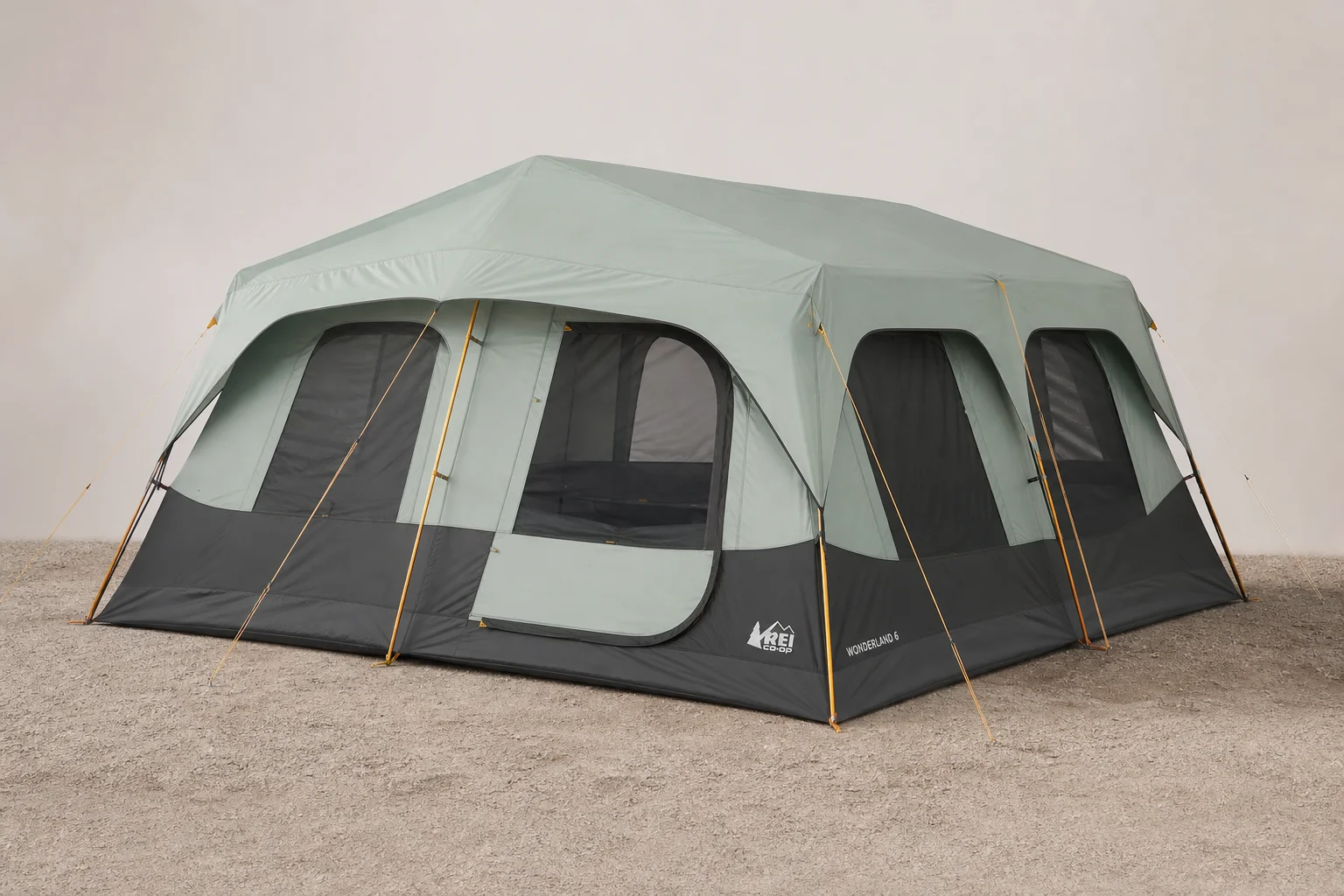
The North Face Wawona 6 is a four-pole dome tent. Two poles crisscross for the main body, a third shapes the front, and a fourth helps form the front vestibule. Setup took the longest of all seven tents because the rainfly has a lot of fabric and pole clips that catch on the tent or poles. It often took two or three tries to get the rainfly on correctly. Pack-away is surprisingly easy thanks to a top-loading carry bag with a huge opening that swallows all the material without a fight.
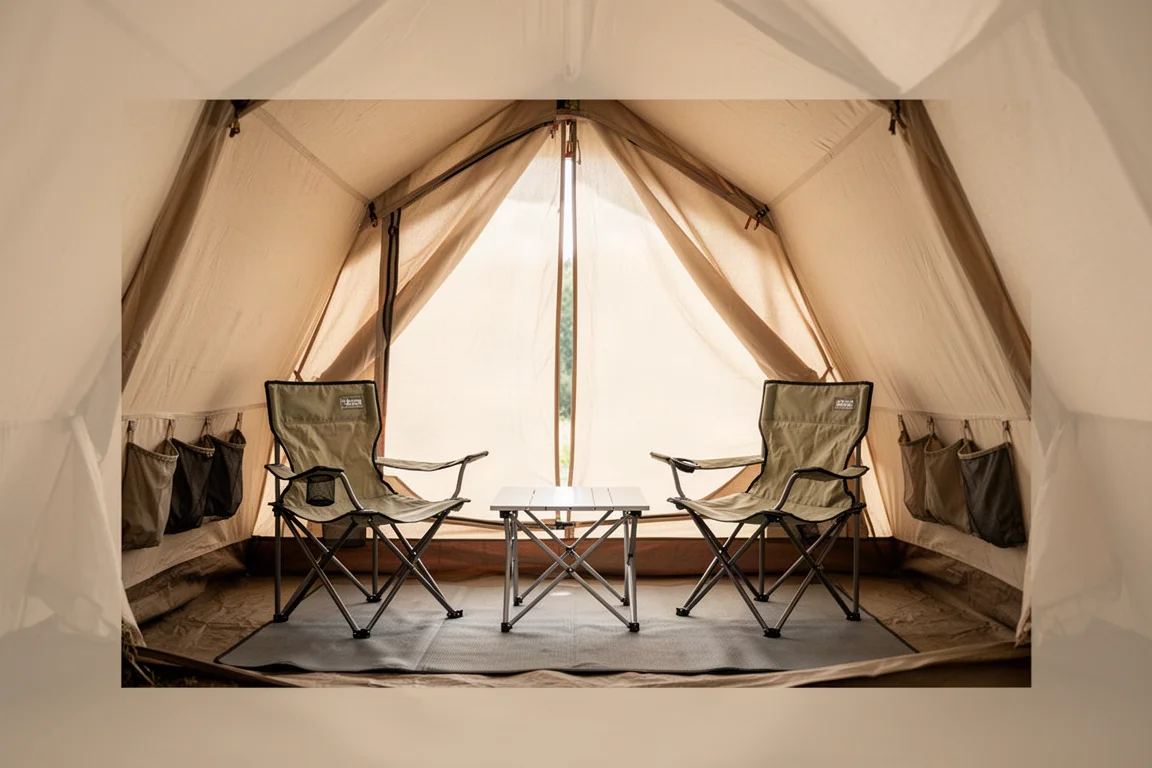
The Wawona 6 has the smallest base area in this group, but it makes up for that with livability. Its front wall is completely vertical thanks to the extra pole, creating more usable interior space than a basic dome. The vestibule is the standout feature. It has a peak height of about 74 inches and a low point of 65 inches, so you can stand upright throughout. It fits two camping chairs and still leaves room for a large camping table.
Ventilation is strong for a dome tent. About three-quarters of the front wall above a certain height is mesh, and all four walls have mesh panels that join at the top. The front wall pole extends the mesh outward, creating ceiling-like airflow. A back window adds more ventilation. For rainy days, the Wawona 6 has two window vents and two smaller vents.
Weather protection is the Wawona 6’s greatest strength. It passed three hours of nonstop, heavy rain plus flooding without leaking. The back wall was slightly damp to the touch after the third day, but no water entered. Every seam is perfectly taped, so no sealing is required. When a corner sat in two inches of water, the seams did not leak. It also held up in moderate winds of 15 to 20 miles per hour, and the DAC MX aluminum poles are top-of-the-line: they snap together easily, resist bending, and stayed straight through testing. The Wawona 6 uses SBS zippers on both doors and windows, which are a grade below YKK but still good quality. At full price, it is not the most expensive tent here; the Base Camp 6 and Wonderland 6 cost more.
Overall Buying Advice
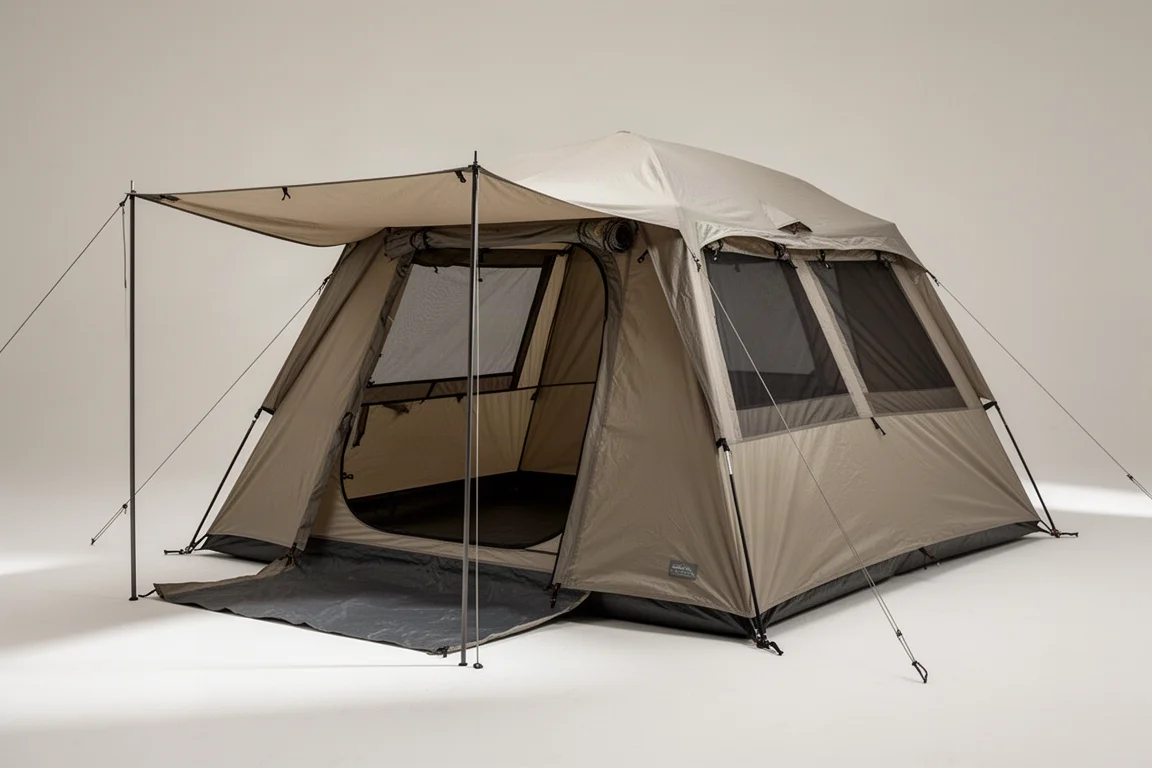
For most campers, The North Face Wawona 6 is the best all-rounder. It earned the highest overall score and was the only tent that did not receive a low rating in more than one category. It leads in quality, rain protection, and wind protection. It is also the best value among the premium tents because it costs less than the Base Camp 6 and Wonderland 6 at full price. Choose the Wawona 6 for family camping in summer or mixed conditions, especially if rain is likely.
The REI Base Camp 6 is the runner-up. It scores second overall and performs nearly as well as the Wawona 6 across categories. Consider it if the Wawona 6 is out of stock, if REI is running a sale that makes it significantly cheaper, or if you camp primarily in shoulder seasons. Its limited mesh and small vents make it less comfortable in hot summer weather.
For a cabin tent, the REI Wonderland 6 is the top choice. It has the best cabin-tent rain protection, the best doors in the group, fully vertical side walls, intuitive solo setup, and outstanding hot-weather ventilation. The Caddis Rapid 6 and Eureka Copper Canyon LX 6 tie for runner-up cabin tent. Choose the Caddis Rapid 6 if fast setup and pack-away matter most, since it is the only tent that sets up and packs away in under ten minutes. Choose the Eureka Copper Canyon LX 6 if you want more interior space, including a full seven-foot peak height and the ability to stand everywhere.
On a budget, the Coleman Sundome 6 beats the NTK Cherokee 6 in almost every test. It is easier to pitch, easier to pack, and offers much better rainy-day ventilation. If both are available, the Sundome 6 is the safer pick. If the Cherokee 6 happens to be less expensive, it can still work for fair-weather camping, but expect fewer features and weaker rain performance.
Keep in mind that all seven tents fit six sleeping pads, but floor space becomes tight once everyone is inside. Only the Wonderland 6 fits two queen beds. Only the Wawona 6 and Base Camp 6 have vestibules. Cabin tents offer more standing room but are less wind-resistant than dome tents. Instant tents like the Caddis Rapid 6 trade longer packed size for faster setup.
Conclusion
The best six-person tent for most people is The North Face Wawona 6. It combines premium materials, outstanding rain and wind protection, a livable vestibule, and strong summer ventilation. If you prefer a cabin tent, the REI Wonderland 6 is the most spacious and best-ventilated option, though it sacrifices some rain protection. Budget shoppers should look to the Coleman Sundome 6 for a simple, affordable tent that handles heat well and manages light rain. Whichever you choose, match the tent to your typical conditions: hot and dry, rainy and windy, or a mix of both.
Further reading
Related Reviews
Camping Tents
3F UL Gear Taiji Two-Person Tent Review: Field Waterproofing Results and Buying Advice
The Taiji pairs an attached fly with a removable inner, but sustained rain exposed untaped vent seams that need sealing before this shelter can be trusted.
Camping Tents
3FUL Gear Lanshan 2 Pro 4-Season Review: A Sub-$200 Single-Wall Trekking Pole Tent
An early look at the 3FUL Gear Lanshan 2 Pro 4-Season, covering its straightforward pitch, generous interior space, and the condensation and seam-sealing questions that come with any single-wall shelter.
Camping Tents
Alps Mountaineering Lynx 1-Person Tent Review: Big Value in a Small Budget Tent
A close look at the Alps Mountaineering Lynx 1-Person Tent, covering real interior dimensions, materials, setup time, ventilation limits, and who should buy it.