360 Cameras
Best 360 Cameras Compared: DJI Osmo 360, GoPro Max 2, and Insta360 X5
Three flagship 360 cameras face off on image quality, batteries, lens durability, apps, and support so you can pick the right one with confidence.
Introduction
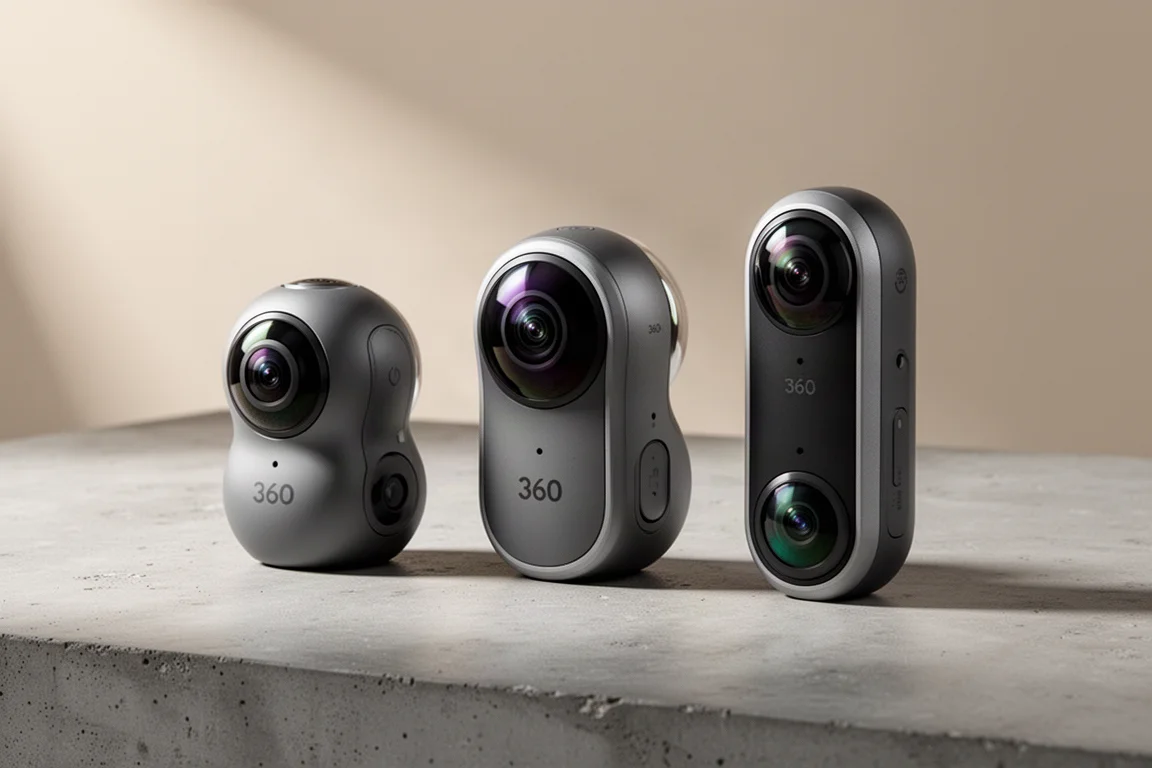
The 360 camera market currently has three serious contenders: the DJI Osmo 360, the GoPro Max 2, and the Insta360 X5. After extensive side-by-side and individual testing over roughly six to eight months, across dozens of comparison categories, some clear patterns emerge. All three are genuinely good cameras, and all three have real weaknesses. This guide breaks down where each one wins, where it stumbles, and which one fits your style of shooting.
One practical note before anything else: prices across the three are fairly similar, but the DJI Osmo 360 is not officially available in the US. It can be bought through third-party sellers sourcing it from outside the US, but that means DJI does not consider it a supported product there. That single fact shapes a lot of the buying advice below.
Design, Size, and Screens
In terms of weight, all three cameras sit within a spread of about 15 grams, roughly 190 grams plus or minus 10. Sizes differ more. DJI and GoPro use a squat design similar to the original GoPro Max, while Insta360 keeps its taller, elongated body. If you plan to mount the camera on a helmet, the squat designs tend to fit better; on a pole, the taller Insta360 shape can feel more natural.
Screens are close enough in size that they don’t sway the decision much. The more meaningful difference is reframing on the device itself: the DJI and Insta360 both let you reframe footage directly on the screen, while the GoPro only allows it after the fact. In a 360 camera you are always recording everything anyway, so this is a convenience feature rather than a dealbreaker.
Lens Durability and Replaceable Domes
This may be the single most important differentiator. Lens domes are user-replaceable on both the Insta360 X5 and the GoPro Max 2, but not on the DJI Osmo 360. The GoPro’s dome simply pulls off and swaps out, while the Insta360’s requires some tools, making it an at-home or hotel-room job. Replacement lens pricing is broadly similar across all three.
In testing, the DJI’s front lens picked up light scratches, likely from tree branches while mountain biking, and because the dome isn’t user-replaceable, the camera has to be sent back to DJI for a fix that can take upwards of a month. For a 360 camera, where scratches on a dome ruin the entire sphere, that is a serious drawback. If you are in the US, you cannot send it back at all. The Insta360 X5 also adds support for ND filters, an option neither of the other two offers.
Water Resistance and Underwater Use
On paper, the ratings differ: GoPro is rated to 5 meters, DJI to 10 meters, and Insta360 to 15 meters. In practice, none of the three produces usable underwater footage without a dive case, because the lens optics blur underwater. Only Insta360 currently offers a dive case. GoPro has promised one for the future with no timeline, and DJI has promised nothing at all. If underwater footage matters to you, Insta360 is the only real option today.
Mounting and Compatibility
All three use similar quick-release mount systems, all have tripod threads underneath, and all offer a magnetic mounting option. GoPro goes further with built-in dual finger mounts on the bottom, meaning it works with the enormous ecosystem of GoPro-style third-party mounts natively. DJI and Insta360 both need small adapter plates to reach the same compatibility. In day-to-day use the differences are small, but GoPro has the best mount story here.
Batteries and Charging
The DJI Osmo 360 uses the same batteries and charging case as DJI’s regular action cameras, so you can swap batteries back and forth. That is a genuinely handy feature for anyone already in DJI’s ecosystem. Insta360 uses a battery that slides out the entire side of the case, and GoPro introduced a new battery for the Max 2, so cross-compatibility is limited there.
Battery life claims held up well in testing with airflow: Insta360 and GoPro exceeded their claims, while DJI fell slightly short. With no airflow, all three can overheat in roughly 20 to 30 minutes, so static mounting inside a car dashboard is the risky scenario; in normal action use with moving air, overheating is not a real problem.
Charging is a different story. Insta360 and DJI both reach 80 percent in roughly 20 minutes. GoPro takes somewhere between an hour and 90 minutes, which is painfully slow by comparison, even though GoPro batteries perform well in cold weather.
Video Quality: Resolution, Frame Rates, and Night Mode
All three claim 8K, but only GoPro delivers true 8K. DJI and Insta360 count black pixels around the lens images in their headline number, so their real usable resolution is around 7K. Practically, GoPro has roughly 20 percent more resolution, which matters mostly if you crop aggressively. At 8K, Insta360 and GoPro top out at 30 fps while DJI reaches 50 fps; at around 5.7K, all three manage 60 fps.
In single-lens mode, all three capture 4K at 60 fps as a known-good setting. DJI claims 5K60, though the black-pixel counting again inflates that figure, and it supports up to 120 fps, roughly double its rivals. Insta360 offers a neat party trick: recording from one flat lens alongside the 360 capture, handy when you want a ready-made flat file without caring about maximum resolution.
Slow motion is a weak spot on all three. They max out around 100 to 120 fps in 4K across the full sphere, from which you crop down to 1080p. Full-screen results look soft compared to a traditional action camera, so none of these should be bought for slow-mo work.
Night mode splits the field. GoPro’s daytime footage is widely considered the best of the three, but its night footage is markedly darker because the company kept the same sensor to prioritize daytime quality. DJI edges out Insta360 at night, though that comes down to preference. GoPro does win on night effects like star trails and light trails, which are built in and easy, whereas Insta360’s star trails mode is cumbersome, and DJI has no equivalent.
Bitrate, Log, and Audio
All three offer log formats for color grading. GoPro leads clearly on maximum bitrate at 300 Mbps versus 170 and 180 on the other two, which matters most if you grade your footage. Insta360 and GoPro also support external timecode sync; DJI does not on the Osmo 360.
Photo modes exist on all three, with DJI and Insta360 clearly ahead of GoPro, though most users will simply pull stills from video. On audio, all three are broadly similar: DJI and Insta360 use four microphones, GoPro six, serving spatial audio and wind noise reduction. All three support Bluetooth microphones as a fallback, though audio quality there is mediocre. Insta360 and DJI offer higher-quality wireless microphone options that record synced directly into the file, while GoPro has no equivalent and requires separate audio syncing later.
Apps and Desktop Editing
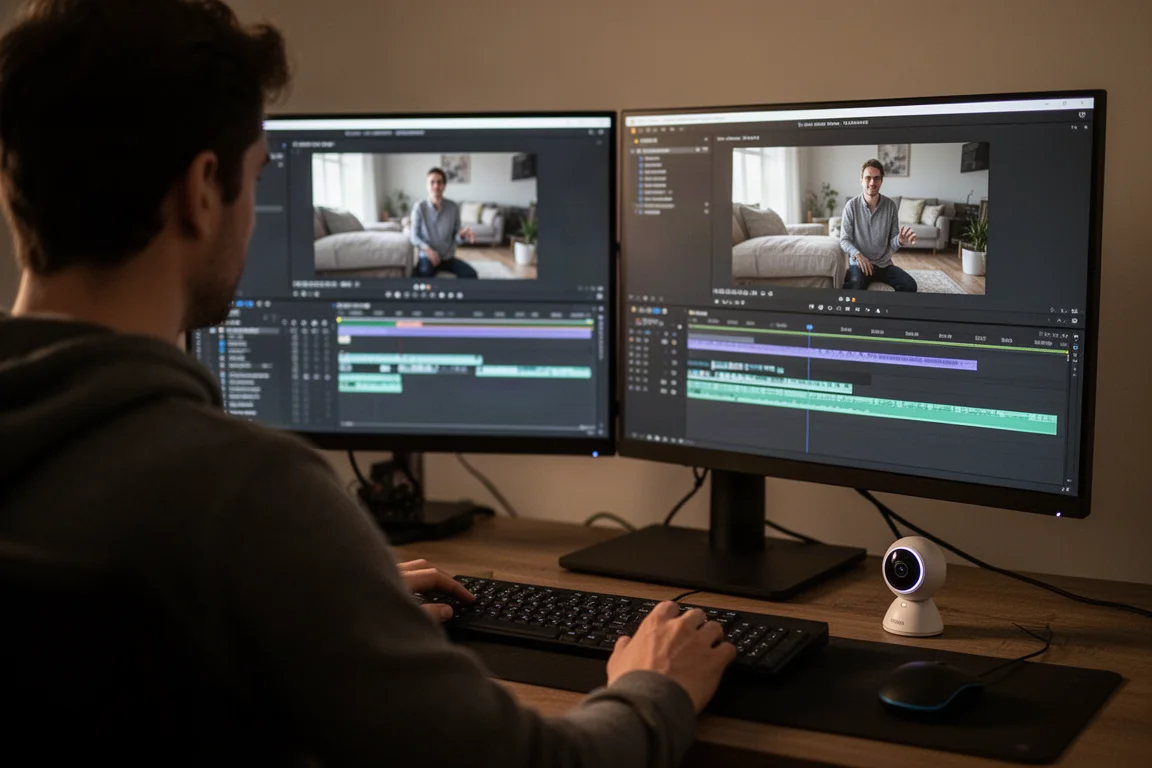
Apps matter enormously for 360 cameras because most footage gets reframed and exported as a flat video. On smartphones, all three apps are relatively similar with small exclusive features each. On the desktop, Insta360 is the clear leader. DJI’s desktop app closely mirrors Insta360’s but is less polished and a bit laggy on stability. GoPro barely tried: its desktop app handles reframing, recoding, stabilization, and batch exporting, but lacks the AI subject-tracking reframing the other two offer, which is only available on GoPro’s smartphone app.
Workarounds exist: GoPro footage can be processed through the Insta360 or DJI apps for AI reframing with an extra step. Still, if you do heavy desktop editing, Insta360 is the strongest choice; if you never edit on desktop, all three feel similar.
Data Overlays and Cloud Backup
GoPro has built-in GPS, enabling speed overlays and data stickers without accessories. DJI and Insta360 lack built-in GPS but offer accessories for it, and both support third-party platforms, pulling data automatically from devices like Garmin or Apple Watch. That means Insta360 can overlay things like cycling power, which GoPro cannot. Insta360 and GoPro both offer cloud backup; Insta360’s new platform currently supports only its 360 cameras, with other cameras promised but without timeframes. DJI has no comparable cloud option.
Which One Should You Buy?
The simplest rule of thumb: stay in the ecosystem you already own. Existing GoPro owners should look at the Max 2, existing Insta360 users at the X5, and existing DJI users at the Osmo 360. The major exception is the US, where the DJI Osmo 360’s unsupported status and non-replaceable lenses make it hard to recommend, since a scratched lens cannot be fixed locally at all.
For buyers without an existing ecosystem, usage drives the decision. If your shooting is mostly daytime, chest or helmet mounted, and quality focused, the GoPro Max 2 is the stronger pick thanks to its superior daytime image quality, higher bitrate, and built-in GoPro mount compatibility. If you shoot a lot at night, edit heavily on desktop, or work in static low-airflow situations like a camera on a boat pole, the Insta360 X5 makes more sense, with its replaceable lenses, dive case, and stronger app. The DJI Osmo 360 remains appealing for existing DJI users elsewhere in the world, particularly for its shared batteries and fast charging, but lens fragility and support gaps temper that enthusiasm.
Conclusion
There is no single winner across all 45-odd comparison points, but the decision is manageable. GoPro Max 2 for daytime quality, bitrate, and mounting; Insta360 X5 for night footage, desktop editing, lens swaps, and underwater use; DJI Osmo 360 for DJI ecosystem users who value fast charging and shared batteries. Match the camera to how you actually shoot, and all three can deliver.
Product link
View more details for DJI Osmo 360
This product is mentioned in the review. Check the specifications, options, and compatibility before buying.
View more details for DJI Osmo 360Further reading
Related Reviews
360 Cameras
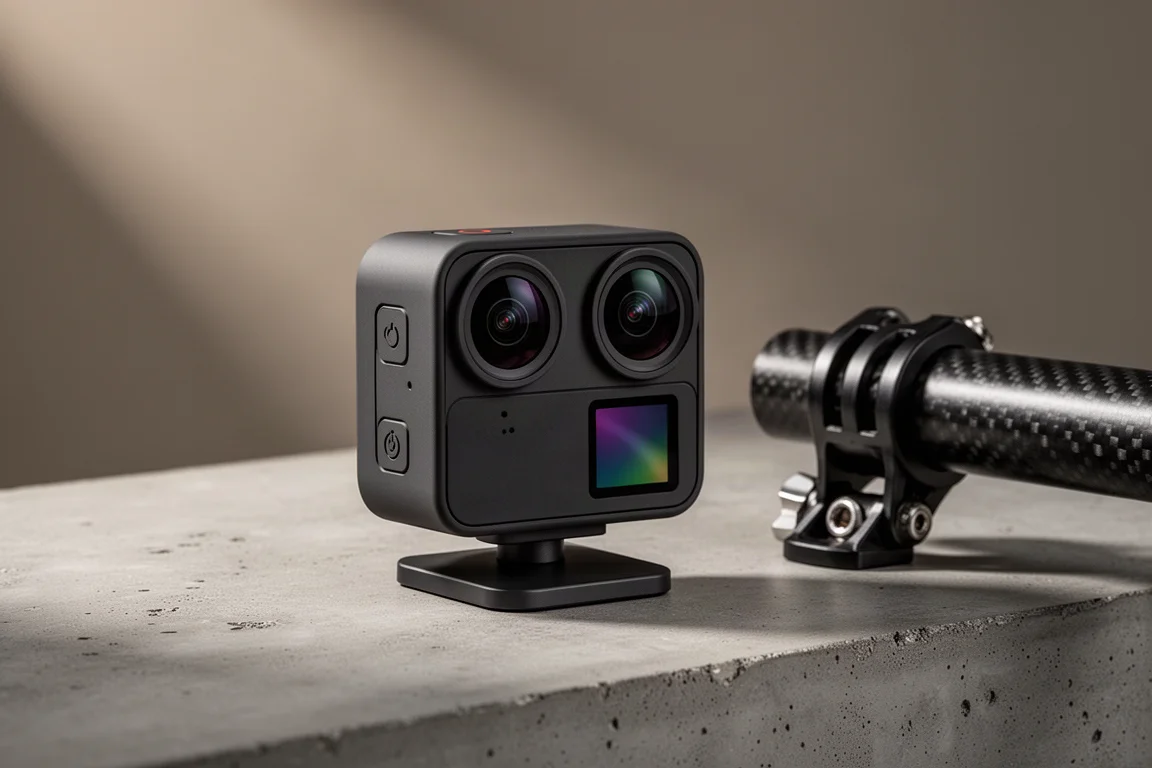
DJI Osmo 360 Review: A Compact 8K 360 Camera for Riders and Creators
A close look at the DJI Osmo 360, covering its 1-inch 360 sensor, native 8K capture, magnetic mounting, battery life, built-in storage, and single-lens mode.
360 Cameras
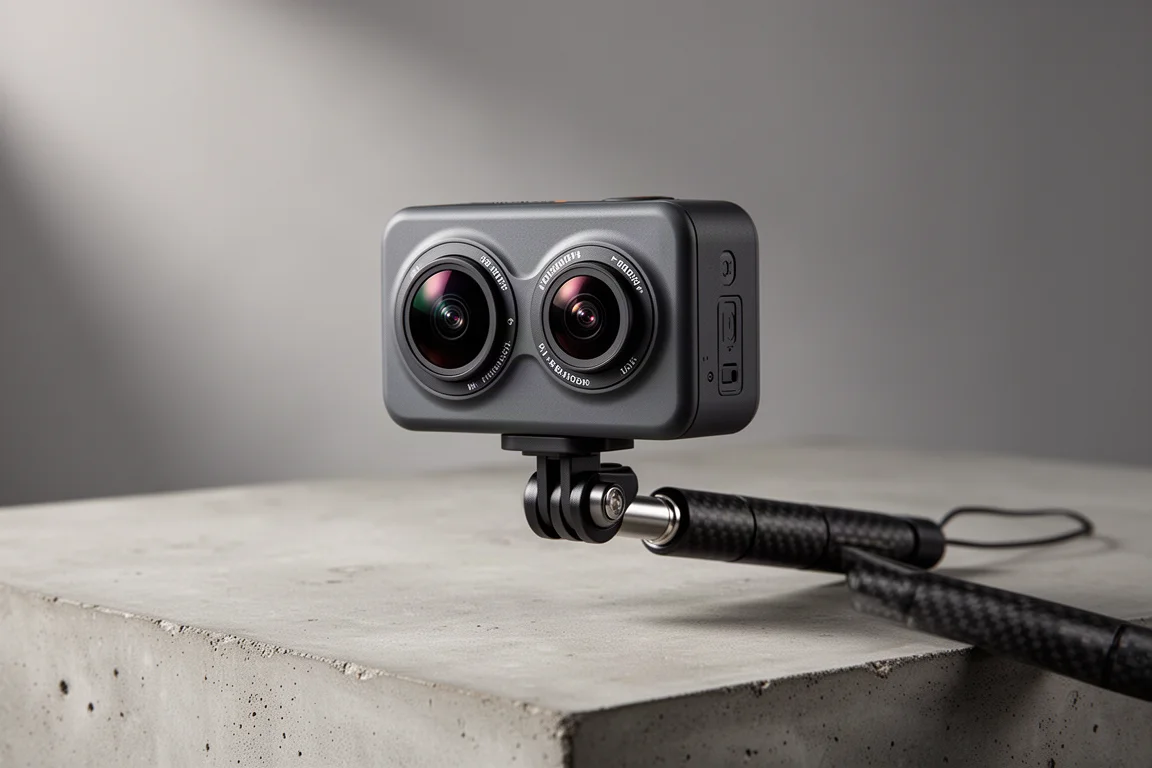
Insta360 X4 Review: 8K 360 Capture Built for Bike Riders
A practical look at the Insta360 X4, covering 8K capture, reframing workflow, battery life, and the accessories that matter for riders.
360 Cameras
Insta360 X5 Review: A 360 Camera for Hiking and Self-Filmed Footage
A practical look at the Insta360 X5 for hikers who film their own trips, including where it replaces a heavy mirrorless setup and where it does not.