Wet/Dry Vacuums
Best 16 Gallon Wet/Dry Vacs 2026: Eight Models Compared
We compare eight 16-gallon wet/dry vacuums across suction, airflow, water pickup, sand pickup, air filtration, and noise to find the best value.
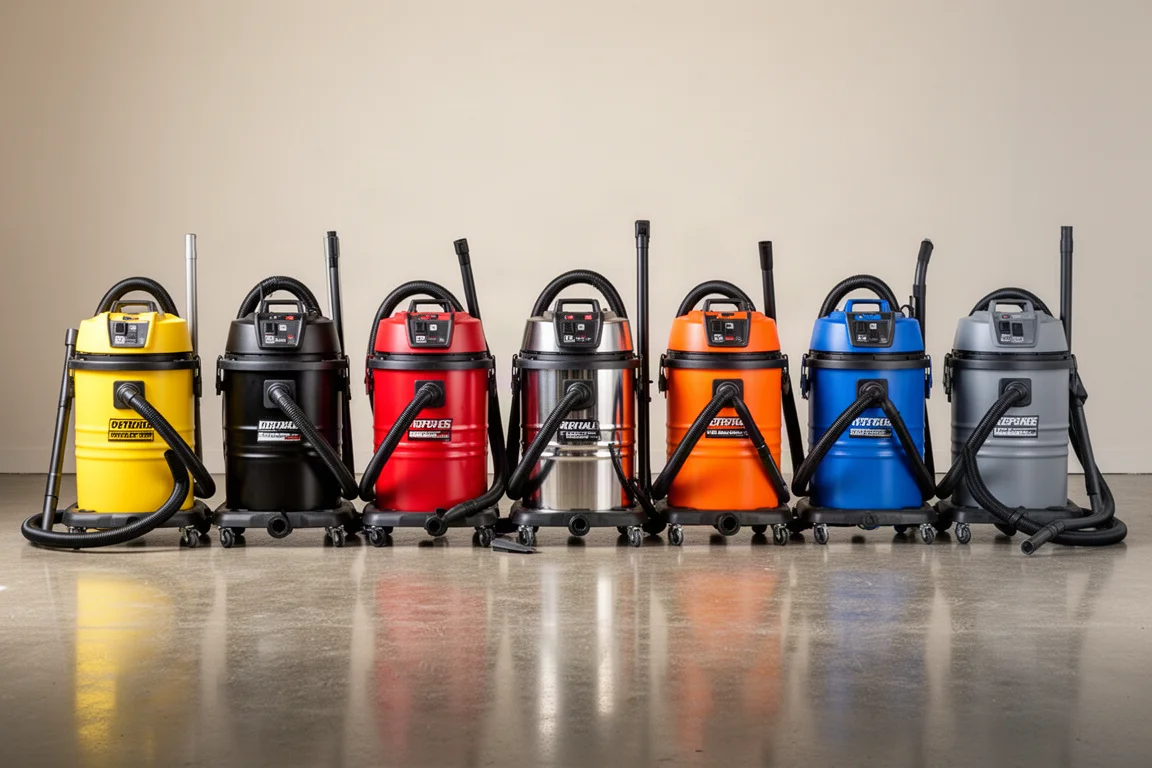
Introduction
A wet/dry vacuum is one of those tools that earns its place in any garage, workshop, or home. It handles spilled liquids, sawdust, and the occasional car interior without complaint. But with prices ranging from about $135 to $270 for 16-gallon models, it is worth asking whether the most expensive option is genuinely better than the budget pick.
This comparison puts eight 16-gallon wet/dry vacuums through the same set of tests: suction, airflow, water pickup speed, sand pickup, air filtration, noise, and real-world capacity. The goal is to show which models deliver the best performance for the money and which ones have trade-offs worth knowing about before you buy.
How We Compared These Wet/Dry Vacs
Every vacuum in this lineup was tested under the same conditions. Suction was measured in inches of water column, which indicates how much lift the vacuum can generate. Airflow was measured in cubic feet per minute (CFM) using a pitot tube, which shows how much air the vacuum can move to carry debris into the tank. Water pickup speed was timed while each vacuum collected five gallons of water. Sand pickup was timed using a bucket weighing 67.44 pounds. Air filtration was measured with a particle counter that tracks particles from 0.3 to 10 microns. Noise was recorded in decibels during operation.
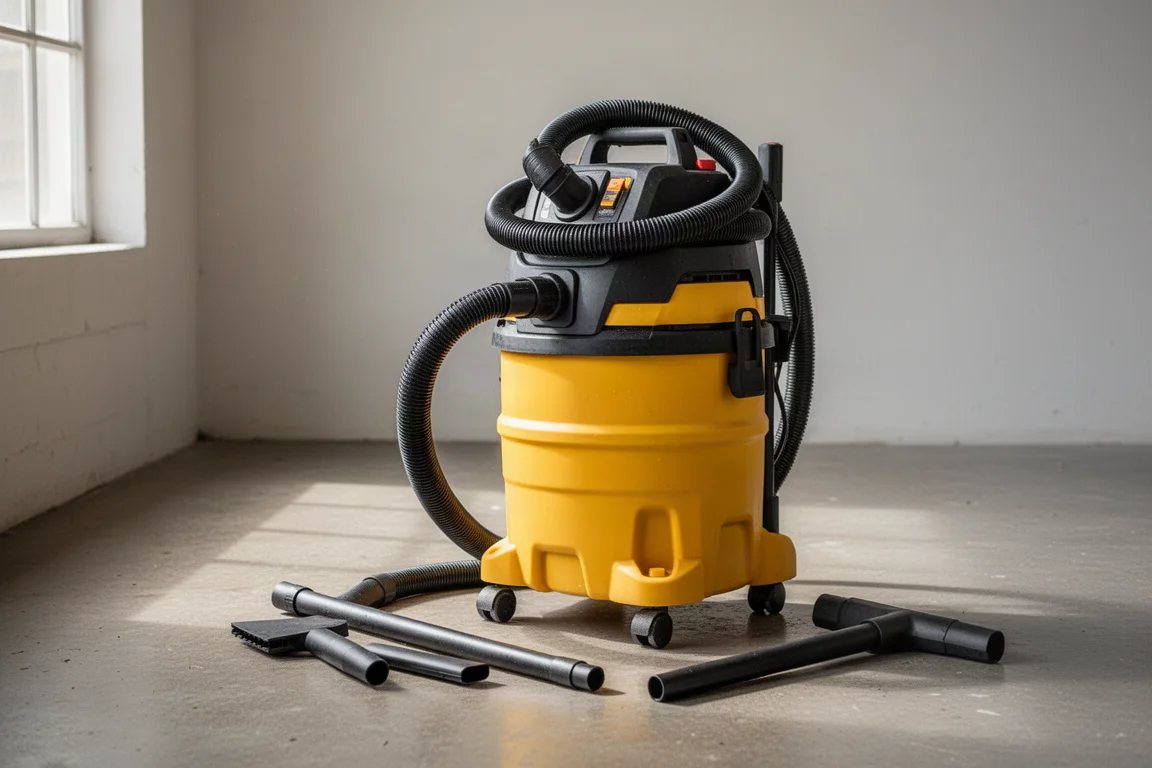
These tests cover the two things a wet/dry vac actually needs to do well: generate enough suction to pick things up, and move enough air to carry them into the tank. A vacuum that excels at one but struggles at the other will show up clearly in the results.
Vacmaster 16 Gallon 6.5 HP Wet/Dry Vac
The Vacmaster is the least expensive vacuum in this test at around $135. It is rated for 16 gallons and 6.5 peak horsepower, with a claimed airflow of 145 CFM and a 27-foot cleaning reach combining hose and power cord. The cord measures about 20.5 feet. It includes 10 accessories and has onboard storage for four of them. The hose storage design is particularly well thought out, and a large drain port makes emptying liquids quick. The Vacmaster weighs 23.71 pounds and is made in China.
In testing, the Vacmaster produced about 62 inches of water column, which is a solid mid-pack result. It moved the most air of any vacuum in the lineup at around 175 CFM, with an air speed of about 90 mph. It picked up five gallons of water in close to 5 seconds and cleared the sand bucket in 1 minute 1 second. It also improved air quality by 74% during the filtration test, finishing third overall in that category. Noise measured 83.8 dB, which is the second quietest result in the group.
Stanley 16 Gallon 6 HP Wet/Dry Vac
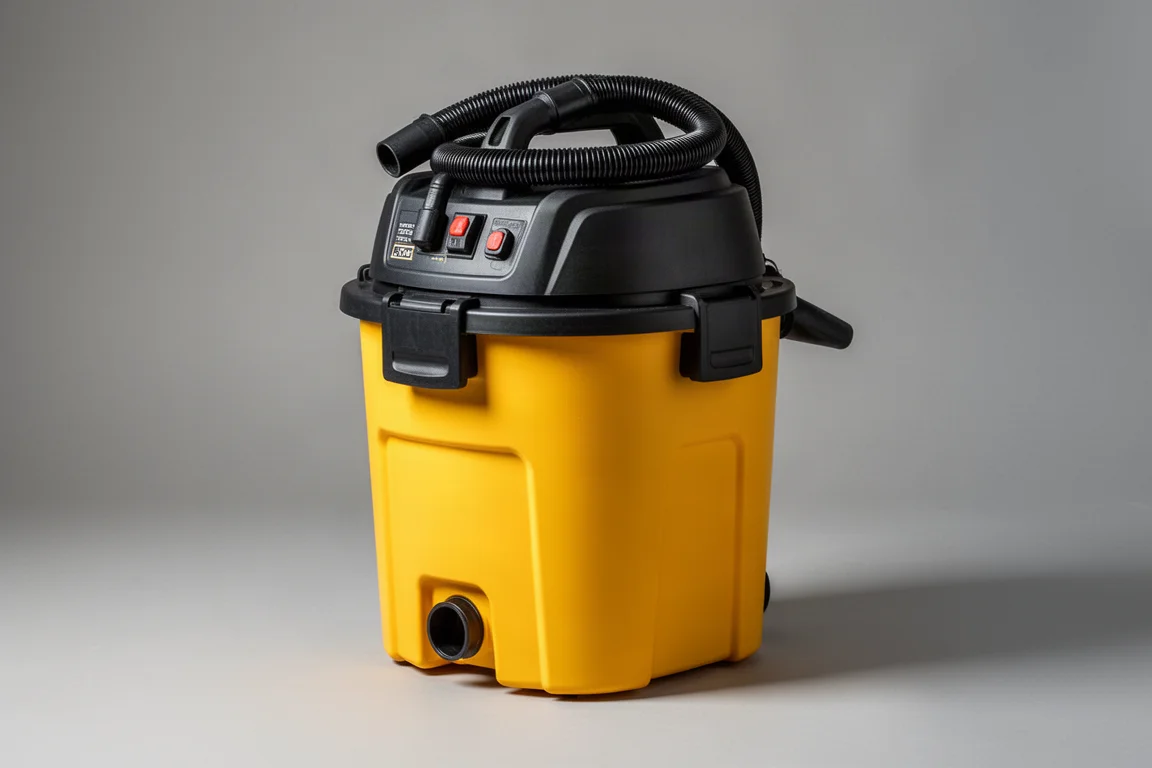
The Stanley sells for around $138 and is rated for 16 gallons and 6 horsepower. Notably, the advertising for this model states that the horsepower rating includes the motor’s inertial contribution achieved in laboratory testing, and that motors do not operate at peak horsepower in actual use. The Stanley has a built-in drain, onboard storage for four attachments, and swivel casters for easy movement. The power cord is only 10 feet long, which is shorter than most competitors. It weighs 16.69 pounds and is made in China.
The Stanley produced the second highest suction reading in the test at 79 inches of water column. That strong lift translated into excellent water pickup, finishing the five-gallon test in about 4 seconds, and it cleared the sand bucket in 41.6 seconds, the second fastest time. However, airflow was a weak point at only 101 CFM, and the vacuum added dust to the air during the filtration test, increasing particle counts by nearly 69%. Noise measured 85.9 dB.
Craftsman 16 Gallon 6.5 HP Wet/Dry Vac
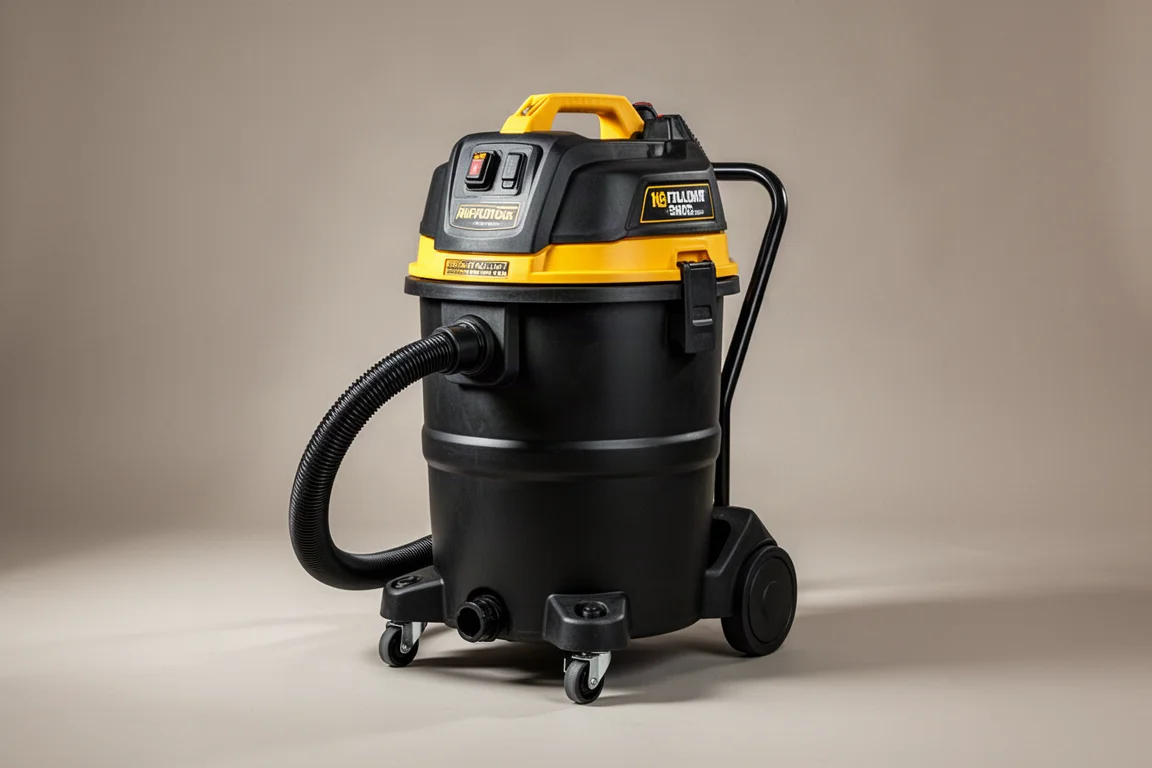
The Craftsman is priced at around $140 and is rated for 16 gallons and 6.5 peak horsepower. It features a rear built-in blowing port, an oversized drain, and a hose with dual flex technology for 180-degree mobility. The hose measures close to 7 feet and the cord is just over 20 feet. It comes with seven attachments plus a dust collection bag, and has onboard storage for four accessories. Assembly requires a bit more work than some competitors. It weighs 21.37 pounds and is made in Mexico.
In testing, the Craftsman produced about 52 inches of water column, the lowest suction reading in the group. It moved a strong 171 CFM of air, finishing second in that category. Water pickup took 5.77 seconds, and the sand bucket was cleared in 61.8 seconds. The Craftsman reduced airborne dust by 22% during the filtration test. Noise measured 86.6 dB, making it one of the louder options.
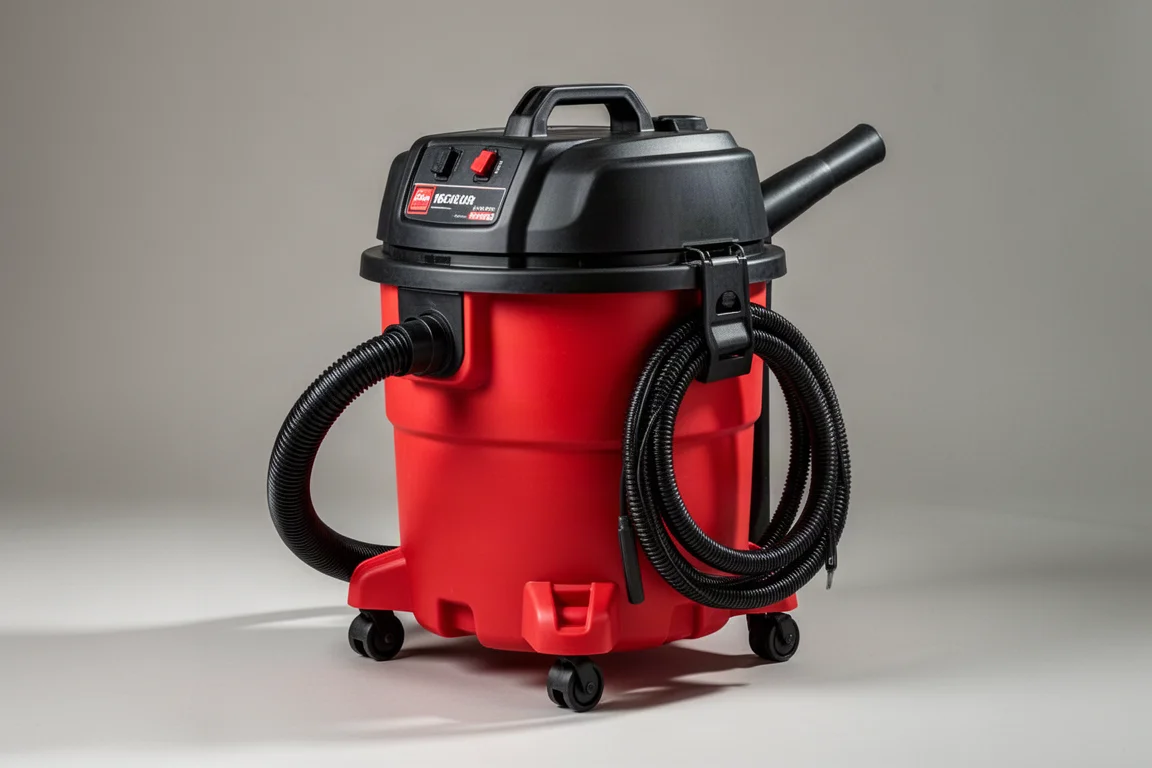
Bauer 16 Gallon 6.5 HP Wet/Dry Vac
The Bauer, sold at Harbor Freight, is priced at around $140 and rated for 16 gallons and 6.5 horsepower. The manufacturer claims 196 CFM at the head and 155 CFM at the machine. It has a blower port that converts the vacuum into a blower, and onboard storage for six accessories. The power cord is close to 20 feet. The Bauer weighs just under 25 pounds, making it the heaviest model tested, and it is made in Malaysia.
Assembly was the most difficult of the group at about 20 minutes, because the steel rod for the wheel kit arrived too short and required a replacement part. In testing, the Bauer produced about 62 inches of water column and moved 154 CFM of air. It picked up five gallons of water in 4.2 seconds and cleared the sand bucket in 44.4 seconds. However, it added a significant amount of dust to the air during the filtration test, increasing particle counts by 176%, the worst result in the group. It was also the loudest vacuum tested at 90 dB.
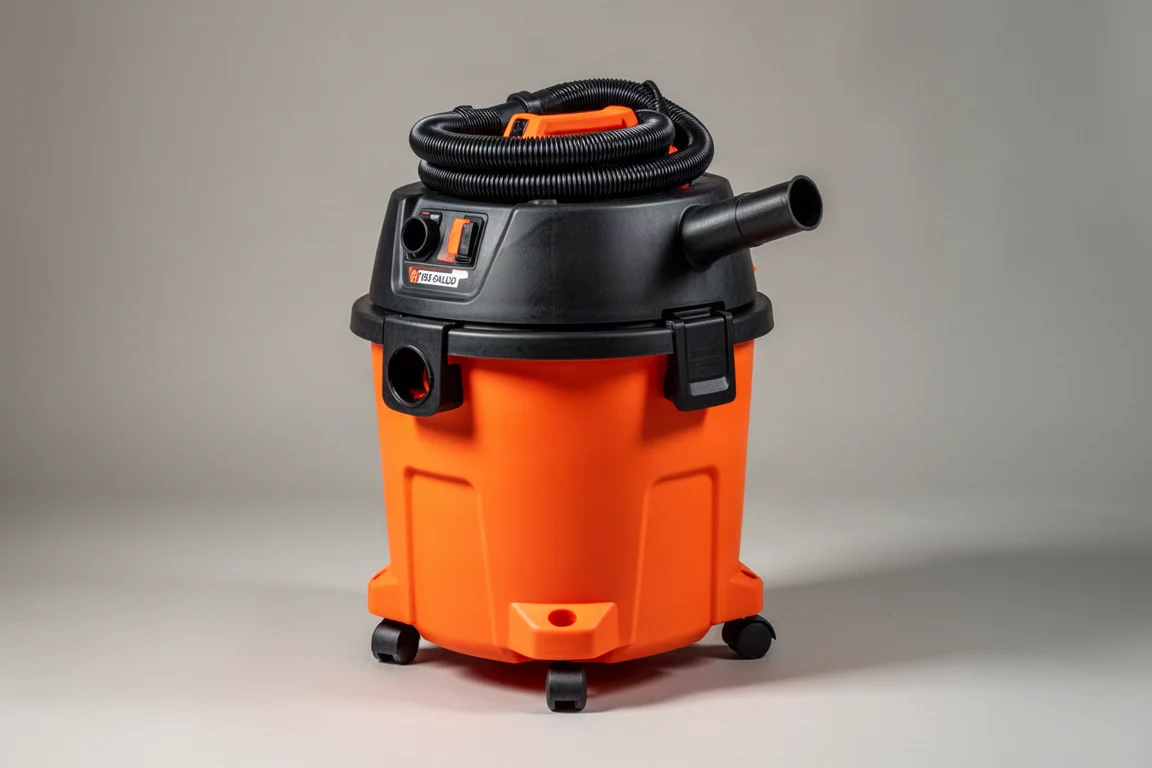
Shop-Vac 16 Gallon 6.5 HP Wet/Dry Vac
The Shop-Vac is priced at around $170 and rated for 16 gallons and 6.5 peak horsepower. The manufacturer claims twice the motor life and offers a lifetime warranty. It comes with seven attachments and a storage bag, but does not have onboard storage on the body of the vacuum. The hose measures 8 feet and the power cord is 12 feet. It weighs just under 21 pounds and is made in Vietnam.
The Shop-Vac produced 76 inches of water column, the third highest suction reading, and moved 149 CFM of air. It was the fastest vacuum in the water pickup test at 3.81 seconds and also the fastest in the sand pickup test at 38.8 seconds. It reduced airborne dust by 67% during the filtration test. The main downside is noise, measuring 91.7 dB, the second loudest result. It also sprayed some water out of the back during the water pickup test.
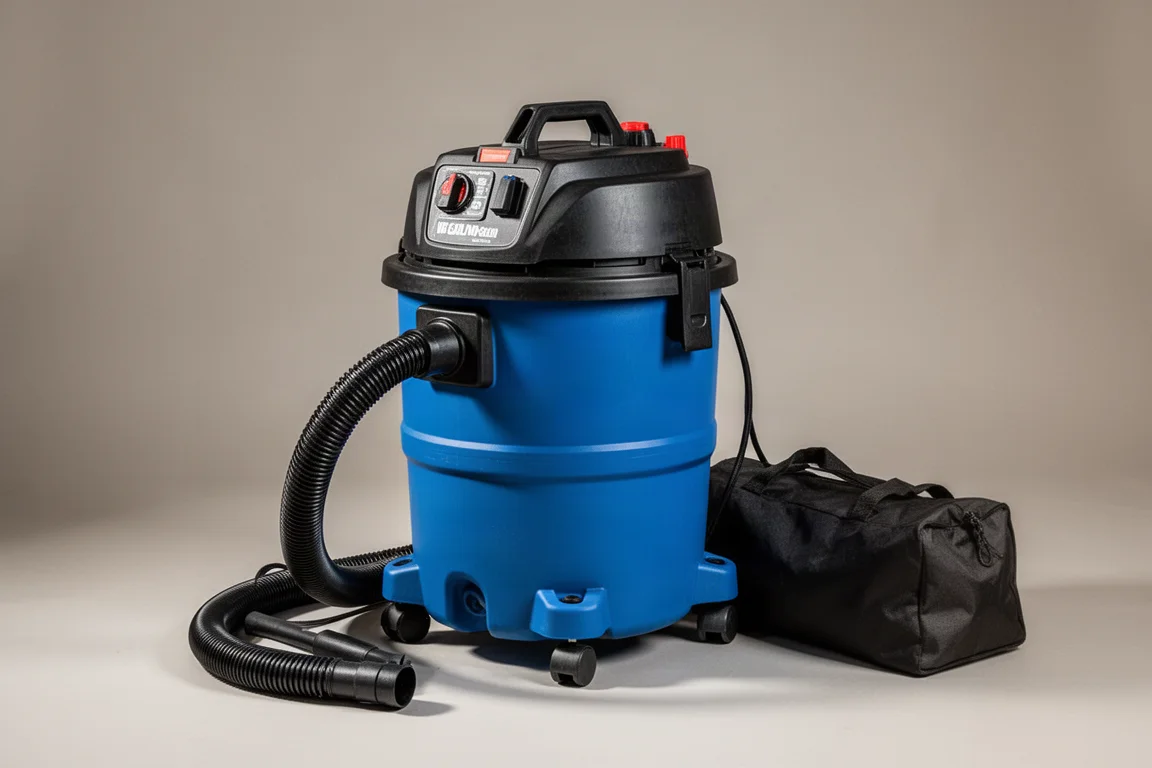
Channellock 16 Gallon 6.5 HP Wet/Dry Vac
The Channellock is priced at around $212 and rated for 16 gallons and 6.5 horsepower. It features a noise diffuser for quieter operation, a 10-foot hose, an 18-foot cord, and a claimed airflow of up to 265 mph. It converts into a leaf blower and has five locations for storing accessories plus a tool bag. It weighs 26.76 pounds, the heaviest in the group, and is made in China.
In testing, the Channellock produced about 58 inches of water column and moved 135 CFM of air. Water pickup took 6.39 seconds and the sand bucket was cleared in 1 minute 12 seconds. It excelled in the air filtration test, reducing airborne dust by 88.1%, the best result in the group. Despite the noise diffuser claim, it measured 94.5 dB, the loudest vacuum tested.
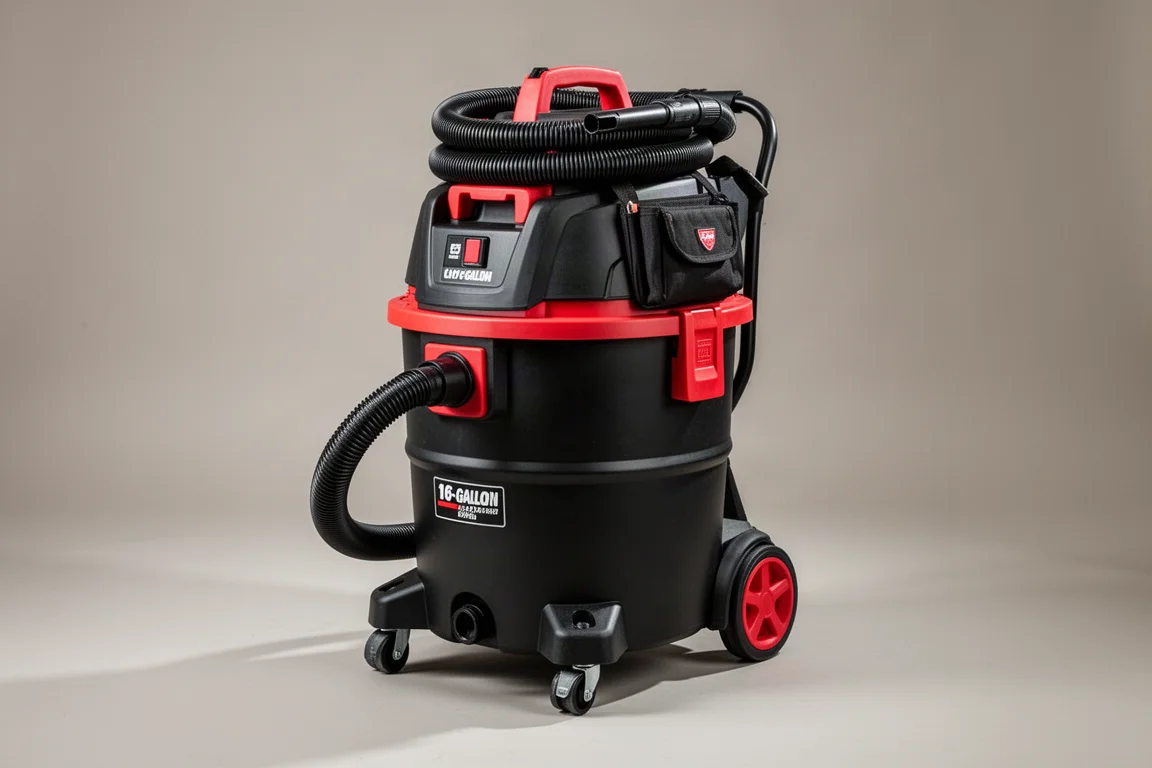
Ridgid 16 Gallon 6.5 HP Wet/Dry Vac
The Ridgid is priced at around $265 and is the only vacuum in this test with a stainless steel tank. It is rated for 16 gallons and 6.5 horsepower. The filtration system includes a patented quick lock fine dust filter for trapping fine powders. The manufacturer claims 181 CFM and 45 inches of lift, with a 20-foot power cord. It weighs almost 31 pounds, making it the heaviest model by a wide margin, and is made in Mexico.
Assembly requires quite a bit of work, and aside from a tool bag on the handle, there is not much onboard storage. In testing, the Ridgid produced about 50 inches of water column and moved 128 CFM of air. It was the slowest in the water pickup test at 9.39 seconds and the slowest in the sand pickup test at 2 minutes 9 seconds, with the filter appearing to plug up from the sand. It did perform well in the air filtration test, reducing dust by 86.2%, the second best result. Noise measured 84.8 dB.
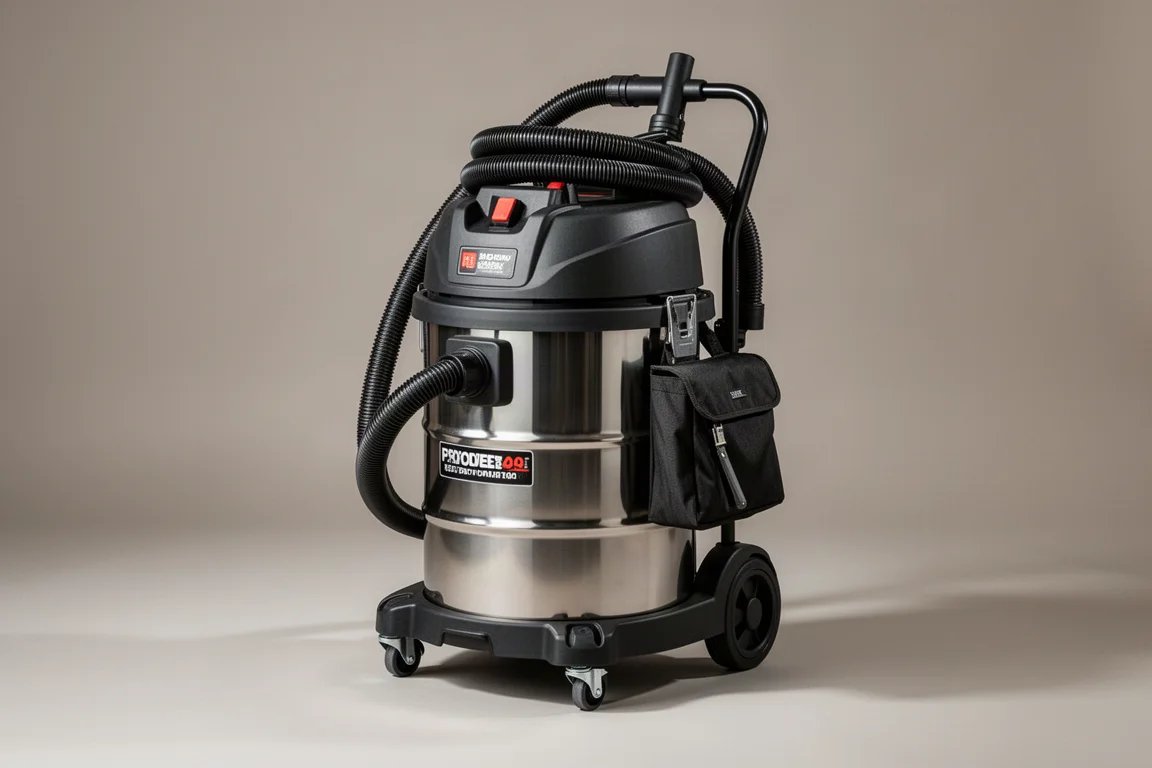
DeWalt 16 Gallon 6.5 HP Wet/Dry Vac
The DeWalt is the most expensive vacuum in this test at around $270. It is rated for 16 gallons and 6.5 horsepower, with a 20-foot power cord and a 7-foot hose. The manufacturer claims new technology that reduces motor noise by 50%, an airflow of 135 CFM, and a motor with 2.5 times the life. It comes with several accessories and a vacuum bag. It weighs close to 22.5 pounds and is made in China.
The DeWalt produced the highest suction reading in the test at 84 inches of water column. It was also the most energy efficient, drawing about 1,047 watts or 8.8 amps, and the quietest at only 74.5 dB. It picked up five gallons of water faster than the Ridgid but slower than the Shop-Vac, and cleared the sand bucket in just under 1 minute 7 seconds. It reduced airborne dust by 56% during the filtration test. Unlike most other models, it does not have a blower capability, and airflow could not be accurately measured through the vent.
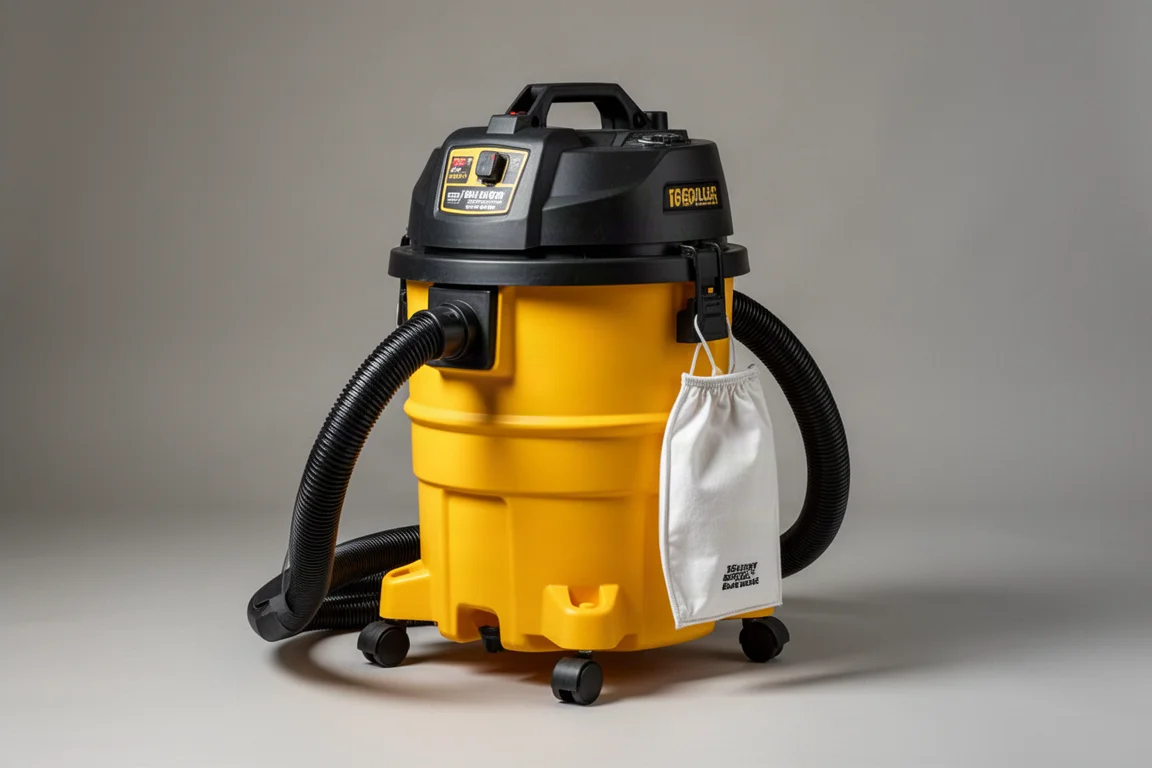
Carpet Cleaning Performance
Beyond the quantitative tests, each vacuum was used with its utility attachment to clean sand from a carpet. Attachment design made a significant difference here. The Vacmaster and Craftsman attachments formed a tight seal against the carpet when placed flat, which reduced their effectiveness. Tilting the attachment to create a gap improved results, but it was not as convenient.
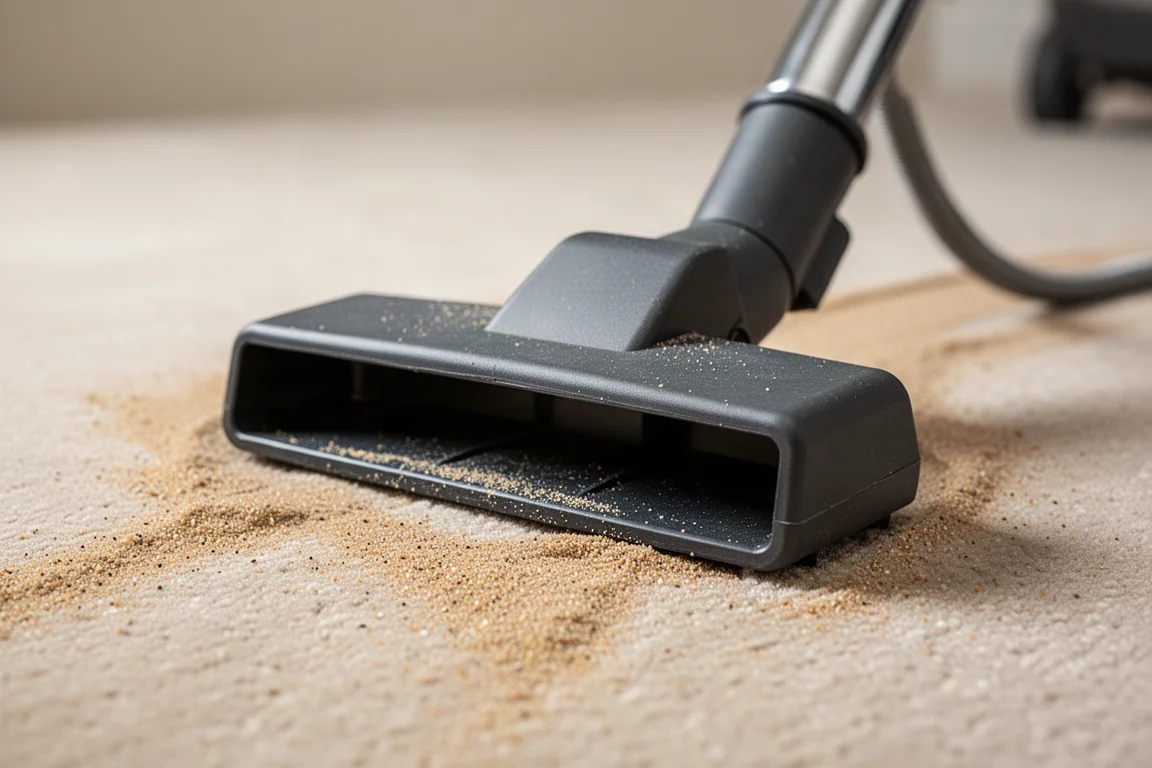
The Stanley and Bauer attachments have cutouts that allow airflow even on a flat surface, which made them noticeably more effective. The Shop-Vac and Channellock attachments were designed to avoid sticking to the carpet while still lifting dirt well. The Ridgid attachment was user-friendly but slower at lifting dirt. The DeWalt’s scupper nozzle, designed for both wet and dry cleaning, received the best rating for ease of use and cleaning effectiveness, followed closely by the Stanley and Channellock.
Water Pickup Speed
Picking up standing water is a core job for any wet/dry vac. The Shop-Vac was the fastest in this test, finishing five gallons in 3.81 seconds. The Stanley finished second at 4.01 seconds, and the Bauer third at 4.2 seconds. The Vacmaster took close to 5 seconds, while the Craftsman finished in 5.77 seconds. The Channellock took 6.39 seconds, and the Ridgid was the slowest at 9.39 seconds.
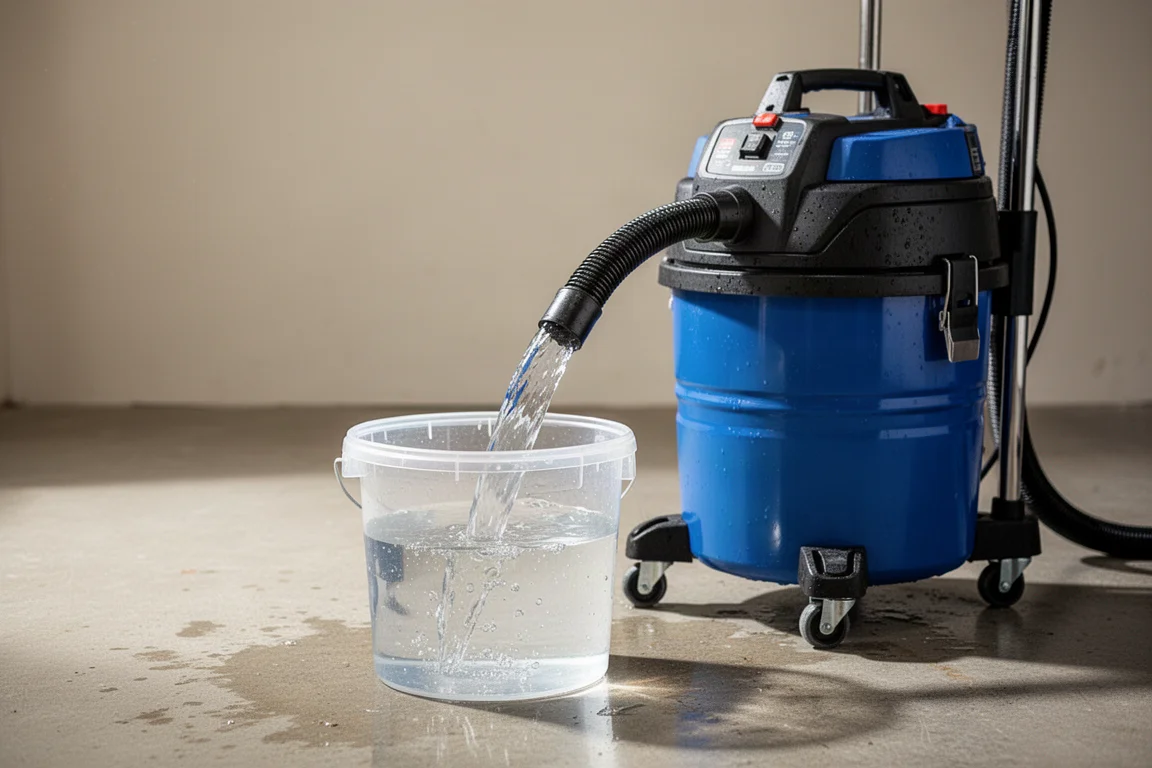
Both the Bauer and the Shop-Vac sprayed some water out of the back of the machine during this test, which is worth noting if you plan to use the vacuum for large liquid pickups.
Air Filtration and Dust Control
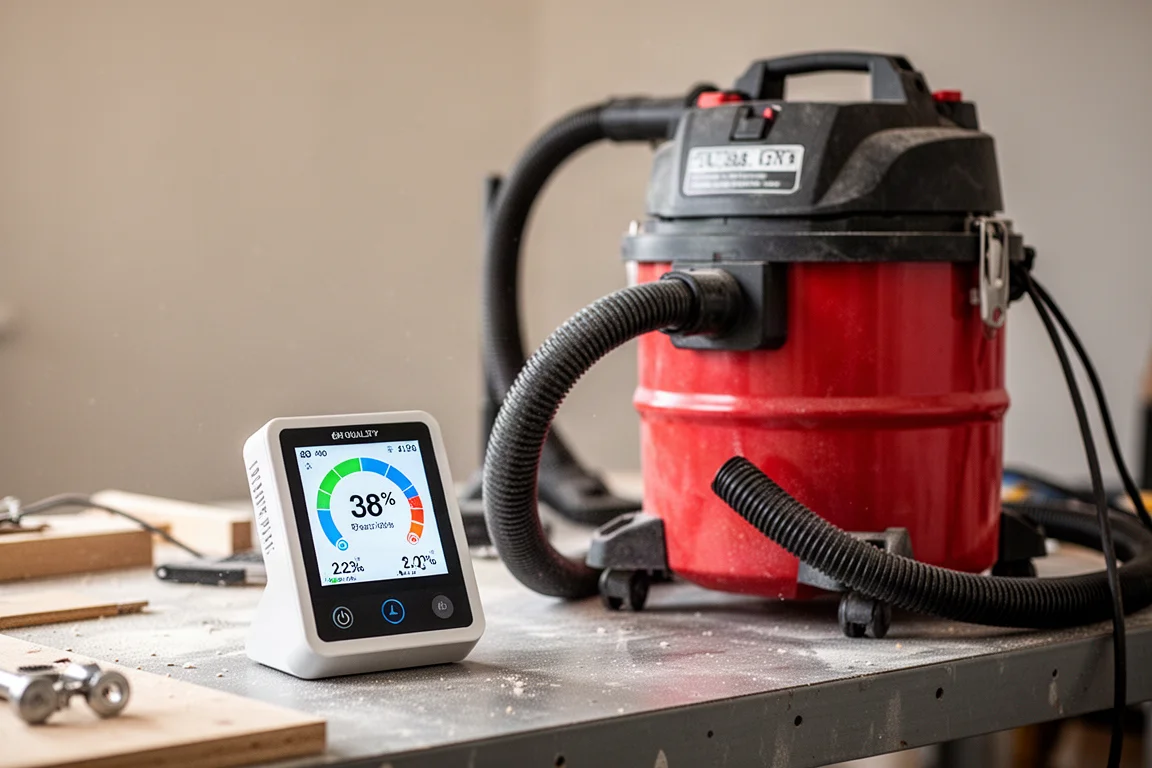
A wet/dry vac should clean the air, not add dust to it. The Channellock performed best in this test, reducing airborne particles by 88.1%. The Ridgid finished second at 86.2%, and the Vacmaster third at 74.3%. The Shop-Vac reduced dust by 67%, the DeWalt by 56%, and the Craftsman by 22%. The Stanley and Bauer both added dust to the air, with the Bauer increasing particle counts by 176%, which is a significant concern for anyone working in a closed space.
Real-World Capacity
All eight vacuums advertise a 16-gallon capacity, but real-world testing told a different story. The Ridgid held the most water without leaking at 11.26 gallons. The Stanley and Craftsman were disqualified because their tanks overfilled and leaked water onto the floor. The Bauer, Shop-Vac, and DeWalt all held just over 10.5 gallons, while the Vacmaster held about 10.25 gallons. The Channellock held the least at 9.14 gallons. The float valves on the Stanley and Craftsman did not stop the vacuuming process in time to prevent overfilling.
Overall Buying Advice
When the test results are averaged across all categories, the Shop-Vac comes out on top with an average finish of 2.9. It finished in the top half of every category and took first place in two of them. Given its price of around $170, it offers the best balance of performance and value in this lineup.
The DeWalt finished second overall with an average of 3.5. It produced the most suction, was the most energy efficient, and was by far the quietest vacuum tested at 74.5 dB. It is an impressive machine, but the $270 price is the highest in the group.
The Bauer finished third with an average of 3.9. It performed well in several tests, but the air filter added a lot of dust to the air, and the wheel kit arrived with a missing part. Those issues make it harder to recommend despite the competitive price.
Conclusion
Choosing the right wet/dry vac comes down to what matters most for your workspace. If you want the best all-around performer for the money, the Shop-Vac is the strongest choice. If suction and quiet operation are your priorities and budget is less of a concern, the DeWalt is worth the premium. For anyone on a tighter budget, the Vacmaster offers strong airflow and decent filtration at the lowest price, though it does not match the top performers in suction or speed.
The key takeaway is that price does not always predict performance. The most expensive vacuum in this test was also the quietest and most powerful, but the mid-priced Shop-Vac outperformed it in several practical tests. Knowing which tests matter for your typical use will help you pick the right machine.
Further reading
Related Reviews
Pickleball Paddles
2025 Paddle Awards: The Best Pickleball Paddles of the Year
A category-by-category breakdown of the best pickleball paddles of 2025, covering value, control, all-court, power, and paddle of the year.
Automotive Accessories
70mai Dash Cam Comparison: A200 vs A510 vs A810
Three dash cameras from 70mai across different price points reveal how resolution and sensor quality impact real-world footage clarity, especially for number plate visibility and low-light performance.
Mobile Gaming Accessories
8BitDo FlipPad vs GameSir Pocket Taco: Which Vertical Phone Controller Fits You Best?
Two compact vertical phone controllers with very different approaches to connectivity, controls, and everyday use. Here is how they compare across seven practical categories.