Winches
Best 12,000 lb Winch: Seven Winches Put Through Real Pulling Tests
Seven 12,000 lb winches, from a $289 budget option to a $760 flagship, tested for line speed, current draw, and raw pulling strength under load.
Introduction
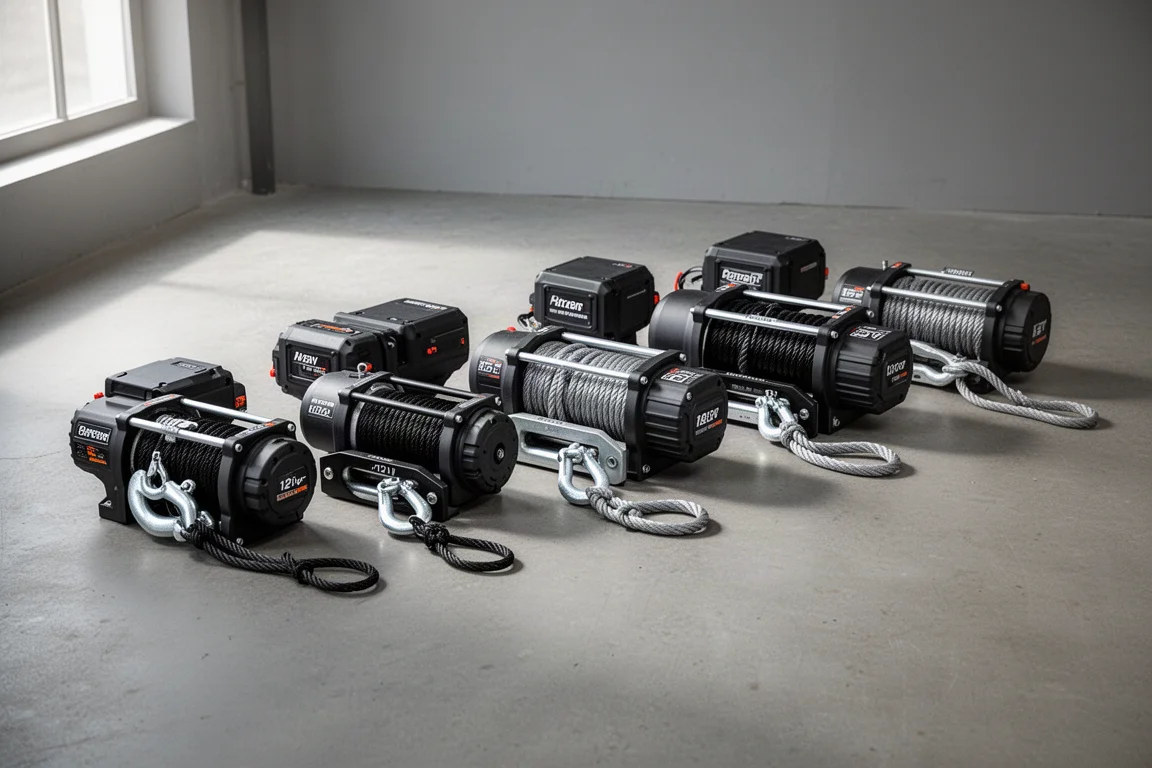
Testing winches is a lot of work, and a lot of fun. To see whether a $300 winch really performs like one costing nearly $800, seven 12,000 lb-rated winches went through the same battery of tests: no-load line speed, current draw, a hill climb with a 3/4 ton pickup, a locked-wheels drag, a heavy farm-implement pull, and a maximum capacity test that not every winch survived.
To give every winch a fair shot, the tests used an auxiliary power unit with a 1,000 cranking amp battery, an alternator, and a 6.5 horsepower engine, keeping voltage high and the battery fully charged throughout. Winches were mounted to hitch-receiver plates rated for 15,000 lb, though in hindsight a heavier custom plate was the safer choice.
Evaluation Criteria
Each winch was measured on:
- No-load speed for reeling in 50 ft of rope
- Current draw at no load and under load
- 20 ft hill pull of a 3/4 ton pickup (transmission in neutral, roughly 800 to 1,500 lb of resistance)
- Locked-wheels drag at close to 5,000 lb of pulling force
- Heavy pull moving a farm implement attached to a tractor and pickup (5,500 to 6,000 lb) over 4 ft
- Maximum capacity with the line mostly wrapped around the drum
Rugged Ridge: The $289 Budget Contender
At $289, the Rugged Ridge 12,000 lb waterproof winch is the least expensive in this group. It uses a 500 amp solenoid, a unique brake clutch system, a 6.6 horsepower 12V motor, a 236:1 gear ratio with a three-stage planetary gear system, and 100 ft of 3/8 inch synthetic nylon rope. It includes two wireless remotes plus a wired remote, weighs 55.4 lb, and measured 88 dB at 24 inches. Some assembly is required: two screws secure the solenoid, and several wires run from the solenoid and winch to the battery.
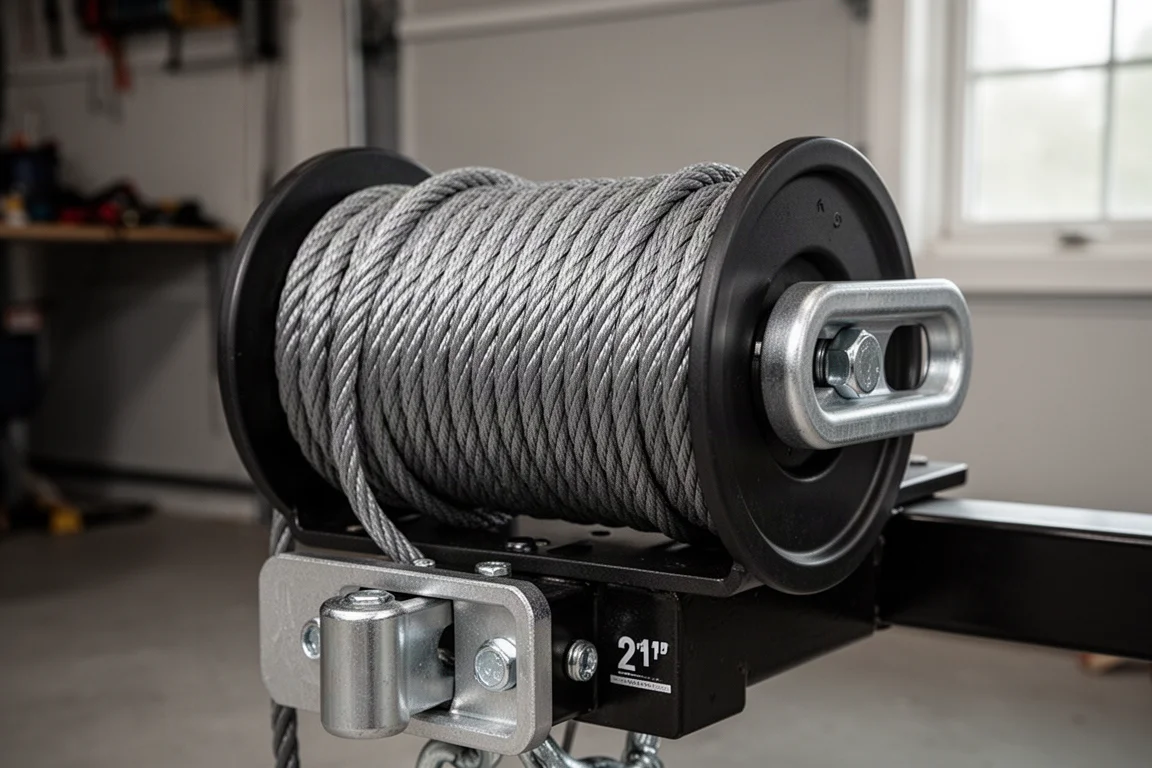
It takes 8 kg (about 17.6 lb) of force to pull the rope out, drawing 80 amps releasing and 83 amps pulling. On the 50 ft no-load test it managed 79 seconds, and it pulled the pickup up the 12 degree hill in 53 seconds at around 120 amps. For under $300, it performs fairly well, but heavy pulls were its undoing: its rope broke at just over 9,000 lb, about 3,000 lb short of its rating, and the winch body itself twisted in later tests. It was skipped in the heavy-pull test due to that damage.
Badland: Torque Advantage at $350
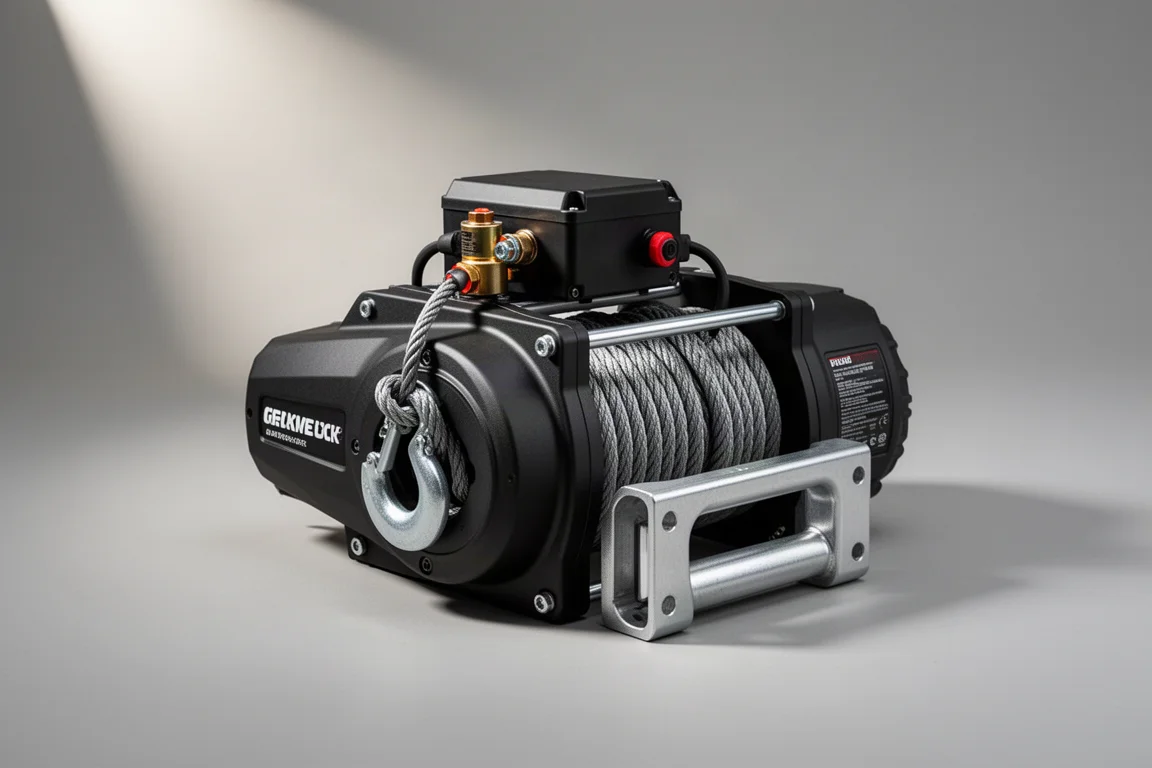
The $350 Badland 12,000 lb winch (with a $40 wireless remote kit added) uses a 6 horsepower series wound motor that stays cooler during long pulls, a 265:1 gear ratio with a three-stage planetary gear train, automatic hold, and an automatic brake for maximum safety. It comes with a 12 ft ergonomic handheld remote, weighs 76.5 lb, and measured 82.6 dB.
Its wire rope tensioner adds resistance: 10 kg (about 22 lb) of force to release the rope, at 106 peak amps releasing and 111 pulling, roughly 20 amps higher than the Rugged Ridge. The higher ratio gave it a torque advantage, letting it climb the hill in 45 seconds at 180 amps, beating the Rugged Ridge by 8 seconds. But its no-load speed suffered, taking a full 1:44 to reel in 50 ft, 25 seconds slower than the Rugged Ridge. In the heavy pull, the mounting plate and winch began to twist; it finished in 58 seconds after what was clearly a rough day, and it faded at just over 8,000 lb in the capacity test, though the wire rope did not break.
Zeak: The 13,000 lb Surprise
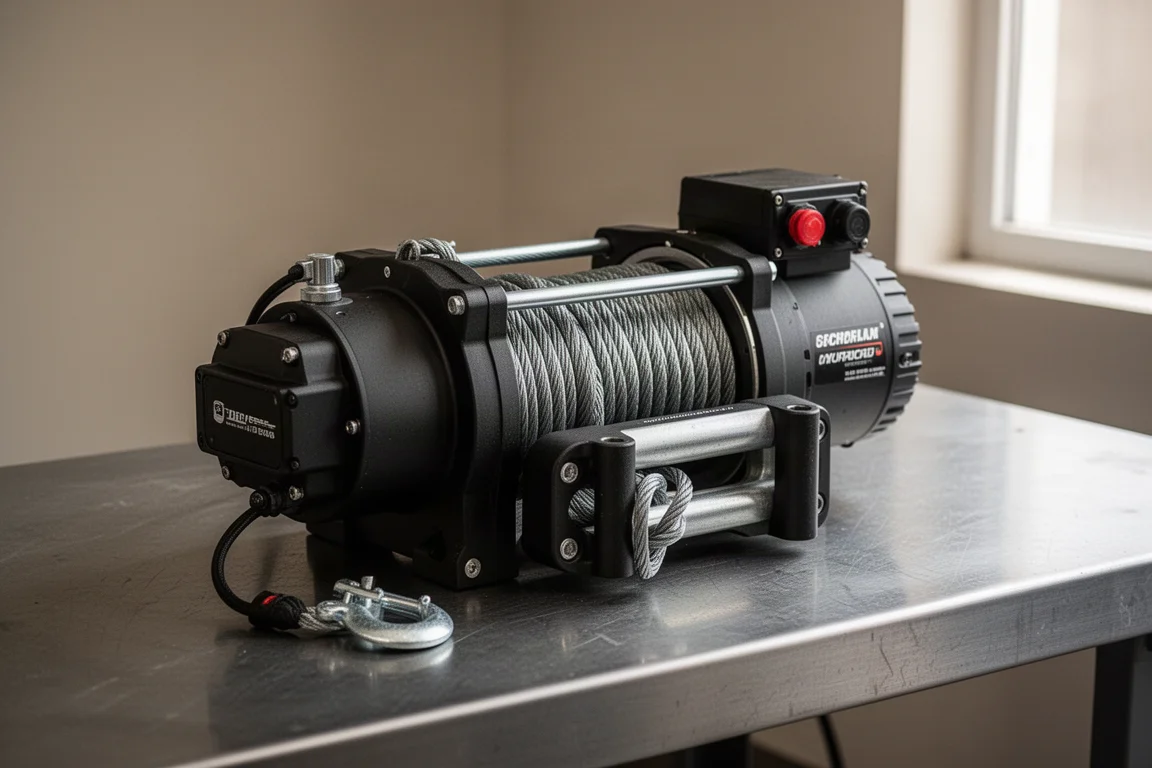
At $370, just $20 more than the Badland, the Zeak is the only winch here rated higher than 12,000 lb: it claims 13,000 lb. It includes both wired and wireless remotes, claims a 6 horsepower motor, an IP68 waterproof design, a 500 amp 12V DC series wound motor, a 236:1 ratio with a three-stage planetary system, and a claimed no-load speed of 21.3 ft per minute. It weighs 55.4 lb and measured 86.4 dB.
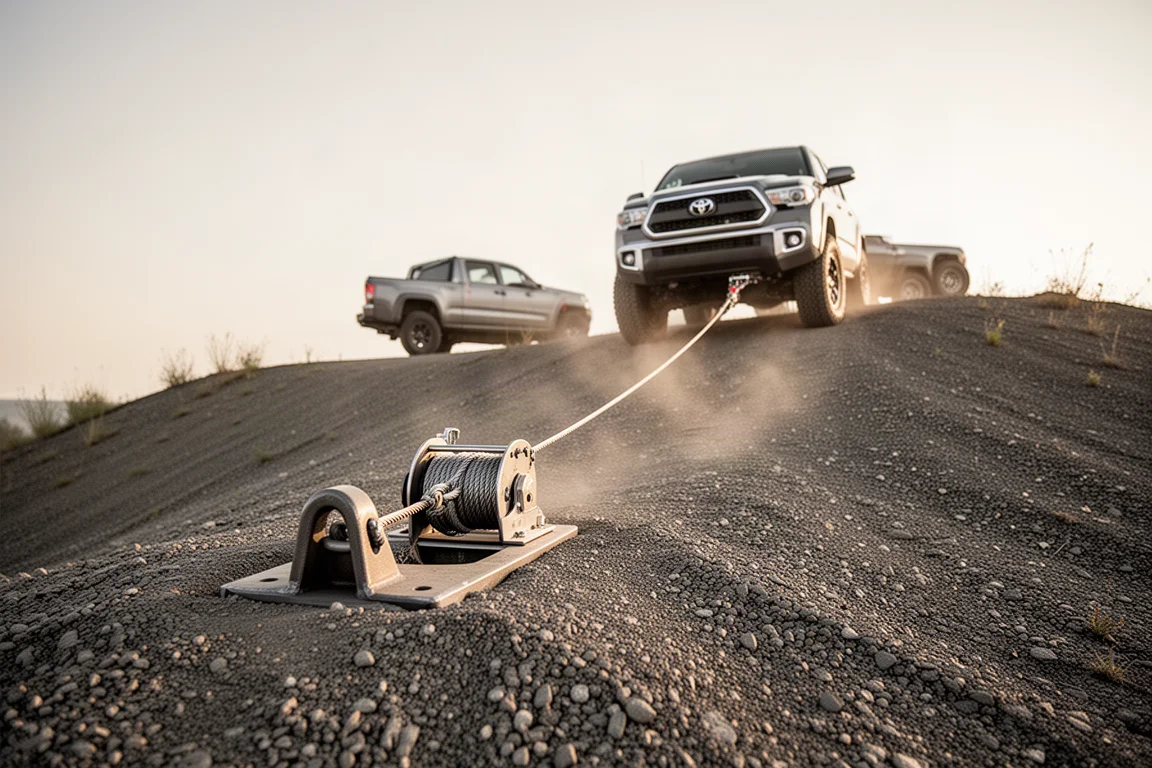
The Zeak is remarkably easy to work with: only 8.2 lb of force to pull the rope out, drawing 82 amps going out and 84 going in, among the lowest of the group. On the 50 ft no-load test it blew past the field at 51 seconds, and it kept the lead on the hill climb at 36 seconds. In the heavy pull it took 46 seconds, 12 faster than the Badland, and it went past 10,000 lb before its synthetic rope snapped at 10,370 lb. Overall, the Zeak topped the scoreboard with an average finish of 1.4 across five events, with the rope failure the main caveat.
Mile Marker Maverick: Heavy-Load Speed King
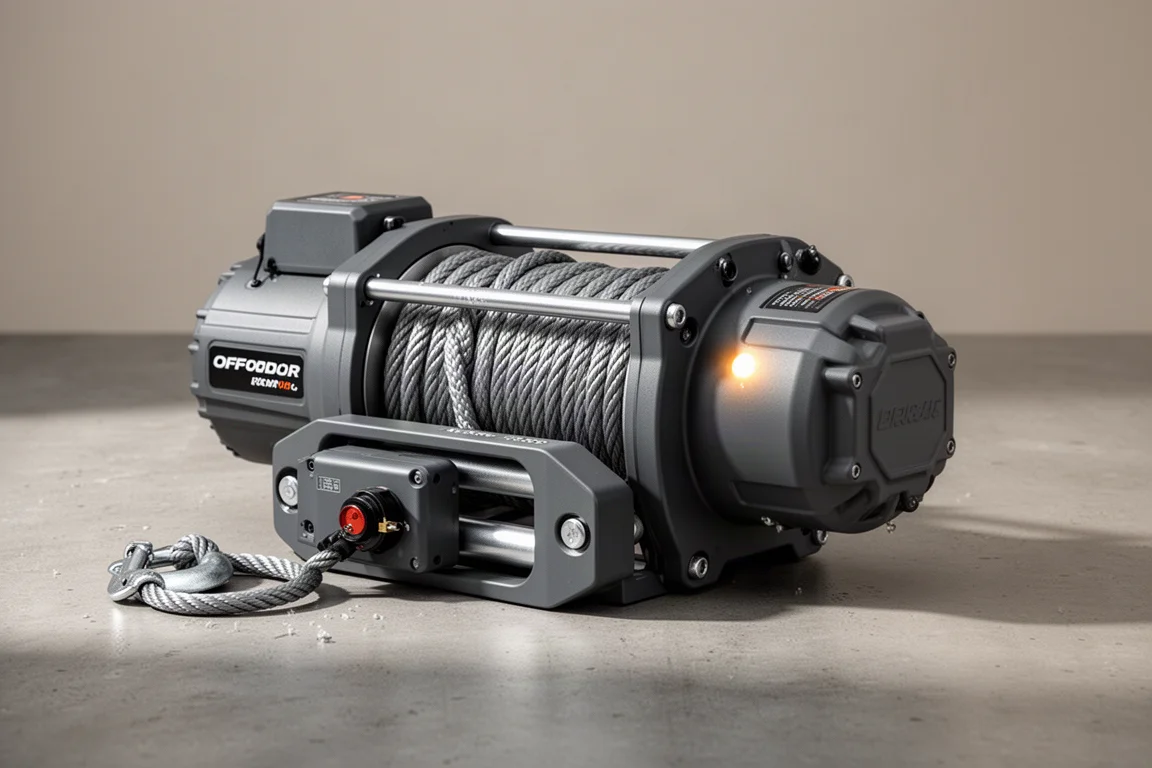
At $660, nearly twice as much as the budget brands, the Mile Marker Maverick does not include a wireless remote. It has a three-stage planetary gear system, an 80 ft 3/8 inch steel cable, a 4.9 horsepower rating, a 210:1 gear ratio, threaded anchor points, and no cable tensioner. It weighs 83 lb, measured a group-worst 93.4 dB, and setup involves a little more work than the other brands.
It released the wire rope at 4.5 kg (about 10 lb), drawing 125 amps out and 131 in, the highest no-load draw at that point. No-load and light-load performance is slower than average at 1:44 and 47 seconds respectively, but under serious load it transformed: it moved the tractor and two vehicles 4 ft in just 33 seconds, about twice as fast as the Badland, and it reached 10,072 lb in the capacity test, finishing second there. If you want a winch that works fast under heavy loads, the Mile Marker does not waste time.
Superwinch: Fast Under Light Loads, Nearly Assembled
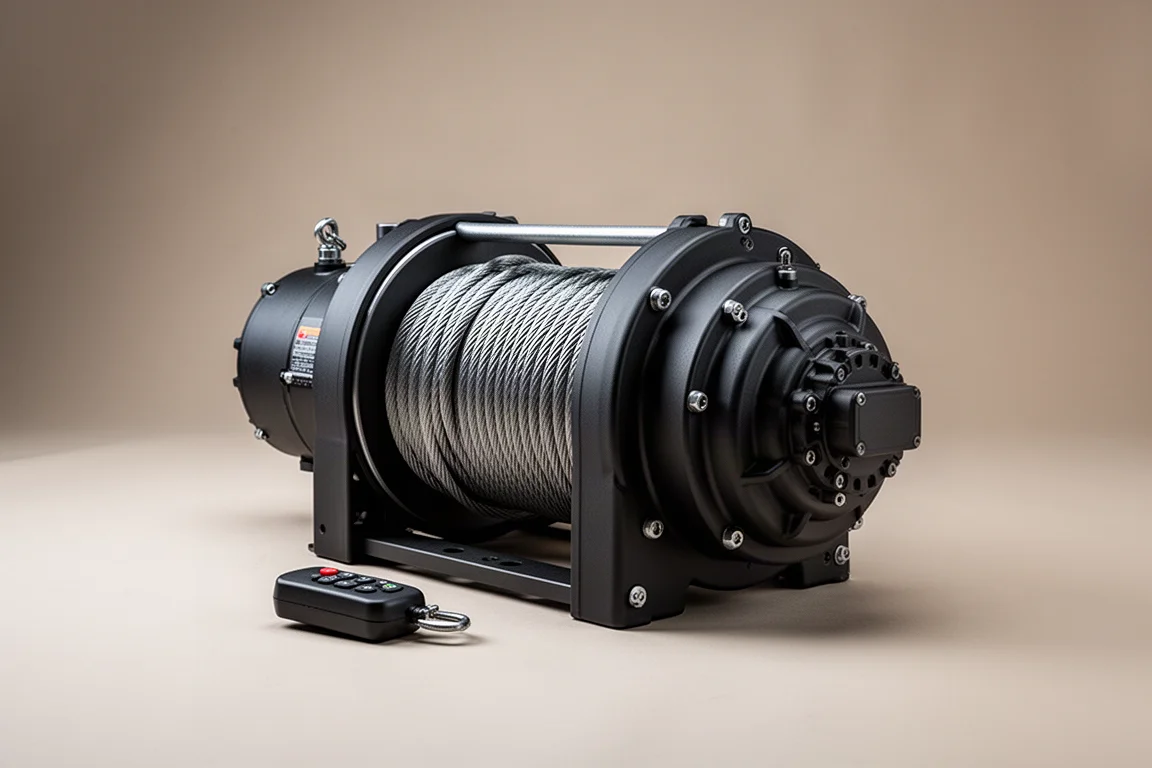
At $674, the Superwinch 12,000 lb winch also skips the wireless remote, with the wired remote connecting near the top of the control box. Its 12V DC sealed motor is rated at 6 horsepower, its no-load speed is 23.4 ft per minute, it weighs 83.6 lb, and it measured 93.8 dB. The standout convenience: it arrives almost fully assembled, with just one wire to connect to the battery.
It pulled the rope out at 4.5 kg (about 10 lb), drawing the highest no-load current yet at 137 amps out and 162 in. On the hill climb it drew a hefty 181 amps and made excellent use of it, tying the Zeak for the fastest time at 36 seconds. But heavy loads slowed it: 47 seconds in the tractor pull, and it faded at 9,675 lb in the capacity test. With an average finish of 2.6, it performed very well in most categories and held up without breaking.
Warn: Balanced and Well Built
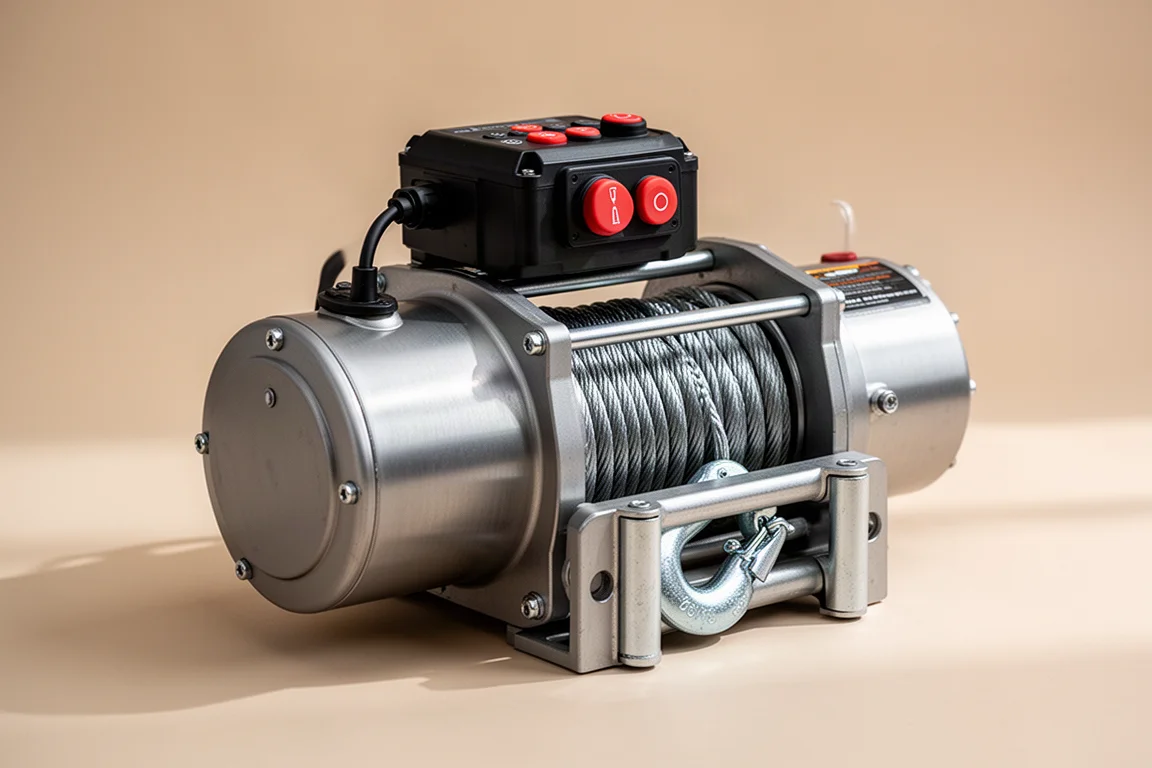
At $705, the Warn standard-duty 12,000 lb winch comes with steel cable and a planetary gear train that delivers faster line speed under load. Like the Superwinch, it arrives mostly assembled, needing only the ground wire connected to the battery. It offers a wireless remote or a wired connection to the control box, with very well constructed, durable connectors. It weighs close to 79 lb, measured 86.8 dB, and is made in China.
The Warn released rope at 4.5 kg (about 10 lb), drawing 89 amps releasing and 101 pulling, one of the more efficient sets of numbers. It sat close to average on the no-load and hill tests at 1:20 and 40 seconds, but was decisively faster than most pulling heavy: 40 seconds in the tractor pull, good for second place. It drew just 196 amps in the locked-wheels drag, similar to the Rugged Ridge. In the capacity test it ran out of steam at 9,187 lb. Combined with the Mile Marker, it shared an average finish of 3.2.
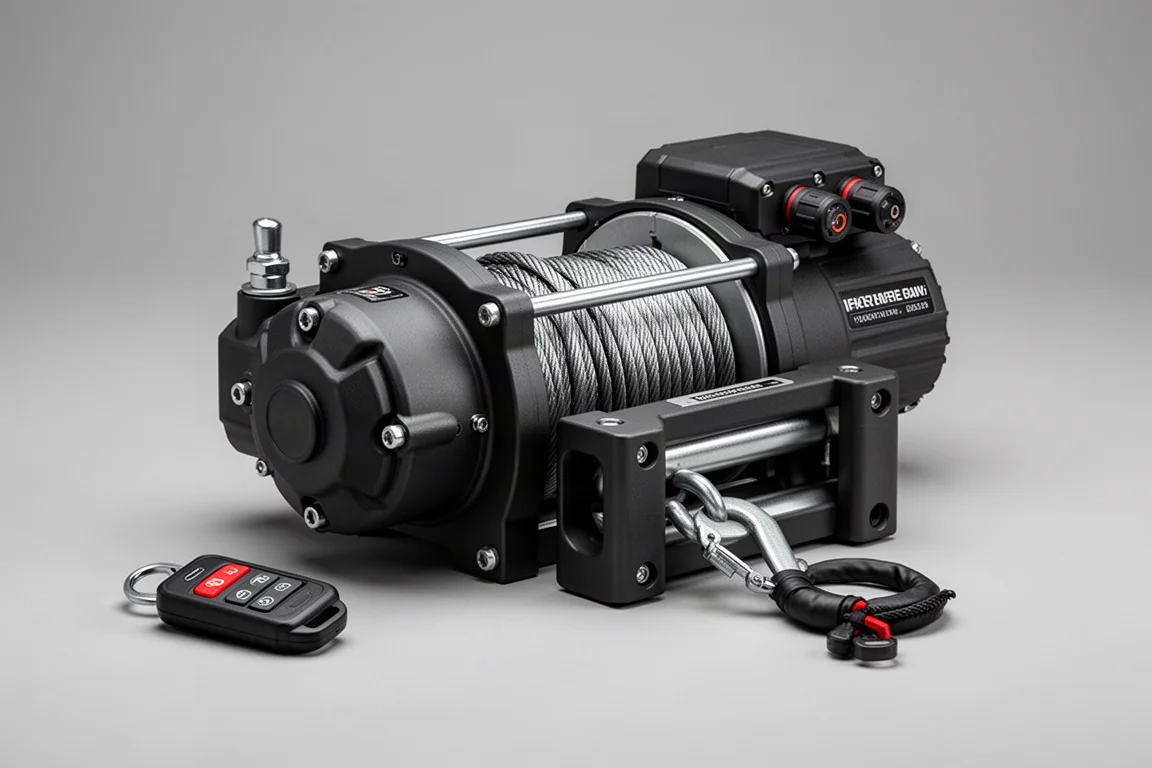
Smittybilt: The IKEA of Winches
The most expensive winch at $760 is the Smittybilt 12,000 lb, and it required the most assembly of the group by far. The control box bracket must be installed before the box mounts to the winch, wires feed through a slot held by two screws, all control box wires fasten to the winch, and a screw secures the rope. Given the price, arriving mostly assembled like the Superwinch and Warn would be expected, though consumer assembly likely saves the manufacturer money. It weighs a fairly light 61 lb, measured 89.5 dB, and took the most effort yet to free-spool at 16 kg (35.2 lb).
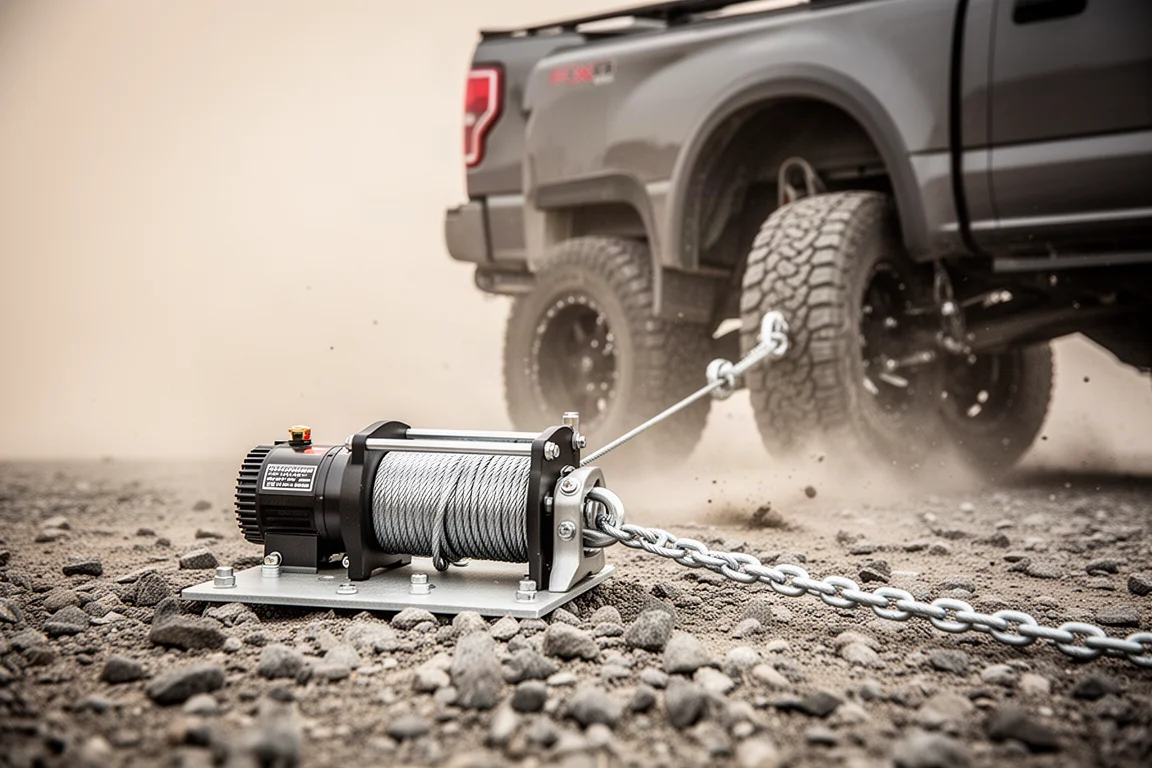
Despite the fussy setup, it had the lowest no-load current at 73 amps and was quick unloaded: 59 seconds for 50 ft of rope and 37 seconds on the hill climb. But heavy loads revealed problems. Early on a fuse inside the control box had to be replaced, it needed 54 seconds in the tractor pull, it drew the highest current in the locked-wheels drag at 307 amps, and it topped out at just over 9,000 lb in the capacity test, though the rope survived.
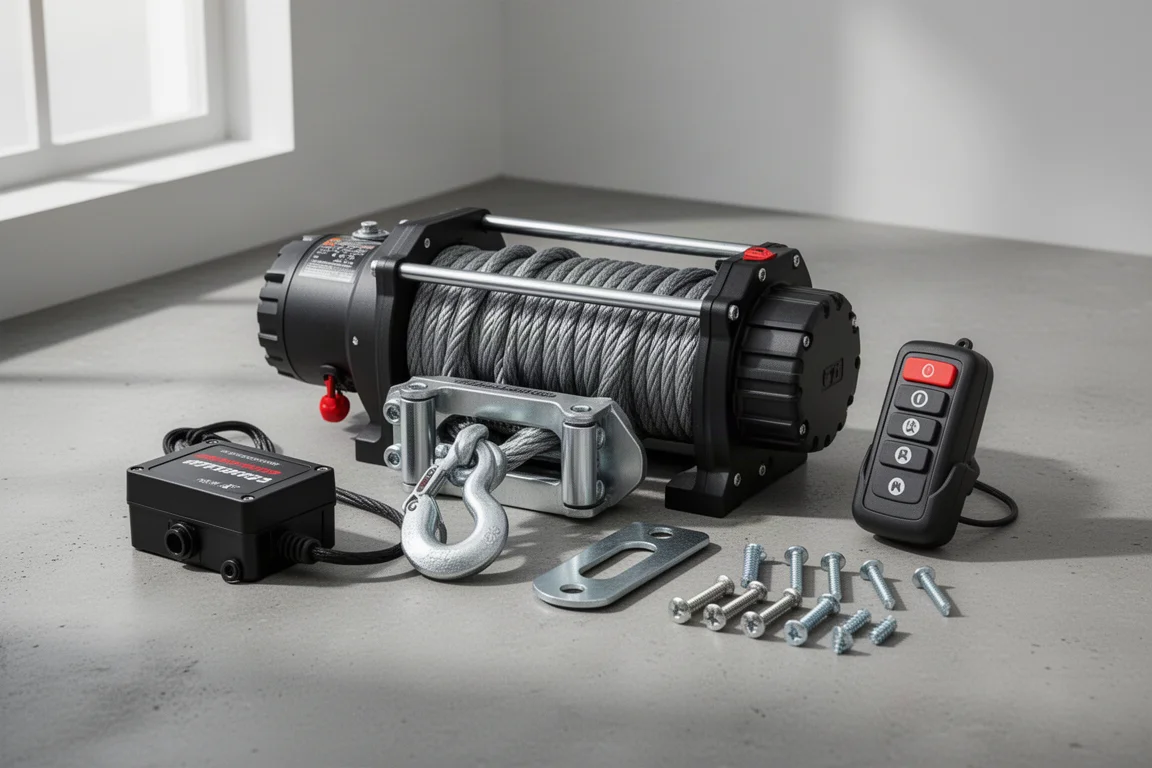
The Heavy Load Test: Tractor and Two Vehicles
Moving the farm implement with a tractor and pickup attached (transmissions in neutral, roughly 5,500 to 6,000 lb of load) over 4 ft produced the clearest separation of the showdown:
- Mile Marker Maverick: 33 seconds (fastest by far)
- Warn: 40 seconds
- Zeak: 46 seconds (on the heavier-duty custom plate)
- Superwinch: 47 seconds
- Smittybilt: 54 seconds
- Badland: 58 seconds (with visible twisting of the winch and plate)
- Rugged Ridge: skipped (damaged earlier)
One caution worth repeating: two hitch-mounted plates rated for 15,000 lb both bent badly during testing. Mounting hardware deserves as much scrutiny as the winch itself.
Maximum Capacity Test: Where Each Winch Topped Out
With the brake of the tractor engaged and the line mostly wrapped around the drum, each winch pulled until it gave out:
- Zeak: 10,370 lb (rope snapped)
- Mile Marker: 10,072 lb
- Superwinch: 9,675 lb
- Rugged Ridge: just over 9,000 lb (rope broke)
- Smittybilt: just over 9,000 lb (rope survived)
- Warn: 9,187 lb
- Badland: just over 8,000 lb (rope survived)
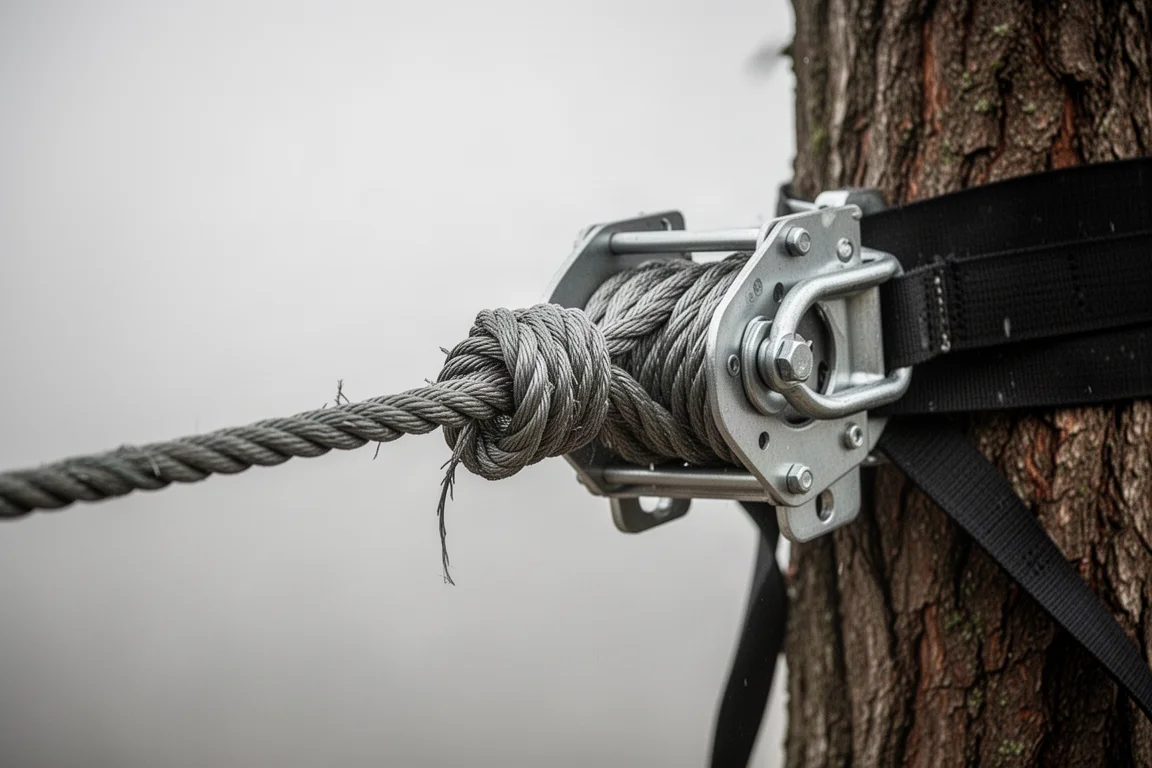
Manufacturers typically rate winches on the first wrap around the drum, so these numbers, with most of the line still spooled, are a realistic look at what each can actually deliver. Even so, a high-quality winch can do remarkable things: one of the 12,000 lb-rated units lifted the farm implement completely off the ground from a tree anchor.
View more details for Superwinch 12,000 lb Winch
Overall Buying Advice
Judged purely on the numbers, the $370 Zeak came out on top with an average finish of 1.4 across five events, though its rope failure is a genuine caveat. If you want a winch that holds up under heavy load, the Superwinch averaged 2.6 and performed very well in most categories. The Mile Marker and Warn tied for third at 3.2, with the Mile Marker standing out for heavy-load speed and the Warn for build quality and efficiency. Budget buyers get real value from the Rugged Ridge on price, but its rope and body did not survive hard pulling, and the Badland’s torque advantage comes at the cost of slow line speed and hardware stress. The Smittybilt, despite the premium price, demands the most assembly and faded under sustained load.
Whichever you choose, invest in a genuinely heavy-duty mounting plate. The light-duty 15,000 lb-rated plates tested here bent under loads the winches were designed to handle.
Conclusion
The gap between a $289 winch and a $760 one is real but smaller than the price gap suggests. The Zeak proves a budget unit can win on outright performance, the Superwinch proves reliability under load has its own value, and the Mile Marker and Warn split the difference between speed and build quality. Match the winch to how you actually pull heavy: line speed for light loads, raw strength for recovery work.
Further reading
Related Reviews

Backpacking Gear
Building a 10 lb Base Weight: An Ultralight Backpacking Gear List
A practical walkthrough of the ultralight pieces behind a 10 lb base weight, from a 765 g pack and a roomy one-person tent to a full camp chair and a dependable water filter.

Road Bikes
10 New Road Bikes Worth Watching: Aero, Titanium, Steel and Endurance Standouts
A practical roundup of 10 new road bikes, from aero flagships chasing single-watt gains to titanium, steel and endurance platforms built for real roads.
Bikepacking Gear
11 Bikepacking Essentials for Long-Distance Cycling
Eleven bikepacking essentials for long-distance cycling, from a steel gravel frame and a two-person tent to helmet lights, packable gloves, and a frame bag that puts weight in the right place.