Camping Tents
Best 10-Person Tents 2026: Six Large Cabin Tents Compared
A practical comparison of six 10-person tents covering setup speed, headroom, ventilation, rain performance, and value.
Introduction
Choosing a 10-person tent usually comes down to one question: how much work are you willing to do at the campsite? Large cabin tents promise room for the whole group, but the real differences between models show up in setup time, usable headroom, airflow, and how they behave when the weather turns.
This comparison covers six 10-person tents that were pitched, slept in, rained on, and packed away at least half a dozen times each. Two are instant tents that spring into shape in minutes. Four are traditional pole-and-sleeve designs that take longer to build but bring other advantages. Together the six tents represent an outlay of more than $1,500, and the gaps between them are wider than the similar footprints suggest.
What follows is a breakdown of each tent, followed by buying advice to help match a model to the way you actually camp.
How These 10-Person Tents Were Evaluated
Each tent was assessed across seven areas: ease of use, spaciousness, comfort and features, ventilation, weather protection, build quality, and portability.
Ease of use covered two-person setup times including staking and guying out, solo setup attempts, and how easily each tent folded back into its carry bag. Spaciousness covered peak height, the slope of the side walls, and measured floor area. Comfort and features looked at doors, room dividers, storage pockets, gear lofts, lantern loops, and dark room technology.
Ventilation was measured by opening every window, door mesh panel, and ground vent, then calculating the total open area in square inches. Weather protection was tested with at least an hour of rainfall per tent, using a hose where the weather did not cooperate. Build quality covered flooring, fabric, stitching, zippers, and mesh.
Portability was judged on packed length as much as weight. Instant tents pack to roughly 50 inches, while the traditional designs pack to about 30 inches, so an instant tent takes up around 40 percent more space in the car. For scale, each packed tent was compared against a two-person dome tent and a 32-ounce water bottle.
One note on solo setup: the person doing most of the pitching stands about five foot three. That height made a real difference to which tents could be raised alone, and it is worth keeping in mind while reading the setup notes below. The solo timings across the group ran roughly double the two-person timings, give or take.
Coleman WeatherMaster 10-Person Tent: Best Overall and Best Value
The WeatherMaster was the easiest of the four traditional tents to pitch. There are only three roof poles to feed through short, largely snag-free sleeves, plus six straight wall poles and three fiberglass poles: two for the angled windows and one for the curved section of the hinged door.
It is also one of only two tents in this group that could be pitched by one person. The reason is the shape. The WeatherMaster is not a cabin tent. Instead of fully vertical walls it tapers at the ends, which leaves a small triangular space and brings the rainfly within reach. The lowest point inside, at the corners, is about 58 inches, and the peak height is 80.5 inches.
The hinged front door is genuinely user friendly, with a handle on both the inside and the outside. A second door at the opposite end is not hinged, so it has to be zipped open and closed. Storage is generous, with four pockets and one lantern loop.
The two angled windows are the standout feature. They are slightly larger than the ones on the Columbia tent and can be left open in moderate to heavy rain. There are no ground vents, though, so dry-weather ventilation comes to roughly 5,500 square inches, level with the Ozark Trail.
In the rain test, water worked through an inverted but untaped seam after about 15 minutes of heavy rain, and the darker brown fabric felt slightly damp after a full hour. In light rain there was only a trace of leakage through the seam, with the fabric staying dry. The removable room divider has noticeable gaps at the sides, top, and bottom.
The floor is not rectangular, which is why only three queen-size mattresses fit, but the leftover space is enough for a reasonable amount of gear. Packing it away is a tight squeeze into the carry bag. Long-term durability has held up well: after roughly three years of backyard use, some steel poles have become stiff to join, and the thin fiberglass pole for the curved part of the hinged door cracked and was repaired with tape.
Columbia Mammoth Creek 10-Person Tent: Best Premium Pick
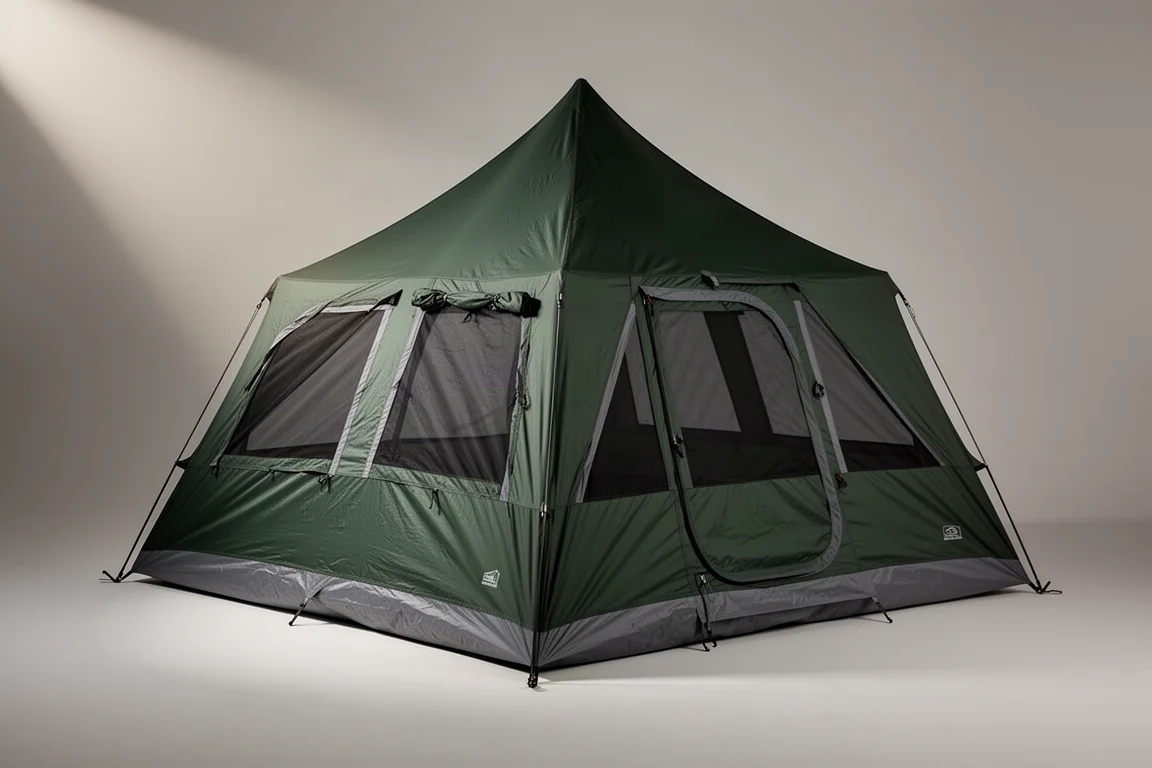
The Mammoth Creek is the most capable tent here in bad weather, and it is also the most demanding to build. It uses six roof poles rather than three, two additional pole clips, ten guylines, and two angled windows that have to be set up from inside the tent.
Solo setup is where it bites hardest. The blue fiberglass roof poles could not be pushed into their connectors alone, and the attempt nearly broke a pole. With a second person the process is straightforward, just a few minutes slower than the rest of the group. The elbow-style pole connectors shared with the Ozark Trail and Core tents are the main culprit, because the roof has to be propped into a specific arch. Get it wrong and the roof inverts.
The payoff arrives in the rain. After an hour of moderate to heavy rain there were no leaks at all and the fabric stayed bone dry, with water only working in through the corners after an entire night of rain. This is also the only tent in the group with every seam taped. It has the most ventilation while raining, thanks to a 40 by 12 inch ground vent and two large pull-out windows that stayed open in light rain and through moderate to heavy rain. In dry conditions, four windows and three door mesh panels add up to about 7,800 square inches of airflow.

The wide T-door is the biggest of any tent here, with a smaller side door beside it. The room divider is the best of the six: pre-attached, full length, not very see-through, and free of gaps at the top, bottom, or sides. The only compromise is that both doors sit on the same side of the divider. Storage is modest at two pockets, though there are two lantern loops.
Build quality is a clear step up. The body is 75D polyester, the floor is 150D polyester with a softer, less crunchy feel, the zippers are SBS units that did not snag, and the mesh is smooth no-see-um. It was also the most wind-ready shape on paper, with ten guylines, though one fiberglass roof pole bent during a stormy night and was pulled back into shape afterward.
Outdoor Products 10-Person Instant Cabin Tent: Best Instant Setup
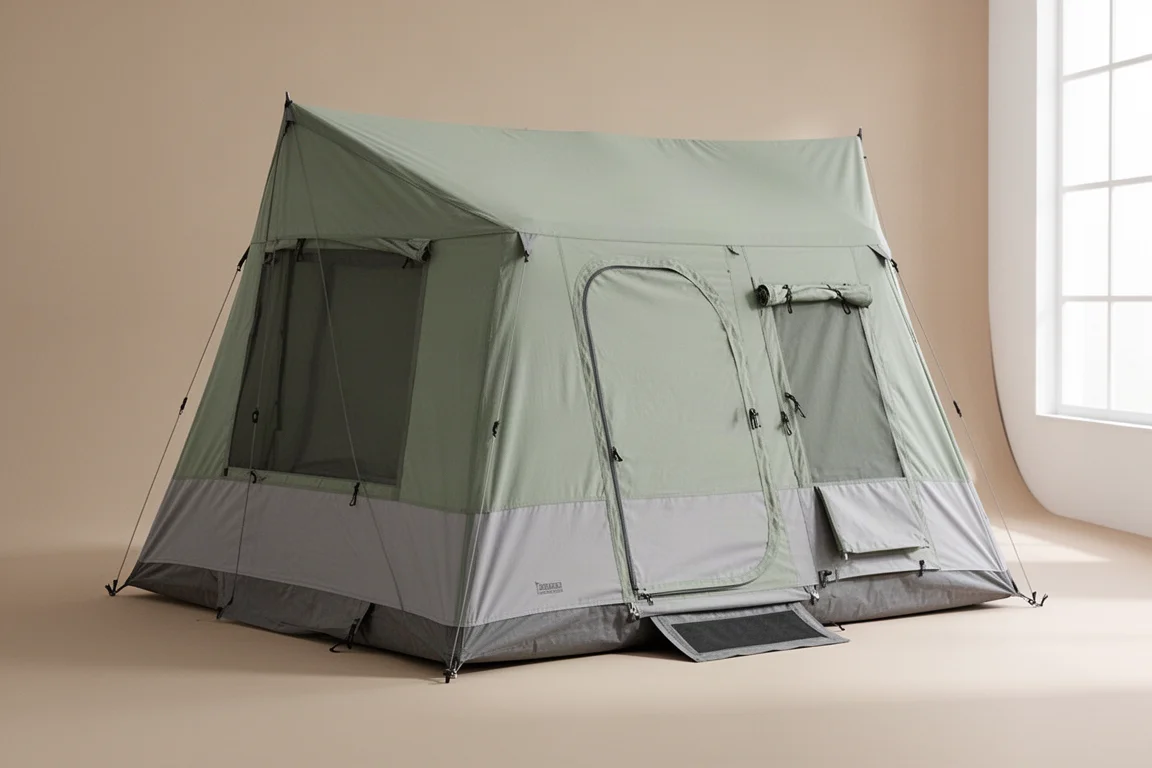
This was the fastest tent to pitch in the group and the easiest to live with overall. The instant frame uses three hubs, which keeps the walls noticeably tauter than the single-hub design on the other instant tent, and the elbow joints never jammed during testing.
Three doors make it unusually flexible for a tent this size: one very large T-door with a smaller side door on either side of it. The trade-off is that the zippers on the side doors snag on the rain cover. The room divider is closely related to the one in the Columbia tent, differing mainly in color.
Storage is the best here in practical terms. There are only two pockets, but they are the largest of any tent in this comparison, backed up by four lantern loops. Ventilation in dry weather comes to about 5,900 square inches, tied with the Core tent, helped by one extra-large ground vent measuring roughly 59 by 11 inches.
Rain performance is mixed. A hose test produced leakage through an untaped seam after about 15 minutes of heavy rain, but after a full hour the tent body and bathtub flooring were still dry apart from that seam. In light rainfall there were no leaking seams and no wet fabric at all. The floor is polyethylene, the body and rainfly are 68D polyester, the stitching is good, and the mesh is silky no-see-um.
It also packed back into its carry bag more easily than anything else here. The main limitation is reach: at five foot three the rainfly was out of range, so taller campers will get the smoothest experience from this one.
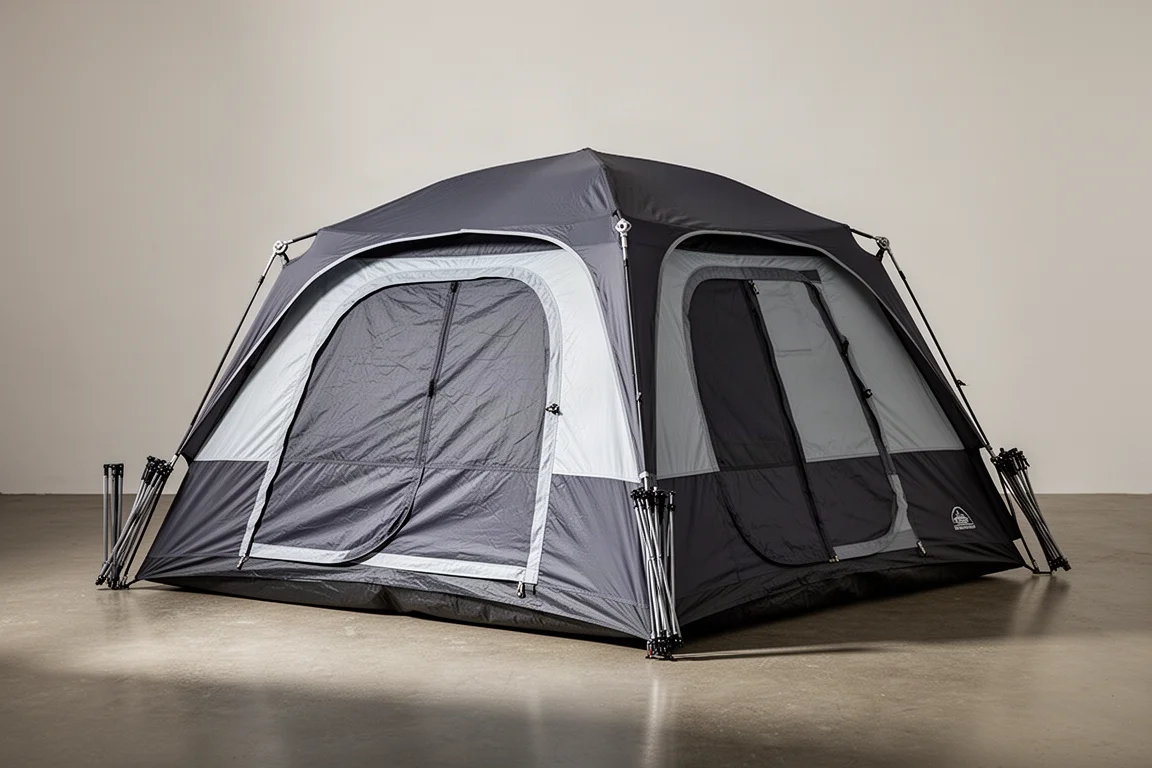
Coleman 10-Person Instant Cabin Tent: Best Dark Room Comfort
The second instant tent here sets up quickly and, like the Outdoor Products model, can be pitched by one person. It needs one extra step: green fiberglass poles have to be installed for the hinged D-door, which takes about a minute for two people.
Its defining feature is the dark room fabric, and it is the only tent in this group that has it. With every window and door closed, almost no light gets in beyond a thin line where the roof meets the rainfly and a little around the bathtub floor. At night it is close to pitch black even with street lights nearby, and during the day the interior stays noticeably cooler than the other tents tested. It also has the most ventilation of the six in dry weather: five windows and two doors add up to roughly 9,400 square inches.
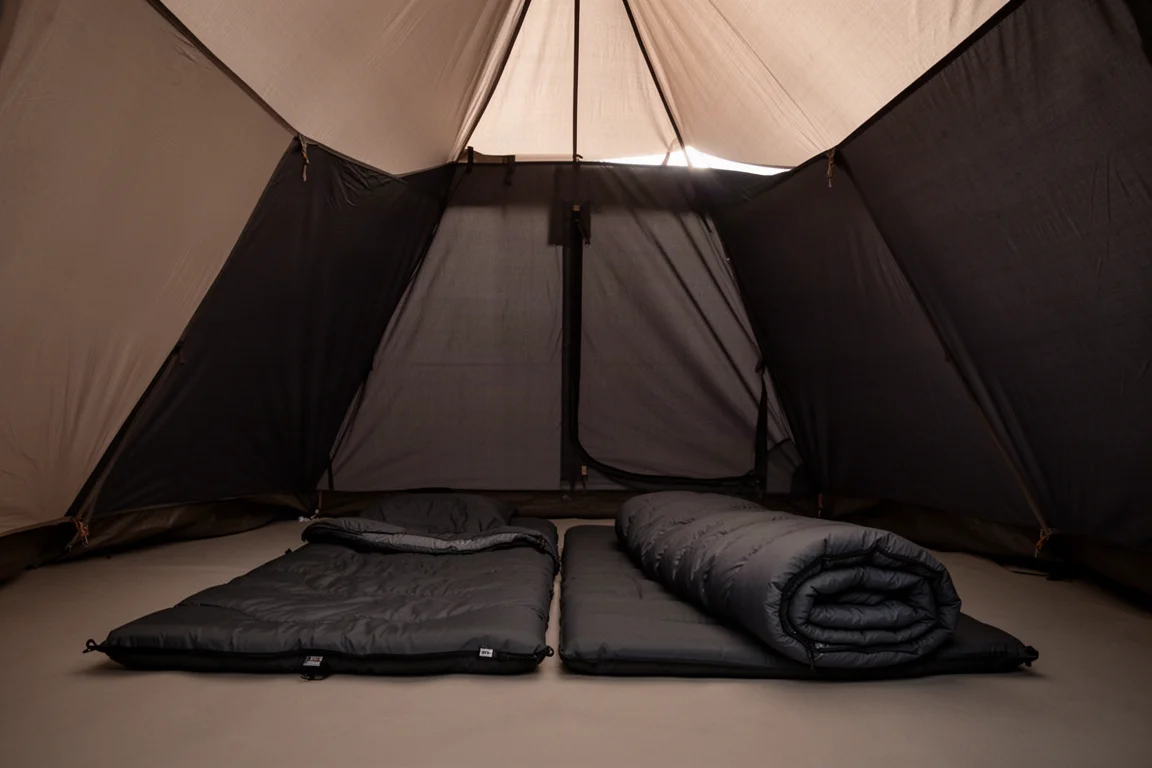
That airflow advantage disappears in the rain. There are no ground vents and no angled windows, so the only ventilation left is the gap between the ceiling mesh and the rainfly. In testing, water seeped through an inverted, untaped seam after about 15 to 30 minutes of rain, and the zipper of the hinged D-door leaked as well.
Space is the other compromise. This tent has the lowest peak height of the six and the least vertical side walls, so livable space suffers, and the body felt a little droopy because there are not enough pole clips. The hinged D-door is only about 47 inches tall, so most adults will duck more than usual. Storage is limited to two tiny pockets and one lantern loop, and the room divider is see-through with big gaps at the sides.
Quality is a mixed picture: polyethylene flooring and a polyester body with fine stitching, but seam tape was poorly applied around the windows and interferes with the zippers, there were a couple of small holes in the mesh, and the tent arrived with a pole attached the wrong way. The carry bag also could not fit everything back in.
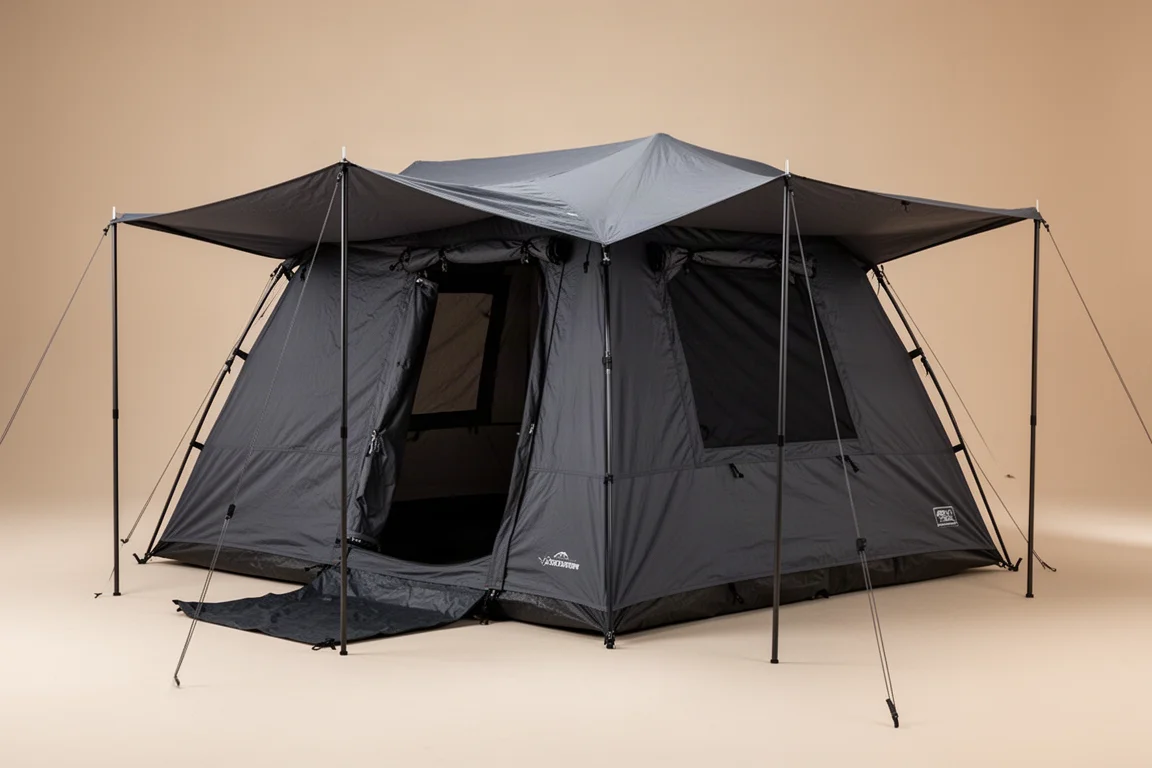
Core 10-Person Straight Wall Cabin Tent: Best Headroom
The Core tent lands at average or slightly better in most categories, but it wins spaciousness outright. The peak height is 90 inches, the tallest in the group, and with near-vertical side walls it offers the most livable vertical space of the six. Taller campers will appreciate it most; anyone shorter will struggle to reach the gear loft and lantern loop at the top.
Setup follows almost exactly the same pattern as the Ozark Trail, with three color-coded roof poles and six wall poles, but there are six extra stakes for the ground vents and doors, bringing the total to 20. The elbow pole connectors make solo setup awkward, and the roof poles need a second person to arch correctly. The rainfly was also out of reach at five foot three.
Two identical D-shaped doors sit at opposite ends. Inside there are two pockets, a small gear loft that can be used at the same time as the divider, and one lantern loop. The divider is one of the more see-through designs here. It is the only tent tested with two ground vents, each about 32 by 9 inches, and dry-weather ventilation matches the Outdoor Products tent at roughly 5,900 square inches.
In light rain it came through an hour with no leaks at all, which is a strong result for the price point. Heavier rain exposed weak points: a zip leaked at around 15 to 30 minutes, an untaped seam started leaking after about 55 minutes, and the fabric near the ground vent felt damp. Build quality is acceptable rather than impressive, with polyethylene flooring, a 68D polyester body, a few loose threads, and a door zipper that snags more than the WeatherMaster’s.
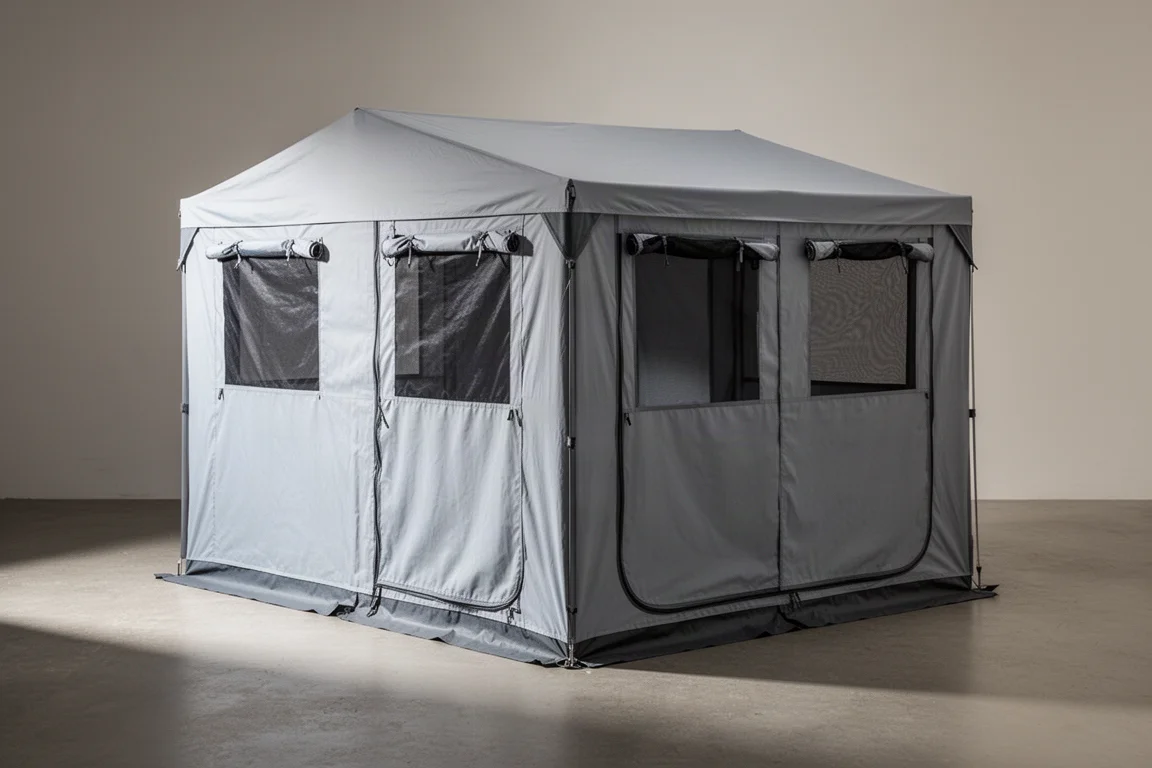
Ozark Trail 10-Person Tent: Best Budget Option
If the budget tops out well below what the other tents here cost, the Ozark Trail is the one to look at. Some configurations of this tent sell for under $100, and nothing else in the group gets close to that.
Setup involves three roof poles, six steel wall poles, and 14 steel stakes. The pole sleeves are considerably longer than the WeatherMaster’s, and the roof poles are not color-coded, so threading the frame takes more patience. Solo setup is difficult for the same reason as the Core tent: the roof has to be propped into the correct arch by hand. The rainfly was also beyond reach at five foot three.
Inside, there is a single D-shaped door, two pockets, a gear loft, and one lantern loop. The divider is the weakest of the six, with huge gaps at the sides, top, and bottom and no zip down the middle for easy access. There are no ground vents, so dry-weather ventilation sits at roughly 5,500 square inches, tied with the WeatherMaster, and there is almost nothing left for rainy days.
Rain protection is the clear weak point. After only about 15 minutes of mostly light rain, water was already coming through an untaped seam, and some was seeping through the blue fabric. In testing it was the least water-resistant tent of the six.
Quality also lags. The fabric feels slightly sticky to the hand, there were loose threads throughout, fairly large holes where the guylines attach, inconsistent mesh in two places, rust on the steel wall poles, and a door zipper that snagged from the outside every time. Some black residue came off on the hands straight out of the box. On a dry, sunny trip with a spacious interior, though, it does the job for a fraction of the cost.
Buying Advice: Matching a 10-Person Tent to How You Camp
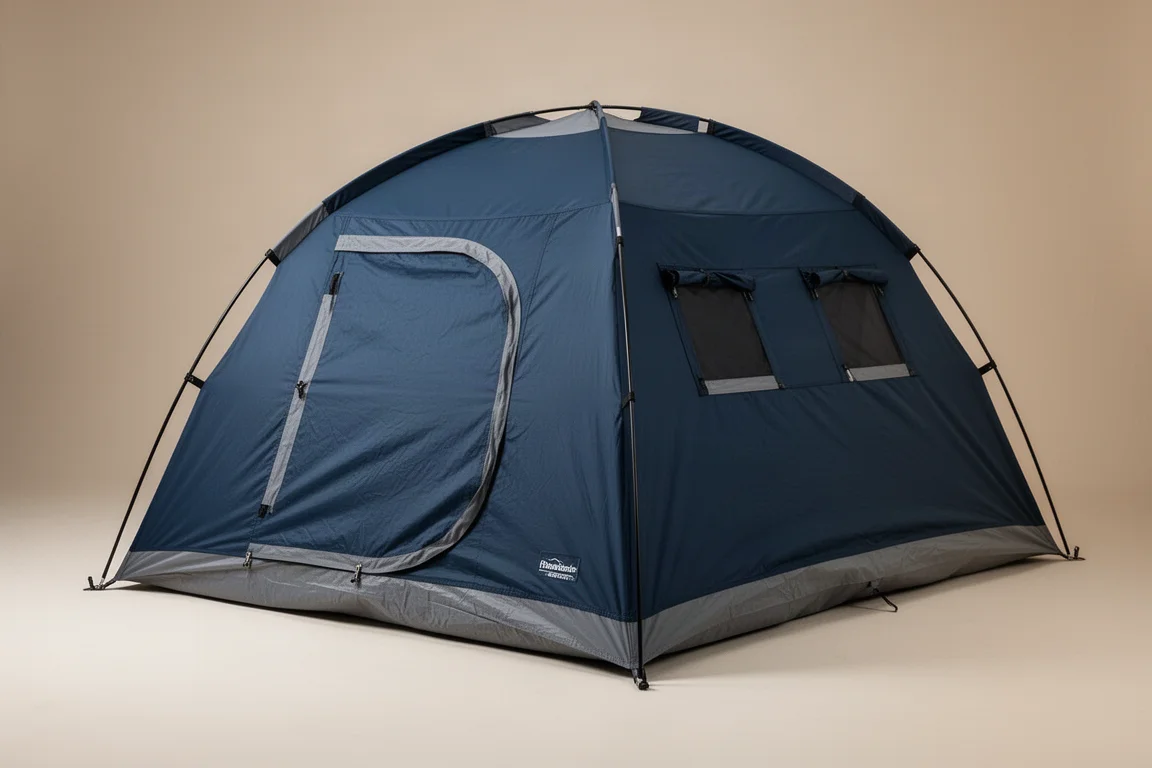
Start with setup, because that is where these tents differ most. If you want the tent standing in minutes, the two instant models are the obvious choices, and the Outdoor Products version is the better mechanism of the two thanks to its three-hub frame and tauter walls. The Coleman instant tent is the more affordable way into instant pitching, and it adds the dark room fabric that no other tent here offers.
If you are usually pitching alone, the field narrows fast. Only the two Coleman tents could be raised solo at five foot three, and the Outdoor Products instant tent becomes an easy one-person job for anyone taller. The Ozark Trail, Core, and Columbia tents all use elbow pole connectors that make solo pitching genuinely difficult, with a real risk of an inverted roof and unnecessary stress on fiberglass poles. Bring a second person for those.
Think honestly about weather. The Columbia tent is the only one that shrugged off an hour of moderate to heavy rain without a leak, the only one with every seam taped, and the only one that keeps meaningful ventilation going while it rains. The WeatherMaster is the next best compromise, with angled windows that stay open in moderate to heavy rain. The Ozark Trail is a fair-weather tent, and the Coleman instant tent trades rain ventilation for its dark room comfort.
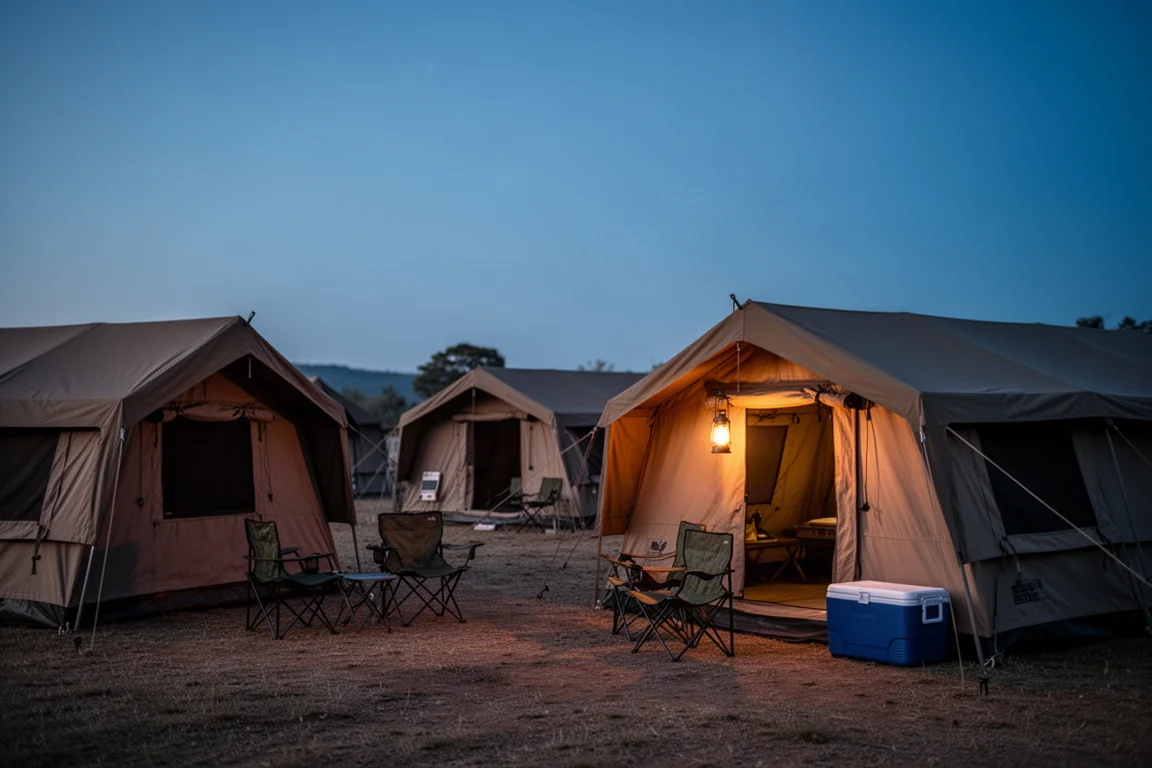
Then look at how you will actually sleep in it. Every tent here can take ten single sleeping pads or bags, but that means sleeping shoulder to shoulder with almost no room left for gear. Four queen-size mattresses fit in the five rectangular-floor models with hardly any space to spare, while the WeatherMaster takes three mattresses plus a useful amount of leftover gear space. None of these tents has a vestibule, so anything left outside the door will get wet in rain.
Two practical points apply across the board. First, stake everything down: these cabin shapes have tall, near-vertical walls that catch wind, and unstaked they will not survive even a light breeze. Second, none of them is built for very strong winds, though more guylines and a more tapered shape help a little. Packed size is worth a thought too, since instant tents are roughly 40 percent longer in the bag than traditional ones.
Conclusion
The Coleman WeatherMaster remains the tent to beat for most buyers. It was the easiest traditional tent to pitch, it can be raised by one person, the hinged front door and angled windows are genuinely useful, and it scores almost as well as the more expensive tents while costing substantially less.
If budget allows, the Columbia Mammoth Creek is the premium pick and the strongest performer in rain, with taped seams, a full-length divider, and the best ventilation when the weather is wet. For the fastest possible setup, the Outdoor Products instant tent is the better of the two instant designs, while the Coleman instant tent is the value route into instant pitching plus dark room comfort. The Core tent is the choice for maximum headroom, and the Ozark Trail is the budget option for dry, sunny trips.
Further reading
Related Reviews
Camping Tents
3F UL Gear Taiji Two-Person Tent Review: Field Waterproofing Results and Buying Advice
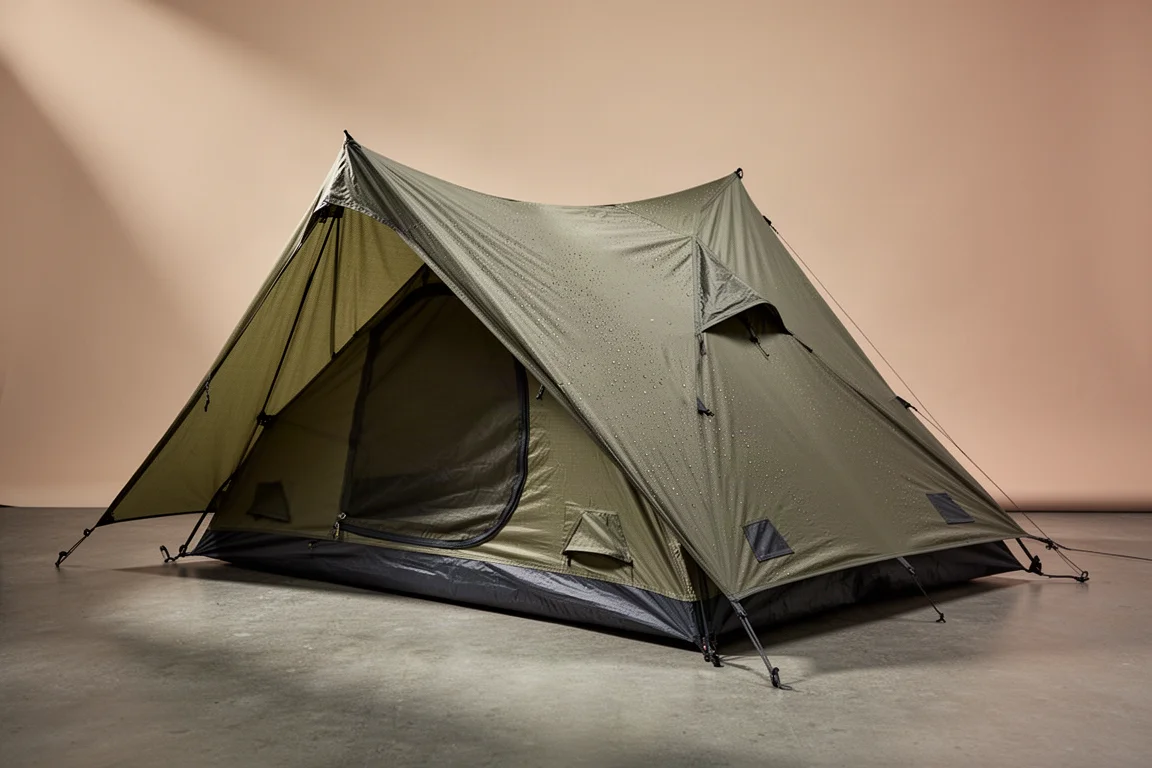
The Taiji pairs an attached fly with a removable inner, but sustained rain exposed untaped vent seams that need sealing before this shelter can be trusted.
Camping Tents
3FUL Gear Lanshan 2 Pro 4-Season Review: A Sub-$200 Single-Wall Trekking Pole Tent
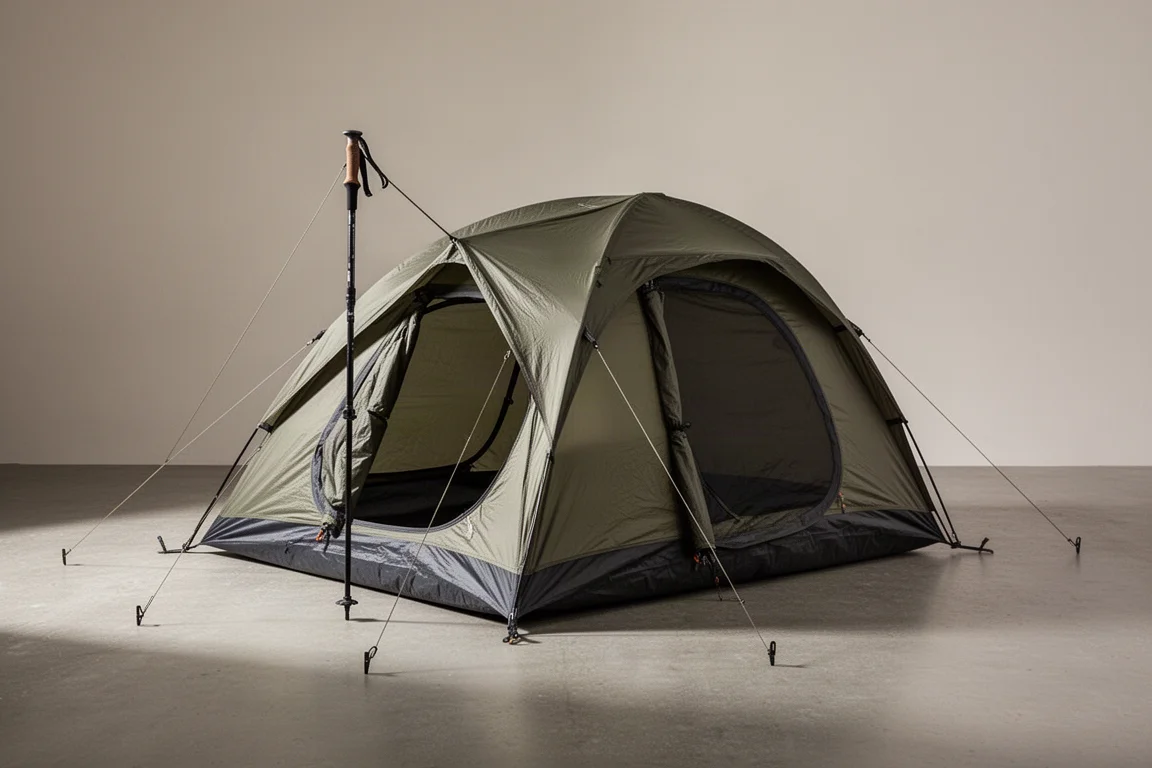
An early look at the 3FUL Gear Lanshan 2 Pro 4-Season, covering its straightforward pitch, generous interior space, and the condensation and seam-sealing questions that come with any single-wall shelter.
Camping Tents
Alps Mountaineering Lynx 1-Person Tent Review: Big Value in a Small Budget Tent
A close look at the Alps Mountaineering Lynx 1-Person Tent, covering real interior dimensions, materials, setup time, ventilation limits, and who should buy it.