Hi-Fi Amplifiers
Belles Aria Integrated Review: A Hand-Built Amplifier With Warmth and Weight
A hand-built American integrated amplifier with a warm, full-bodied character, a 500 VA transformer, and standout performance at low listening volumes.
Introduction
Belles has been designing amplifiers for other companies as well as for its own brand for more than three decades, and the Aria Integrated is the entry point into its range. It is hand built in the United States, right down to each component being placed on the circuit board, and in the UK it retails for £2,500.
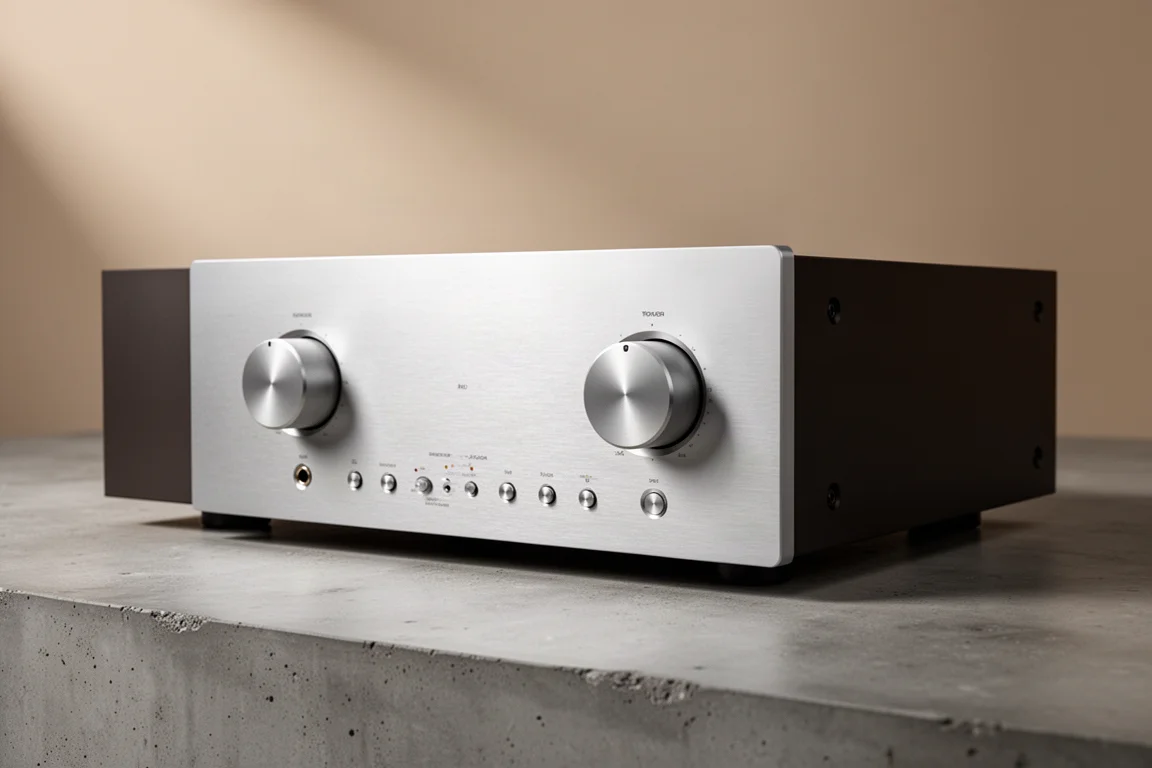
There is no fancy casework here, but the Aria has a thick brushed aluminium front panel and feels reassuringly heavy for a full rack width unit of its size, weighing 12 kilograms (26.5 pounds). That weight is not decoration. Inside sits a 500 VA toroidal transformer, roughly double the size you would ordinarily expect on an amplifier with this power rating, feeding a design that is conservatively rated at 75 watts into 8 ohms and 120 watts into 4 ohms.
What follows covers what the Aria does well, where it gives ground to rival integrated amplifiers, and which listeners will get the most from it.
Who This Amplifier Is For
The Aria is not trying to be all things to all people. Its voicing clearly targets listeners who value a warm, rich, full-bodied presentation over the last word in transparency, neutrality and detail-led insight.
That makes it a natural fit for two groups in particular. The first is anyone drawn to the idea of a traditional tube amplifier but who does not want to live with tubes. The second is anyone who likes the idea of a big, warm-sounding Class A amplifier but cannot accept the heat such designs put into a room. The Aria is a Class A/B design, so room temperature is not part of the deal.
It is also worth being clear about who the Aria is not for. If your priority is a neutral, detail-centric sound with maximum air and transparency, this amplifier will not be the obvious choice at its price.
Main Strengths
The strengths here are unusually consistent, and they all trace back to the same design decision: a large power supply feeding a simple, fully discrete output stage.
Warm, Full-Bodied Sound
The Aria’s most distinctive quality is the sheer acoustic mass it brings to music. Against two well-regarded integrated amplifiers around this price, the Exposure 2510 (£1,750 in the UK) and an upgraded Willsenton R8 running PSVANE Ti2 collection tubes, the Aria delivers even more weight and body, in a way that feels closer to its own Class A sibling than to either rival. Bass has all the heft you could want, and while it is not one-note bass, it is not the final word in definition for amplifiers around this price either. There is a touch of bloom low down, and that cloudiness carries into the lower midrange where it reads as warmth, softening the leading edge of notes and obscuring some fine detail. The body and decay of notes, though, are very pleasant.

Higher up, the picture is more nuanced. Vocals, male and female alike, have very good presence and clarity, right up there with the best at this price. The upper midrange is pulled back a little, which is what makes the Aria so forgiving of bright recordings and so easy to listen to for long stretches without fatigue. It is well judged, because the amplifier does not sound dull or boring in the process. In the high frequencies the same forgiving character applies to bright partnering equipment and bright recordings, though with the very best recordings it does cost some of the air and transparency that sits on top.
Soundstaging is a clear strength. Width, depth and the placement of instruments within the landscape are all excellent and stand with the class leaders at this price.
Build Quality and Internal Design
Inside the Aria the money has clearly gone into the amplifier section. The 500 VA toroidal transformer is the main reason the unit weighs 12 kilograms, and it supports a peak current capability of 18 amps, double what you get from an AudioLab 6000A. The power supply uses four Cornell Dubilier filter capacitors rated at 22,000 microfarads each, giving 44,000 microfarads per channel. A second, much smaller toroid handles standby so the amplifier draws very little power when idle.
The power amplifier board is fully discrete, using through-hole components with no integrated circuits and no surface mount parts, a layout many listeners associate with better sound quality. Eight MOSFET output transistors are mounted to a heatsink, and MOSFETs are typically described as having a warmer character than bipolar junction transistors, which lines up with what you hear. The preamplifier and headphone amplifier board carries an Alps volume control and two Burr Brown OPA551 op amps dedicated to headphone amplification, and it may well be a passive preamplifier section. The input board uses white relays to switch between sources alongside Texas Instruments logic chips and audio-grade decoupling capacitors.
Connectivity and Everyday Use
Across the front panel, going left to right, there is a button to toggle between three line-level inputs and the moving magnet phono stage, a button to engage the monitor loop for recording devices or to select bypass mode for easy integration with a home theater receiver, and a button for mute and standby. The volume control is weighty and smooth in use, and there is a 6.25 mm quarter-inch headphone jack. The supplied remote control is plastic, inexpensive and simple, but it is functional and gets the job done.
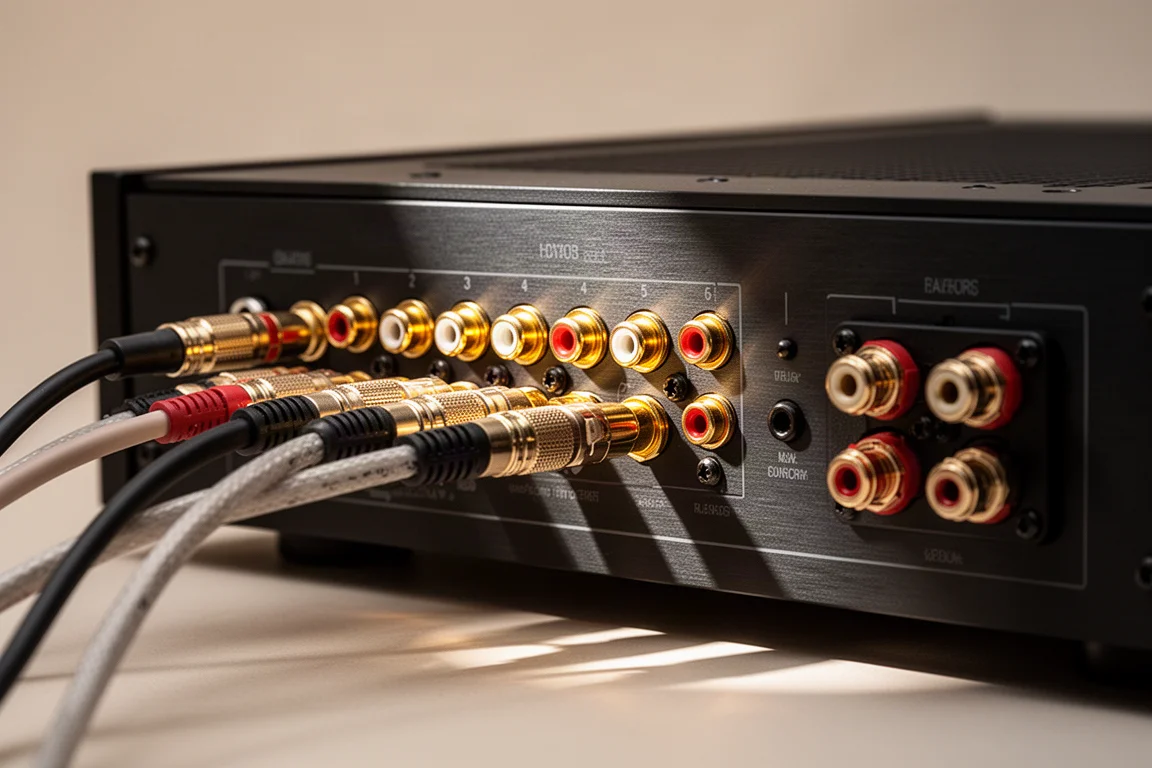
At the rear there is a bank of RCA connections that is heavier duty than is typical at this price: a phono input with a ground connection, three line-level RCA inputs, monitor out and monitor in for the monitor loop, a home theater bypass input, and pre-outs for powered subwoofers or an external power amplifier. The left and right speaker terminals are of a more standard construction, though still of respectable quality.
The Aria also does something unusual very well: low-volume listening. At late-night levels in the 50 to 60 dB range it sounds fuller than several amplifiers that handle quiet listening well, including the Exposure 2510, the Willsenton R8 and a long-term Exposure pre and monoblock pairing, all of which can begin to sound a little thin. That is an exceptional quality for anyone who does most of their listening after dark.
Things to Consider Before Buying
What It Gives Up
The trade-offs are consistent with the voicing. Compared with the Exposure 2510 and the upgraded Willsenton R8, the Aria gives up some definition and control in the low frequencies, and some clarity in the midrange and high frequencies. The bloom in the bass and the resulting warmth in the lower midrange are the price of that fullness, and on the very best recordings the amplifier gives up some ultimate air and transparency at the top. None of this makes the Aria a poor performer. It simply describes the character you are buying.
No Onboard DAC and Speaker Matching
The Aria is a traditional Class A/B amplifier and there is no option to fit a DAC board inside. If keeping the box count to a minimum matters to you, this is not the amplifier for that job. The upside is that off-board DACs compete in very competitive market segments, so a good one can be had for a sensible price, and all the money in the Aria has gone into the amplifier section.
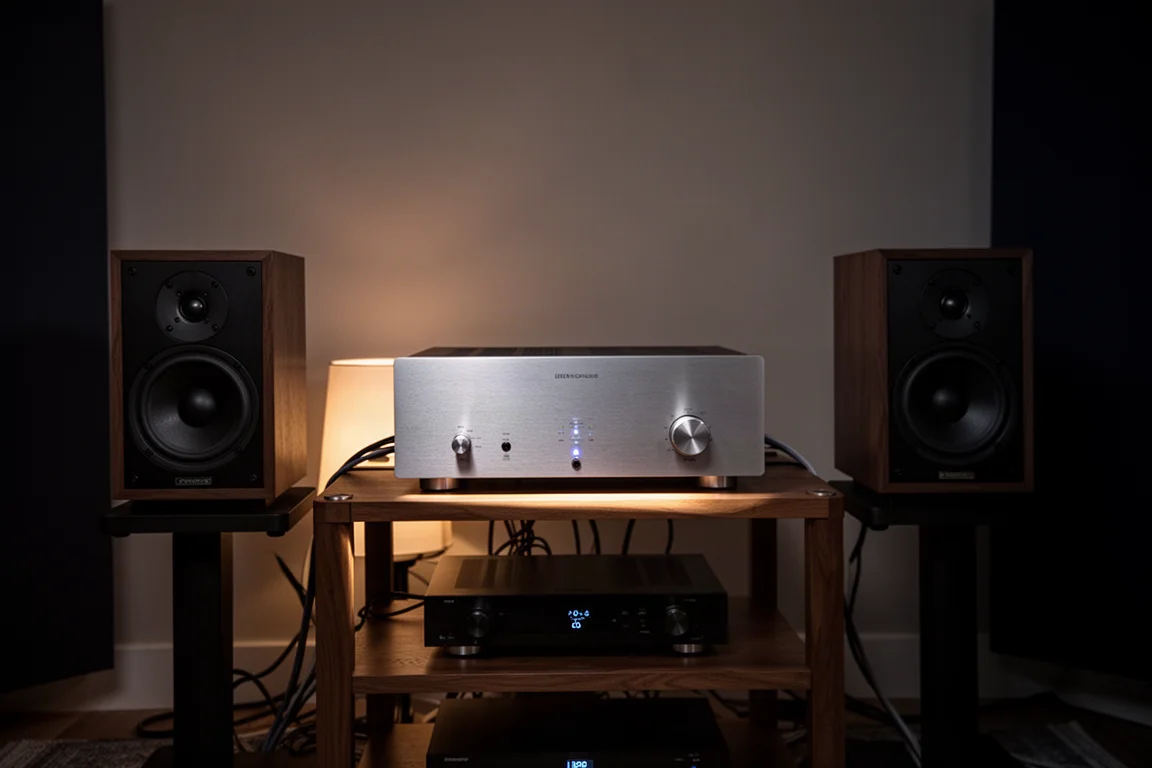
Speaker matching matters more than usual here. The Aria is best suited to neutral speakers and to those with a slightly tilted top end. Among the speakers it was paired with, the liveliest combination was a pair of JBL 4309s, which are not bright but carry enough liveliness to balance the amplifier’s warmth. Amphion Argon speakers, again not bright but with a slight smile-shaped response thanks to a little thinness in the midrange, also combined very well for a nicely balanced result. DALI Menuet SE speakers are smaller and less dynamic but more revealing in the midrange, and they let more of the amplifier’s coloration through, which can work well in a nearfield setup. ProAc Response 1SC speakers, the most difficult load of the group, caused no problems at all, though the limits in transparency and the amplifier’s coloration were more apparent. Livelier speakers such as B&W, Focal or Klipsch would be worth trying, though those combinations were not available to test.
Buying Advice
If you want a big, dynamic, warm and rich sound, the Aria Integrated makes a strong case for itself at £2,500 in the UK. It can drive most speakers in an average-size living space, it plays exceptionally well at low listening levels, and it is hand built in the USA down to the components on the board. It is also the entry point in the Belles range, which makes it the most accessible way into the brand’s approach.
Buy it for the character, not for the specification sheet. If your reference points are maximum transparency, neutrality and a detail-centric presentation, the Exposure 2510 and an upgraded Willsenton R8 are the more obvious choices, and each gives up something the Aria offers in return. If you want tube-like richness without tubes, or Class A warmth without the room heating, the Aria is the kind of amplifier that earns its place in a long-term system.
Conclusion
The Belles Aria Integrated is a reminder that small hi-fi manufacturers can still produce highly competitive products. Its 500 VA transformer, fully discrete power amplifier board and eight MOSFET outputs deliver a warm, full-bodied presentation with real weight, an excellent soundstage and vocal clarity that stands with the best at the price. It gives up some low-frequency definition and some top-end air compared with its closest rivals, and there is no onboard DAC. For listeners who prioritise musical richness, forgiving treble and superb low-volume listening over absolute neutrality, it is an easy amplifier to recommend.
Product link
View more details for Belles Aria Integrated
This product is mentioned in the review. Check the specifications, options, and compatibility before buying.
View more details for Belles Aria IntegratedFurther reading
Related Reviews
Hi-Fi Amplifiers
Accuphase E-280 Review: Entry-Level Accuphase With Flagship Attention to Detail
A close look at the Accuphase E-280 integrated amplifier, covering its champagne build, AAVA volume control, sound quality, and the speakers and sources that suit it best.
Hi-Fi Amplifiers
Advance Paris A10 Classic vs Yamaha A-S301: Two Integrated Amplifiers Compared
A practical comparison of a $350 integrated amplifier and a $2,500 reference model, covering the differences that matter and the ones that do not.
Hi-Fi Amplifiers
Affordable Chinese Amplifiers Worth Buying: Five Budget Hi-Fi Amps Compared
A practical look at five affordable amplifiers, what each one does well, and the trade-offs to weigh before you buy.