PA Speakers
Behringer B215XL and B212XL Review: Budget PA Speakers With Real Limits
A close look at the Behringer B215XL and B212XL, two inexpensive PA cabinets whose resonant enclosures and early roll-off limit them to casual outdoor use.
Introduction
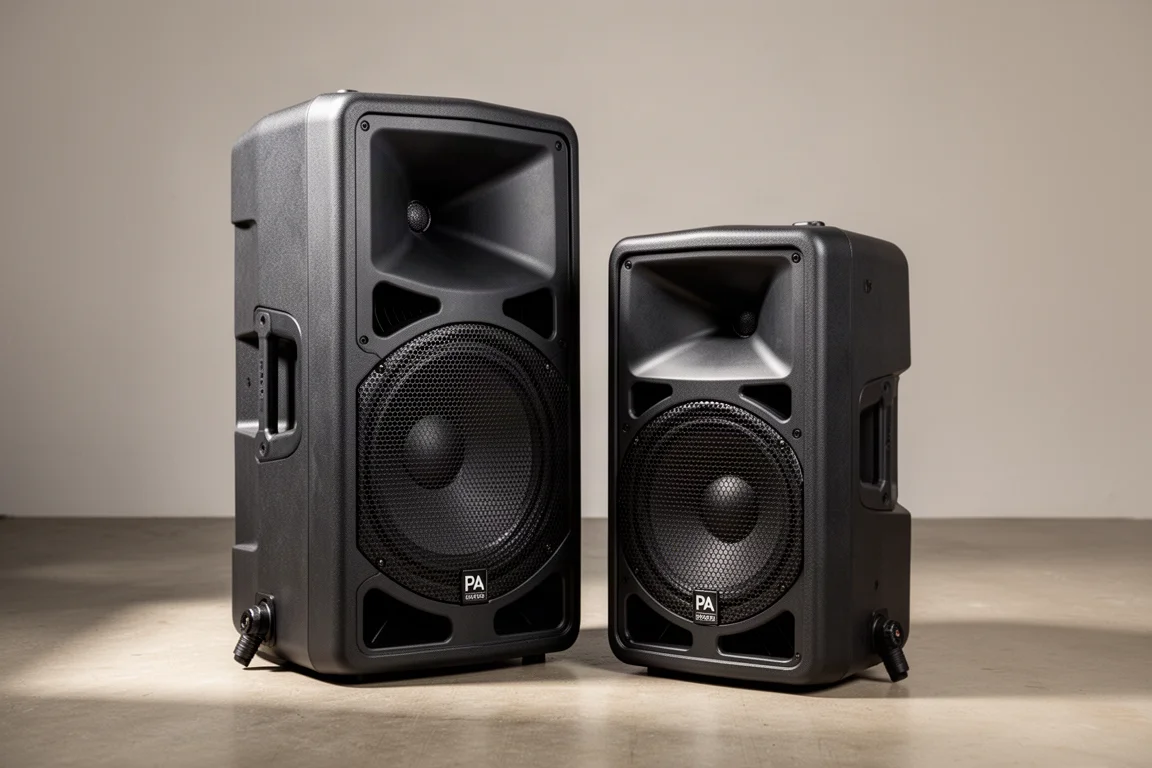
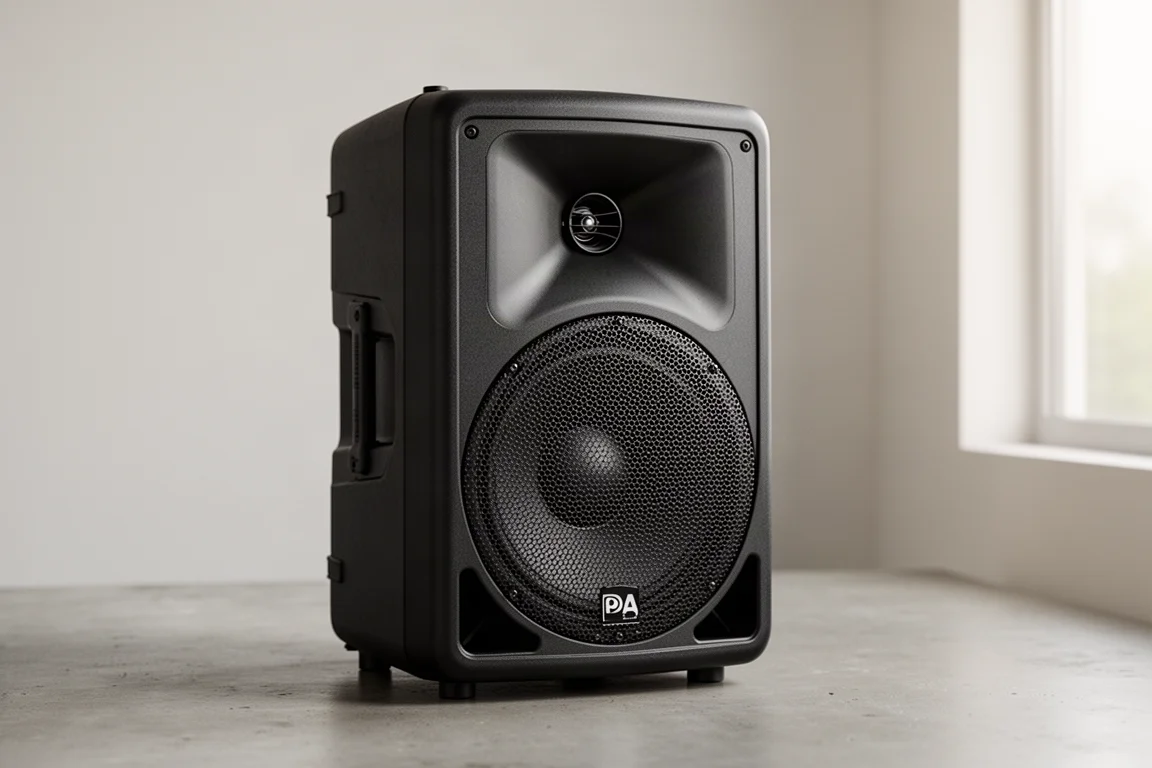
Cheap PA speakers are tempting. A large woofer and a high-sensitivity cabinet look like a shortcut to loud, full-range sound for a backyard party or an outdoor event, and the Behringer B215XL and B212XL sit squarely in that bargain bracket. The 15-inch B215XL and the 12-inch B212XL share the same basic recipe: a moulded plastic enclosure, a compression driver mounted in a horn with a wave guide, a large woofer, and pole mounts on the bottom for stand mounting.
The problem is that the recipe does not deliver. Both cabinets are heavily resonant, and that resonance colours almost everything they play. This review covers what each model offers, what the measurements show, and who, if anyone, should consider buying them.
What the B215XL and B212XL Have in Common
The two models are siblings. The B212XL uses a 12-inch woofer and is light enough to lift with one hand. The B215XL uses a 15-inch woofer and carries a little more weight. Both use the same style of horn-loaded compression driver and the same wave guide, and both are built into moulded plastic enclosures with pole mounts underneath.
That plastic cabinet is central to the story. The enclosures behave like resonant boxes, and the resulting ringing is audible in normal use. Vocals are the clearest casualty: they arrive boomy in one register and thin in the next, so a single voice can shift character between adjacent notes.
Build and finish are basic in the way budget PA gear usually is, and the design language leans on established cabinet shapes rather than anything original.
Behringer B215XL: The 15-Inch Version
The B215XL pairs its 15-inch woofer with a horn-loaded compression driver. Sensitivity is reasonably high, which is exactly what makes a cabinet like this attractive to buyers who want output without a large amplifier.
Measured response, though, is uneven from top to bottom. There is a steep roll-off around 100 Hz, so despite the 15-inch woofer the cabinet does not extend low. Around the vocal range the response moves sharply: output is roughly 7 dB down at 200 Hz compared with 250 Hz, a drop across a third of an octave that is easy to hear on speech and singing. The impedance curve shows a series of small wiggles alongside the main port tuning saddle near 50 Hz, and those wiggles point to resonances rather than anything that can be dialled out.
Behringer B212XL: The 12-Inch Version
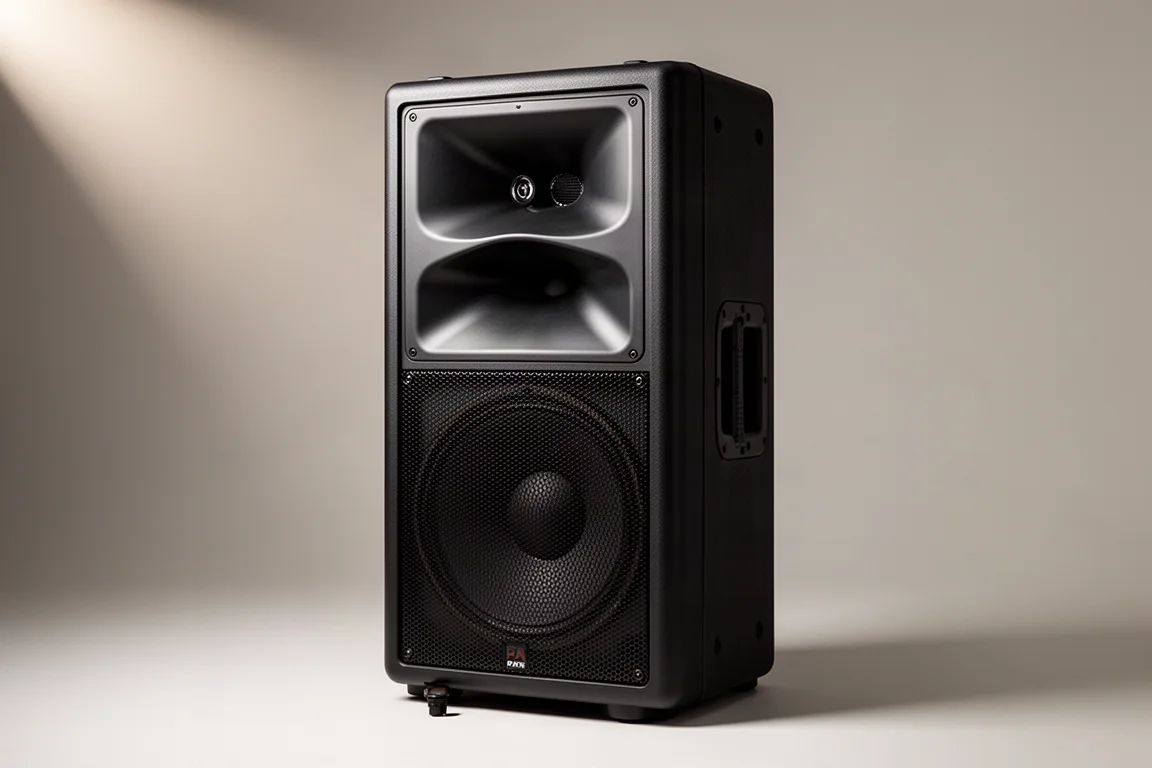
The B212XL is the smaller sibling, with a 12-inch woofer in the same style of plastic enclosure and the same horn and wave guide arrangement. It is light enough to carry in one hand.
Its performance lands in the same territory as the larger model. The same family of resonances shows up, and the same uneven tonal balance applies, so neither cabinet is meaningfully better than the other.
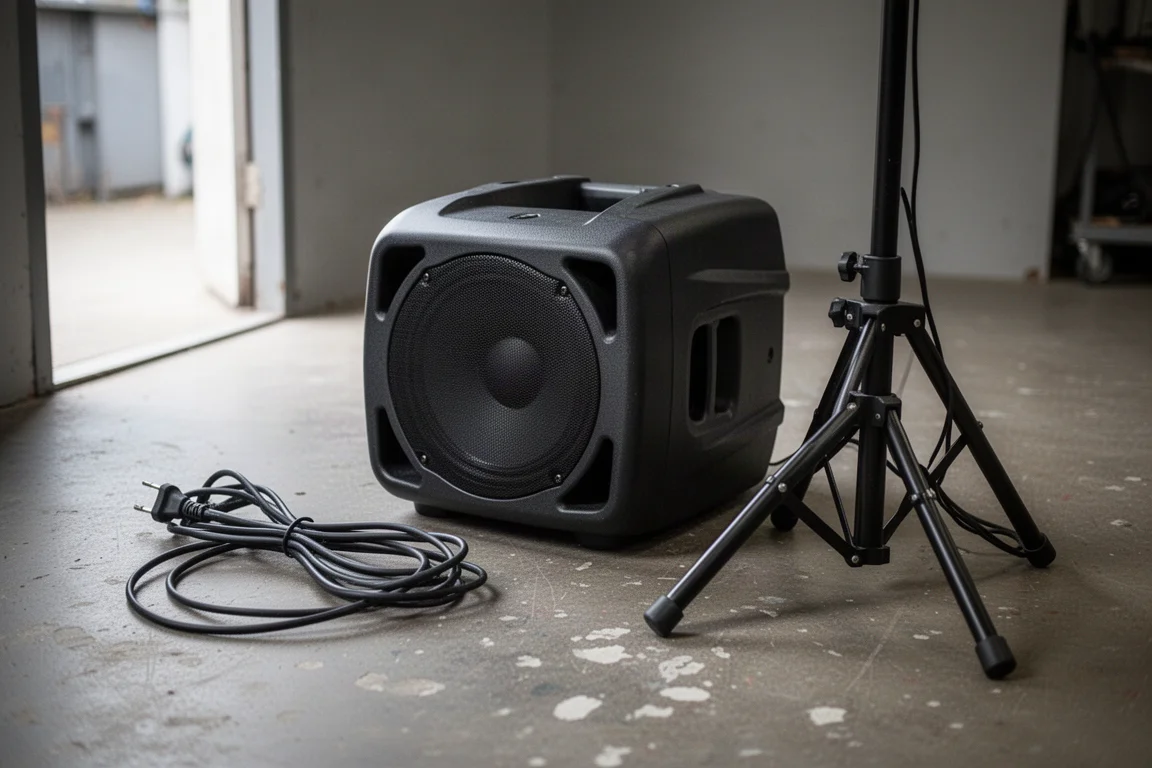
If anything, the smaller cabinet makes the trade-off clearer: you give up the visual promise of a big woofer without gaining the fidelity that would justify the compromise.
What the Measurements Show
One area does measure well. Directivity above roughly 1.5 kHz is solid, which suggests the horn and wave guide are doing their job in that band.
Everything below that is a different story. The frequency response rises and falls repeatedly rather than following a smooth trend, and the shape is not a simple lifted treble or a single broadband tilt. The impedance plot backs this up, showing small irregularities layered on top of the port tuning saddle near 50 Hz. Those irregularities indicate resonances, whether they originate in the drive units, the enclosure itself, or the port.
Why Equalization Will Not Fix These Speakers
A common argument for cheap speakers with large woofers is that DSP can clean them up later. That argument does not hold here.
Above roughly 1.5 kHz, some smoothing is plausible, though it costs headroom because cutting peaks reduces effective sensitivity. Below that, the problems are resonances stacked back to back, and a parametric filter can only address a narrow resonance when it can be isolated. When they occur in sequence, taming each one would mean a high-power DSP with very high Q filters applied individually to each frequency, which is impractical for a cabinet at this price.
The low-frequency limitation is not an EQ problem at all. The steep roll-off near 100 Hz is a physical limit of the enclosure and the driver pairing, not a tonal choice that can be reversed.
Enclosure resonances in particular are not something equalization removes, and that is the part that shapes the sound most obviously in everyday listening.
Who These Speakers Suit
For home theatre or music listening, these are poor choices. Dialogue and vocals never sit right, and the resonance makes the cabinet’s character obvious regardless of the source material. Anyone shopping on the assumption that a 15-inch woofer guarantees deep bass will be disappointed, because the roll-off arrives well before the low end most listeners expect.
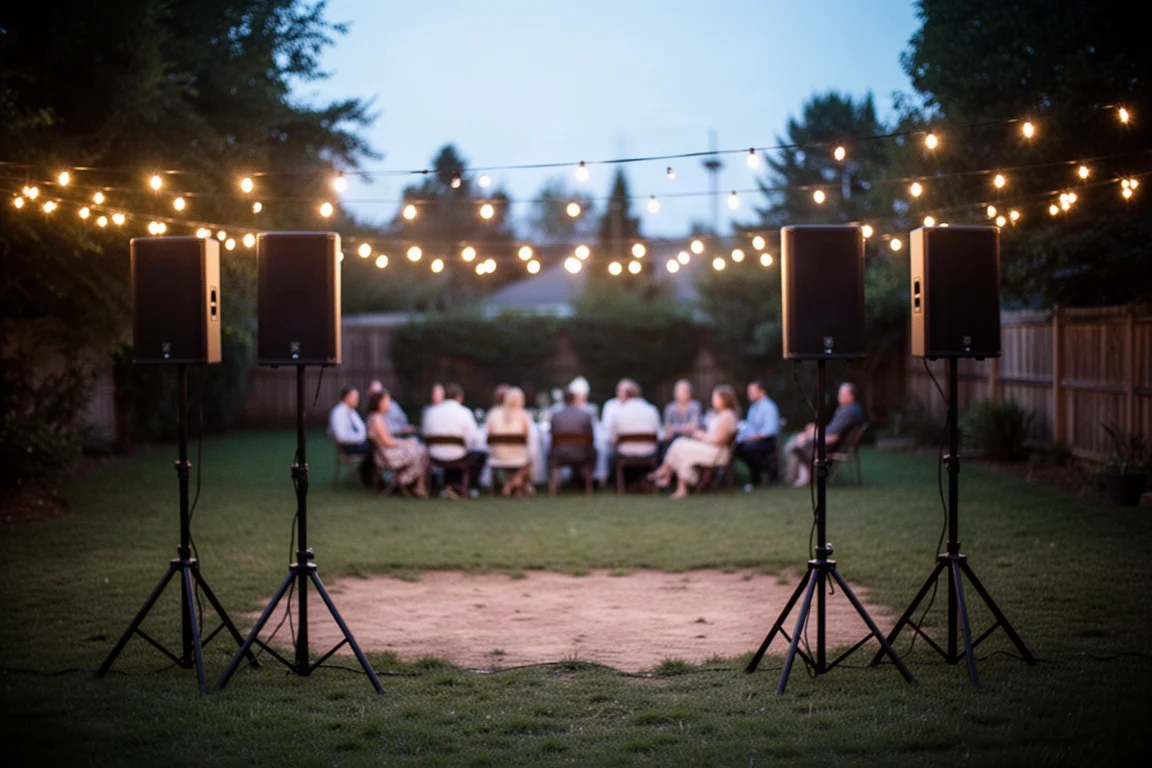
For a backyard gathering or an outdoor event where the goal is simply to have sound, the calculation changes. They are inexpensive, they play loud enough for casual use, and they are built to be pole mounted. Buyers who want coverage rather than fidelity can make that work.
Buying Advice
If the priority is accurate sound, look elsewhere. The resonances and the roll-off near 100 Hz are baked into the design, and no amount of post-processing will remove them. It is also worth ignoring the assumption that a large woofer and a low price automatically add up to a bargain.
If the priority is a cheap, loud, pole-mountable cabinet for occasional outdoor use, these speakers can serve that purpose. At around $180 per cabinet for the 15-inch model, a pair costs less than many single speakers in this class, and the trade-offs are at least transparent.
Treat them as utility speakers rather than hi-fi, and expectations stay in line with what they actually deliver. The one genuine technical strength, the directivity above 1.5 kHz, is worth remembering, but it does not compensate for the rest.
Conclusion
The Behringer B215XL and B212XL are not speakers to buy on the assumption that a big woofer and a low price add up to a bargain. Both cabinets are resonant, both roll off steeply near 100 Hz, and both put a lumpy tonal balance in front of anything you play through them. The horn’s directivity above 1.5 kHz is the one clear strength.
For casual outdoor sound where fidelity is not the point, they can do a job at a low cost. For home theatre or music, they are the wrong tool.
Further reading
Related Reviews
PA Speakers
Point Source vs Line Array Speakers: Yamaha DHR12, Bose L1 Pro16, and QSC K12 Compared
A practical comparison of three powered speaker systems and how point source and line array designs shape coverage, distance behaviour, and clarity.
Bookshelf Speakers
Acoustic Energy A100 Mark II Review: A Compact Standmount With an Expansive Soundstage
The Acoustic Energy A100 Mark II brings clarity, natural tonality and a wide soundstage to an entry-level standmount, with a few setup details worth knowing first.
Hi-Fi Accessories
Affordable Hi-Fi Accessories Under $100: A Practical Gift Guide
A practical guide to budget Hi-Fi upgrades, from 12-gauge speaker cable and isolation pads to affordable bookshelf speakers, a warm stereo receiver, and a vinyl anti-static device.