Camping Tents
Bass Pro Shops Hiker Biker Backpacking Tent Review: The Cheapest Solo Tent, Tested in Light Rain
The Bass Pro Shops Hiker Biker is the least expensive one-person tent the brand sells at $35. Here is what its claimed specs, seam construction, and overnight performance in light rain mean for buyers.
Introduction
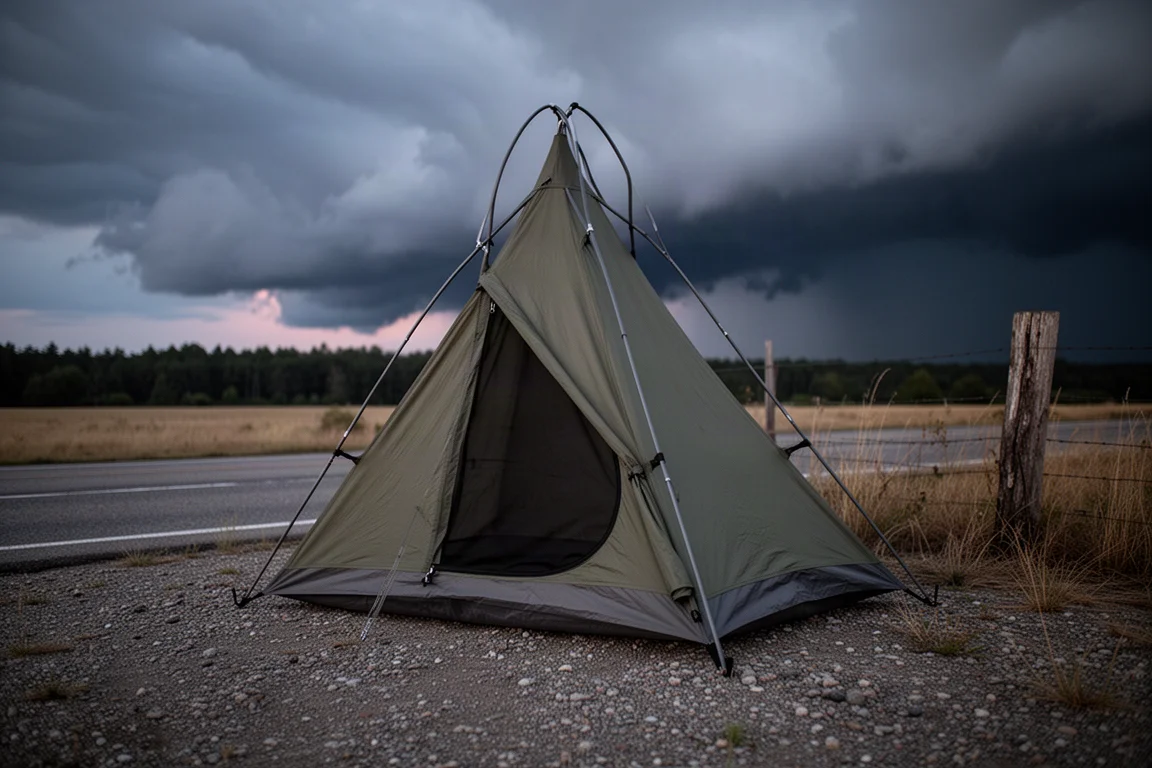
The Bass Pro Shops Hiker Biker Backpacking Tent is the least expensive one-person tent the brand offers. It retails for $35 and is frequently discounted, with units selling for $29.99. That price is the whole pitch: a tapered A-frame shelter small enough and light enough to strap onto a pack, sold under a well-known outdoor retail name.
That is also why it deserves a careful look rather than a quick recommendation. A tent at this price is usually bought by people who are new to camping or backpacking, or who want an affordable option for occasional nights out. Those buyers are depending on the tent to keep them dry, and that is exactly where this model struggles. After a night of light rain and heavy condensation, the honest summary is that the Hiker Biker is a shelter with serious design compromises, and buyers should understand them before spending anything at all.
The good news is that those compromises are visible before you ever leave the driveway. Seam construction, ventilation, and the way the walls tension are all things you can check on a first pitch in the yard, and this review walks through each of them so the decision is an informed one rather than a guess.
Design and Claimed Specifications
Bass Pro Shops describes the Hiker Biker as a lightweight, protective solution for solo backpacking, built around a tapered A-frame tunnel design with a single door. The body is 68 denier 190T polyester taffeta with a water-repelling 1,200 mm polyurethane coating. The frame uses lightweight shock-corded fiberglass poles, three in total, with two of equal length and one noticeably shorter.
In the box you get a duffel-style carry bag, eight tent stakes, and reflective guy-out ropes. The specification lists two guy lines, though the unit supplied with this tent included only one, and there is no obvious second attachment point for the other.
The claimed dimensions are 6 ft 11 in long, 4 ft wide, 2 ft 11 in high at the front, and 2 ft at the rear. Measured on the ground, the length came in close to 6 ft 10 in, which is a fair claim. The width figure is far more generous than the tent itself, because the walls taper sharply toward the top, where the interior measures roughly 2 ft 8 in across. The entrance is about 2 ft high, and the sloped walls mean the headline height number does not translate into usable headroom or shoulder room.
Seam taping is inconsistent in a way that matters. The side seams are taped, the floor seams are taped, and the top seam is taped. The door seam is not taped, and the rear seams are not taped either, with light visibly passing through the stitching. On a tent that is meant to be a shield from the elements, those are the two places you would want sealed most.
Who This Tent Is For
The appeal here is understandable. Inexpensive tents are the volume sellers in outdoor gear, and buyers who are testing whether they enjoy backpacking often start with the lowest price on the shelf. Someone shopping for a tent has no reason to assume it will leak, and no reason to assume a brand name on the side of the box is anything other than a promise.
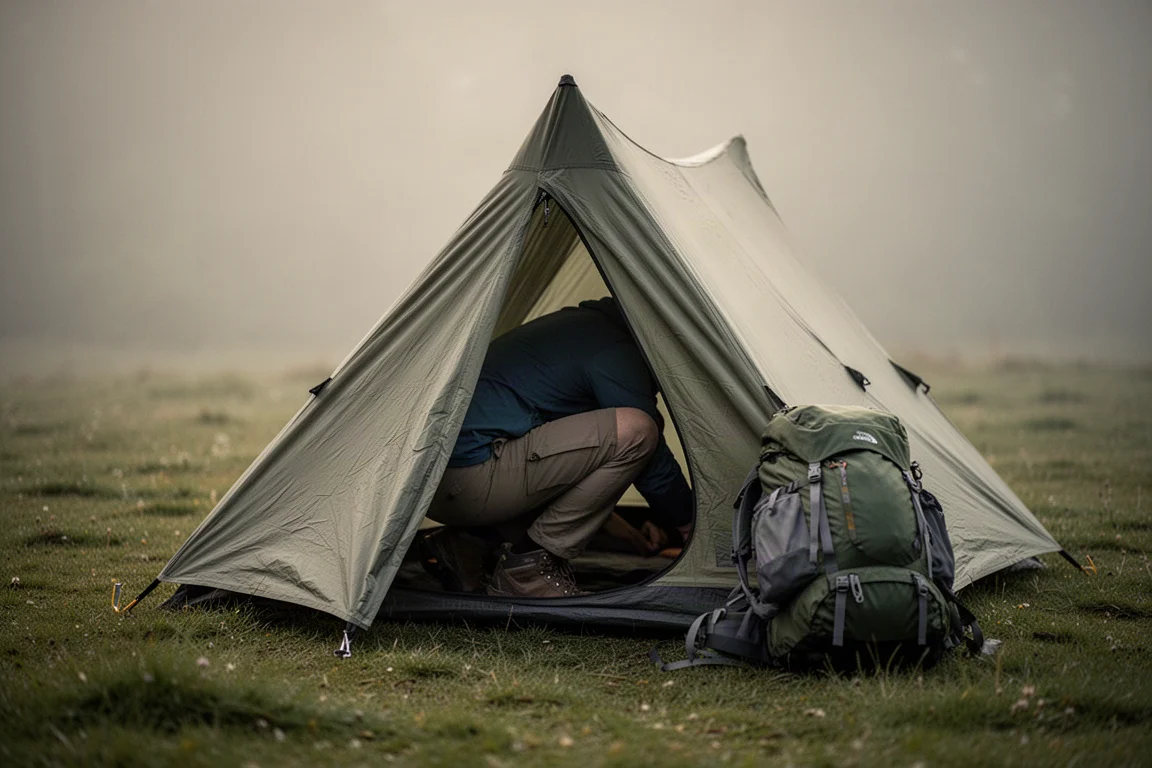
On paper, this tent fits that beginner profile: light, compact, quick to pitch, and cheap enough to try without much risk. In practice, the size is the first reality check. This is among the smallest one-person form factors you can buy, and getting inside means reversing through a low door because there is no room to turn around. A sleeping pad, a sleeping bag, and a small pack fill the floor completely.
That combination of low price and cramped interior is worth weighing honestly. If the goal is a first shelter for a child in the yard, or an emergency option kept in a vehicle for covered, dry conditions, the calculation is different from a tent that is expected to protect an adult on a real backpacking trip.
Main Strengths
Price is the clearest strength. At $35 retail, and often less on sale, this is the cheapest one-person tent in the Bass Pro Shops range, and very few competitors undercut it.
Packability is the second. The packed bundle is remarkably small for a tent with a floor, and it disappears into a pack without argument. Setup is also quick: the shock-corded fiberglass poles go together fast and the A-frame shape is simple to raise, even for someone pitching a tent for the first time.
Finally, the length claim holds up. At roughly 6 ft 10 in measured against a claimed 6 ft 11 in, tall sleepers get close to what the specification promises, even if the width and height figures are far less honest about usable space.
Things to Consider Before Buying
Ventilation is the single biggest issue. This is a single-wall tent with one small vent at the rear that does very little. On a night when the outside temperature sat around 42 F, the interior felt closer to the 60s F, and that warm, humid air against a cold single wall is a direct recipe for condensation. There is no second layer and no meaningful airflow path to carry moisture away.
There is also no way to tension the side panels outward. Once the fabric takes on moisture, the walls stretch and bow inward, so the interior shrinks further and body contact becomes unavoidable. That contact transfers condensation straight onto a sleeping bag and clothing.
The untaped door and rear seams are the third concern, because those are the entry points for driven rain and the exact places where water finds a path through stitching.
Buyer feedback reflects the same pattern and is worth reading before ordering. One listing for this model carries 13 reviews averaging 2.5 out of 5, with complaints about missing instructions, missing guy ropes, fabric that does not breathe, saturated walls, and a groundsheet soaked through on a night when no rain fell. There are also glowing accounts, including one describing hail damage repaired by hand stitching and a storm survived, which sits awkwardly beside the more common reports.

It is also worth knowing that this tent exists in several versions, some discontinued and some sold under different names, and the listings vary in what they include. Checking the exact product page and what ships with it is more useful than assuming all versions are identical.
Real-World Performance in Rain and Condensation
The forecast for the test night was modest: rain arriving after 2 a.m., patchy fog after 4 a.m., a low around 36 F, an 80 percent chance of rain, and precipitation totals near a tenth of an inch. That is not a storm. It is a light, ordinary rain event, which is precisely what makes the outcome worth reporting.
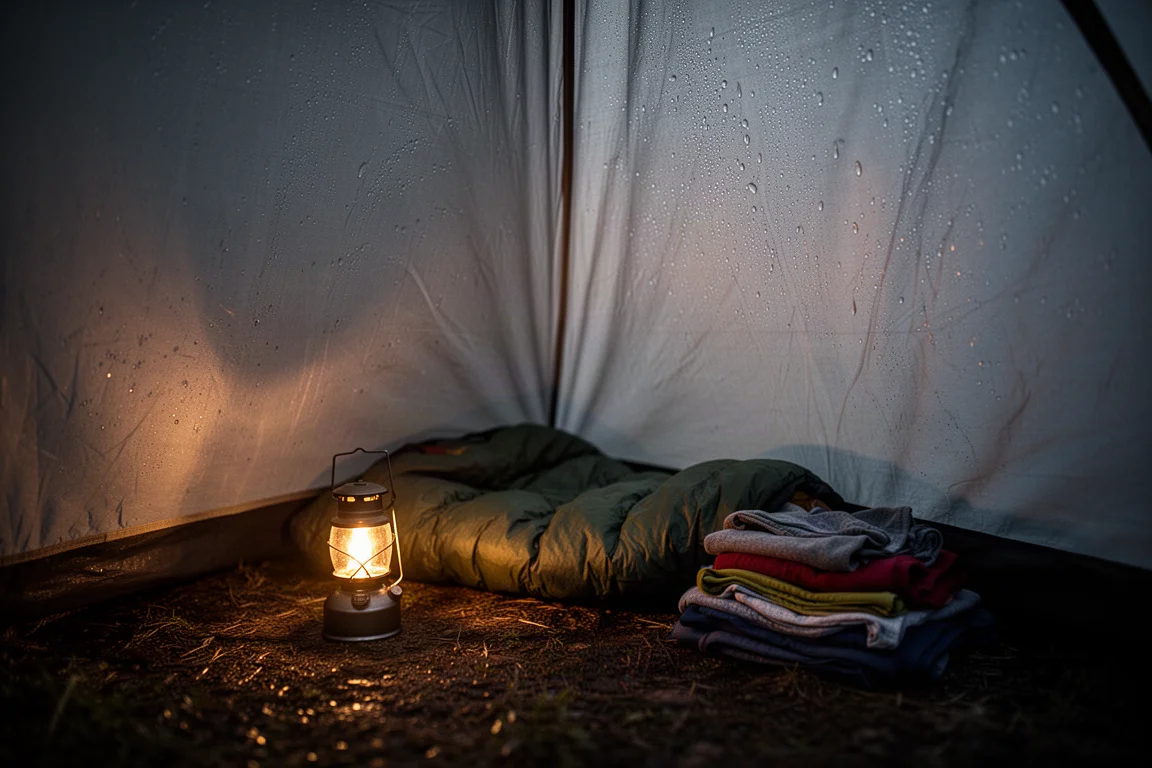
After roughly 45 minutes of light rain, the floor was covered in moisture, the walls were wet to the touch, and a puddle had formed at the foot end where the corner leaked. The rear mesh vent was wet from drips falling off the untaped seam above it. Outside, the ground never formed a single puddle, so the water collecting inside came from the tent rather than from standing water beneath it.
Condensation made the situation worse rather than better. With the walls bowing inward and no way to move them off the body, a sleeping bag and clothing were soon soaked. With temperatures in the upper 30s F, staying inside a wet shelter stopped being a reasonable option, and the night ended in a vehicle instead. That is the real lesson here: a wet shelter in cold weather is a safety problem, not just an uncomfortable one, and this tent reached that point on a night of light rain.
Buying Advice
Inexpensive tents sell in enormous numbers because buyers reasonably assume a tent will do the one job a tent is for. The question worth asking before you order is whether the savings are worth the risk of a wet, cold night, and on this model the answer is difficult to justify.
Seam sealing and aftermarket water-repellent treatments are workarounds, not fixes. If you are going to spend an evening treating seams or adding a tarp over the top to make a shelter usable, that money and effort are better directed at a tent that does the job on its own. There are inexpensive tents that handle rain far better than this one, and buying one good shelter once costs less than replacing a failing one repeatedly.
If you do decide this model fits a specific, narrow use, treat it accordingly. Check the box contents on arrival, since instructions and guy lines have been reported missing. Pitch it in the yard before a trip so you know how it behaves and how small it really is. Keep it for short, dry, well-covered outings rather than exposed backpacking trips, and never rely on it in cold, wet conditions where getting soaked becomes a genuine safety issue.
Conclusion
The Bass Pro Shops Hiker Biker Backpacking Tent wins on price and pack size and loses almost everywhere else that matters. The 1,200 mm coated polyester body, quick fiberglass frame, and honest 6 ft 10 in length are real, but untaped door and rear seams, a single ineffective vent, and walls that bow inward under moisture turn light rain into a wet night. For a buyer who needs a shelter that protects them in the cold and rain, this is a tent to look past, and the money is better spent on a modestly more expensive shelter that keeps the weather outside where it belongs.
Product link
View more details for Bass Pro Shops Hiker Biker Backpacking Tent
This product is mentioned in the review. Check the specifications, options, and compatibility before buying.
View more details for Bass Pro Shops Hiker Biker Backpacking TentFurther reading
Related Reviews
Camping Tents
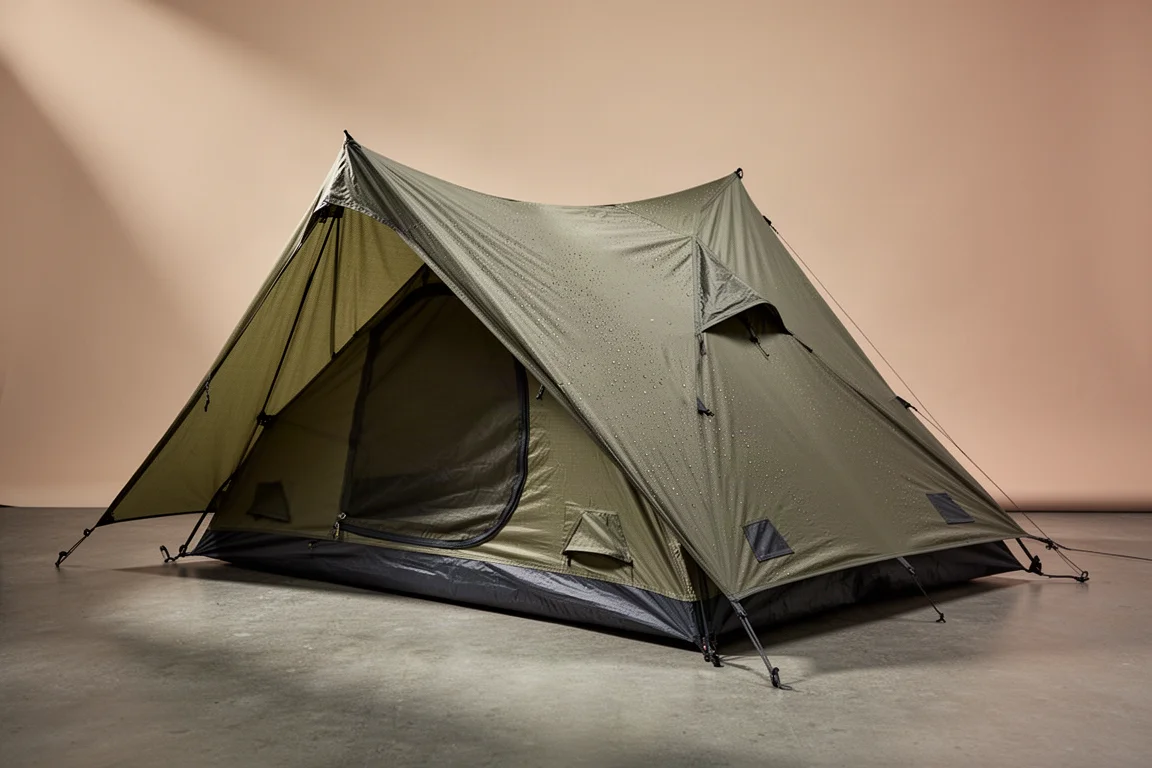
3F UL Gear Taiji Two-Person Tent Review: Field Waterproofing Results and Buying Advice
The Taiji pairs an attached fly with a removable inner, but sustained rain exposed untaped vent seams that need sealing before this shelter can be trusted.
Camping Tents
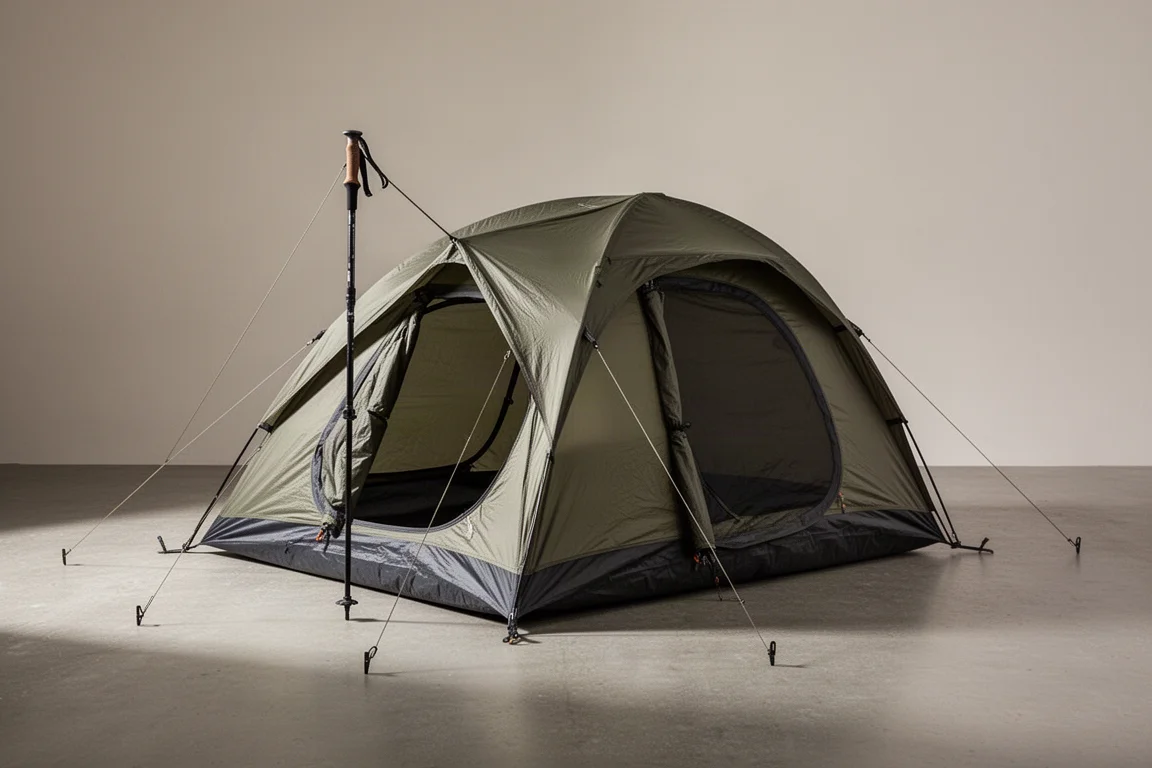
3FUL Gear Lanshan 2 Pro 4-Season Review: A Sub-$200 Single-Wall Trekking Pole Tent
An early look at the 3FUL Gear Lanshan 2 Pro 4-Season, covering its straightforward pitch, generous interior space, and the condensation and seam-sealing questions that come with any single-wall shelter.
Camping Tents
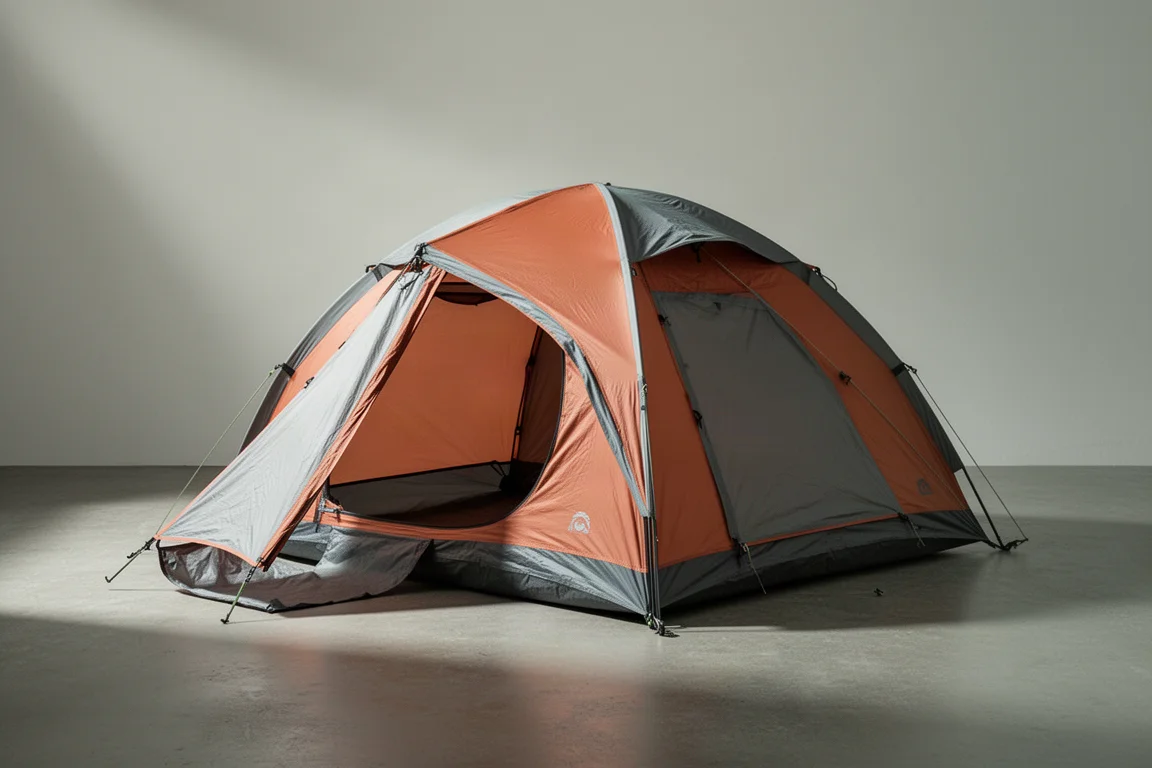
Alps Mountaineering Lynx 1-Person Tent Review: Big Value in a Small Budget Tent
A close look at the Alps Mountaineering Lynx 1-Person Tent, covering real interior dimensions, materials, setup time, ventilation limits, and who should buy it.