Gravel Bikepacking
Badger Divide Bikepacking Setup: Six Gravel Components That Handled a 200 Mile Scottish Route
A loaded carbon gravel build put through 200 miles of remote Scottish off-road terrain, from frame and suspension fork to wide rims, tyres, gearing and rack luggage.
Introduction
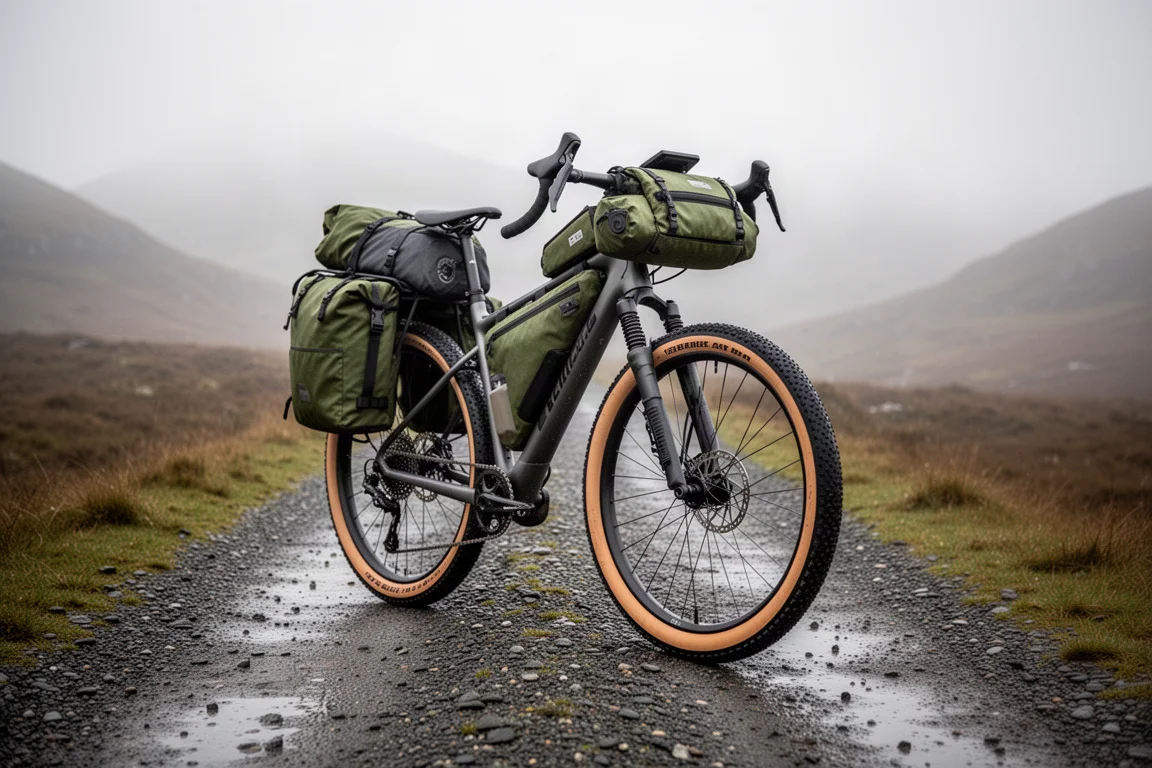
Some routes test a bike in ways no showroom floor ever will. The Badger Divide runs 200 miles, or roughly 320 kilometres, of off-road gravel from Inverness to Glasgow, and it asks a loaded bike to cope with fine dirt, massive boulders, roots and genuinely gnarly terrain in a landscape that feels properly remote.
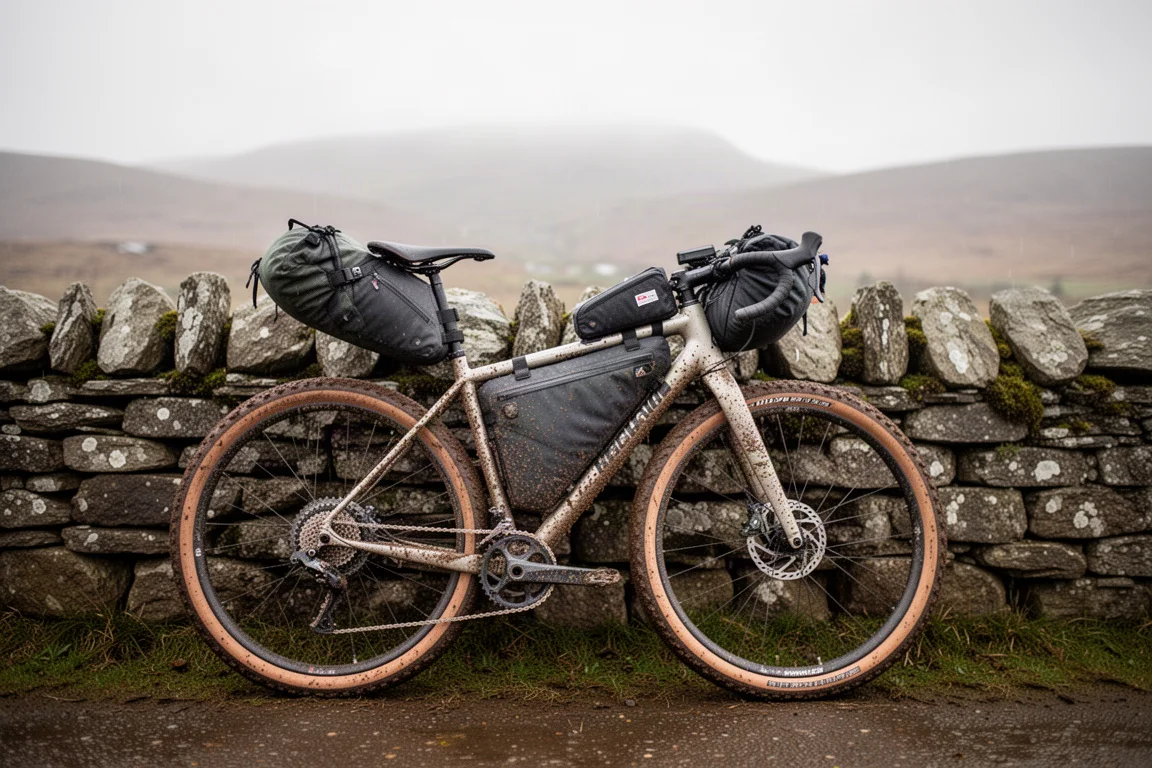
This build was assembled with one goal in mind: go lighter and faster than a steel setup, and find out whether carbon can handle a self-sufficient off-road bikepacking trip where every problem has to be fixed at the roadside. Loaded and ready to ride, the complete setup weighed 18 kg, with the bike itself accounting for 9.5 kg without pedals.
Here is how each part of the build performed.
What a Route Like the Badger Divide Demands
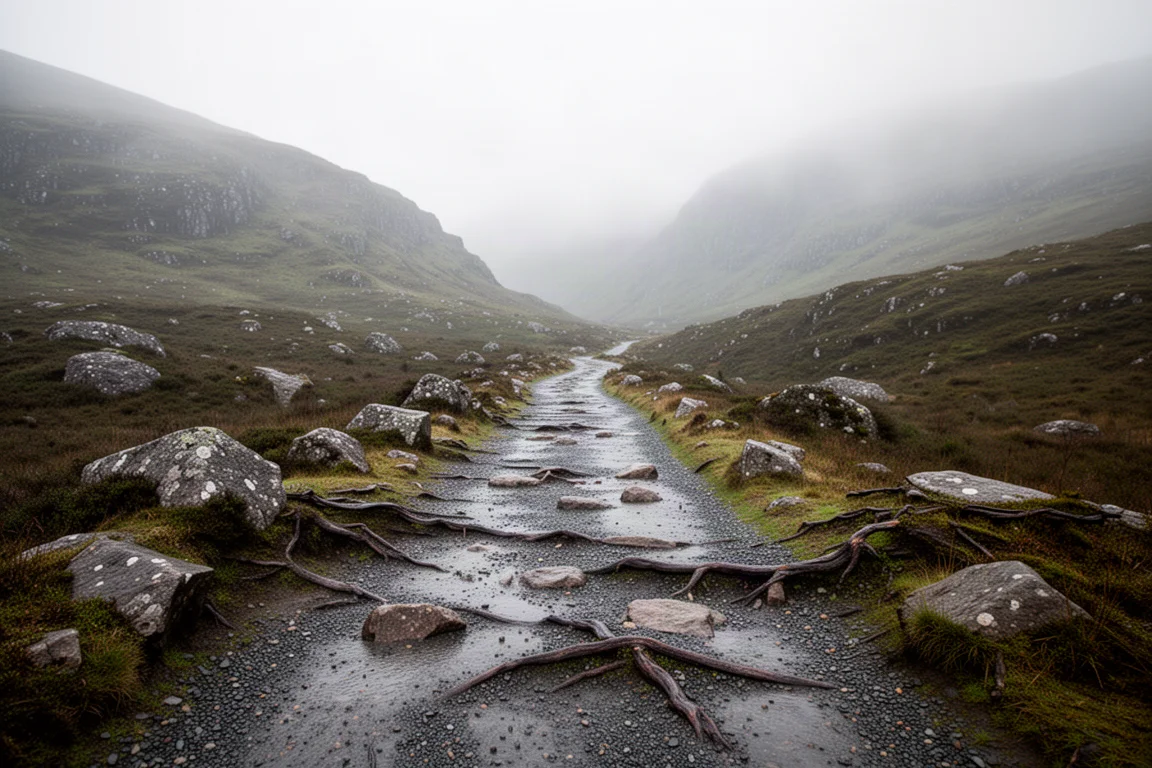
The Scottish hills are big, the climbing is relentless and the surfaces change constantly. Average speed across the whole trip landed between 16 and 17 km/h, with smoother roads and gravel tracks allowing stretches of 30 to 35 km/h.
That mix shapes every equipment decision. A setup has to stay comfortable across long days in the saddle, keep control on loose rocky descents, carry everything needed for wild camping, and survive wet weather and grit without a workshop anywhere nearby.
Riders weighing up a similar trip should think about comfort and durability first, then speed. The rougher the route, the more a small amount of added compliance is worth.
Salsa Warbird: A Gravel Race Frame Under Load
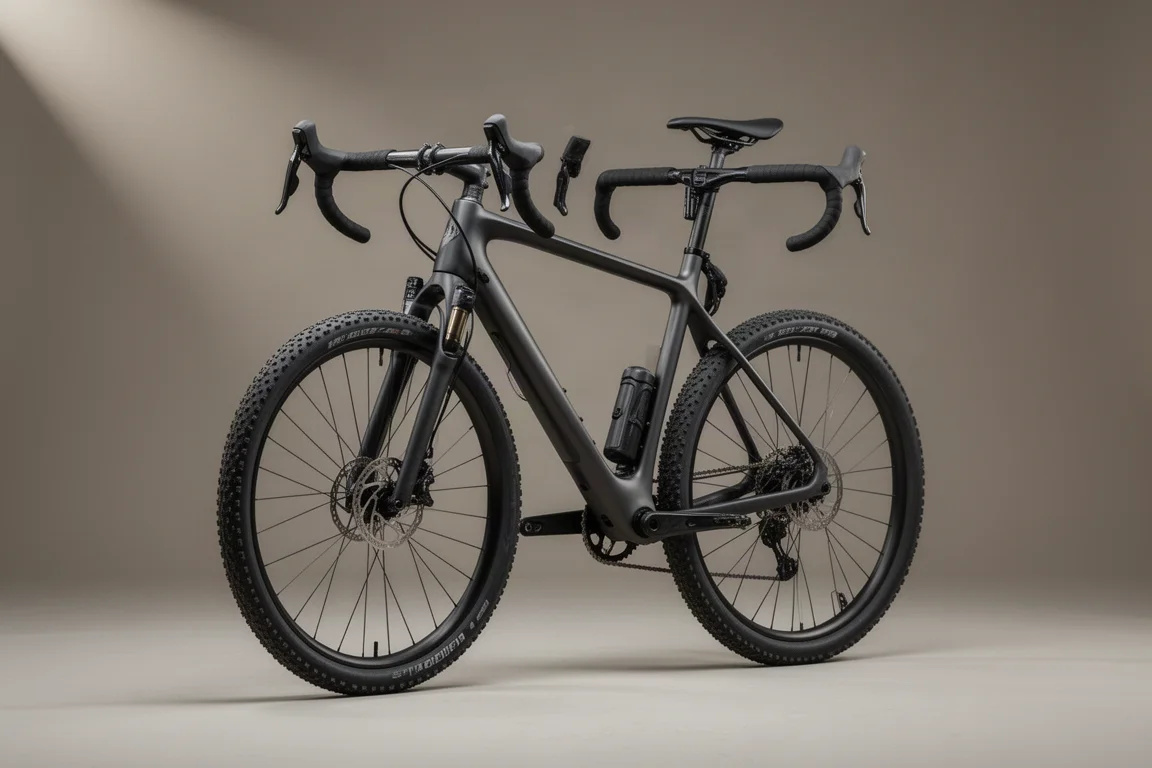
The frame is a fourth-generation Salsa Warbird, a design widely regarded as the first gravel race bike and now around ten years into its evolution. It offers ample tyre clearance, plenty of mounts for bottles and accessories, and geometry that balances a lively, fast feel with stability thanks to a longer wheelbase, longer rear stays and a slightly slacker head angle.
Over three to four days of riding it proved comfortable and composed, and the carbon construction came through the rocks without drama.
RockShox Rudy: 30 mm of Suspension Travel
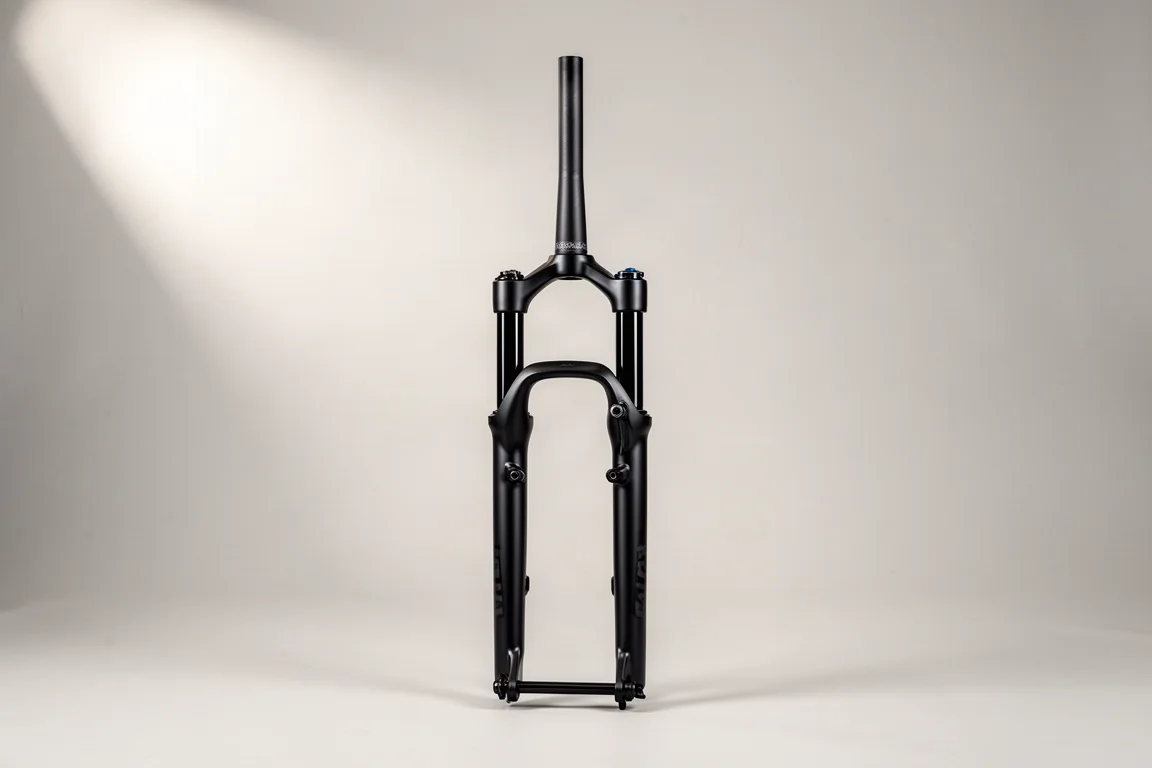
In place of the rigid carbon fork the frame ships with, this build used a RockShox Rudy suspension fork. The 30 mm of travel made a real difference on rougher tracks and during the long days in the saddle.
On a long gravel ride the upper body usually takes a beating through the arms. The fork absorbed much of that, and it also added control on the longer rocky tracks, which made those sections more fun rather than simply survivable.
Zipp 101 XPLR: Wide Carbon Rims Built for Compliance
The Zipp 101 XPLR wheels use a single-wall carbon rim design intended to build compliance into the rim itself. It sounds like a gimmick, and it is not. Combined with wide tyres and the suspension fork, the ride was noticeably smoother, less buzzy and quieter than a deep-section aero carbon rim or a shallow alloy wheel.
The rims measure a substantial 27 mm internally, which gives a broad platform for 40 mm tyres. That allowed low pressures without tyre squirm and without the rim dings that rocks often cause on deeper carbon rims.
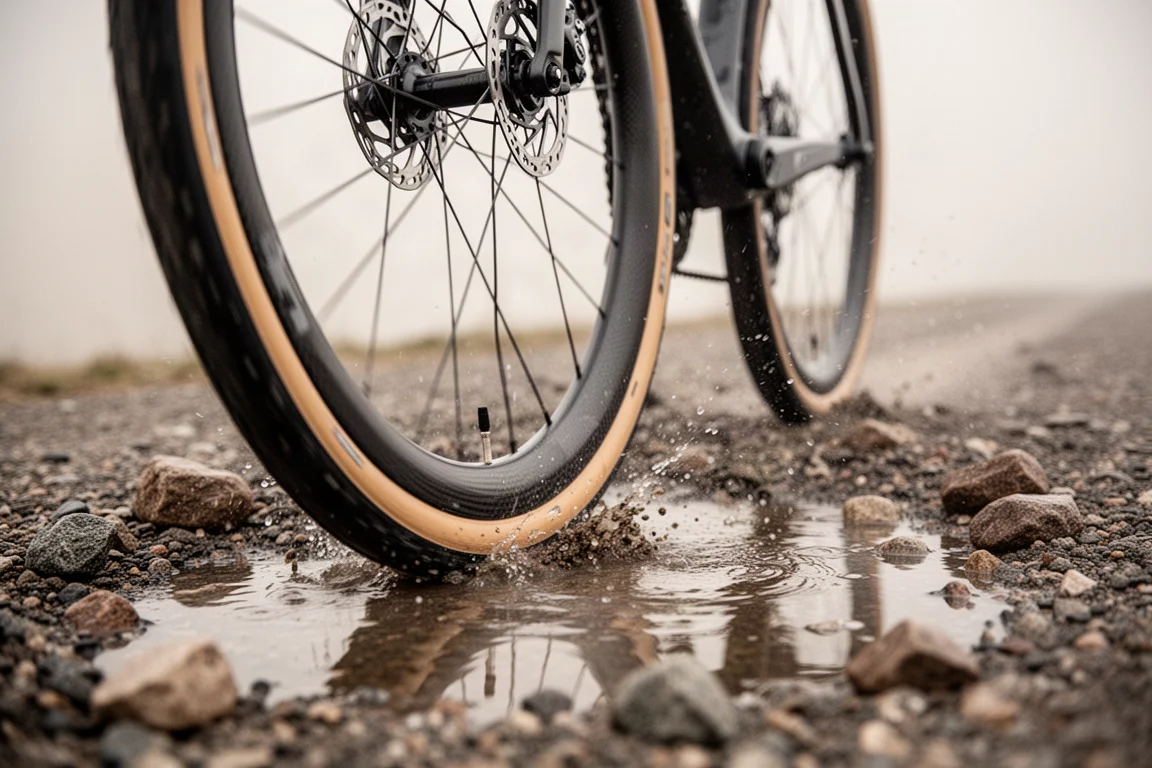
After the trip there was no damage to the rims at all and spoke tension remained good. These wheels are probably not as fast as an aero section, but at the speeds this route allowed, the comfort and control were worth more than the aero advantage.
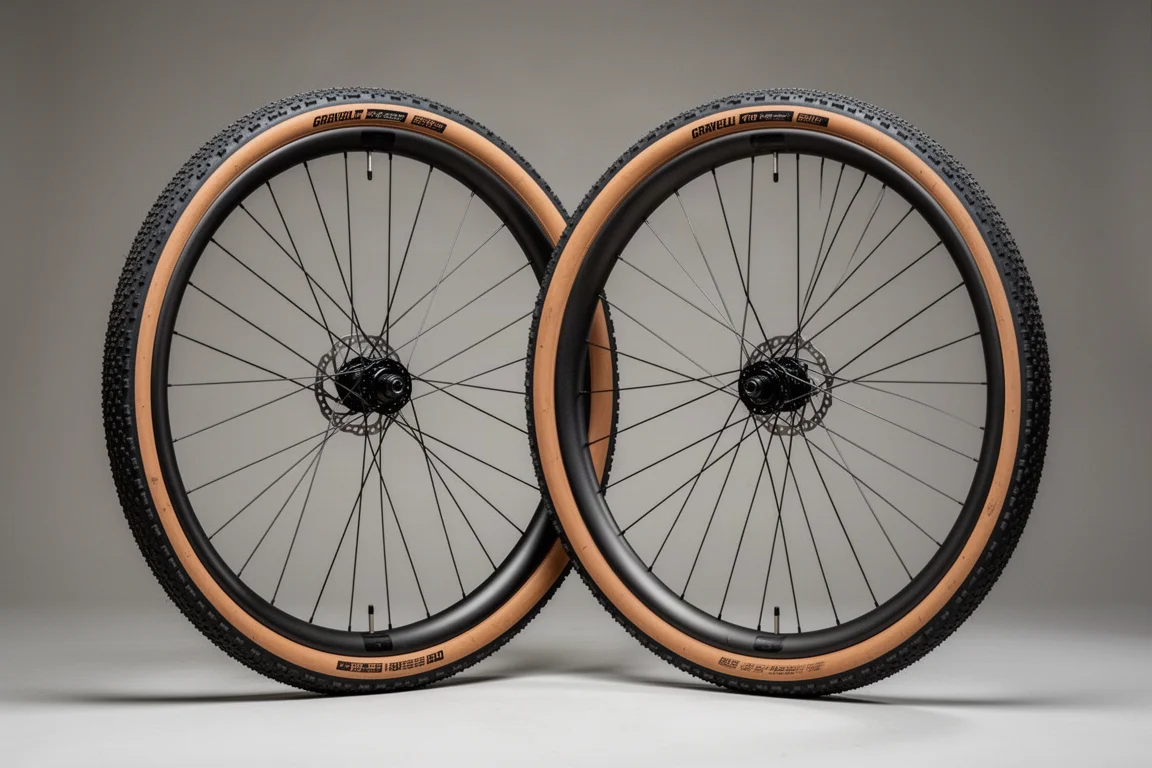
Zipp G40 XPLR: 40 mm Tyres for Loose and Wet Ground
The Zipp G40 XPLR tyres wrap those rims in a 40 mm casing with tan sidewalls. The low-profile tread looked like it might struggle on the wetter, muddier tracks the route delivered, but the compound is sticky enough to hold traction on wet roots and rocks.
Pressures sat between 32 and 35 psi front and rear. Across the whole trip there were no punctures, no cuts and no gashes on the tread or the sidewalls.
SRAM XPLR: One-by Electronic Gearing
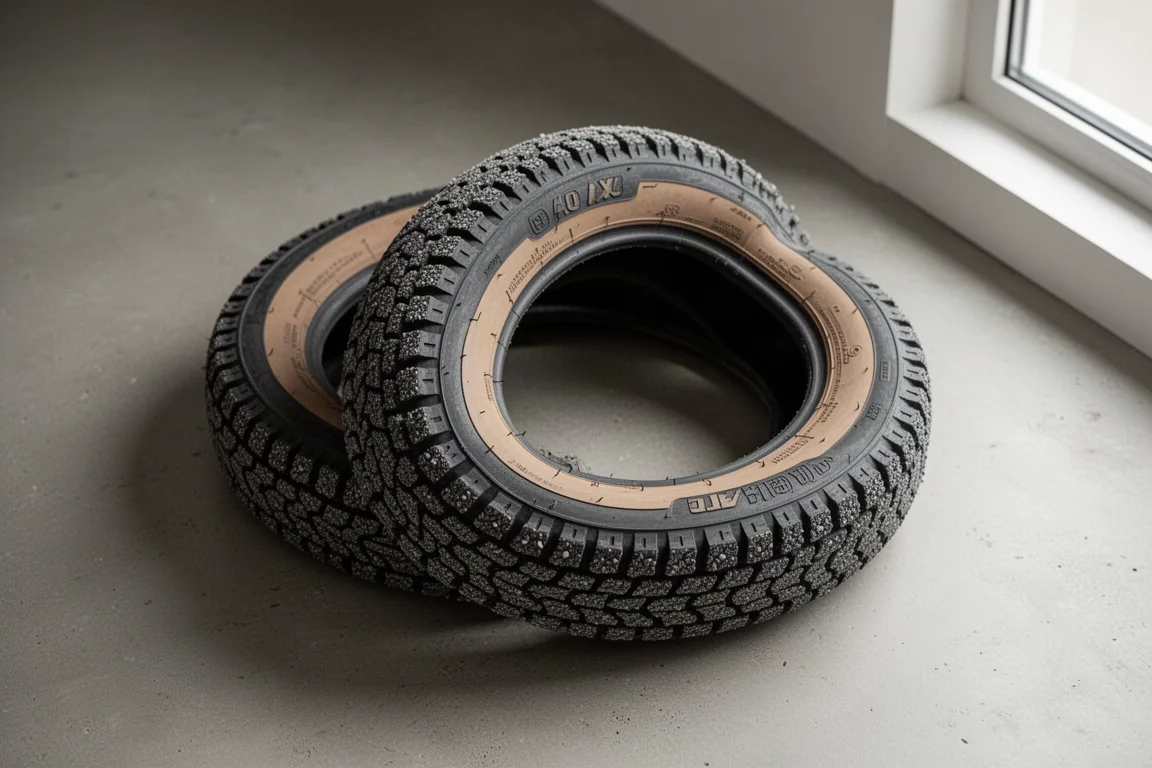
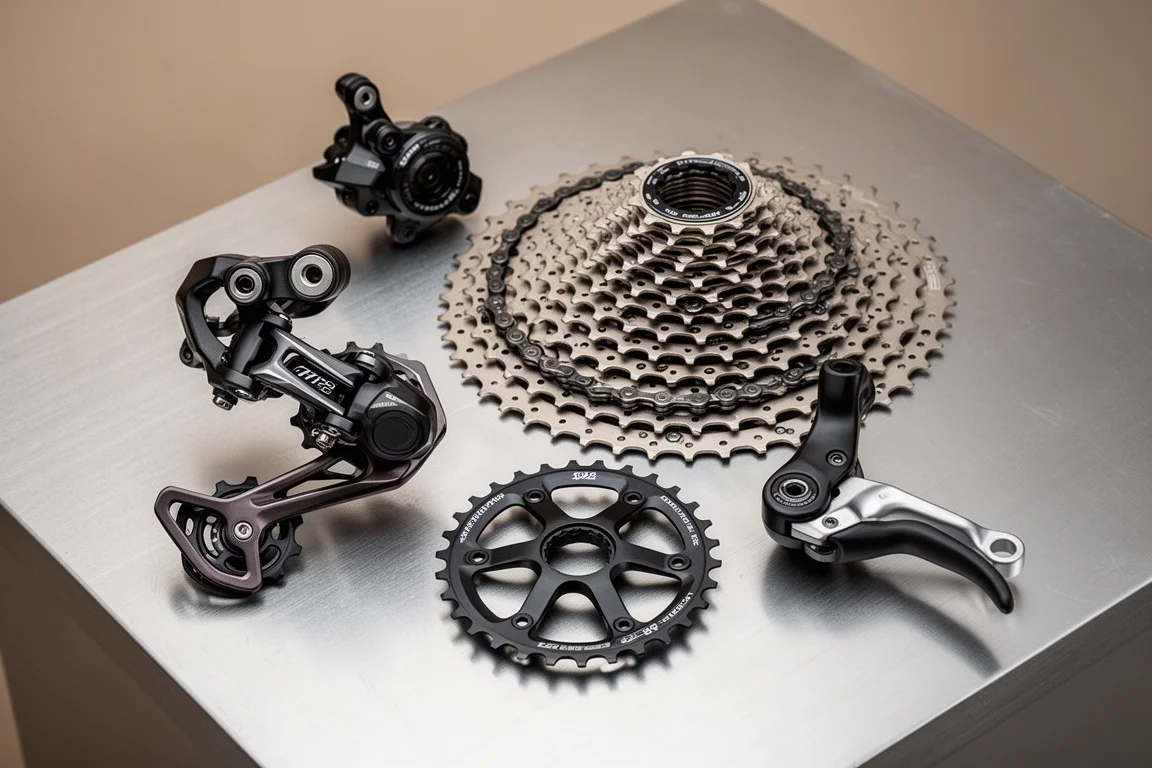
The drivetrain is SRAM’s latest XPLR groupset: a single 42-tooth chainring up front, a new 10-44 cassette at the back, 12-speed electronic wireless shifting and hydraulic disc brakes.
One detail worth knowing is that the companion app shows which gears get used most. Across 21 hours of total ride time, four and a half hours were spent in the 44-tooth rear sprocket, which says a lot about how much climbing this route contains.
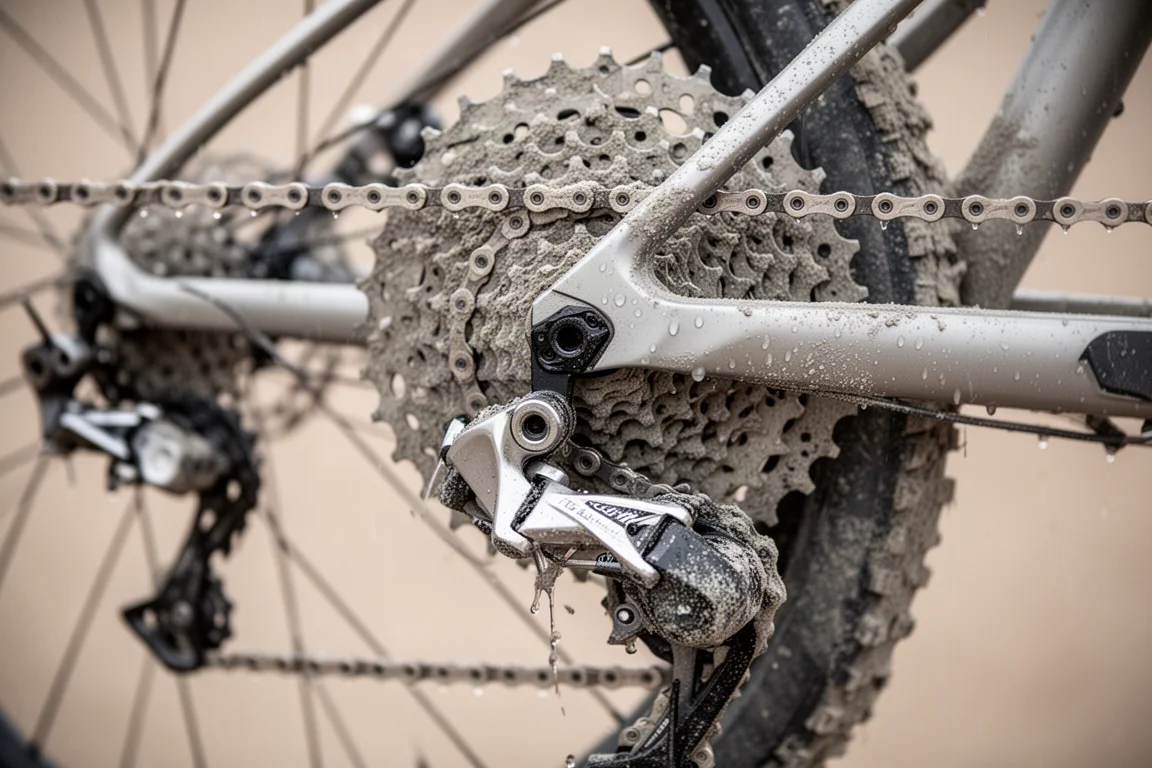
If the same trip were repeated, a smaller chainring would be the one change worth making. The 42-tooth ring was a little tall for the biggest climbs, and dropping to a 40-tooth ring would have been just right. That is the appeal of a one-by setup, because the swap is simple. Despite being covered in grit and never washed, the groupset shifted faultlessly throughout.
Tailfin AeroPack Alloy: Rack-Based Luggage
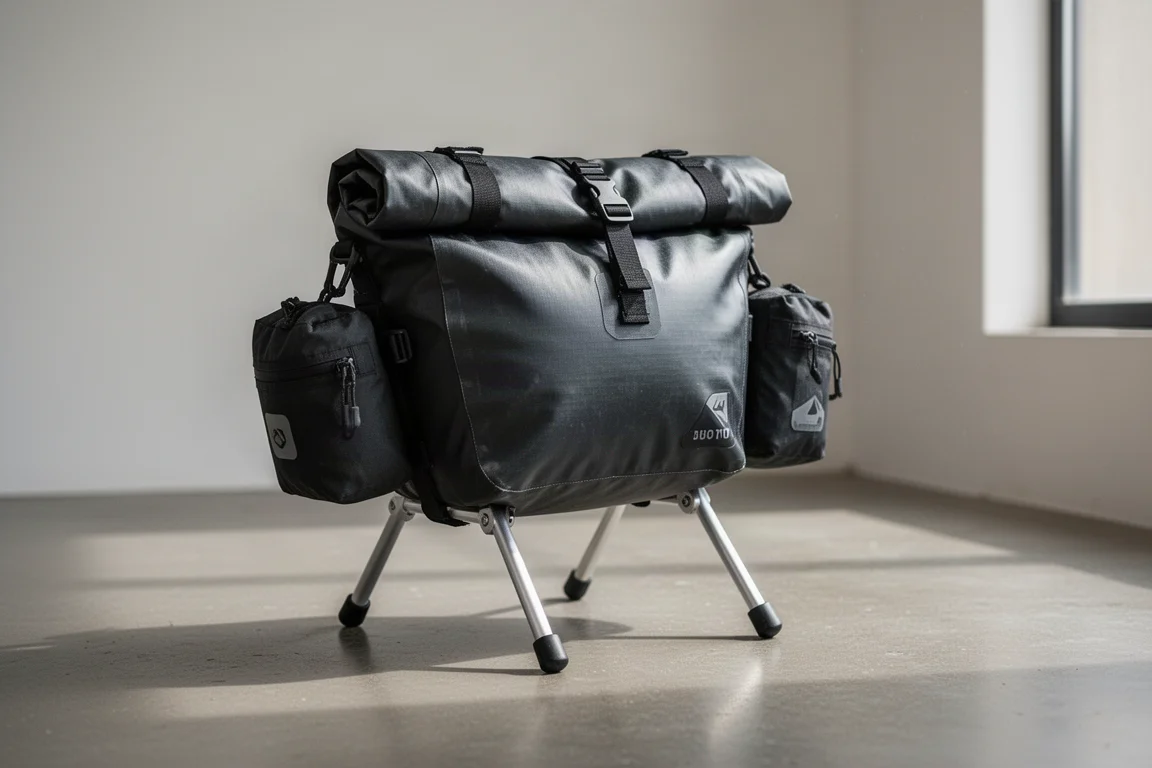
Luggage on this build moved away from the traditional handlebar bag, frame pack and seat pack combination. The Tailfin AeroPack Alloy is a rear rack with a 20 litre roll-top bag integrated into the rack itself, and a lighter carbon version is also available.
Fitting is quick: swap the axle, clip adapters onto the axle and the seat clamp, and the rack is ready. Because it is fixed firmly to the frame, it eliminates the sway a seat pack develops when riding out of the saddle. The roll-top bag is easier to pack and to access during a ride than a seat pack, helped by a flat bottom rather than a tube shape, and the weight penalty is marginal.
It is a pricey option, costing more than a seat pack and more than a titanium rack, but the design, durability and modularity make a strong case. The same rack works for commuting and weekend rides, keeps luggage high, off the ground and out of the wind, and doubles as a mud guard.
Overall Buying Advice
The clearest takeaway from this build is that carbon frames and carbon wheels are tough enough for loaded off-road bikepacking. The frame and the rims came through a demanding route with no damage and no loss of spoke tension.
Priority order depends on the terrain. Riders heading somewhere rocky and remote will get the most from a suspension fork and wide, compliant rims, because comfort and control matter more than outright speed when the surfaces are rough. Tyre choice follows the same logic, and a 40 mm casing with a sticky compound handled wet roots and rocks without a single puncture.
Gearing deserves honest planning. Study the climbing profile before settling on a chainring size, because one tooth makes a noticeable difference on long, steep days.
If luggage access matters, a rack-mounted system is easier to live with than a seat pack, at a higher cost.
Conclusion
Nothing here is exotic for its own sake. Each part solved a specific problem on a remote 200 mile route: a stable carbon frame, a fork that softened the rough stuff, wide rims that added compliance, tyres that gripped without failing, gearing that kept working in the wet, and luggage that stayed put.
For riders planning a similar adventure, the combination is worth considering, and each component is worth evaluating against the terrain you actually ride.
Further reading
Related Reviews

Backpacking Gear
Building a 10 lb Base Weight: An Ultralight Backpacking Gear List
A practical walkthrough of the ultralight pieces behind a 10 lb base weight, from a 765 g pack and a roomy one-person tent to a full camp chair and a dependable water filter.

Road Bikes
10 New Road Bikes Worth Watching: Aero, Titanium, Steel and Endurance Standouts
A practical roundup of 10 new road bikes, from aero flagships chasing single-watt gains to titanium, steel and endurance platforms built for real roads.
Bikepacking Gear
11 Bikepacking Essentials for Long-Distance Cycling
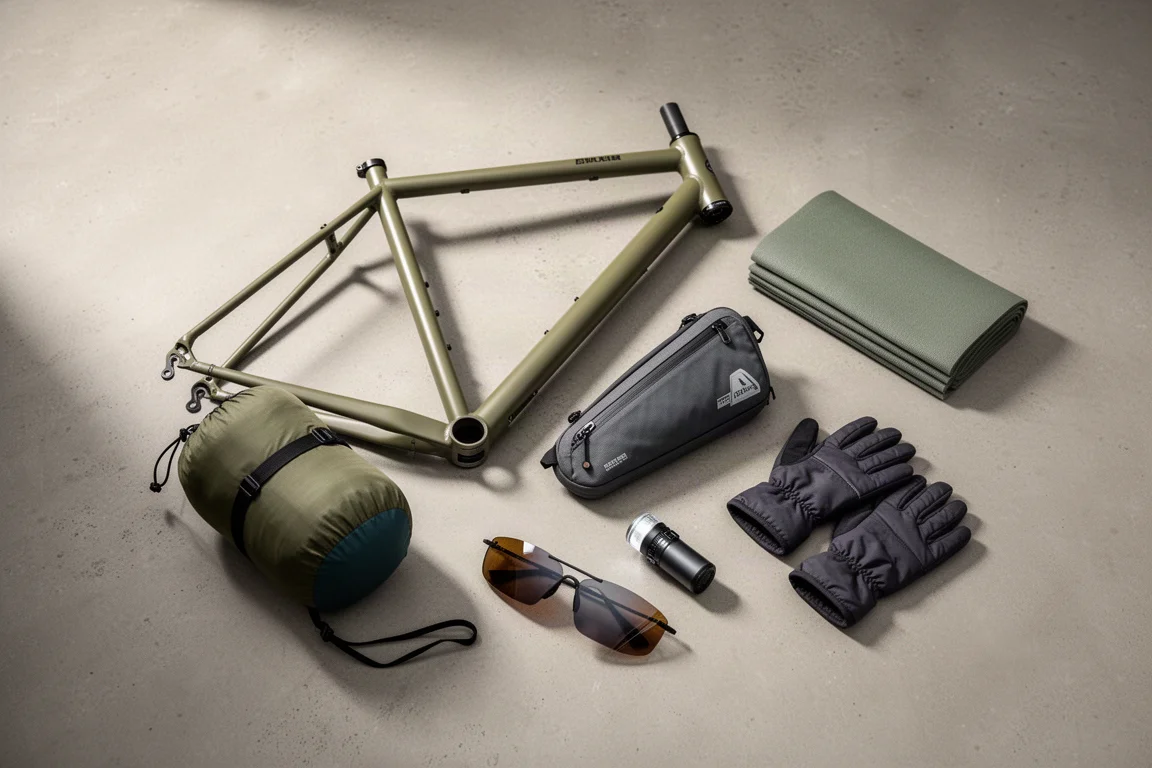
Eleven bikepacking essentials for long-distance cycling, from a steel gravel frame and a two-person tent to helmet lights, packable gloves, and a frame bag that puts weight in the right place.