Backup Power
Backup Power, From USB Top-Offs to a 9,500W Inverter Generator: What to Buy at Every Level
A practical breakdown of backup power options, from $50 battery top-offs to large inverter generators, with the pros and cons that actually matter in an outage.
Introduction
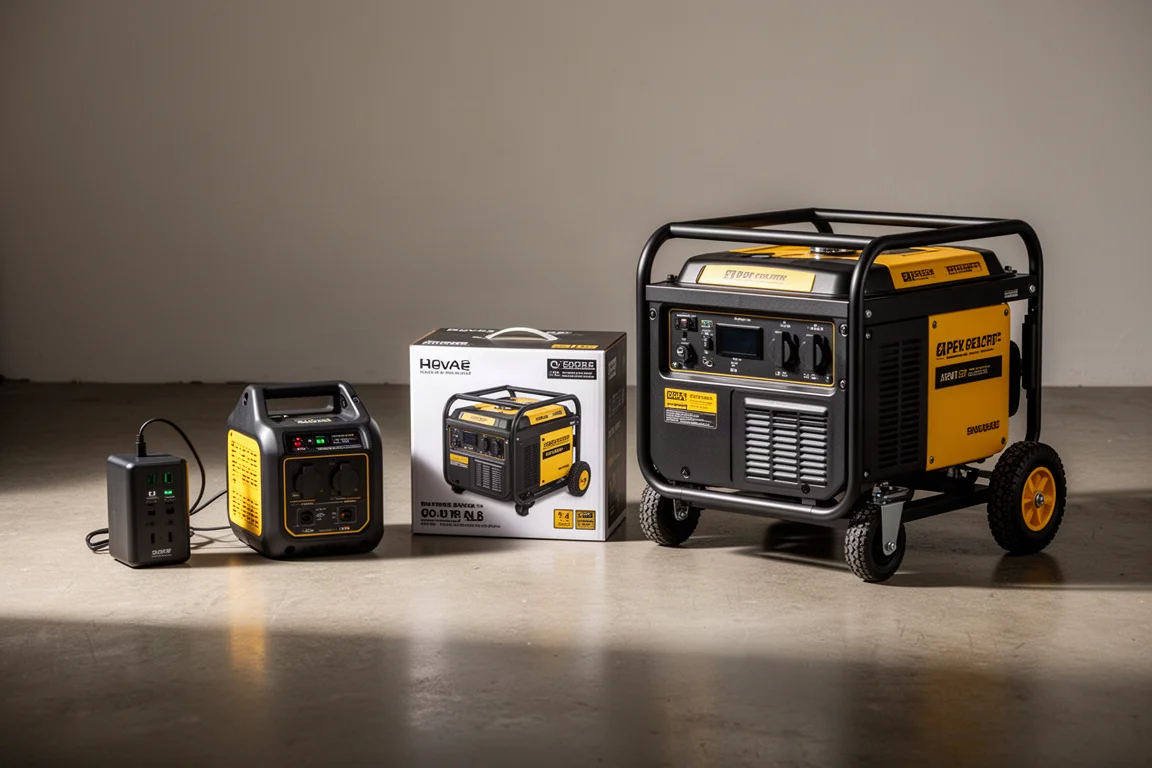
Outages keep getting more common: trees, snow, high winds, utility shutoffs, summer rolling blackouts. If you live somewhere that deals with any of these, backup power has quietly become one of the most relevant purchases you can make. The catch is that the market spans everything from a $50 battery adapter that charges a phone to a $2,300 inverter generator that can run most of your house. Buying the wrong tier wastes money, and buying too small leaves you in the dark anyway.
This guide breaks the options into clear classes, from the cheapest battery-powered top-offs up through single-battery inverters, power stations, and finally gas generators, including the large inverter model we ultimately bought. The goal is simple: help you spend the right amount for the jobs you actually need done, whether that is keeping a fridge alive, keeping the kids’ tablets charged, or running heat during a multi-day outage.
Class 1: USB and Top-Off Battery Adapters
The cheapest entry point is battery-powered top-off style inverters. These days, some models push 45, 80, even 100 to 140 watts out of USB-C ports, enough to charge and power everything from phones to laptops to soldering irons. They also earn their keep outside of emergencies; a flat tablet in the back seat on a road trip is exactly the kind of problem they solve.
Power tool brands have leaned into this hard. Many offer pop-off style battery attachments, like the DeWalt DC090 with USB-A aimed mainly at smartphones and tablets, and Ryobi’s version with a 12V port suited to things like inflating camping beds.
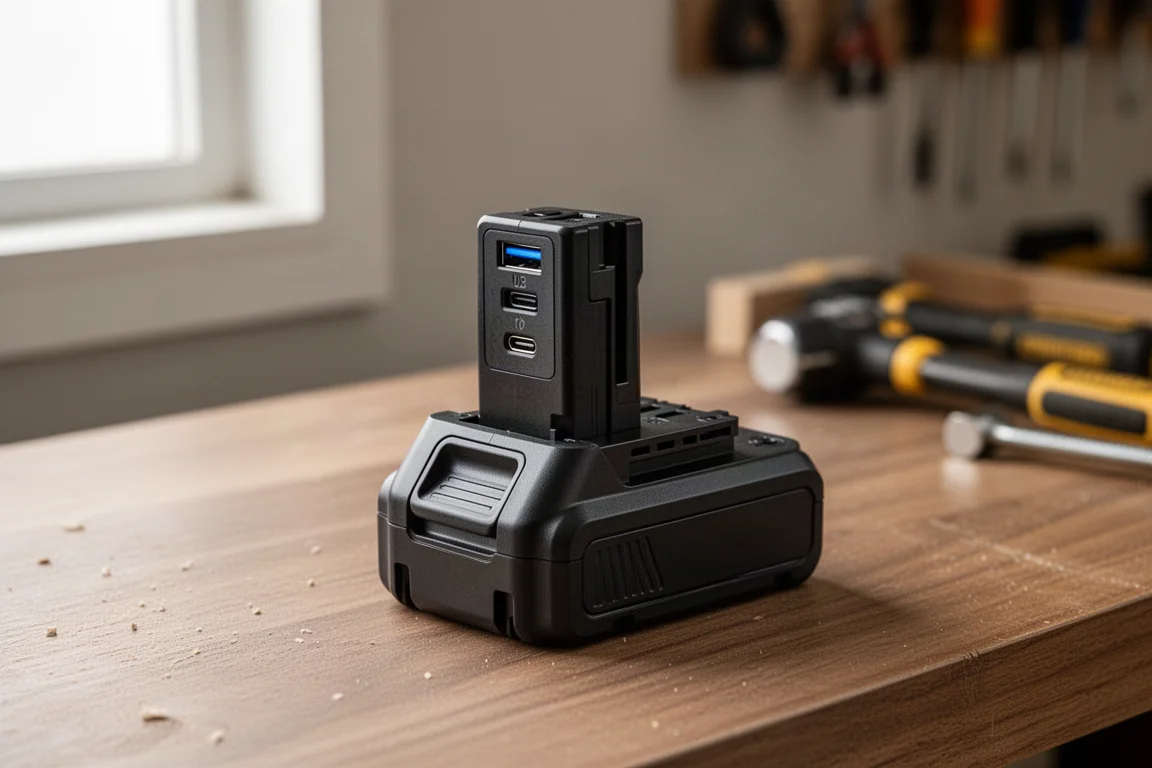
The DeWalt DCB094K steps things up to 100 watts over USB-C, enough for handheld devices and laptops. The catch is price: at around $80, if you can find one, you are often better served by a similarly priced 120V inverter-style top-off, which gives you a USB output for efficient DC-to-DC charging plus a 120V AC outlet for regular plug-in electronics.
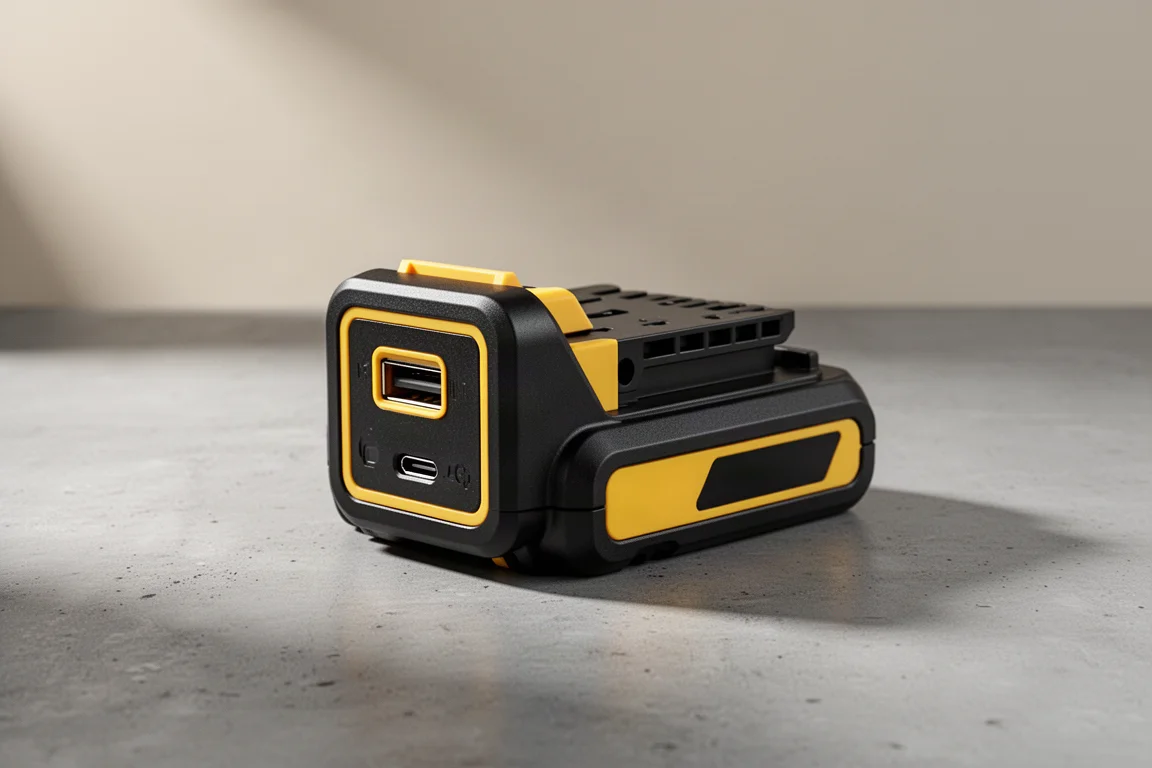
The best-priced examples of those 120V top-offs are the Ryobi 150BG at 150 watts and EGO’s 150W model, each around $50, with Craftsman offering one as well. At that price, there is little reason not to own one. Just note the limits: running a decently sized TV plus internet and modem can occasionally be too much to ask of a 150W unit. Ryobi and Milwaukee both offer 175W versions for $80 to $90, and EGO has a $100 180W model, which are more often able to handle that load.
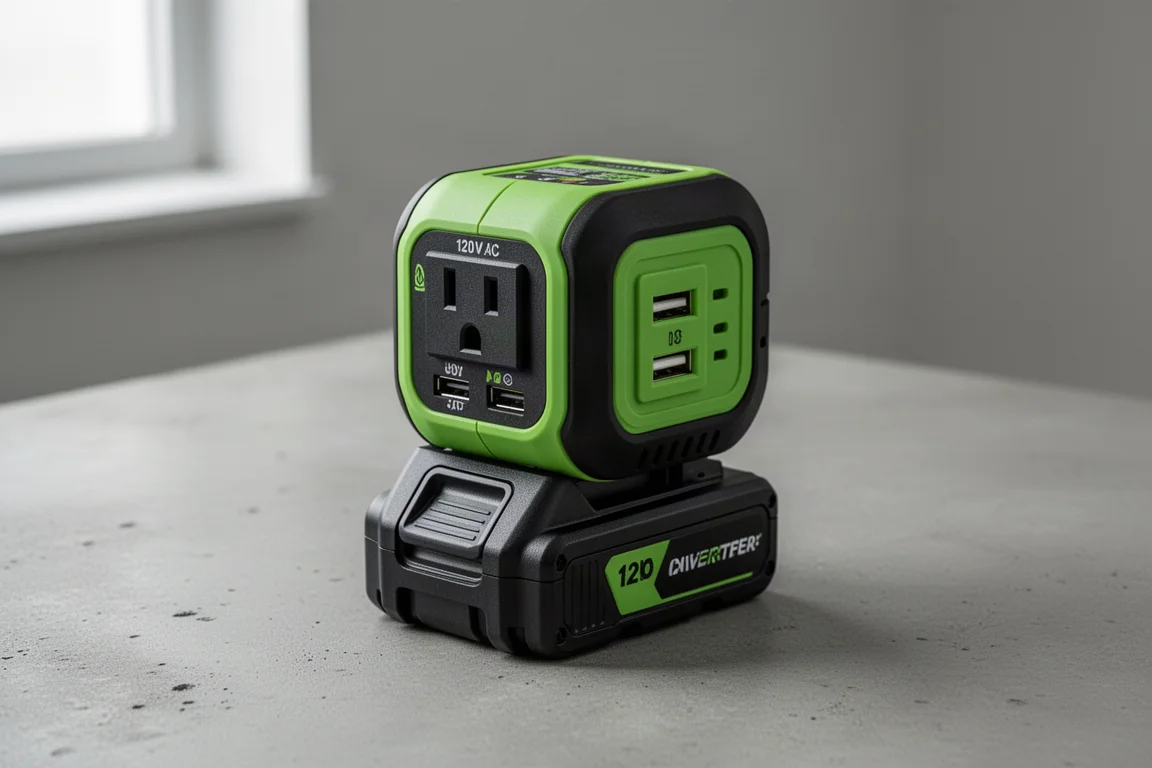
The pros of this class are clear: they are cheap, small and portable enough to take camping, available everywhere from Lowe’s and Home Depot to Ace Hardware and Walmart, and they let you charge your tool batteries with batteries. The cons are just as clear: some brands are USB-only, and none of them can power a sump pump, a fridge, or the TV-plus-internet setup for the whole household.
Class 2: Single-Battery Inverters (300 to 400 Watts)
The next step up is single-battery inverters in the 300 to 400 watt range, usually found on higher-voltage outdoor power equipment platforms. This is the class we currently use to run the TV, internet, and Wi-Fi through the house during an outage, which keeps the kids happy for at least a few hours.
We went with the Ryobi 40V 300W AC inverter at about $95 because the platform’s HP OPE tools are solid, and its batteries are easy to find used or on sale for cheap. That is roughly the price of some top-offs for around twice the output.
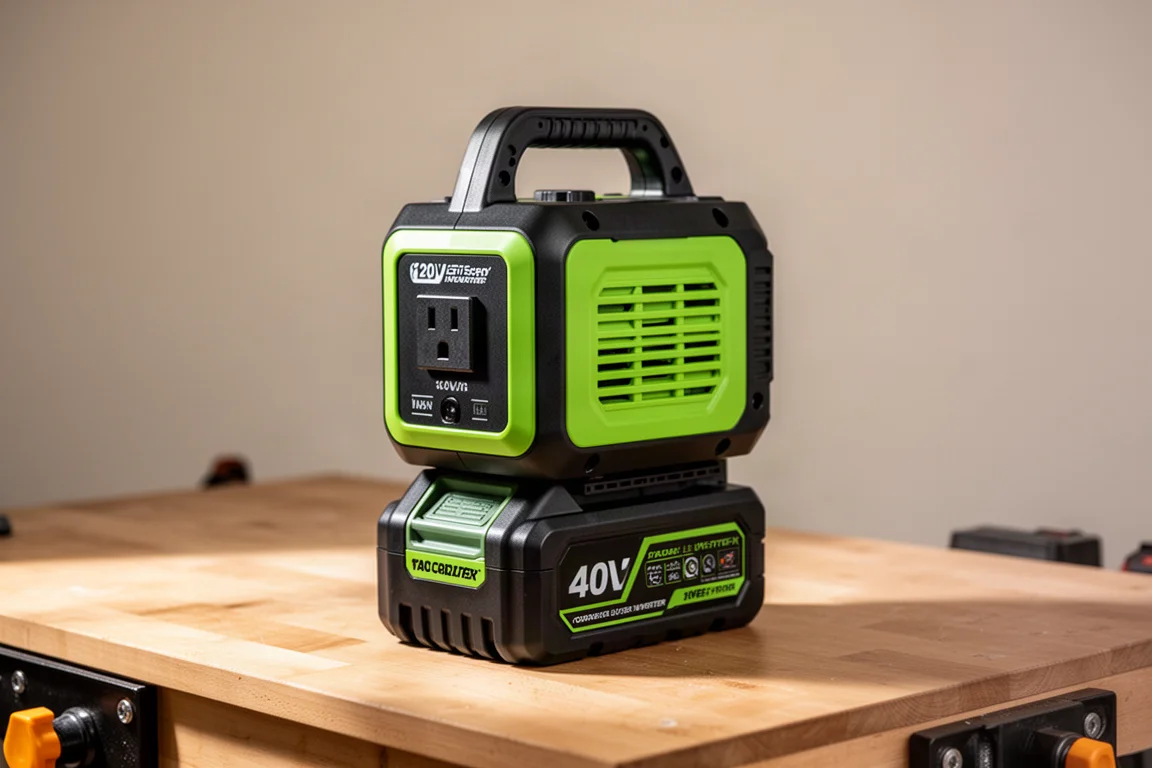
EGO’s $150 PAD5000 at 400W is another proven example, and Cobalt’s 300W units in the 40V and 80V lines run about $100. These are our favorite single-appliance home inverters for three reasons: they cost similar to many top-offs, they unlock more uses like heated blankets and somewhat larger electronics, and the cost per watt-hour of the big platform batteries is typically lower, with higher capacity on a single pack. A Ryobi 40V 12Ah pack compares to something like a 24Ah Milwaukee battery, and an EGO 56V pack compares to a hypothetical 36Ah M18. Not cheap, but cheaper than stacking three 12Ah Milwaukee packs.
The downsides: there is no hot swapping, so the TV and internet reboot every time you change batteries. And while these do far more than top-offs, in most cases they still will not run your fridge or a deep well sump pump, which are two of the main reasons people want backup power in the first place.
Class 3: Power Stations and High-Wattage Battery Inverters
Then there are the battery-powered power stations. Two types exist here: enclosed all-in-one packs (the Jackery, EcoFlow, and newer Predator pack style), which are essentially a big battery you charge from a cord or solar, and power tool battery inverters that draw from packs you already own.

Enclosed packs take up less space, can be used weekly or even daily, and typically use iron phosphate cells with far more charge cycles than lithium-ion. Some of the latest models even charge faster than you can charge your tool batteries. For many people, that all-in-one route is the smarter buy.
The tool-battery route makes sense if, like us, you already own a wall of batteries and want a second use out of them. Knowing a unit could run high startup-draw power tools was the clincher for our pick: the Milwaukee M18 3600W peak inverter power station. A lot of units in this class beep and complain when spinning up a circular saw, large grinder, chop saw, or table saw. This one has no problem with them and has a track record on job sites without power.
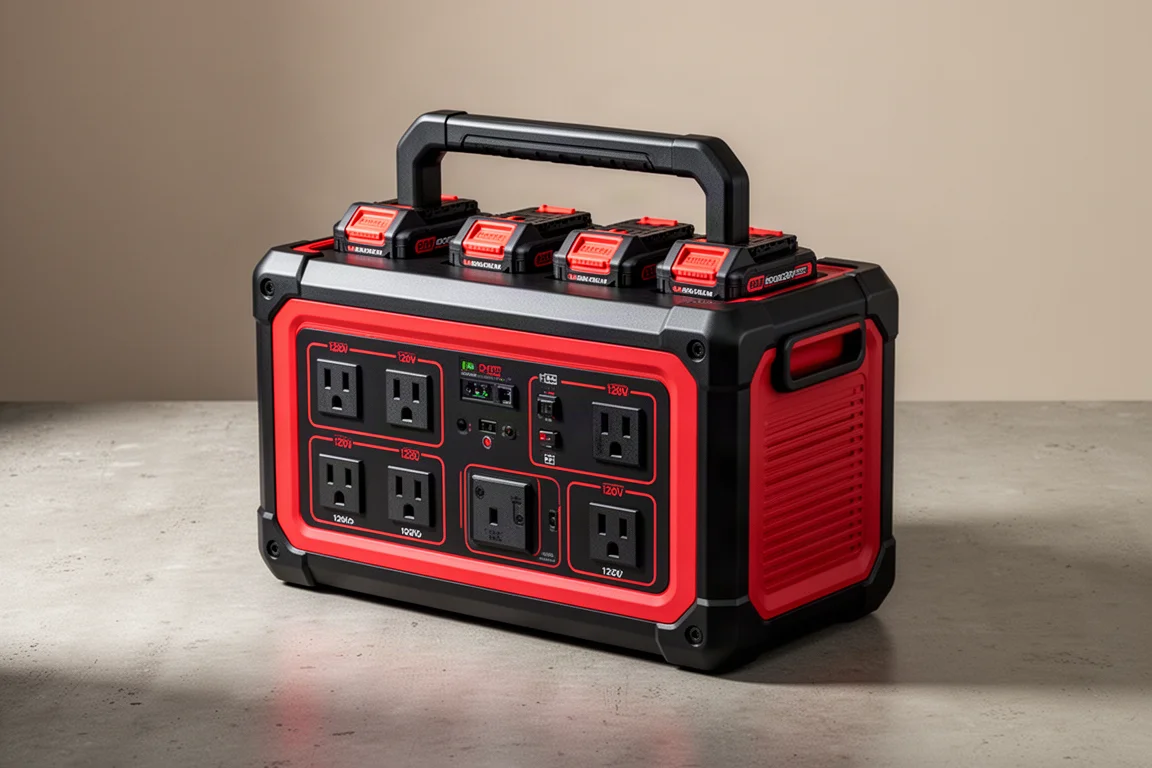
Be warned about filling any of these with batteries from scratch: DeWalt’s 1800W unit, Ryobi’s 40V 1800W, or EGO’s Power+ Nexus 3000W all end up costing a fortune once you buy the packs, more than just buying an all-in-one power station. The workaround is adapters. Most of these units, including Milwaukee’s highest-power model, pull from packs in a fairly simple way, and DeWalt, Ridgid, and Hercules batteries all ran on our M18 power station with basic adapters and the right resistance trick. Hercules 12Ah batteries, for example, run half to a third the price of Milwaukee packs on the used market with essentially the same cells inside.
A bonus: many of these double as multi-bank chargers, charging four batteries at once, which can effectively save you a couple hundred dollars versus buying a dedicated multi-bay charger. Just check the fine print, because some units, like the Ryobi here, charge slowly and only one bank at a time, which does not make much sense during an outage.
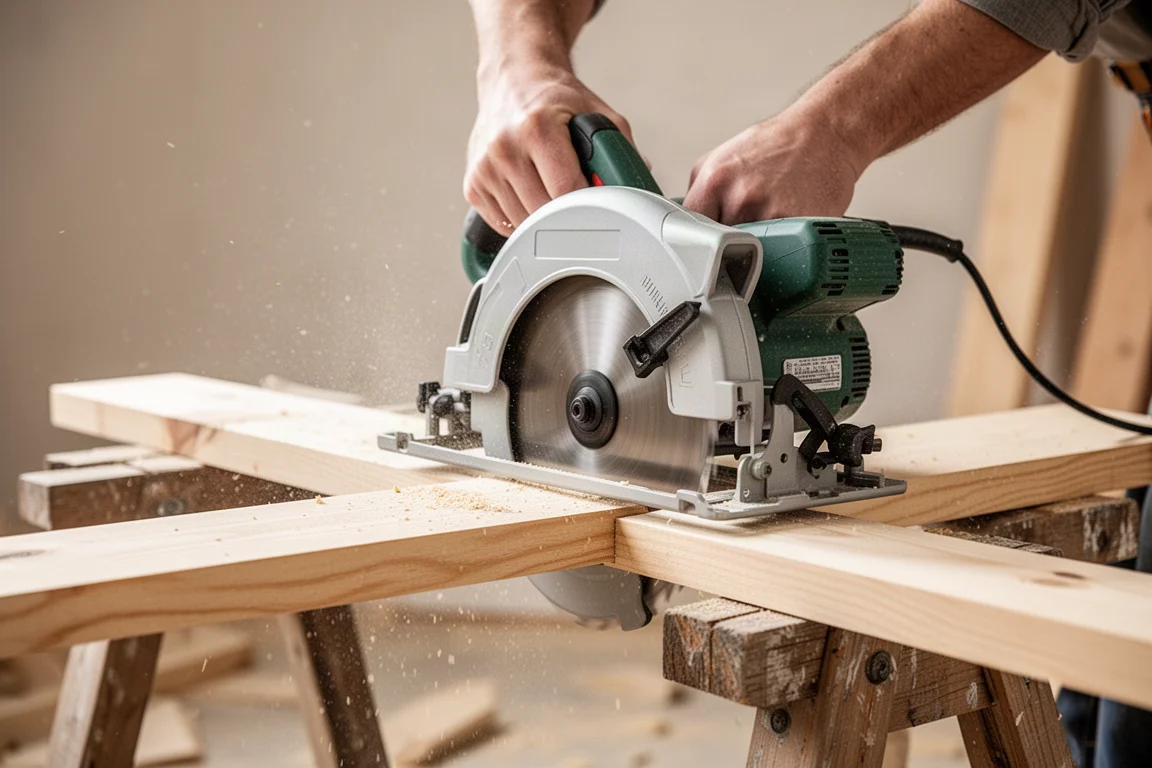
Overall, this class covers roughly 1,000 to 4,000 watts for around $200 to $1,000, delivers clean power, can run corded heavy-draw tools on some models, and even ran an AC unit through two outages for us, though only for about 1.5 to 2 hours before needing a recharge or another round of batteries. You get two to three 120V outlets instead of one, and clever adapters can slash the battery cost. The cons: starting from zero batteries is lunacy, buy an all-in-one instead, and many models shut off and beep if you pull a battery while in use, forcing everything off before a swap.
Class 4: Small Gas Inverter Generators (Suitcase Style)
Gas changes the math entirely. The 60 to 80cc suitcase-style generators you see at food trucks and farmers markets are often cheaper than the battery solutions above, do many of the same jobs for far longer, and gasoline’s power density is almost impossibly hard to beat. Recharging is as simple as lifting a jerry can for 30 seconds.
They are also less picky. A battery power station may sound alarms when a corded tool spins up, but these are, in a good way, dumb machines. They tolerate sudden current spikes as long as they can sustain the RPMs and running watts of the tool or device.
The cons matter, though. This size range has no 240V output, so it cannot power a house, a welder, or medium to large equipment. They are far from silent, and the fumes dictate where you can put them, which in practice means a long extension cord and a location that is not right outside your window. You will need to store and stabilize fuel in today’s ethanol-blended gas, pay for it, and most are gasoline-only. Many lack electric start, and in real life that means you will be the one trudging out to pull-start it every single outage.
Class 5: Large Open-Frame Generators and Clean Power
Step up to something like a 12,000W open-frame 460cc generator and you gain a lot: electric start with a battery, easy choke, plenty of outlets for running job site equipment or most of a house, and 240V 30-amp and 50-amp outlets. With a 50-amp outlet and an inlet on the side of the house, you can backfeed a subpanel and power most of the home’s needs, or run welders off-grid. At around $1,000, that is a lot of capability, and if you are familiar with this class, the ones that work just work.
The fuel burn is real, about three-quarters of a gallon per hour, three to five times what a smaller inverter unit uses, and it is louder. But the dealbreaker we hit was dirty power. The sine wave from a traditional open-frame generator is inconsistent, and in our home that showed up as flickering lights, LEDs that would not turn on, a microwave that ran but did not cook, and some TVs refusing to start.
None of that is fatal during a typical outage. It became fatal when we replaced an old gas furnace that happily fired up anywhere from 113 to 123 volts with a new, more efficient, higher-tech model. The new unit behaves like the microwave: it turns on but does nothing after that. A $170 line conditioner did a whole lot of nothing to fix it. Plugged into the Milwaukee M18 power station, with its stable 120 to 122 volts, the furnace fires right up. But that cannot run long enough on batteries alone. The solution is an inverter generator.
The Flagship Pick: Harbor Freight Predator 9500
The Harbor Freight Predator 9500 inverter generator, at a $2,300 sticker price, is designed to deliver a clean sine wave for sensitive modern electronics. In practice, it is the only option here with enough juice and clean enough power to run our new furnace, which clicks on happily, and it kept the lights steady, the microwave cooking, and the heat running through the house.
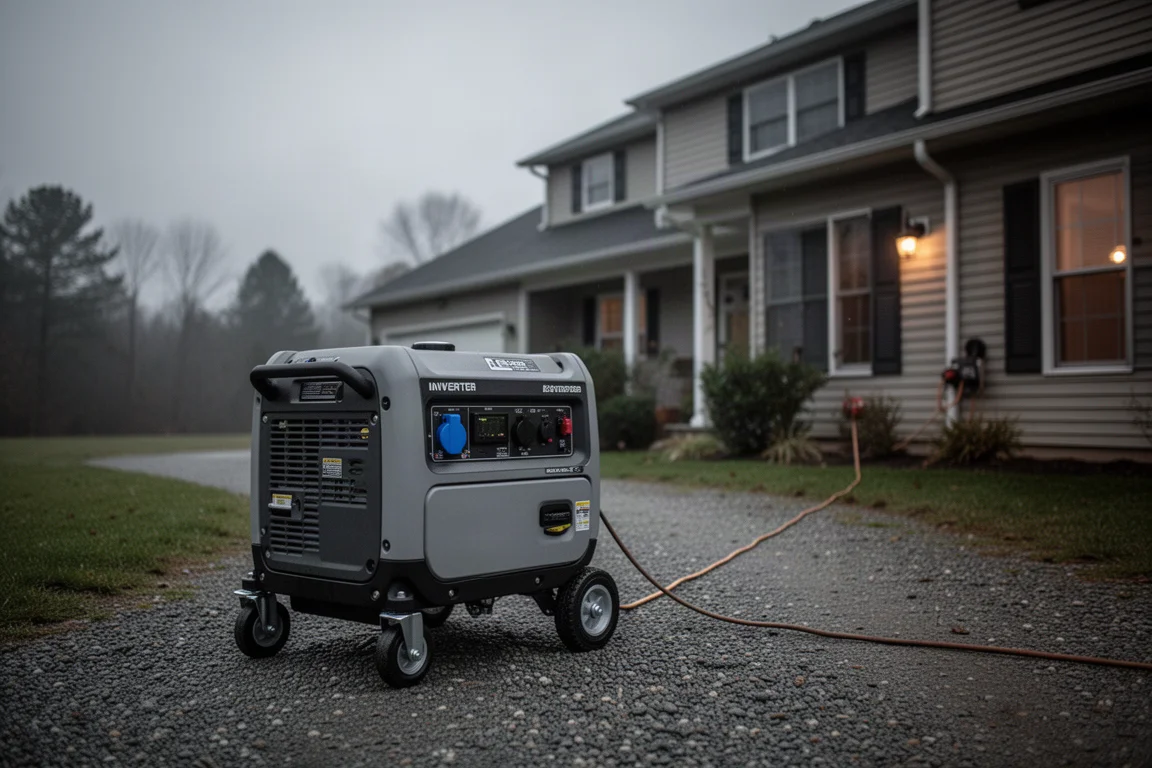
Its pros go beyond clean power. Four wheels with locks instead of the usual two means you never have to lift a side to move it. It is more fuel efficient than our old open-frame unit, roughly half to 0.6 gallons under load, a 20 to 30% saving on its 6.6-gallon tank. Inverter generators achieve this by varying engine load based on the wattage requested, and they can be chained in parallel with other models to roughly double running capacity. As an enclosed unit it is also more weatherproof and much quieter: an advertised 67 dB that we measured at 68 to 69 dB at the advertised distance, versus about 80 dB from the old open-frame unit at the same spot.
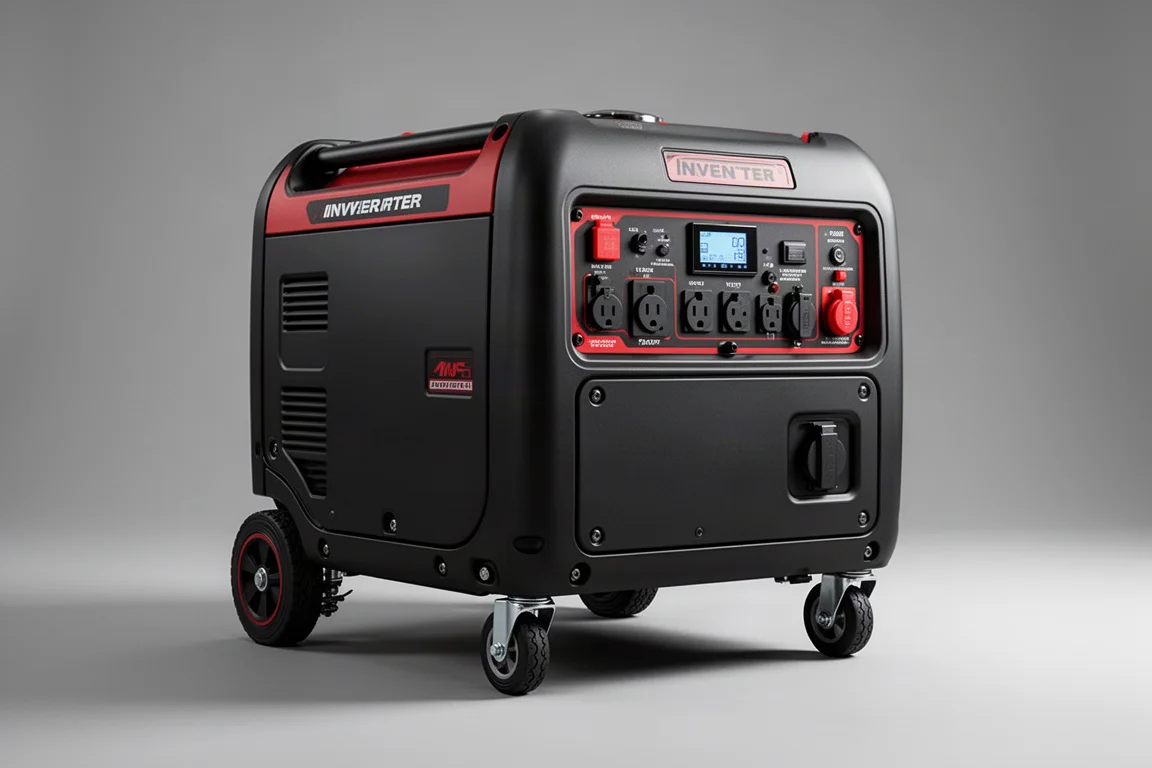
The cons are real. It is only 9,500 watts instead of 12,000, so more money for fewer total watts, and the drop means no 50-amp outlet, so the welders are out. Despite being Harbor Freight’s largest inverter generator, it lacks remote start that some of their smaller models have, and it is not dual fuel, so it cannot run on propane like the next model down in the range. Would we buy it again? Honestly, probably not. It works well and the quality seems high, but for most buyers the alternatives below make more sense.
Better Value: Westinghouse and Champion
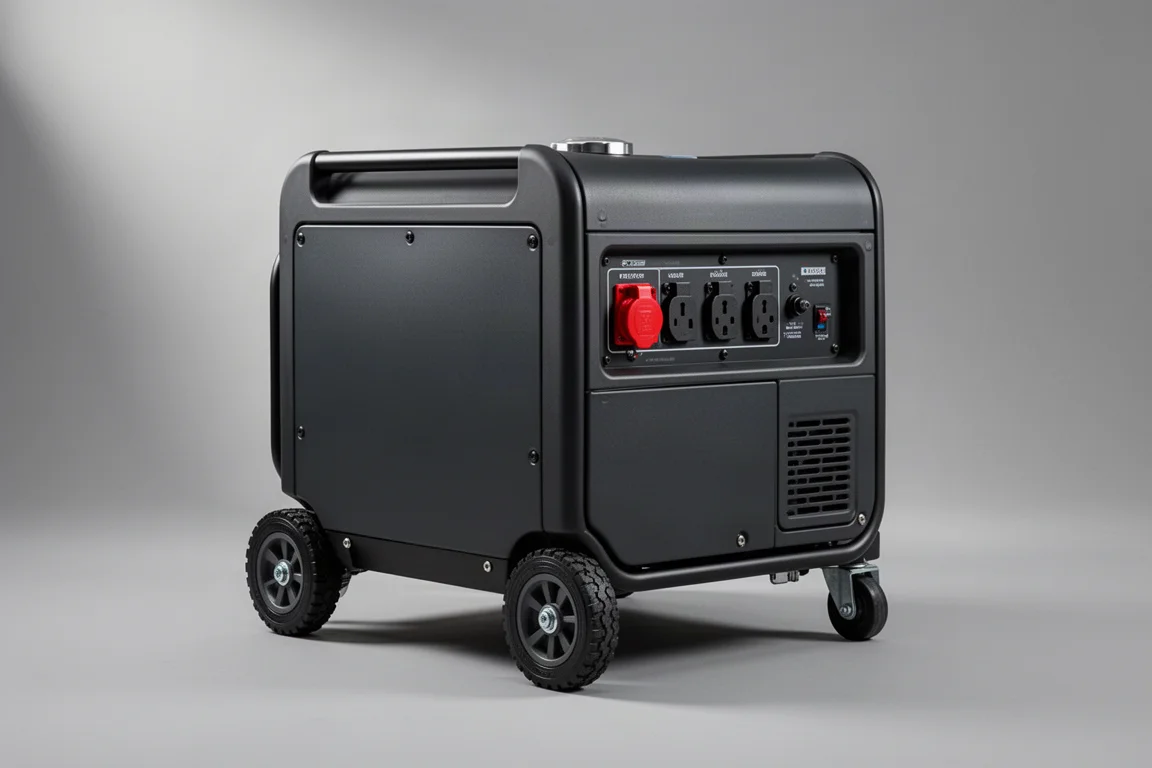
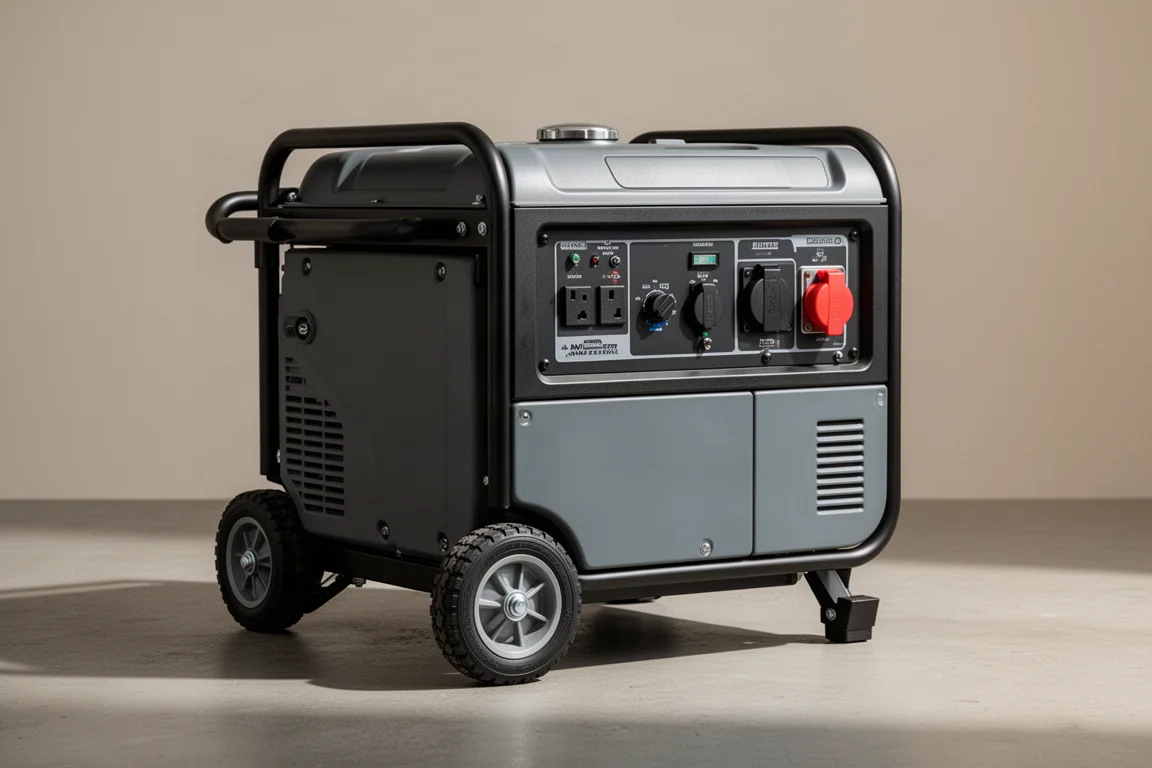
If we were doing it all again, needing an inverter generator, the pick would be the Champion at around $1,900 or the Westinghouse at around $1,800. Both offer 11,000 watts with a 50-amp outlet, enough to run welders off-grid, and around 9,000 running watts, roughly a 37.5-amp sustained outlet peaking up to 46 amps. That should handle most welding needs fine.
Both ship free from Lowe’s or Amazon, which matters when you are dealing with a 300-pound generator and would otherwise face a $130 freight fee. Both are available with remote start. Both are dual fuel and can run off propane, which is slightly less efficient but adds real flexibility in an outage. And both, like most established brands, carry a three-year warranty, versus Harbor Freight’s usual 90 days on even a purchase this large, with extended coverage sold separately.
Buying Advice
After living with all of these tiers, our ideal setup is simple: a top-off or single-battery OPE inverter for small jobs and electronics, plus an inverter generator in the 5,000-watt range at around $800, or the 11,000-watt range depending on your requirements, ordered from Lowe’s with free delivery or a Champion off Amazon. Skip the enclosed power station unless you genuinely have no tool batteries, and skip the flagship Harbor Freight model unless clean 240V-class inverter power at any price is a hard requirement.
Conclusion
Backup power does not have to be one giant purchase. Match the tier to the job: a $50 top-off for phones and laptops, a 300 to 400W single-battery inverter for TV and internet, a power station or high-wattage battery inverter for tools and short high-draw jobs, and an inverter generator when you need to run a house, or just a furnace that refuses dirty power. Buy the smallest tier that covers your real outage needs, and let the tiers above it go.
Further reading
Related Reviews

Backpacking Gear
Building a 10 lb Base Weight: An Ultralight Backpacking Gear List
A practical walkthrough of the ultralight pieces behind a 10 lb base weight, from a 765 g pack and a roomy one-person tent to a full camp chair and a dependable water filter.

Road Bikes
10 New Road Bikes Worth Watching: Aero, Titanium, Steel and Endurance Standouts
A practical roundup of 10 new road bikes, from aero flagships chasing single-watt gains to titanium, steel and endurance platforms built for real roads.
Bikepacking Gear
11 Bikepacking Essentials for Long-Distance Cycling
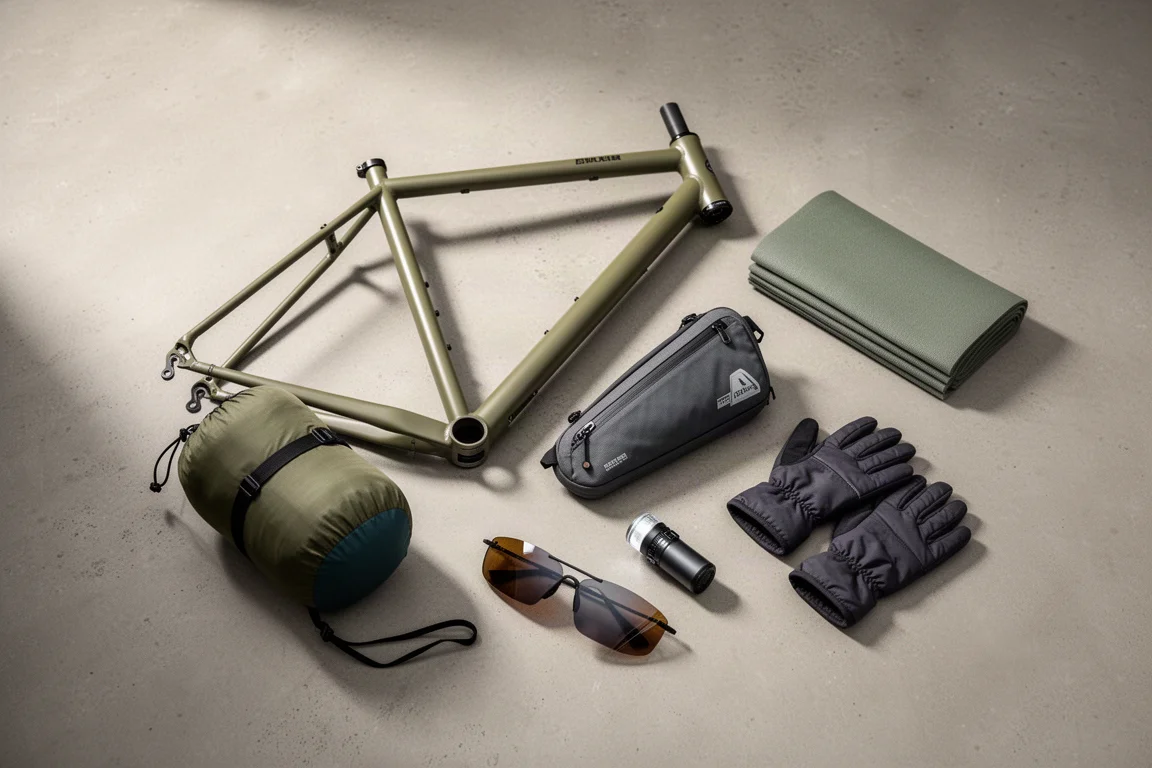
Eleven bikepacking essentials for long-distance cycling, from a steel gravel frame and a two-person tent to helmet lights, packable gloves, and a frame bag that puts weight in the right place.