Backpacking Water Filters
Backpacking Water Filters Compared: LifeStraw Peak Series, Sawyer Squeeze, Katadyn BeFree, and Platypus QuickDraw
A practical comparison of four hollow fiber squeeze filters, covering flow, filling, packability, weight, and thread compatibility.
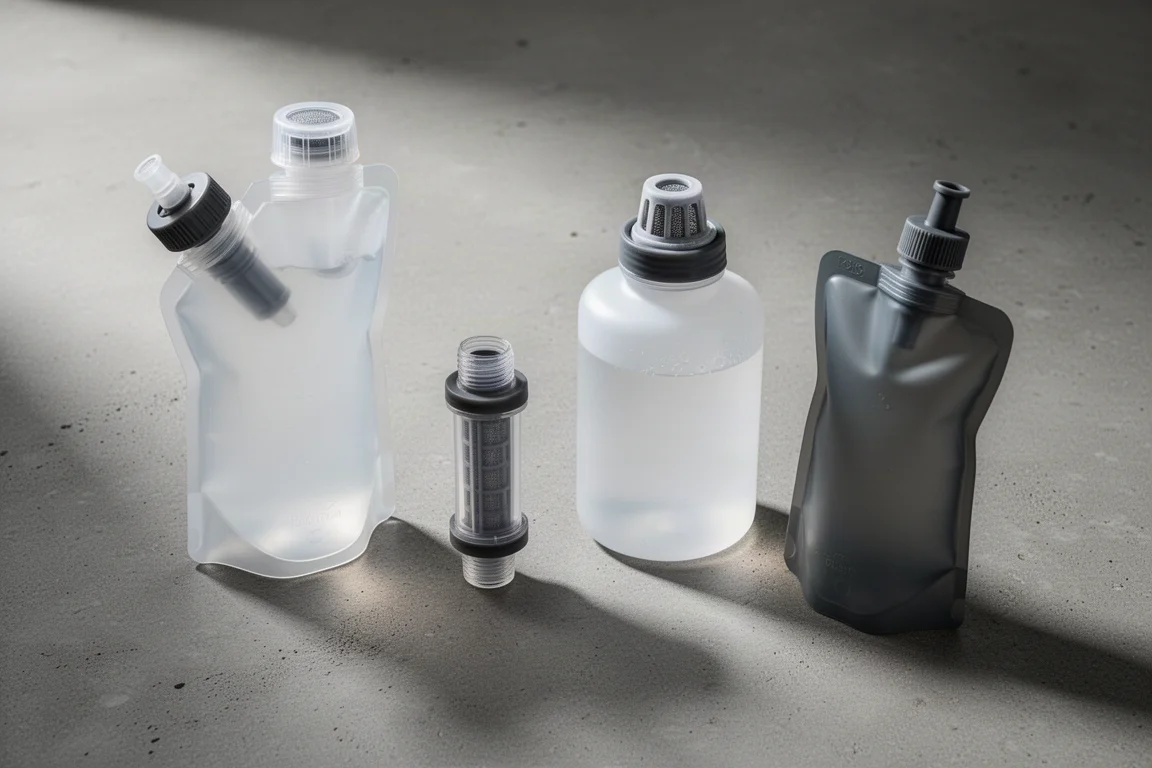
Introduction
A squeeze filter is one of the few pieces of kit that earns a place on almost every backpacking list. It turns questionable water into something you can drink without hauling a pump or waiting on tablets, and modern designs have made the process far less of a chore than it once was.
The four filters in this comparison, the LifeStraw Peak Series Squeeze, the Sawyer Squeeze, the Katadyn BeFree, and the Platypus QuickDraw, all rely on hollow fiber membranes. That means the differences between them are practical rather than fundamental: how easily water flows through, how the bag fills and empties, how the whole assembly packs, and how much it weighs.
What These Backpacking Water Filters Have in Common
Hollow fiber filters have been on the market for years, and most filters sold today use that same membrane. The Sawyer Squeeze, the Katadyn BeFree, the Platypus QuickDraw, and the LifeStraw Peak Series all sit in that group. The filtration method itself does not separate them.
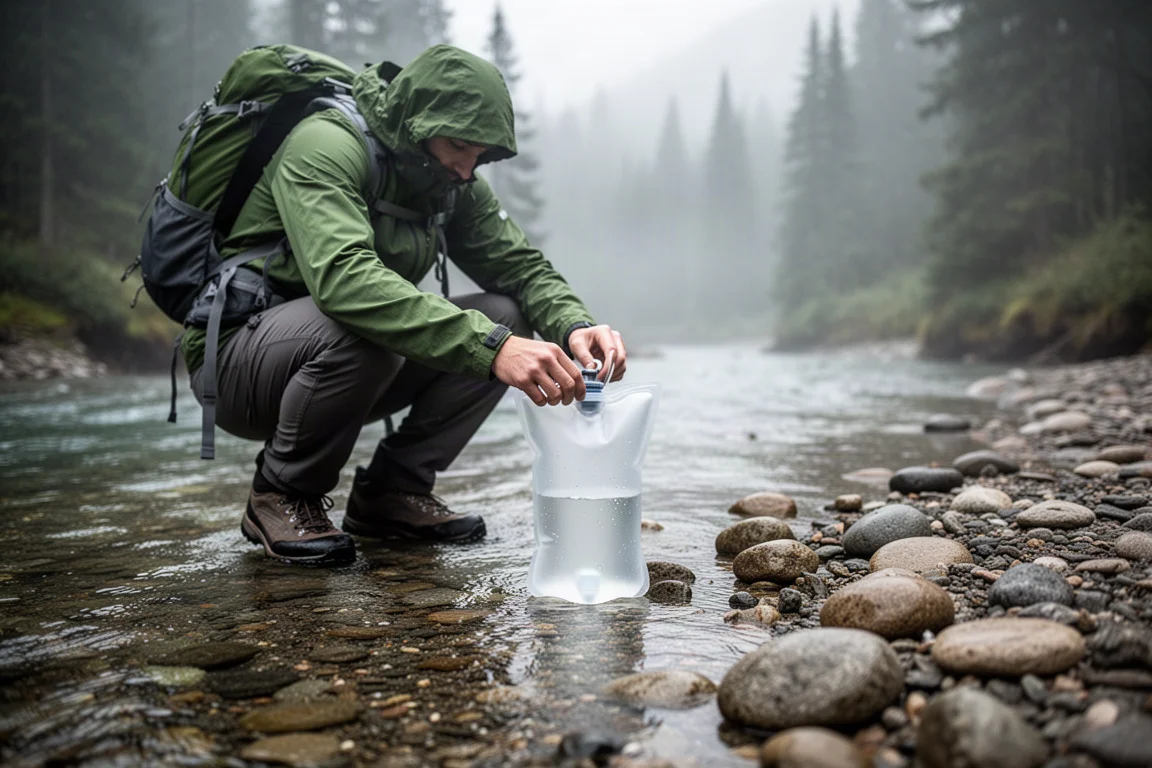
The area that has genuinely moved forward is flow speed, and flow speed matters more than it first appears. A faster filter is simply an easier filter: water passes through with less effort, which counts for a lot at the end of a long day when you are filtering a couple of liters before dinner. The earliest straw-style filters took real effort to draw through, closer to a thick milkshake than a drinking straw, and later designs made that push noticeably easier.
What actually distinguishes these four is the packaging around the membrane: where the filter sits relative to the bag, whether the filter is open on all sides or only at the bottom, whether it threads onto a bottle you already carry, and how compactly the assembly stows.
LifeStraw Peak Series Squeeze Water Filter
The Peak Series is the newest filter family from LifeStraw, and it covers three shapes: a straw, a gravity filter, and the flagship squeeze bag. It is presented as a reinvention of the squeeze filter, but the core is a hollow fiber membrane in a new housing, the same approach used across the category.
The squeeze bag layout is where the design runs into trouble. The filter sits inside the bag with its intake at the bottom, so once the water level drops below that opening, the last ounces are hard to squeeze out. The Katadyn BeFree sidesteps the problem because its filter is open all the way around and water can enter from any side.
There is a workaround. The small rubber spout can be removed and the filter threaded onto the outside of the squeeze bag, which makes filling and filtering more convenient. The catch comes later: if you put the filter back inside the bag to drink from it the way you would with a BeFree, the dirty end of the filter ends up exactly where your mouth goes, which leaves unfiltered parasites and bacteria uncomfortably close to your drinking surface.
The bag itself feels genuinely sturdy, helped by a stiff shroud around the collar. That durability costs something in packability, because the assembly is harder to compress into a small space, especially with the filter mounted on the outside. A half-liter squeeze bag with the filter attached weighs 4.3 oz.
On the practical side, the standard 28 mm thread lets the filter screw directly onto a Smartwater bottle or a Katadyn bag, which makes it a flexible piece of kit. It filters bacteria, protozoa, and other contaminants typically found in backcountry water sources, and it will do its job on a trip.
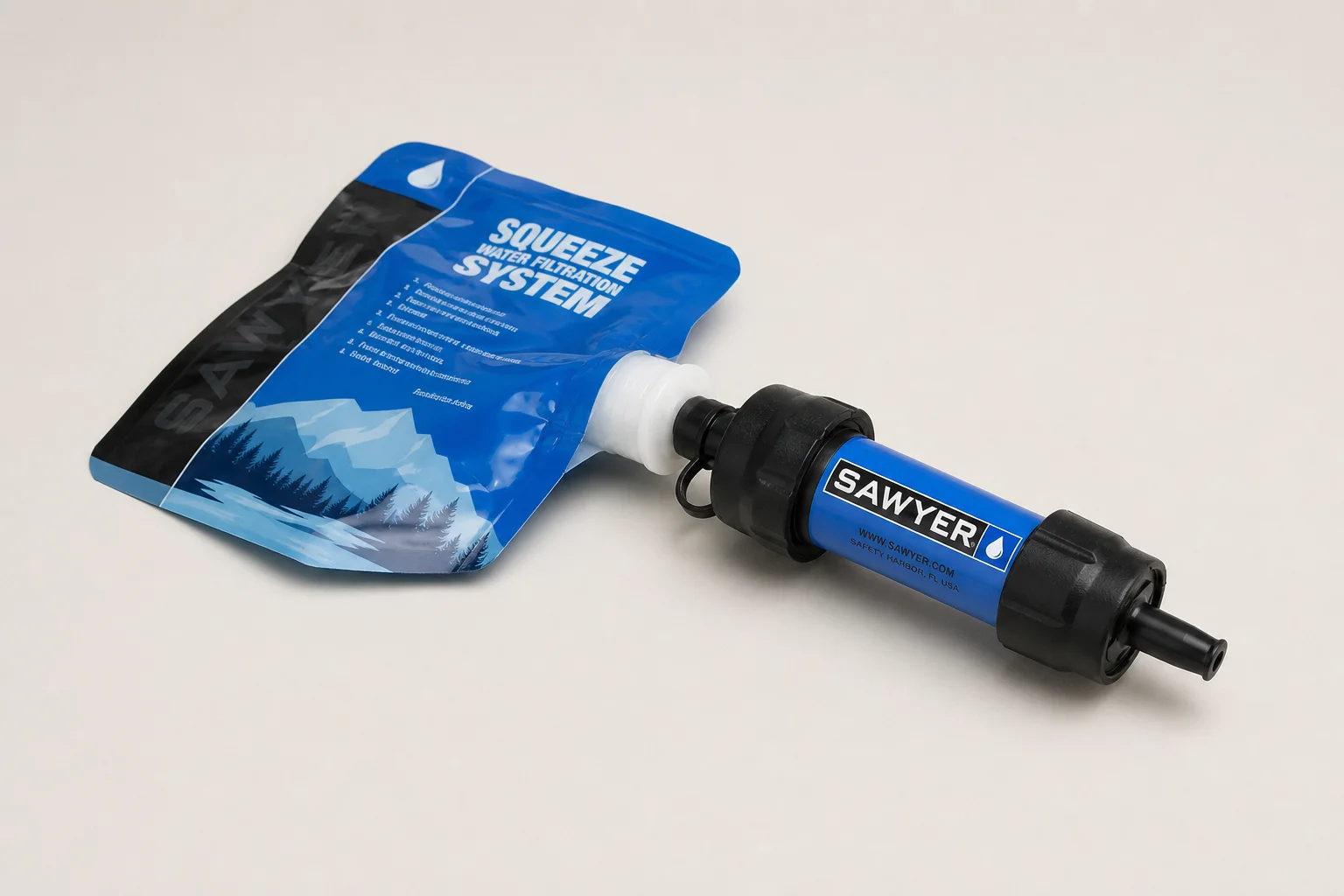
Sawyer Squeeze
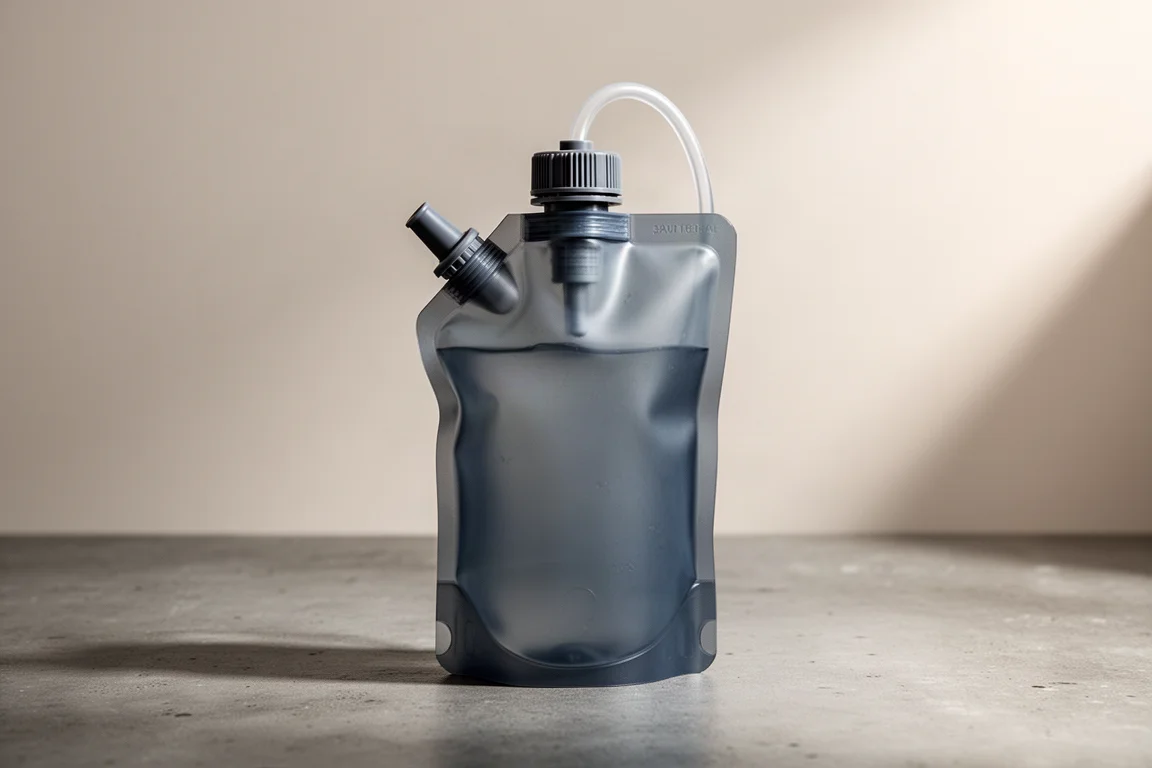
The Sawyer Squeeze spent years as the go-to backpacking water filter, and at its core it is a hollow fiber filter. The routine is simple: fill a bag or bottle, thread the filter on, and squeeze.
Its standing changed when the Katadyn BeFree arrived with faster flow and easier filling, and plenty of backpackers made the switch. That does not make the Sawyer Squeeze a bad choice. It means the trade-off now favors other designs if flow speed is what you care about most.
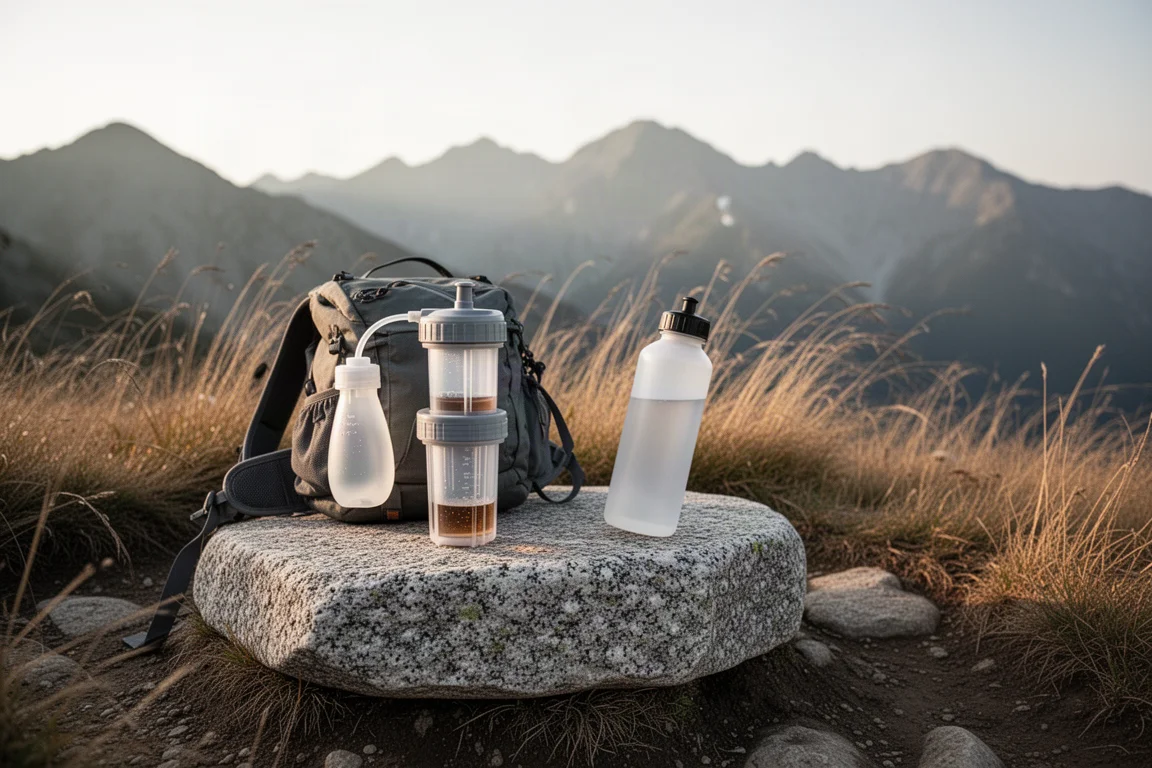
For a hiker who wants a familiar filter and does not mind a slower squeeze, it still covers the basics without fuss.
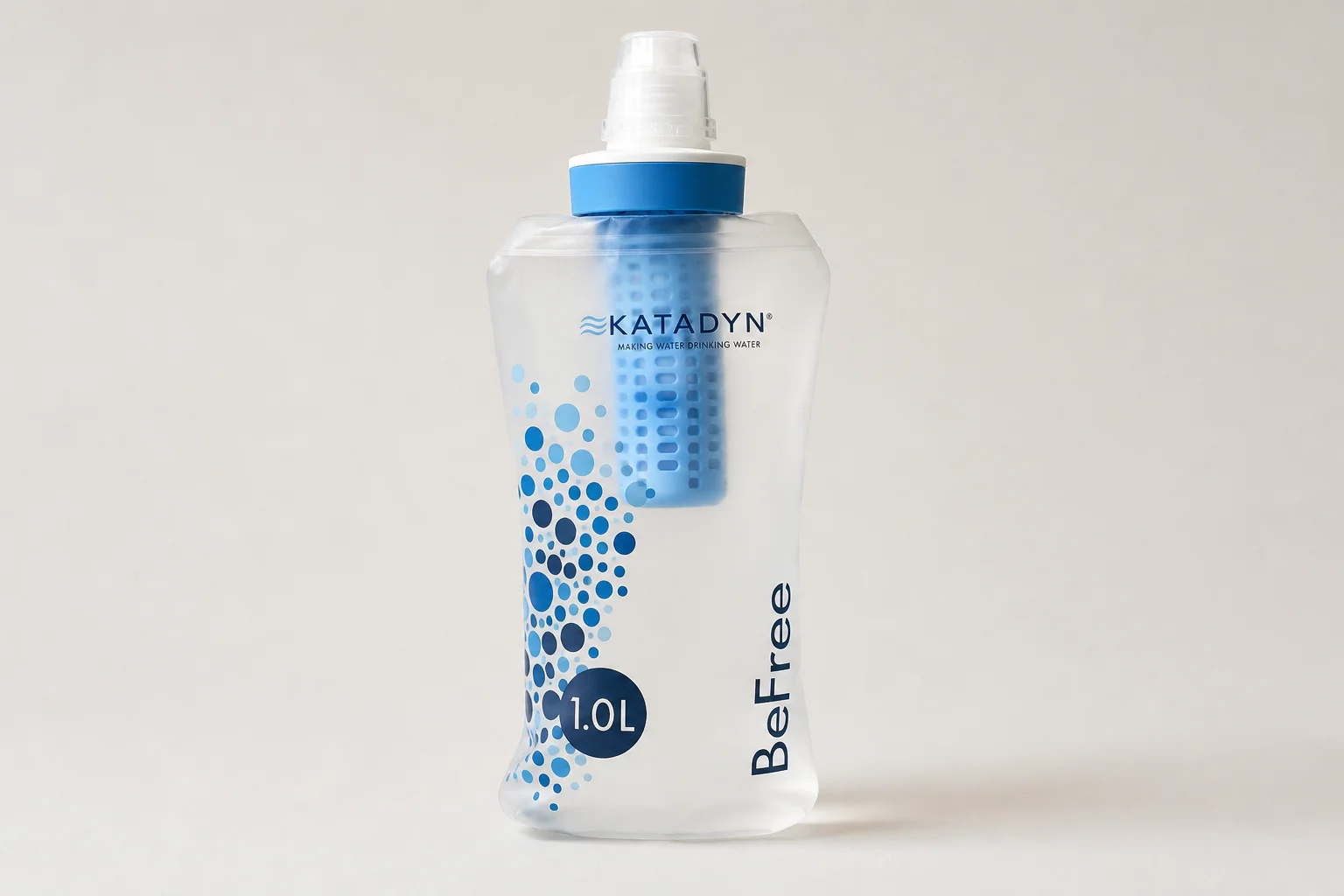
Katadyn BeFree
The BeFree changed the conversation when it launched by filtering faster and filling more easily than the Sawyer Squeeze. Its defining design choice is that the filter is open all the way around, so water can enter from any side. That is exactly why mounting the filter inside the squeeze bag works well here: you can keep squeezing until the bag is nearly empty.
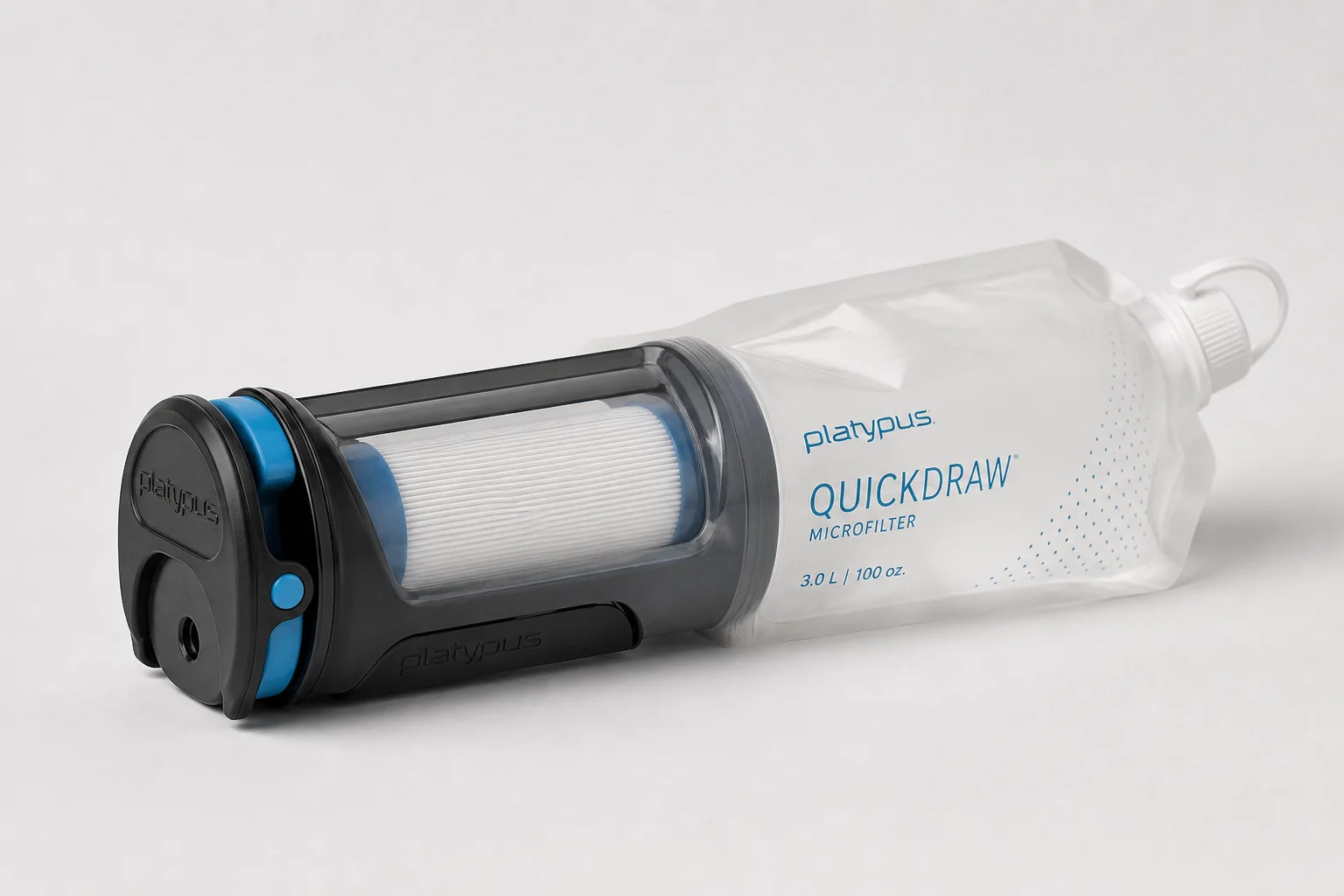
Platypus QuickDraw
The QuickDraw is the lightest setup in this group at 3.8 oz with its squeeze bag, and that bag holds roughly double what the half-liter Peak Series bag holds. It carries more water for less weight.
It is also the filter here with the most considered design detail, with choices aimed at making the filtering process simpler rather than simply adding features. Low weight, higher capacity, and thoughtful ergonomics together make it a strong candidate for backpackers who count grams.
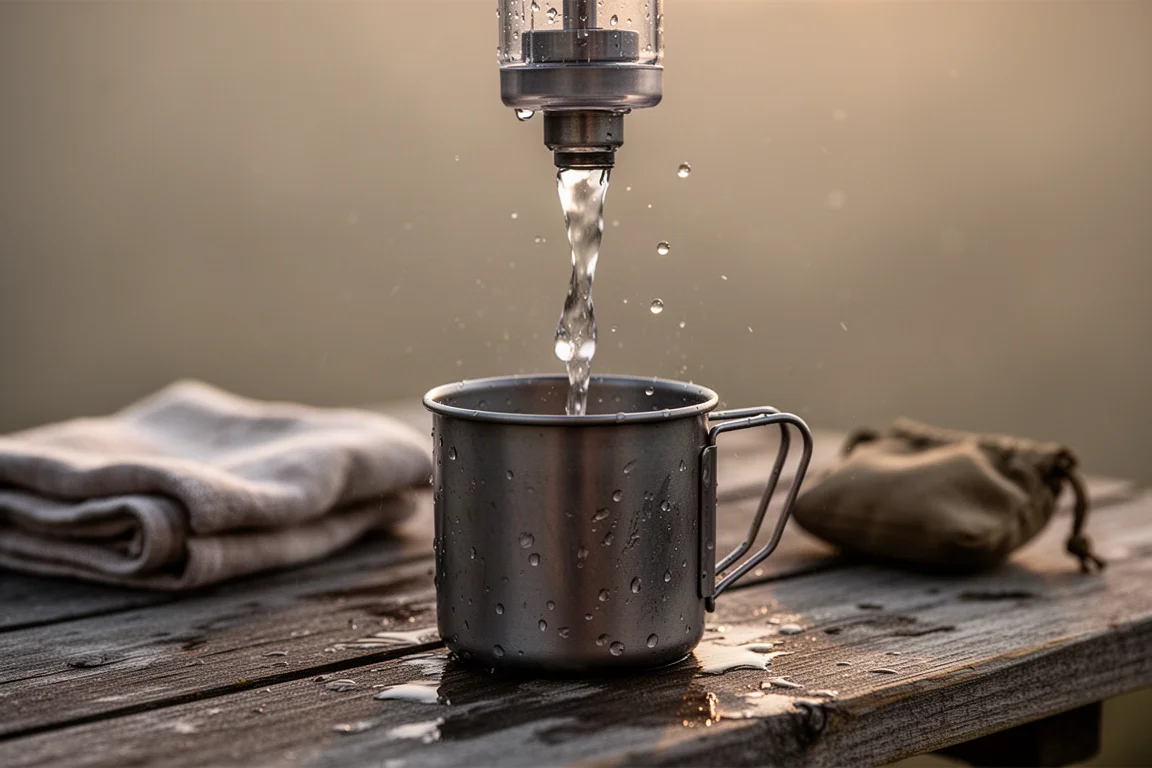
If capacity per ounce is your priority and you want a setup that behaves predictably through a long day of filtering, the QuickDraw deserves a close look.
Weight, Capacity, and Packability Compared
Weight and capacity are the clearest measurable differences in this group. The LifeStraw Peak Series squeeze bag, in its half-liter size, comes to 4.3 oz with the filter attached. The Platypus QuickDraw comes in at 3.8 oz with its bag, and that bag holds about twice as much water. Per ounce of capacity, the QuickDraw is the more efficient setup.
Packability follows a similar pattern. The Peak Series bag feels notably sturdy, helped by the stiff shroud around its collar, and that same structure makes the assembly bulkier to stow, particularly with the filter mounted on the outside of the bag.
Buying Advice: Choosing the Right Filter
All four filters here will treat backcountry water, so the decision comes down to how you want to use one. Match the filter to the way you actually hike, and the trade-offs become easier to weigh.
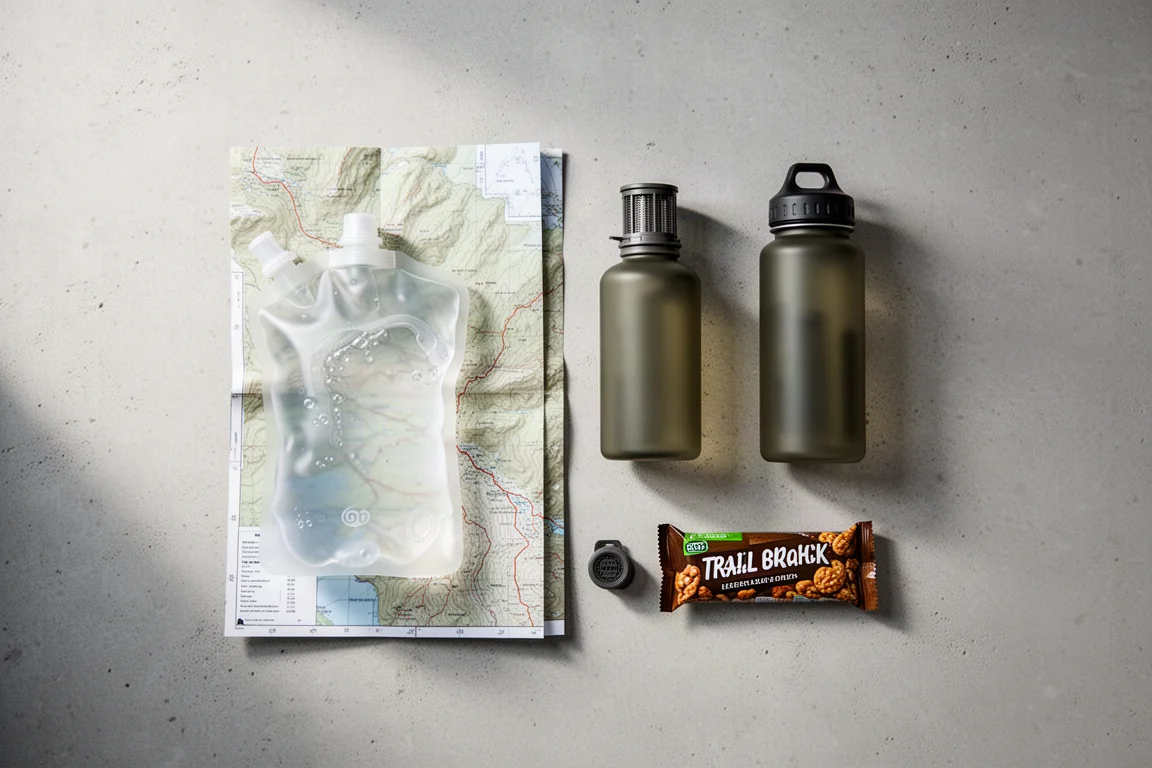
If fast flow and easy filling matter most, the Katadyn BeFree is the design that set that standard, and its wrap-around filter lets you squeeze the bag close to empty. If weight and capacity are your priorities, the Platypus QuickDraw delivers more water for less weight. If you want a familiar, long-standing option, the Sawyer Squeeze remains a straightforward hollow fiber filter. And the LifeStraw Peak Series is a capable filter with a genuinely useful 28 mm thread, provided the bottom-mounted intake and the bulkier bag do not bother you.
Conclusion
The LifeStraw Peak Series Squeeze is a fine filter, but it is not a reinvention. It uses the same hollow fiber technology as the Sawyer Squeeze, the Katadyn BeFree, and the Platypus QuickDraw, and its squeeze bag design introduces compromises the others avoid. Where it does add value is the durable bag and the 28 mm thread that fits common bottles and bags.
If you are choosing a backpacking water filter, the honest framing is that all four will get the job done. Pick the BeFree for fast, easy flow, the QuickDraw for the best weight-to-capacity balance in this group, the Sawyer Squeeze for a simple and familiar setup, and the Peak Series if thread compatibility and a sturdy bag appeal to you.
Further reading
Related Reviews
Backpacking Water Filters
Platypus QuickDraw vs Sawyer Squeeze: Which Backpacking Water Filter to Trust
A practical side-by-side look at two lightweight squeeze filters, covering reliability, prep and storage habits, integrity testing, and what to weigh before you buy.

Backpacking Gear
Building a 10 lb Base Weight: An Ultralight Backpacking Gear List
A practical walkthrough of the ultralight pieces behind a 10 lb base weight, from a 765 g pack and a roomy one-person tent to a full camp chair and a dependable water filter.

Backpacking Gear
A 15-Pound Lightweight Backpacking Gear List for Solo Trips
A beginner-friendly 15-pound backpacking setup built from easy-to-find gear, with notes on what each piece does, how it packs, and where to spend your attention.