Sleeping Pads
Backpacking Sleeping Pad Comparison: Five Pads for Warmer, More Comfortable Nights
Five backpacking sleeping pads compared on construction, R-value, comfort, and price, from value-focused picks to higher R-value options for colder trips.
Introduction
Sleeping pads cover an enormous price range. At the very bottom sit pads that cost roughly as much as a takeaway meal, and at the top there are pads that run well over $200. The gap between those two ends is not just branding. It shows up in construction, in insulation, and in how well you actually sleep after a long day on the trail.
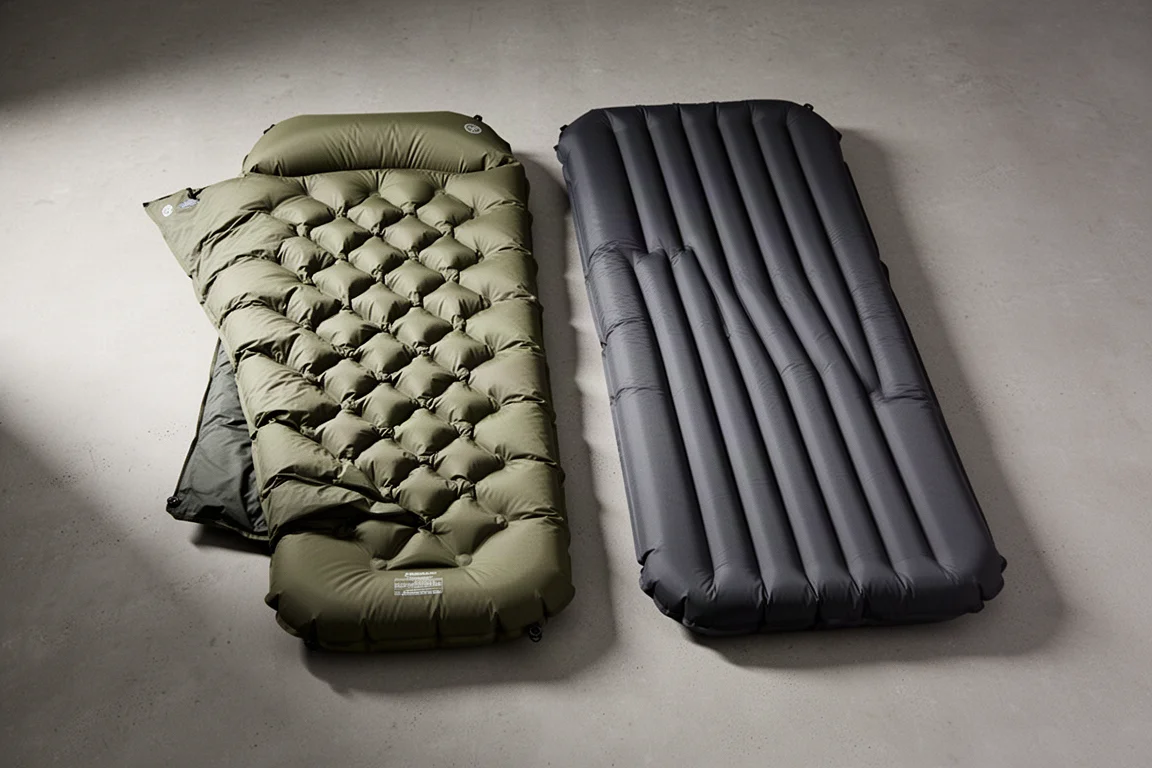
This comparison looks at five pads: the AEX Gear Rano Lightweight, the Kilos Gear Aeroc Cloud Elite and its UL sibling, and two reference points from the Exped Ultra range. Three of them sit in the value-focused part of the market, roughly $90 to $140 depending on the size you choose, and the other two cover a wider spread of R-values, one at a modest premium and one at a substantial one.
What Separates a Value Sleeping Pad From a Cheap One
The cheapest pads on the market make the difference obvious. A $15 pad is extremely thin, so side sleepers feel their hips press straight into the ground. It is cheaply built and it carries no insulation at all, which makes it a poor choice for anyone heading out backpacking or camping.
Stepping up into the $90 to $140 range buys a fundamentally different product. The construction is more sophisticated, and there is more going on inside the pad to deliver comfort, warmth, and a better night overall.
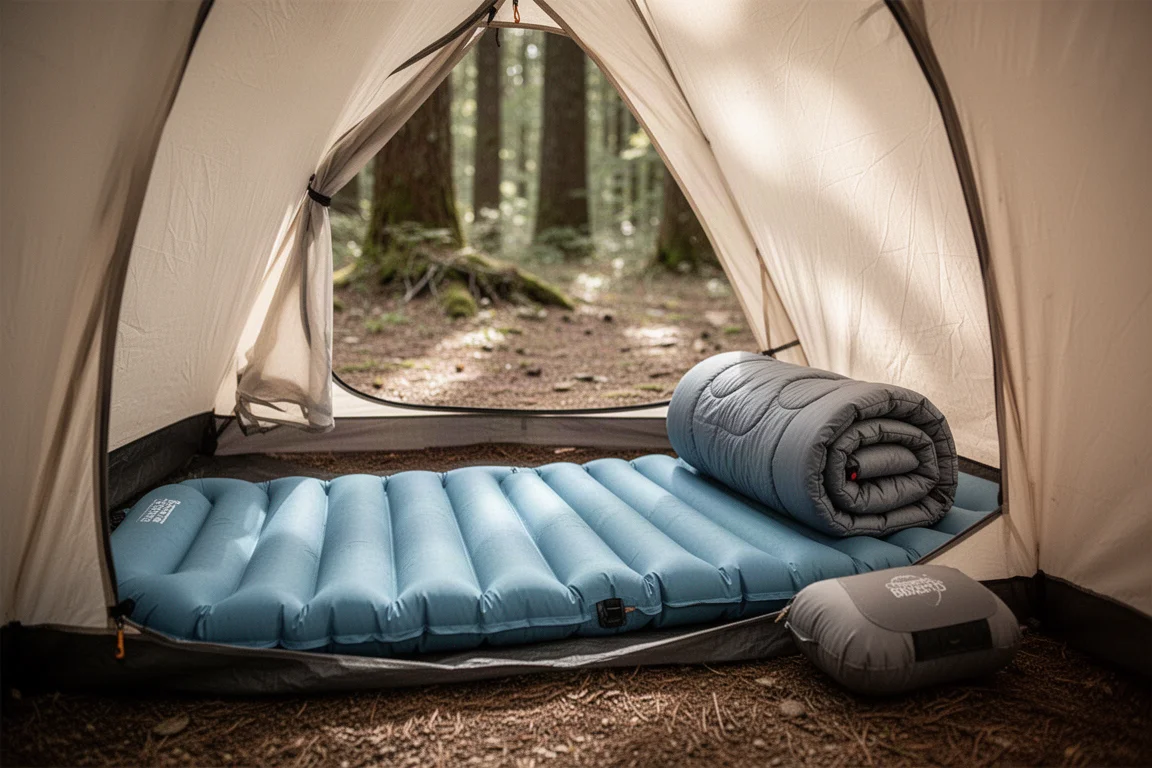
Price alone is not a reliable indicator of performance, though. A well-built pad at $100 can easily deliver more comfort and warmth than a poorly built pad at $200, because the deciding factors are how the pad is put together and what kind of insulation is used inside it. That is why the pads in this comparison are worth looking at individually rather than ranking them by sticker price.
How R-Value Affects the Pad You Choose
R-value is the simplest way to describe a sleeping pad’s insulation. The lower the number, the less insulation value the pad provides and the colder you may sleep depending on conditions. The higher the number, the more insulation it offers and the warmer you will sleep, especially in colder temperatures.
It helps to know that not every pad carries a rated R-value. A company has to choose to put a pad through the testing process to earn that number, so a rating is a useful baseline rather than a universal guarantee.
More importantly, R-value does not define overall performance on its own. Construction matters just as much: what type of insulation is used, and whether it is suspended in the middle of the pad, attached to the top and bottom layers, or pressed against the ground. Ambient temperature plays a role, as does the size of the pad relative to your sleep system and your body, and the temperature of the ground beneath you. All of those variables combine to determine how warm you actually sleep.
AEX Gear Rano Lightweight Sleeping Pad
The AEX Gear Rano comes in two standard sizes: a regular at 20 inches wide by 72 inches long, and a long wide version at 76 inches long and 25 inches wide. Both are about 3.5 inches thick, which is plenty of height to keep your body off the ground in any sleeping position without your hips or shoulders digging in. The long wide version weighs 23 ounces, a respectable figure for the price. Retail is $90 for the regular and $130 for the long wide.
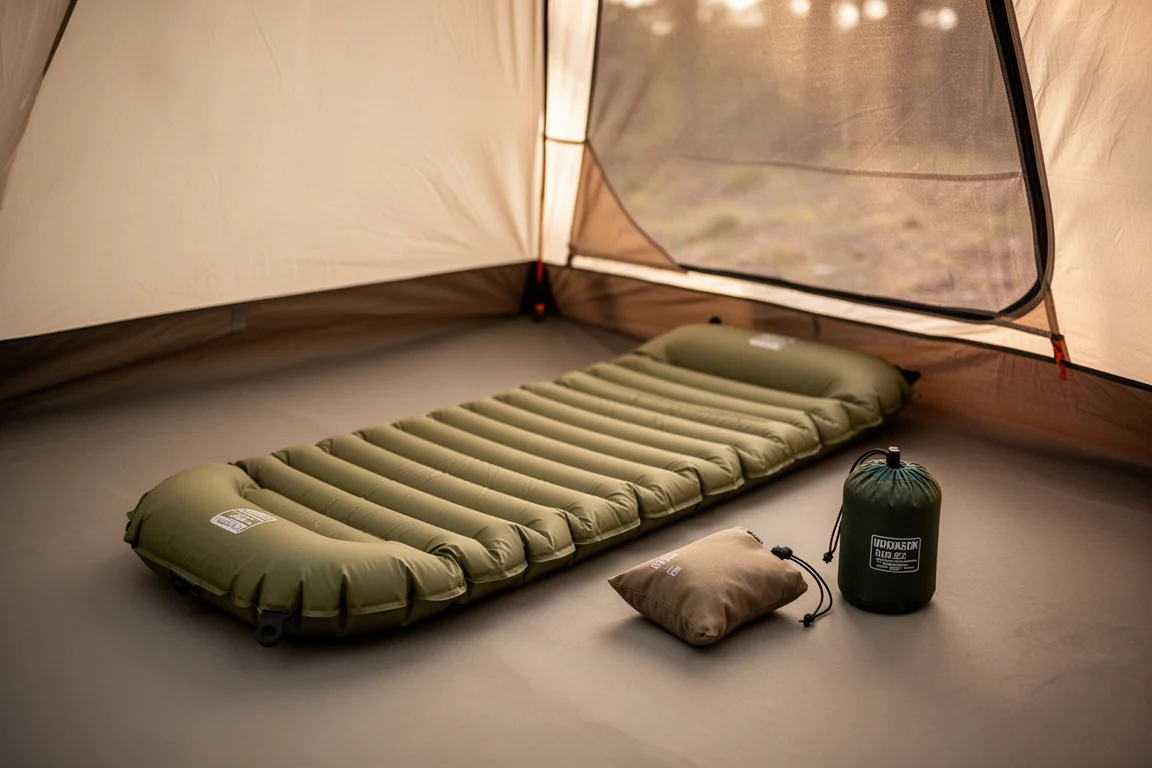
Inside, the Rano uses two layers of mylar insulation that are attached to the top layer and the bottom layer of the pad rather than suspended in the middle. That construction detail matters in practice. Insulation performs best when it is suspended through the interior of the pad, and with the Rano the attached layers mean the pad can feel cooler in demanding conditions than its numbers suggest. It has been comfortable down to freezing temperatures without any supplemental insulation underneath or on top, such as a closed cell foam pad. Below freezing, there is a real risk of sleeping cold.
The baffling is a vertical, lightly quilted pattern. It is not the most comfortable layout available, but it is still more comfortable than the horizontal baffles found on pads such as the NeoAir or the Tensor, and it sits roughly on par with the Tensor. The shell uses 20 denier nylon ripstop fabric, which adds durability. For three-season use, from late spring through summer into early fall, on ground that is not frozen and in temperatures that are not extreme, this is a strong value and a pad worth considering, particularly when it is discounted.
Kilos Gear Aeroc Cloud Elite Sleeping Pad
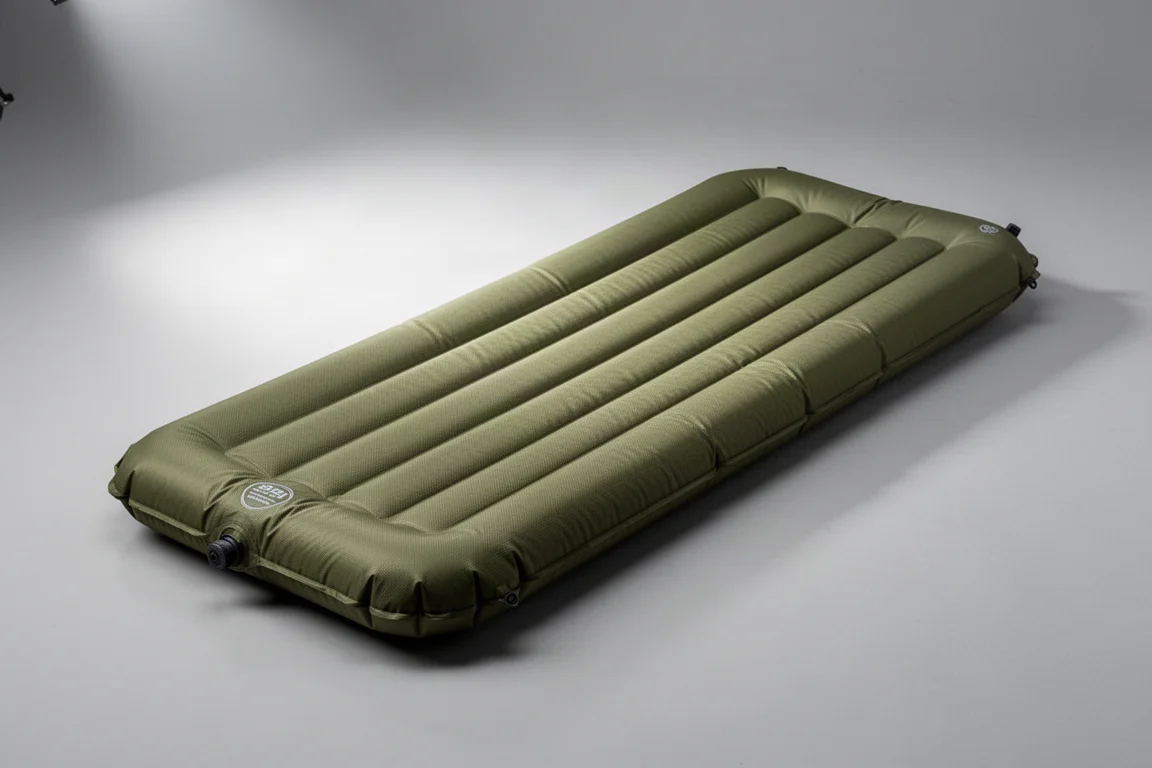
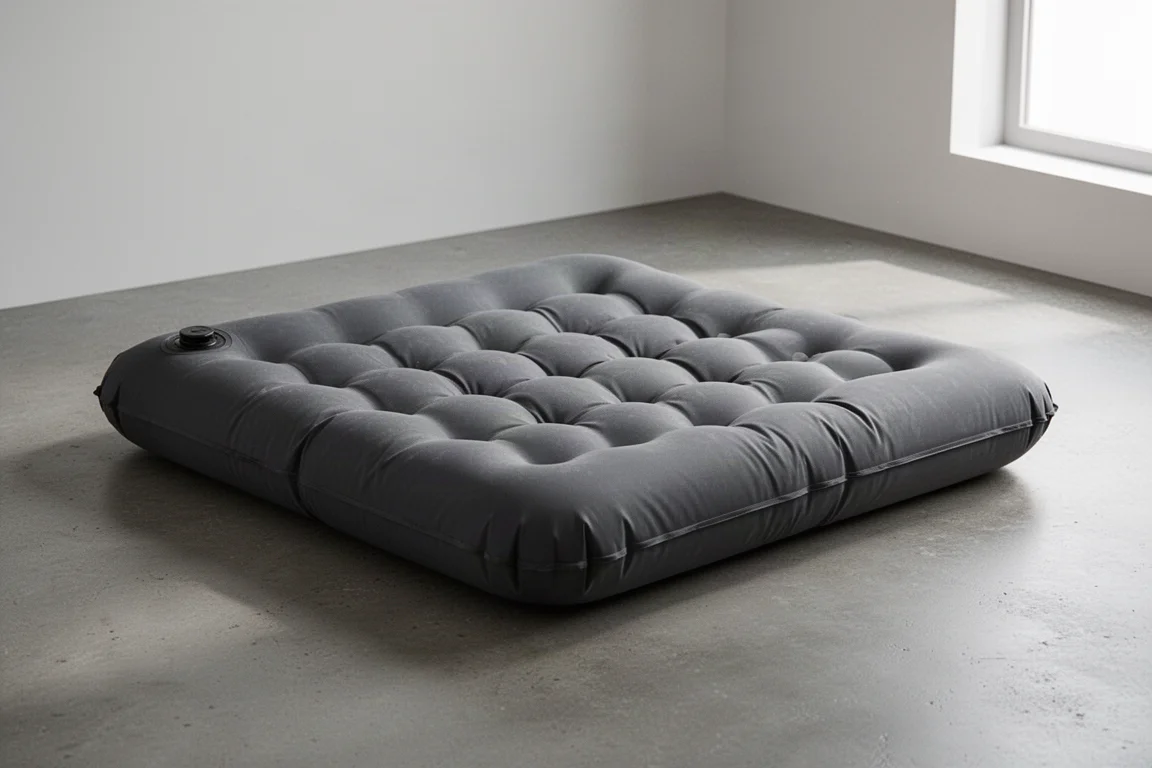
The Aeroc Cloud Elite uses a 40 denier polyester fabric across the whole body of the pad. Its insulation is effectively one and a half layers: a metallic film layer with a batted insulation, similar in feel to a synthetic or cotton batting, attached to it. Together they produce a rated R-value of 5.
The baffling here is quite different from the AEX Gear pad. It is a quilted pattern, and the result is a genuinely comfortable pad that delivers enjoyable nights of sleep. Thickness is 4 inches, which is a little more than the AEX Gear pad and adds both height and the ability to fine-tune firmness to suit how you sleep. It comes in a regular size at 72 inches long and 25 inches wide, plus a large version that is longer and slightly wider. Pricing runs from $130 to $140 depending on the size.
One construction detail is worth understanding before you buy. The insulation runs the full length of the pad, but it is not suspended and it is not attached to the top layer, so it settles toward the bottom. It still provides insulation value and a barrier down to freezing temperatures, and small cutouts around each weld point keep it from bunching up. Even so, the performance is not quite what a suspended design would deliver. This is a pad to take out in three-season conditions and down to freezing, not a dedicated winter pad. Anyone heading onto snow or into genuinely cold temperatures is better served by a pad with an R-value around 7 and a construction purpose-built for that kind of exposure.
The value here is excellent for the comfort on offer, and the support the brand provides to its customers stands out as well.
Kilos Gear Aeroc Cloud UL Sleeping Pad
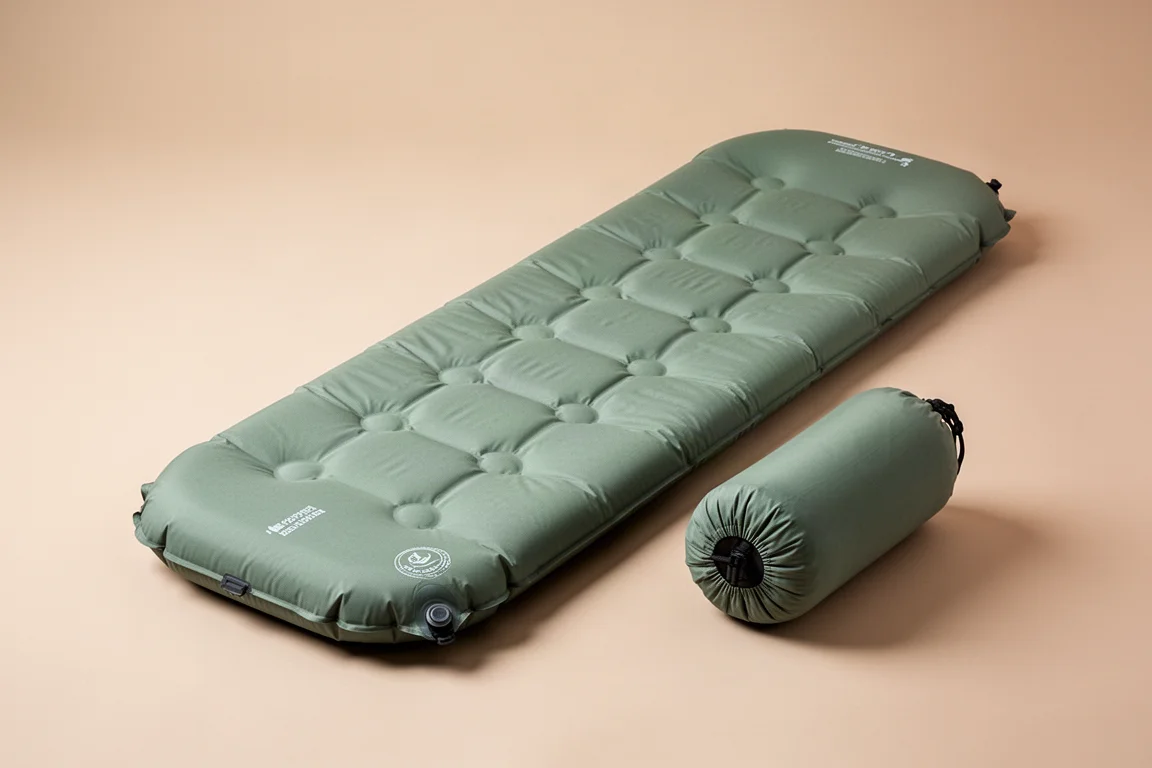
The UL version of the Aeroc Cloud differs from the Elite mainly in its insulation. Instead of the laminated metallic film with batted insulation attached, it uses a single layer of mylar insulation. That drops the rated R-value from 5 to 3.8, saves weight, and lowers the price.

Everything else carries over. The UL comes in the same regular and large sizes, uses the same fabric construction, and has the same valve as the Elite. It is simply a lighter pad aimed at milder temperatures. Within that envelope it is still an excellent sleeping experience and a very good value, which makes it a sensible pick for warm-weather trips where every gram counts.
Exped Ultra 7R Sleeping Pad
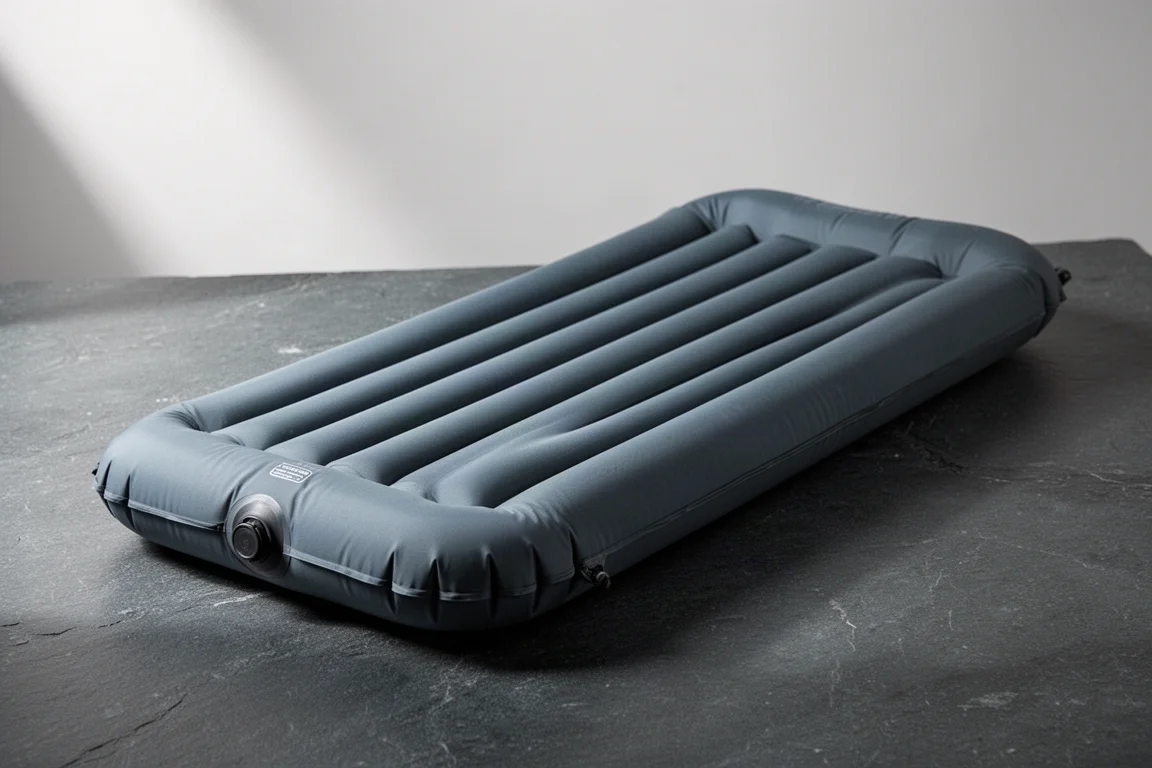
The Exped Ultra 7R sits at the top of this group in insulation terms with a rated R-value of 7. It also represents a substantial price increase over the value-focused pads covered above. It is worth knowing about as a reference point for what a genuinely cold-conditions pad looks like, since the jump in R-value is what separates a three-season pad from something you can rely on when temperatures drop well below freezing.
Exped Ultra 5R Sleeping Pad
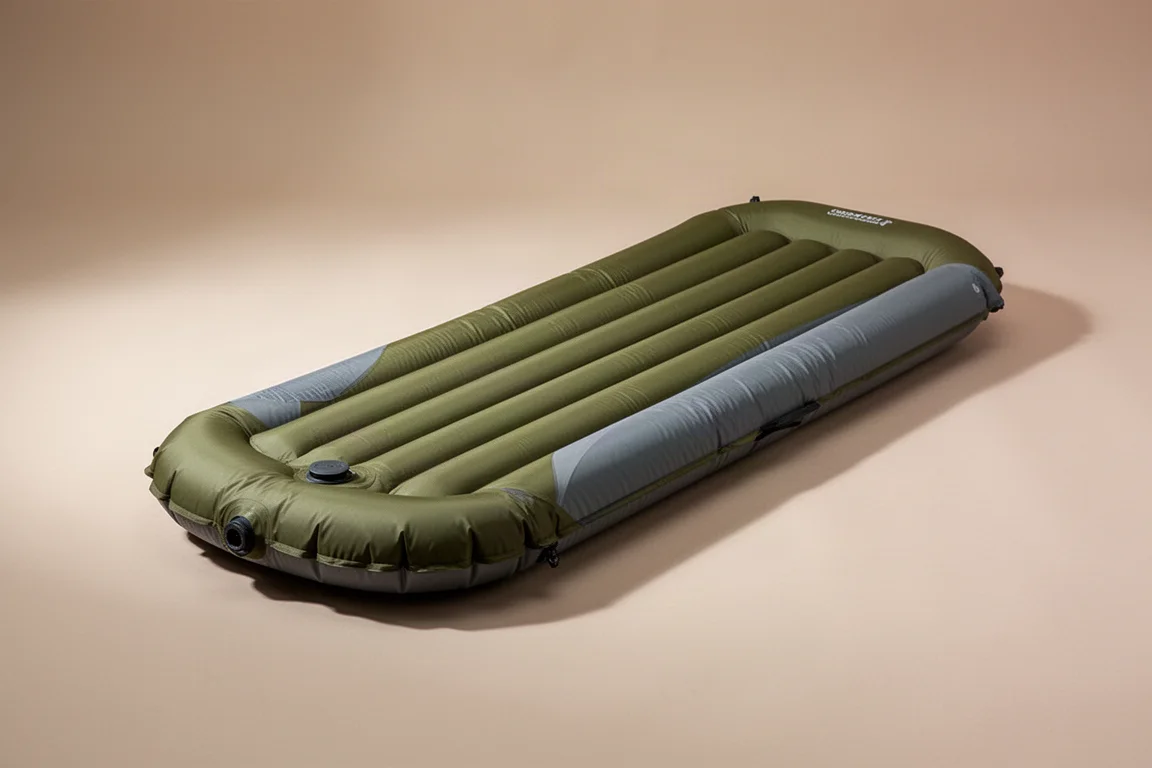
The Exped Ultra 5R is a more direct alternative to the Kilos Gear and AEX Gear pads, and it is not a significant price increase over either of them. It uses a fully synthetic batted insulation, which provides genuinely good thermal value and solid protection from cold ground, but it also adds bulk and some weight to the pad.
The main trade-off is comfort. The Ultra 5R uses large vertical baffles, which are less comfortable than the quilted pattern on the Kilos Gear pad. If you value a lower packed size and a lighter bag, the Kilos Gear option has the edge. If you prefer synthetic insulation and you can find the Ultra 5R on sale, which happens frequently, it is a decent buy at a similar price point.
Buying Advice: Matching a Pad to Your Trips
The right choice depends less on the spec sheet than on where and when you sleep outside. Start with the temperatures you realistically expect. If your trips run from late spring through early fall and you rarely camp on frozen ground, an R-value in the 3.8 to 5.5 range is a sensible target. If you camp on snow or in genuinely cold conditions, plan for something closer to an R-value of 7 with construction built for that environment.
Comfort is the second filter. If you are a side sleeper or you move around at night, thickness and baffle pattern matter more than most specifications. A 4-inch pad with a quilted baffle pattern, like the Kilos Gear Aeroc Cloud Elite, is the most comfortable option in this group. The AEX Gear Rano sits slightly behind it on comfort but comes in at a lower price and still delivers a solid 3.5 inches of thickness.
Warmth per dollar is the third filter, and it is where the Rano and the Aeroc Cloud Elite separate most clearly. The Rano is the cheaper of the two and carries the higher rated R-value at 5.5, but its insulation is attached to the pad layers rather than suspended, so its real-world warmth is closer to the Kilos Gear pad than the numbers alone suggest. The Aeroc Cloud Elite is the more comfortable pad and the more expensive one, and both are honest value at their price points.
Finally, consider weight and packed size. The Aeroc Cloud UL saves weight and money by stepping down to a single mylar layer and an R-value of 3.8, which makes it the right answer for warm-weather trips where you are counting grams. The Exped Ultra 5R trades a little comfort and packed size for synthetic insulation at a similar price, and the Ultra 7R is the option to consider if cold-weather performance matters more than cost.
Conclusion
All five pads offer real value at their respective price points, and none of them require you to accept the compromises of a $15 uninsulated mat. The Kilos Gear Aeroc Cloud Elite is the most comfortable of the group and a strong all-rounder for three-season trips down to freezing. The AEX Gear Rano costs less, weighs 23 ounces in the long wide size, and delivers a rated R-value of 5.5 with durable 20 denier ripstop fabric. The Aeroc Cloud UL trims weight and price for milder weather, while the Exped Ultra 5R and Ultra 7R show what synthetic insulation and a higher R-value cost in money, comfort, and packed size. Match the pad to the conditions you actually camp in, and any of these will keep you warm and rested.
Further reading
Related Reviews
Sleeping Pads
Best Backpacking Sleeping Pads 2026: Nine Pads Rated on Price, Comfort, Warmth, and Weight
Nine backpacking sleeping pads compared on price, comfort, warmth, and weight, from a $65 summer pad to a year-round option rated at R-7.3.
Sleeping Pads
Best Backpacking Sleeping Pads: Comfort, Warmth, and Weight Compared
A practical comparison of the Nemo Quasar 3D, Therm-a-Rest NeoAir XTherm Max, and Big Agnes Rapide SL for backpackers choosing between comfort, warmth, and packed weight.
Sleeping Pads
Best Backpacking Sleeping Pads: Ultralight, Winter, Comfort and Budget Picks
A practical roundup of the sleeping pads that stand out for ultralight weight, winter warmth, pressure relief and value, plus three popular pads that fell short.