Backpacking Gear
Backpacking Quilt vs Sleeping Bag: Therm-a-Rest Hyperion and Vesper Compared
A practical comparison of a backpacking quilt and a sleeping bag from the same maker, covering warmth, weight, drafts, and how your sleeping position should shape the decision.
Introduction
A backpacking quilt and a sleeping bag are built to solve the same problem, but they go about it in opposite ways. One seals you in, the other leaves the back open and asks your sleeping pad to handle insulation from below. Neither approach is universally better, and the right answer usually comes down to the conditions you camp in and the way you move in your sleep.
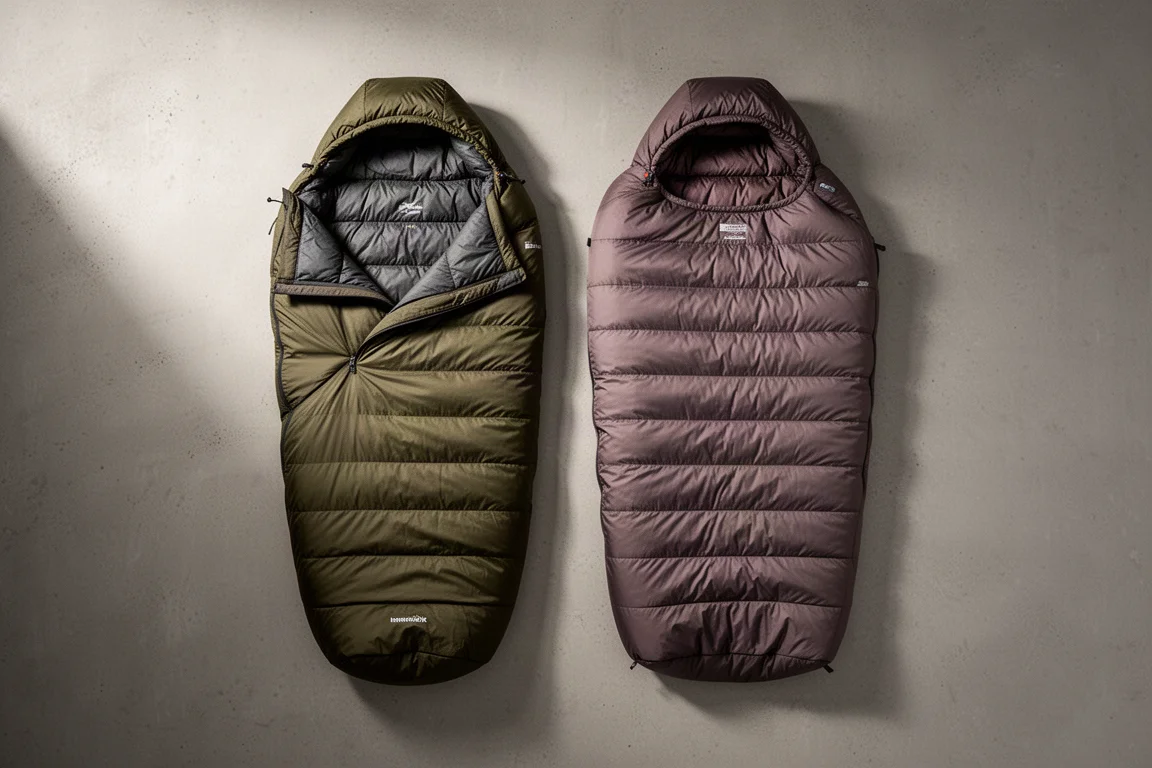
Comparing the Therm-a-Rest Hyperion sleeping bag with the Therm-a-Rest Vesper quilt keeps things fair, because both come from the same manufacturer and are aimed at the same kind of trips. What follows is a practical look at how the two designs differ, where each one performs best, and how to decide which one belongs in your pack.
How Quilts and Sleeping Bags Differ
A typical backpacking sleeping bag is a closed system. The foot end is fixed, a three-quarter or half-length zip runs up one side, and a hood sits over your head and cinches down around your face. For backpacking it is almost always a mummy shape, which is efficient but noticeably constrictive once you are inside.
A quilt takes the opposite approach. There is no hood, and the back is open. That open back worries people at first, but there is a sound reason for it. The insulation on the back of a sleeping bag compresses under your body weight and loses a large share of its insulating value. A quilt removes that section entirely and lets an insulated sleeping pad provide the warmth underneath you. This is why an insulated pad is not optional with a quilt. It is part of the system.
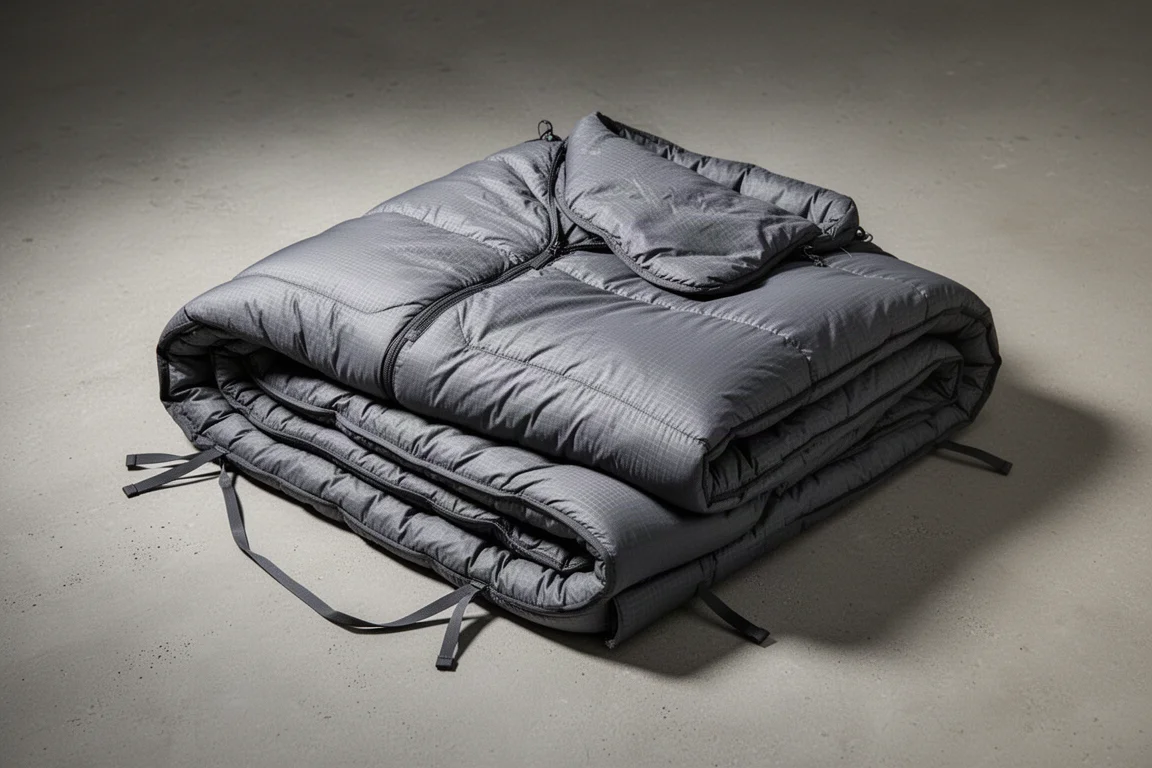
Removing the hood and the back panel also removes a lot of material, so quilts tend to be lighter and more packable than a comparable sleeping bag. The Vesper opens up along its length with a fixed foot box, and some quilts go further with a zippable foot box that lets the whole thing lie flat like a blanket.
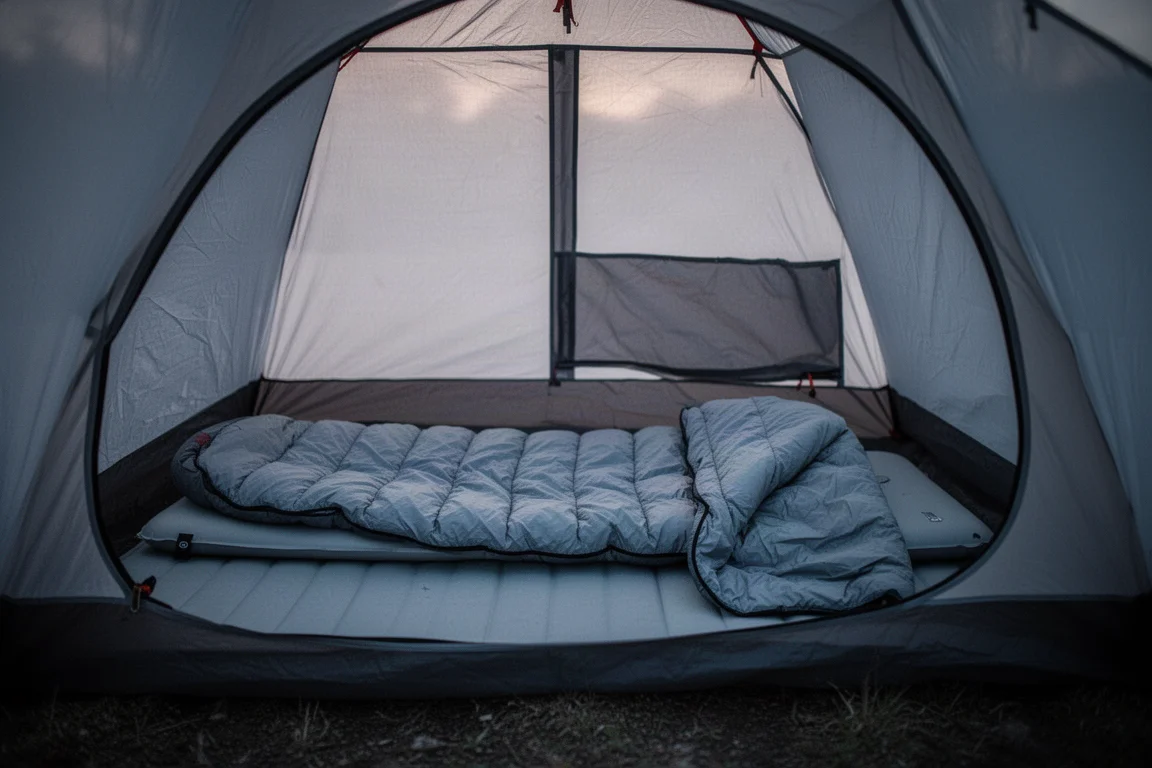
That openness is the source of the quilt’s biggest advantage and its biggest weakness. You get far more room to move, but you also have to manage the drafts that come with it.
Therm-a-Rest Hyperion Sleeping Bag: Warmth and Simplicity
The Hyperion is a mummy-style bag with a fixed foot end, a partial side zip, and a hood that cinches around your head. Once you are zipped in and the hood is tightened, there is very little opportunity for heat to escape. That closed design is why a sleeping bag is the stronger option in genuinely cold conditions, where losing body heat in the middle of the night is difficult to recover from.
It is also the easier of the two to live with. You get in, you zip up, and you sleep. There is no strap system to fine-tune before bed and no need to think about how the insulation is sitting on your pad.
The trade-off is restriction. The hood and the narrow cut of a mummy bag feel confining, particularly if you move around a lot. Front sleepers can also end up breathing into the hood, which builds condensation inside the bag and can leave you dealing with a cold, damp patch near your face.
Therm-a-Rest Vesper Quilt: Lightness and Freedom of Movement
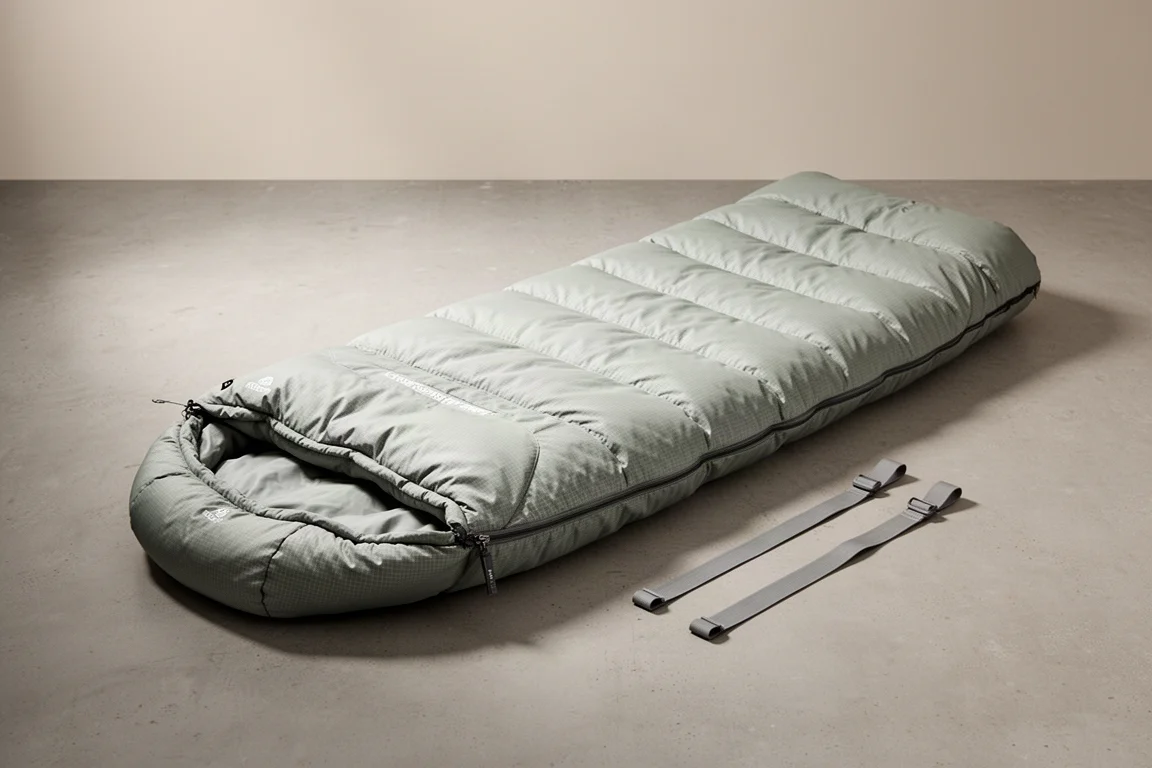
The Vesper drops the hood and the back panel altogether. It has a fixed foot box and opens along the rest of its length, which gives a generous amount of space from roughly the hips upward. If you are a restless sleeper, that extra room is the difference between waking up several times and sleeping through the night.
Two pad straps are included so you can lock the quilt down around your midsection and below. This is the part that matters most. A loose quilt shifts as you move, warm air escapes, cooler air gets in, and you spend the night chasing drafts instead of sleeping. Set the straps properly before you settle in and the lower half of the quilt stays put while your upper body keeps its freedom.
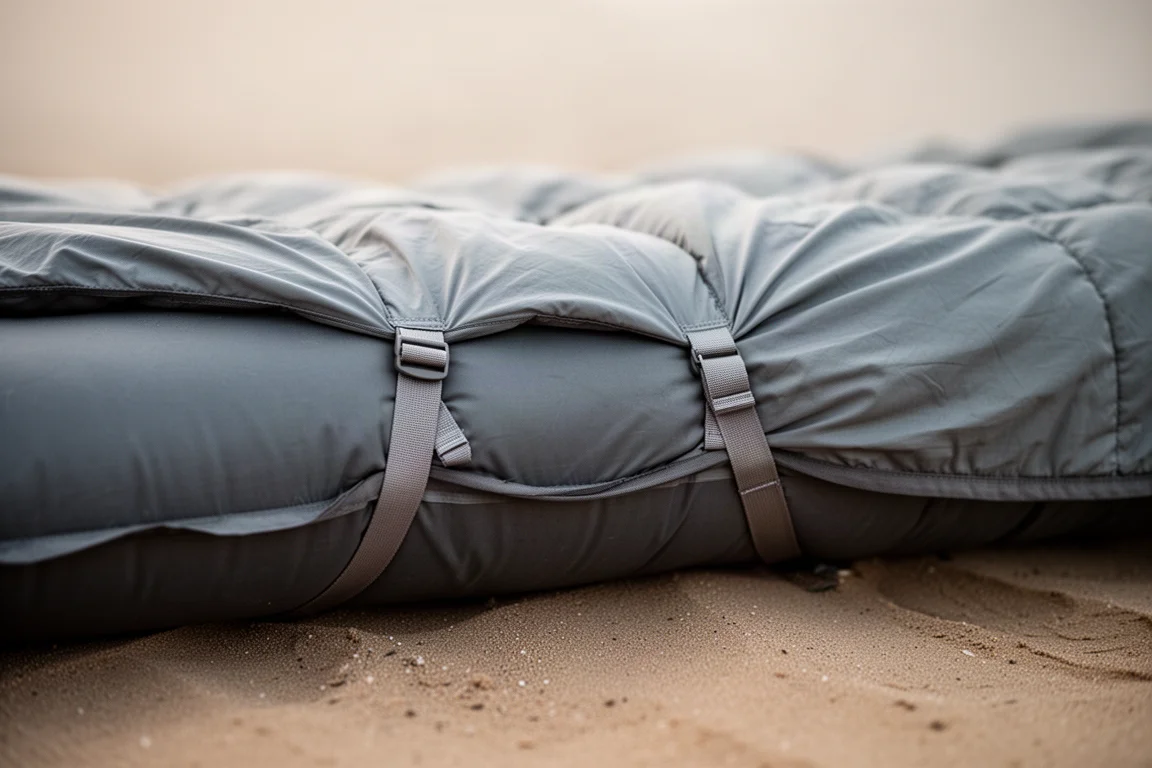
The upside is weight and packed size. With less material overall, the Vesper is lighter and takes up less room in a pack than an equivalent sleeping bag. The downside is warmth management. Drafts are the main drawback of any quilt, and the head end in particular needs attention in cooler conditions.
Warm and Cold Weather Performance
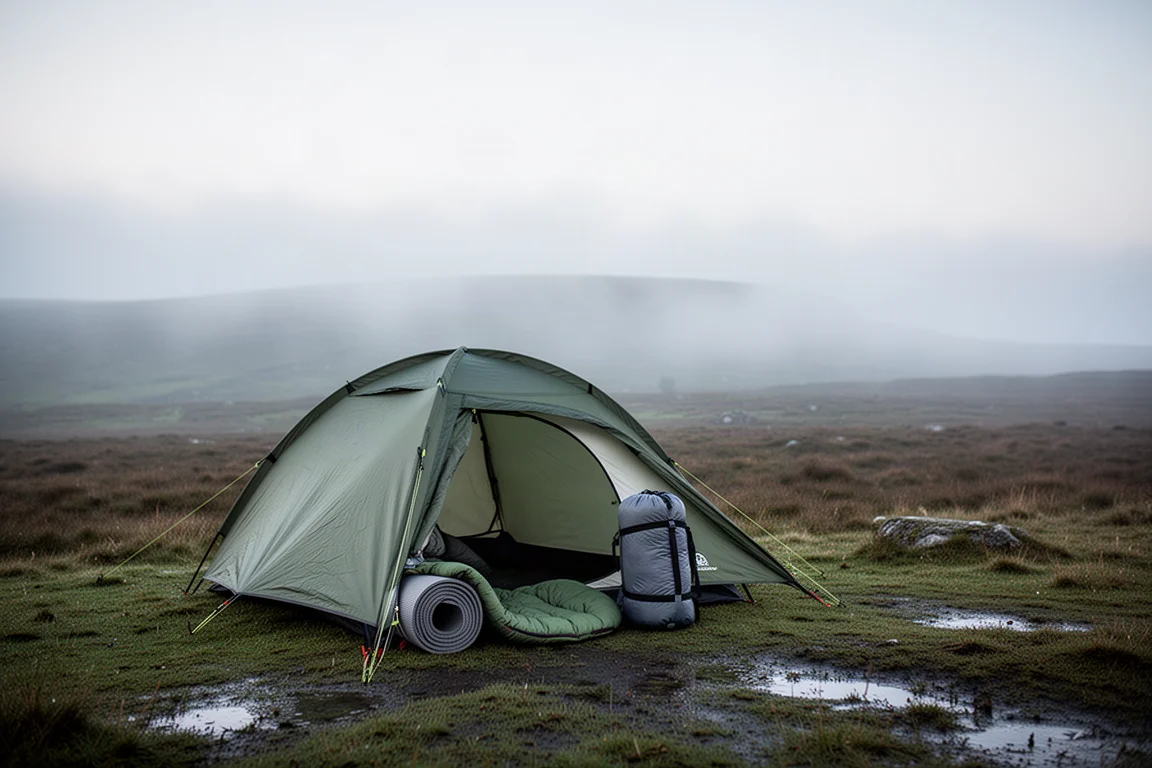
In cold weather, a sleeping bag is hard to argue with. Being fully zipped in and hooded up means almost no heat loss, and that margin matters when temperatures drop. In warm conditions, the quilt pulls ahead. Open it up and you are essentially sleeping on your pad with a blanket over you, which is far more comfortable than being sealed inside a bag on a mild night.
Spring and autumn are where the choice gets more complicated, and where the specific quilt design matters. A quilt used in cooler shoulder-season conditions often needs a neck covering and a hat, items you might not need with a sleeping bag. Those additions eat into part of the weight advantage. Base layers matter more with a quilt as well, both for comfort against the pad and for limiting the effect of any draft that reaches your skin.
Matching the Choice to How You Sleep
The single most useful question is not which design is lighter or warmer in theory. It is what kind of sleeper you are.
Back sleepers are generally better served by a sleeping bag. A closed bag with a hood suits a still sleeper, and there is no real penalty for the restriction. Lightweight sleeping bags are widely available, and some come with long zips or zips on both sides if you want more ventilation.
Side sleepers, front sleepers, and anyone who moves around a lot tend to get more out of a quilt. The extra room above the waist makes a real difference, and the absence of a hood solves a specific problem for front sleepers who would otherwise breathe into it and wake up cold and damp.
If you are honest about your sleeping position before you buy, you will usually arrive at the right answer without much second-guessing.
Spring and Autumn Setup: Pads, Straps, and Base Layers
Shoulder-season trips are where a quilt rewards a little preparation. Start with an insulated sleeping pad, since it is doing the insulating work that a sleeping bag would otherwise handle on your back. Fit the pad straps before you get in, keeping the quilt snug from the midsection down, and check that there is no obvious gap along the sides.
Layer up as well. A light base layer keeps you comfortable against the pad and softens the effect of any draft that sneaks in. Add a hat and something around the neck if the forecast is cool, and treat those as part of the sleep system rather than optional extras.
Buying Advice
Decide in two steps. First, match the design to how you sleep: back sleepers should look at sleeping bags, while side sleepers, front sleepers, and restless sleepers will usually be happier in a quilt. Second, match it to the conditions you actually camp in. If you spend nights in genuinely cold weather, the sealed warmth and simplicity of a sleeping bag are worth the extra restriction. If most of your trips are milder and you want to save weight and pack space, a quilt is the more rewarding choice.
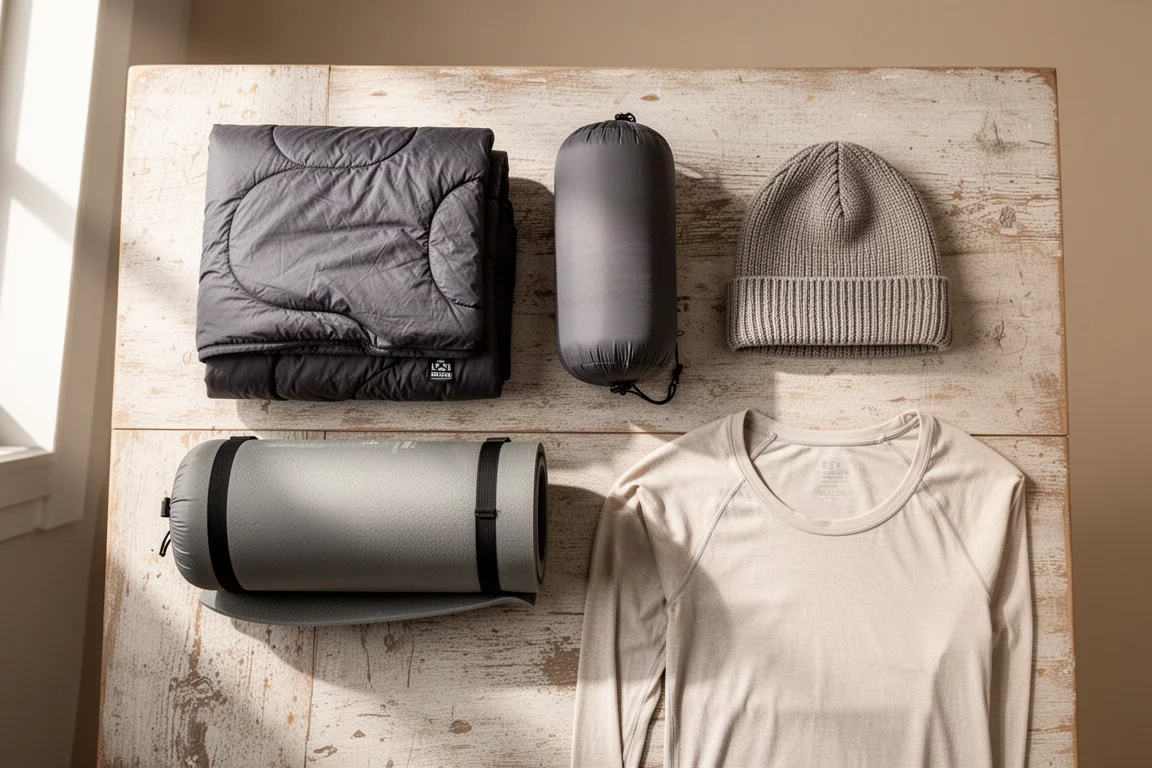
Be realistic about the setup as well. A quilt asks for a properly fitted pad strap arrangement and, in cooler conditions, a hat, a neck covering, and decent base layers. If that sounds like fuss you will not want to deal with at the end of a long day, a sleeping bag remains the simpler answer.
Conclusion
Quilts and sleeping bags are both capable, and the decision comes down to fit rather than superiority. The Therm-a-Rest Hyperion sleeping bag suits cold trips and still sleepers who want warmth with no setup. The Therm-a-Rest Vesper quilt suits warm-weather backpacking and anyone who wants room to move, provided they are willing to manage drafts with a good pad and straps. Choose according to your sleeping style and your seasons, and either one will serve you well.
Further reading
Related Reviews

Backpacking Gear
Building a 10 lb Base Weight: An Ultralight Backpacking Gear List
A practical walkthrough of the ultralight pieces behind a 10 lb base weight, from a 765 g pack and a roomy one-person tent to a full camp chair and a dependable water filter.
Backpacking Gear
A 15-Pound Lightweight Backpacking Gear List for Solo Trips
A beginner-friendly 15-pound backpacking setup built from easy-to-find gear, with notes on what each piece does, how it packs, and where to spend your attention.
Backpacking Gear
8 Ultralight Backpacking Gear Upgrades Worth Carrying
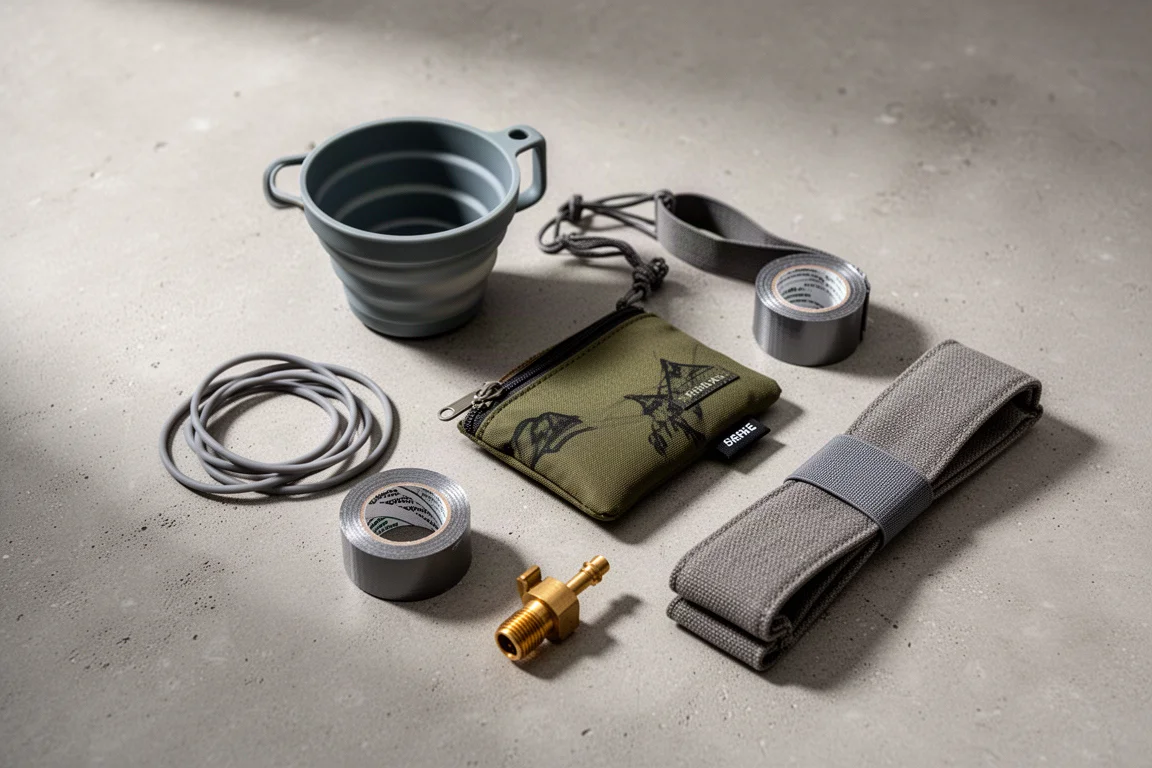
Eight small, affordable backpacking upgrades that solve real trail annoyances, from a pillow that stays put to a fuel valve that rescues leftover canister gas.