Backpacking Gear
Backpacking Gear Worth Your Money: Two Standouts and One Warning
A practical look at three pieces of backpacking gear: a zero-drop trail shoe, a 28-gram rechargeable headlamp, and a trekking pole design with a locking flaw.
Introduction
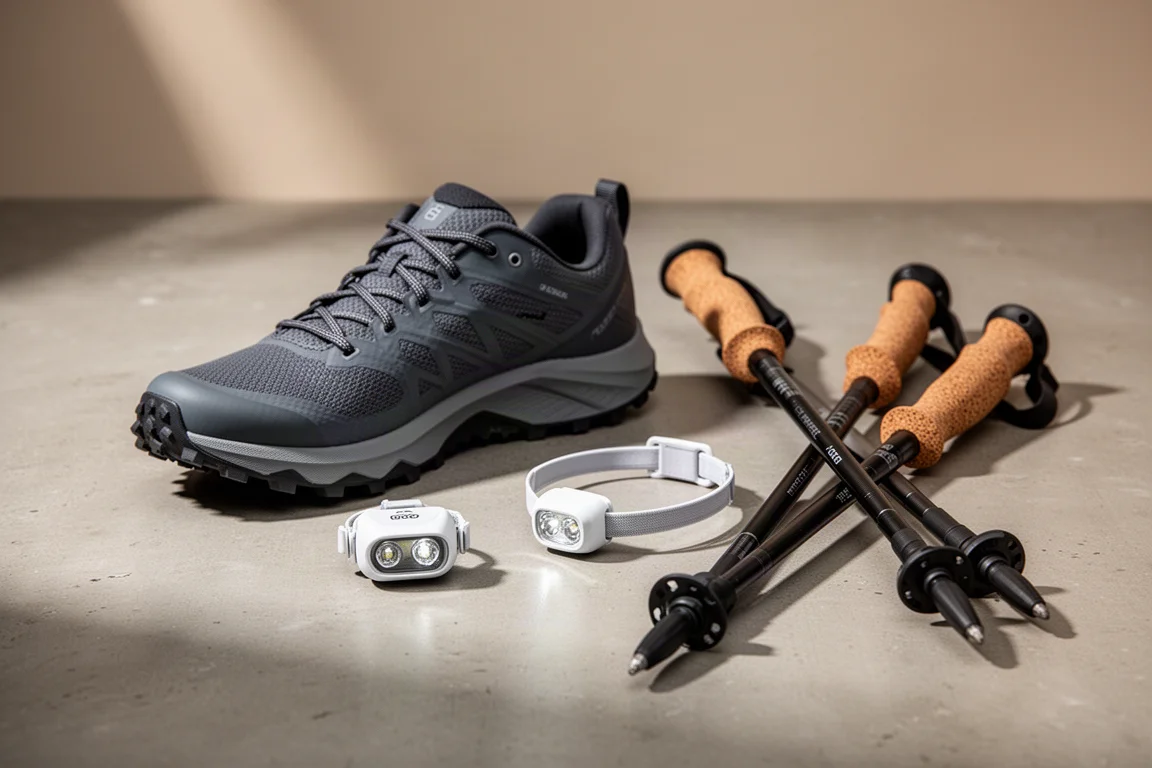
Choosing backpacking gear is less about chasing the newest release and more about knowing which items will still be working after a few hundred miles. This roundup covers three pieces of gear that have seen real trail time: a zero-drop trail shoe that became a daily wearer, an ultralight rechargeable headlamp that has handled night runs and camp evenings, and a trekking pole model whose locking design raises a genuine concern.
Two of these items have earned a permanent spot in a pack. The third is a cautionary example of how a small mechanical detail can undermine an otherwise comfortable product.
How This Gear List Came Together
The items here were judged on long-term use rather than first impressions. That means thousands of miles of hiking, night running, and everyday wear, with attention to how each product held up once the novelty wore off.
Weight, comfort, and durability carried the most influence, but repairability mattered just as much. Gear that cannot be serviced in the field, or that relies on hard-to-find replacement parts, becomes a liability on a long trip no matter how well it performs on a short one.
Fit and break-in also played a role. Shoes and poles that feel fine on a two-hour walk can behave very differently on a multi-day route, so the notes below focus on what changed over time rather than what stood out on day one.
Altra Lone Peak 5: A Zero-Drop Shoe Worth the Adjustment
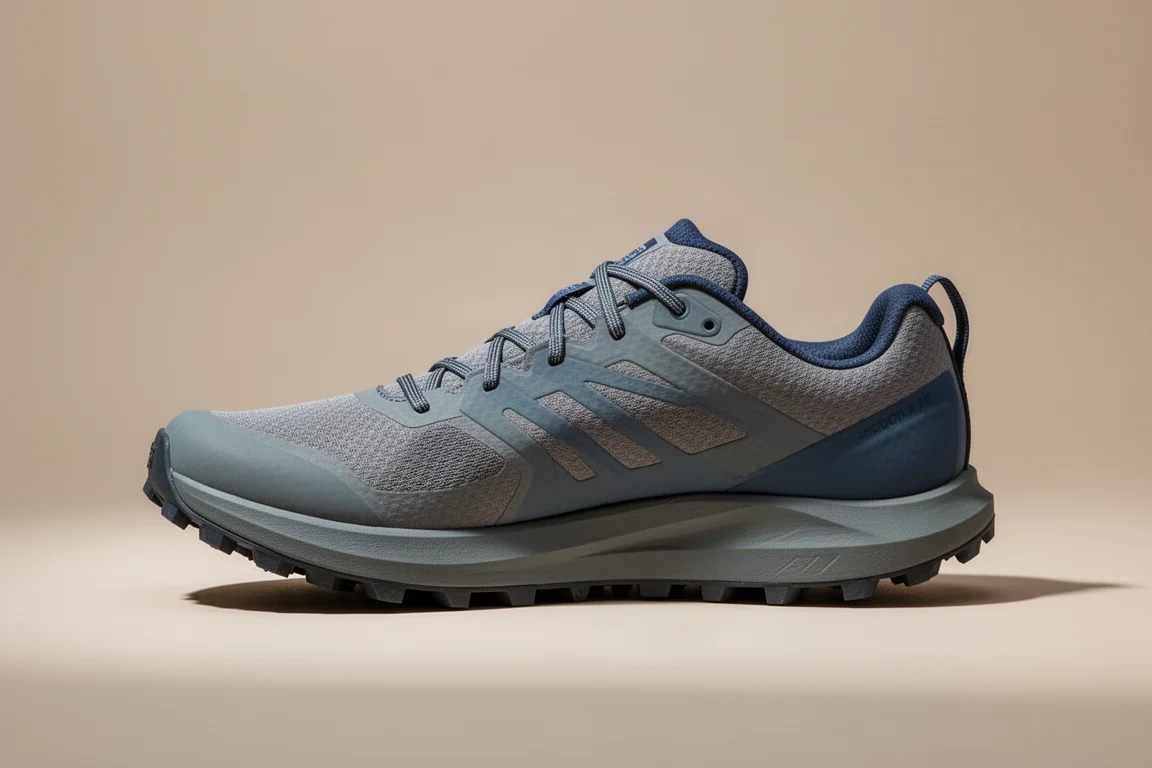
The Lone Peak 5 is one of the most widely used trail shoes for thru-hiking, backpacking, and trail running, and after a full season it is easy to see why. The shoe uses a zero-drop platform, which means the heel and forefoot sit level with no incline between them. That flat platform is intended to encourage a more natural foot position, and it is the feature people either love or struggle with.
Anyone moving to zero drop for the first time should treat it as a transition rather than a straight swap. Wear the shoes around the house, take a few short and easy hikes, and let the feet and calves adapt before committing to long days. That gradual approach worked well here, and the platform became comfortable quickly.
Sizing runs large in this model. A hiker who normally wears a size 10 ended up in a 9, and the earlier 4.5 version ran large enough that an oversized pair contributed to a foot problem on a long hike. Trying a half size down, or even a full size down, is worth the effort before ordering.
Durability has been solid. After roughly 300 miles of trail use plus everyday wear, the outsole grip is still going strong, and the uppers show the expected scuffs without any structural failure. Colorways vary by retailer, and availability in a given size can be limited, so it is worth checking a few options if a specific look matters.
Nitecore NU25: A 28-Gram Headlamp That Earns Its Place
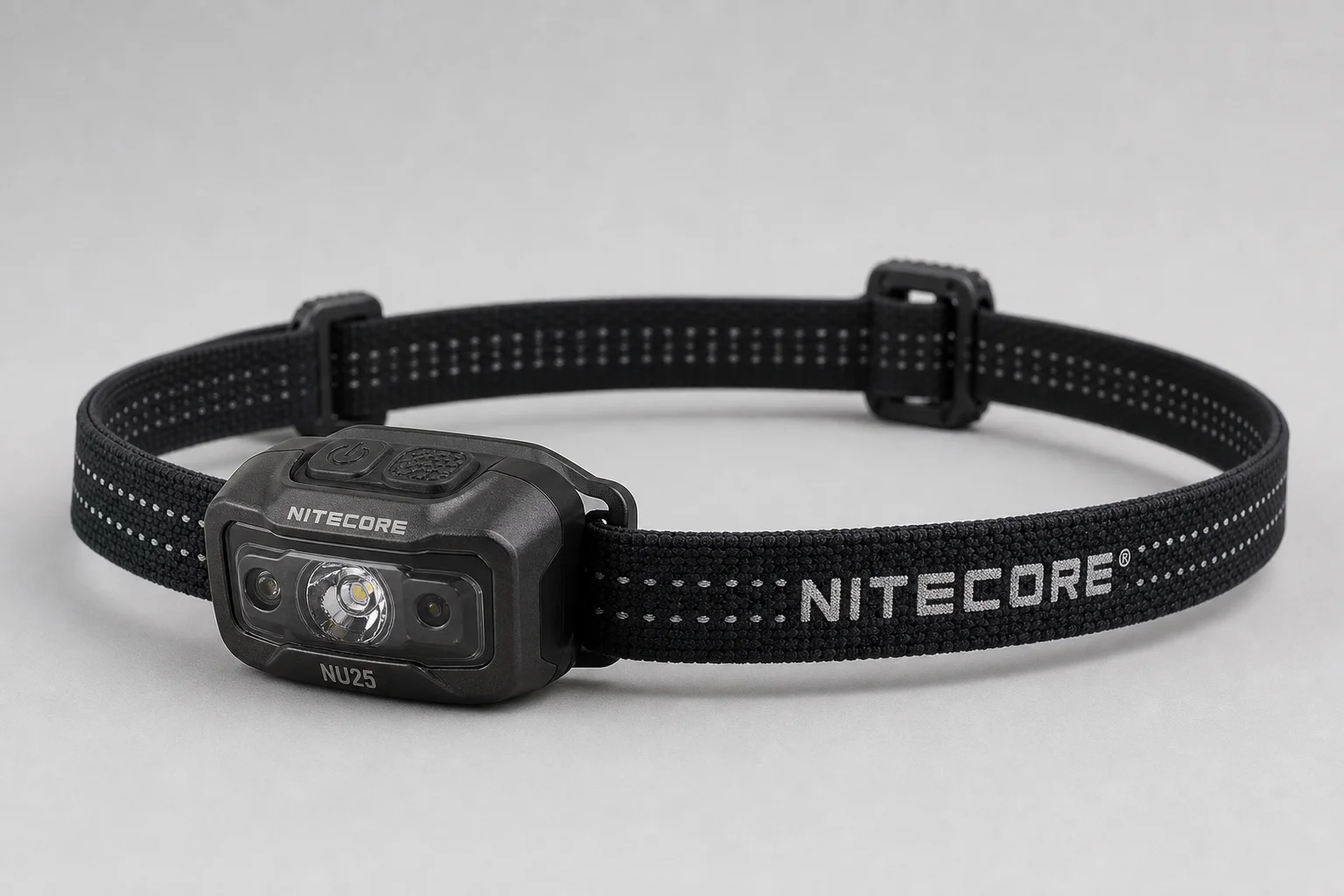
The NU25 weighs 28 grams, or 0.99 ounces, for the main light unit, with the headband adding roughly another ounce. That makes it one of the lightest options for backpacking and night running, and some users go further by removing the stock strap and replacing it with a shock cord to save a little more.
Output reaches 360 lumens at maximum, with a high setting around 190 lumens that has proven bright enough for running on dark trails at speed as well as for general camp use. A medium setting covers time spent around camp, and a red light mode is available for use inside a tent or shelter where a bright beam would disturb others.

The battery is rechargeable, which is a meaningful change for anyone used to disposable cells. It removes the need to carry spares and is a large part of how the weight stays so low. Charging has been reliable in practice.
Pricing sits in the region of $30 to $35, which is modest next to many headlamps with comparable output. One caveat worth noting: a white housing shows the effects of sweat and heavy use over a couple of seasons, so a darker colorway is likely to age better.
Leki Corklite: A Locking Design That Falls Short
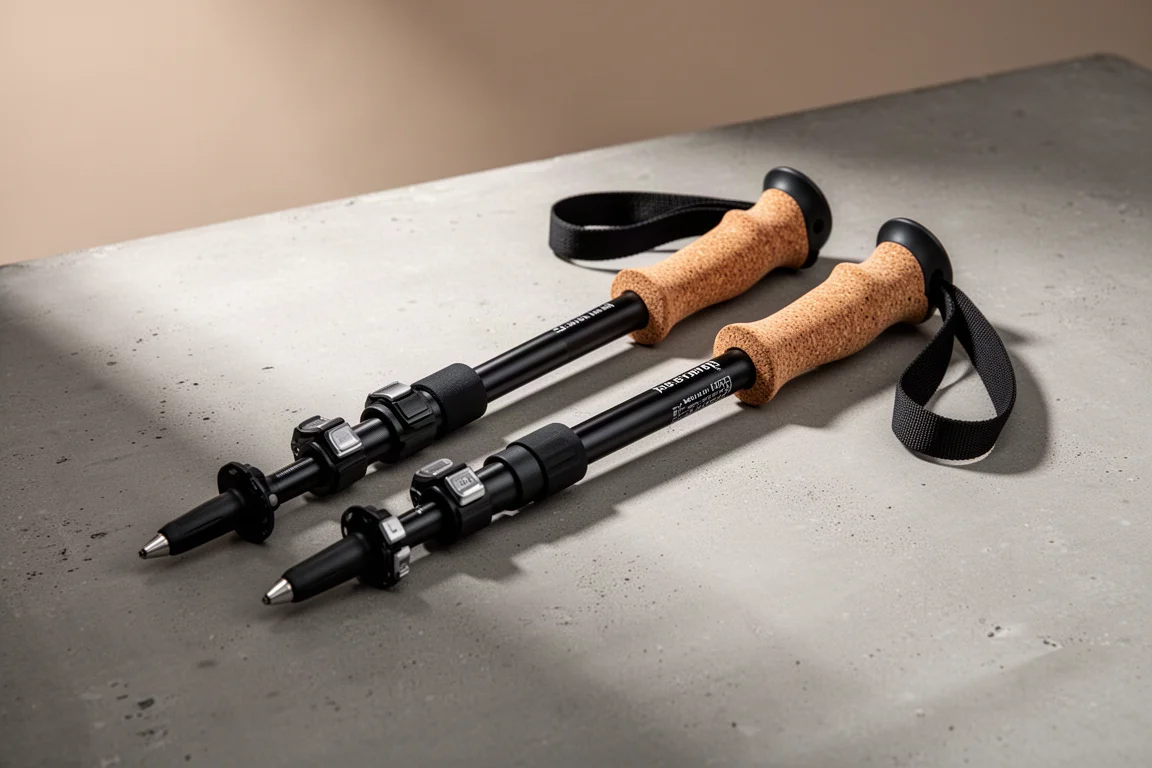
The Corklite poles have plenty going for them on paper. The cork grip stays comfortable over long days, the shaped top is easy to grip on descents, and the build is lighter than the earlier version of the same pole.
The problem is the locking mechanism. Adjustment works by loosening or tightening a screw that controls how firmly the pole sections are held. Tighten it too little and the pole slips; tighten it too much and the plastic piece can snap when the pole is folded closed. That failure happened three times across two users: twice on personal pairs and once on a hiking partner’s identical poles. In one case the pole could no longer be opened without tools such as pliers, which would be a serious problem mid-route on a long hike.
Earlier versions of the pole were heavier and considerably tougher, surviving a long thru-hike and a full Appalachian Trail crossing with no snapped parts. The newer, lighter build feels flimsier, and that trade-off has not paid off.
Replacement straps were also difficult to source, which adds friction for anyone planning to keep a pair running for years. The specific Corklite model appears to be discontinued, but the same locking system is still used on other poles in the range, so the concern is worth checking before buying.
What to Look For in Trekking Poles
The Corklite experience points to a few things worth checking before committing to a pair. The locking mechanism comes first: look for a design that holds firmly without requiring force, and that can be adjusted with gloves on. A system that depends on over-tightening a small plastic part is a weak point on any long trip.
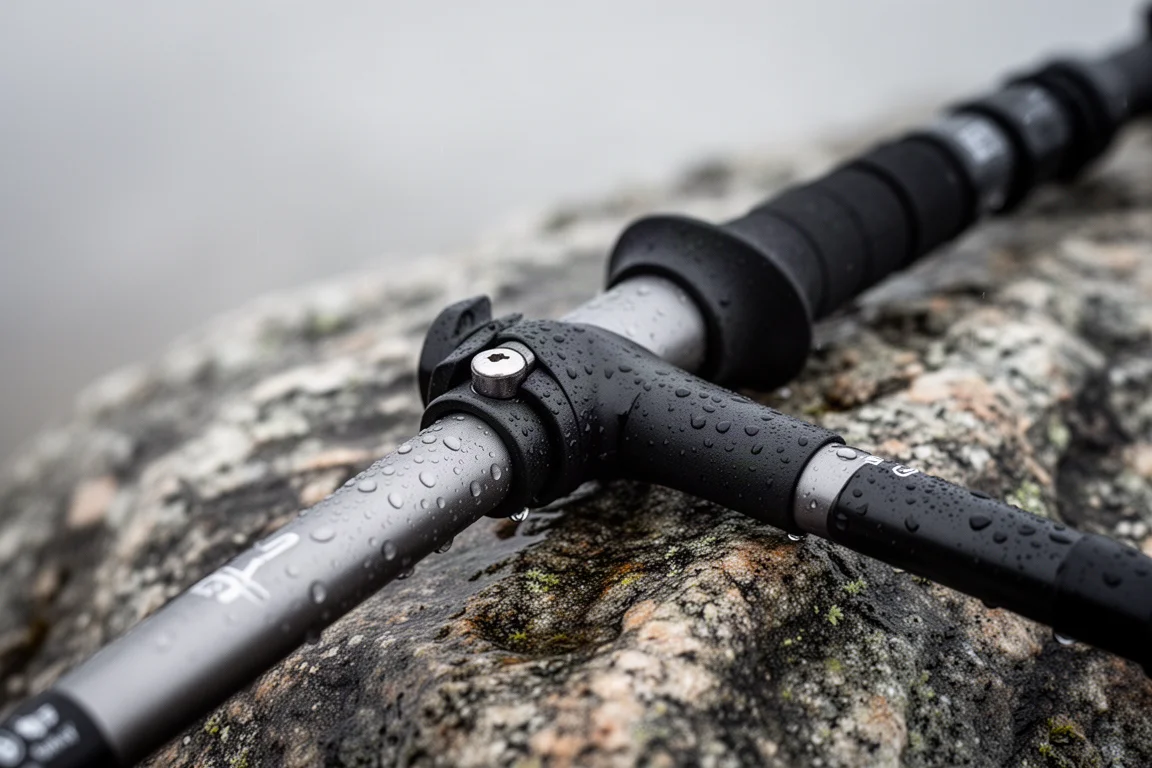
Field serviceability is the second consideration. If a pole jams, can it be freed by hand? If a strap or tip wears out, are replacements easy to find? Weight matters, but a pole that cannot be repaired or adjusted on trail is worse than a heavier one that can.
Grip material is the third. Cork remains a comfortable choice for long days, particularly in warm conditions, and it tends to mold to the hand over time.
Care, Maintenance, and Replacement Parts
Locking mechanisms collect grit, and that grit accelerates wear. Wiping pole sections clean and letting them dry before storage keeps the mechanism working smoothly. When adjusting a lock, tighten only until the pole holds, then stop. Forcing it further is what causes failures.
Straps, tips, and baskets are the parts most likely to need replacing first, so it is worth confirming that spares are available before a long trip rather than after something breaks. For shoes, the same logic applies: rotate them into use gradually and keep an eye on outsole wear as the miles add up.
Buying Advice: What to Prioritize
For footwear, fit comes first. The Lone Peak 5 rewards anyone willing to size down and break the zero-drop platform in slowly, and it holds up well across hundreds of miles of mixed trail and everyday use. It is a strong choice for hikers who want one shoe that handles both.
For lighting, the NU25 makes sense for anyone counting grams. At 28 grams and roughly $30 to $35, it delivers enough output for night running and camp use, plus the convenience of a rechargeable battery and a red light mode.
For poles, prioritize the locking design and parts availability over a small weight saving. The Corklite is comfortable and well shaped, but the snapping issue reported across multiple pairs is enough to justify comparing alternatives before buying.
Conclusion
Two of these three items have earned their place: the Lone Peak 5 for its comfort and durability once sized correctly, and the NU25 for its combination of weight, output, and price. The Corklite is a reminder that a comfortable grip and a light build cannot compensate for a locking mechanism that fails under normal use. Check the details that matter on a long trip, and the gear that comes home in one piece will be the gear worth keeping.
Further reading
Related Reviews

Backpacking Gear
Building a 10 lb Base Weight: An Ultralight Backpacking Gear List
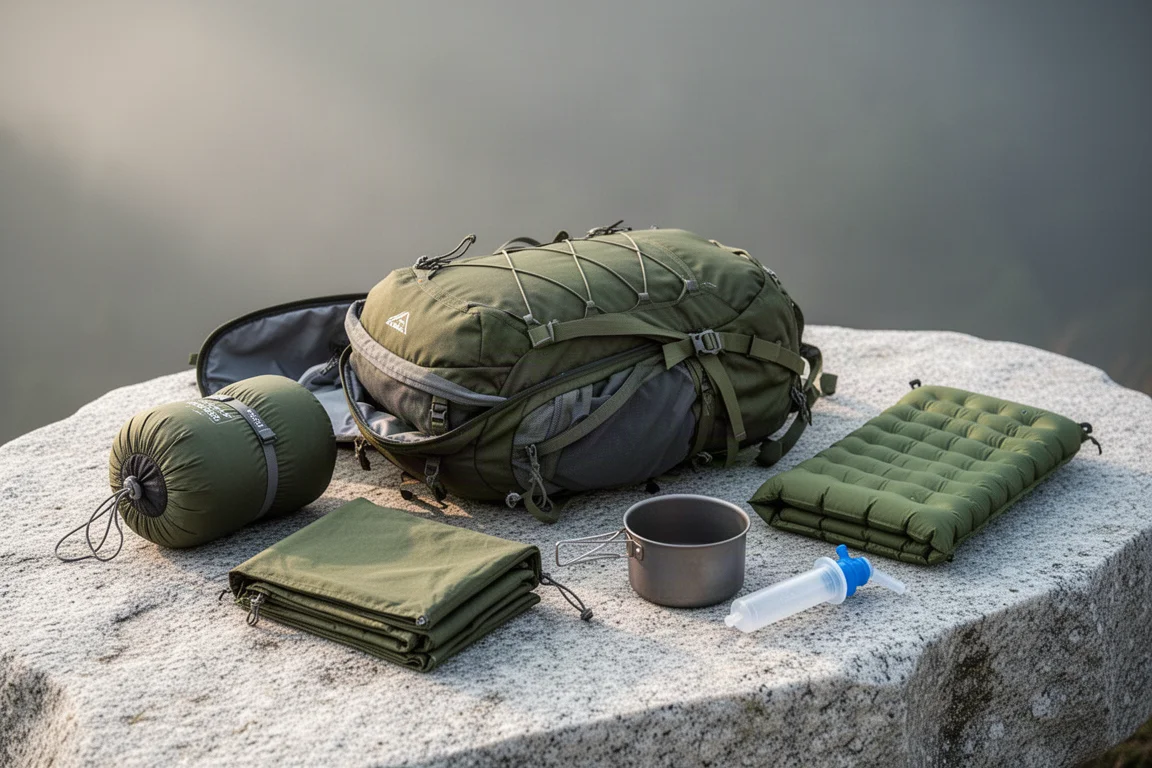
A practical walkthrough of the ultralight pieces behind a 10 lb base weight, from a 765 g pack and a roomy one-person tent to a full camp chair and a dependable water filter.
Backpacking Gear
A 15-Pound Lightweight Backpacking Gear List for Solo Trips
A beginner-friendly 15-pound backpacking setup built from easy-to-find gear, with notes on what each piece does, how it packs, and where to spend your attention.
Backpacking Gear
8 Ultralight Backpacking Gear Upgrades Worth Carrying
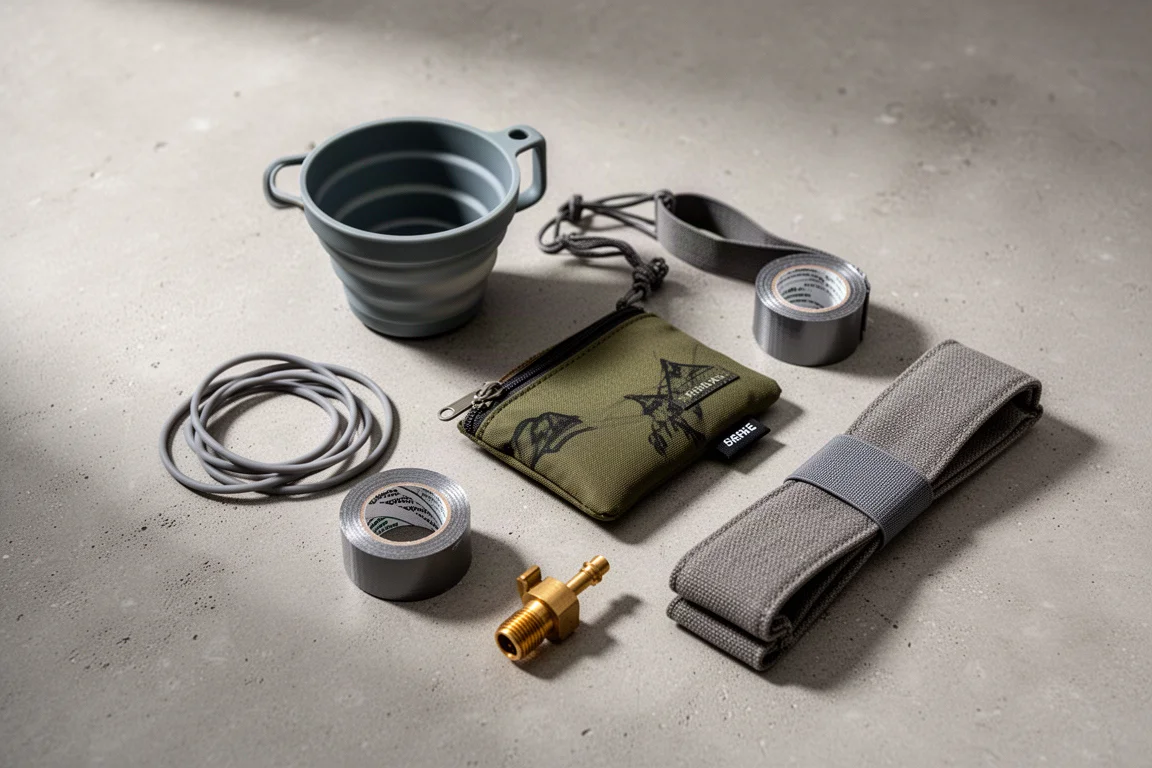
Eight small, affordable backpacking upgrades that solve real trail annoyances, from a pillow that stays put to a fuel valve that rescues leftover canister gas.