Backpacking Gear
Backpacking Gear Worth Carrying: Four Picks for Simpler, Lighter Trips
Four backcountry items that hold up over long miles, from route planning software to repairable carbon trekking poles, plus how to tell a keeper from a gimmick.
Introduction
Backpacking gear has never been more inventive, and that is not automatically a good thing. Every season brings a fresh crop of small, clever-looking accessories that promise to solve a problem you may not actually have. The result is a pack that is heavier, more expensive and more complicated than it needs to be, and a base weight that creeps upward one gadget at a time.
Long-distance trails are a useful filter here. Gear that survives thousands of miles usually earns its place for three unglamorous reasons: it does more than one job, it can be repaired rather than replaced, and it does not add a part that can jam, snap or get lost. Everything else tends to end up in a hiker box within the first week, which is where most of the clever plastic goes.
That is the lens for this guide. It covers four items that hold up under real trail conditions, including two trekking poles that have covered thousands of miles without failing, a navigation tool that doubles as an emergency safety net, and one accessory that is genuinely optional depending on where you camp. It also explains how to spot the difference between innovation and a gimmick before you spend money on either.
How These Picks Earn Their Place
Four questions separate gear that lasts from gear that gets abandoned.
Does it replace something you already carry? The best items in a pack do a second job. A pump sack that ships with a sleeping pad inflates it, stuffs a quilt and lines a pack. A water bottle cap pushes a tent stake. A folded square of aluminium foil makes a pot lid. Gear that only does one narrow thing has to be very good at it to justify the space.
Can you fix it in the field? Long trails are hard on moving parts. A pole with a clamp you can tighten with a small screwdriver, or a tip you can swap out, stays in service. A pole held together by an internal cord and a push button usually does not.
Does it prioritise durability over minimum weight? A trekking pole takes your full body weight, gets jammed between rocks and gets dropped on scree. Cutting grams out of a load-bearing item is a trade, and it is often a bad one.
Is it simple? Fewer parts means fewer failures. That is the whole argument for keeping a cook system to a pot, a lid and a stove.
OnX Backcountry: Route Planning and Emergency Backup in One App
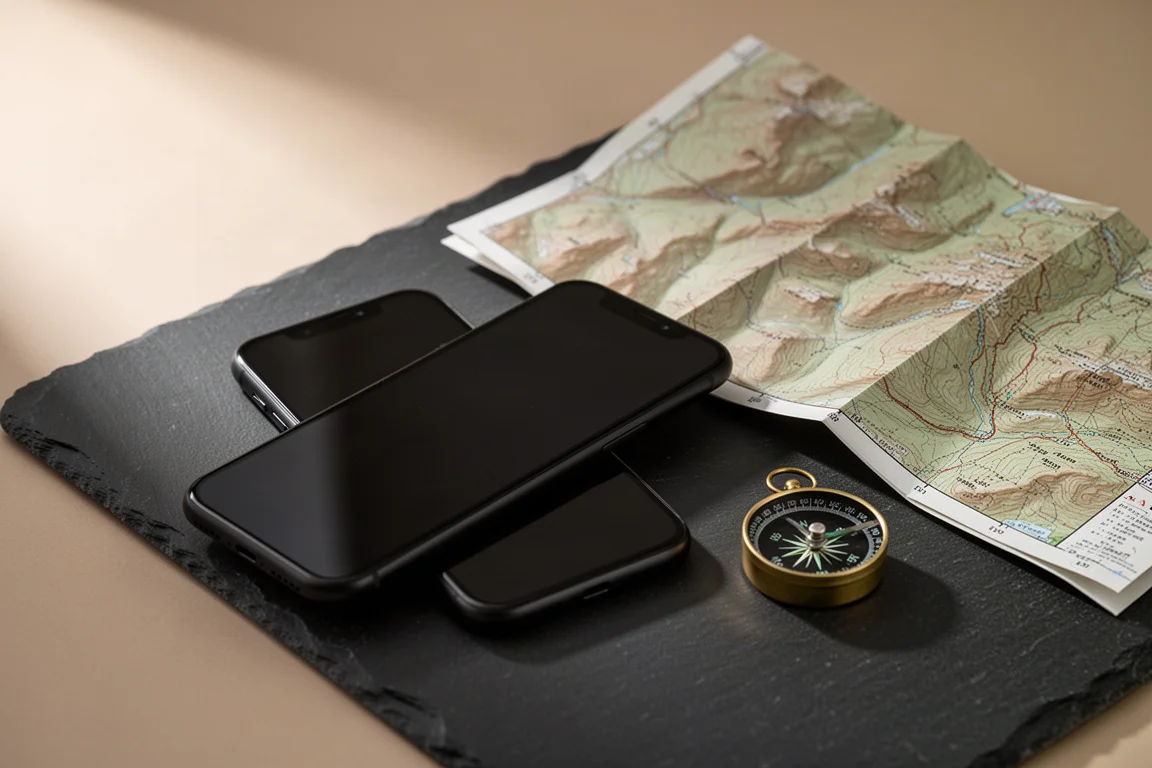
OnX Backcountry is a trip planning and navigation tool that works on both mobile and desktop. Routes are built before a trip and then followed on trail, which makes it useful across very different kinds of outings: a weekend backpacking loop with friends, a packrafting route, or a long thru-hike through remote country such as the Brooks Range in Alaska.
The app includes layers for current weather, active wildfire and slope angle, so conditions and terrain can be assessed in the same place the route is planned. The newest addition is OnX SOS emergency, a yearly subscription service built directly into the app. If something goes wrong on a trip and a rescue is needed, the request sits in the same application used for navigation rather than in a separate device or a separate account.
For hikers who travel solo, or who spend time in areas where a phone signal is unreliable, that combination is the most practical reason to consider a subscription. Route planning is a convenience; having an emergency service in the app you already have open is closer to insurance, and it is worth weighing against the cost of the subscription itself.
Jetboil Fuel Can Stabilizer: A Niche Fix for Uneven Ground
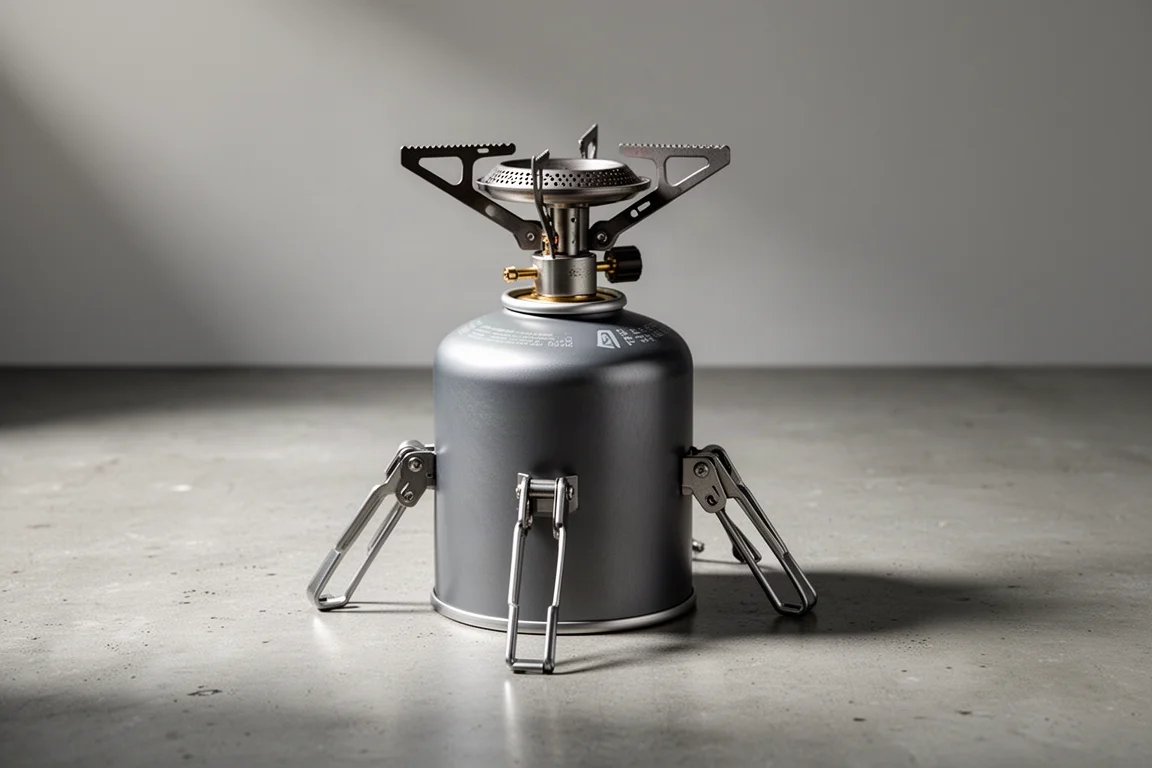
A fuel can stabilizer is a set of small legs that clip onto the base of a canister and widen its footprint, so a stove is less likely to tilt or tip. Jetboil’s version is the best known of these and was for years included with Jetboil stove systems.
There is a real use case. On soft sand, on duff, or on genuinely lumpy ground, the wider base does make a canister stove noticeably more stable, and for campers who routinely cook in those conditions it is a small, light addition to a kit.
On most campsites, though, the same result is free. A few seconds spent clearing a patch of ground, moving a couple of rocks or scraping the surface level will settle a canister just as well. And if the pot on top is heavy enough that a small canister stove feels precarious, the better answer is a larger stove and a larger fuel system rather than legs under a small canister. Treat this one as a specific-conditions accessory rather than a default addition.
Black Diamond Carbon Cork Trekking Poles: The Long-Haul Standard
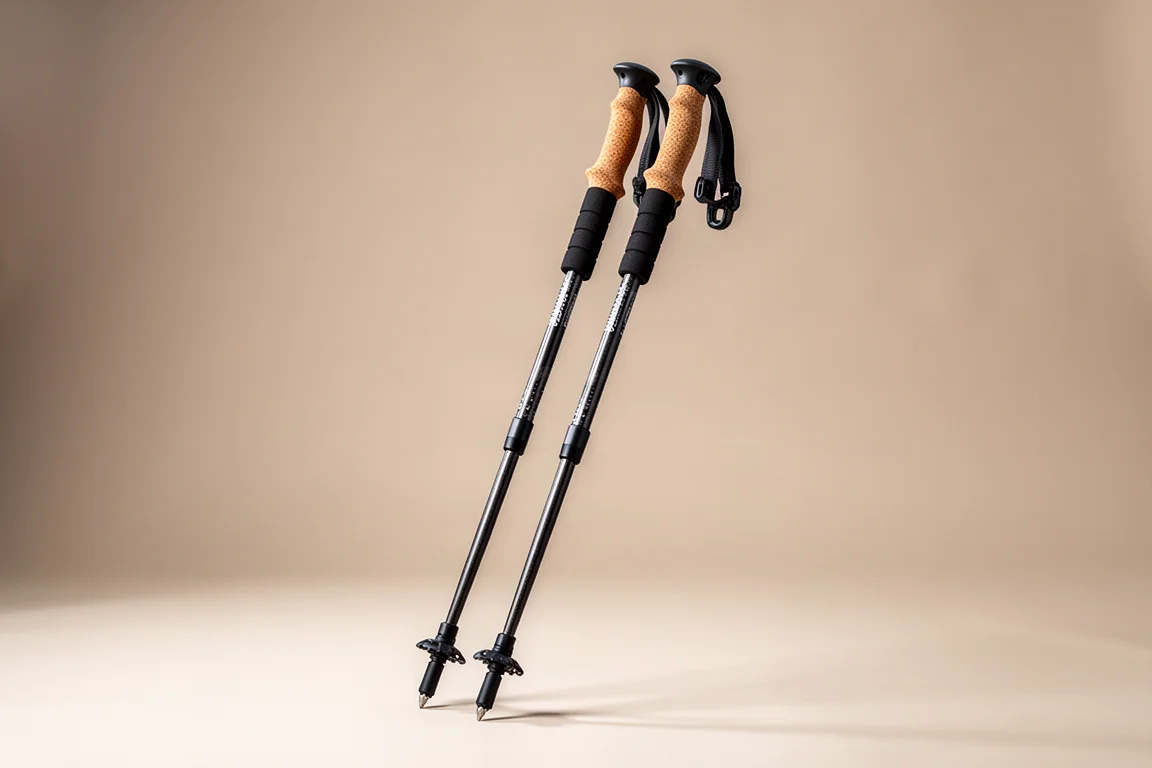
Black Diamond Carbon Cork poles pair carbon shafts with natural cork grips, and they have been in continuous use since 2015 across thousands of miles without a single component failure. The flick-lock clamps can be adjusted and repaired in the field with nothing more than a Phillips head screwdriver, and the tips are replaceable, so the pole can be brought back to working order on a trail rather than retired.
The trade-off is weight. These poles are heavier than the minimalist, multi-section designs that break down small enough to fit inside a pack. That is the point. The extra grams buy a pole that can take a fall, a rock strike and a season of dirt without the locking mechanism seizing or the shaft folding, which matters far more on a long trail than the number on a scale.
Deaorite Trekking Pole: Carbon That Can Be Repaired on Trail
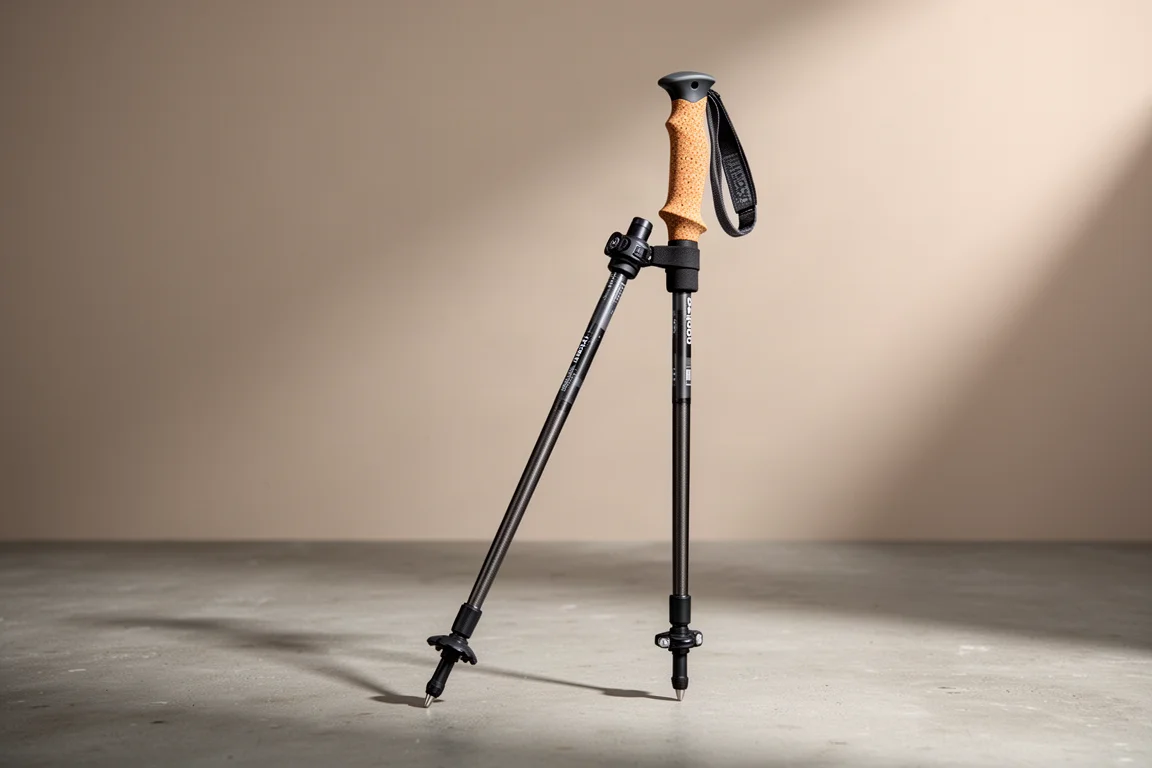
Deaorite, formerly Kanak, builds a carbon trekking pole in Portland around the same philosophy: field-repairable parts and replaceable tips, with no internal cord to stretch or hidden button to jam. The design is deliberately simple, and simple is what keeps a load-bearing item working.
One pole from this line eventually snapped after more than 3,000 miles of use, but only when it was wedged between two rocks and levered during a fall. That is a failure caused by the situation rather than by a worn component, and an earlier pole from the same line is still going strong after thousands of miles. For hikers who want a light carbon pole they can service themselves, that is a strong record.
Buying Advice: Matching Gear to the Miles You Actually Hike
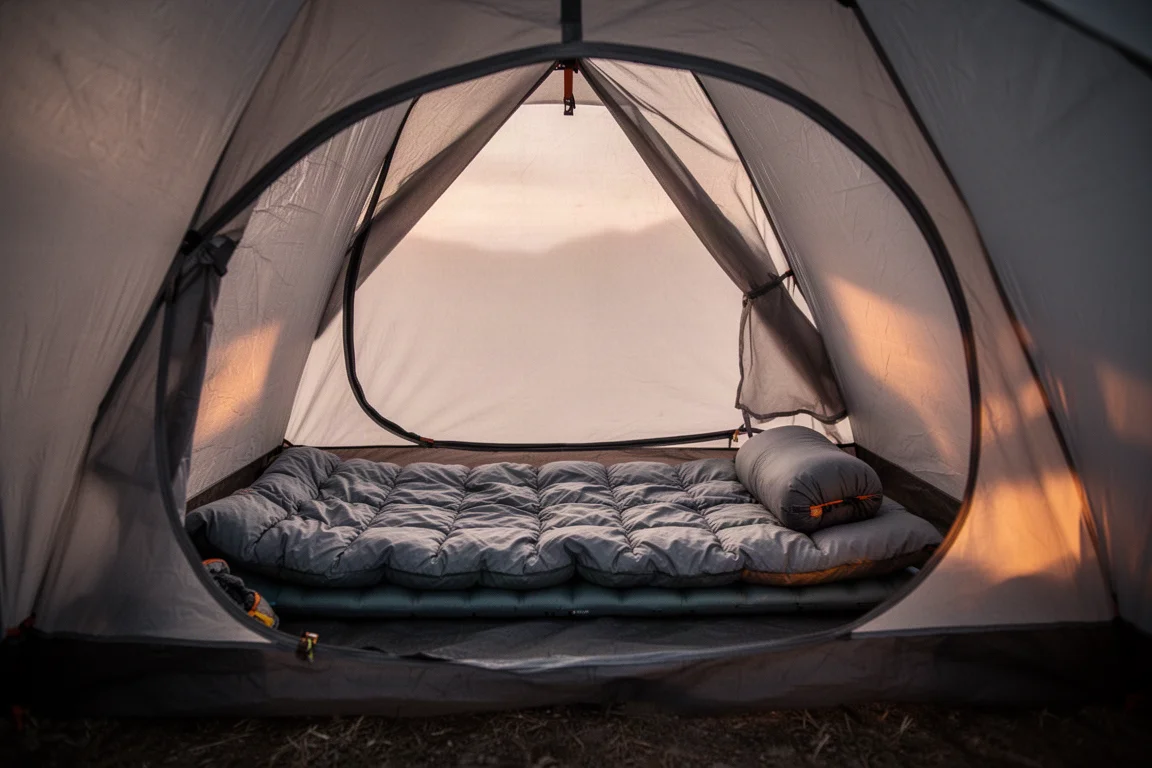
The quickest test for any new item is whether it replaces something you already carry. A water bottle cap pushes a tent stake as well as a dedicated plastic tool. A folded square of aluminium foil makes an ultralight pot lid that can be remade for pennies if it is lost or damaged. A pump sack that comes with a sleeping pad inflates the pad, carries a quilt and doubles as a pack liner, while a battery-powered inflator does one job, runs loudly and needs charging before every trip.
Think about the trips you actually take rather than the trips you imagine. Day hikes and weekend overnights rarely justify specialised accessories, because the ground is usually manageable and the consequences of a small inconvenience are low. Multi-day routes, solo trips and remote sections change the calculation, and that is where a navigation subscription with emergency cover, or a pair of poles that will not fail halfway through a season, starts to look like money well spent.
The pattern across all four items is the same. The gear that lasts is boring, repairable and often a little heavier than the alternative. The gear that gets left behind is clever, single-purpose and made of parts that break.
Conclusion
None of these four picks is complicated, and that is exactly why they work. OnX Backcountry handles planning and adds an emergency option in the same app, the Jetboil stabilizer solves a narrow problem for campers who cook on soft ground, and the Black Diamond Carbon Cork and Deaorite poles are built to be carried for years and repaired rather than replaced. If a piece of gear cannot pass the multi-use, repairability and durability tests, it probably belongs in someone else’s pack.
Further reading
Related Reviews

Backpacking Gear
Building a 10 lb Base Weight: An Ultralight Backpacking Gear List
A practical walkthrough of the ultralight pieces behind a 10 lb base weight, from a 765 g pack and a roomy one-person tent to a full camp chair and a dependable water filter.

Backpacking Gear
A 15-Pound Lightweight Backpacking Gear List for Solo Trips
A beginner-friendly 15-pound backpacking setup built from easy-to-find gear, with notes on what each piece does, how it packs, and where to spend your attention.
Backpacking Gear
8 Ultralight Backpacking Gear Upgrades Worth Carrying
Eight small, affordable backpacking upgrades that solve real trail annoyances, from a pillow that stays put to a fuel valve that rescues leftover canister gas.