Backpacking Gear
Backpacking Gear Trends 2026: Merino Wool, Trekking Pole Tents, and Wider Sleeping Pads
Three shifts worth understanding before your next backpacking purchase: synthetics and alpaca wool replacing merino in wet conditions, trekking pole shelters gaining ground, and 25-inch sleeping pads becoming the norm.
Introduction
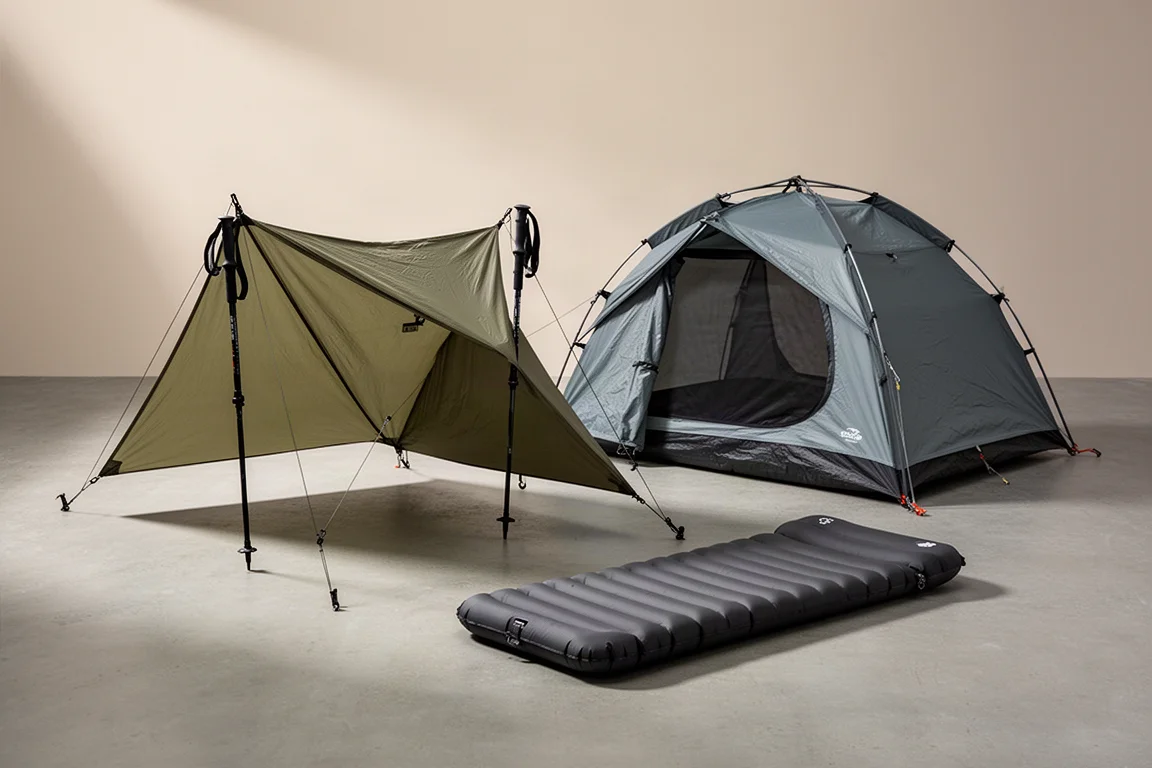
Backpacking gear moves slowly, but it does move. A handful of conventions have shaped shelters, sleep systems, and clothing for years: merino wool next to skin, nylon flys, aluminium pole structures, and a 20-inch wide sleeping pad. None of those choices are wrong, but they are no longer the automatic default for every trip.
Three shifts are worth understanding before you spend money. Merino wool is losing ground where moisture management matters most. Trekking pole shelters such as the Durston X-Mid are showing up at campsites where freestanding tents like the MSR Hubba Hubba used to dominate. And sleeping pads have grown wider and thicker, with four-inch options like the Sea to Summit Ether Light XT leading the change.
Merino Wool Is Losing Ground
Merino wool still has a place. It is comfortable, it resists odor, and it works well for static activities or conditions where you are only slightly damp, such as sweating in your sleep. The problem is moisture management, and that is where synthetics have pulled ahead.
Nylon and polyester hold on to roughly 90 percent less moisture than merino wool, and that difference has two practical consequences. First, synthetics dry faster. A merino sock that gets soaked during a stream crossing takes a long time to dry out, while a synthetic equivalent recovers far more quickly. Second, when moisture is in the picture, synthetics keep you warmer because they are not carrying as much water against your skin.
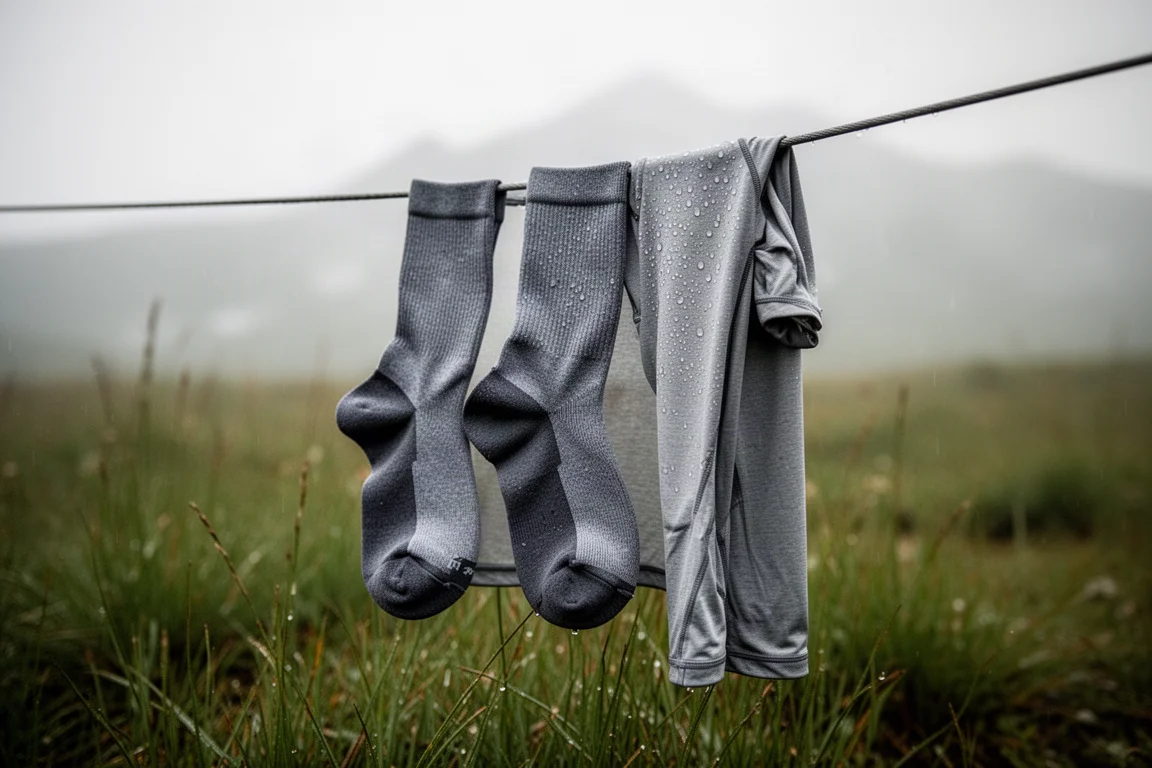
Merino wool is often described as keeping you warm when wet. That is partly true, because the fibers hold moisture inside rather than on the surface, and damp merino does feel warm. Once those fibers saturate, though, moisture sits on the outside and evaporative cooling takes over. Saturation arrives faster than most people expect, and heavy sweating alone can get you there. That is why merino makes more sense for lower-output days and camp wear than for sustained effort in wet conditions.
If odor is the reason you reach for merino in the first place, alpaca wool is worth a look. It offers moisture management closer to nylon while resisting smell far better. Alpaca has been worn for five consecutive days of hiking, backpacking, and sleeping without developing noticeable odor.
Durston X-Mid: Trekking Pole Tents Are on the Rise
The classic backpacking tent is easy to picture: an aluminium pole structure, a mesh inner, and a fly that pitches over the top. These tents are simple to find at large outdoor retailers and big box stores, and they are marketed as the most user friendly and the most robust option in bad weather. Trekking pole shelters like the Durston X-Mid are the alternative that keeps gaining ground.
The shift is visible at popular campsites in the Canadian Rockies. Five to ten years ago, roughly half the tents at those sites were MSR Hubba Hubbas and trekking pole shelters were rare. Today, a quarter to a third of the tents at the same campsites are trekking pole designs. That is a substantial change in a short period of time.
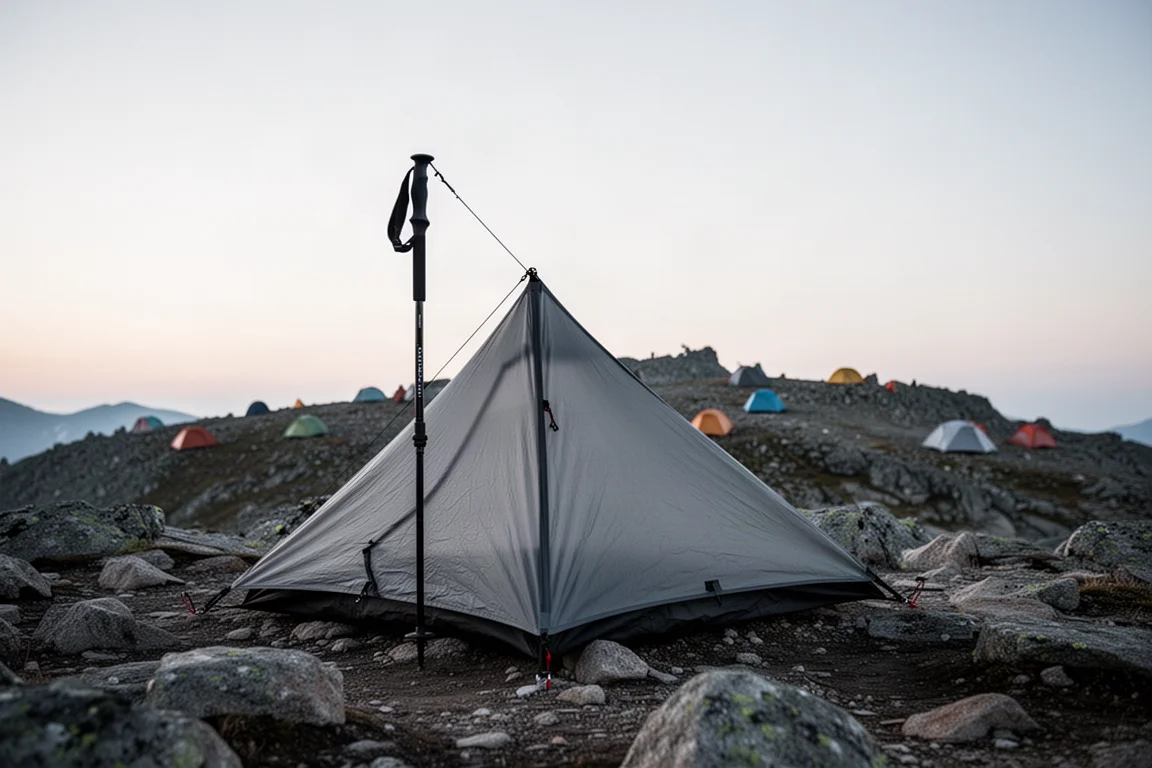
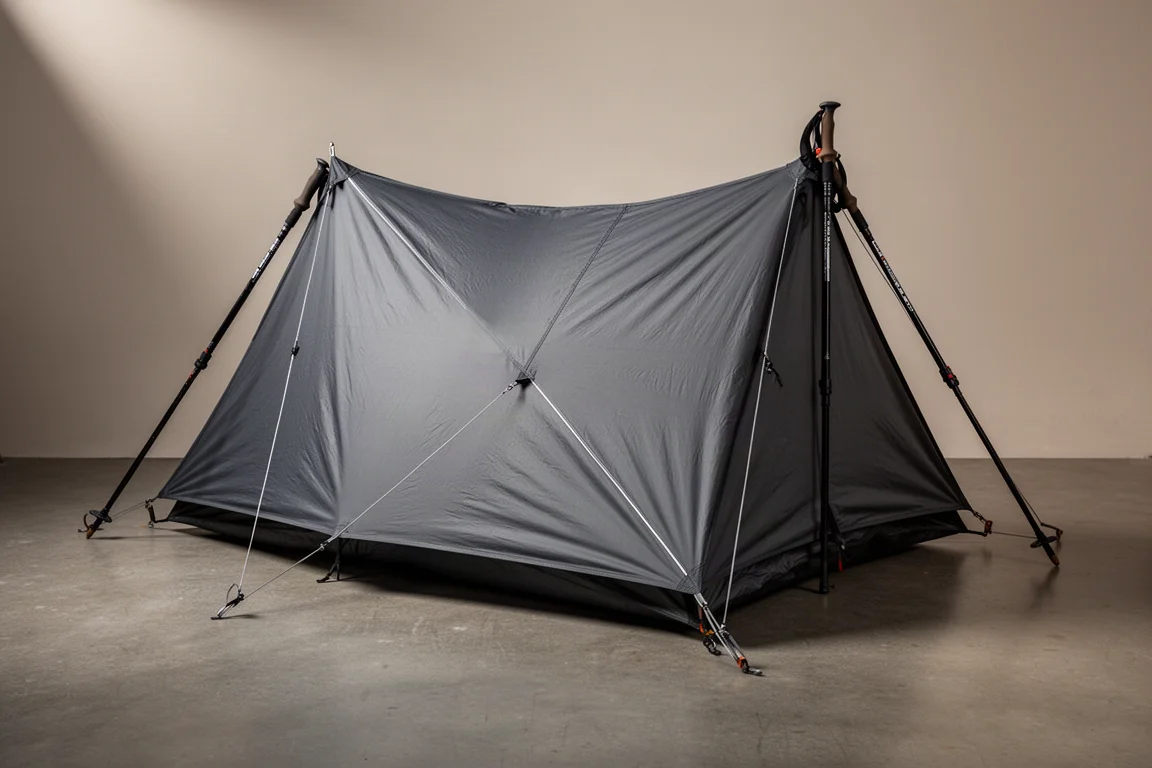
The appeal goes beyond pack weight. Trekking pole shelters are lighter, and after some practice they can be pitched faster than a traditional tent. They also tend to handle rain better, because most of them use an all-in-one pitch where the inner and the fly go up together, which keeps the inner from getting soaked in the process. Manufacturers in this category are also innovating in ways that traditional tent makers have not matched.
Fabric choice matters here too. In the past, nylon was reserved for higher-end tents while polyester was seen as a budget material. Modern polyester is a genuinely strong tent fabric: it holds less moisture than nylon and it does not sag or stretch the way nylon does when it gets wet. Nylon has a reputation for being more durable, but the gap is marginal, and after a handful of days in direct sun the two fabrics end up roughly even because polyester handles UV exposure better. Smaller companies such as Durston Gear, Six Moon Designs, and Tarptent have been building high-end tents in polyester, while established makers like MSR and Big Agnes still use a lot of nylon, especially for flys.
MSR Hubba Hubba: The Traditional Tent Standard
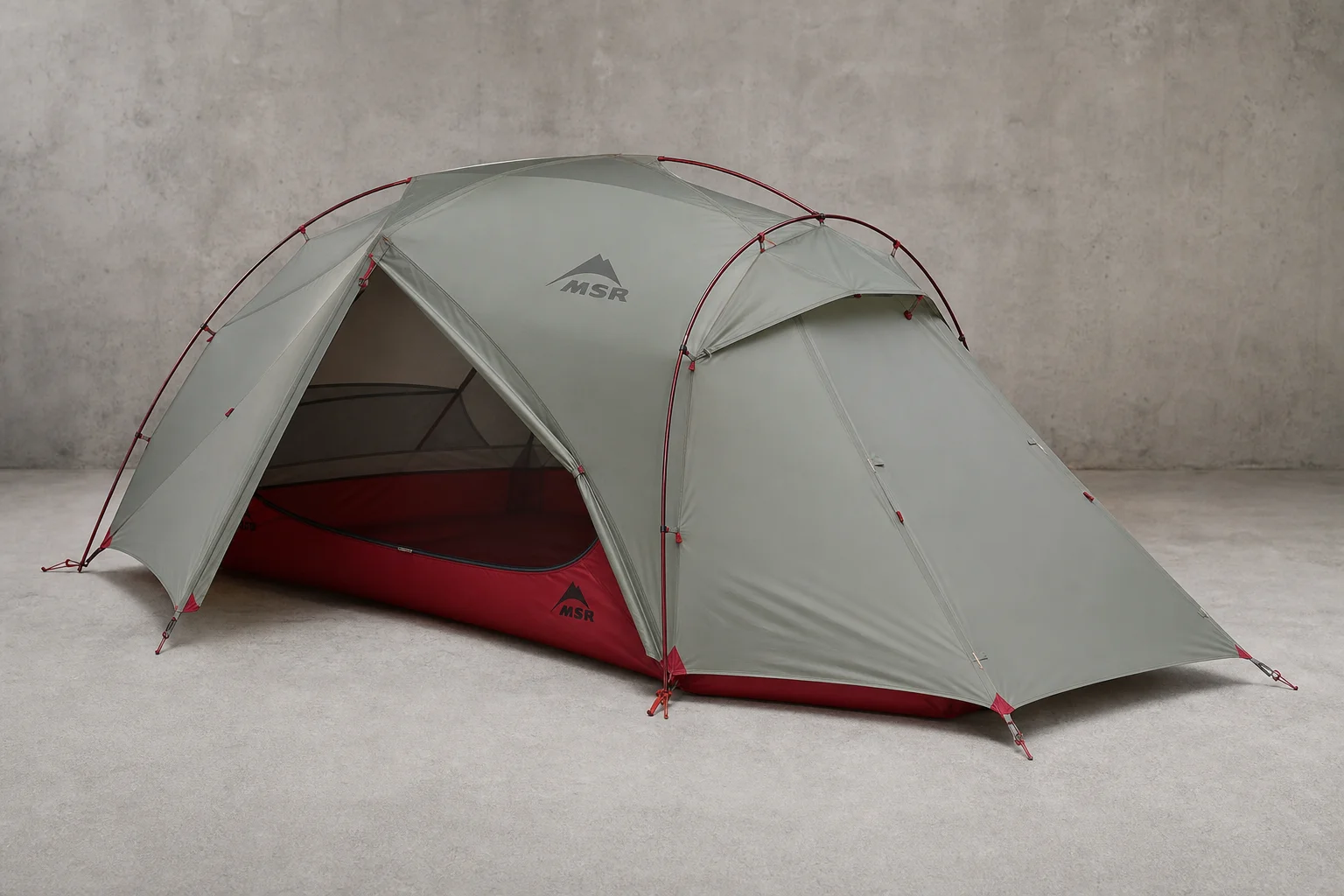
The MSR Hubba Hubba is the reference point for the traditional approach, and it remains a reasonable choice. It uses a freestanding aluminium pole structure with a mesh inner and a separate fly, so it does not depend on trekking poles to stand up. For anyone who hikes without poles, wants a simple pitch, or wants the weather protection that a freestanding double-wall design provides, that format still makes sense.
What has changed is how dominant it is. The Hubba Hubba is the tent that trekking pole shelters are being measured against, and its share of the tents at popular campsites has clearly fallen. MSR also continues to build many of its tents in nylon rather than polyester, which is worth knowing if you care about how a fly behaves once it is wet.
Sea to Summit Ether Light XT: Sleeping Pads Are Getting Wider
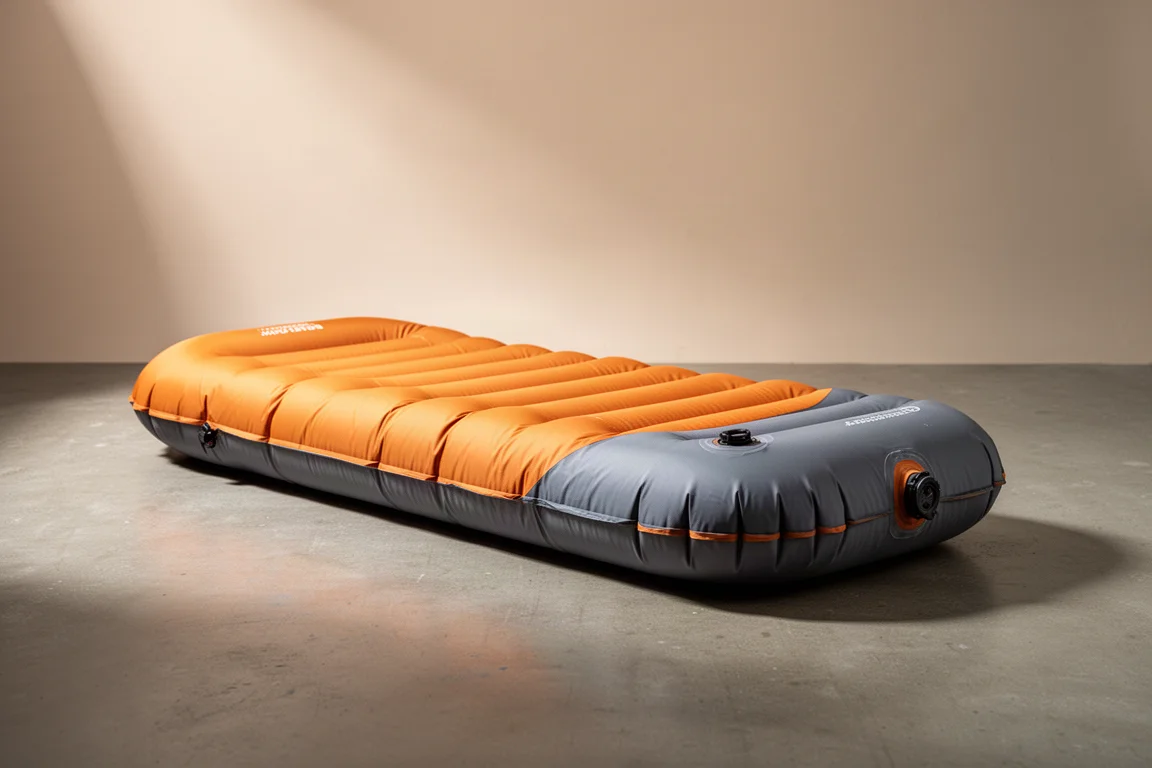
Sleeping pads have improved more than almost any other category. An early pad might have been 20 inches wide, torso length, and only an inch thick, which is not a comfortable night. Today there are four-inch thick pads like the Sea to Summit Ether Light XT, along with more sophisticated baffling systems that distribute support more evenly and widths that let you roll over without sliding off the edge.
Width is where the real shift is happening. In a poll of 2,000 respondents, 75 percent said they use a 25-inch wide pad, which puts 20-inch pads firmly on the decline. A 25-inch pad is now the near-default for anyone who wants a full night of sleep, and a 20-inch pad is reserved for trips where the priority is going as light as possible and most of the day is spent hiking rather than at camp.
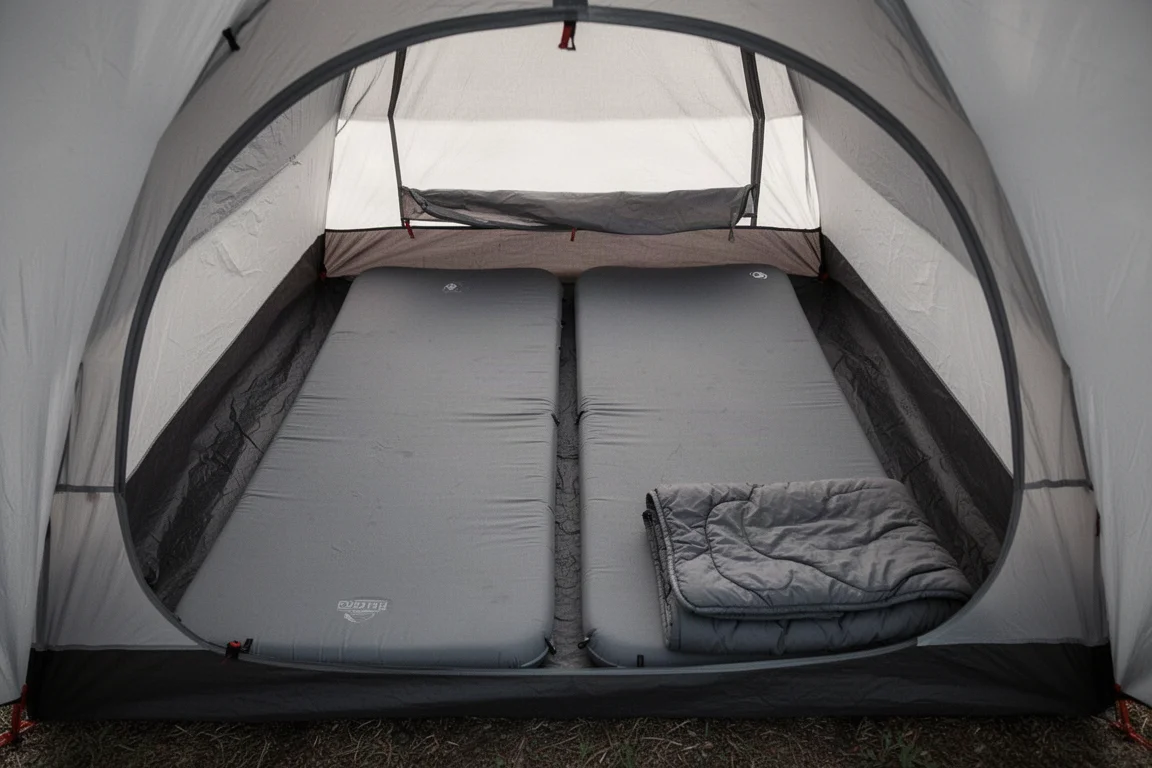
That change creates a knock-on problem for shelters. Most two-person tents cannot fit two 25-inch wide pads, especially if the pads are rectangular, and if two of them do squeeze in, there is no floor space left for anything else. The sensible fix is to shift the two-person tent standard to a minimum width of 54 or 55 inches, so backpackers can stop buying a three-person tent just to sleep two people comfortably.
Buying Advice
Match the gear to the conditions you actually expect. If you are moving hard and getting wet, synthetics or alpaca wool will manage moisture better than merino, and merino is better saved for camp and for cold, dry, low-output days. If you already hike with trekking poles, a shelter like the Durston X-Mid offers real weight savings and a drier pitch in rain. If you would rather not depend on poles, the MSR Hubba Hubba format is still the straightforward answer.
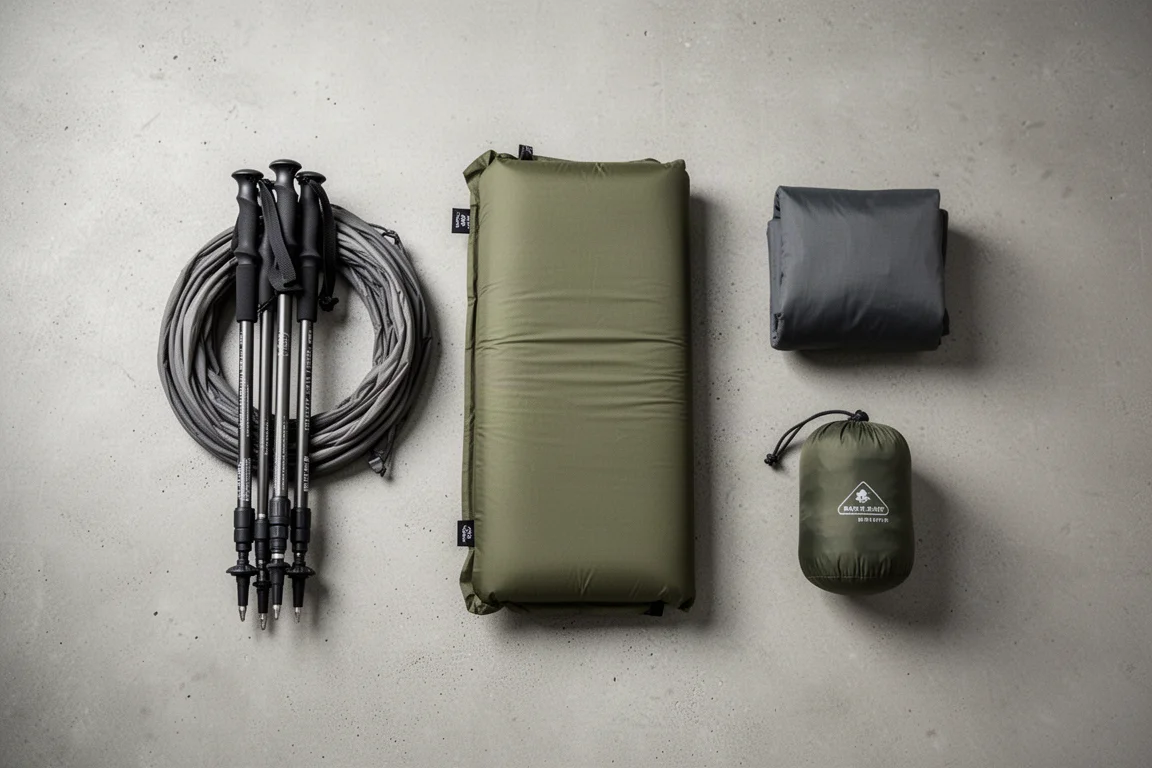
Sleep is the other half of the equation. A 25-inch, four-inch thick pad like the Sea to Summit Ether Light XT trades some pack space for a noticeably better night, and it is the more sensible default for most trips. A 20-inch pad only earns its place when every gram counts and you plan to spend very little time lying down.
Conclusion
Backpacking gear is not changing for the sake of novelty. Synthetics and alpaca wool are taking ground from merino because they handle moisture better. Trekking pole shelters are taking ground from freestanding tents because they are lighter, faster to pitch once you are practiced, and drier in the rain. And 25-inch sleeping pads are taking ground from 20-inch pads because a full night of sleep is worth more than the weight you save. Understanding those three shifts makes it much easier to choose gear you will not want to replace next season.
Further reading
Related Reviews

Backpacking Gear
Building a 10 lb Base Weight: An Ultralight Backpacking Gear List
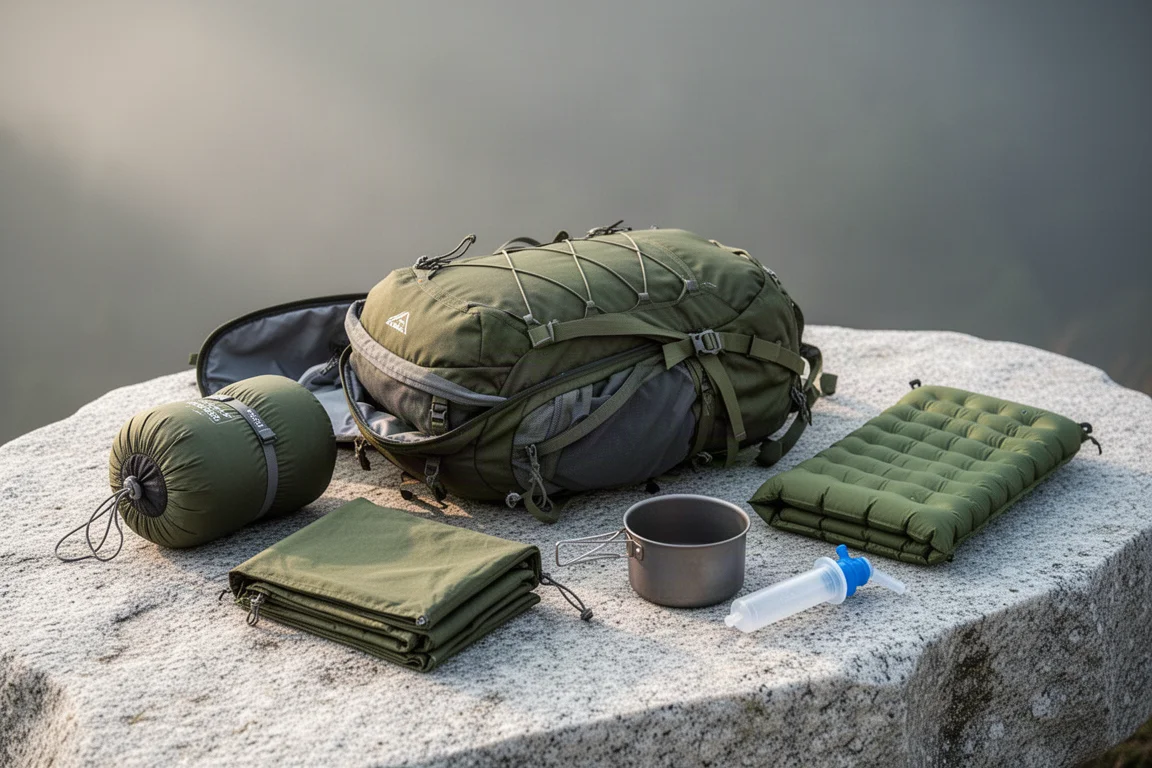
A practical walkthrough of the ultralight pieces behind a 10 lb base weight, from a 765 g pack and a roomy one-person tent to a full camp chair and a dependable water filter.
Backpacking Gear
A 15-Pound Lightweight Backpacking Gear List for Solo Trips
A beginner-friendly 15-pound backpacking setup built from easy-to-find gear, with notes on what each piece does, how it packs, and where to spend your attention.
Backpacking Gear
8 Ultralight Backpacking Gear Upgrades Worth Carrying
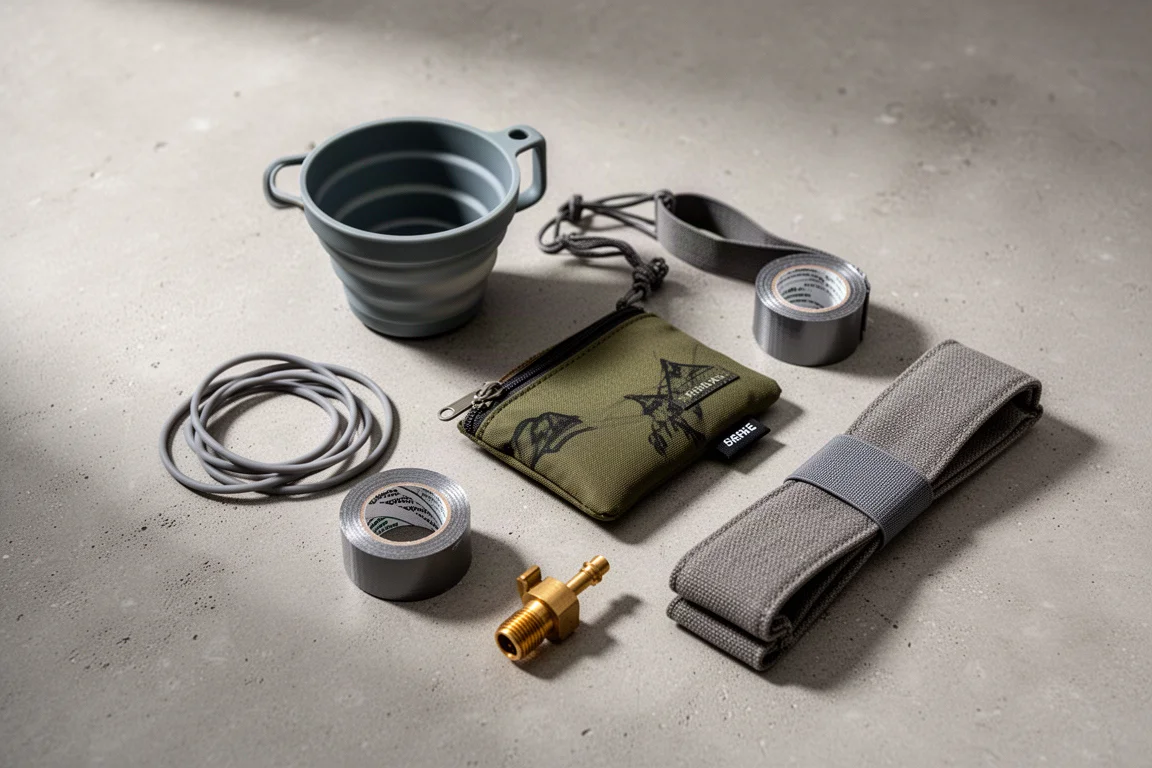
Eight small, affordable backpacking upgrades that solve real trail annoyances, from a pillow that stays put to a fuel valve that rescues leftover canister gas.