Backpacking Gear
Backpacking Gear That Lasts: A Five-Year Kit Worth Copying
A long-serving backpacking kit covering sleep, insulation, carrying, cooking, lighting, and water treatment, with the details that make each piece worth keeping.
Introduction
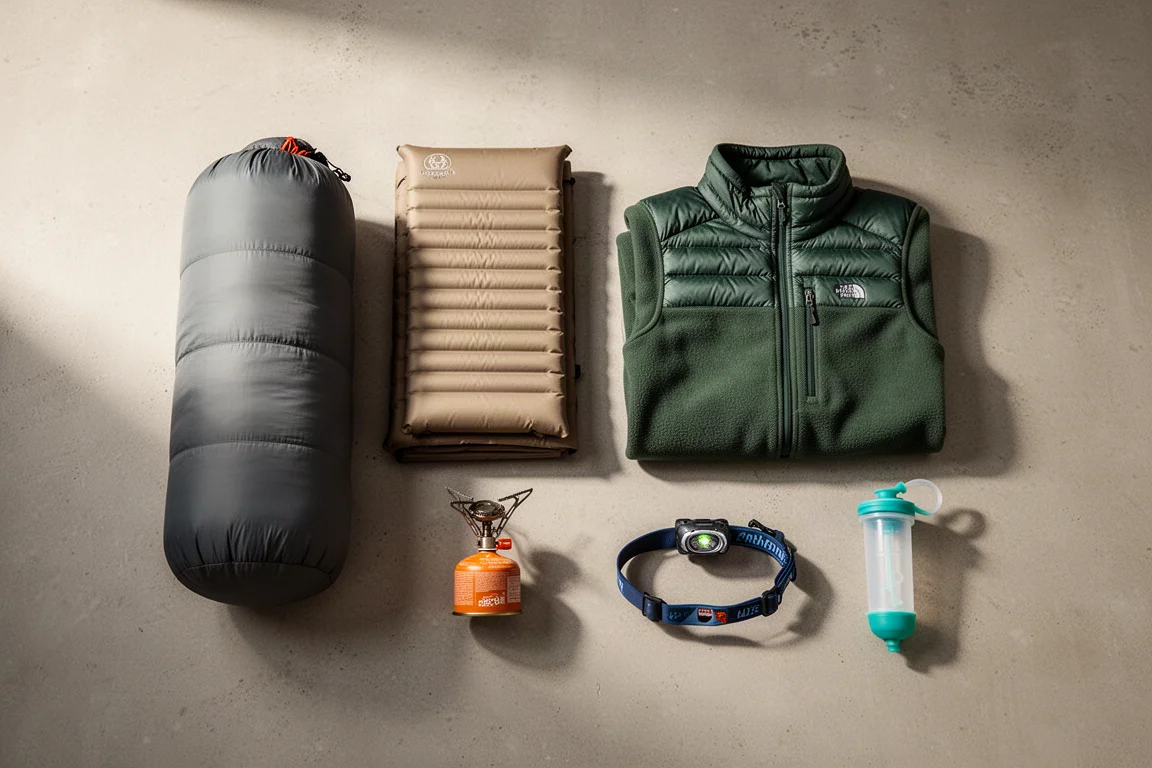
Some backpacking kits get rebuilt every season. Others stay almost exactly the same for years, and those are often the more useful ones to study. The loadout below has been in service for roughly five years, with most items carried on nearly every trip and several pieces showing hundreds of nights of use.
What makes it interesting is not that every item is the newest or the lightest. It is that each piece was chosen, used hard, and then kept. Most of this kit is a second version of something. The pattern repeats: a first item that did not quite work, one considered upgrade, and then years of use with no further changes.
What This Kit Has in Common
Three habits show up again and again. The first is buying for the coldest conditions you realistically expect, then using that same item year round, which is why one high R-value sleeping pad replaces a separate summer pad and winter pad. The second is accepting a small weight penalty in exchange for a wider comfort range. The third is repairing instead of replacing: tape on a sleeping bag, a patch on a down jacket, a lid carried over from an older pack.
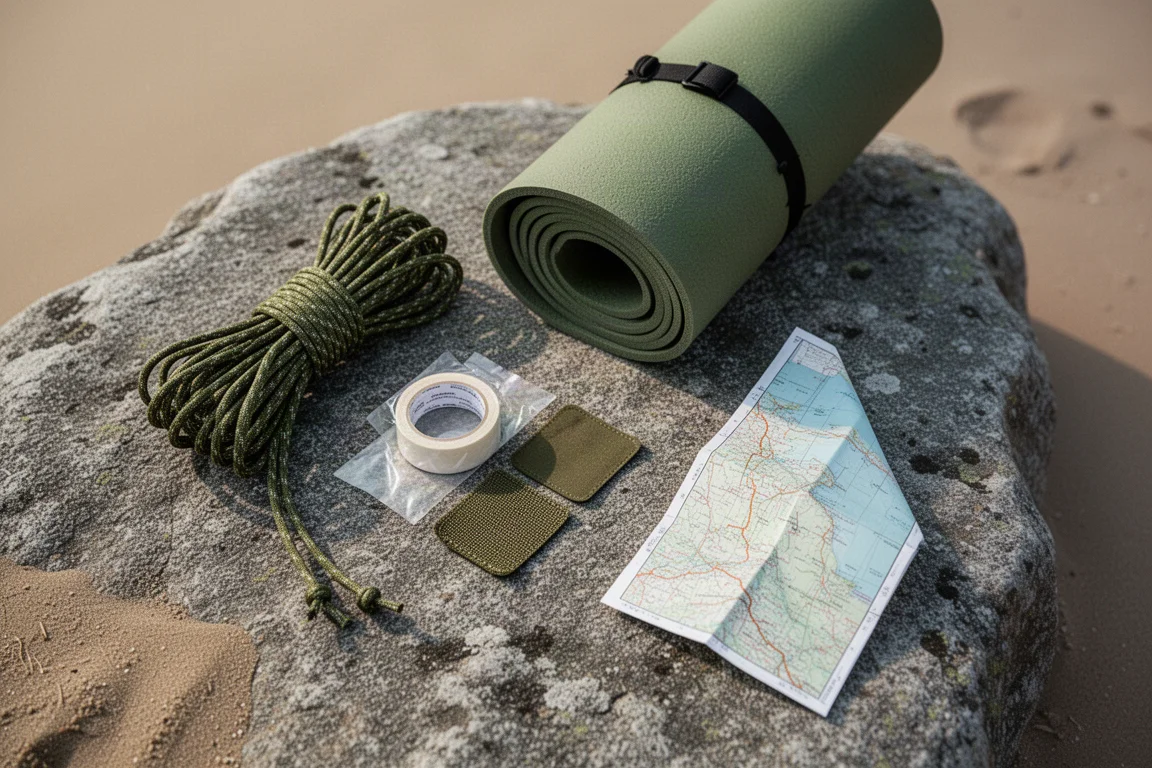
The result is a kit that is not ultralight in the strictest sense, but light enough to carry comfortably and proven enough that nothing needs to be reconsidered before a trip. That is a different kind of confidence from the kind you get from a fresh spreadsheet of specifications.
NEMO Rift 15 Sleeping Bag
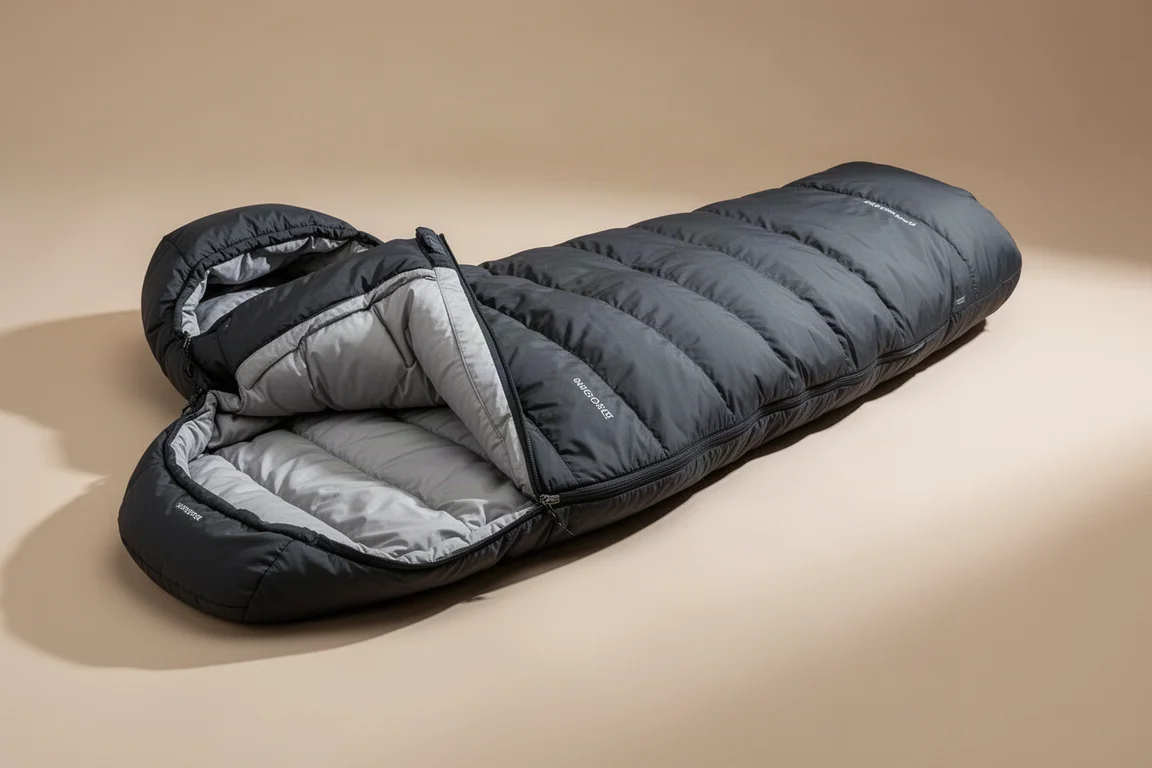
This is a 15°F spoon-shaped down bag, and the shape is the main reason it stayed in the kit. A spoon cut is wider through the middle than a traditional mummy, which makes it much easier to roll from back to side to stomach during the night without waking up tangled in fabric. A pillow pocket at the hood holds a camp pillow in place, and Thermogills vents along the bag can be opened for ventilation or closed for warmth.
The shell is a light colour, which makes the interior feel brighter and more open on clear nights, and there is a single interior pocket for small items. In practice the bag has been comfortable to around 20°F, with a down jacket worn inside on colder nights, and pushing it to its stated rating has been less pleasant. It has also been repaired rather than replaced, with tape over a developing tear. The bag costs around $450 and has been carried on nearly every trip across four or five years.
NEMO Tensor Extreme Conditions Sleeping Pad
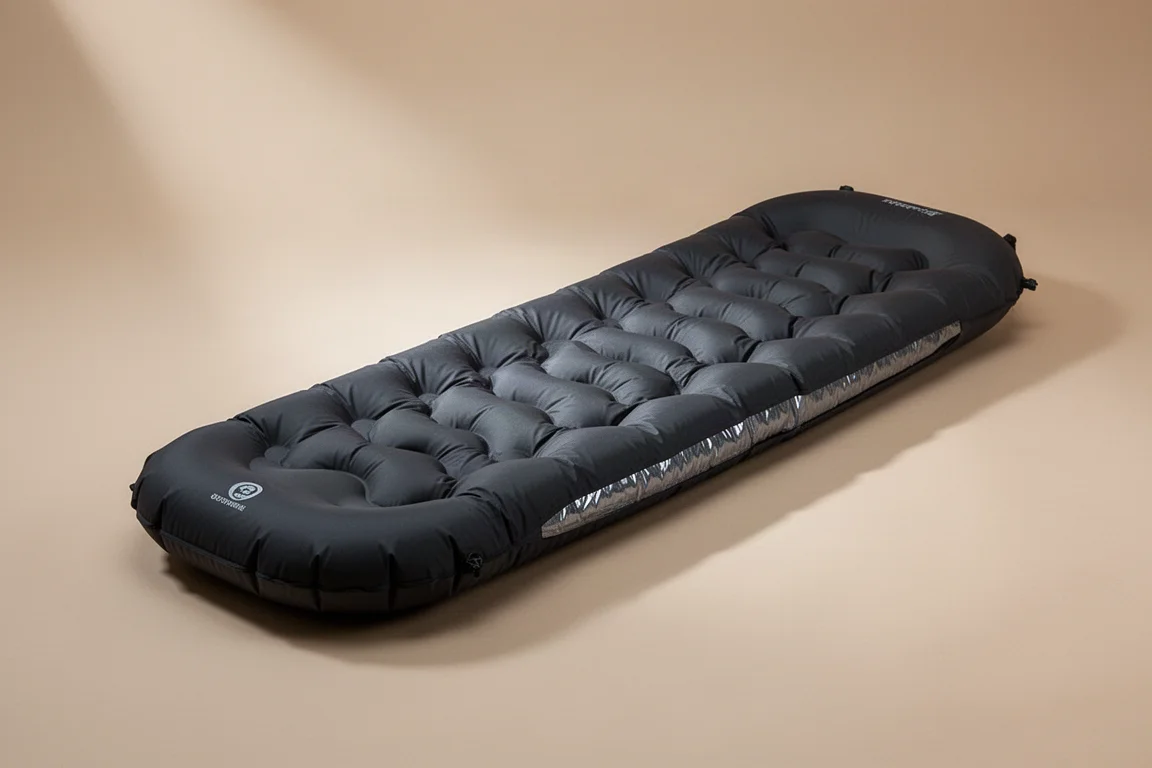
An insulated pad with an R-value around 8 is more warmth than most three-season trips require. That is the point. One pad covers everything from winter nights to warm summer camping, so there is no decision to make before packing and no second pad sitting in a closet. The weight difference between this pad and NEMO’s lower R-value Tensor is small enough that it does not register on the trail.
For warm sleepers, a lower R-value pad plus an open sleeping bag side is a reasonable alternative. For anyone who sleeps cold, the extra insulation is the more useful upgrade, because warmth is far harder to add on the trail than it is to vent away.
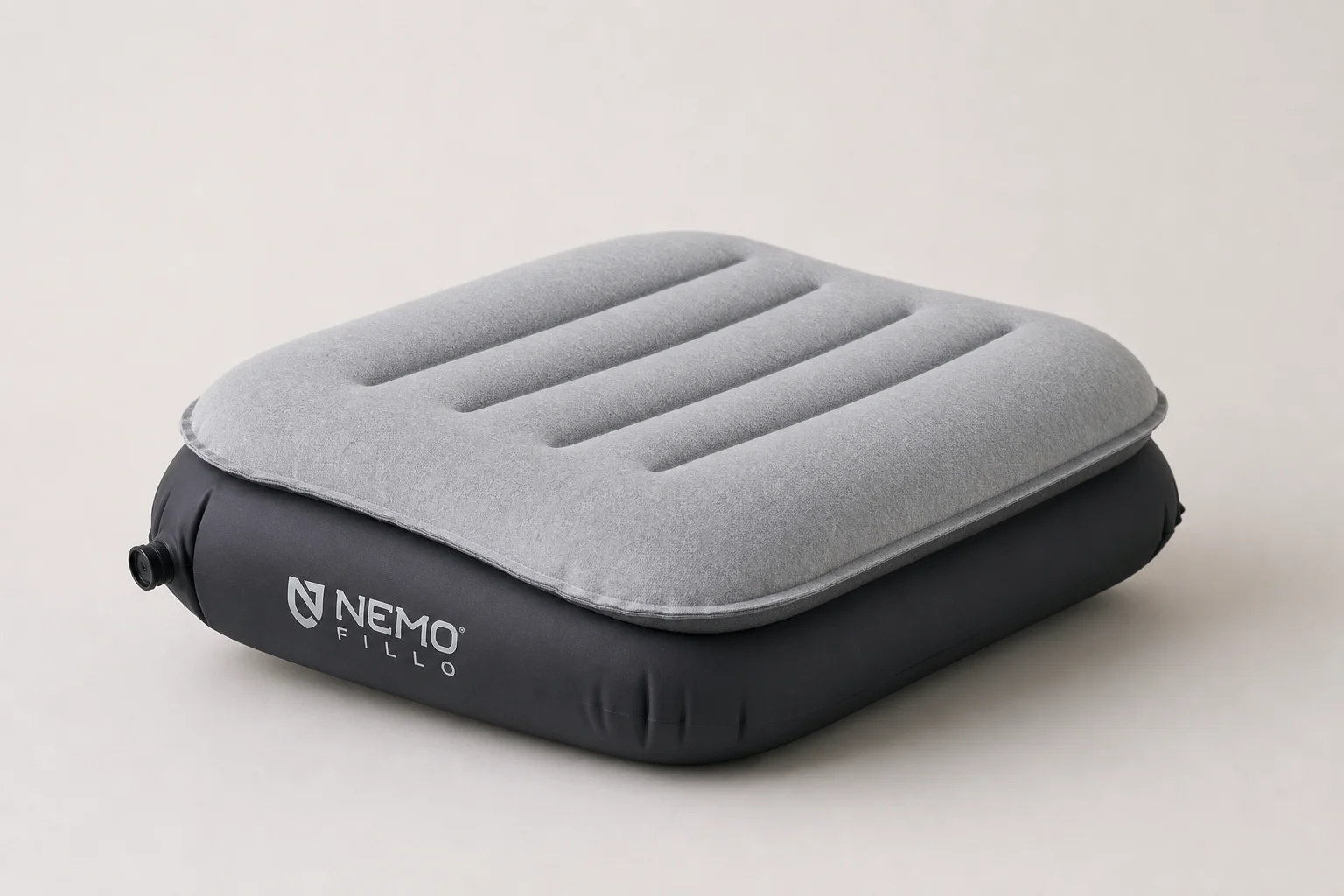
NEMO Fillo Pillow
A packable camp pillow with a soft, fabric-topped surface that feels closer to a real pillow than most inflatables. It slides into the sleeping bag’s pillow pocket and stays there through the night, which solves the usual problem of a pillow migrating off the pad by 2 a.m.
It has been in use since 2020 with no thought of replacing it, which says most of what needs to be said about a comfort item. A pillow either works or it does not, and this one has quietly done its job for years.
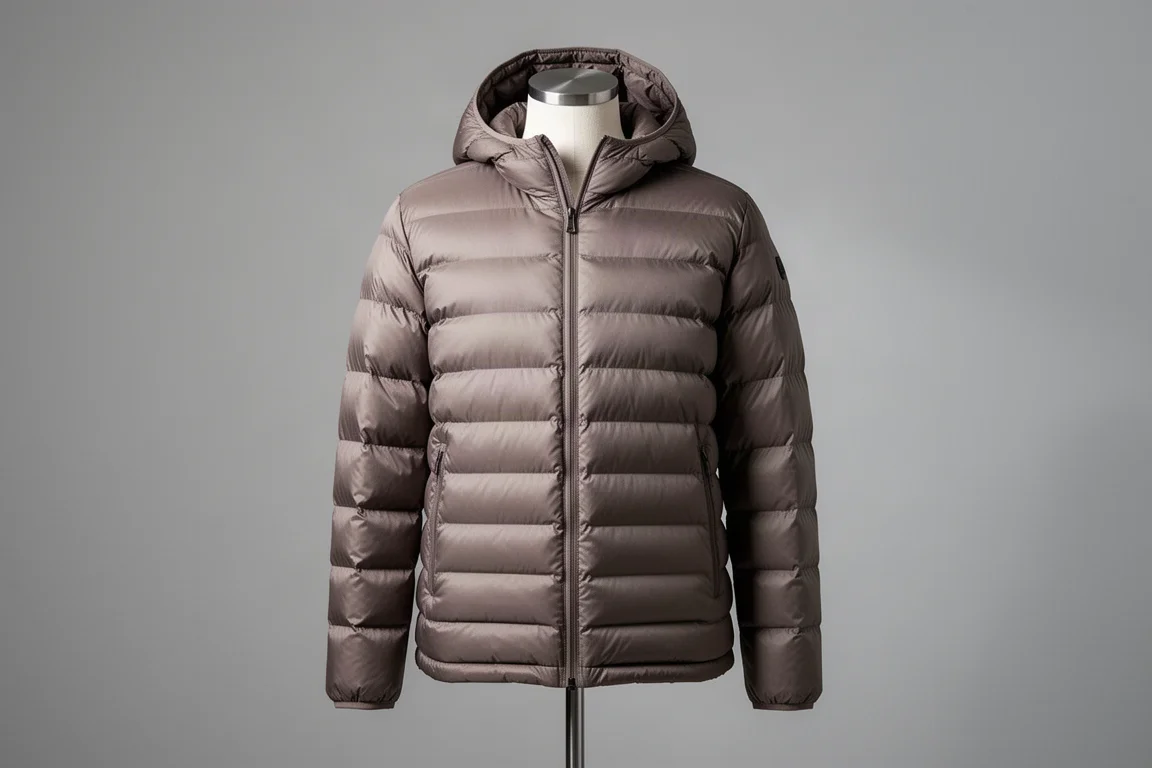
Arc’teryx Thorium Down Jacket
The interesting detail here is where the insulation changes. Down fills most of the jacket, but the ends of the sleeves, the shoulders, and the wrist areas use synthetic insulation instead. Those are the places where moisture and abrasion show up first, and synthetic insulation keeps working when it gets wet.
In practice that means a tear or a burn at the sleeve end does not release a cloud of down. A singed patch from a stove was left for months before being repaired, and nothing leaked out in the meantime. This jacket has been worn through winter days as well as on every backpacking trip for more than four years, and it still looks close to new apart from that single patch. It costs roughly $450 to $500, and possibly more now.
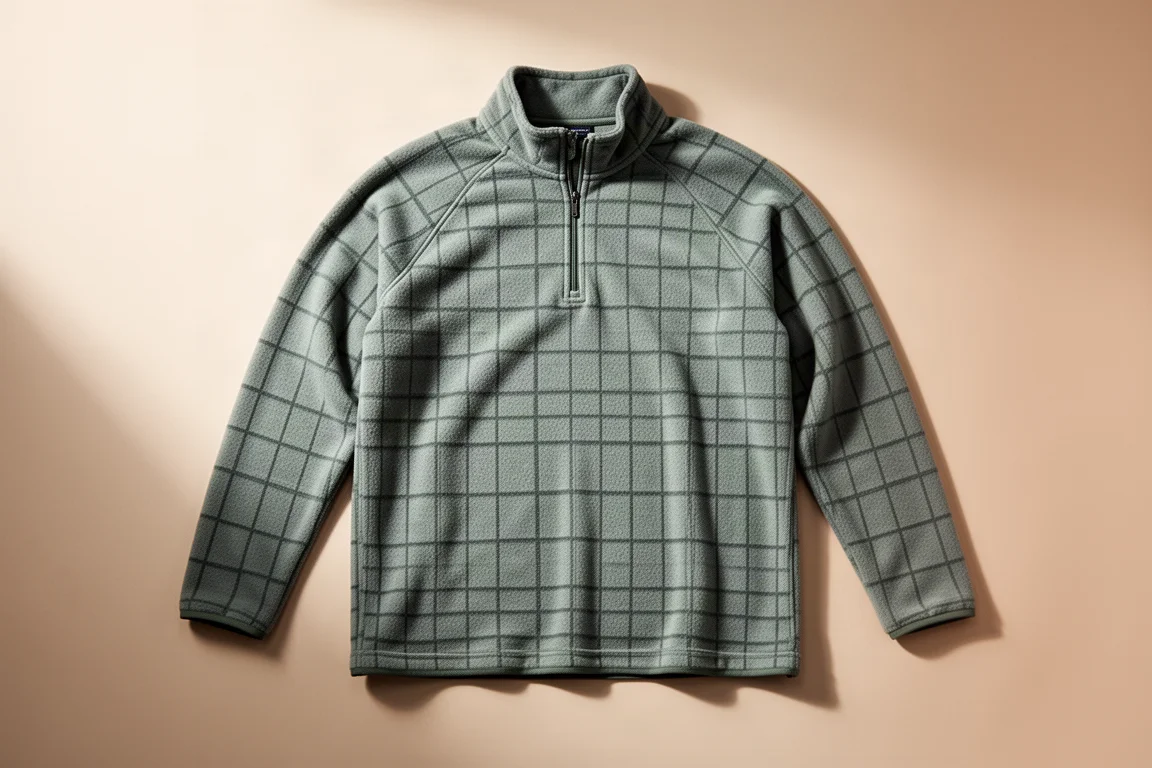
Patagonia R1 Air Fleece
A full-zip grid fleece with a textured, almost squiggly knit that leaves air channels between the fibres. That structure is what makes it both warm and quick to vent: it holds heat when you stop and releases it when you start moving again, which is exactly what a midlayer needs to do on a long climb.
It is the layer that gets worn on every trip and kept by the door in winter. The current jacket is about a year old, and the previous one lasted three to four years of the same treatment. The pockets are not really part of the appeal, but everything is still in good working order.
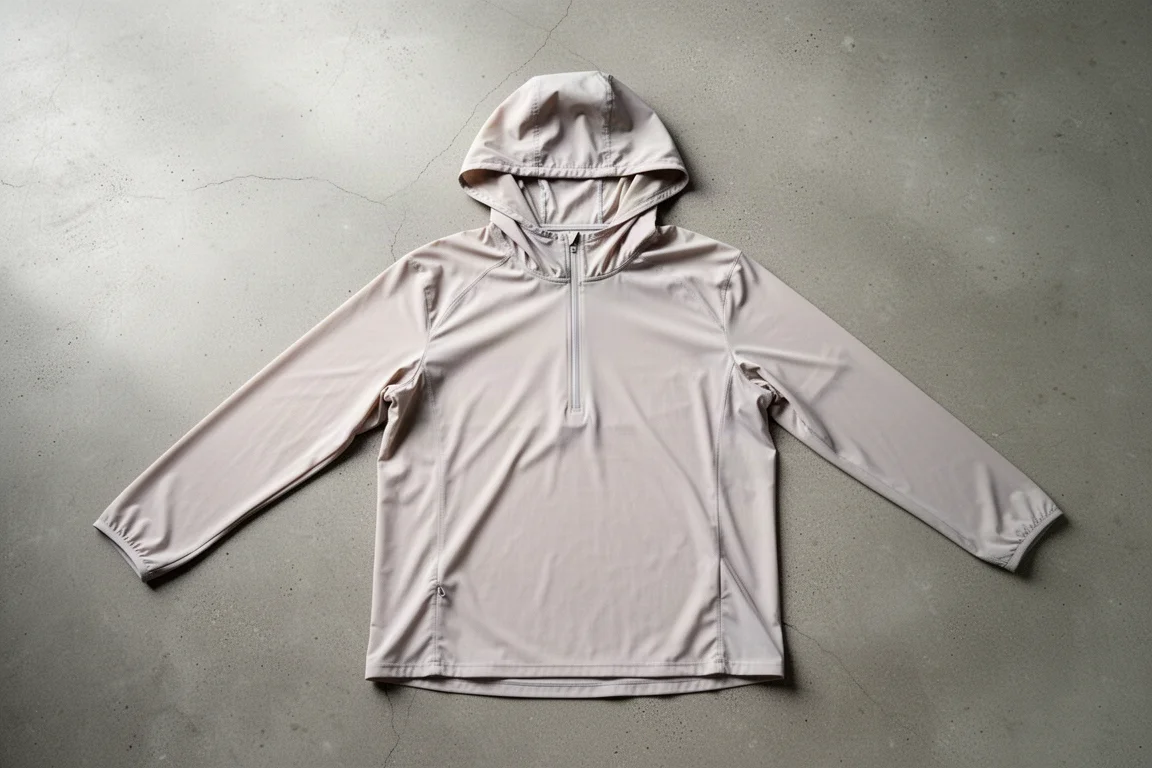
REI Sahara Sunshade Hoodie
A UPF 50 hooded sun shirt that has been worn on every hike, from short day walks to multi-day trips, in both hot and cold weather. The fabric is soft and synthetic, so it dries quickly and can be worn for days at a time, and it is comfortable enough to sleep in.

The trade-off is heat. Full sun protection means the fabric does not breathe as freely as a lighter shirt, so it can feel hot and sweaty on exposed climbs. For anyone who reacts badly to sun exposure or dislikes reapplying sunscreen all day, that is usually a fair exchange, and splashing a little water on the fabric takes the edge off. It is also light enough that small tears appear with use, and a hoodie at this price is easy to replace when they do.
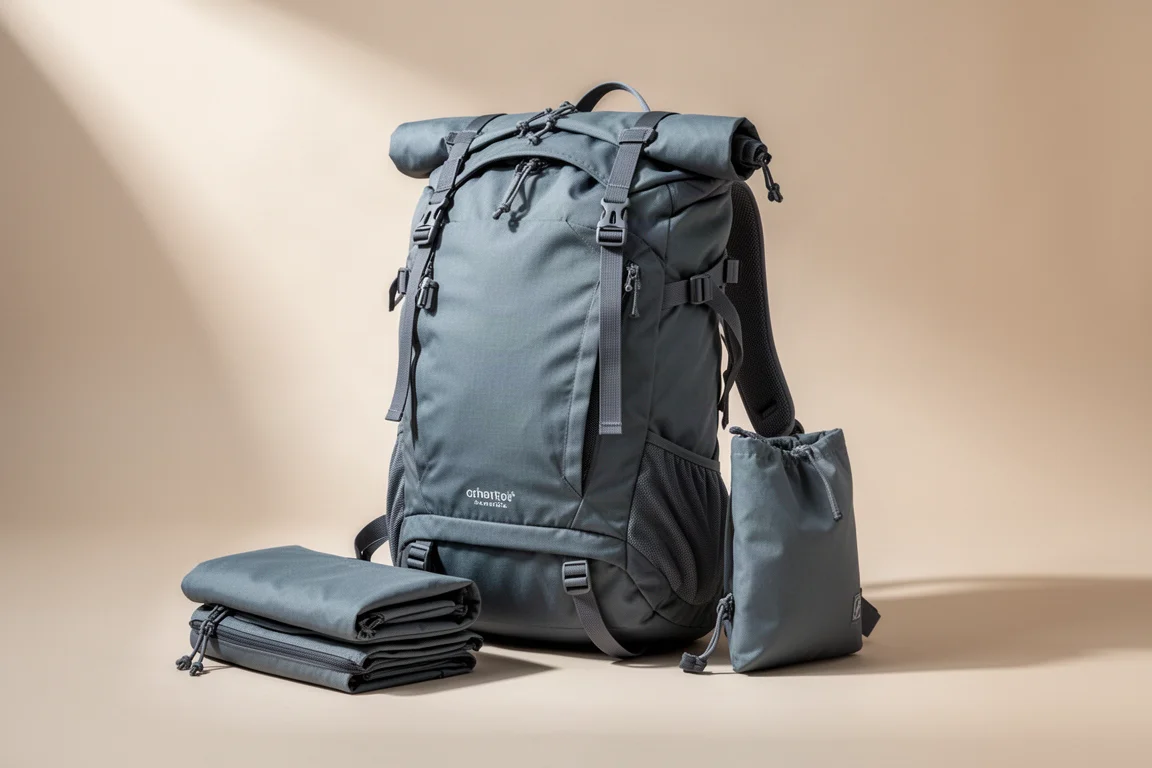
REI Flash 55 Backpack
A 55-litre pack that carries 30 to 35 pounds comfortably, camera gear included, without behaving like a heavy load hauler. The fabric is light but has survived bushwhacking and scraping branches, and the buckles and straps have held up. The hip belt pockets are unusually large and easy to reach, which matters more on a long day than it sounds.
One detail is worth knowing before buying. The earlier version of this pack had a water-resistant pocket in the lid, and the current version does not, which is why one long-serving example runs an older lid on a newer body. The colour mismatch is the price of keeping a feature that adds a little peace of mind in wet weather.
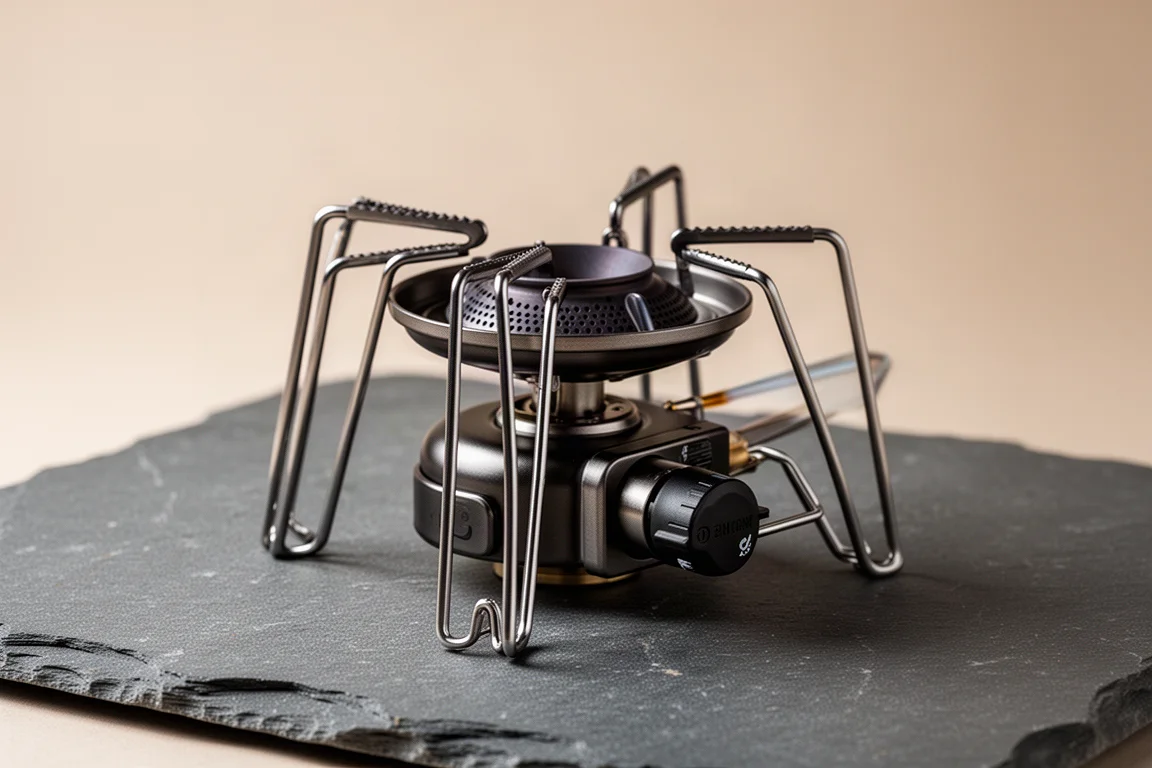
MSR PocketRocket Deluxe Stove
A small canister stove that has been in continuous use since early 2019, boiling water for dinners, breakfasts, and several rounds of coffee on nearly every trip since. The folding pot supports are still the originals, the included pot grabber is still with it, and the body carries the dents and faded markings of years of use.
Wind is the one condition that will slow it down, which is why a simple foil windscreen lives at the bottom of the cook bag. Paired with a 900 ml titanium pot, it makes a compact setup that has never needed replacing and shows no sign of needing to be.
Black Diamond Cosmo Headlamp
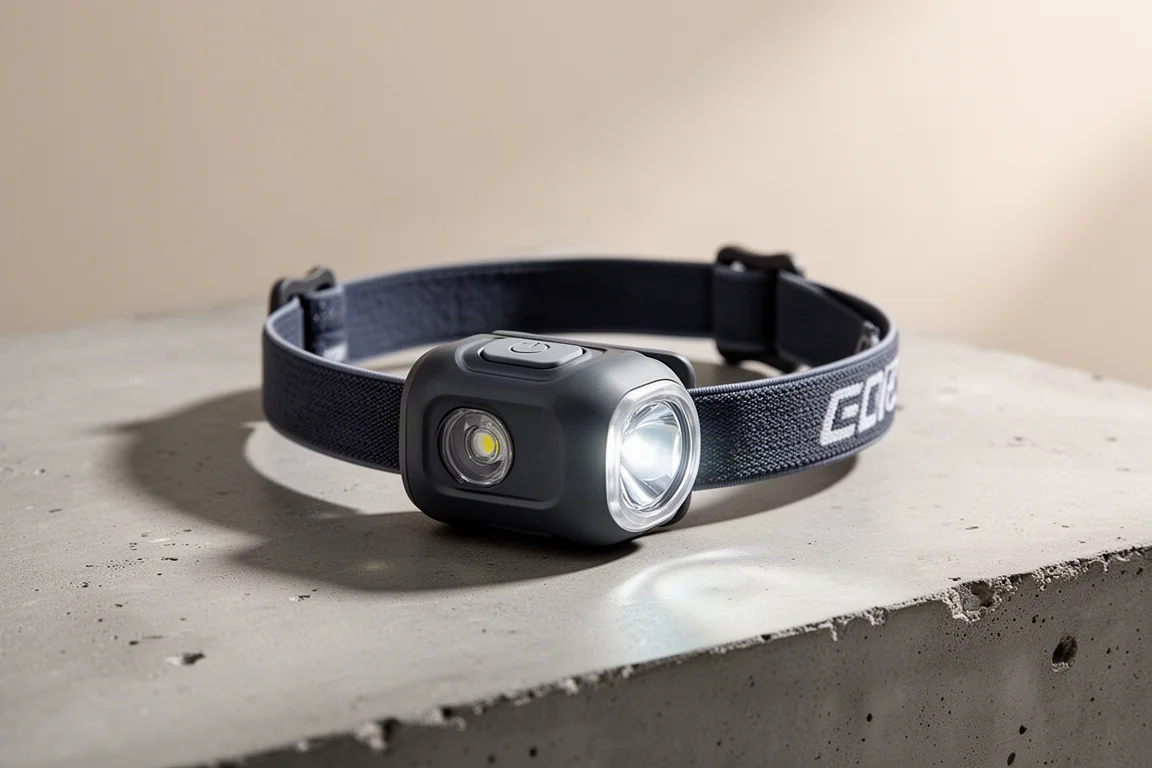
A dual-fuel headlamp that runs either on its rechargeable battery or on standard batteries, which removes the usual pre-trip worry about whether it is charged. It offers white and red light, each with its own dimmer, and nothing else to cycle through.
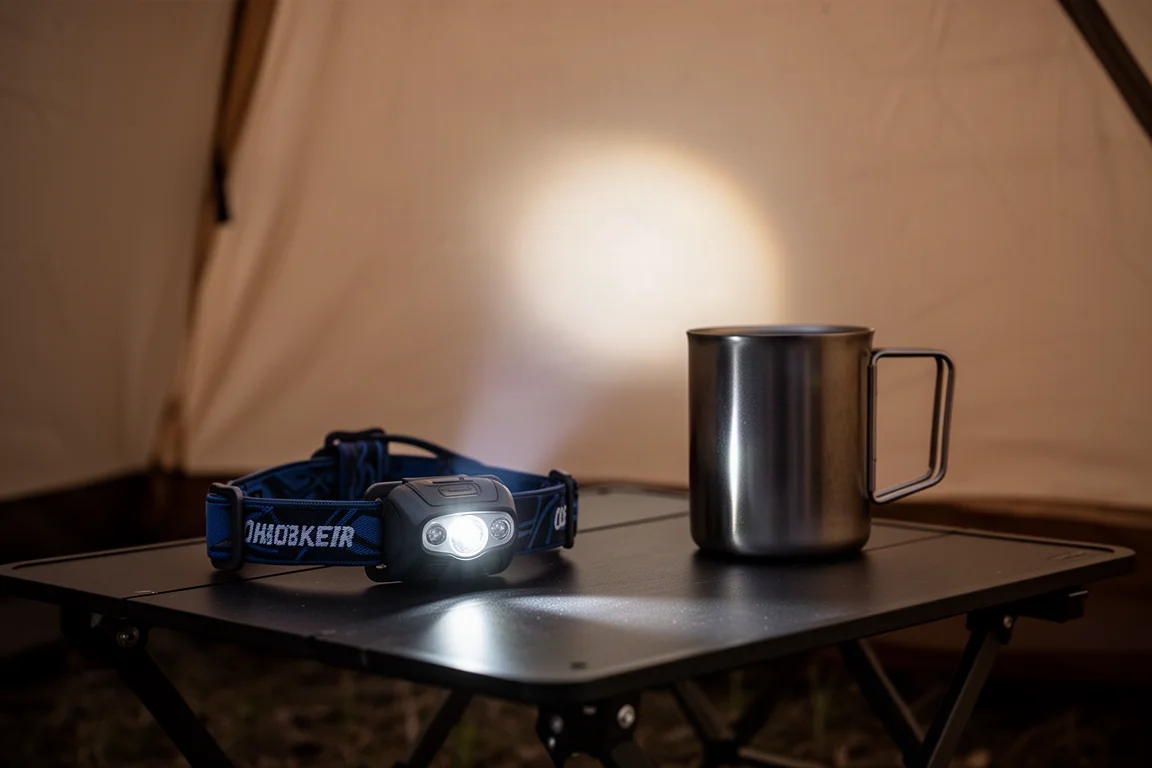
That simplicity is the appeal. There are no modes to hunt for in the dark and no menus to escape from when you just want to find your sleeping bag. It is not a feature-heavy light, and it is not meant to be.
Sawyer Squeeze Water Filter
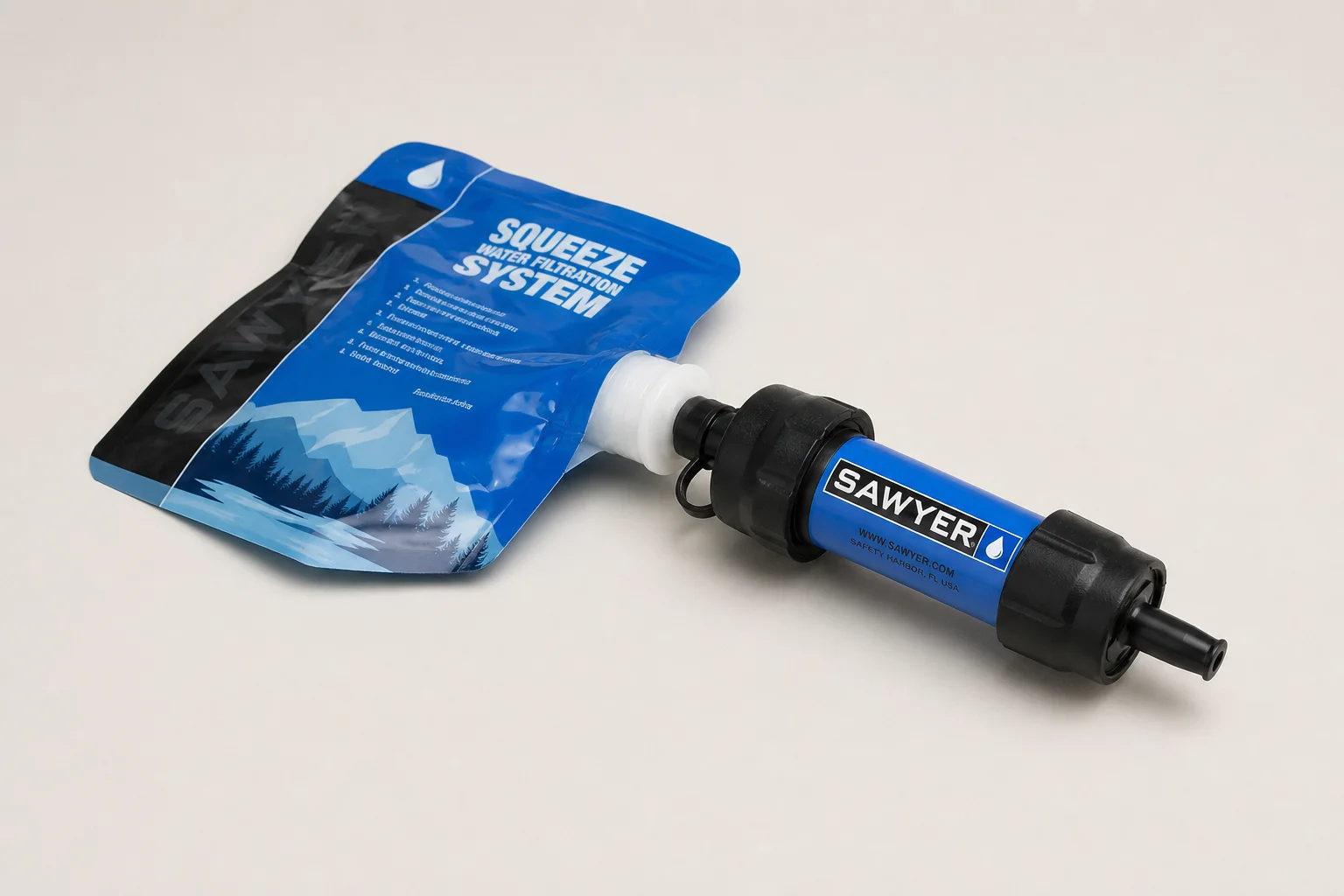
A squeeze filter with a threaded coupling that lets you push water straight into a bottle without extra adapters. The pouch is easy to scoop from a stream or lake, which is why it gets used even when a wide-mouth bottle would work just as well.
The pouch in long service has developed a small pinhole, and it still holds enough water to filter a full bottle in one go. That is a normal wear point for this kind of setup rather than a reason to change systems, and the filter itself has been going for years.
Buying Advice
If there is a single idea behind this kit, it is that the best gear is often the gear you already own. Upgrading only when an item genuinely fails or stops fitting your trips is a slower way to build a kit, but it produces a loadout you understand completely. You know how the zipper behaves, where the seams wear first, and how the pack feels at the end of a long day.
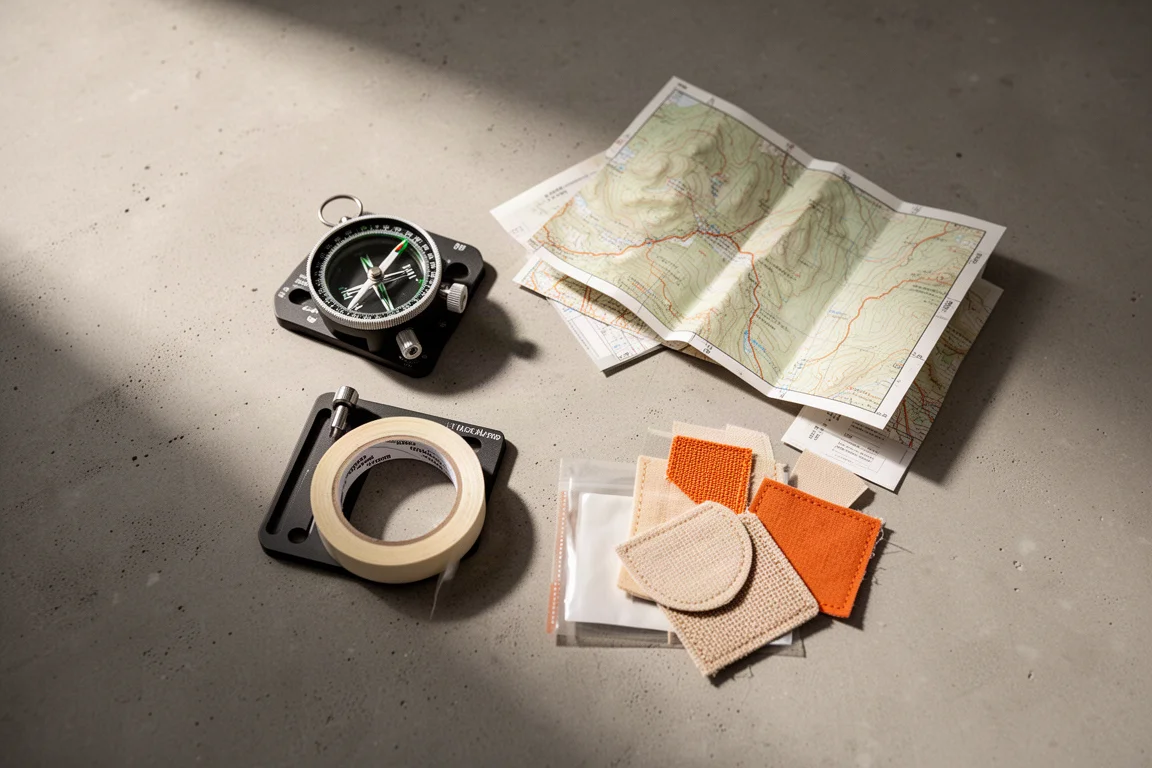
Two habits make that approach easier. Buy for the coldest and wettest conditions you realistically expect, so one item can cover more of the year instead of two. And keep a small repair kit, because tape and a patch will extend a sleeping bag or a jacket by years.
A paper map and a baseplate compass belong in the kit as well. A phone with offline maps is excellent until the battery dies, the screen cracks, or the device ends up in a creek, and the backup weighs almost nothing.
Conclusion
None of this gear is exotic, and none of it is new. That is exactly the point. Every item here has been through enough trips to prove it works, and most of it has been repaired rather than replaced along the way. If you are building a kit from scratch, the useful lesson is not to copy the list item for item, but to buy deliberately, use things hard, and change only what genuinely stops working.
Further reading
Related Reviews

Backpacking Gear
Building a 10 lb Base Weight: An Ultralight Backpacking Gear List
A practical walkthrough of the ultralight pieces behind a 10 lb base weight, from a 765 g pack and a roomy one-person tent to a full camp chair and a dependable water filter.

Backpacking Gear
A 15-Pound Lightweight Backpacking Gear List for Solo Trips
A beginner-friendly 15-pound backpacking setup built from easy-to-find gear, with notes on what each piece does, how it packs, and where to spend your attention.

Backpacking Gear
8 Ultralight Backpacking Gear Upgrades Worth Carrying
Eight small, affordable backpacking upgrades that solve real trail annoyances, from a pillow that stays put to a fuel valve that rescues leftover canister gas.