Backpacking Gear
Backpacking Gear That Lasts: 11 Tried and True Favorites for Long-Distance Hikers
Eleven dependable backpacking staples, from a 2-ounce camp pillow to carbon trekking poles and a four-season sleeping pad, with the strengths and trade-offs worth knowing before you buy.
Introduction
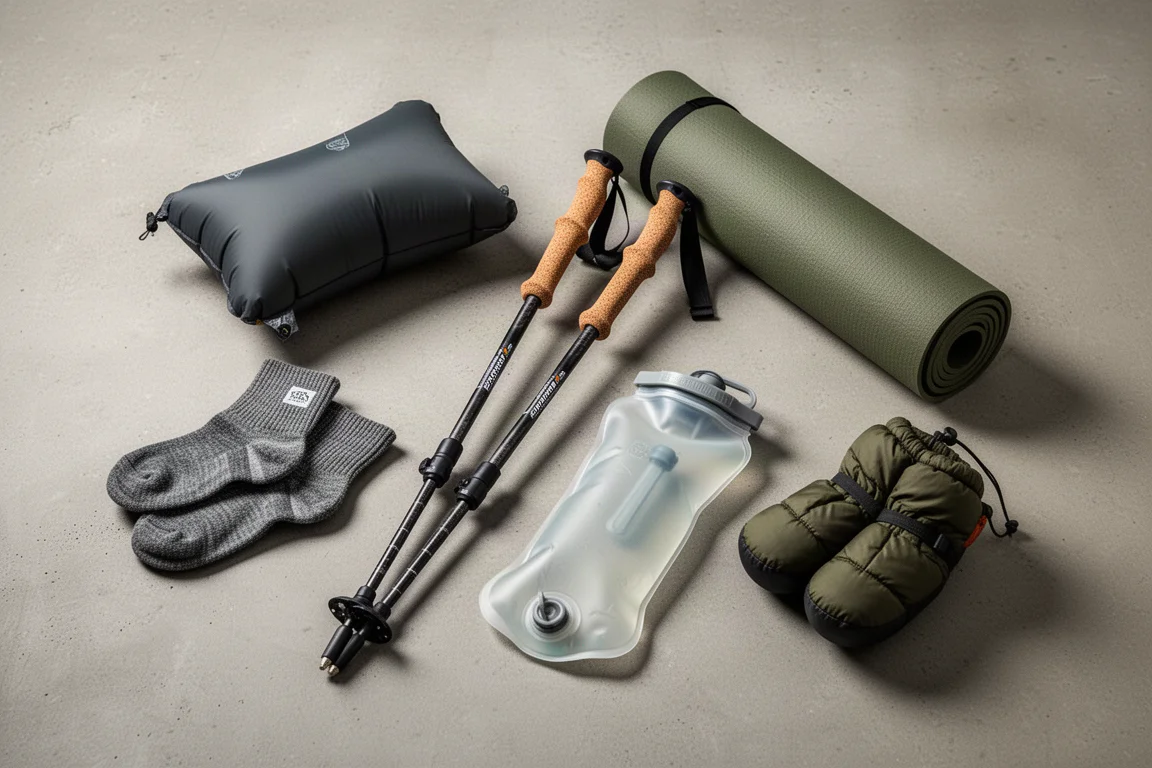
Not every piece of gear earns a permanent place in a pack. Tents, backpacks, and shoes tend to get traded in and out as routes and seasons change. The items in this roundup are different. They are the staples that get picked up without a second thought, because they have already proven themselves over thousands of miles of long-distance hiking.
The eleven products below cover sleep, trekking support, hydration, foot care, and camp comfort. None of them are exotic. What they share is a track record: each one has been carried repeatedly, season after season, and kept working.
What Makes a Favorite Piece of Gear
Weight matters, durability matters, and comfort matters. But the quality that separates a favorite from a merely good purchase is reliability. A favorite is a piece of gear that has never failed at the moment it was needed.
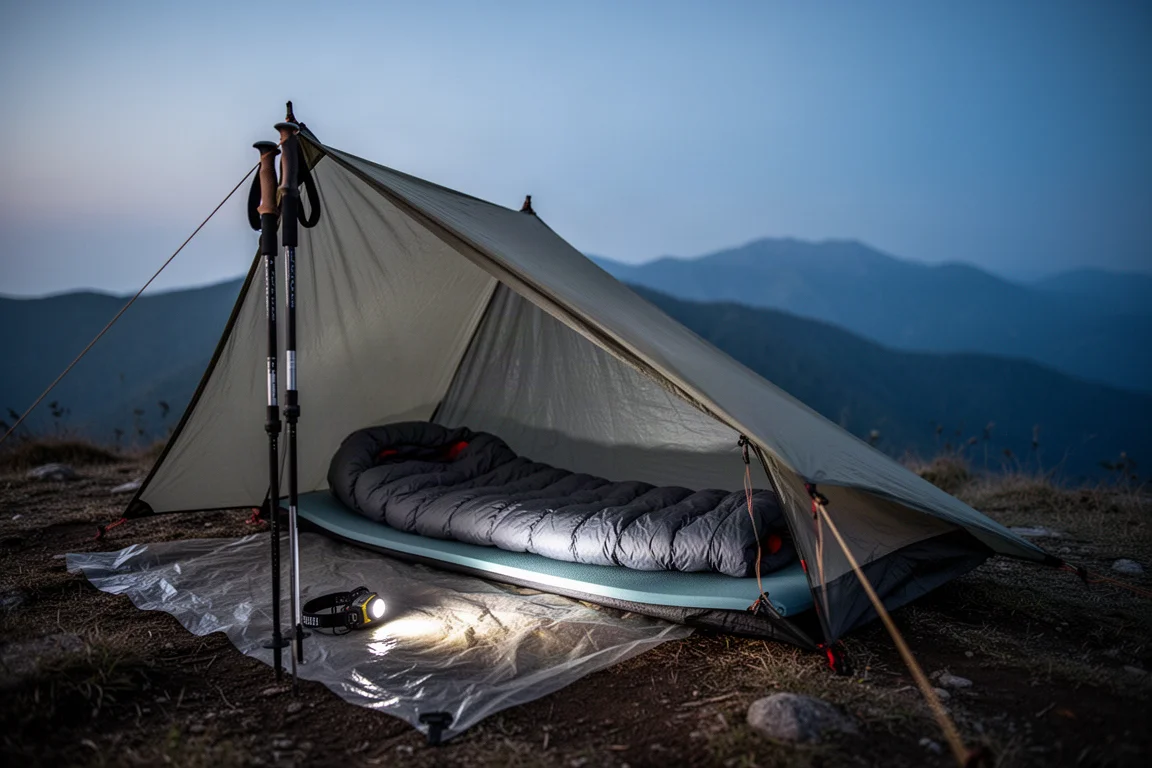
That is a high bar, and it explains why this list is short on novelty. These are items that have been used on thru-hikes, weekend backpacking trips, bikepacking routes, and in everyday life, and they keep finding their way back into the kit.
Sea to Summit Aeros Ultralight Pillow: Better Sleep for Two Ounces
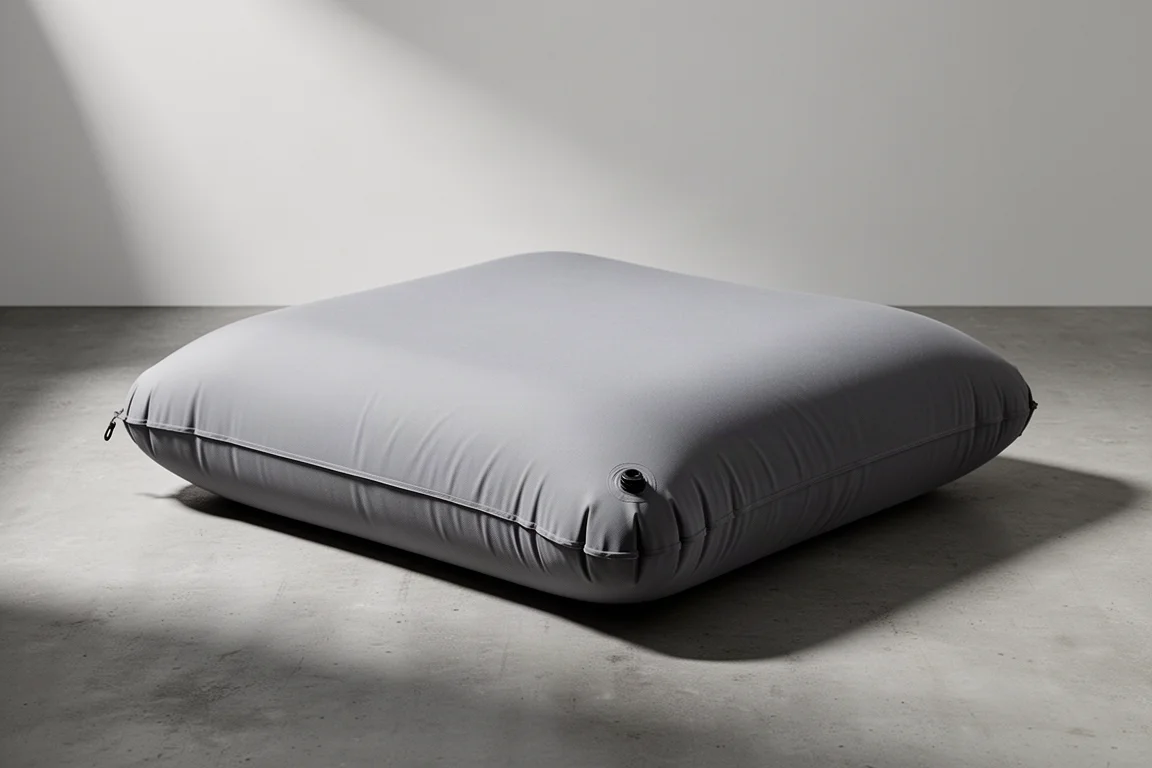
Inflatable pillows look like an unnecessary luxury until the first night on a long trail. Better sleep changes everything about a hike, and a pillow that weighs about 2 ounces is an easy trade for it.
It inflates quickly, deflates just as easily, and packs down small enough to disappear into the foot box of a quilt, which means it is always there when camp goes up. The baffled air chamber keeps the head supported without feeling bulky, and the current version carries the same shape and weight class as the original that first went out on the Appalachian Trail. The pillow has been part of nearly every trip since.
Black Diamond Ergo Carbon Cork Trekking Poles: Dependable Adjustability
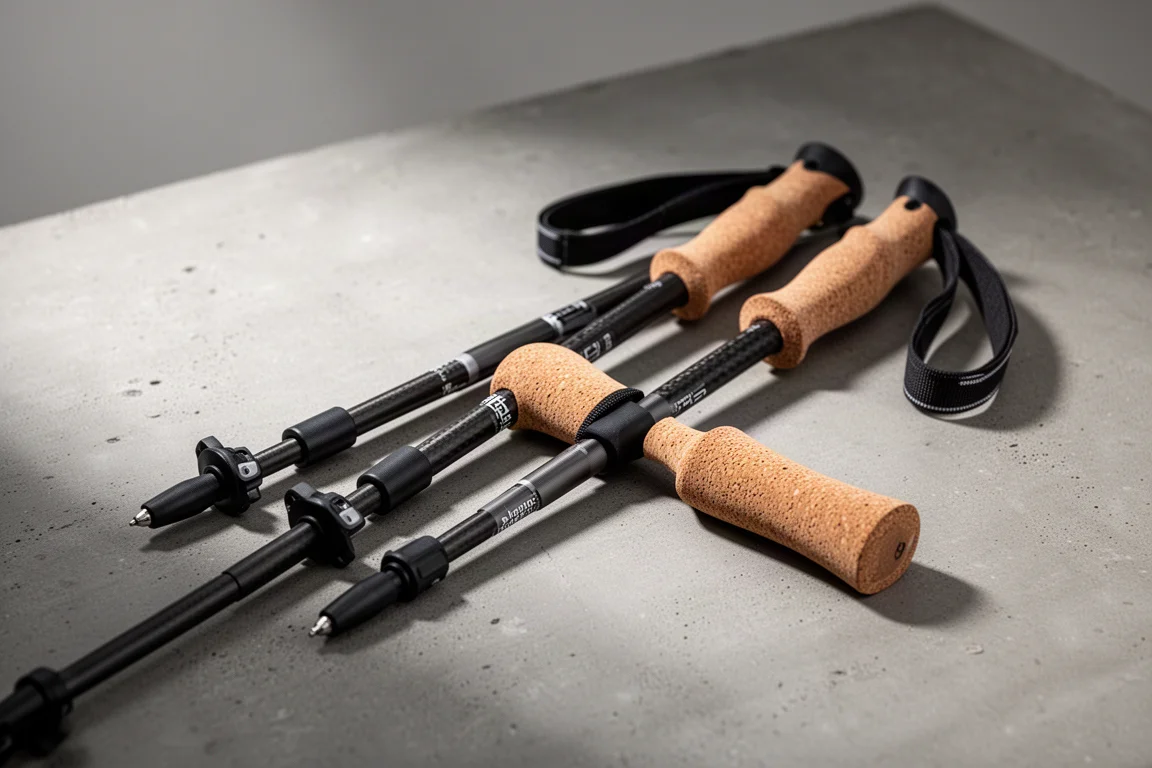
Trekking poles take a beating, and the usual failure point is the same: a snapped shaft in the middle of a long section. These carbon cork poles have avoided that fate over years of hard use, including the closing stretch of a Pacific Crest Trail thru-hike after another pair gave out in the Sierra.
The appeal is simple. The cork grips stay comfortable in heat and cold, the length adjusts easily when terrain changes, and the construction has held up where lighter options have not. They have moved in and out of gear lists depending on the trip, but they are the pair that gets chosen when dependability matters more than saving a few grams. For shelters with a taller peak, a longer pole is sometimes the better match.
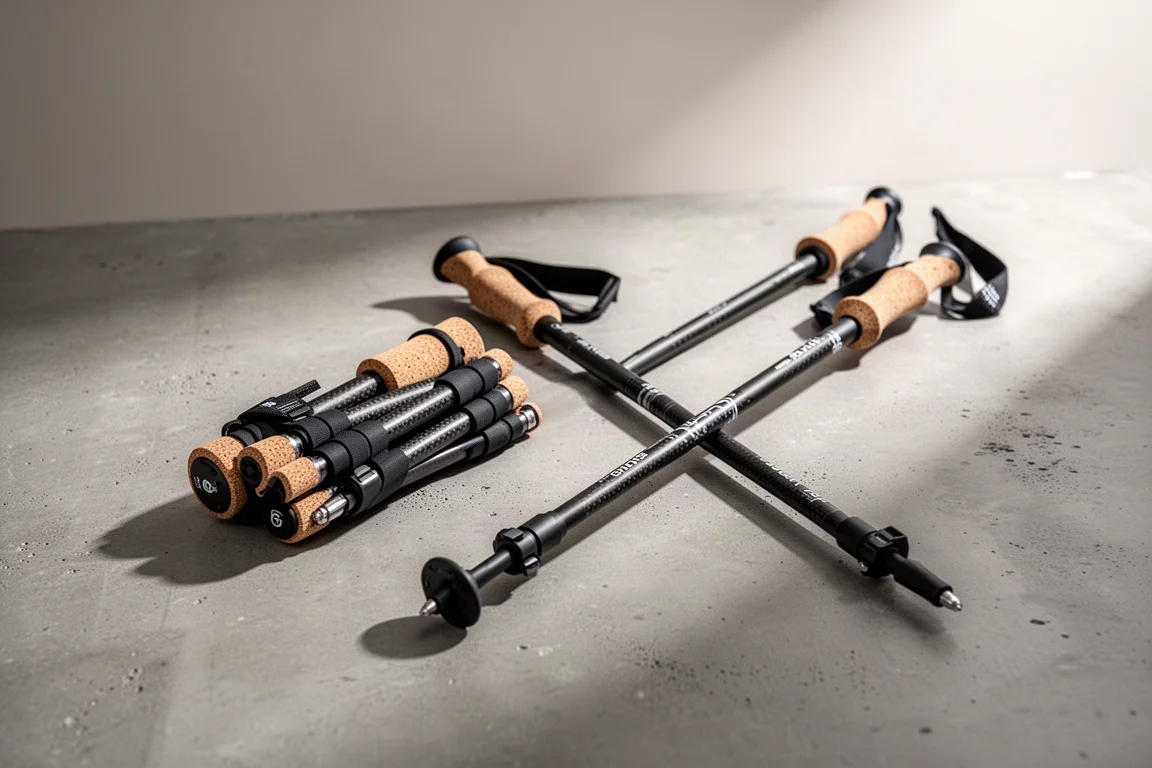
Black Diamond Alpine Carbon Z Trekking Poles: The Same Trust, Folding Format
The Alpine Carbon Z takes the same dependable carbon and cork formula and moves it into a folding Z configuration. That matters for two reasons: a folded pole packs neatly along the side of a backpack, and a shorter packed length is far easier to manage during hand-over-hand climbing, on mountaineering trips, or on a trail run.
If you mostly walk maintained trails, a three-section pole is perfectly fine. If your trips involve scrambling, snow, or air travel, the folding format is the more practical choice.
Darn Tough Socks: The Only Sock Worth Carrying
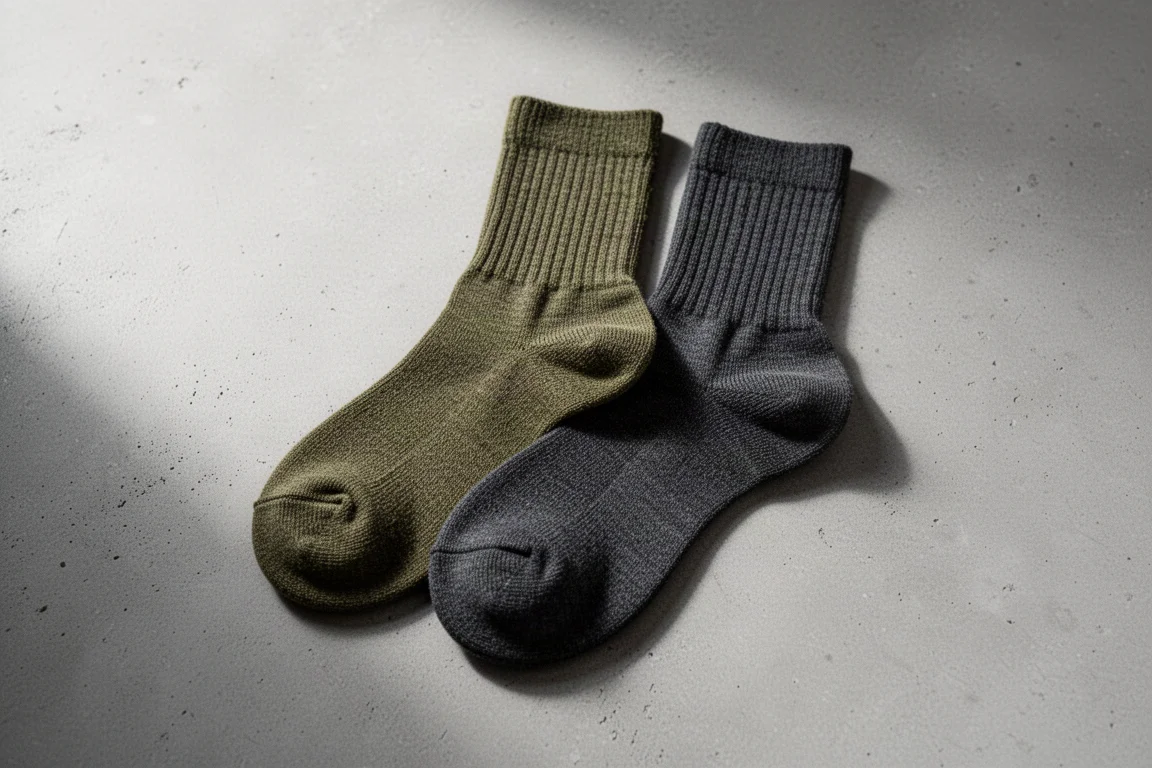
Most hikers treat socks as apparel. On a long trail they are gear, and the wrong pair can end a trip. These merino socks have been the only ones worn for eight years of thru-hiking, backpacking, and bikepacking, plus everyday use.
Two things set them apart. First, durability: they resist the fast breakdown and holes that plague thinner socks. Second, blister control: switching to these removed the need for a liner sock entirely. The range covers lightweight running styles, merino models, and heavier cushioned boot socks, so there is a weight for every season.
The brand also backs them with a lifetime replacement policy. If a pair wears through, it can be sent back for a new one, which changes the math on a product that already lasts a long time.
Cnoc Vecto Water Bladder: A Smarter Way to Fill Up
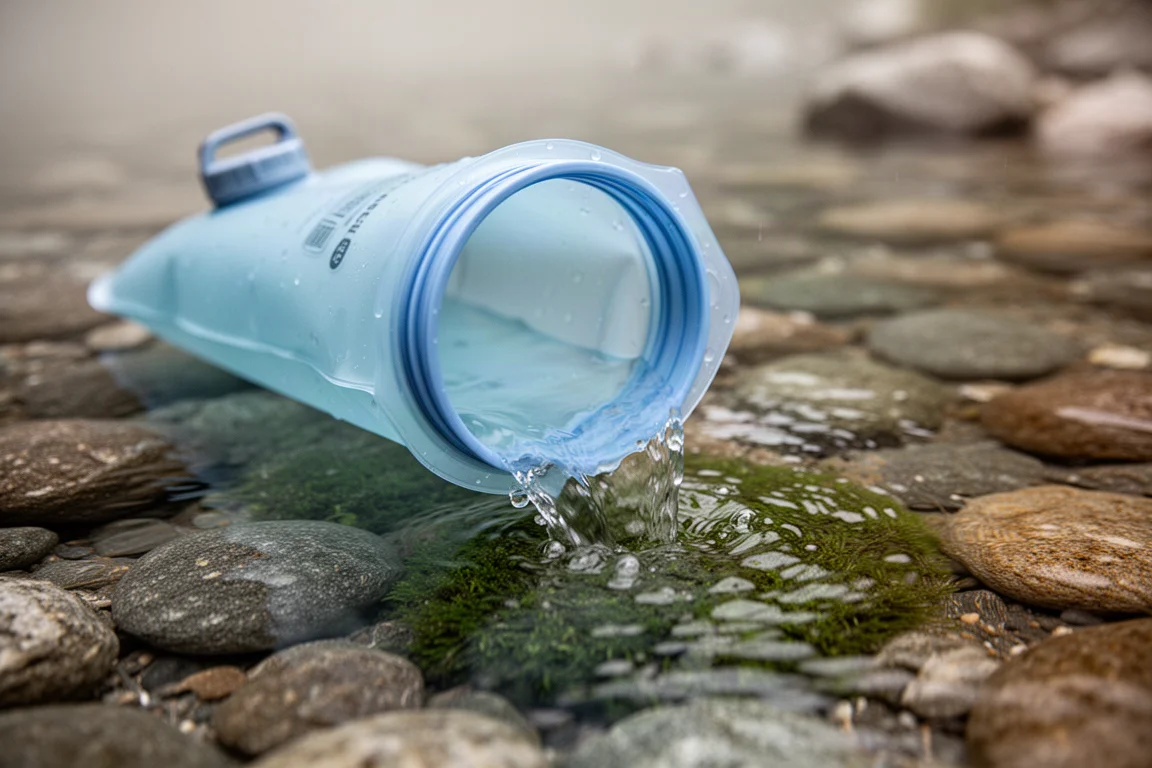
Filling a water bladder through a narrow threaded opening is one of the small frustrations of backpacking. This design solves it by putting a standard 28 mm filter thread on one end and a wide-mouth opening with a sliding closure on the other, so water can be scooped directly from a stream or lake instead of poured in cup by cup.
The wide opening also makes the bladder far easier to clean and dry. The 2 L size is the most common choice for solo trips, and a 3 L version is available for longer carries. A larger 48 mm thread option pairs with high-flow filters that use the wider standard.
Field reliability is the real story here: after thousands of miles, these bladders have not split open or leaked inside a pack.
For anyone still filling a bladder with a cup, this is one of the simplest upgrades available.

Goosefeet Gear Down Socks: Warm Feet on Cold Nights
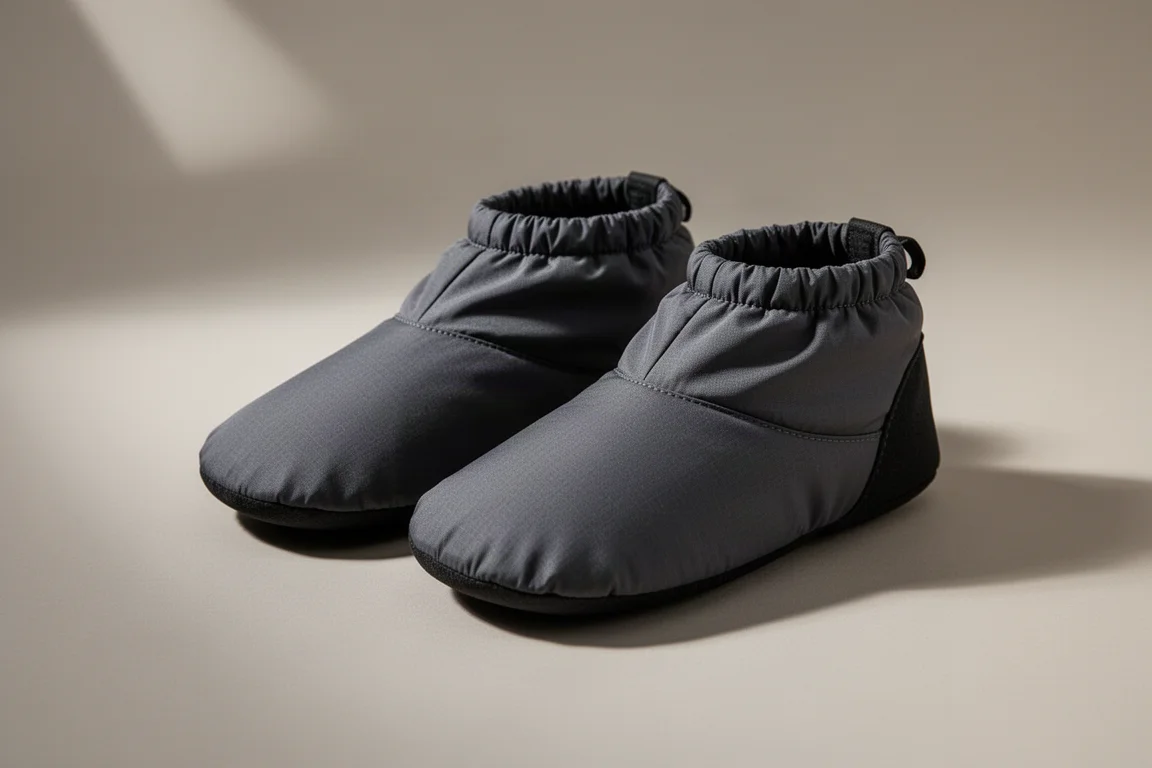
Cold feet at night are a sleep killer, particularly for anyone with poor circulation. Down sleep socks solve it with almost no weight penalty.
These have been in use since 2014 and still hold their loft, which says as much about the fill as about the shell. They pack down small enough to live in the foot box of a quilt alongside a pillow, so they are already in place on the nights that turn colder than expected.
Enlightened Equipment Torrid Insulated Booties: A Synthetic Alternative
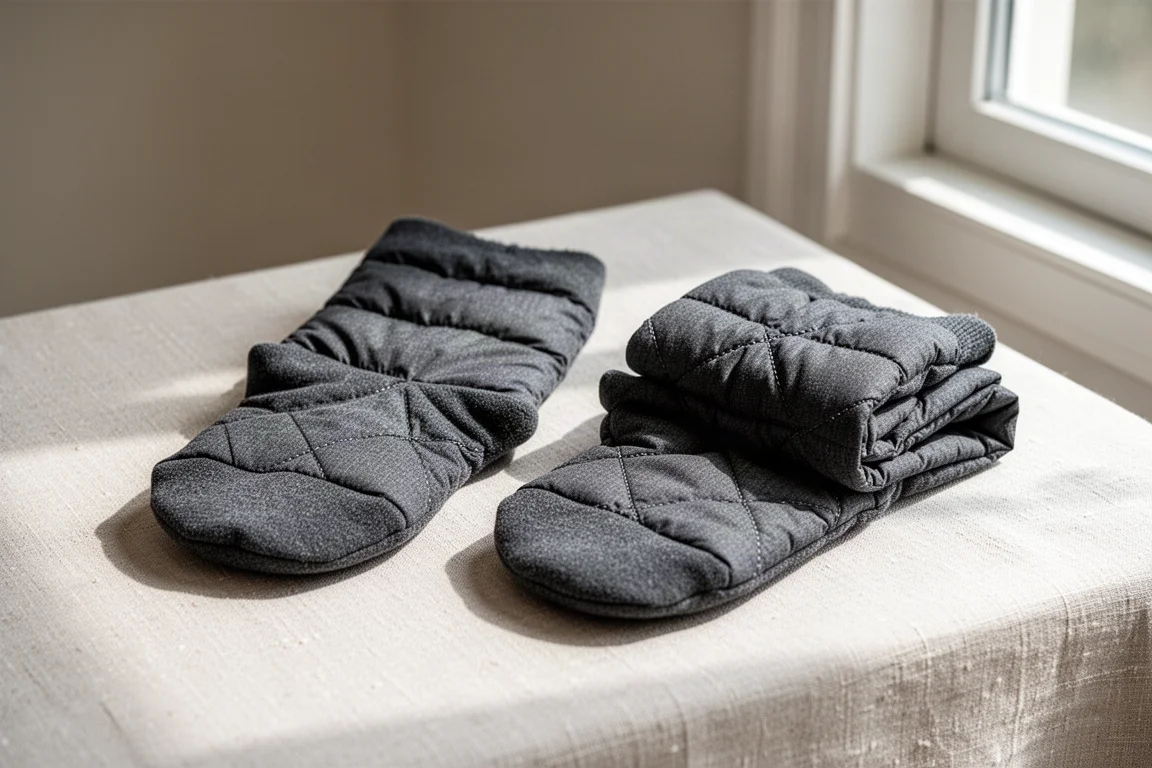
For damper conditions, a synthetic camp bootie makes more sense than down. The Torrid booties, previously sold under a different name, use synthetic insulation that keeps working when moisture is part of the picture.
They are light, compress into a small bundle, and follow the same routine as the down version: stored in the foot box of a quilt, ready for a cold night. For many backpackers, a pair of insulated sleep socks is the single biggest comfort upgrade for the money.
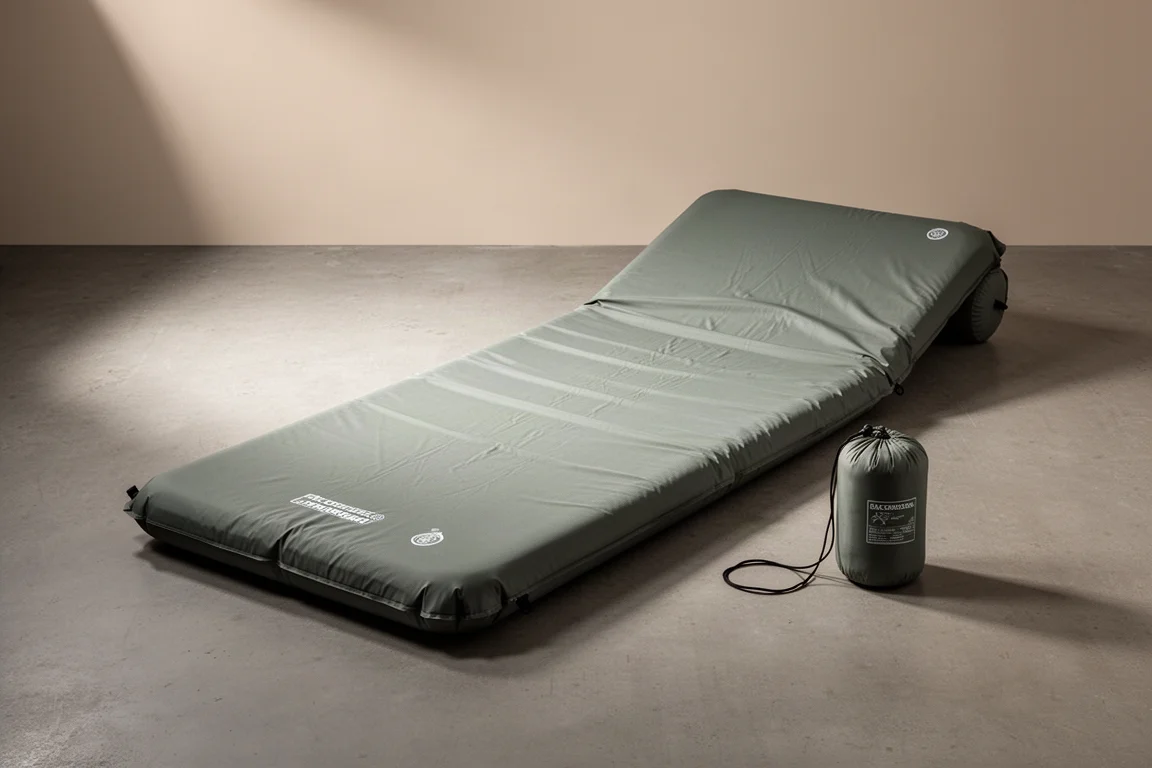
Therm-a-Rest NeoAir UberLite: The Pad That Earns Its Place
This is the sleeping pad that gets used most often, on roughly eight or nine trips out of ten. Warm sleepers do not need a high insulation value to stay comfortable, and the UberLite trades warmth for a very low weight and a small packed size.
Durability is where this pad has surprised people. After thousands of miles there has never been a puncture or a leaking valve, which is unusual for a pad this thin.
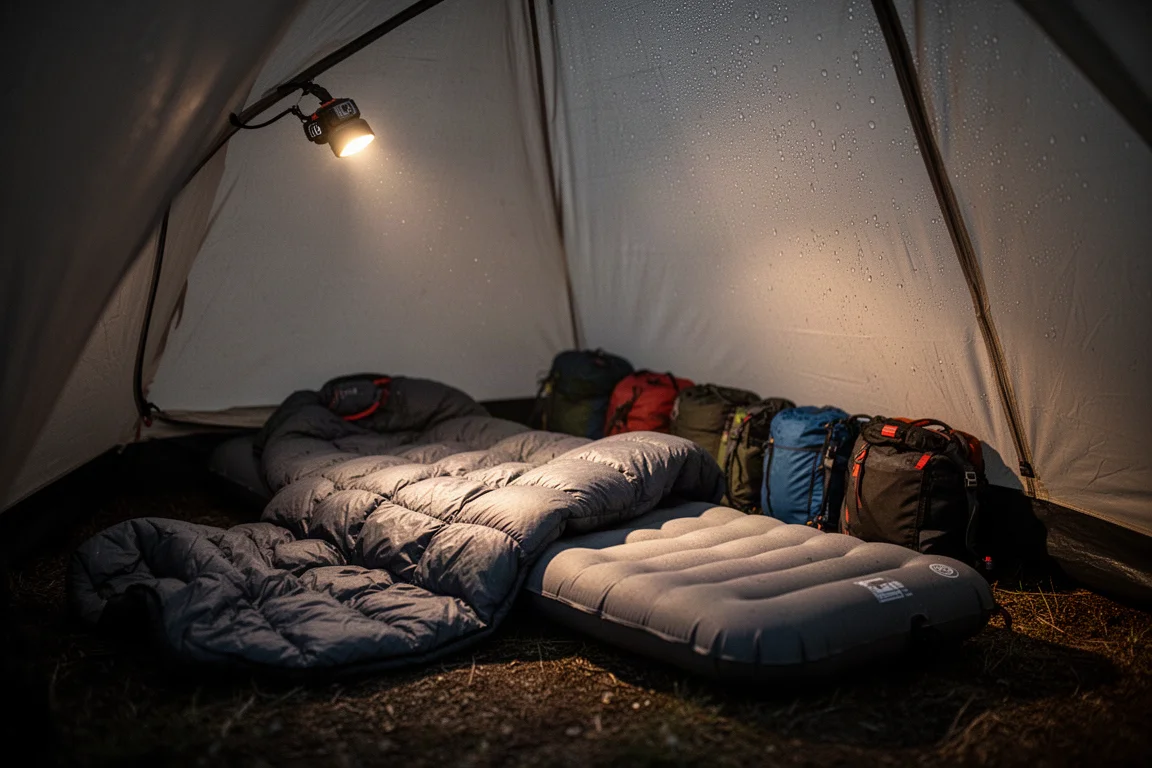
It is not the right pad for everyone. If you sleep cold, or you camp on snow, the rest of the family below is worth a look.
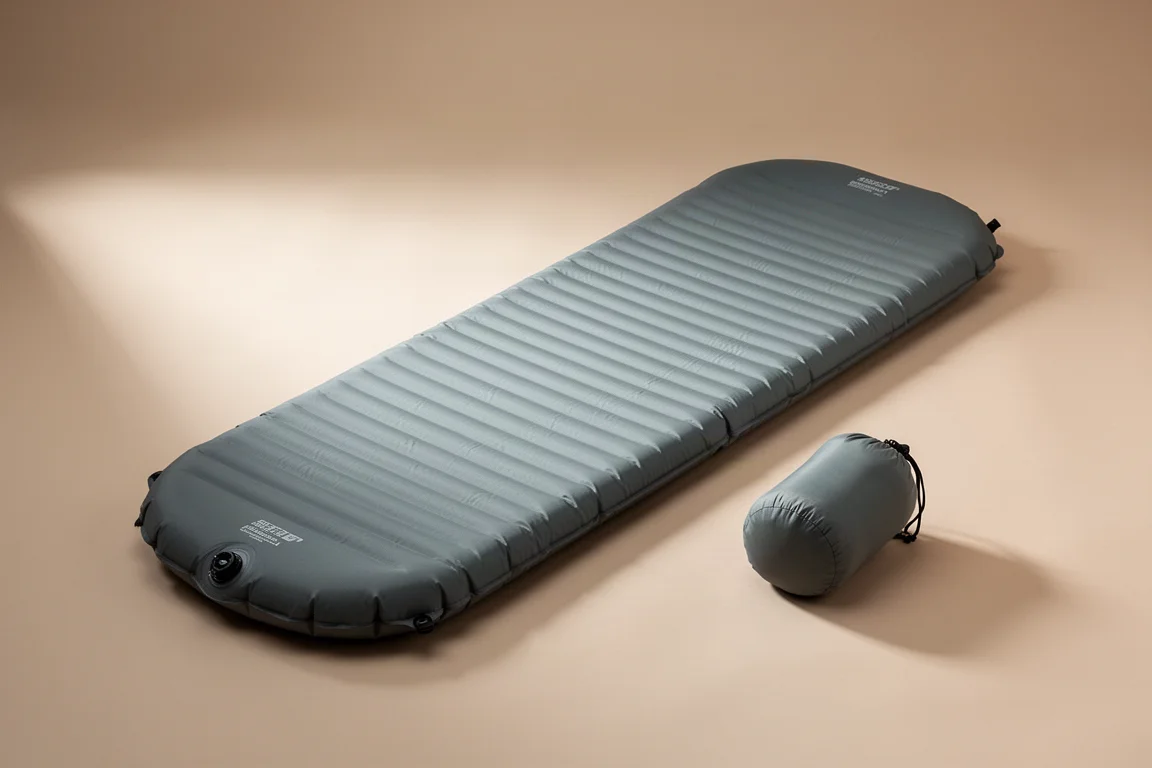
Therm-a-Rest NeoAir XLite: More Warmth for Colder Nights
The XLite is the classic crinkly pad that has been a Therm-a-Rest staple for years. It adds warmth over the UberLite while keeping the packed size small and the weight reasonable.
This is the pad to choose for shoulder-season trips, or for anyone who sleeps a little colder and wants a wider margin without moving all the way to a winter pad.
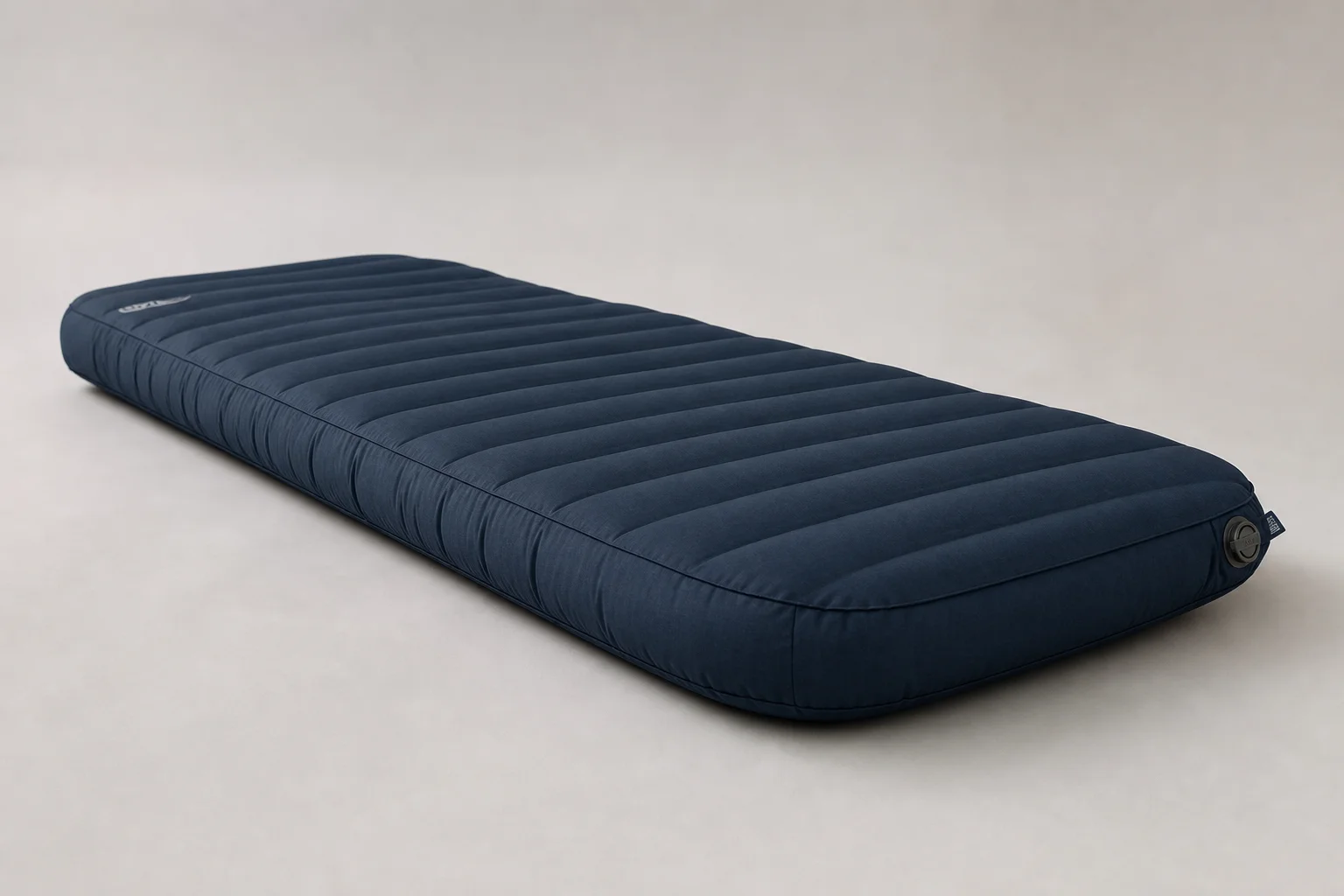
Therm-a-Rest NeoAir XTherm: Built for Snow and Winter
For winter camping and mountaineering trips, the XTherm is the warmest option in this family. The higher insulation value makes it the pad to bring when the ground is frozen or covered in snow.
It weighs more and packs larger than the UberLite, which is the trade-off for the extra warmth. If most of your trips are three-season, the lighter pads above will serve you better.
Lightload Towels: The Multi-Use Rag Worth Packing
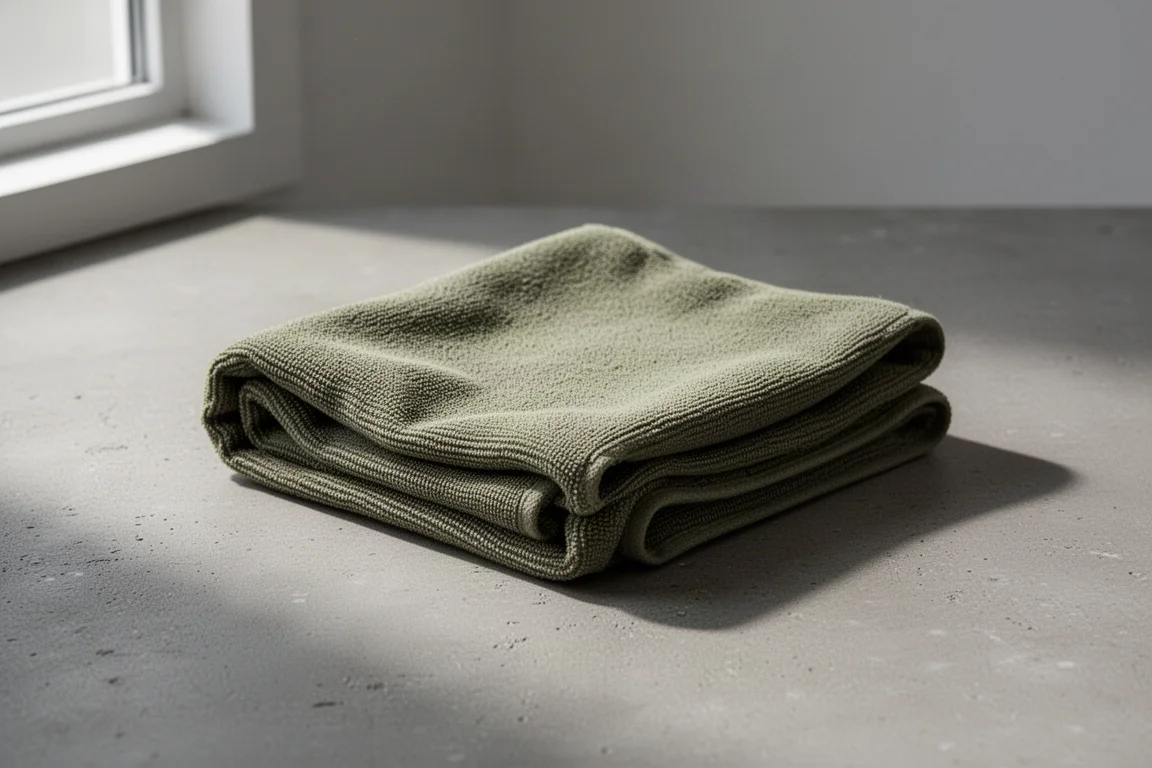
This is the smallest item on the list and one of the longest-serving. A compact towel has been part of every cook kit for more than ten years.
The trick is wrapping a gas canister in it before dropping the canister into a titanium cook cup, which stops the rattle and keeps the pot quiet in the pack. From there it earns its keep: wiping out a wet pot before packing it away, clearing condensation from the inside of a shelter, washing up, and handling the small messes that come with camp life.
It is light, inexpensive, and versatile, which is exactly what a good accessory should be.
How to Choose the Right Gear for Your Hike
Start with the conditions you actually hike in, not the ones you imagine. A warm sleeper on three-season trips will be happier with a lighter pad and a lighter pillow than with winter-rated insulation that never gets used.
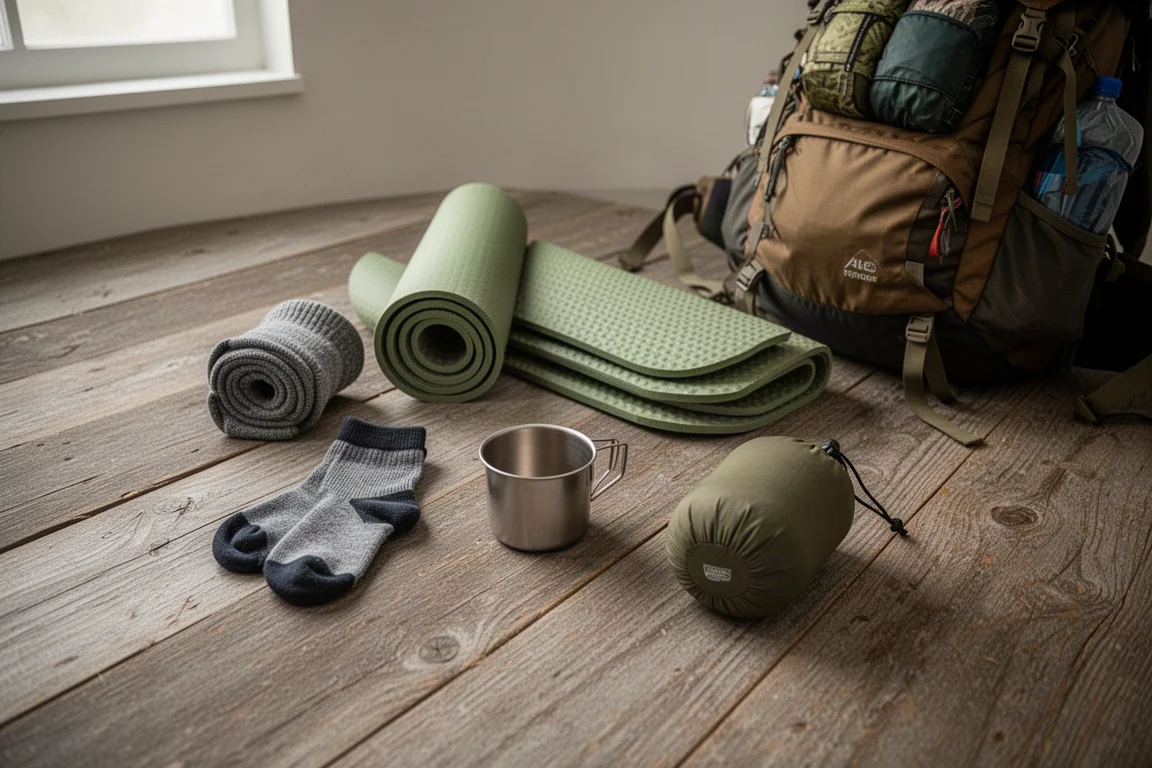
Then look at failure points. Poles and socks are the two items most likely to end a trip early, so dependability and a strong warranty matter more than a few grams of savings. For hydration, a wide-mouth bladder removes a daily annoyance and makes cleaning far easier.
Finally, treat sleep as a system. A pillow, a pair of insulated sleep socks, and a pad matched to your warmth needs work together, and together they are the difference between a restless night and a full recovery before the next day’s miles.
Conclusion
None of these eleven items are flashy, and that is the point. Tents, packs, and shoes change as routes and seasons change, but the gear that stays is the gear that has never let anyone down.
If you are building or refining a kit, start with the pieces that address sleep, foot care, and hydration. Those are the areas where a small, dependable upgrade pays off on every single trip.
Further reading
Related Reviews

Backpacking Gear
Building a 10 lb Base Weight: An Ultralight Backpacking Gear List
A practical walkthrough of the ultralight pieces behind a 10 lb base weight, from a 765 g pack and a roomy one-person tent to a full camp chair and a dependable water filter.

Backpacking Gear
A 15-Pound Lightweight Backpacking Gear List for Solo Trips
A beginner-friendly 15-pound backpacking setup built from easy-to-find gear, with notes on what each piece does, how it packs, and where to spend your attention.
Backpacking Gear
8 Ultralight Backpacking Gear Upgrades Worth Carrying
Eight small, affordable backpacking upgrades that solve real trail annoyances, from a pillow that stays put to a fuel valve that rescues leftover canister gas.