Backpacking Gear
Backpacking Gear Roundup: Seven Picks for Fastpacking and Three-Season Camps
Seven backpacking items for shoulder-season conditions, from an Ultra fabric fastpacking pack and armless sunglasses to a fast-boiling pot and stove combo and a premium down jacket.
Introduction
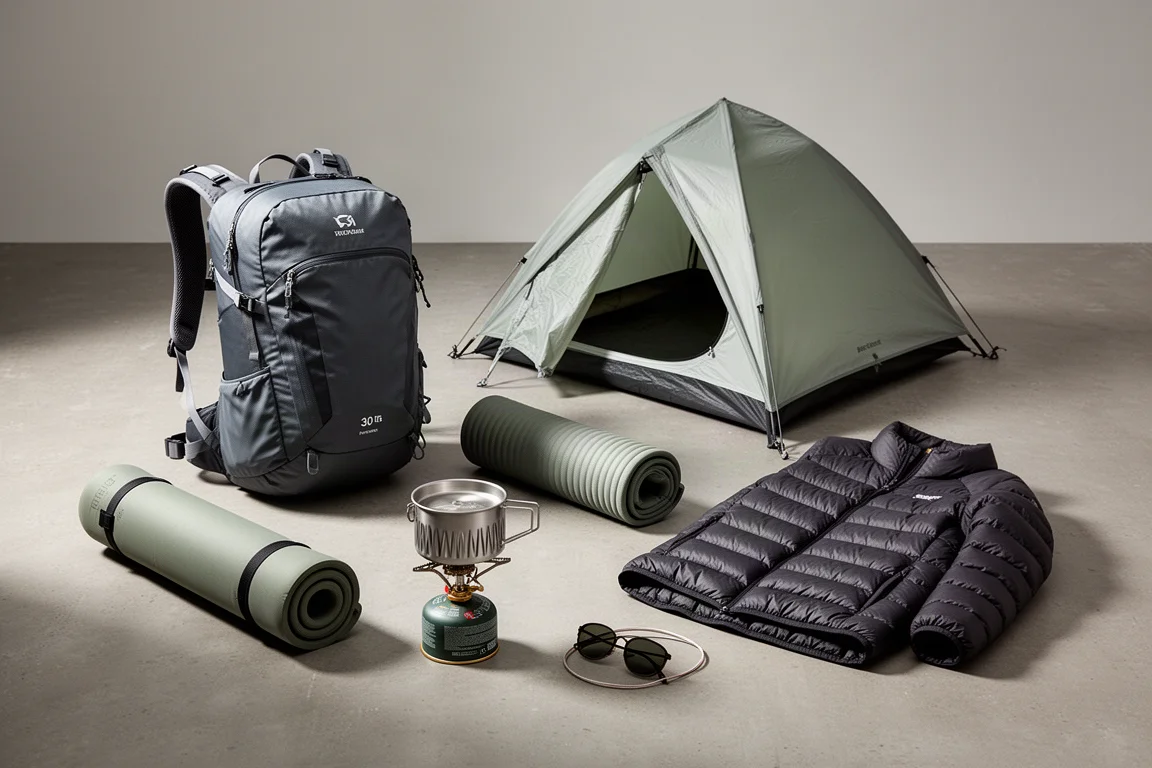
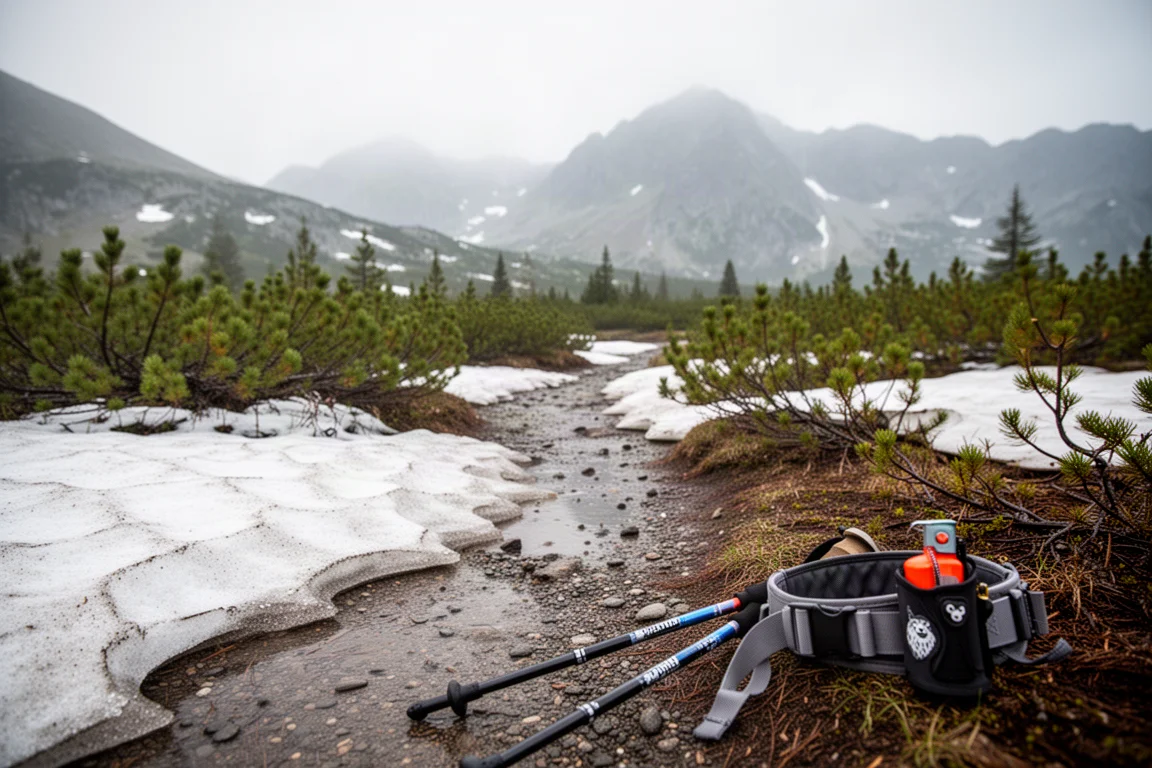
Spring in the Rockies is a stress test. Afternoon temperatures can climb into the twenties Celsius and then fall below freezing overnight, snow can arrive without much warning, and wildlife is active again on the same trails people are hiking. That mix makes it a useful window for evaluating gear that has to cover a wide range of conditions on a single trip.
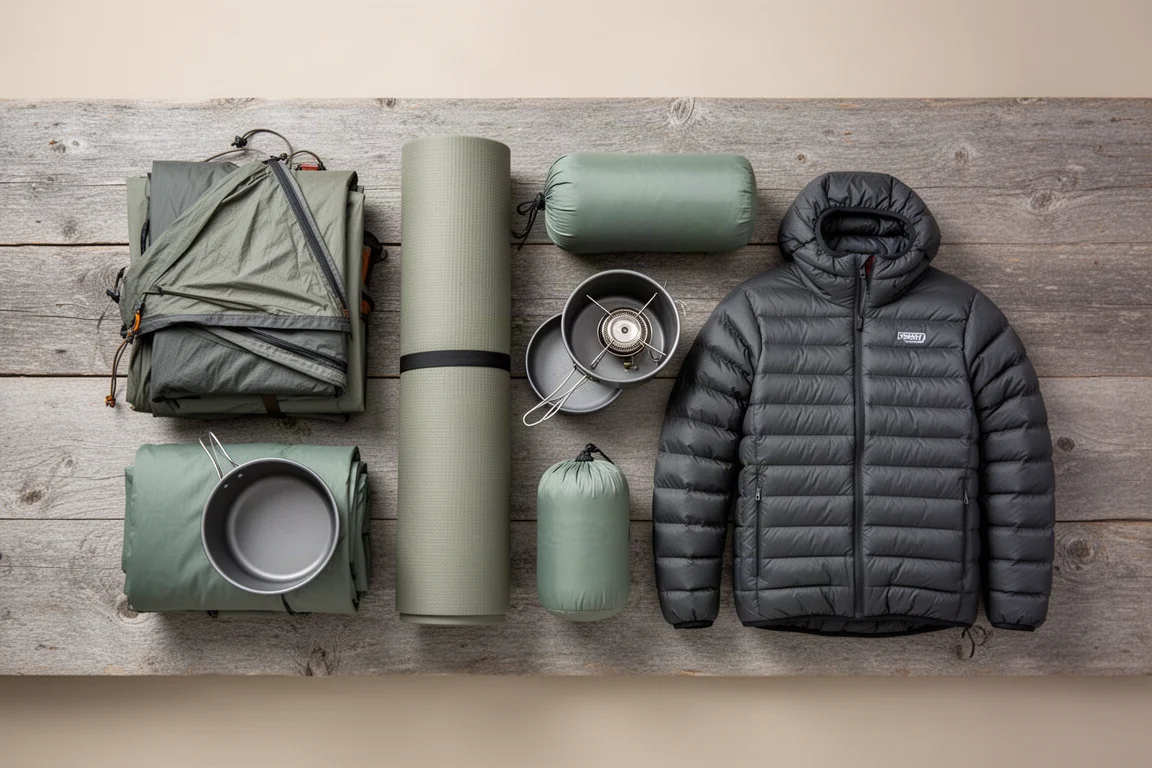
This roundup covers seven items: two worn on the move, four built around camp, and one ultralight pack that serves as a reference point for the others. Some of them solve obvious problems well. Others raise questions that only more time in cold, wet conditions will answer.
How These Picks Were Evaluated
The criteria here are practical rather than spec-sheet driven. For packs, the question is how a load carries, how easily a bottle can be reached, and whether the harness supports running as well as walking. For shelters, it comes down to interior space, ventilation, footprint size and whether the tent stands on its own without trekking poles.
For sleeping pads, warmth and comfort get tested together, because a pad that is warm only when fully inflated is a different product in real use. For cook systems, boil time, wind performance, packed size and total cost all matter. For jackets, the test is warmth per gram while standing still, which is where down layers either justify their price or do not.
Every item here was used in the field on a shoulder-season trip, and several of these are first impressions rather than settled conclusions.
Black Diamond Beta Light 30: A Fastpacking Pack in Ultra Fabric
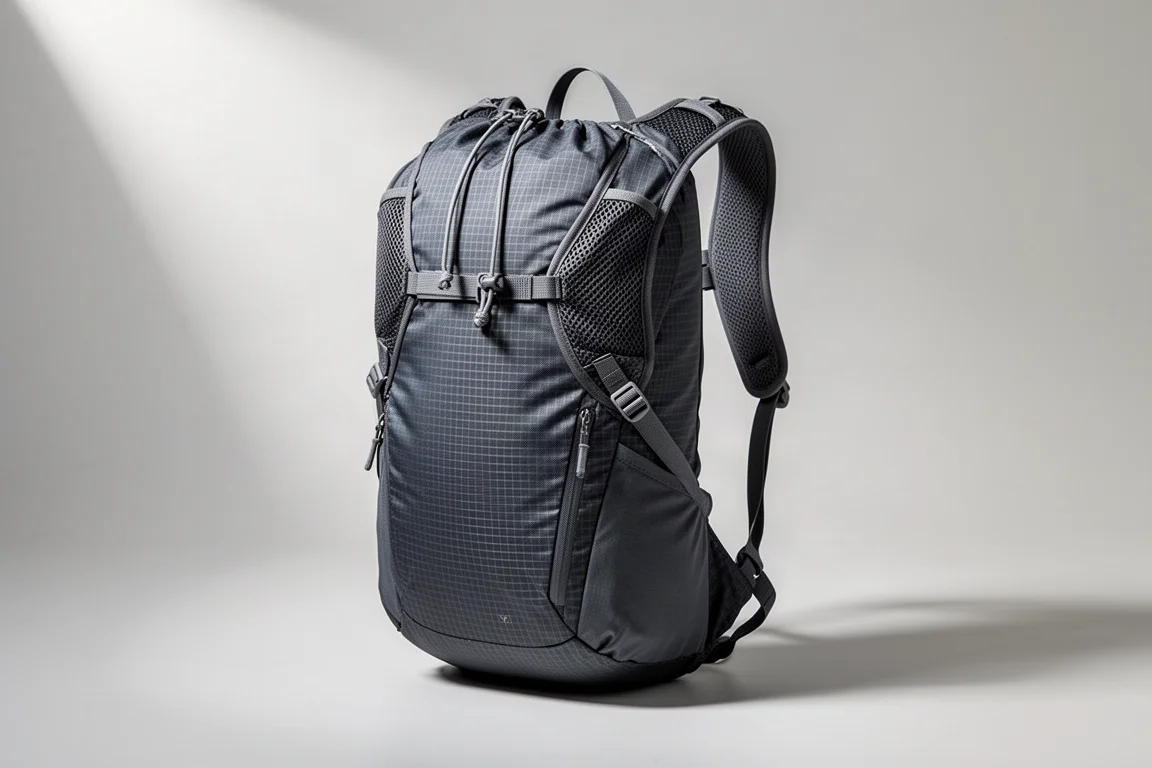
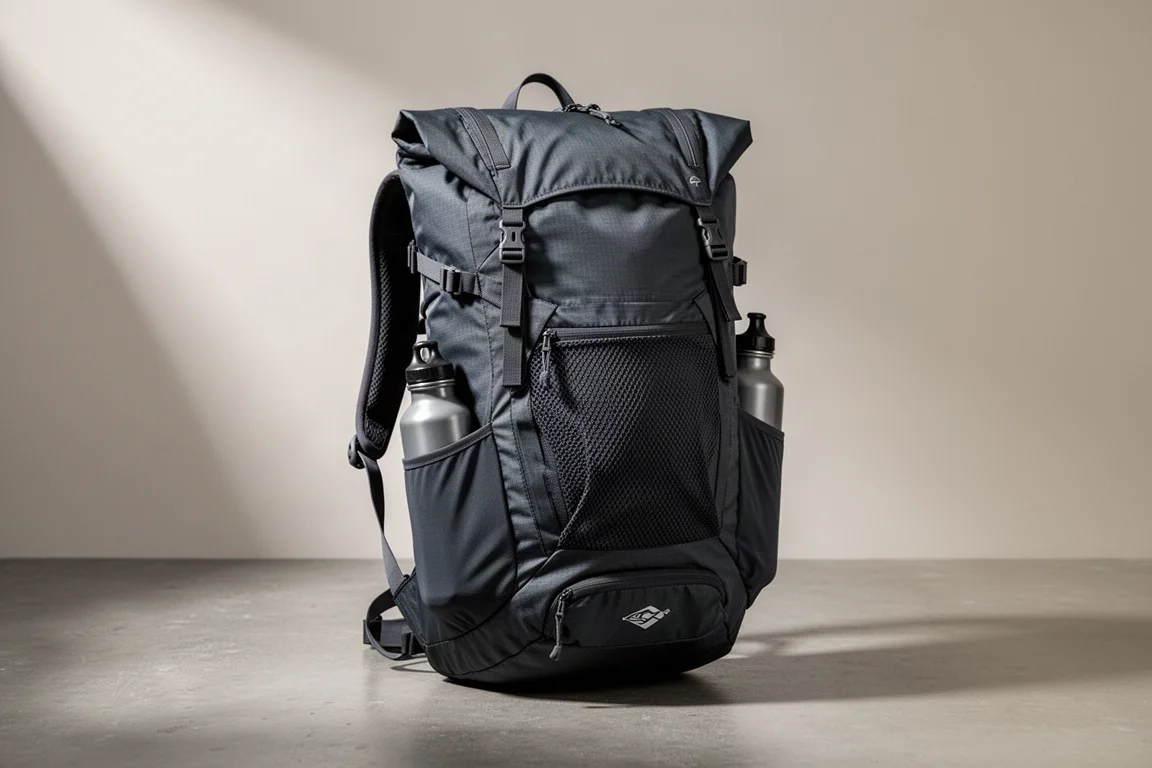
Black Diamond is not a brand usually associated with newer technical fabrics, which is part of why the Beta Light 30 stands out: a 30-litre pack built from Ultra fabric. It pairs that material with running vest style shoulder straps and two sternum straps, and the harness spreads weight from the shoulders across the chest rather than hanging it off the back.
On the trail the pack carries comfortably, including with a fairly heavy load, and it stays stable enough to run with. Bottle access from the side pockets works, though the pockets are on the tight side: pulling a bottle out is straightforward, while getting it back in takes a little more effort.
Two details are worth knowing before buying. The pack ships with a removable hip belt that seems unnecessary at this capacity, since you would have to load it with rocks to reach a weight where a hip belt earns its place. And one of the line-lock hooks at the base snapped while a camp chair was being cinched on, which could be a one-off plastic defect or could come down to thick cordage that is hard to pull through the hardware.
In practice the Beta Light 30 sits closer to a hiking pack than a running pack, roughly 60 to 65 percent hiking and 35 to 40 percent running. Runners will notice the missing second shoulder pocket for soft flasks, and pure runners may find it heavy and bulky. Against the Durston Wapta 30, this is the easier pack to run with, while the Wapta leans further into ultralight hiking.
Ombraz: Armless Sunglasses That Stay Put
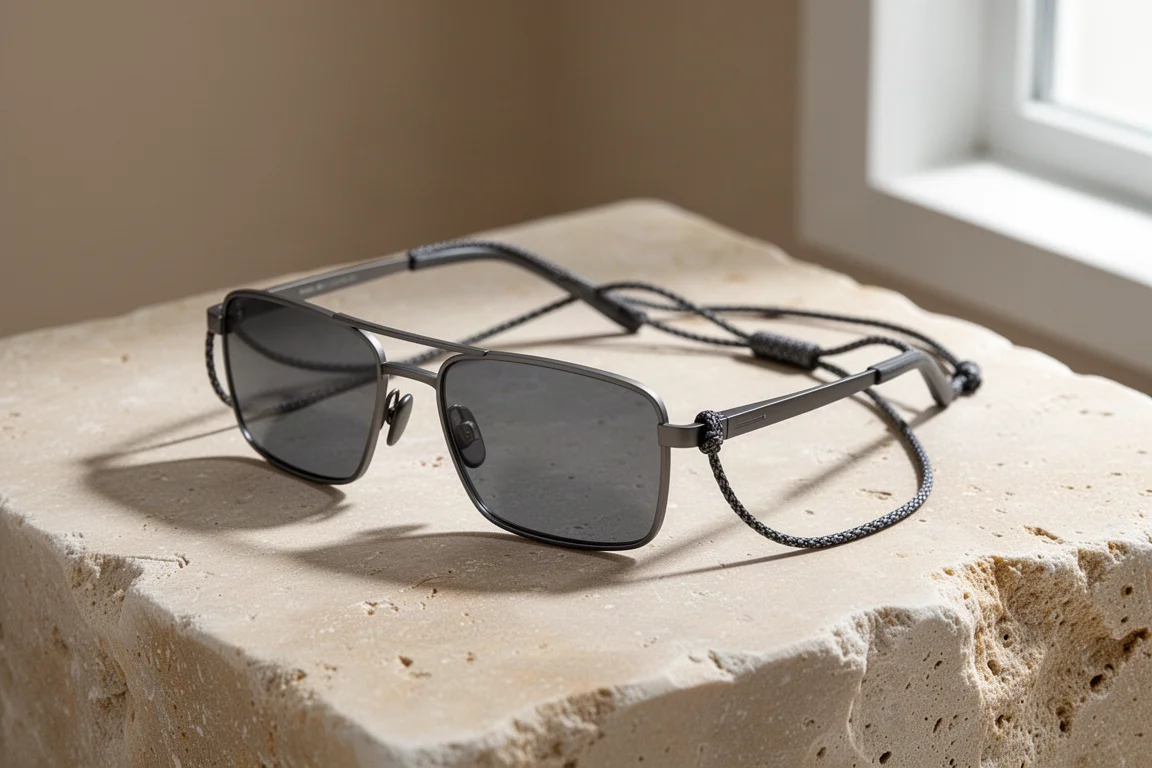
Ombraz takes the arms off a pair of sunglasses and replaces them with an adjustable cord that wraps all the way around the head. Instead of hooks behind the ears, the frame rests against the face and the cord holds it there.
That design has three practical consequences. Unhook the cord and the sunglasses hang on your chest, which makes them far harder to lose. The cord can be tightened for running or skiing so the frame stays locked in place. And because there are no arms, there is no hinge, which is the part that tends to fail first on ordinary sunglasses.
On the move, coverage is good, with few gaps at the sides and across the top where sunlight usually leaks in, and the frame does not slide down when you sweat. The trade-off is cost. These sit well above what most people spend on sunglasses, so the value case rests on keeping them long enough to offset that gap.
Marmot Tungsten Ultralight 1P: A Freestanding Shelter for Tight Campsites
The Tungsten Ultralight 1P is a freestanding one-person tent aimed at the space between cramped ultralight shelters and heavier big-brand designs. The fly uses silpoly rather than nylon, which matters because nylon tends to sag and stretch once it is wet.
The interior is roomy enough for a large sleeping pad, and the tent is tall enough at the head and foot ends to give more vertical walls, so the mesh does not sit against your face when you lie down. It is light for a freestanding tent from a major brand and relatively affordable at around $350.
Ventilation is one of its strongest points. A mesh-heavy inner and a top vent kept condensation away even on a site next to a creek. The footprint is compact, which helps on slickrock and small campsites where a trekking pole shelter would be awkward to squeeze in. The shelter is also structurally sound enough to shed a reasonable snow load, so winter use is realistic.
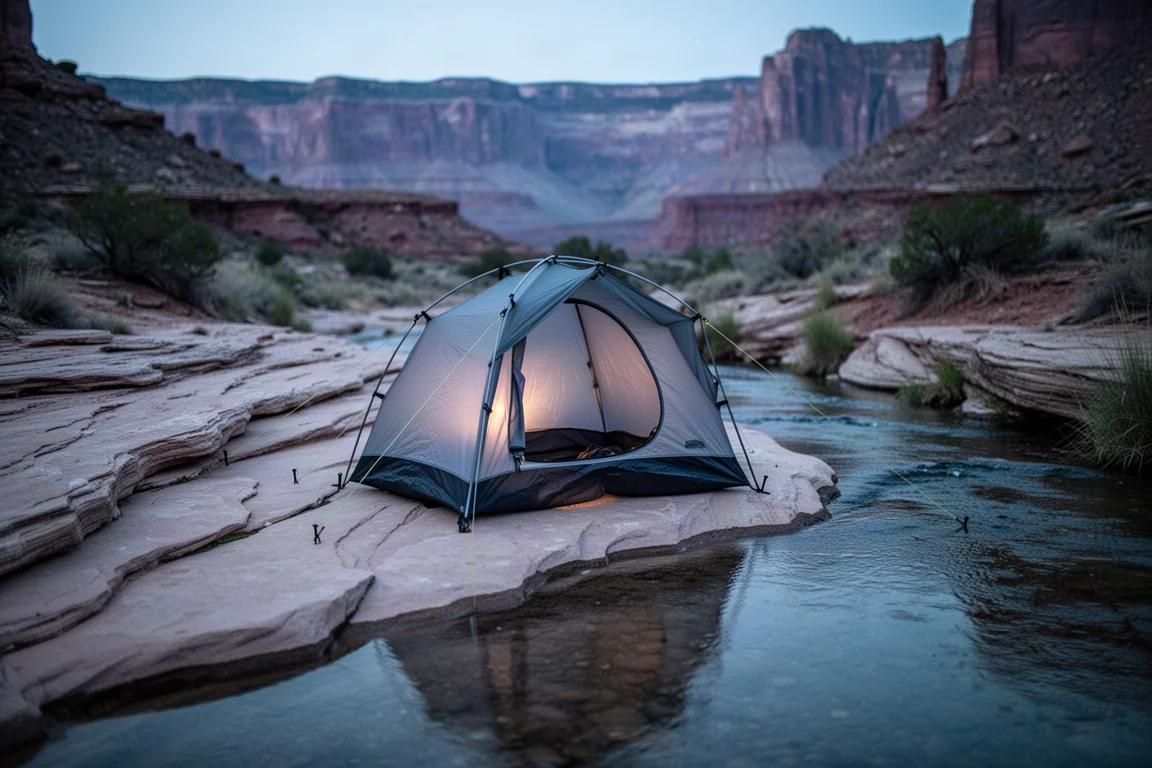
Length is the main limitation. At 5 ft 10 in there was just enough room at both ends without the mesh pressing in, and anyone around 6 ft or taller is likely to feel short on space. For most trips a trekking pole shelter still saves roughly half the weight, and in some cases more, so this tent makes the most sense when freestanding pitching or a small footprint matters more than the scale.
Nemo Tensor All-Season: Warmer, Thicker, and More Comfortable
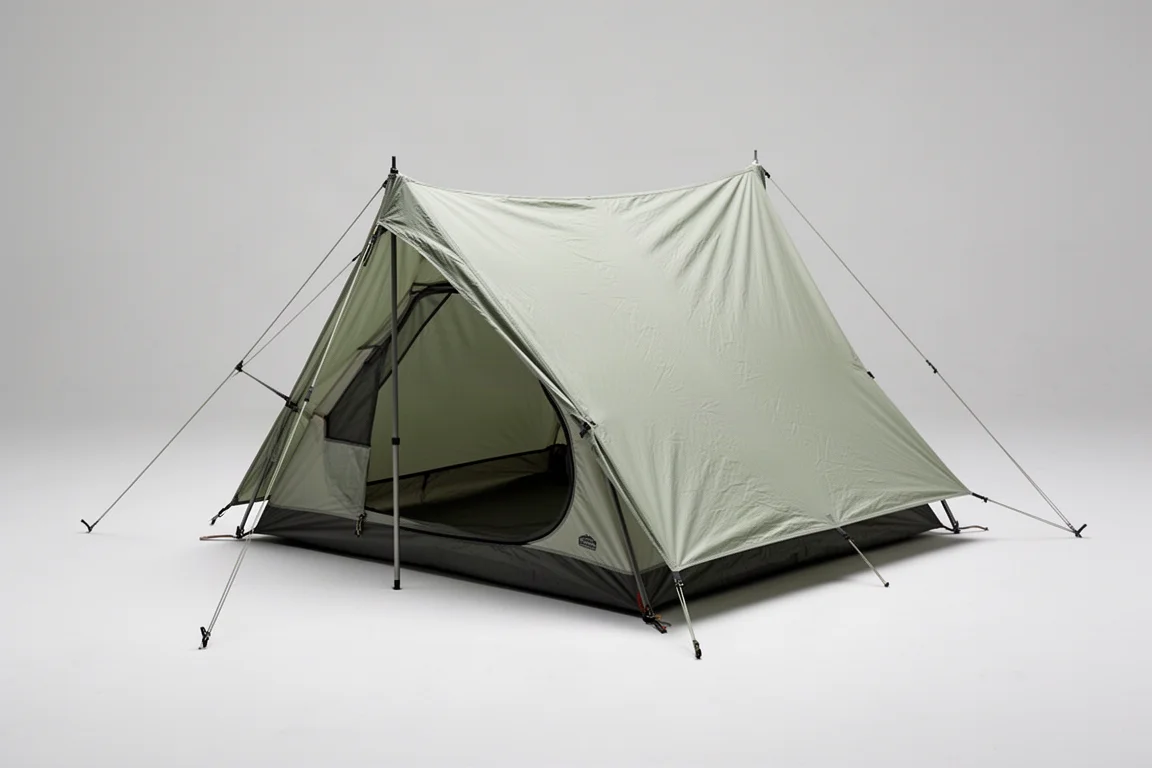
Nemo raised the R-value of the Tensor All-Season from 4.2 to 5.4 and reworked the materials: nylon instead of polyester, a 20D fabric on top and a more durable 40D fabric on the bottom. The pad is also 0.5 in thicker, which brings it to 3.5 in.
On a night that dropped to right around freezing, warmth was the standout. The pad felt genuinely toasty, with a noticeable sense of heat being reflected back, and it performed better than the numbers alone suggested it would. The usual caveat still applies: a partially deflated pad loses R-value wherever it compresses, so keeping it fully inflated is the way to get the rated warmth.
Comfort improved as well. The Tensor line uses horizontal baffles with slight dimpling for pressure relief, which is decent but not the plushest design around. The extra thickness changes the picture. Sleeping at roughly 70 percent inflation was comfortable, where the thinner previous version needed closer to 90 percent to keep hips and shoulders off the ground.
Fire Maple Hornet 2: A Fast-Boiling Pot and Stove Combo
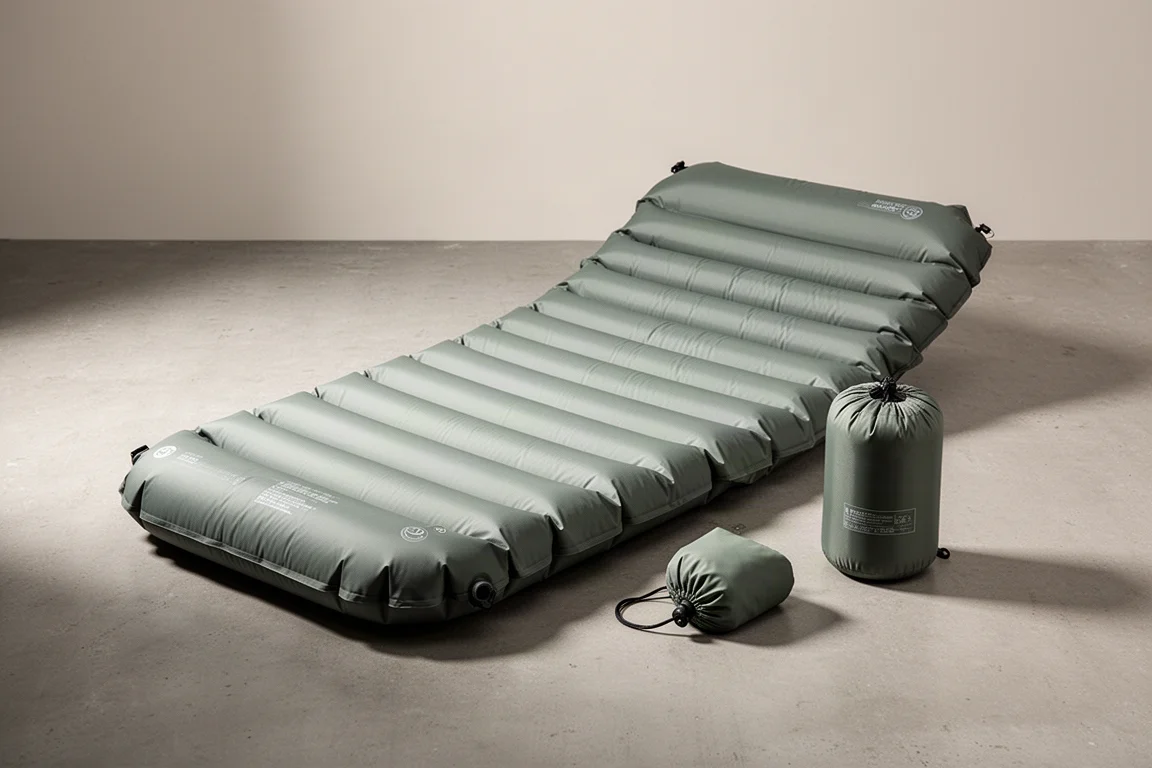
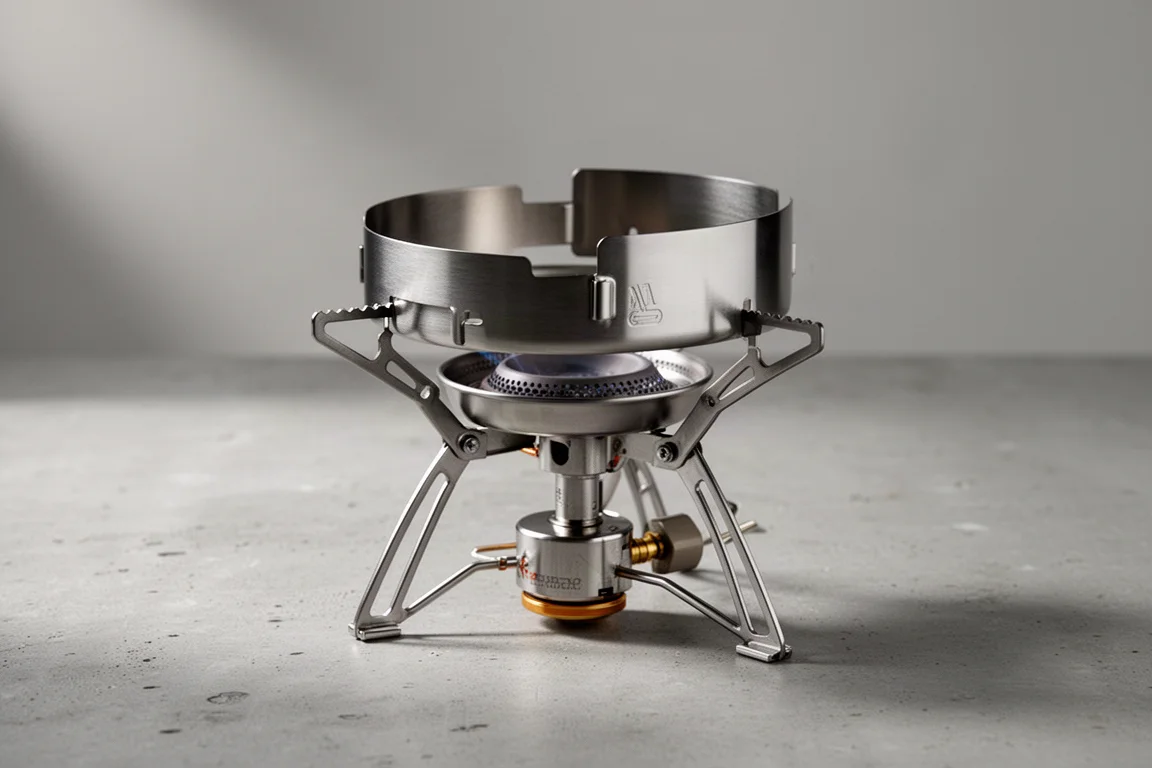
Fire Maple has a reputation for budget versions of other brands’ designs, but the Hornet 2 and its matching pot are a genuinely interesting system. The pot holds half a litre and has a heat exchanger on the base: aluminium fins wrapped around the bottom that shield the flame from wind and improve heat transfer into the water.
In a home test the combo boiled half a litre in about a minute and 30 seconds, roughly 30 seconds quicker than the boil time advertised for comparable Jetboil systems. The full setup is about half the weight of a Jetboil and around a quarter of the price.
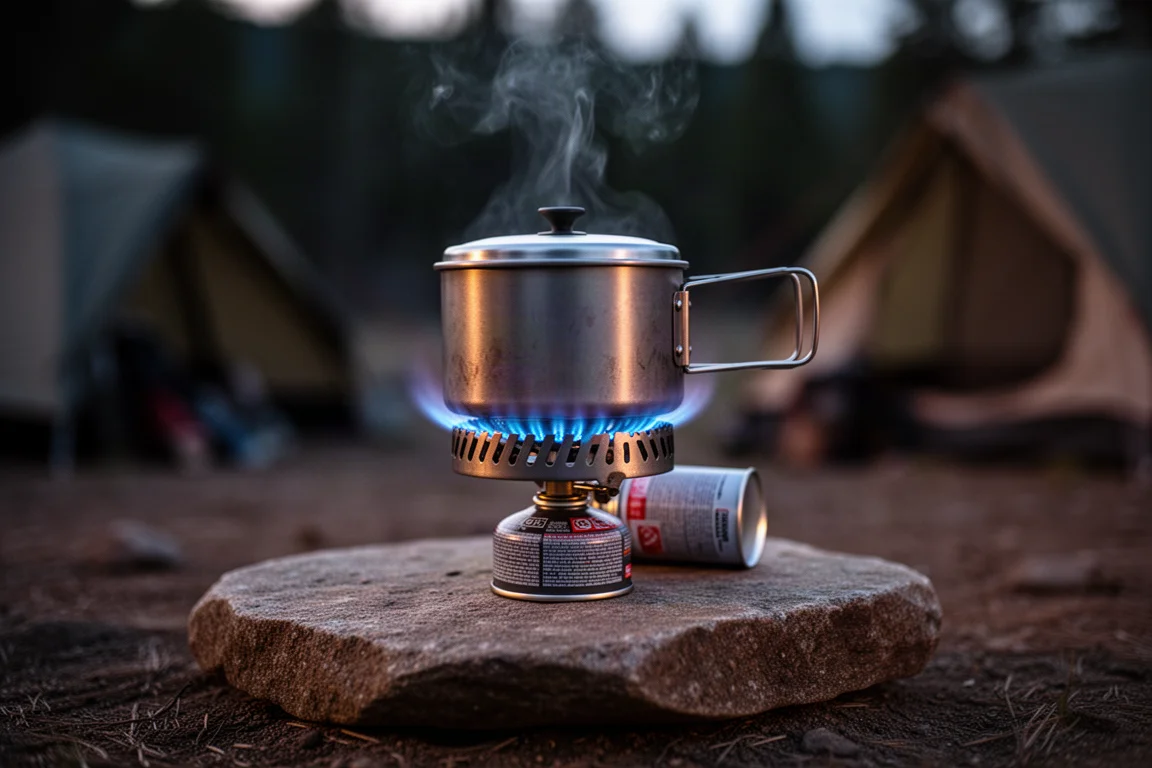
The stove itself weighs 48.5 g, has a lip around the burner to protect the flame, and screws onto a standard canister. Everything nests inside the pot, including the stove, a lighter and the fuel canister, and a folding handle keeps the lid in place. The pot also works with most three-arm canister stoves if you already own one.
The obvious exception is the ultralight crowd, who will still go lighter with a simple titanium pot and a barebones stove. For anyone who wants fast boils, wind resistance and a compact all-in-one kit, the weight and price gap against a Jetboil system is hard to ignore.
Rab Mythic G: Lightweight Warmth at a Premium
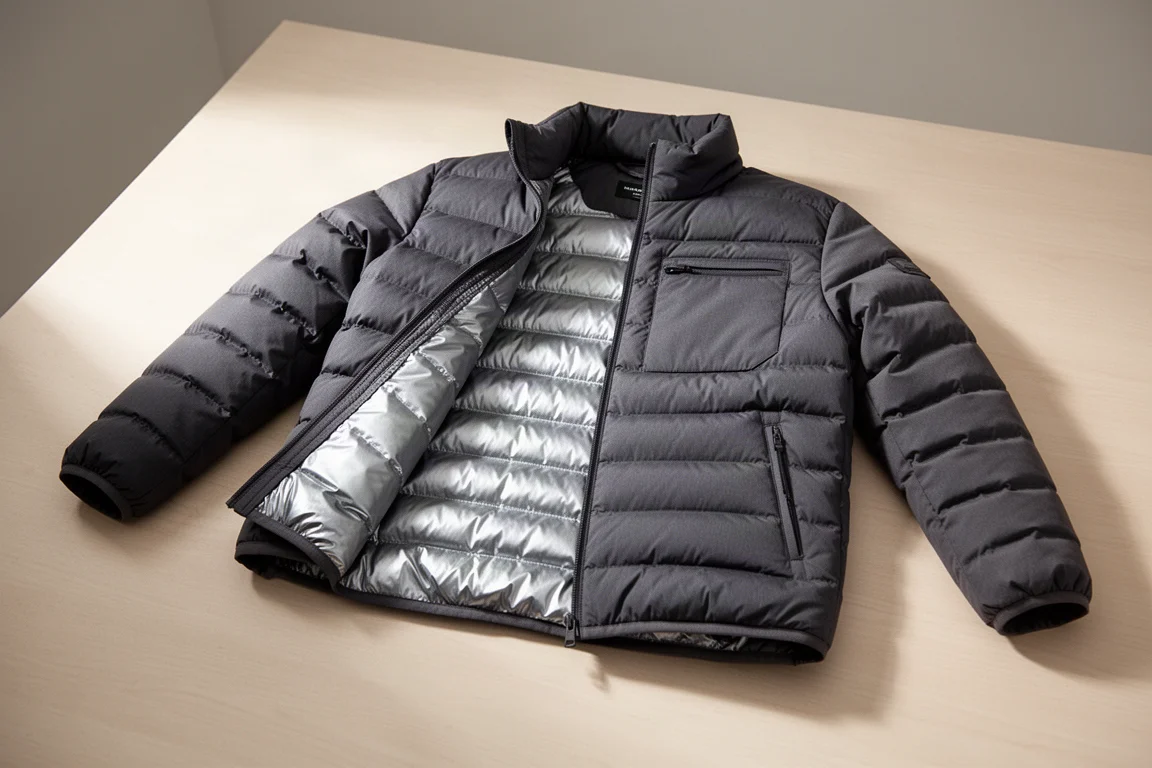
The Mythic G is a three-season down jacket built around warmth per gram: a 7D nylon shell, 1000 fill power down, and a reflective layer on the inside that bounces body heat back toward the wearer. It is positioned as one of the warmest three-season jackets available for its weight.
In field use, conditions only reached just above freezing while sitting around camp, and the jacket felt chillier than expected for the temperatures it is meant to handle. That is not a final verdict. It is a signal that the jacket needs colder conditions, and more static time, before its limits and its value are clear.
The open question is price. The cost is high, so the case for buying it depends on whether this combination of weight and warmth replaces a heavier layer on the trips you actually take, and whether it holds warmth when you are standing still in genuinely cold weather.
Durston Wapta 30: The Ultralight Fastpacking Reference
The Wapta 30 is an ultralight fastpacking pack that has become a reference point in this category. It is more stripped back than the Beta Light 30 and leans toward trips where hiking dominates and running is occasional.
It has been used on a trip with a base weight under 5 lb, which says a lot about how little the pack itself contributes to the load. If your priority is the lightest possible setup for long hiking days, the Wapta is the more natural starting point. If you want to run meaningful sections of a route with a load, the Beta Light 30 has the edge.
Buying Advice
The right pack depends less on capacity than on how you move. If a route is mostly hiking with short runnable sections, a stripped back ultralight pack saves weight all day. If you plan to run real stretches with a load, a vest-style harness with two sternum straps is worth the extra grams, and it is worth checking bottle access in the side pockets before committing.
Shelter is a question of where you camp rather than how far you walk. A freestanding tent with a small footprint earns its weight on slickrock, in tight sites and in winter conditions, while a trekking pole shelter remains the lighter option for most three-season trips where pitching space is easy to find.
Sleep and camp comfort follow a similar logic. A warmer pad pays off in shoulder seasons and at altitude, where overnight temperatures drop below freezing without warning, and a thicker pad can be slept on softer without giving up the warmth you paid for. For cooking, decide whether fast boils and a compact kit matter more than the absolute lowest weight, since the lightest option is rarely the fastest.
Finally, the jacket. Down layers in this class trade a very high price for one specific benefit: warmth at minimal weight while you are standing still. If most of your cold weather is active, a lighter summer-weight down jacket is usually enough. If you spend evenings sitting around camp in near-freezing temperatures, the extra warmth is the reason to pay.
Conclusion
Taken together, these seven items cover the two halves of a shoulder-season trip. On the move, the Beta Light 30 handles mixed hiking and running loads comfortably, while the Ombraz design removes two of the most common ways sunglasses get lost or broken. At camp, the Marmot Tungsten Ultralight 1P delivers a freestanding shelter with a small footprint, the Nemo Tensor All-Season is warmer and more comfortable than its predecessor, and the Fire Maple Hornet 2 undercuts bigger canister systems on both weight and price.
The Rab Mythic G is the one item here that needs more time before a firm recommendation, since its warmth in static near-freezing conditions did not match what its specification implies. Match each purchase to the trip you actually take, and the Durston Wapta 30 remains the benchmark for anyone whose priority is the lowest possible base weight.
Further reading
Related Reviews

Backpacking Gear
Building a 10 lb Base Weight: An Ultralight Backpacking Gear List
A practical walkthrough of the ultralight pieces behind a 10 lb base weight, from a 765 g pack and a roomy one-person tent to a full camp chair and a dependable water filter.
Backpacking Gear
A 15-Pound Lightweight Backpacking Gear List for Solo Trips
A beginner-friendly 15-pound backpacking setup built from easy-to-find gear, with notes on what each piece does, how it packs, and where to spend your attention.
Backpacking Gear
8 Ultralight Backpacking Gear Upgrades Worth Carrying
Eight small, affordable backpacking upgrades that solve real trail annoyances, from a pillow that stays put to a fuel valve that rescues leftover canister gas.