Backpacking Gear
Backpacking Gear Retest 2026: Five Popular Items Back on Trail
Five widely owned backpacking items retested in wind and near-freezing temperatures, with clear notes on what held up, what did not, and who each one actually suits.
Introduction
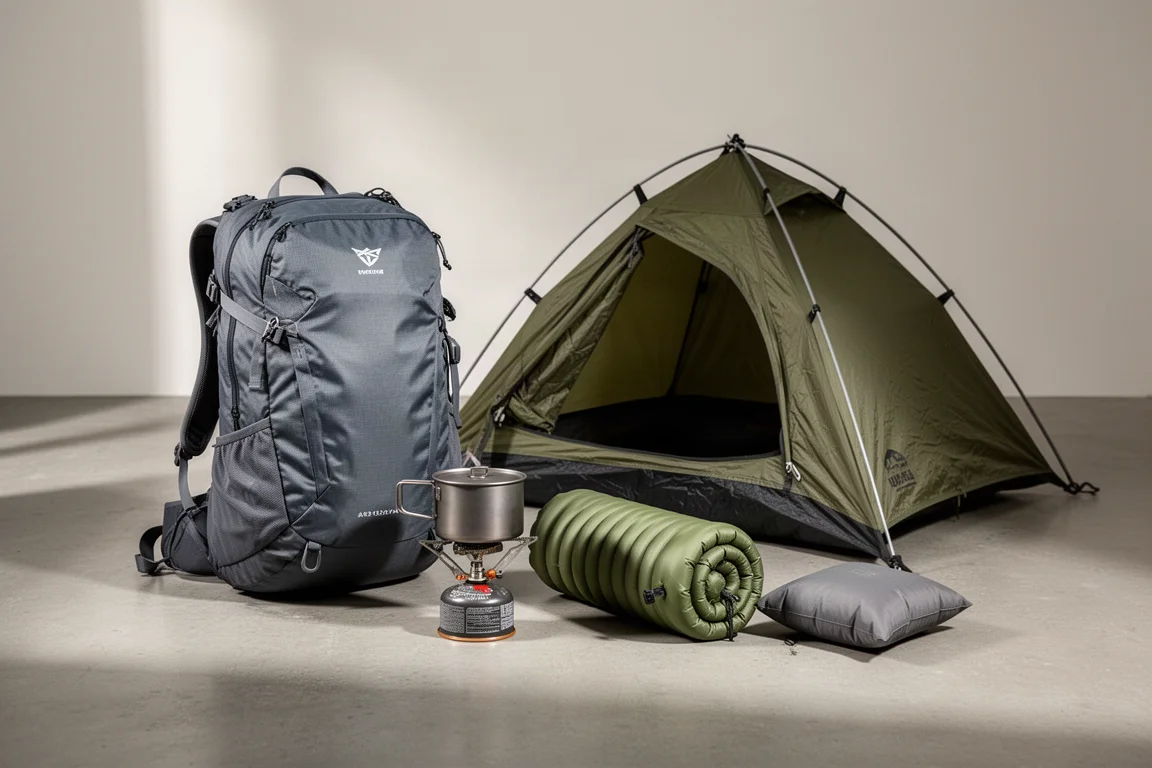
Some outdoor gear earns its reputation long before it earns a place in your pack. The five items below all carry that reputation, and all five were taken back out on trail for a proper second look: a sub-kilogram framed backpack, a classic two-person tent in a new LT build, an all-in-one stove system, a budget sleeping pad, and a lightweight camp pillow.
Each one was chosen for a reason. They are popular enough that a second opinion is worth having, and several of them look genuinely strong on paper with specifications and features that should make them top performers. The open question was whether real trail conditions would agree.
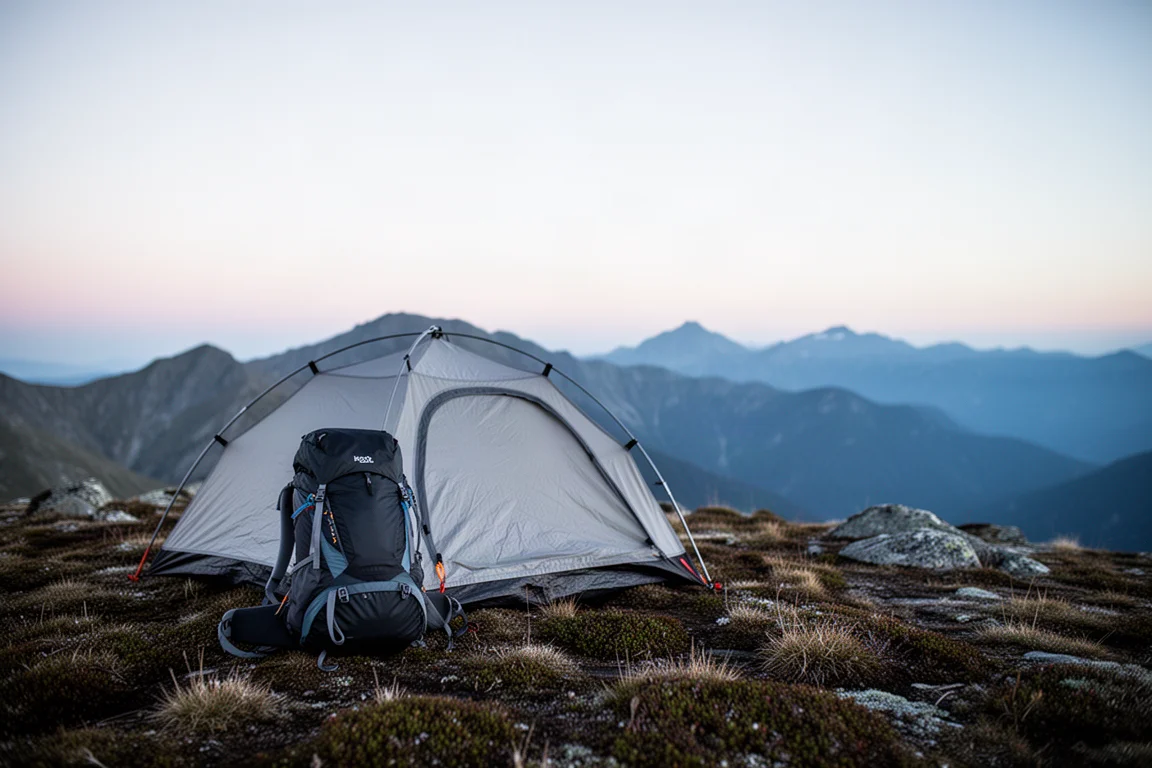
The test trip was deliberately demanding: steady wind, temperatures near freezing overnight, and a 30 lb load in the pack for the climb to camp. That combination puts pressure on exactly the things that matter most, which is load transfer, weather protection, warmth and sleep comfort.
How These Five Items Were Evaluated
Four things decided the outcome for each item. First, whether the real-world performance matched the published specification. Second, how the gear behaved in wind and cold rather than in calm, mild weather. Third, how easy each item was to live with over a full day and night, including access to water, gear storage and setup. Fourth, whether the item had a clear type of user it genuinely suits.
Specifications matter, but they are only a starting point. A claimed rating, a low weight or a clever feature only counts once it survives a night of wind and a cold early start.
Osprey Exos Pro 55: Ventilation That Works, Load Carrying That Does Not
The Exos Pro 55 is a strong paper product. It weighs under a kilogram, yet it still includes a full frame, a hip belt, a ventilated back panel and genuinely good side pockets. On a hot climb, that ventilated back is remarkable. Air moves freely across the back and keeps things noticeably cooler, and it ranks among the most effective ventilated back panels available on any pack.
Carrying weight is where it falls apart. With 30 lb loaded, the pack struggled badly on a steady climb. The hip belt transferred almost no weight, the load lifters loosened repeatedly on the move, and the belt itself is thin and only lightly attached to the pack body. The result is that the load ends up on the shoulder straps, and those straps are not comfortable enough to carry that much weight on their own. The shoulders were sore well before camp.
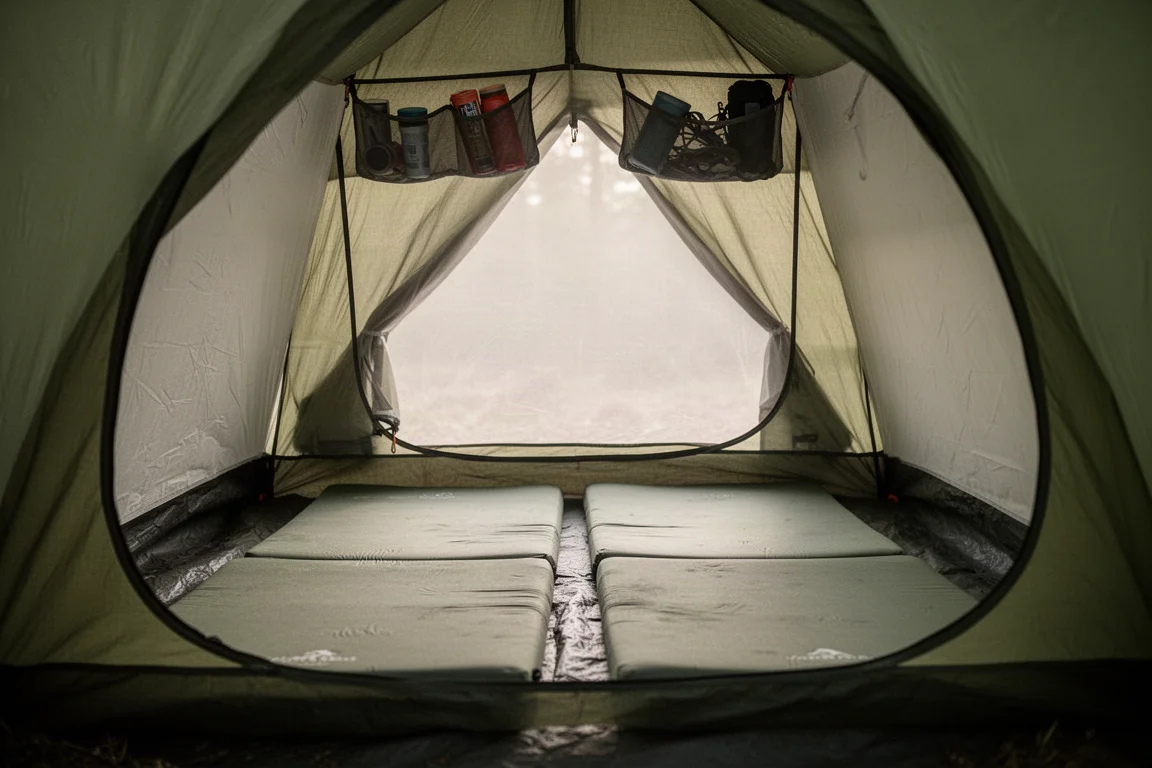
Storage has its own frustrations. One hip belt pocket has no zipper at all, so small items can simply fall out, while the other pocket collected water. The side compression straps run over the side pockets, which makes pulling a bottle in and out awkward, and those same straps attach to the front pocket, which makes the front pocket difficult to open and use. The front pocket is small, although the lid provides useful extra space for smaller items. Durability concerns also appeared after only a handful of trips.
Ventilation is the one clear argument in its favour, and it points to a specific buyer: someone who hikes in heat and cares more about airflow than about carrying heavy loads. For that person the pack has a real purpose. For most others, a ventilated-back alternative such as the Gregory Focal is a more balanced choice, since it gives up some ventilation but is stronger in nearly every other respect.
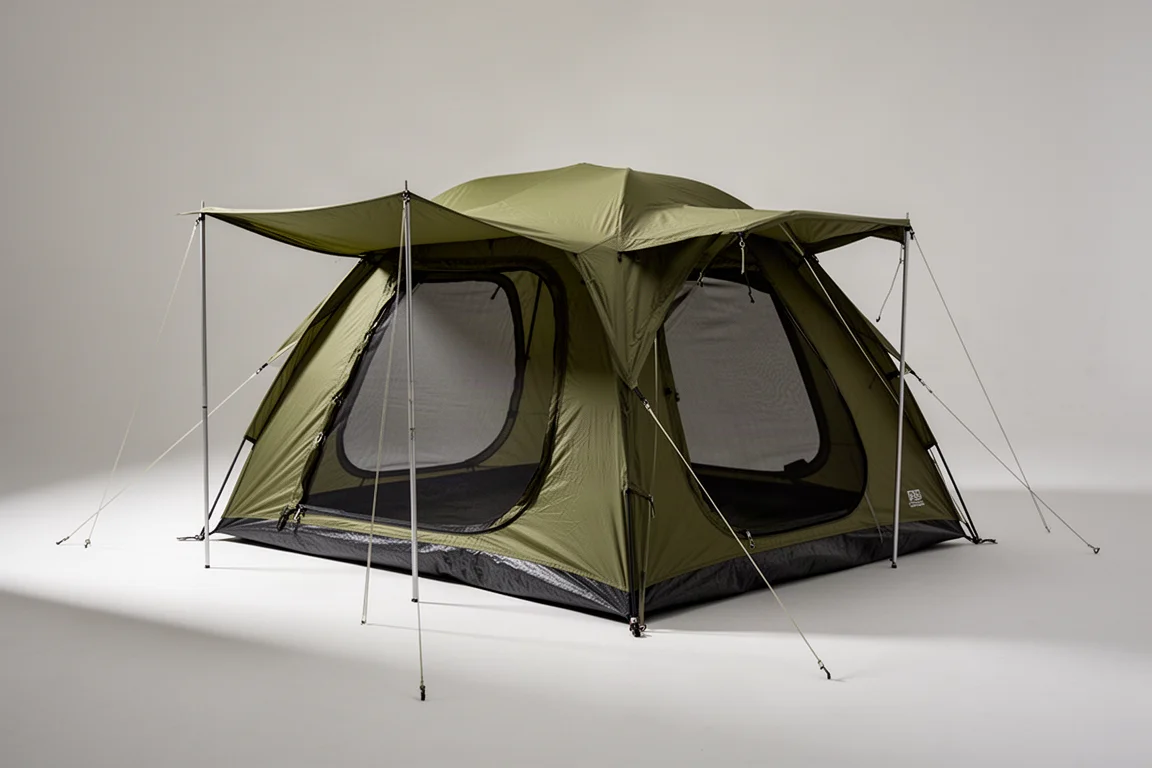
MSR Hubba Hubba LT: The Tent That Changed the Verdict
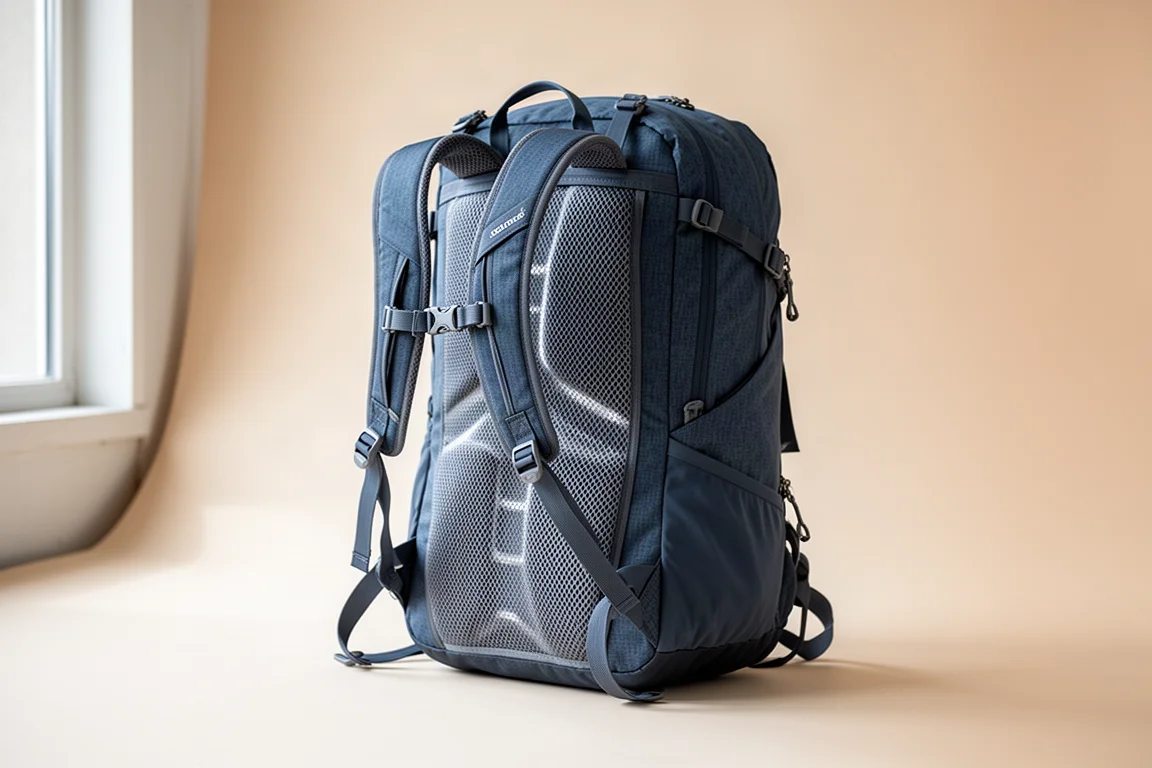
Earlier Hubba Hubba tents had one persistent problem, and that was space. The fly angled in steeply at the head and foot ends, so it sat close to your face when lying down, and the tent was narrow enough that two wide pads were never going to fit. The LT version addresses this directly. It is wide enough to take two 26-inch wide pads, the pole geometry adds height and verticality at both ends, and a wider brow pole opens up the interior in every direction.
That extra volume is the headline change, and it makes the tent far more liveable for two people. Interior storage supports it too: a large pocket at each end plus two ceiling pockets, which is enough to keep gear off the floor when two people are sharing the space on wide pads. On the test night the wind picked up considerably, and the tent handled it well. Once the door guyout points were deployed it locked down and stayed quiet rather than flapping, which made for a much better night’s sleep.
Three things still hold it back. The doors do not open fully, so you cannot roll both panels back for a wide view, and the workaround of tightening the door guyline through the loop at the top is functional but improvised. The tent also has to be pitched inner first, with the fly added afterwards, which is less convenient in rain and offers less structural support during setup than an all-in-one pitch. Finally, the fly is nylon, a material that stretches and sags when it gets wet, whereas sil-poly and proprietary fabrics handle moisture far better.
Even with those caveats, this is the one item that genuinely changed the verdict. It is a good tent that impressed more than expected, and it is widely stocked in outdoor stores, which matters if you want to see it in person. A tent such as the Durston X-Mid 2 offers comparable space, a polyester fly that resists sagging, an all-in-one pitch option and a lower price, but it is far harder to find on a shelf.
MSR Switch Stove: Fast in Calm Air, Exposed in Wind
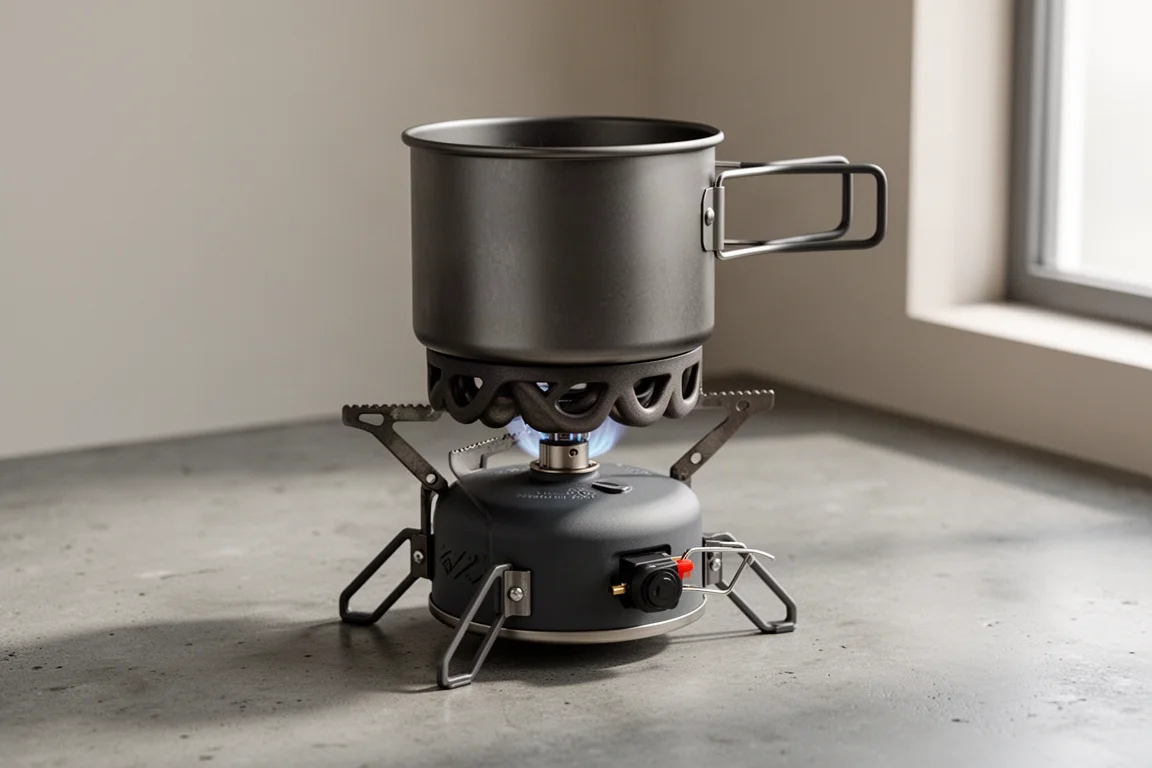
The Switch is an all-in-one system, and the design thinking behind it is interesting. Everything nests inside the pot, and the pot uses a rounded heat-exchanger base instead of the usual fins, on the theory that more surface area means more heat captured and better efficiency. It is also compatible with any pot you already own, which is unusual for a nesting system where the burner and pot are normally a matched pair.
The weakness is the burner itself. It is effectively a Pocket Rocket 2 with a piezo igniter and a modified pot stand, which consists of a ring the pot rests on plus folding arms for use with other pots. Because the burner sits low and exposed, wind reaches the flame directly. That explains earlier results on previous outings, where boil times ran roughly twice as long as an MSR WindBurner and the flame blew out once the wind picked up, which is disappointing for a system built around a heat exchanger.
Conditions on this trip were milder than that. With light wind, a cup and a quarter of water came to a rolling boil in about 1 minute 20 seconds, which is quick work. The system is not a bad stove, and there is no reason to stop using one you already own. The problem is the market around it: comparable or better performance is available for less money and less weight. A stronger burner base and a design that tucks the flame up into the shelter of the pot would fix most of what holds it back.
Trekology R7 Sleeping Pad: Standout Comfort, Questionable Warmth
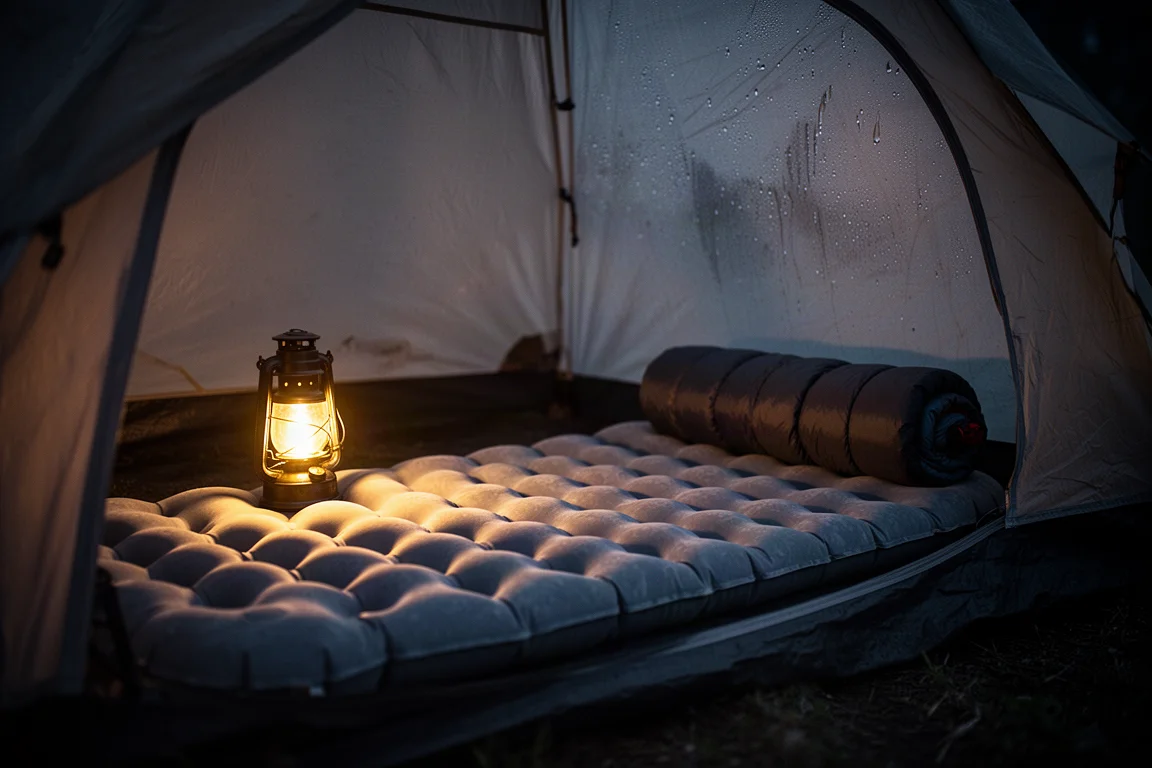
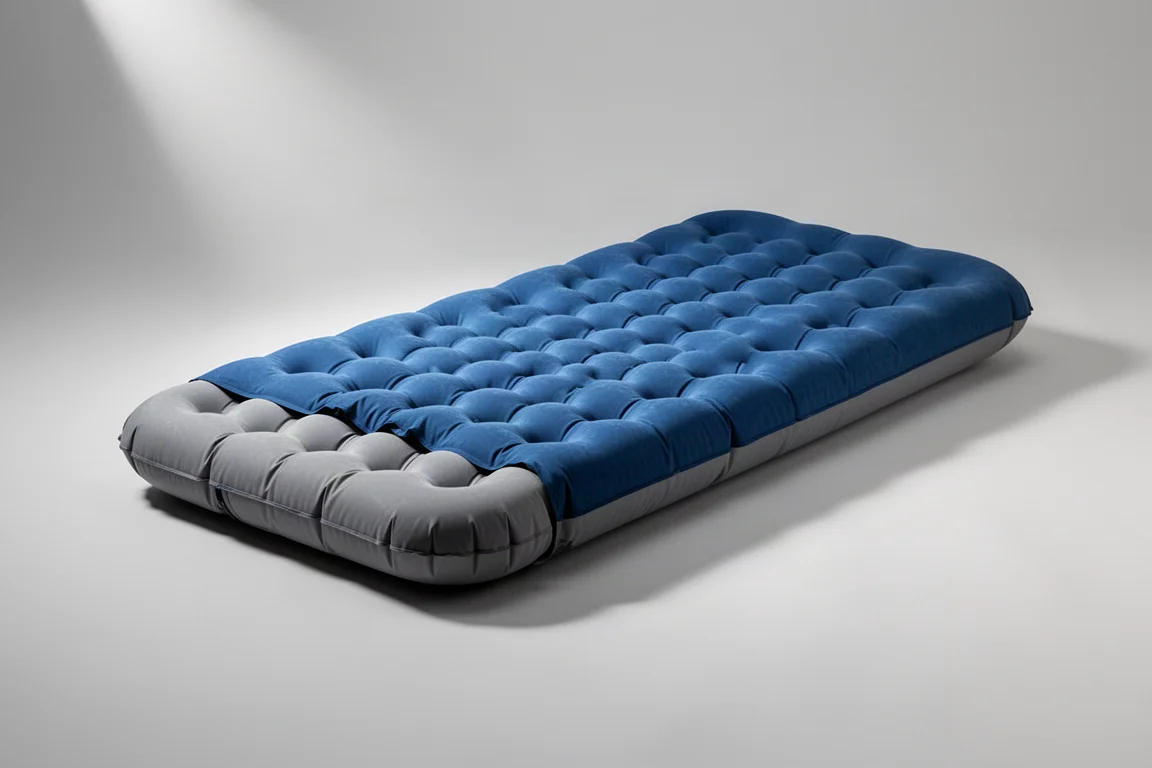
Comfort is where the R7 shines. The dimpled baffling system provides excellent pressure relief, and the pad is thick enough that hips and shoulders never bottom out against the ground. It ranks among the most comfortable pads used, and it holds its own against far more expensive options on that measure alone. You can let a little air out to sink into it, though keeping it firm maximises the insulation.
The specification looks strong as well. The pad carries an R value of 7, and that figure is ASTM tested rather than a marketing estimate. On paper, a rating that high should stay comfortable well below freezing. In practice, it did not. At an overnight low of around 5°C, heat loss was clearly felt through the pad: the top surface stayed warm, but warmth drained downward into the pad itself. Flipping the pad so the blue side faced up made no difference.
That leaves a straightforward conclusion. This is a very comfortable pad that suits milder conditions, roughly above 5 to 10°C, and it should not be trusted for near-freezing nights despite the rating. At around $60 it is still a remarkable value for the comfort on offer, and budget-conscious campers who mostly travel in warmer months will get a lot out of it.
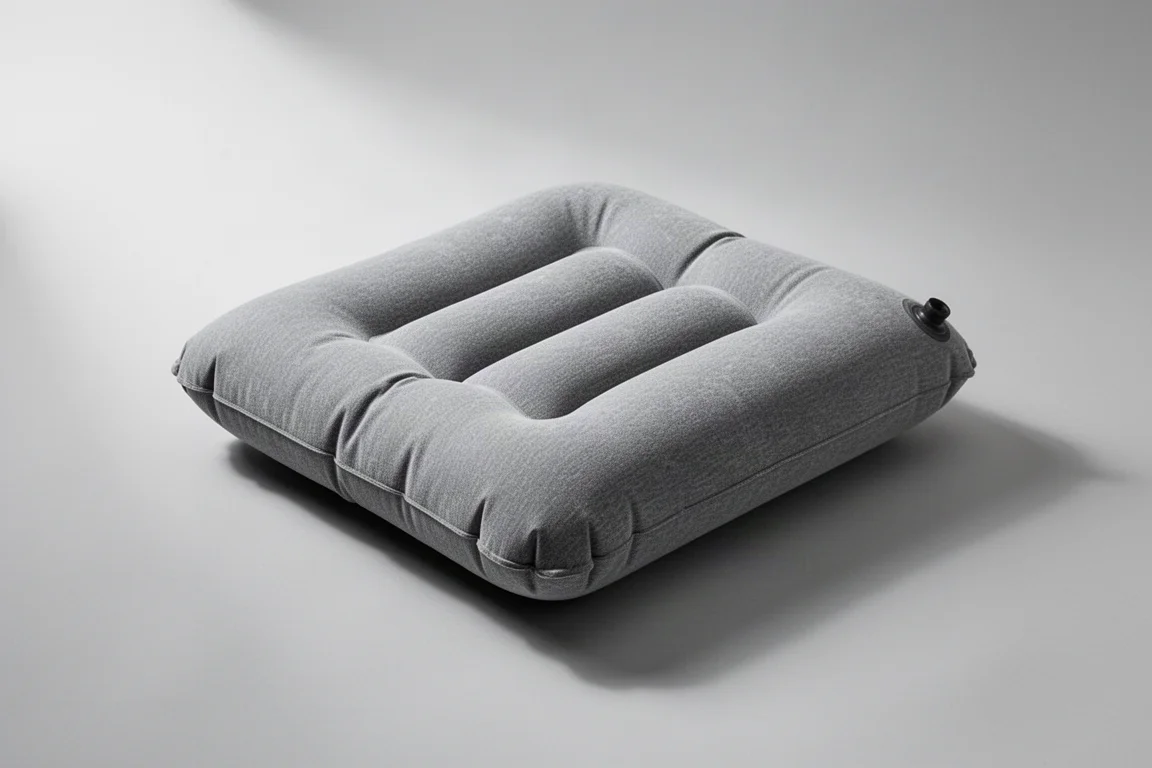
Nemo Fillo Elite Pillow: Soft and Light, but Low
The Fillo Elite has a lot of fans, and the reasons are easy to see. It is very lightweight, the pillow case is genuinely soft, there is a useful amount of cushioning, and the internal baffling provides proper support rather than a shapeless lump. Packed down, it takes up almost nothing.
Height is the recurring problem. The pillow sits low, so side sleepers end up with the neck kinked and pressure building on the shoulder. It also ships without a pad strap, and without one it slid around the tent and off the sleeping pad through the night, waking the sleeper every time they shifted position. Adding a strap solved the movement entirely and held the pillow securely in place, and adding folded clothing underneath raised it slightly, but even then it remained too low for comfortable side sleeping. Fully inflated it also felt firm enough to press on the ear, so some air had to be released.
None of this makes it a bad pillow, just a specific one. Back sleepers, stomach sleepers and anyone without broad shoulders are likely to find it comfortable and light enough to justify the space. Side sleepers should plan on adding height underneath, or look at a taller design.
Overall Buying Advice
Only one of these five items earned a changed verdict. The Hubba Hubba LT is the clear recommendation: a roomy, wind-stable two-person tent that is easy to find in stores, provided you accept the inner-first pitch and the nylon fly. It is a sound purchase for three-season trips where interior space matters.
The Trekology R7 is the value pick, with comfort that belies its price. Buy it for warm-weather camping and treat the warmth rating as optimistic rather than dependable. The Switch Stove is a reasonable system if you want a nesting stove that also works with other pots, but it is not the lightest, cheapest or most wind-resistant option, so it is hard to recommend over the alternatives. The Fillo Elite suits back and stomach sleepers, and side sleepers should look elsewhere or budget for a strap and some extra height.
The Exos Pro 55 is the hardest to justify. Its ventilation is outstanding, and for hot-weather hikers who travel light it may still have a place, but the load transfer and pocket design problems are significant enough that most backpackers should look at a more balanced framed pack instead. Matching gear to the conditions you actually camp in remains the best way to avoid disappointment, especially when a specification promises more than the trail delivers.
Conclusion
Five popular items, one genuine surprise. The Hubba Hubba LT proved that a well-known design can be fixed with better geometry, while the pad, pillow, stove and pack each showed that a strong specification does not guarantee a strong result in wind and cold. Buy the tent with confidence, buy the pad for mild-weather value, and treat the rest as gear that suits a narrower set of users than their popularity suggests.
Further reading
Related Reviews

Backpacking Gear
Building a 10 lb Base Weight: An Ultralight Backpacking Gear List
A practical walkthrough of the ultralight pieces behind a 10 lb base weight, from a 765 g pack and a roomy one-person tent to a full camp chair and a dependable water filter.

Backpacking Gear
A 15-Pound Lightweight Backpacking Gear List for Solo Trips
A beginner-friendly 15-pound backpacking setup built from easy-to-find gear, with notes on what each piece does, how it packs, and where to spend your attention.

Backpacking Gear
8 Ultralight Backpacking Gear Upgrades Worth Carrying
Eight small, affordable backpacking upgrades that solve real trail annoyances, from a pillow that stays put to a fuel valve that rescues leftover canister gas.