Backpacking Cookware
Titanium vs Aluminum Backpacking Food Pots: Stanco Grease Pot and SOTO Outdoors 1100 ml Compared
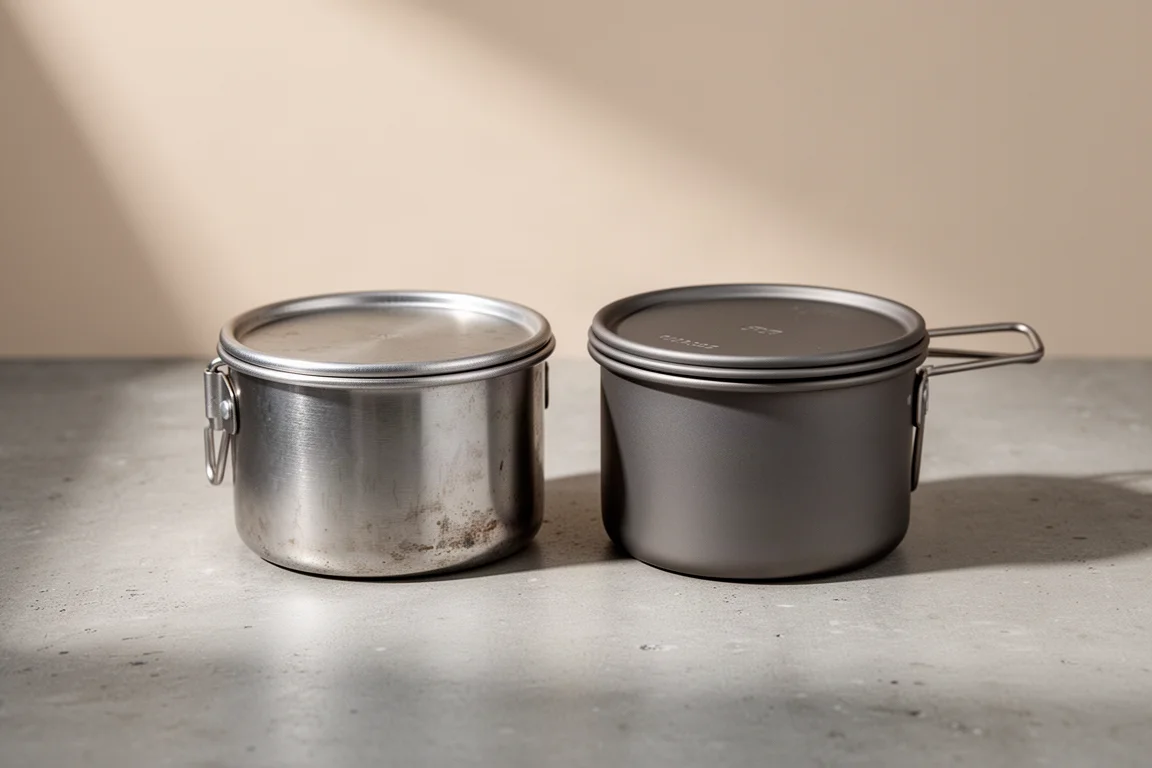
A practical comparison of two backpacking food pots: a budget aluminum grease pot with a decade of trail miles, and a thin-walled titanium pot with millilitre markings.
Introduction
Choosing a backpacking food pot usually comes down to two things: how much it weighs and how much it costs. This comparison looks at two pots that sit at opposite ends of that trade-off. The Stanco aluminum grease pot is a budget option that has been pressed into backpacking service for close to a decade. The SOTO Outdoors titanium pot is a 1100 ml alternative with notably thin walls and a slightly lighter trail weight.
Both pots hold roughly the same amount of water, and both will boil a pot of water for a dehydrated meal. The differences show up in material, base width, markings, grip on a stove, and price.
What These Two Food Pots Have in Common
Capacity is the first thing to compare. The Stanco pot holds 40 oz, or 1189 ml. The SOTO Outdoors pot holds 1100 ml. That is close enough that either pot covers the same jobs on trail: boiling water for a freeze-dried meal, rehydrating food, or heating a hot drink.
Weight is similarly close. The Stanco pot weighs 3.45 oz with its lid in its current configuration, and the claimed weight online sits between 3.5 oz and 4 oz. The SOTO pot weighs 3.9 oz as a set with the pot, lid, and lifter. The lifter alone accounts for 0.7 oz, which brings the pot and lid down to 3.2 oz if you leave it behind.
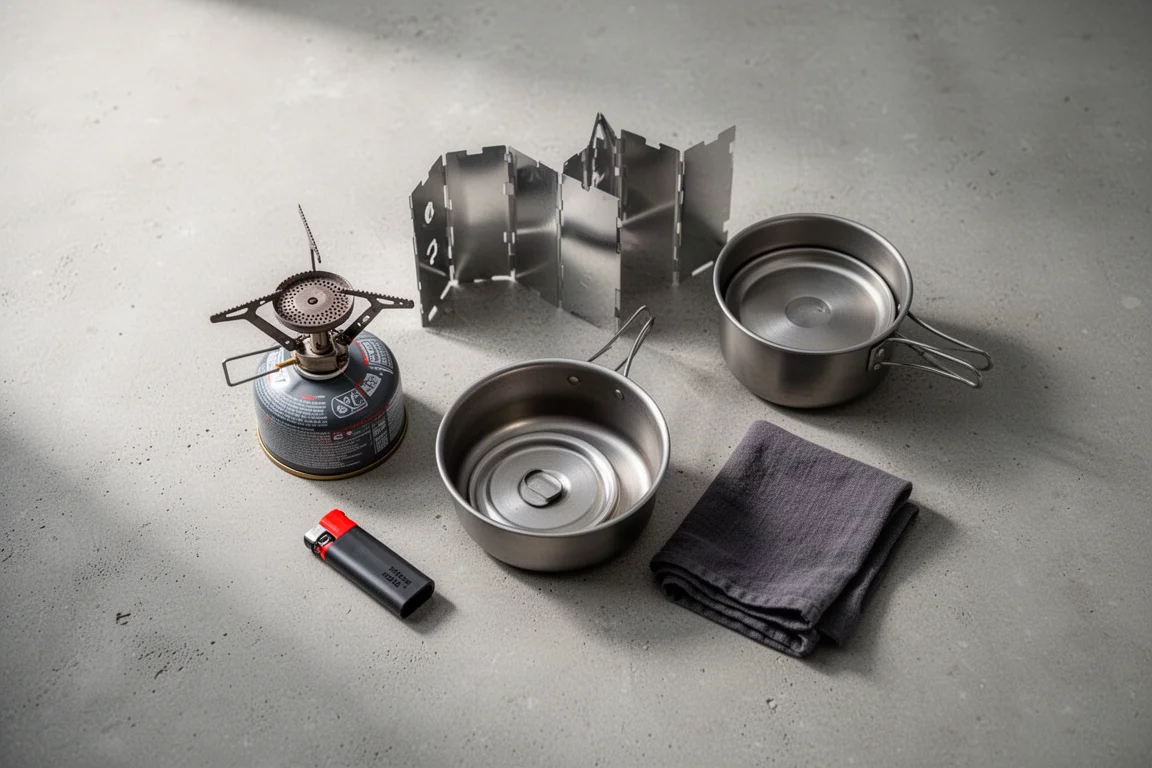
Both are simple lidded pots with no moving parts, so long-term reliability comes down to the material, the thickness of the walls, and how each base behaves on a canister stove. Neither pot includes a built-in handle, which means both need a cloth, a bandana, or a small tool to lift them off the flame.
Best Budget Pick: Stanco Aluminum Grease Pot
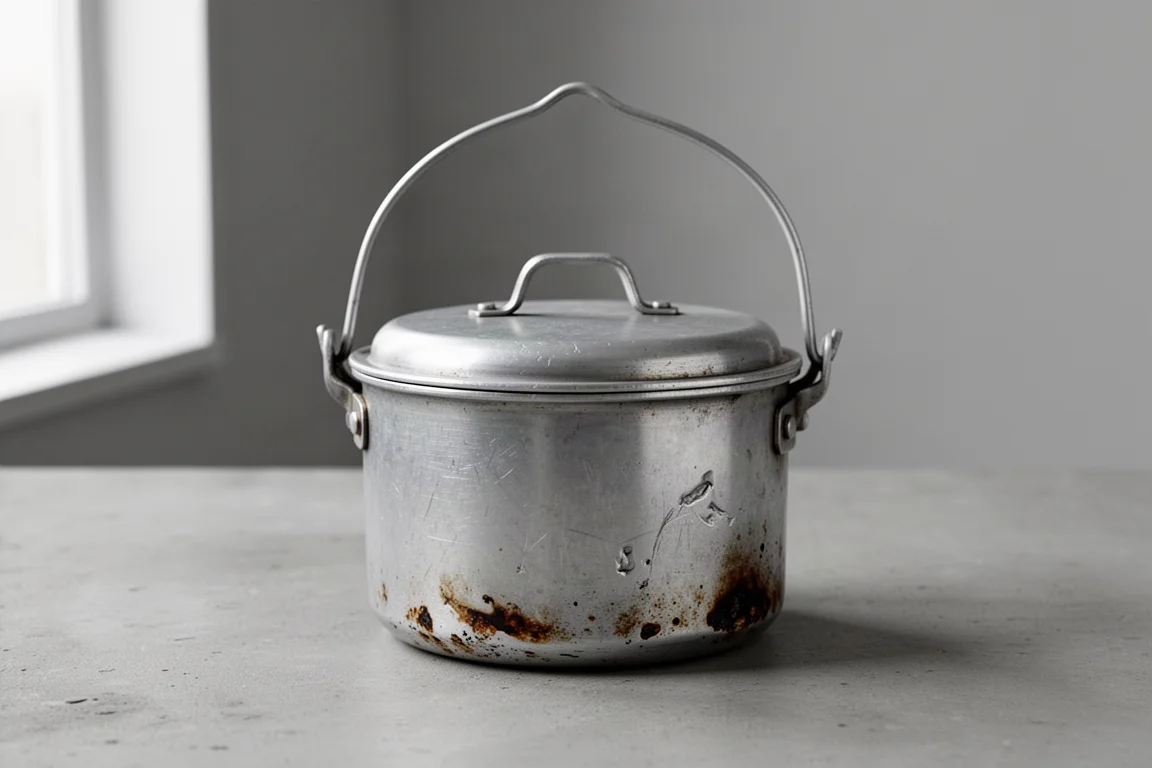
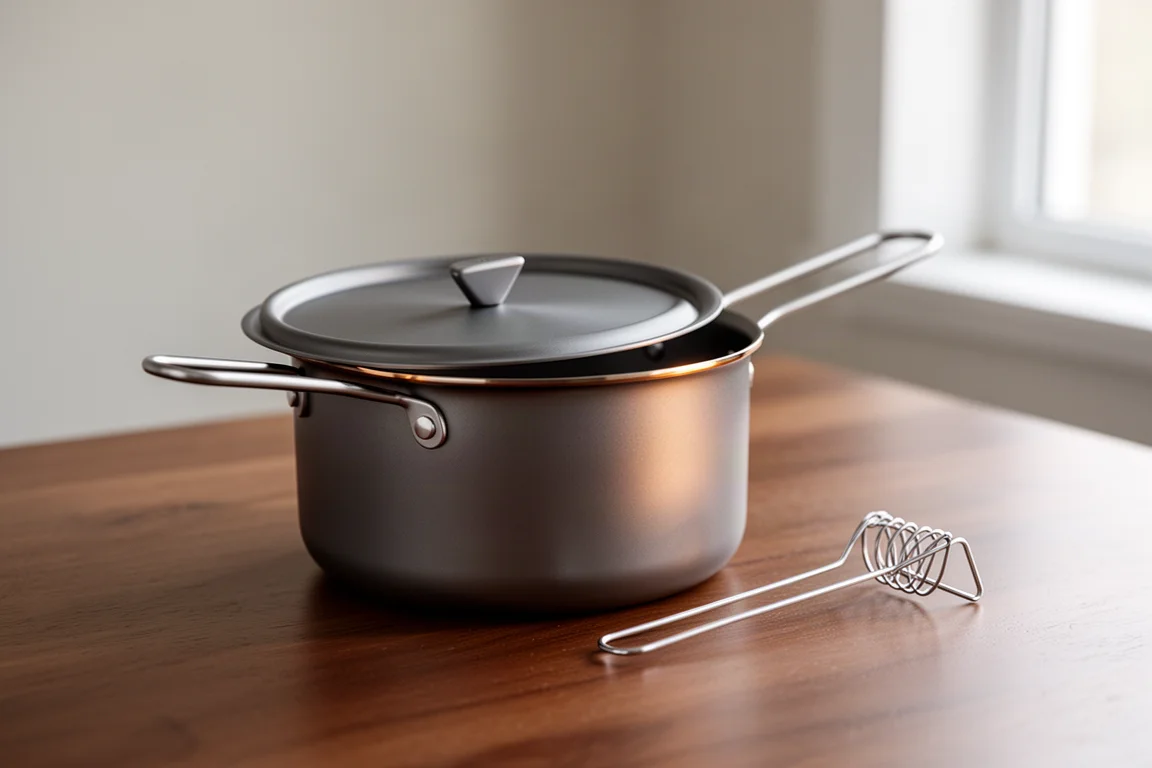
The Stanco pot was not designed as cookware. It is a bacon grease pot meant to sit on a kitchen stove, and budget backpackers adopted it because it was lightweight and inexpensive. It originally sold for around $8, and today these pots can be found online for under $15 depending on where you buy.
Durability is where this pot earns its reputation. It has covered close to a decade of backpacking trips and more than 10,000 miles of trail, and it still holds up and functions. It carries the scratches and dents of that use, and it keeps boiling water.
There is one practical caution worth knowing before the first trip. The aluminum base slides easily on a stove out of the box, which can tip a meal onto the ground. Roughening the bottom with sandpaper at home, or on a rock or gravel once you are on trail, gives it enough grip to stay put. The pot will end up looking rough eventually anyway, so there is little downside.
Material preference is the other consideration. There is limited public information that gives clear confidence about aluminum cookware over long-term use, which is one reason some hikers look toward titanium instead.
Best Lightweight Upgrade: SOTO Outdoors Titanium Pot (1100 ml)
The SOTO Outdoors pot is made of titanium with 0.3 mm walls, which is thin even by titanium cookware standards. That thinness is what keeps the weight down, and it is the main reason this pot lands close to the aluminum option on the scale while offering a different material.
The feature that stands out most in daily use is the graduated tick marks inside the pot. They are marked in millilitres, so water can be measured directly in the pot without a separate cup. For anyone used to estimating by eye, that is a small but genuinely useful upgrade.
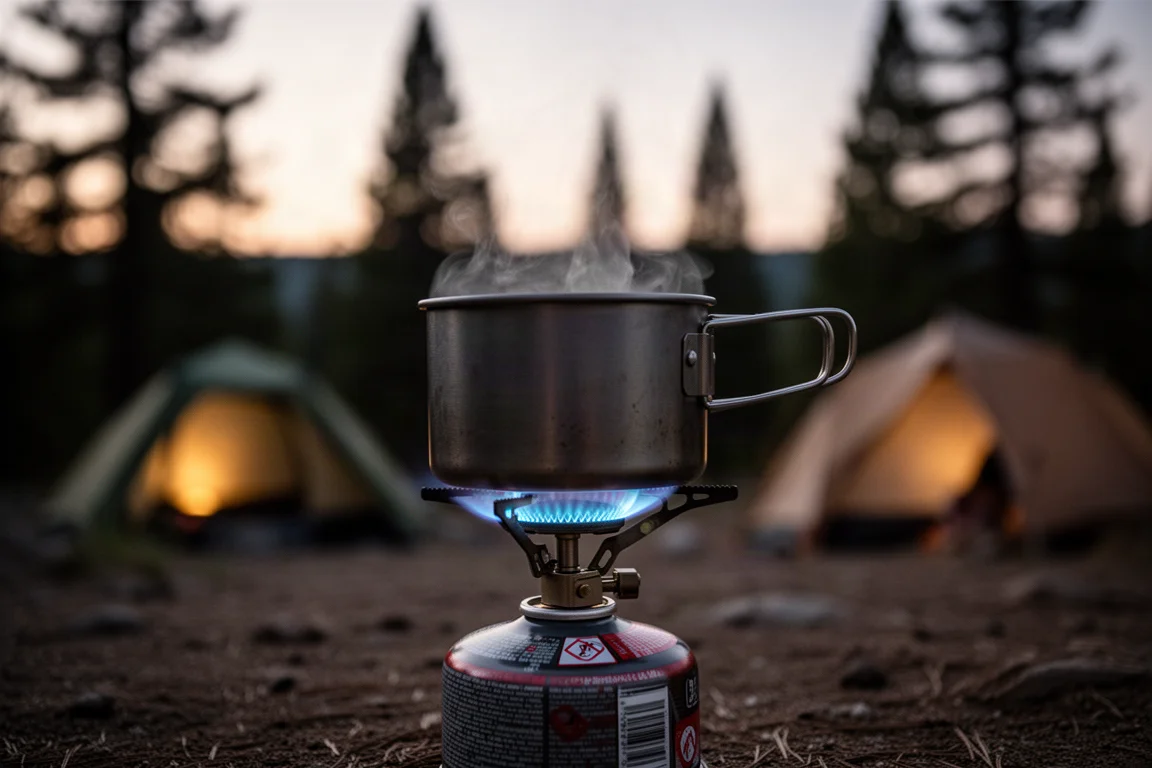
The titanium pot is also more grippy on a stove out of the box. It tends to grab the burner arms rather than slide across them, so it needs no preparation before the first use. The set includes a lifter, which weighs 0.7 oz and can be left at home if you prefer to lift the pot with a cloth. The pot costs around $45, so it is a considerably larger outlay than the aluminum option.
Heat Transfer and Boil Time: What the Test Showed
Aluminum is generally better at conducting heat than titanium, and titanium cookware is known for hot spots and less even heating. That said, very thin or uneven aluminum can develop hot spots of its own, so material alone does not settle the question.
Base width matters as much as material. The titanium pot has a wider base, which means the same volume of water sits shallower in the pot and spreads across a larger surface area. That larger heated surface works in its favour.
A side-by-side test put both pots on the same stove with the fuel setting held constant. Each pot held 500 ml of water, allowed to settle to room temperature beforehand, and the timer ran from room temperature to 210 degrees Fahrenheit. The titanium pot reached that point in 8 minutes and 50 seconds. The aluminum pot reached it in 8 minutes and 12 seconds, finishing 38 seconds sooner. It is not a dramatic gap, but seconds do add up across a long trip.
Weight, Capacity, and Packability
Capacity is effectively a wash. At 1189 ml against 1100 ml, the two pots handle the same meals and the same portion sizes, and neither one is likely to leave you short on water for a standard dehydrated dinner.
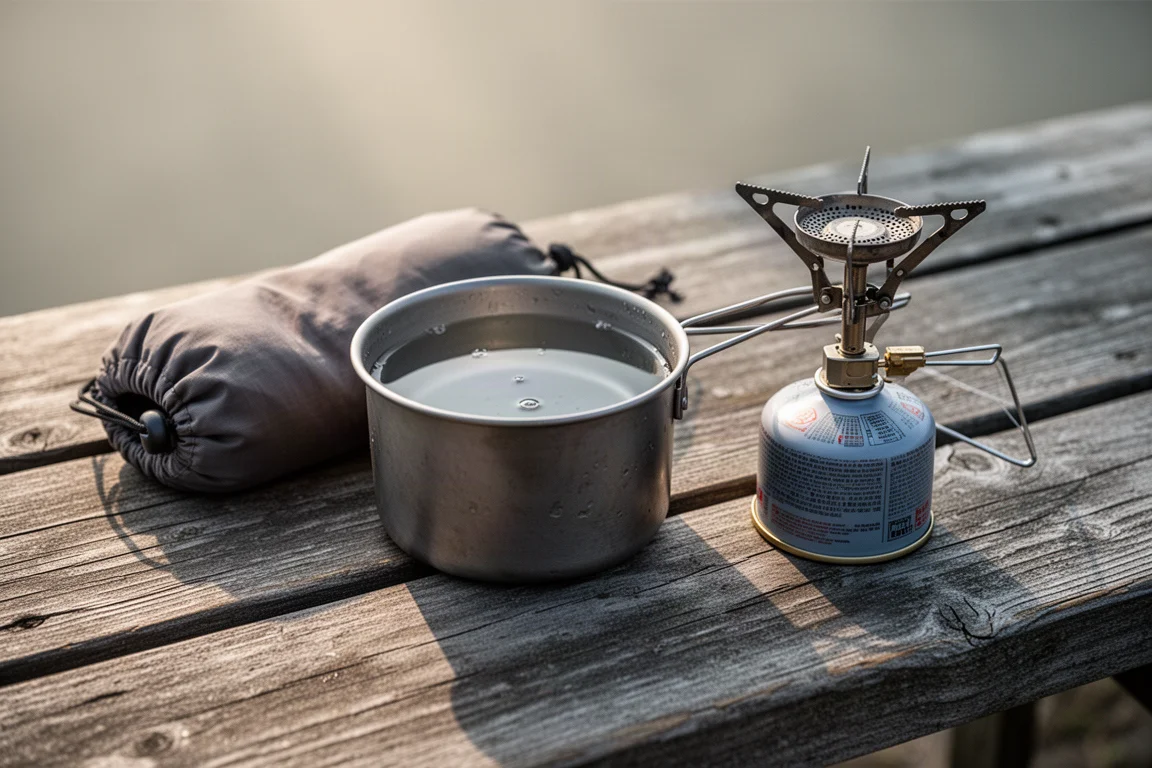
On weight, the titanium pot saves roughly a quarter of an ounce once the lifter is left behind, since the pot and lid together come in at 3.2 oz against 3.45 oz for the aluminum pot with its lid. That is a small difference in absolute terms. It is worth being realistic about it: swapping pots alone will not transform a pack weight, and capacity, lid fit, and how the pot nests with the rest of your cook kit matter more in practice.
Durability and Real-World Considerations
The aluminum grease pot has the longer track record, and its dents and scratches have not stopped it from working. That is meaningful evidence for a pot that costs so little.
Titanium walls at 0.3 mm are thin, so the SOTO pot benefits from being packed with a little care rather than crushed against hard items in a pack. Neither pot has an integrated handle, so plan on carrying a small cloth or the included lifter. Both are simple enough that there is very little to fail.
Buying Advice
If the goal is the lowest possible cost and the fastest boil in a side-by-side comparison, the aluminum grease pot is the straightforward choice. It costs under $15 in most listings, it has proven itself over thousands of trail miles, and it boils water slightly faster than the titanium pot. Budget a few minutes to rough up the base before the first trip so it stops sliding on the stove.
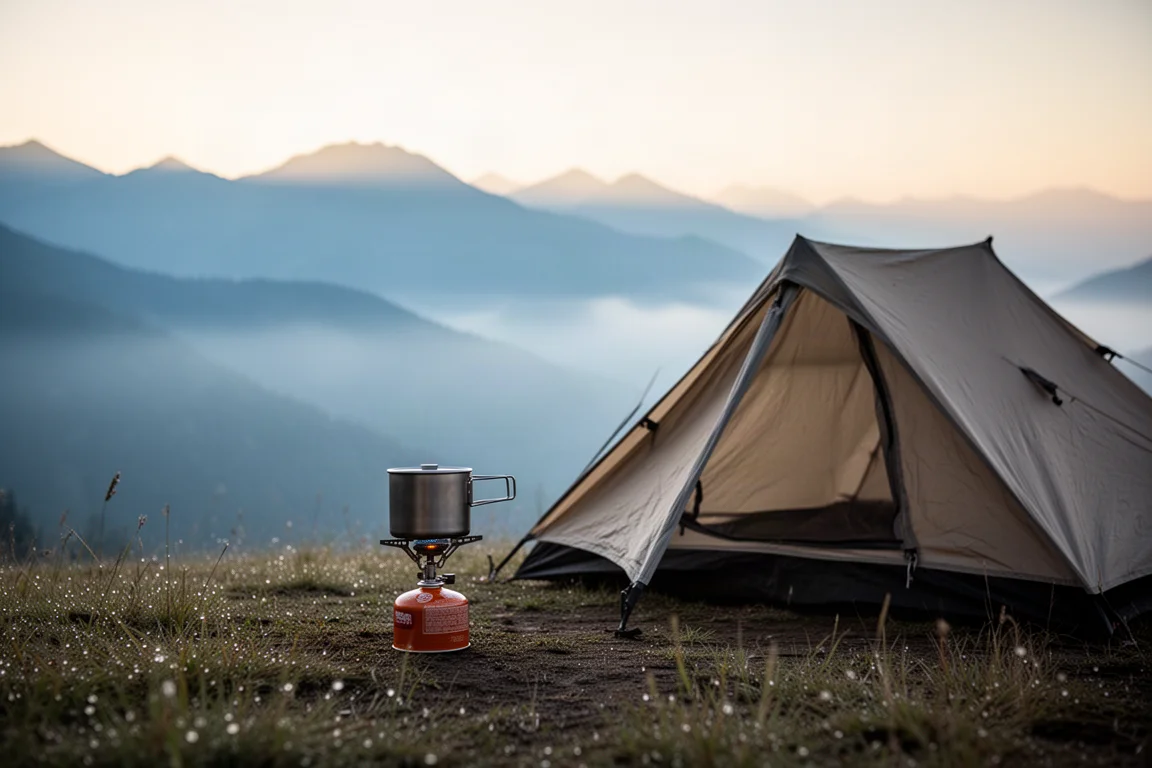
If you would rather move to titanium, want millilitre markings built into the pot, and value a base that grips a stove without any preparation, the SOTO Outdoors pot at around $45 is the one to look at. Leaving the lifter at home keeps it at 3.2 oz and keeps the weight comparison close. Either way, the decision is less about performance and more about which material and which price point you are comfortable carrying for the next few thousand miles.
Conclusion
These two pots cover the same basic job, and the gap between them is narrower than the price difference suggests. The Stanco aluminum grease pot wins on cost and edged ahead in the boil test. The SOTO Outdoors titanium pot wins on material, millilitre markings, and out-of-the-box grip on a stove. Match the pot to your budget and your material preference, and either one will get dinner rehydrated at the end of a long day.
Further reading
Related Reviews
Backpacking Cookware
Best Backpacking Cook Kits and Stoves: Pots, Canister Stoves, and a Budget Setup That Works
A practical guide to backpacking pots and stoves, from ultralight titanium and solid fuel tablets to an all-in-one system and a budget kit that costs about as much as a takeout dinner.
Backpacking Cookware
Best Backpacking Cook Kits: Stoves and Pots for Simple, Reliable Meals
Nine stoves and pots that pair into dependable backpacking cook kits, from a budget canister stove to a heat exchanger pot built for fast, fuel-efficient boils.
Backpacking Cookware
Best Backpacking Cook Systems and Stoves: From Boiling Water to Backcountry Baking
Nine backcountry cook systems and stoves, from tiny alcohol burners and a budget canister stove to an all-in-one kit and cookware built for real backcountry baking.