Backpacking Apparel
Backpacking Clothing for On-Trail Comfort: Five Pieces Worth Packing
Footwear, socks, shorts, pants, and base layers shape on-trail comfort more than most backpackers expect. Here are five pieces and the reasoning behind each.
Introduction
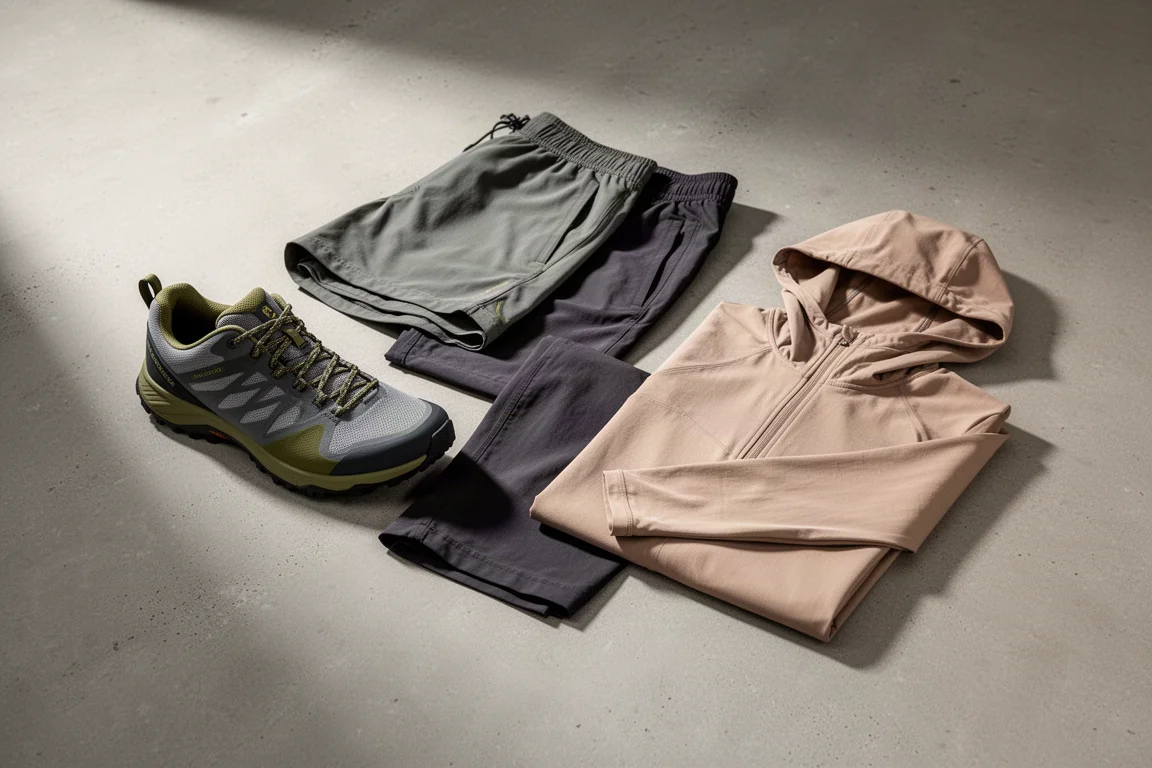
Most backpacking attention goes to the big three: shelter, sleep system, and pack. Those items keep you protected and warm, but the clothing you actually wear while walking and around camp has just as much influence on how a day feels. Footwear, socks, shorts, pants, and base layers determine whether you stay dry, avoid blisters, and finish the mileage you planned. This guide looks at five pieces that address those needs, along with the trade-offs worth understanding before you buy.
What Actually Drives Comfort on Trail
Two things matter more than anything else: moisture management and fit. Materials that move sweat away from your skin and dry quickly keep you comfortable across a wide range of temperatures, while materials that hold water work against you, especially in the cold. Cotton is the classic example, and it is the reason for the old backcountry warning about cotton clothing. It hangs on to moisture, dries slowly, and in cold conditions it can leave you chilled.
Fit is the second half of the equation. Every recommendation here depends on body type and personal preference, and the right answer for one hiker is often wrong for another. The goal is to find pieces that suit your own feet, your own build, and the terrain you actually hike.
Footwear: The Danner N45 Lightweight Hiking Shoe
Footwear deserves the most attention of anything on this list, because backpacking is walking. Rough terrain, boulders, sand, and long descents all take a toll on your feet, and a poorly fitting pair of shoes is the fastest route to blisters and a miserable trip. Traction, protection, and fit are what you are really buying.
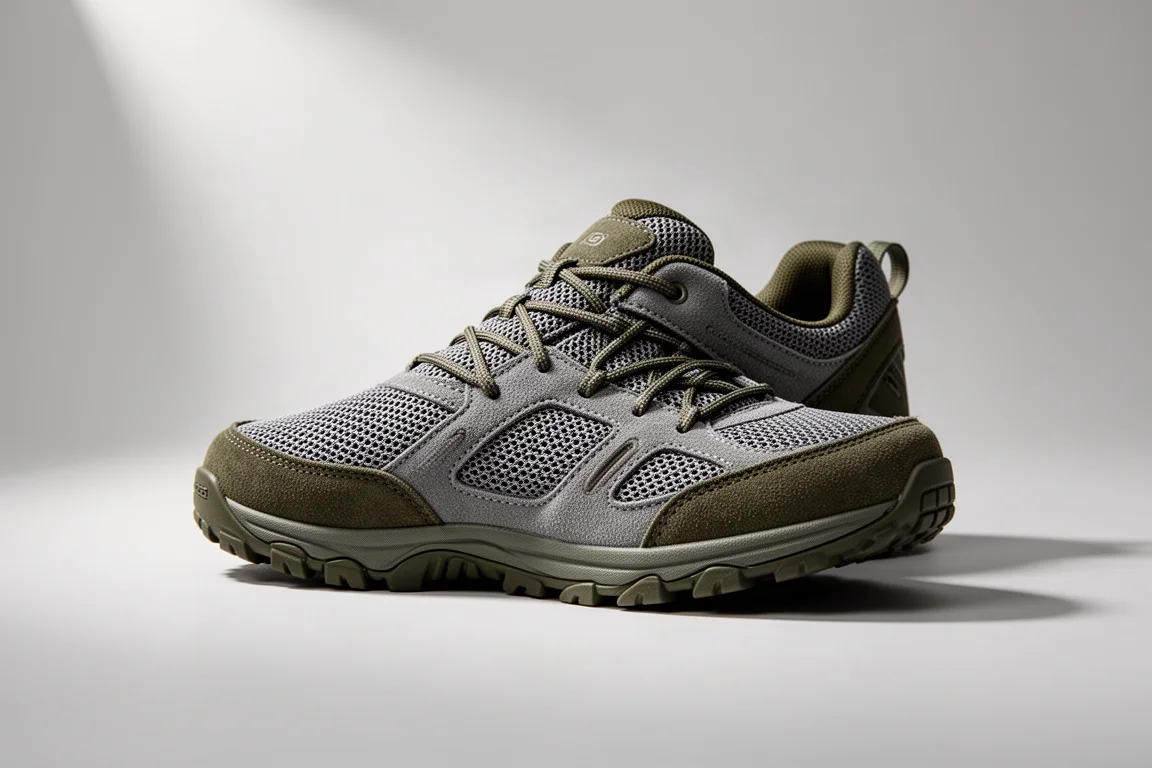
The Danner N45 is a lightweight hiking shoe that fits a medium foot well and stays comfortable over long days. It is not a universal recommendation, though. Feet come in narrow, wide, and low-arch shapes, and a shoe that suits one hiker can be the wrong choice for another. The useful takeaway is less about a specific model and more about the willingness to test options until you find one that fits.
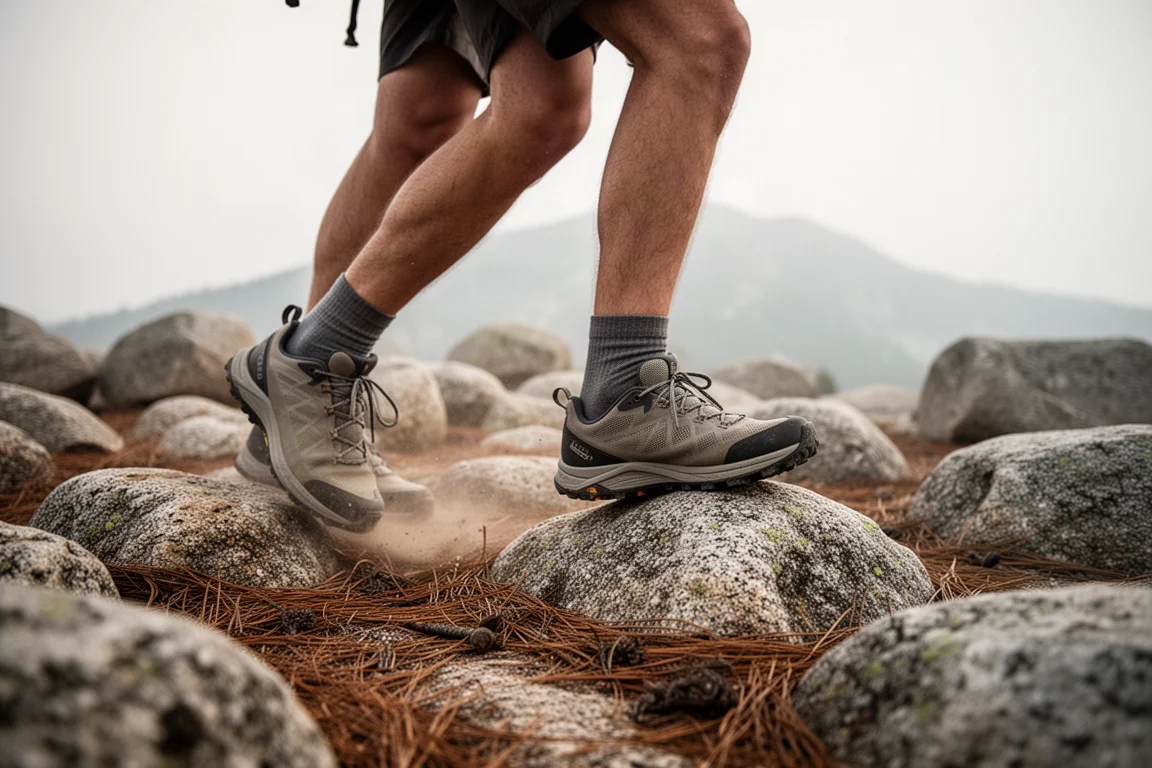
If you are currently hiking in a pair of shoes that never quite fit, replacing them is one of the highest-value changes you can make. The difference shows up over distance rather than in the first mile, and it compounds on every trip that follows.
Socks and Foot Care: The Other Half of the Equation
Socks matter as much as shoes. Cotton socks are a direct route to discomfort and blisters, so choose a synthetic, wool blend, or bamboo sock instead. These materials keep the foot cooler, pull moisture away from the skin, dry faster, and do not stretch as much once they get wet.
Individual foot shape matters here too. If your toes overlap, you get friction in the same spot on every hike, and a liner sock or a toe sock design can remove that pressure point entirely. It is worth testing a few options rather than settling for the first pair you try.
One practical habit is worth adopting: carry two pairs of socks on a long day. At lunch, take your shoes off, swap the morning pair for a fresh one, and put the damp pair somewhere to dry. The comfort gain is immediate and easy to feel.
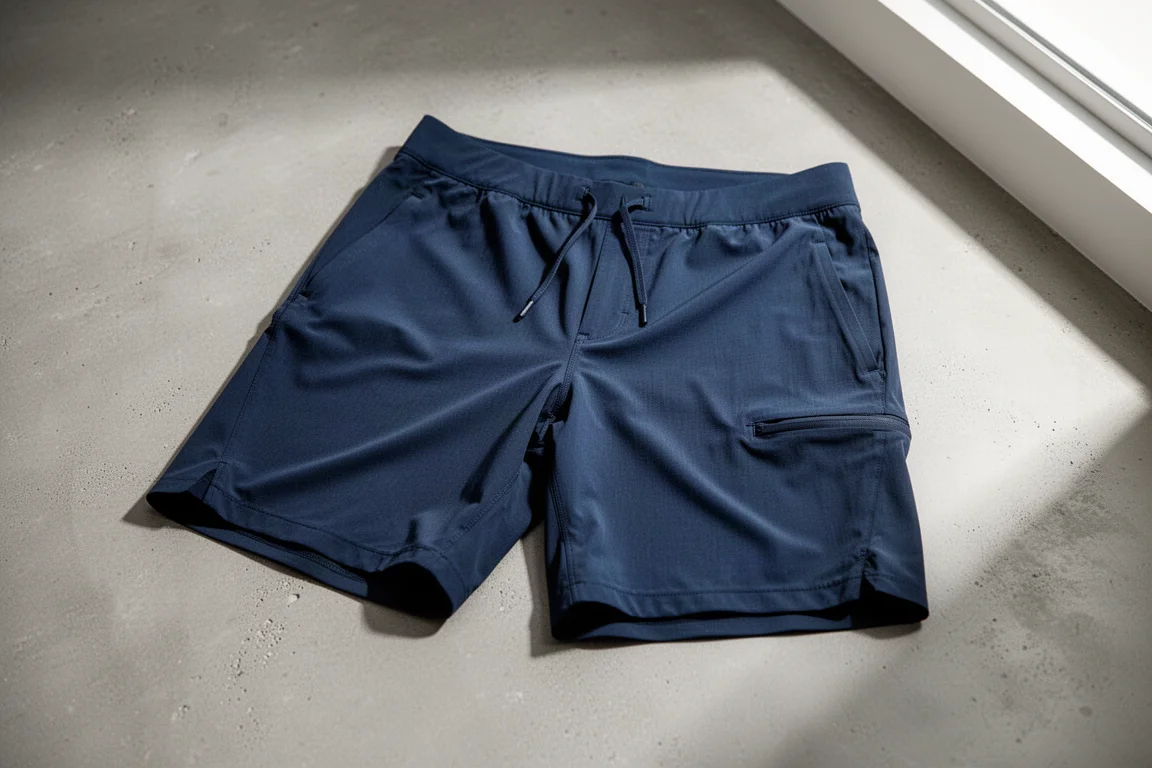
Shorts for Hot Days: Proof Shorts
Shorts are surprisingly hard to get right. The common failure points are length, drying speed, durability, and how the fabric behaves when you are sweaty and stepping up onto rocks. A pair that sticks to your knees on every step becomes a distraction within an hour.
The Proof shorts come in a 9-inch inseam with a 7-inch option, and the shorter cut is the one that avoids fabric catching over the knee on steep steps. They are 100% polyester, which makes them lightweight and quick to dry.
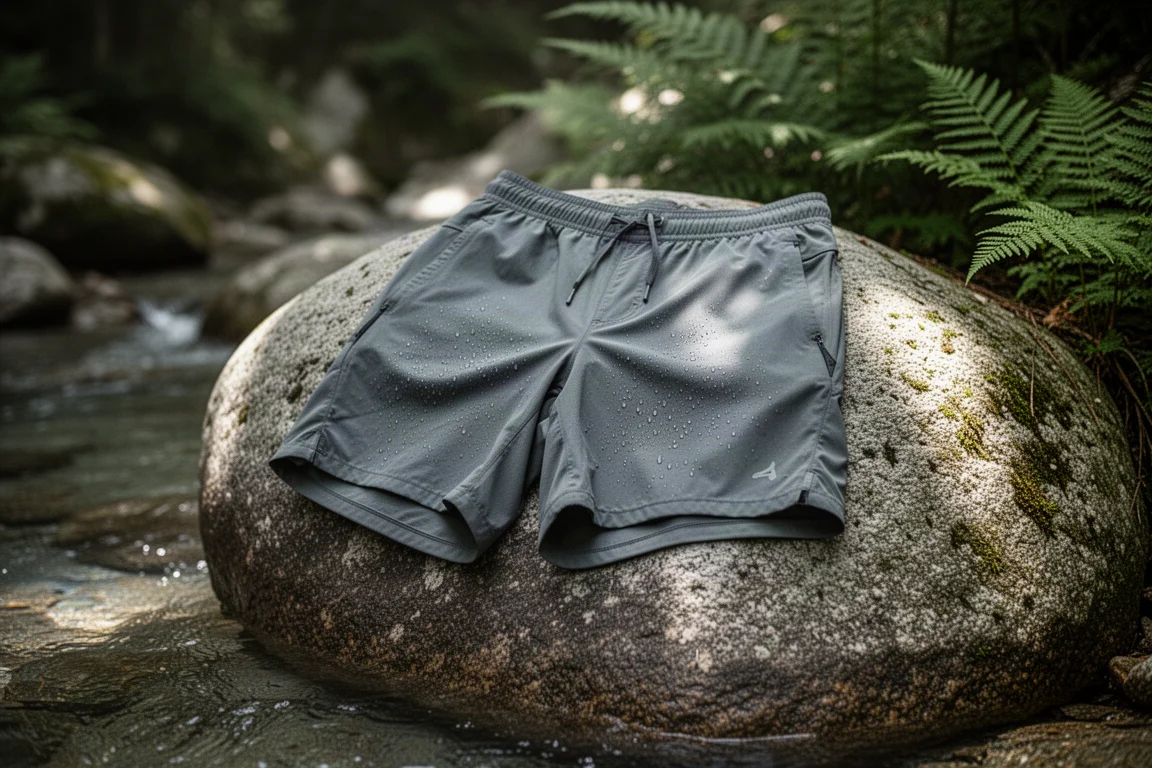
That combination is what makes them useful on hot days: minimal fabric weight, fast drying, and a cut that stays out of the way when you are moving.
Shorts for Heat and Humidity: Outdoor Vitals Skyline Shorts
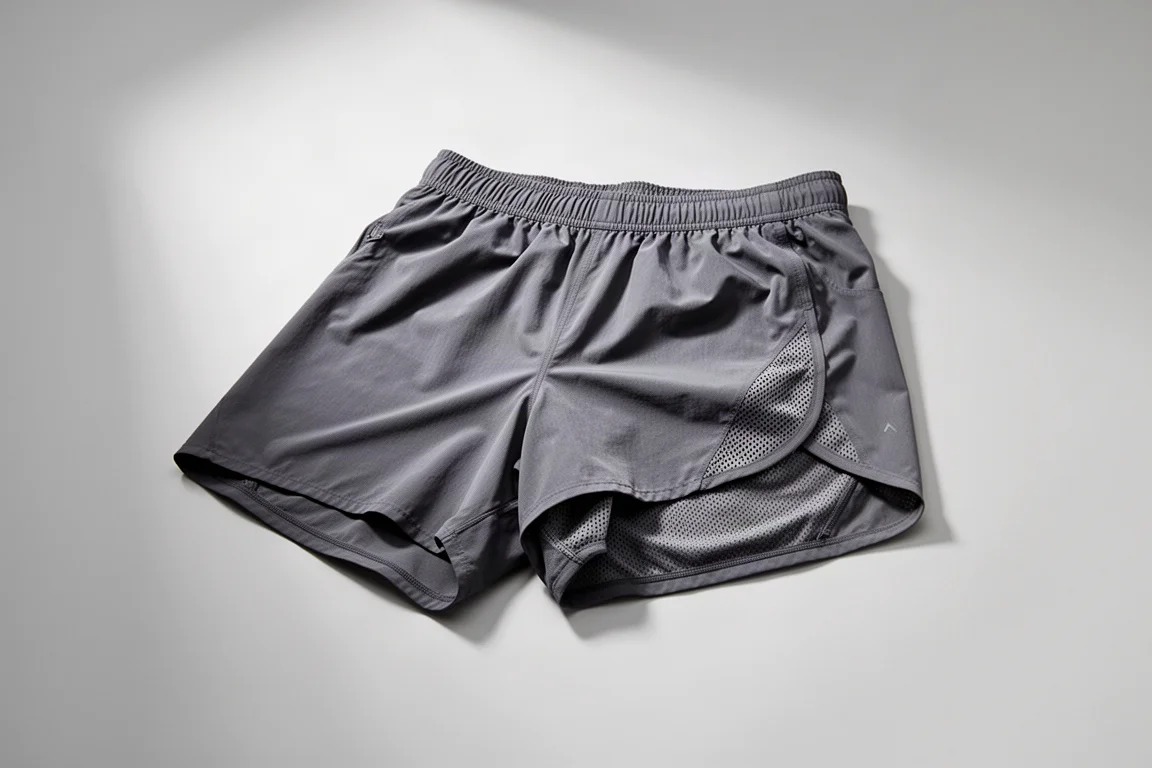
For genuinely hot conditions, a running-style short can be the more comfortable choice. The Outdoor Vitals Skyline shorts are very lightweight and highly breathable, with a mesh panel around the crotch that adds airflow where it matters most. They do not require a belt, and they dry very quickly, which makes them practical for hikes that include a swim.
When Pants Make More Sense: Livson Ecotre Trail Pants
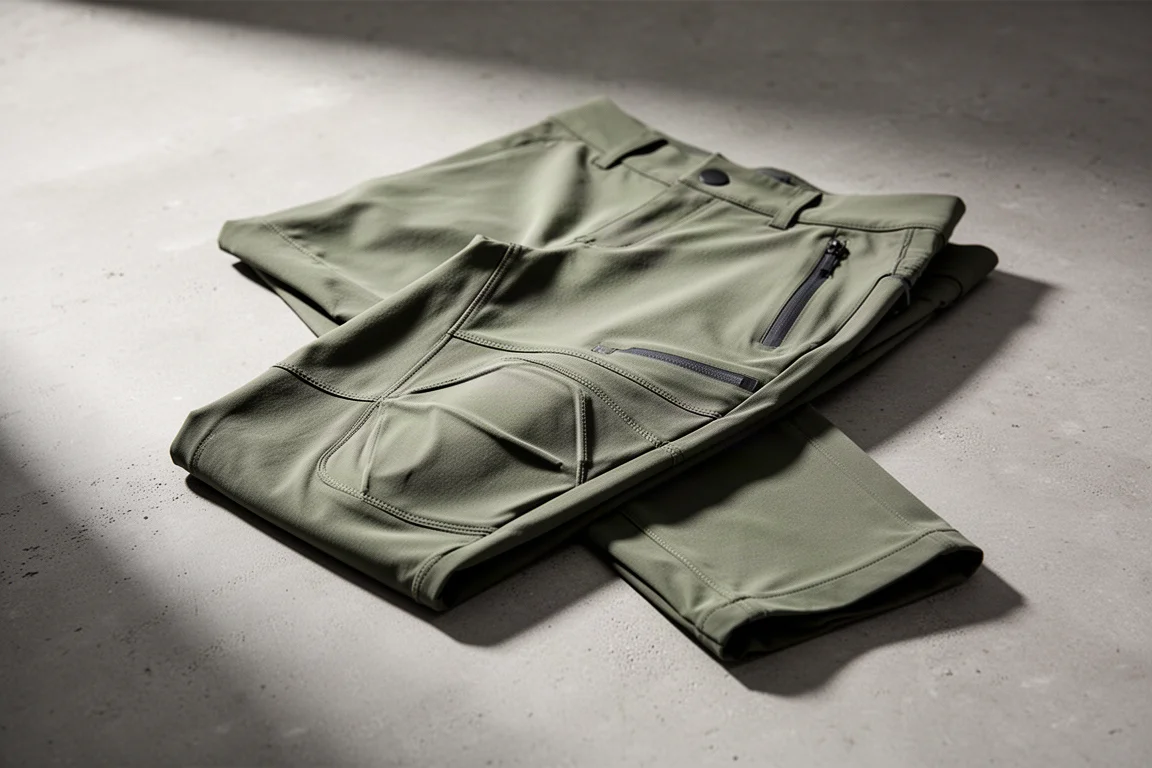
The choice between shorts and pants comes down to season and environment. Bugs, ticks, and dense brush all argue for covering your legs, even on a warm day. If a route involves bushwhacking through thorns and branches, pants save you a lot of scrapes.
The Livson Ecotre trail pants have been the most reliable option here. They fit well, and the articulated knees prevent the twisting and rubbing that shows up in pants cut straight through the leg. Baggy, heavy pants that do not follow the body create chafing and drag, and these avoid that.

Personal fit still governs the decision. A pair that suits one build may hang wrong on another, so the priority is finding pants that move with your legs rather than against them.
Sun Protection and Base Layers: The Altitude Hoodie
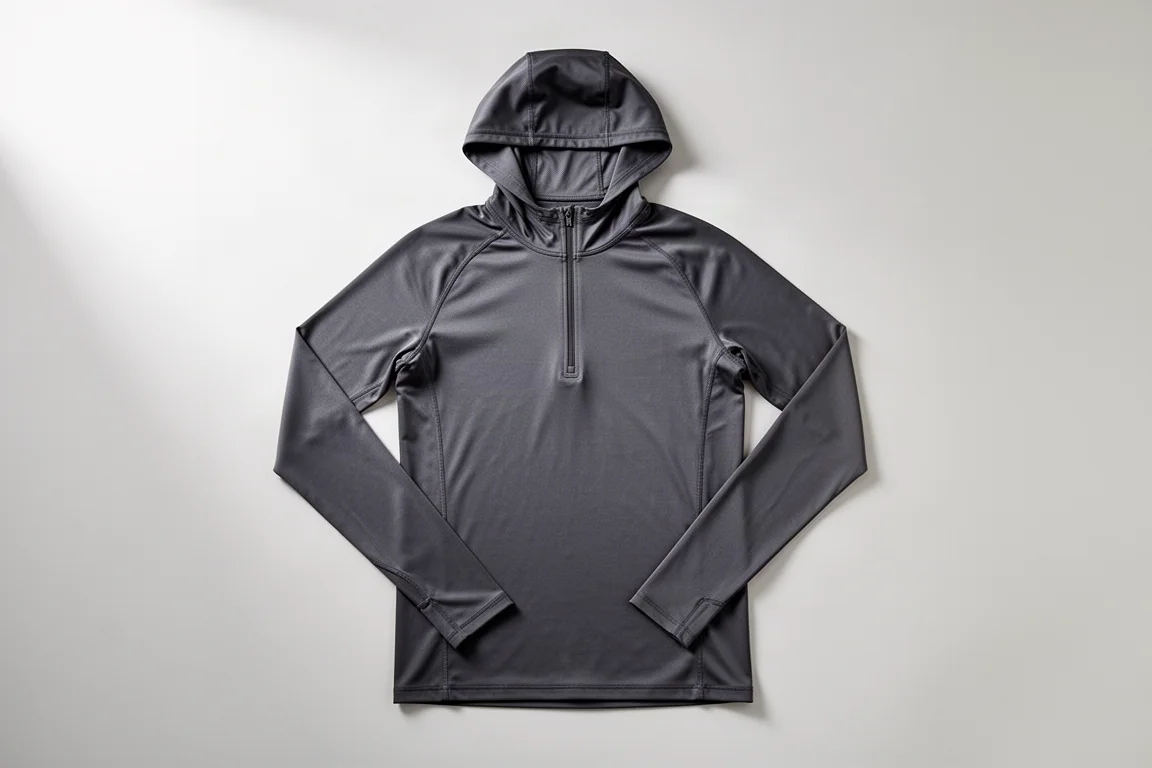
Once cotton t-shirts are out of the picture, a sun hoodie becomes an appealing option. Long sleeves and a hood cover your skin without the sticky layer of sunscreen that collects dirt over a long day. You will still want sunscreen on your face, but the garment handles the rest.
If you prefer long sleeves without a hood, a merino wool or polyester blend shirt works in the same role. Either way, these pieces are next-to-skin base layers: they move moisture away from your body, help you stay dry, and reduce overheating.
They also offer a cooling trick in hot conditions. Soak the garment in a stream or lake, put it back on, and let evaporation cool you as you walk. The Altitude hoodie is especially good at this because it is 100% polyester, which does not stretch much when saturated. It stays close to your body instead of hanging heavy and baggy as you move.
How to Choose What to Pack
Work through the list in order of impact. Footwear and socks come first, because blisters end trips faster than anything else. Next, decide between shorts and pants based on temperature, bug pressure, and how much brush the route crosses. Finally, choose base layers by the conditions you expect, favoring fabrics that wick and dry rather than hold moisture.
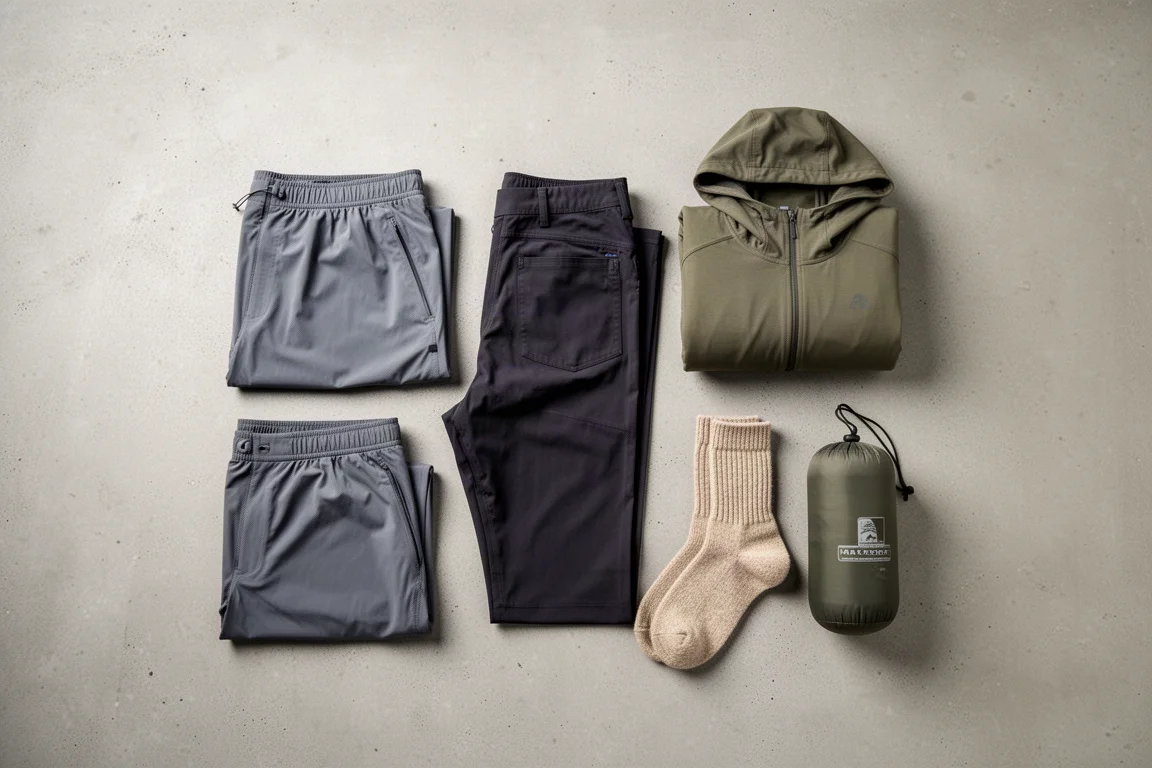
None of these decisions require the most expensive option. They require the right fit, the right material, and a realistic read of where you are going and what the weather is likely to do while you are out there.
Conclusion
Comfort on trail is largely a clothing problem, and it is solvable. A well-fitting lightweight shoe, non-cotton socks, quick-drying shorts or articulated pants, and a moisture-moving base layer cover most of what you need. Test what fits your body, be willing to replace the pieces that never worked, and the difference will be obvious over a full day of walking.
Further reading
Related Reviews
Backpacking Apparel
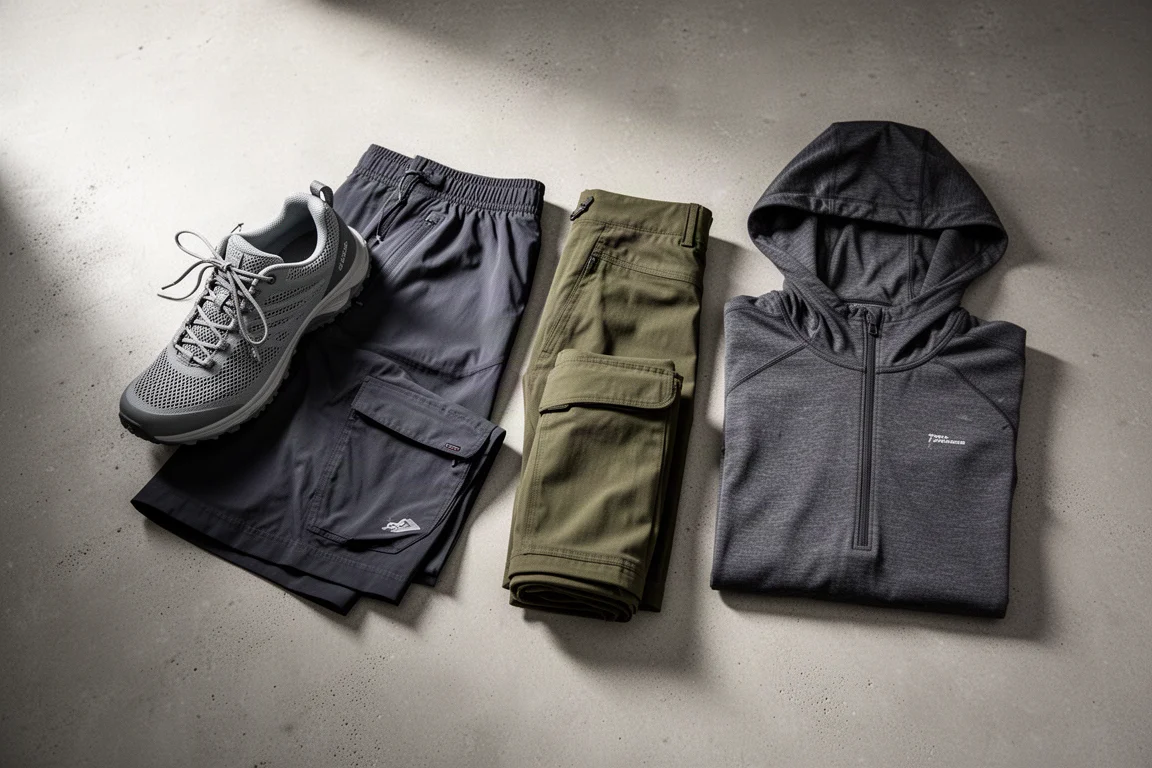
Backpacking Clothing Essentials: Five Pieces That Make Trail Days More Comfortable
Five pieces of hiking clothing that improve on-trail comfort, with the trade-offs worth checking before you buy.
Backpacking Apparel
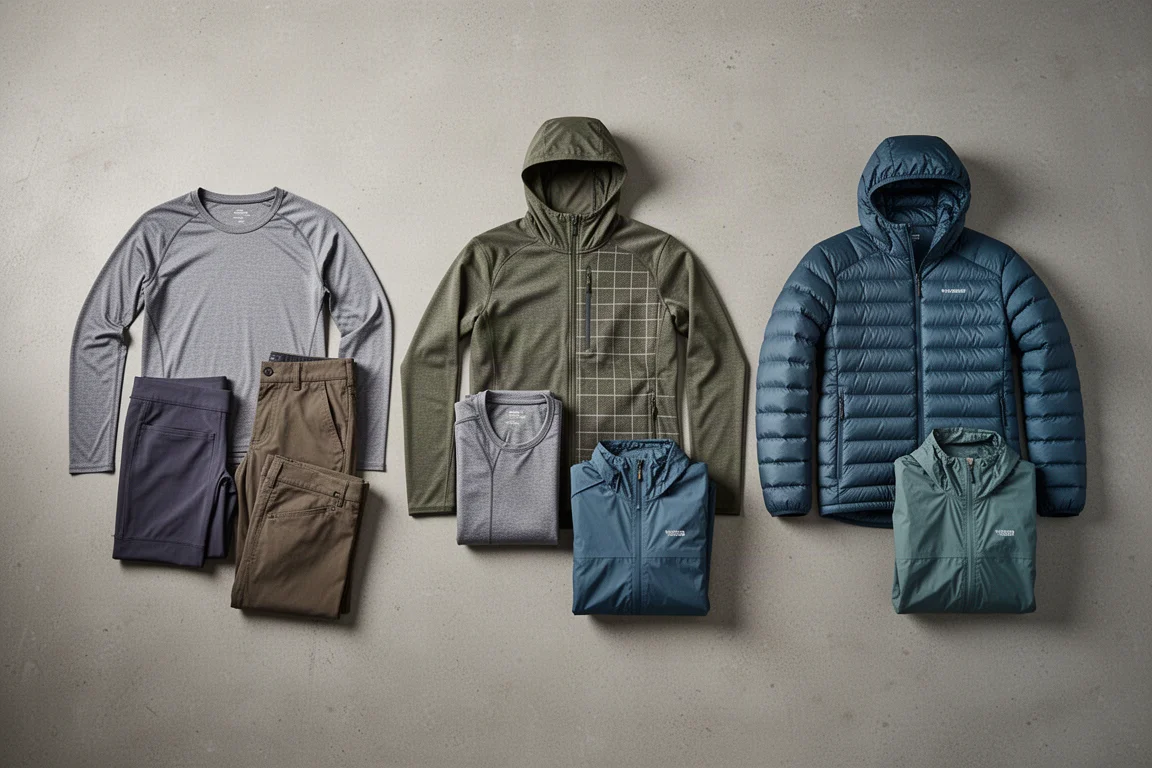
Backpacking Layering Systems Compared: Three Complete Kits at Three Price Points
Three complete backpacking layering systems at $326, $640 and $1,167, compared piece by piece across base layers, hiking pants, sun hoodies, fleeces, insulated jackets and rain shells.

Backpacking Gear
Building a 10 lb Base Weight: An Ultralight Backpacking Gear List
A practical walkthrough of the ultralight pieces behind a 10 lb base weight, from a 765 g pack and a roomy one-person tent to a full camp chair and a dependable water filter.