Camping Tents
Backcountry Light Mesa Hot Tent Review: A Four-Season Shelter and Its Optional Floor
A close look at the Backcountry Light Mesa 3-4 person hot tent and the optional Floor SL Tarp, covering build quality, weights, capacity, and where each piece makes sense.
Introduction
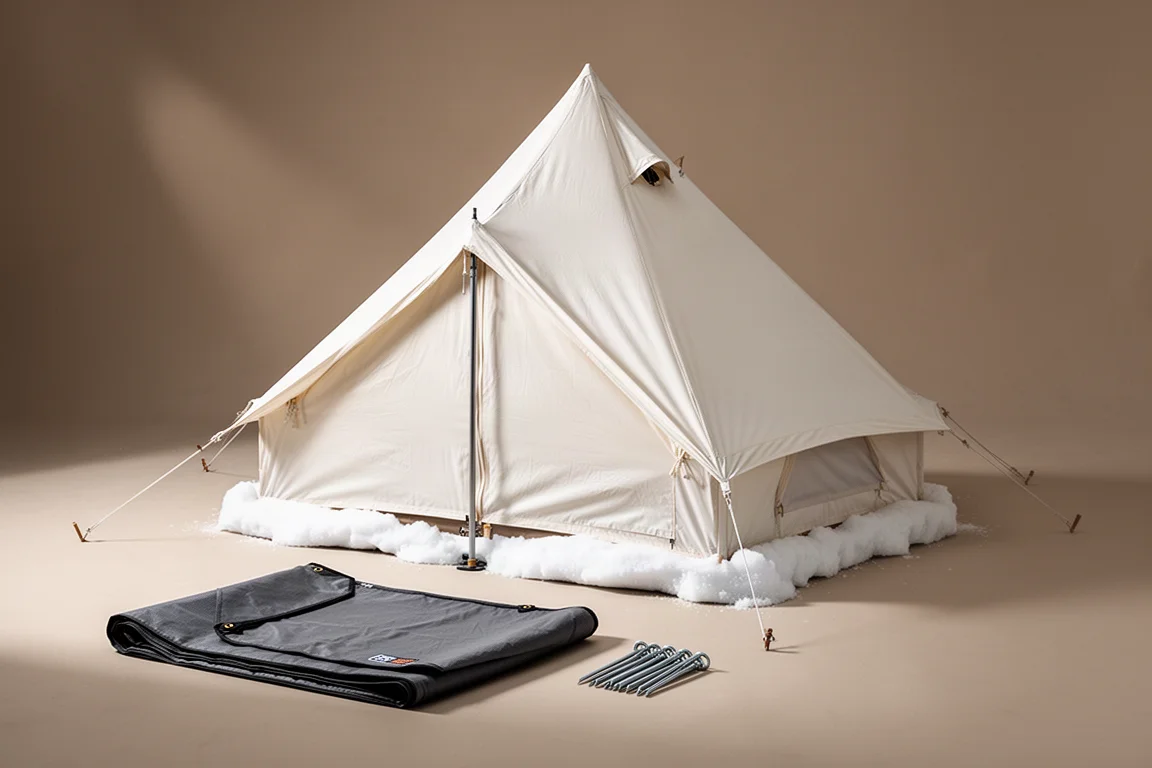
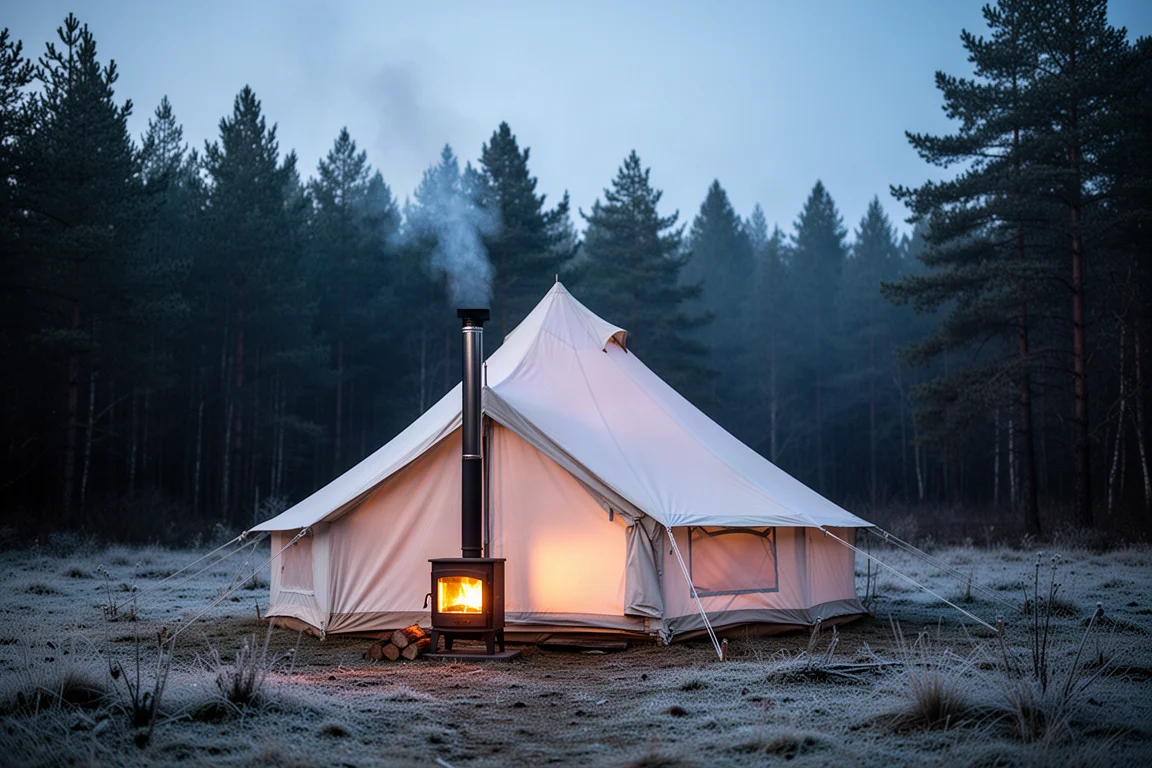
Backcountry Light is a veteran-owned, US-based company out of Colorado, and the Mesa 3-4 person hot tent is its four-season shelter built around a wood stove. The same system includes an optional Floor SL Tarp that is presented as serving two purposes: a groundsheet for the tent, and a standalone tarp.
That second claim deserves a closer look. As a floor, the design clearly makes sense. As a tarp, the shape and the hardware supplied with it raise legitimate questions, and those are examined further down.
This initial assessment covers what ships in the box, how the shelter goes together, the materials and weights involved, the capacity claims, and the pricing structure. Longer-term weather testing is still ahead, so the notes here focus on construction, design, and value rather than durability across a full season.
What Comes in the Box
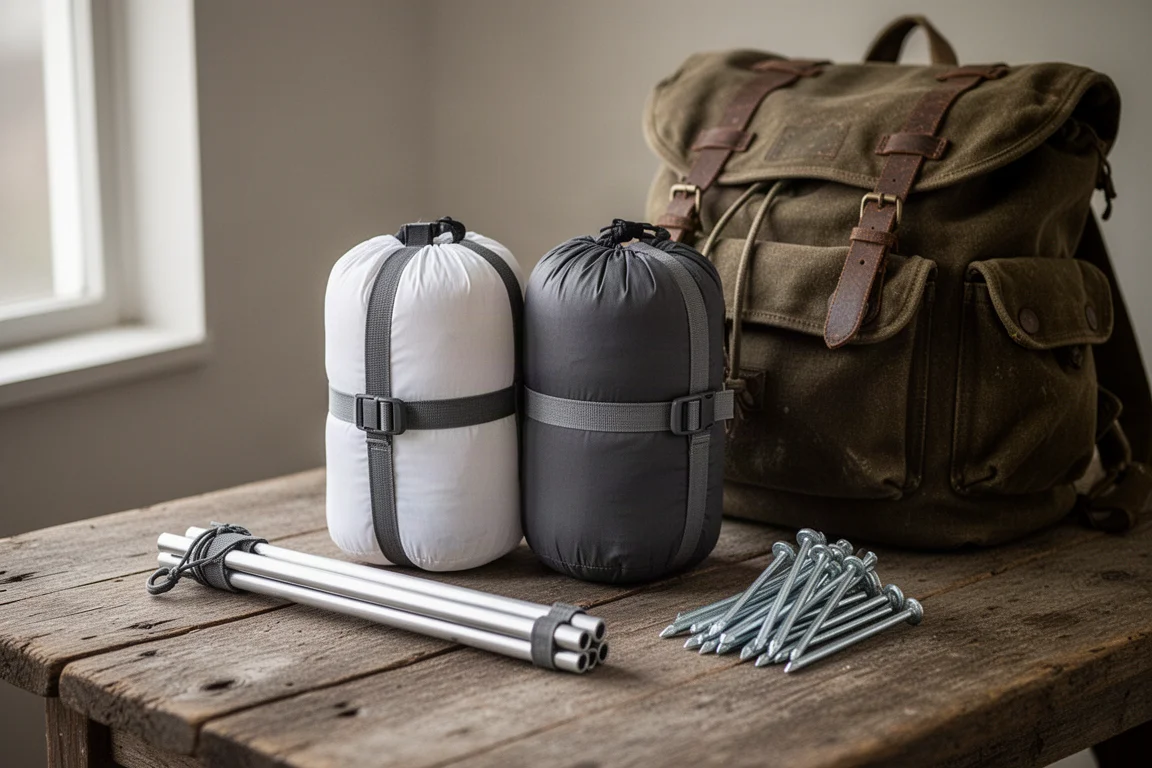
The Mesa arrives in a storage bag with a draw pull at the top, a grab handle at the bottom, and a compression strap across the body. Inside are the tent body, four component bags, eight guy lines with metal hardware, a center pole, and two separate sets of tent stakes: 12 aluminum and 12 titanium. The split is deliberate. Aluminum stakes are intended for soft ground and titanium stakes for hard ground, which gives the shelter a wider working range straight out of the bag.
The pole arrives without a shock cord, so it is assembled piece by piece rather than snapping into shape. Once built, it is fully adjustable: press the stud and slide the sections to extend or shorten the height.
The Floor SL Tarp comes in a matching style bag with a grab handle, a draw pull, and a compression strap. Inside that bag are the floor itself, eight aluminum stakes, and two guy lines. Two guy lines is a notable limitation, because it is not enough to pitch most tarps properly.
Mesa Hot Tent: Setup, Features, and Interior Space
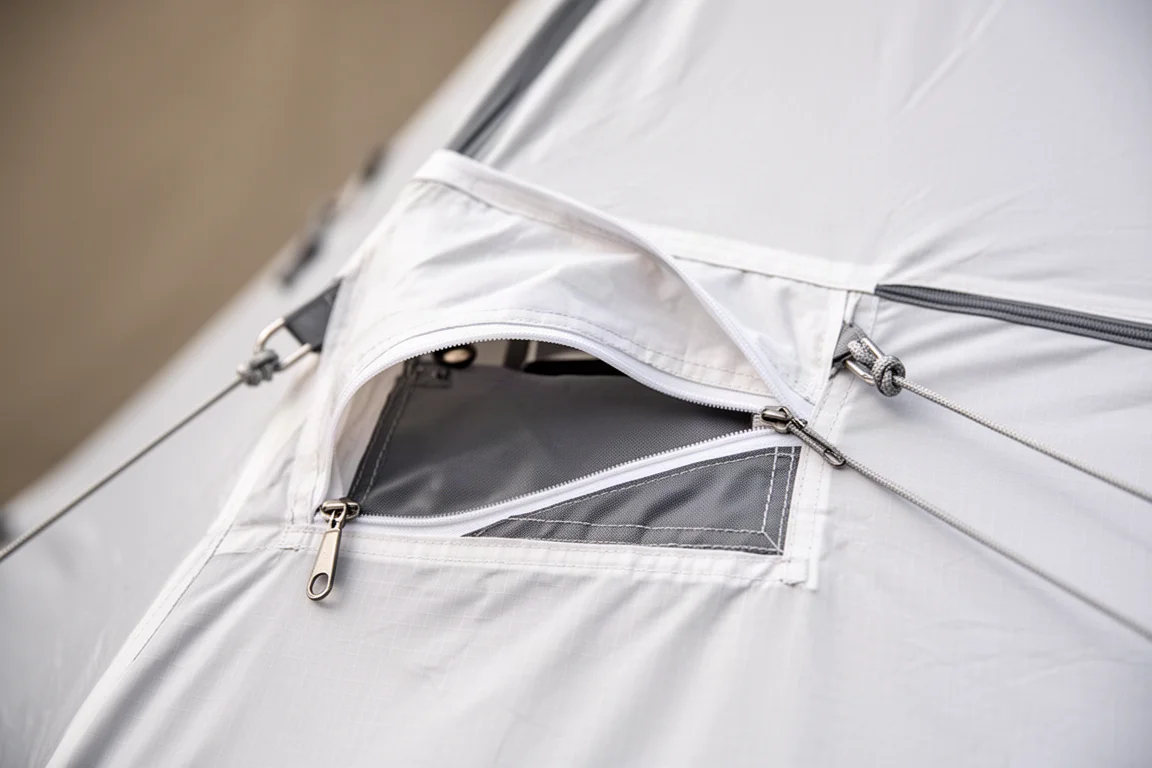
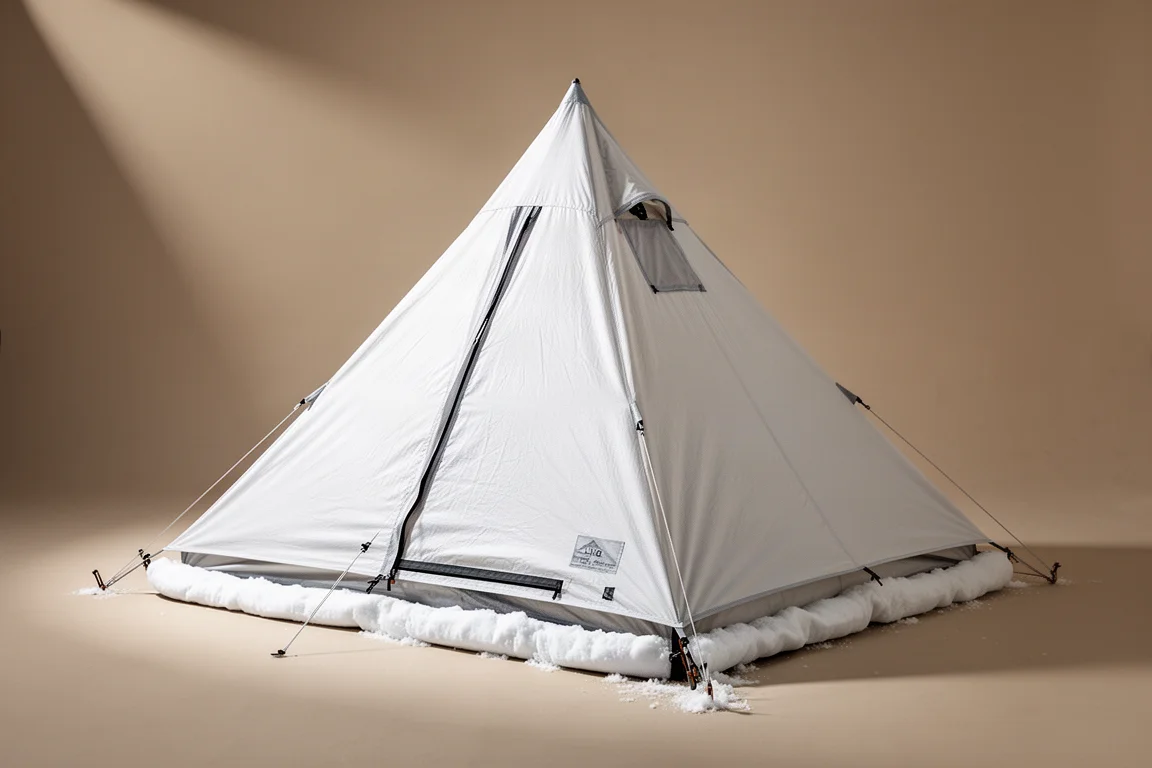
Pitched, the Mesa measures 10 by 10 feet with a peak height of 6 feet 3 inches. The body includes a storm flap over the door zipper, a series of guy line points around the perimeter, a snow skirt running the full way around the base, a stove jack with a zippered cover that can be removed and replaced, and a single vent that closes and stays reachable from outside. The stove jack feels solid, and the vent placement is a practical detail, since vents set too high on some hot tents are hard to reach.
The main design criticism is that the stake-out points on the body are fixed rather than adjustable. Adjustable points would make the initial pitch easier and would simplify re-tensioning later, which matters with this fabric. Packed size for the tent is 18.5 inches by 6 inches.
Standing height is the other thing to plan around. The 6 foot 3 inch figure is measured at the very peak, and the walls slope inward from there. A person around 5 foot 4 cannot stand upright inside, and even someone closer to 6 feet has to hunch. The interior is best thought of as a seated and kneeling space rather than a walk-around space.
Materials, Weather, and Adjustments
Both the tent and the floor use 40D ripstop nylon. That material choice has a practical consequence: nylon stretches, so the shelter will need re-tensioning over time, and especially once it gets wet. Fixed stake-out points make that job harder than it needs to be.
Construction quality is a clear strength. The seams are clean, there are no loose threads, and the seam tape is applied well throughout. Every component examined so far shows the same level of finish.
One specification gap is worth flagging. No hydrostatic head rating is published for the tent, so the waterproof rating is not something a buyer can verify in advance. That detail belongs on a product listing, alongside dimensions and clearer photography of the floor.
Floor SL Tarp: Strong as a Floor, Limited as a Tarp
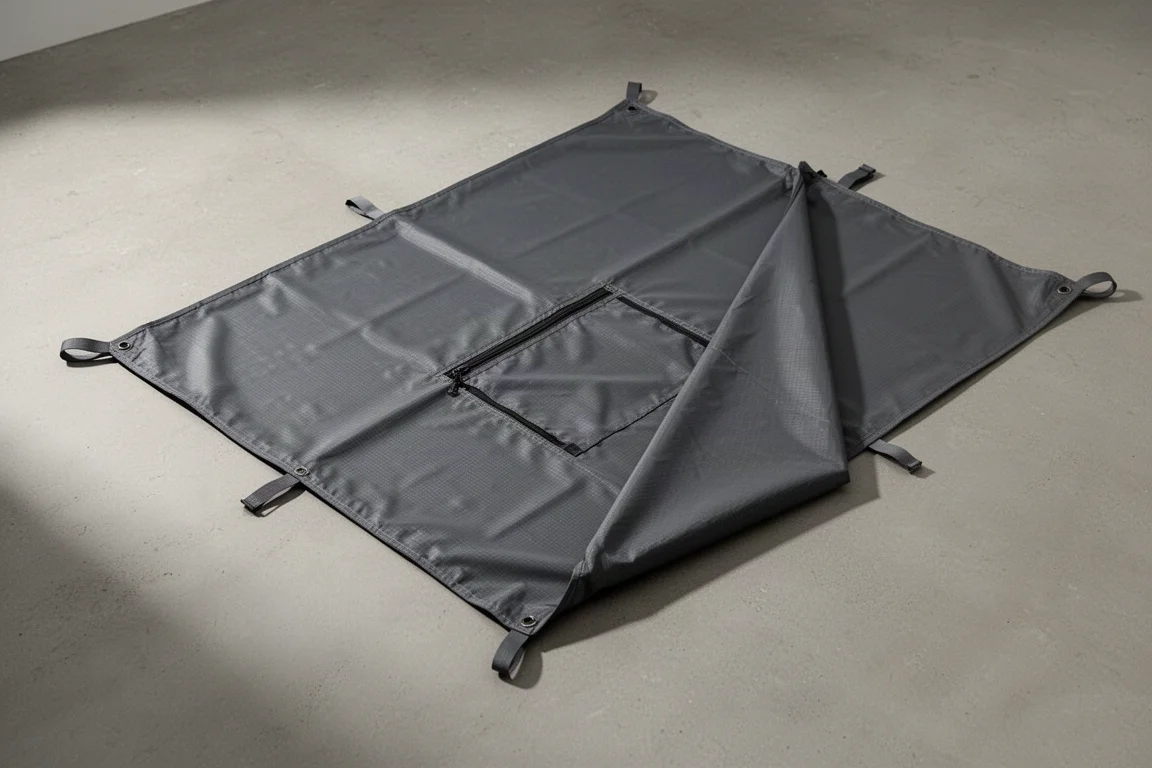
Laid out, the floor has eight stake-out points around the perimeter and a reinforced section where the center pole sits, mirrored by reinforcement at the top of the tent. Its most useful feature is a zippered section that unzips and folds back to create clear space for a stove, which is exactly what a hot tent floor needs.
As a groundsheet, it does its job. The catch is that it cannot be attached to the tent, so gaps remain around the edges and ground stays exposed in places. That keeps ticks, spiders, and other insects a live concern even with the floor in place.
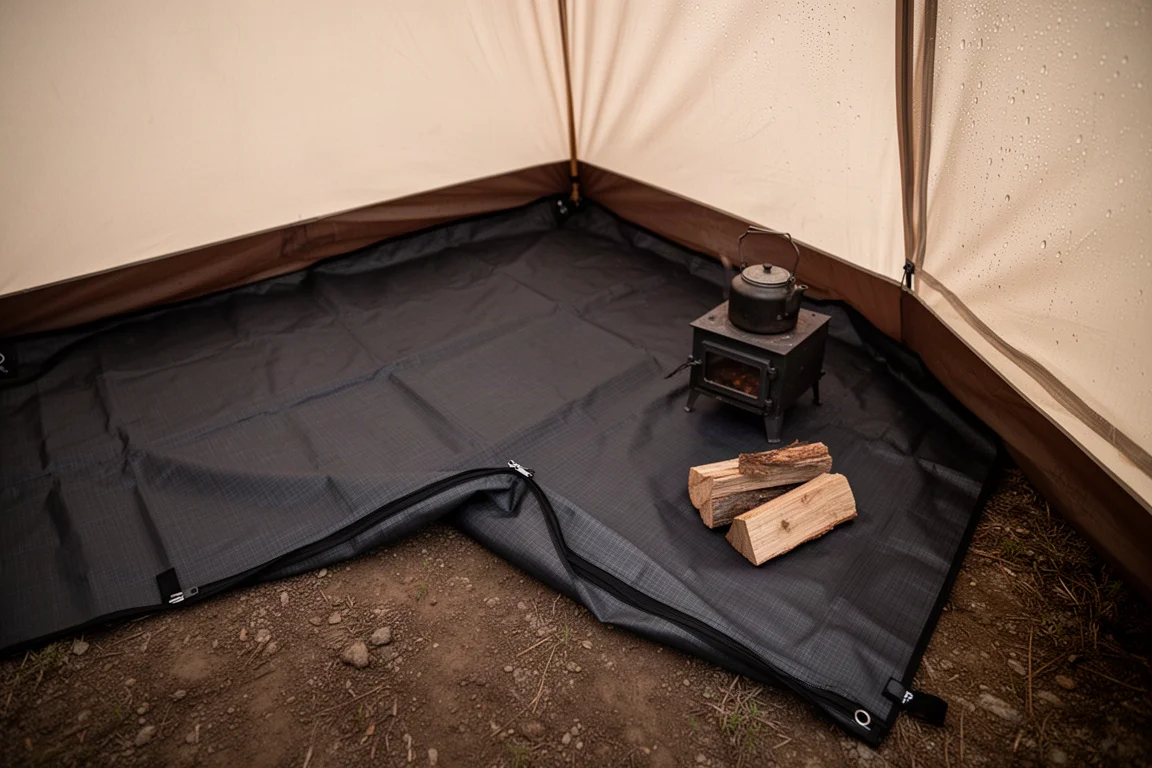
As a tarp, the case is much weaker. The square shape and the limited guy line hardware make it a poor substitute for a conventional square or rectangular tarp, which would offer noticeably more protection and more pitching options. It is better than nothing, but it is not a genuine tarp replacement.
Capacity, Comfort, and Carrying the Load
Backcountry Light rates the Mesa for 3 to 4 people without a stove and 2 to 3 people with one. Those figures hold up on inspection, with the caveat that the shelter is a close-quarters space. For genuinely comfortable use, two people plus gear plus a wood stove is the realistic setup.
Weight is the other consideration. The tent alone is 3 pounds 5 ounces, the floor 1 pound 8 ounces, the pole 15 ounces, the titanium stakes 4.4 ounces, and the aluminum stakes 5.4 ounces, for a full system weight of about 7.5 pounds. For one person carrying everything, that is heavy. Split across two or more people, the numbers become far more reasonable.
Stored dimensions are compact for the category: 18.5 by 6 inches for the tent, and 9.5 by 4 inches for the floor.
Pricing and Buying Advice
The tent with its pole and stakes is $393. Adding the floor brings the bundle to $452, and the floor costs $59 when purchased with the tent or $80 on its own. A complete setup therefore lands under $500.
That is a fair position for the components involved. The materials suit the category, the hardware is generous, and the construction quality is the strongest part of the package. Anyone weighing the purchase should decide on the floor separately: it is a sensible groundsheet for stove use, but it should not be bought as a tarp.
It is also worth asking the company for more published detail. The floor listing currently carries very little photography and no dimensions, and the tent listing omits a waterproof rating. Buyers comparing this system against alternatives would benefit from that information being available up front.
Conclusion
The Backcountry Light Mesa 3-4 person hot tent impresses on build quality: clean seams, solid hardware, a well-executed stove jack, and a vent that can actually be reached. Its trade-offs are structural rather than cosmetic, including fixed stake-out points on a fabric that stretches, a peak height that flatters the spec sheet more than it flatters a standing camper, and a 7.5 pound system weight that is best shared.
The Floor SL Tarp is a straightforward recommendation as a floor and a weak one as a tarp. Buyers who want a hot tent groundsheet with a stove cutout will find it useful. Buyers who want a versatile tarp should look for a square or rectangular design instead.
Further reading
Related Reviews
Camping Tents
3F UL Gear Taiji Two-Person Tent Review: Field Waterproofing Results and Buying Advice
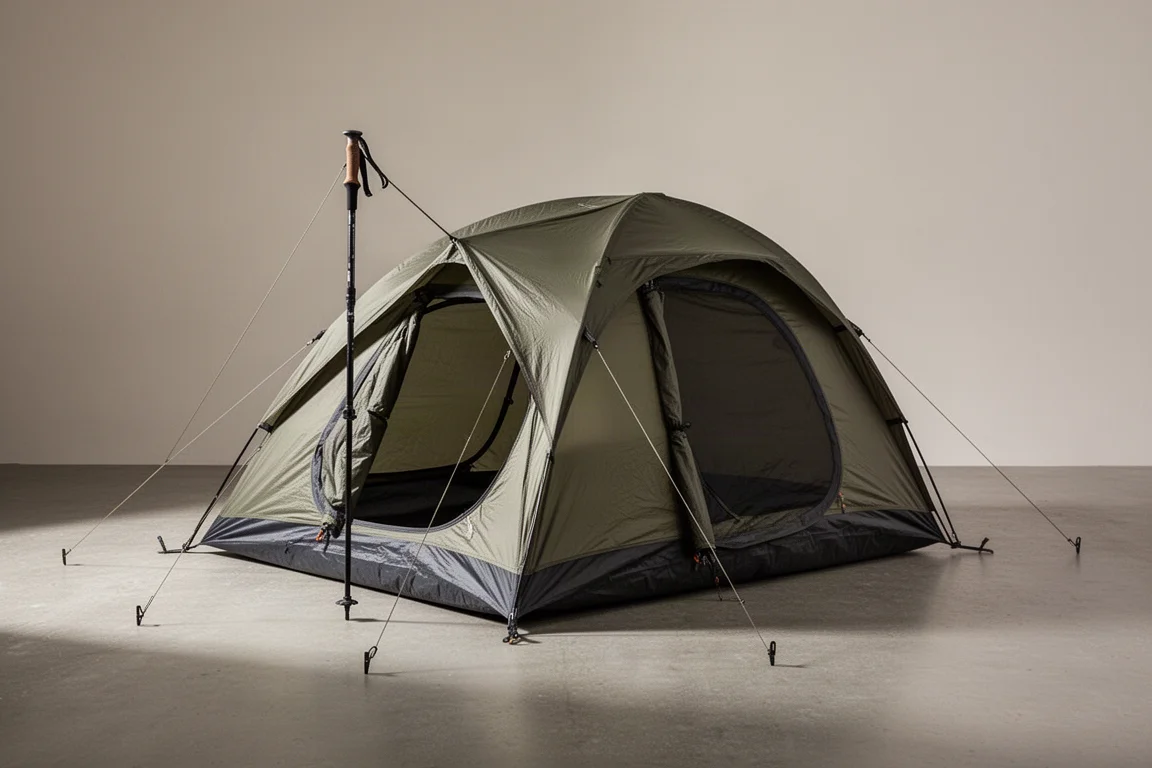
The Taiji pairs an attached fly with a removable inner, but sustained rain exposed untaped vent seams that need sealing before this shelter can be trusted.
Camping Tents
3FUL Gear Lanshan 2 Pro 4-Season Review: A Sub-$200 Single-Wall Trekking Pole Tent
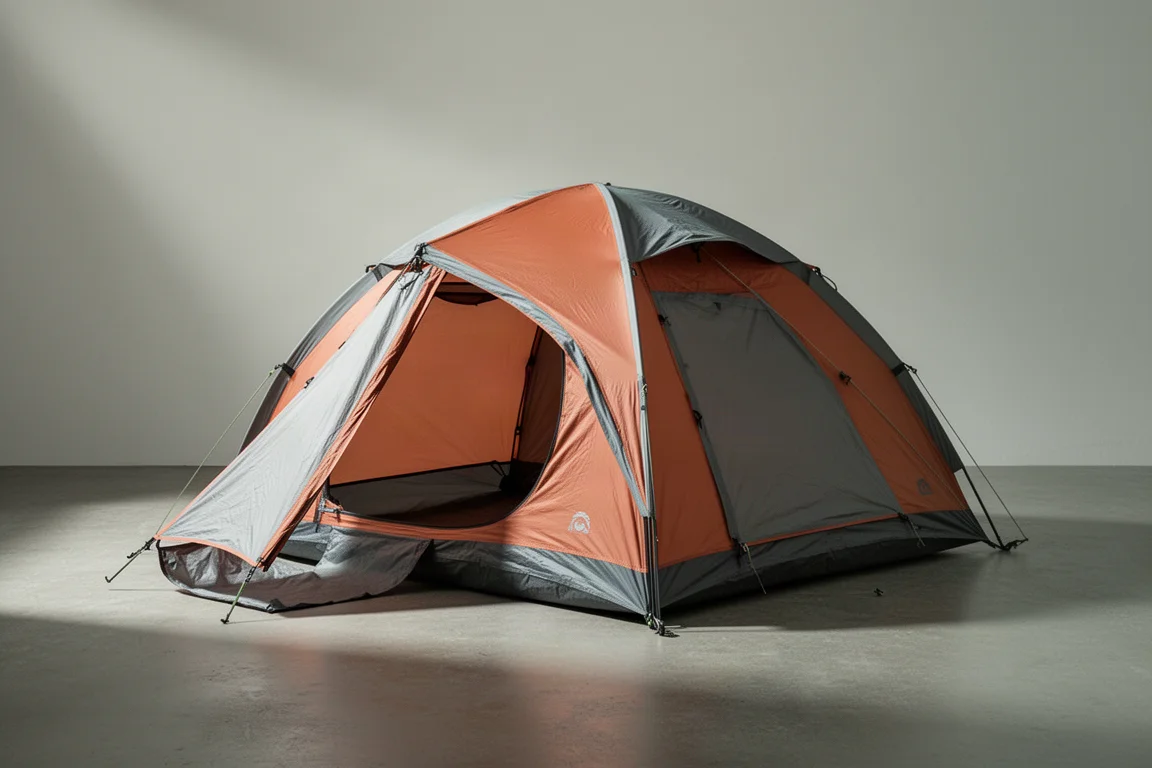
An early look at the 3FUL Gear Lanshan 2 Pro 4-Season, covering its straightforward pitch, generous interior space, and the condensation and seam-sealing questions that come with any single-wall shelter.
Camping Tents
Alps Mountaineering Lynx 1-Person Tent Review: Big Value in a Small Budget Tent
A close look at the Alps Mountaineering Lynx 1-Person Tent, covering real interior dimensions, materials, setup time, ventilation limits, and who should buy it.