Backpacking Food Storage
Backcountry Exposure Food Bags Compared: Mesa vs Aven
A practical comparison of the Backcountry Exposure Mesa and Aven food bag families, covering capacity, closure style, durability, and which size suits which trip.
Introduction
Choosing a backpacking food bag usually comes down to two questions: how much food needs to fit, and how quickly you want to reach it. Backcountry Exposure answers those questions with two distinct families. The Mesa uses a wide zipper opening for fast access, while the Aven uses a roll top closure built around weather resistance and long-term durability.
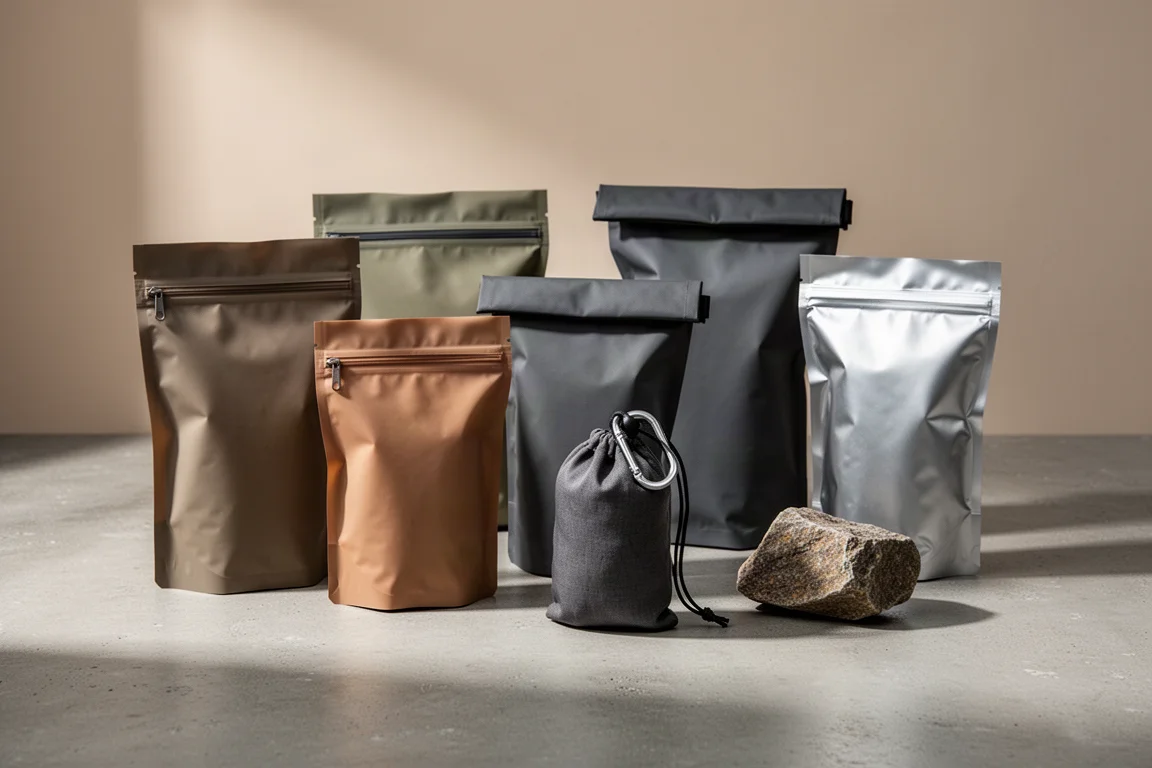
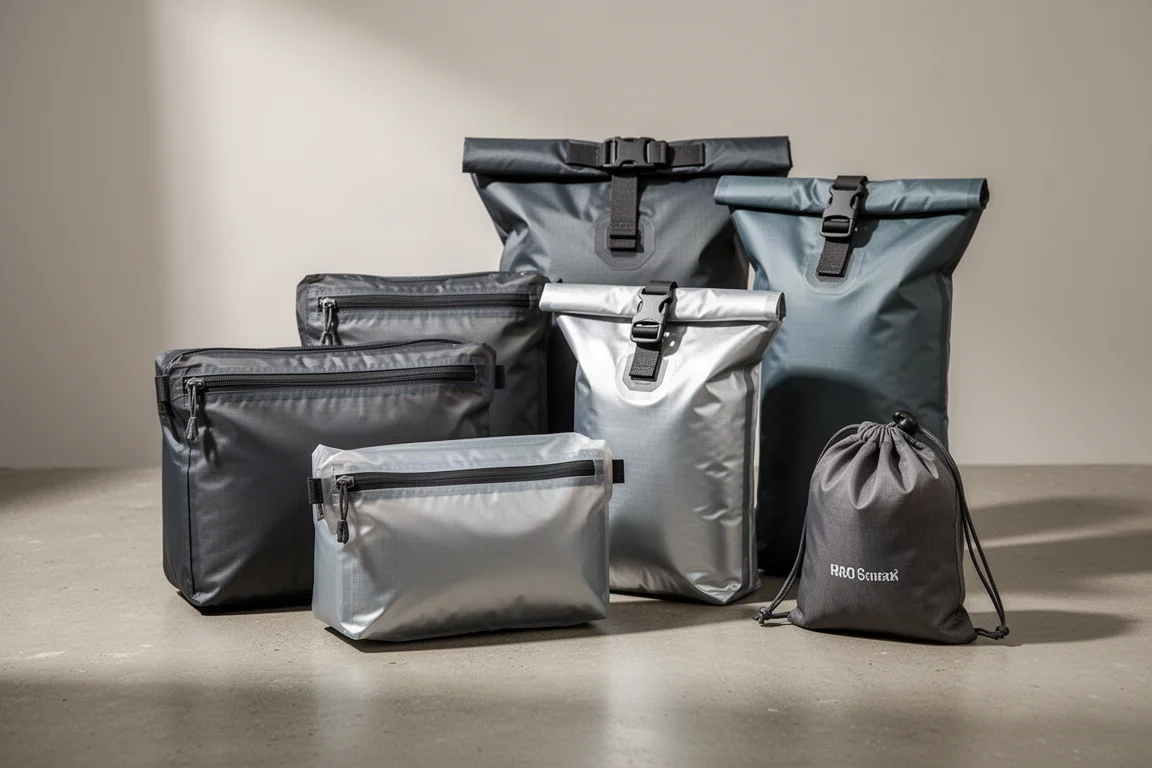
Both families share the same fabric options. Ultra Grid is the hard-wearing choice and comes in a range of colours, while Ultra TX is offered in the Silver Bullet colourway. The Mesa is available in 4.5L and 6.5L, the Aven in 8L and 12L, and a matching rock sack is offered for bear hangs.
How the Two Bag Styles Differ
The Mesa is built around a number five watertight zipper. That zipper is why the bag opens wide and sits flat on the ground, so food can be reached without unpacking everything. It is a watertight zipper rather than a waterproof one, and the seams are deliberately left untaped, because adding a zipper already removes true waterproofing from a bag. The fabric itself is waterproof, using DWR treatments or lamination, so rain and splashes are handled well as long as the bag is not submerged.
The Aven takes the opposite approach. The roll top closure is seam taped, which gives it more water resistance than the Mesa and makes it a reasonable option for protecting clothing or sleeping gear at the bottom of a pack. The trade-off is access, since a roll top has to be opened and rolled again, so it suits trips where food comes out a few times a day rather than constantly.
Backcountry Exposure Mesa Food Bag (4.5L)
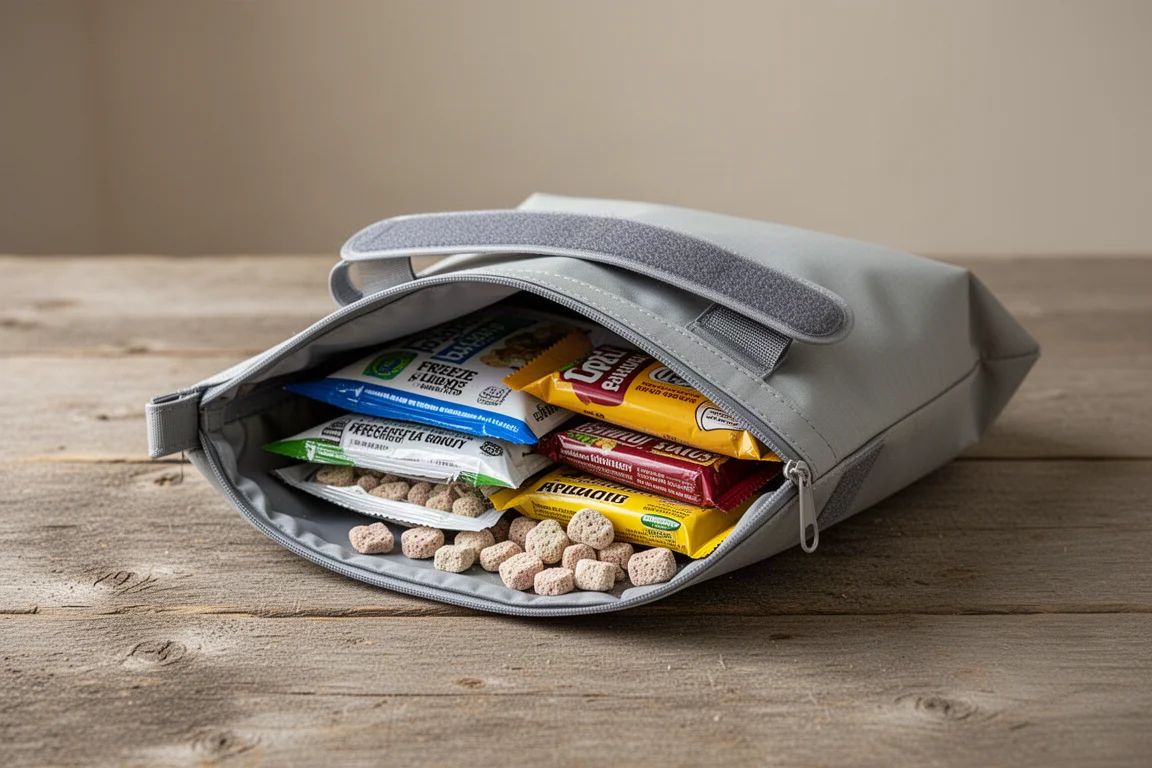
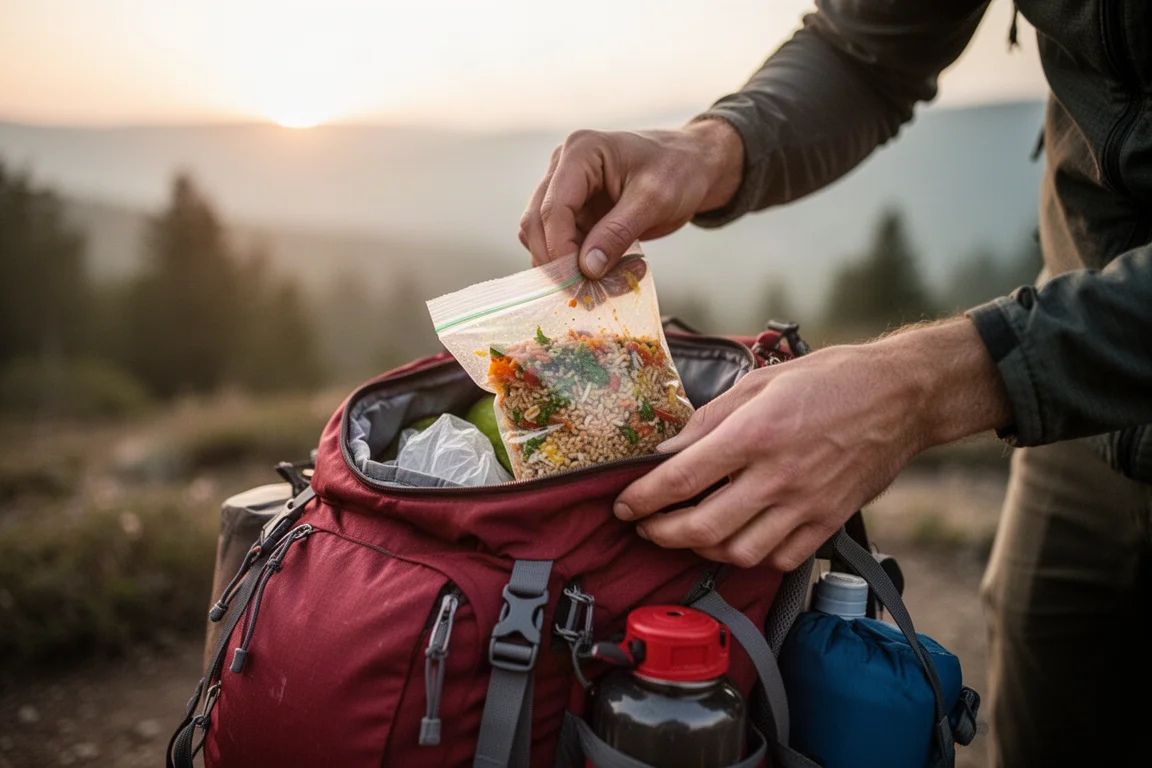
The 4.5L Mesa is the original design in the range and has seen years of trail use. It suits weekend and overnight backpacking trips, and it holds roughly two to three freeze-dried meals depending on the brand. Many hikers keep the first day’s meal outside the bag to leave room for snacks and electrolytes.
Access is the defining feature. The bag stands on its own flat base, the zipper opens wide, and grab tabs at each end make closing straightforward. A webbing grab handle lets you lift the bag out of a pack and doubles as a hanging point for a bear hang using a carabiner or a length of cord. The Mesa is not limited to food either, since it works as a packing cube for a quilt or spare clothing.
Backcountry Exposure Mesa XL Food Bag (6.5L)
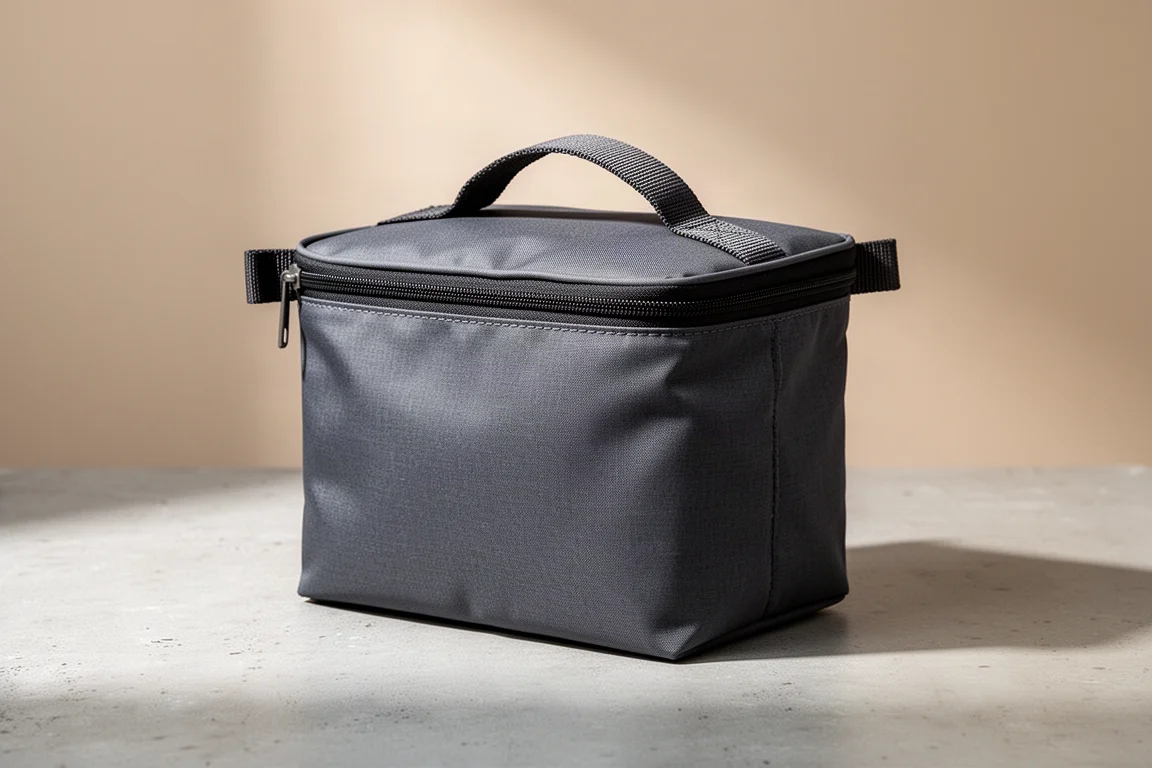
The Mesa XL keeps the same zipper layout and simply widens the body to 6.5L. That extra room covers a full weekend and up to about four days, and it will hold six or seven freeze-dried meals depending on the brand. The size also fits neatly into the top of a backpack, which makes it easy to reach without unpacking everything else.
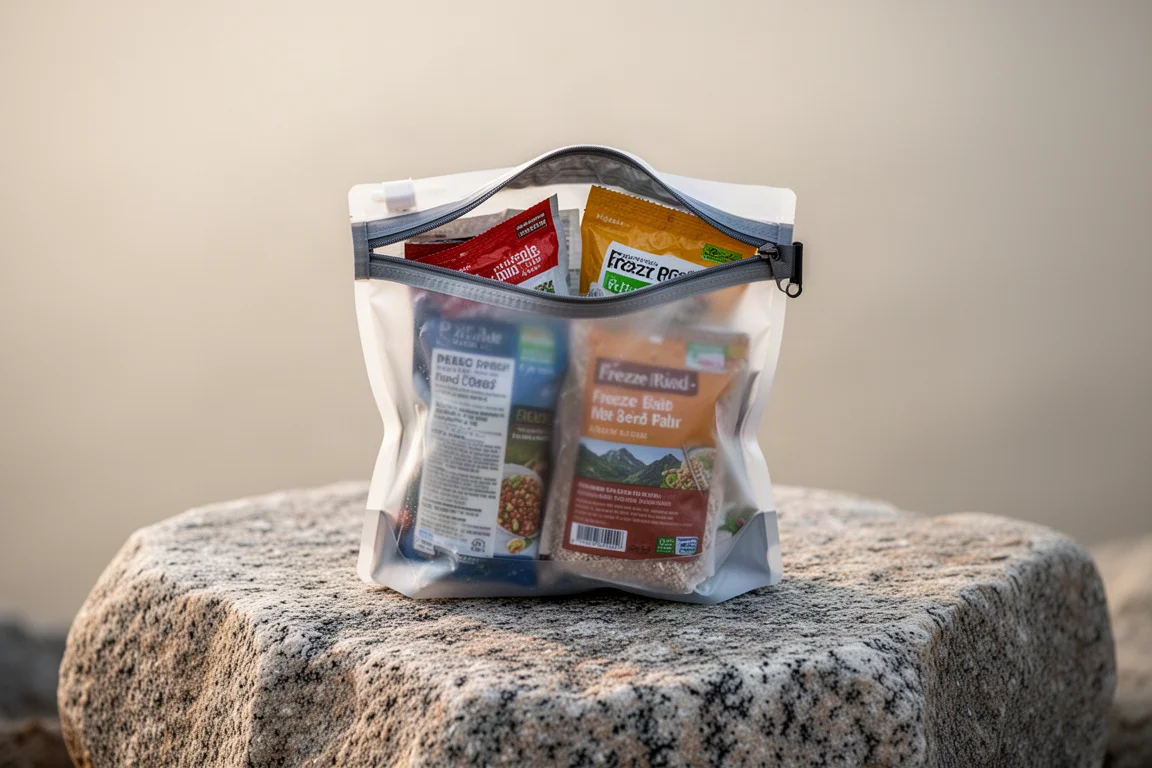
Like the standard Mesa, the XL has a webbing grab handle, a watertight zipper, grab tabs, and a flat base that keeps it upright on the ground. The same multi-use logic applies here, so it can double as a packing cube when a trip calls for one.
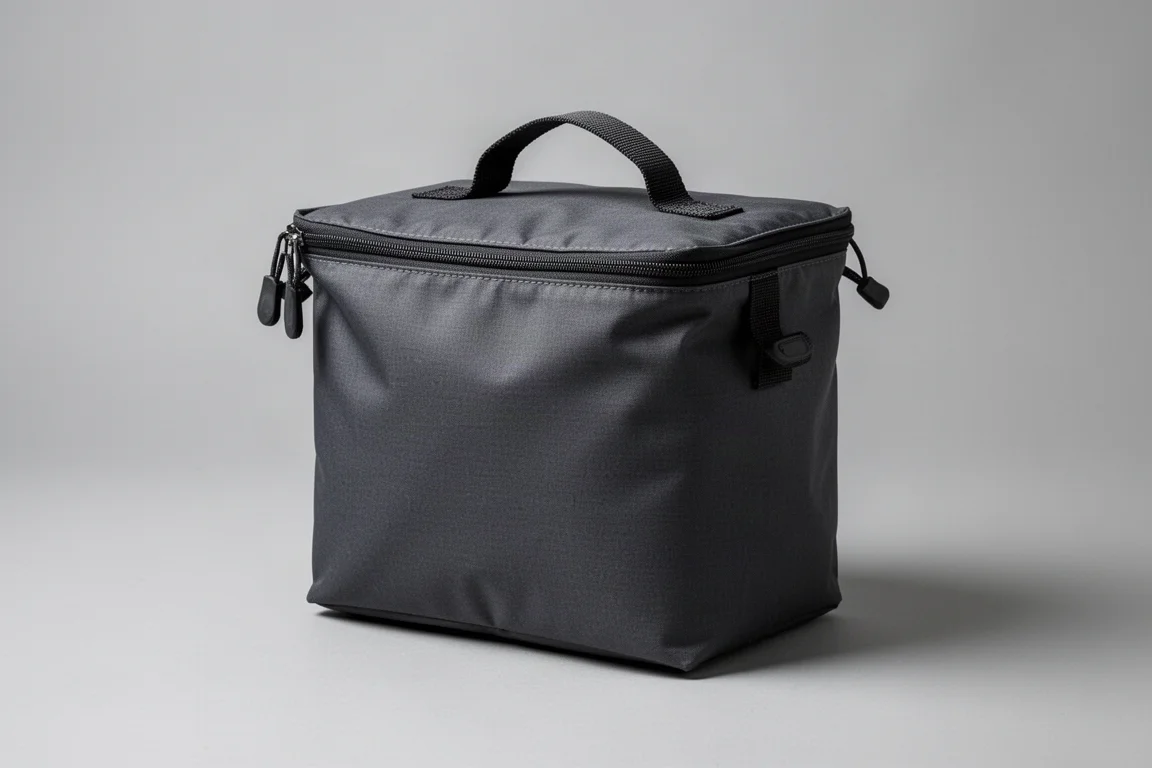
Backcountry Exposure Aven 8L Roll Top Food Bag
The 8L Aven is aimed at trips of roughly three to five days. It holds around eight freeze-dried meals, although five days is a stretch depending on how efficiently food is packed. It is narrower and shorter than the 12L version, so it slots into a pack more easily.
The design choices favour longevity. A molded hook-and-loop strip replaces the snaps often used on food bags, since snaps can break and a molded patch is less likely to catch on fleece sleeves. The strip also gives a rigid edge to roll against, which helps the closure stay tight. The bottom is curved to create a flat base without leaving a dead-space corner, removing a spot where abrasion would otherwise wear through the fabric over time.
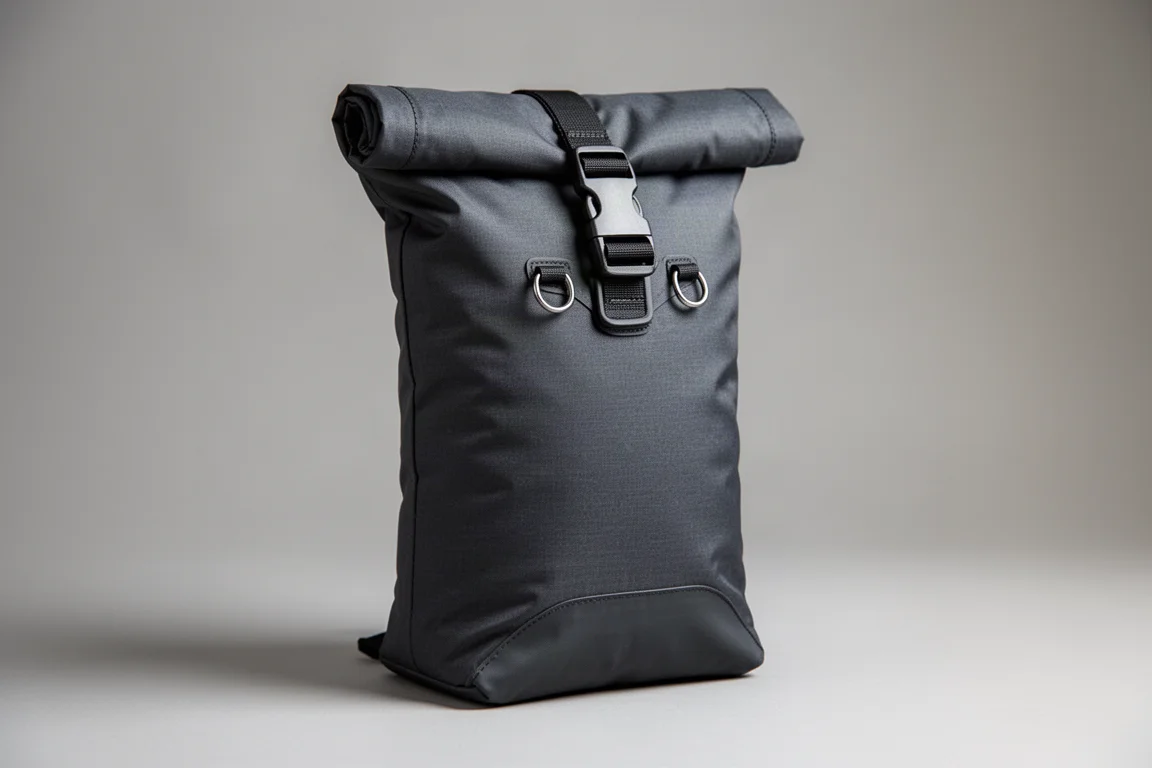
Backcountry Exposure Aven 12L Roll Top Food Bag
The 12L Aven is the largest option in the range. It comfortably holds around eleven freeze-dried meals with room left for electrolytes, snacks, and a spoon. The stated capacity is conservative: measured with five rolls rather than three, the bag comes closer to 14L in total volume.
This is the size for a week-long trip or for stretching between food resupplies. At the top, a plastic clip carries two D-rings that sit apart from the buckle, so cordage or mini carabiners can be attached to the D-rings for hanging instead of loading the clip itself. Seam taping and durable Ultra Grid fabric make it a sensible choice for protecting other gear at the bottom of a pack. It is not as light as composite fabric alternatives, and that is the deliberate trade for durability.
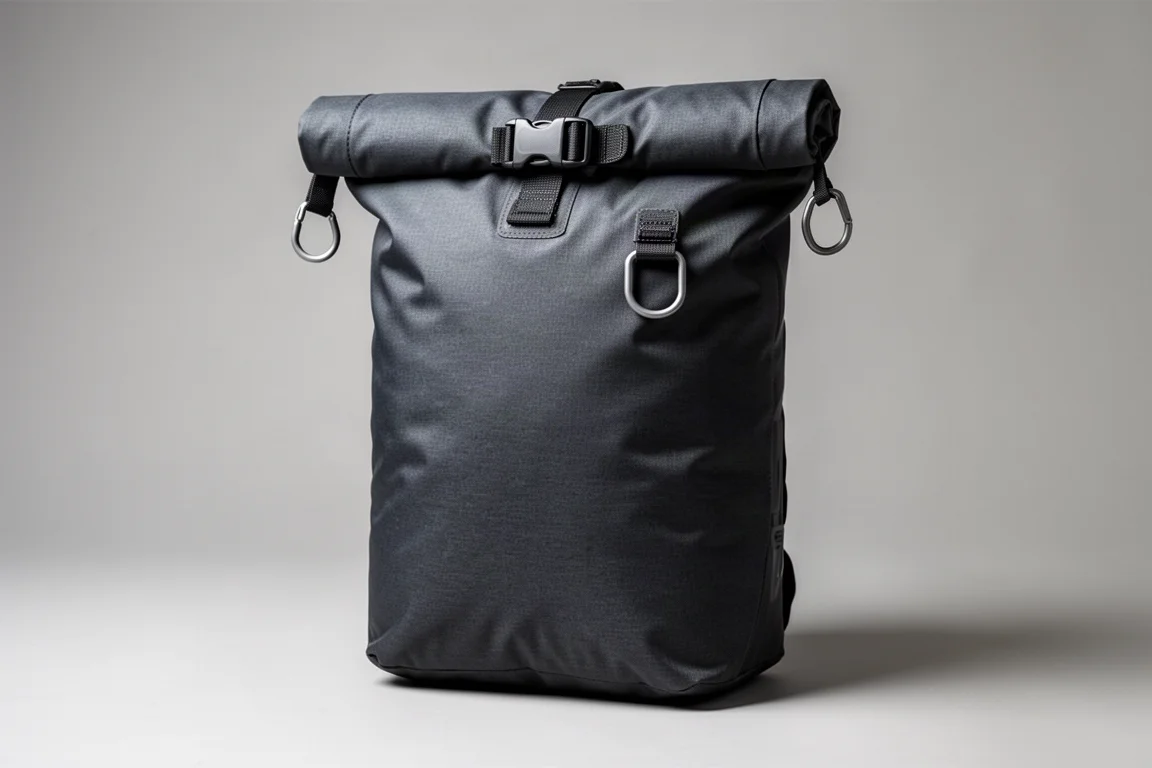
Backcountry Exposure Aven Rock Sack
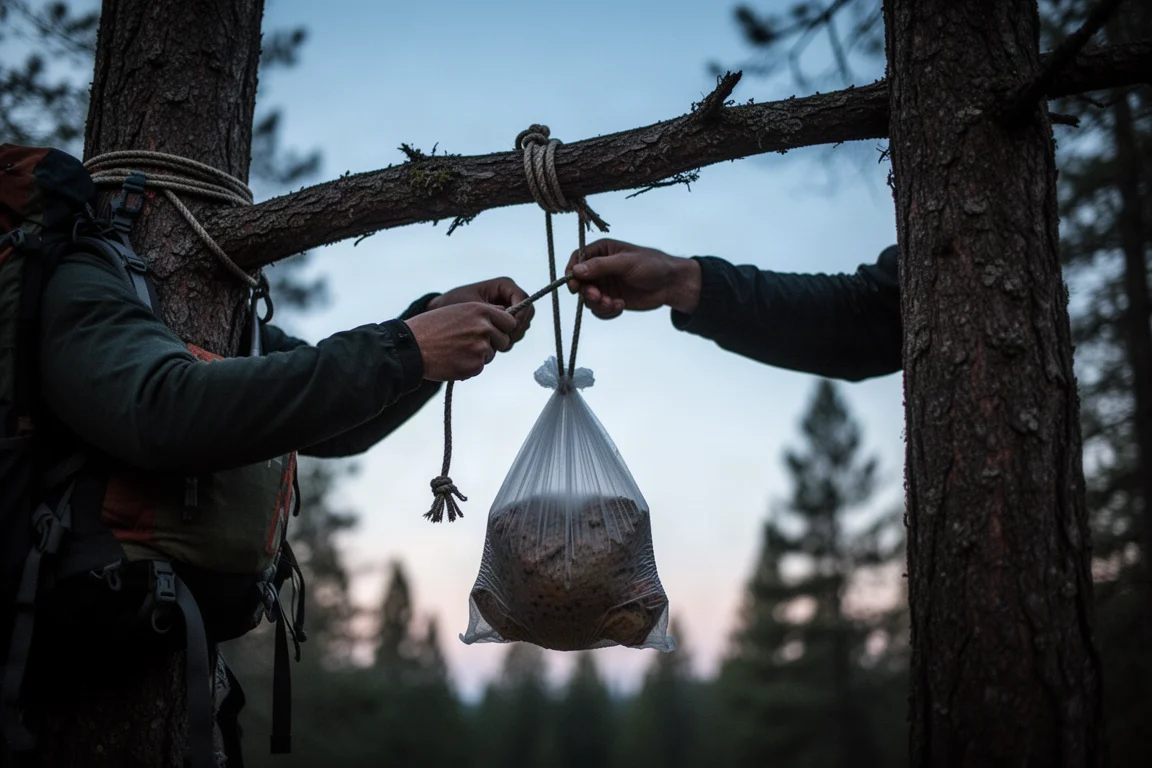
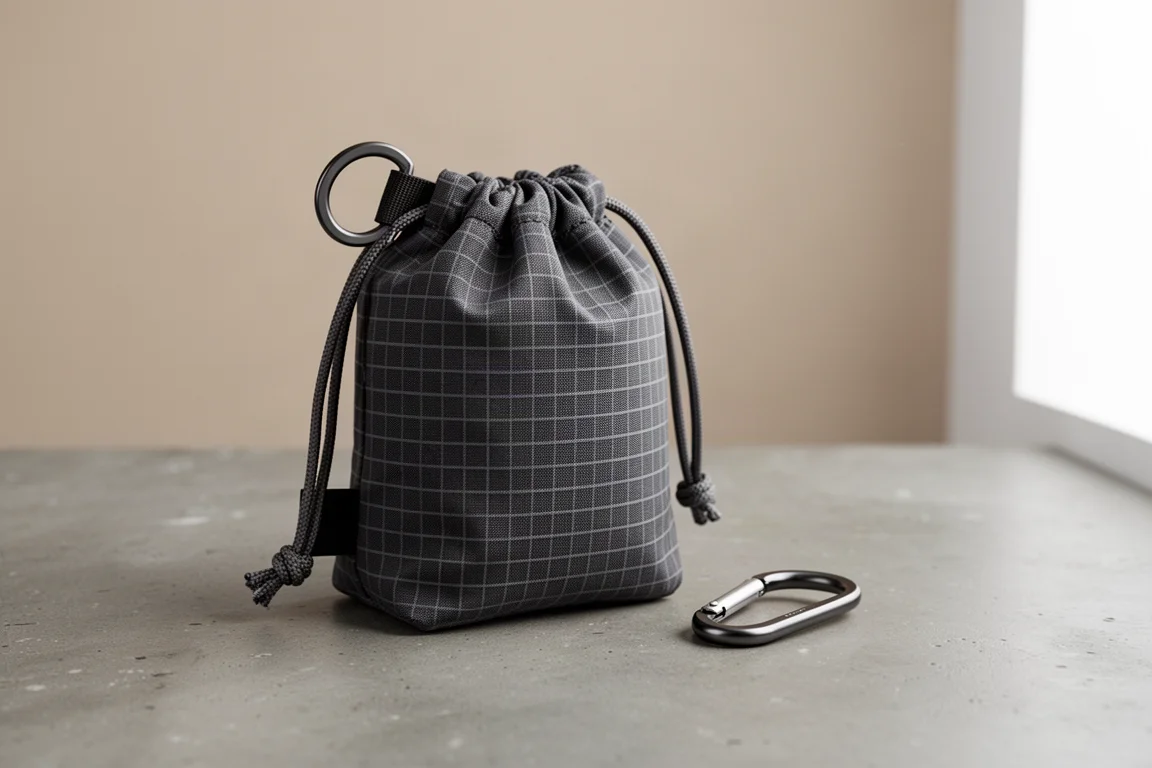
The rock sack is the accessory that makes bear hangs work with either bag family. It holds a bear line, a mini carabiner, and a PCT toggle for the PCT hang method. A D-ring on the back takes a mini carabiner, so the line can be tied on, the sack filled with rocks, and thrown over a branch.
It is made from the same Ultra Grid fabric as the bags, so the setup can be colour matched, and it stays very light in a pack.
Buying Advice: Matching Capacity to Your Trip
Capacity should follow trip length and how often you resupply. For an overnight or a weekend, the 4.5L Mesa is the simplest fit and the quickest to open. For a full weekend up to four days, the 6.5L Mesa XL adds room without changing the access style. For three to five days, the 8L Aven covers most trips, and for a week or longer stretches between resupplies, the 12L Aven is the one to take.
The second decision is closure style rather than size. A zipper gives faster access and a bag that stands open on the ground, while a roll top offers better water resistance through taped seams. Hikers who mostly want convenience can stay with the Mesa, and those who expect wet conditions or want to use the bag for clothing and sleeping gear will get more from the Aven.
Conclusion
Both families do the same job from different angles. The Mesa is the quicker, more convenient option for shorter trips, and the Aven is the tougher, more weather-resistant option for longer ones. Matching the size to your trip length, then choosing the closure that fits how you actually eat on trail, is the simplest way to end up with the right bag.
Further reading
Related Reviews
Backpacking Food Storage
Bear Bag Alternatives: Ursack Major, Bear Vault 450 and Ultraglide Bear Line Compared
Three practical ways to store food in bear country, compared on weight, time at camp and how much protection each one actually provides.
Backpacking Food Storage
Backcountry Exposure Food Bags Compared: Mesa and Aven for Every Trip Length
A practical comparison of the Mesa zipper food bags, the Aven roll top food bags and the Aven rock sack, with sizing guidance from overnight trips to a week between resupplies.
Backpacking Food Storage
Best Food Storage for Desert Backpacking: Five Options Compared
Five practical ways to protect your food in treeless desert terrain, from odour-proof sacks to bear-resistant bags and hard canisters, with the weight, capacity, and cost trade-offs of each.