Hi-Fi Speakers
Axxess L1 Review: A Stand-Mount Speaker That Puts Midrange First
A two-way stand-mount speaker with a ribbon tweeter, a carbon fibre sandwich midwoofer and a neutral, highly transparent sound. Here is what to know before buying.
Introduction
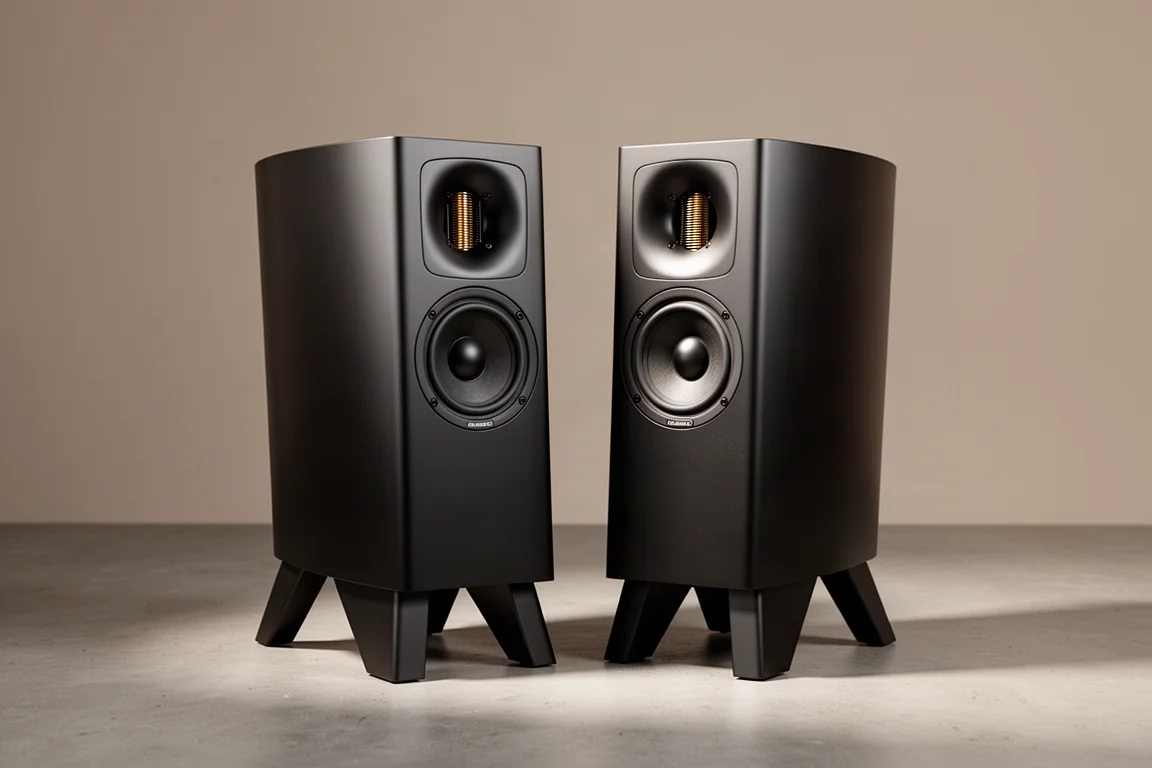
Compact two-way stand-mount speakers are often the most sensible choice for real rooms, and the Axxess L1 is an unusually interesting example of the breed. It pairs a ribbon tweeter with a 4.5 inch midwoofer in a cabinet that is cambered and tapered toward the rear, and it sells for $2,750 per pair, with matching stands available separately at $1,100 per pair. Axxess sits within the Audio Group Denmark family of brands, and the L1’s driver and cabinet work reflects that shared engineering approach.
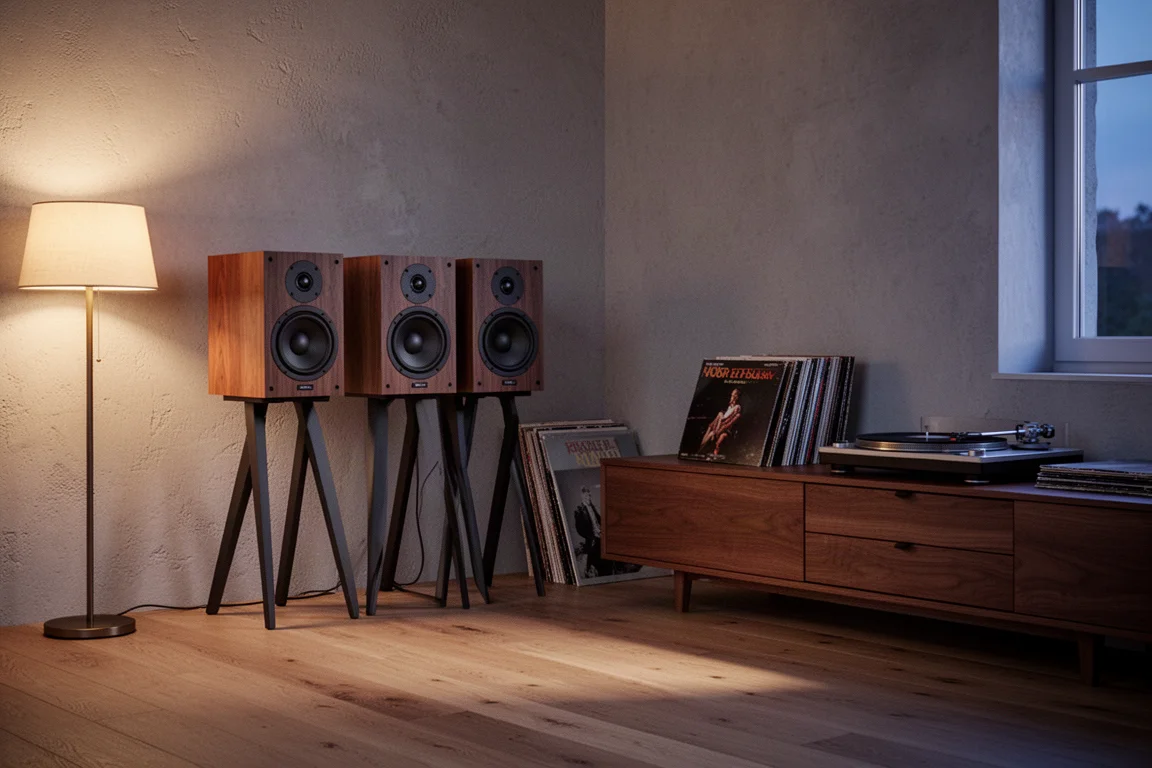
What stands out after time with the L1 is not one headline specification but the balance of them. There is a proprietary driver, a cabinet made from high-density fiberboard rather than the medium-density board used in most speakers at this price, and a sensitivity rating of 86 dB that tells you the speaker expects a capable amplifier rather than a modest one.
Who the Axxess L1 Is For
This is a speaker for listeners who care most about clarity and midrange tonality. It stays composed at low volumes, which makes it genuinely practical for quiet evening listening, and its bass reaches down to roughly 50 Hz depending on the room. That figure is about average for a stand-mount of this size, but the quality of what the speaker does produce is the point. The low end is fast, clean and well defined rather than merely deep.
It is less suited to listeners who want to play loud. A small two-way has physical limits, and the L1 is happiest at moderate levels, with the high 80 dB range being a comfortable ceiling in typical use. If high output is a priority, a larger cabinet with a bigger driver is the more sensible route.
Main Strengths
The L1’s defining quality is transparency. It is supremely clear, and yet it does not turn less-than-perfect recordings into a punishment. Music you like that was not recorded especially well still comes across as music. That combination of high resolution and easy listening is difficult to achieve, and it is the main reason this speaker deserves attention even though its bass extension looks unremarkable on paper.
Imaging is another strength. The stereo picture extends well beyond the physical positions of the cabinets, which gives dense, layered productions room to breathe. On a busy album with several bass players, live drummers and layered electronics, individual parts remain separable without the mix falling apart.
Tweeter and Midrange Clarity
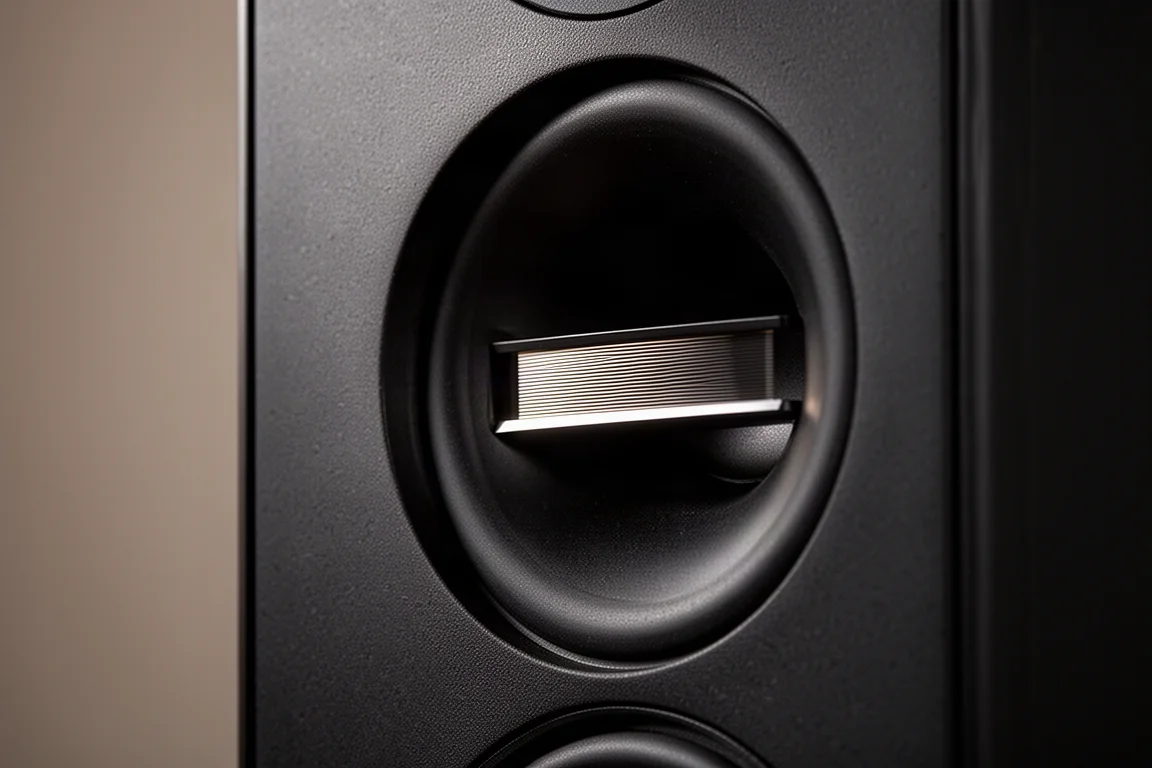
The ribbon tweeter sits in a deep waveguide, and its character is extended, airy and delicate. It never sounds bright or aggressive, and it never draws attention to itself, yet nothing seems to be missing at the top end. The midrange is where the L1 makes its strongest case. Tonality is neutral and correct, with voices and acoustic instruments presented without added warmth or edge.
The 4.5 inch midwoofer is proprietary to the Audio Group Denmark designs. Its membrane is a sandwich construction: spread-tow carbon fibre on both faces with a honeycomb core between them, described as extremely light and extremely rigid, which helps minimise breakup modes. Behind the cone sits a twin 38 mm voice coil on a titanium former, with the titanium used to improve heat dissipation from the coil. The driver’s chassis is stamped stainless steel, and the motor uses a large magnet assembly.
The crossover uses Litz wire and air-core inductors along with high-quality parts throughout. The cabinet is built from high-density fiberboard and finished in satin black or satin white.
Bass, Dynamics, and Room Placement
Bass from the L1 is fast and clear rather than deep. It reaches around 50 Hz in a typical room, and its texture is the memorable part: an electric bass line comes across as muscular and detailed. If you want more low-frequency weight, adding a subwoofer is a straightforward option, though many listeners will find the balance complete as it stands.
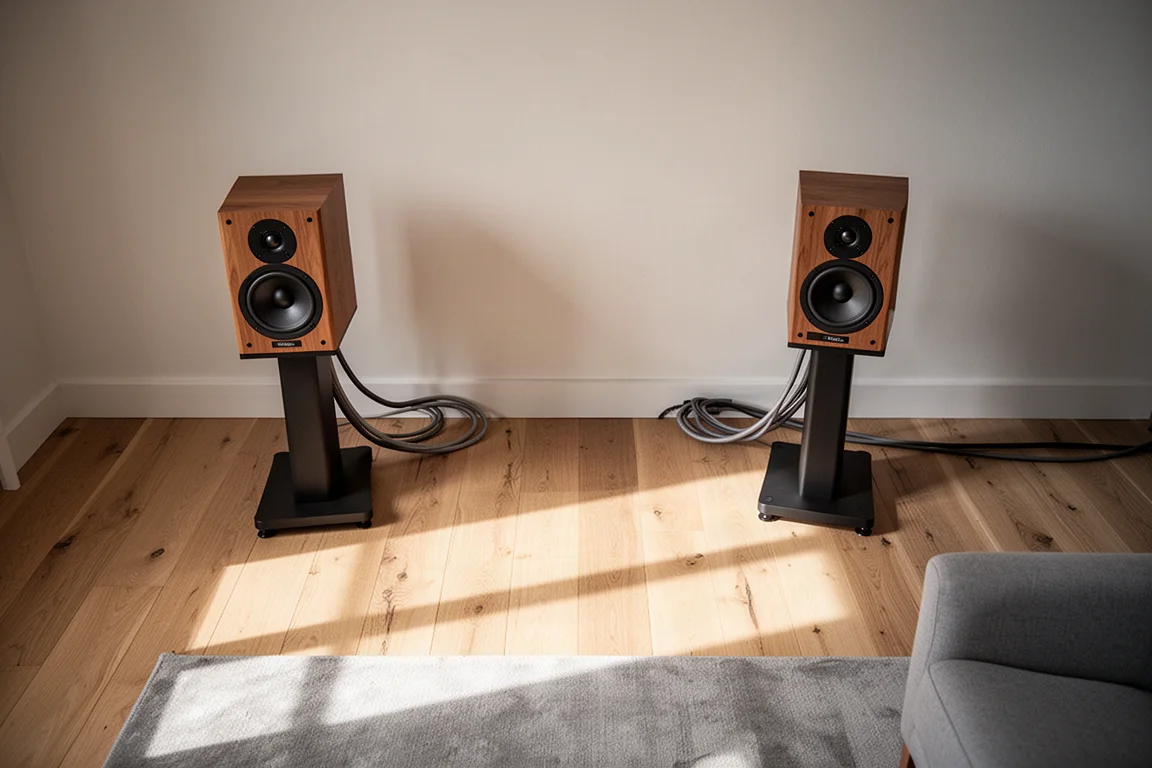
Placement matters here, and in a good way. The L1 works well with its back about 18 inches from the wall behind it, which is a real advantage in rooms where pulling speakers two or three feet into the space is not practical. The cabinet is cambered and tapered to the rear, and the matching stand follows the same angle. On the back you will find three metal tubes: the two lower ones are ports for the midwoofer, while the top tube serves the tweeter.
Dynamics are a surprise for a speaker rated at 86 dB. The L1 has an expressiveness usually associated with high-sensitivity designs. Drums carry real energy, and the crack of a snare has a snap that catches you off guard. Amplifier matching is flexible as well. A 20 watt per channel class A design produced the warmest balance, a tube amplifier delivered the most transparent presentation, and a solid-state amplifier also worked well.
Things to Consider Before Buying
Sensitivity is the first practical consideration. At 86 dB, the L1 benefits from an amplifier with genuine quality rather than raw wattage. The good news is that low-power designs performed well, so you do not need a large amplifier to get a satisfying result.
Bass extension is the second. The L1 goes down to about 50 Hz, which is average for a stand-mount but not a substitute for a floor-standing speaker. If deep bass is essential to you, plan for a subwoofer or choose a larger speaker instead.
Third, consider the sound signature you actually enjoy. The L1 is neutral, and neutral is not to everyone’s taste. Listeners who prefer a fuller, softer, more relaxed balance may find more to like in a design such as the Buchardt S400 Mark II, which offers greater bass fullness but less articulation through the mids and treble. Both approaches are valid; they simply suit different rooms and different ears.
Finally, budget for the finish and the stand. The L1 comes in satin black or satin white, and the optional matching stands are priced at $1,100 per pair on top of the speaker.
Buying Advice
At $2,750 per pair, the L1 sits just below the $3,000 mark, and in our listening it is the most convincing stand-mount speaker we have heard below that figure. The cabinet is solidly built with a listed weight of about 23 pounds, and the fit and finish is high for the price. The optional matching stands add $1,100 per pair, which is worth factoring into the total budget if you want the visual and mechanical match.
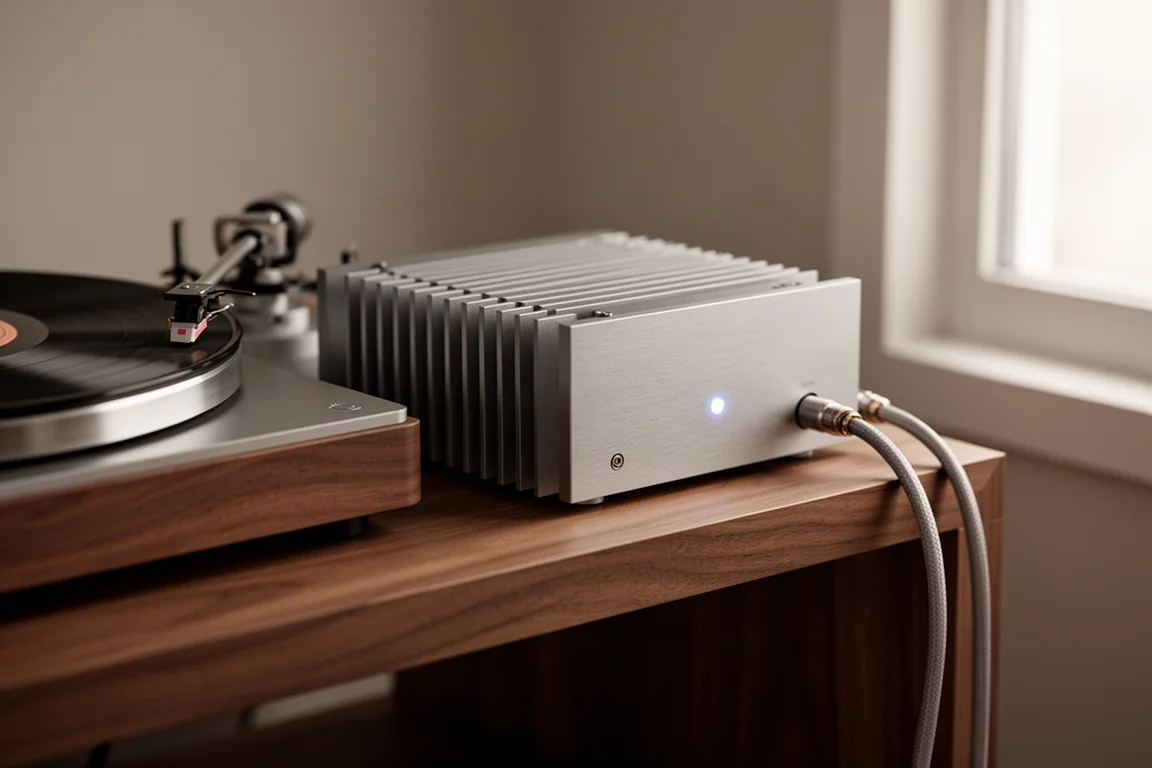
Amplifier pairing deserves some thought before you buy. The L1 responded well to a warm-sounding low-power class A amplifier, and it was at its most transparent with a tube amplifier. Either direction works, so choose based on the balance you prefer rather than on power output alone. Room placement is more forgiving than most: 18 inches from the wall behind the speaker is enough to get the bass, midrange and imaging working together.
Conclusion
The Axxess L1 is a compact two-way stand-mount speaker that prioritises clarity, neutrality and dynamic life over bass depth and sheer volume. It plays beautifully at low levels, images widely, and treats imperfect recordings kindly, which is a rare combination. If your room is modest, your amplifier is decent, and you value midrange truthfulness above all else, the L1 is an easy speaker to recommend. If you need deep bass or high output, look at larger designs and plan for a subwoofer.
Product link
View more details for Axxess L1
This product is mentioned in the review. Check the specifications, options, and compatibility before buying.
View more details for Axxess L1Further reading
Related Reviews
Hi-Fi Speakers
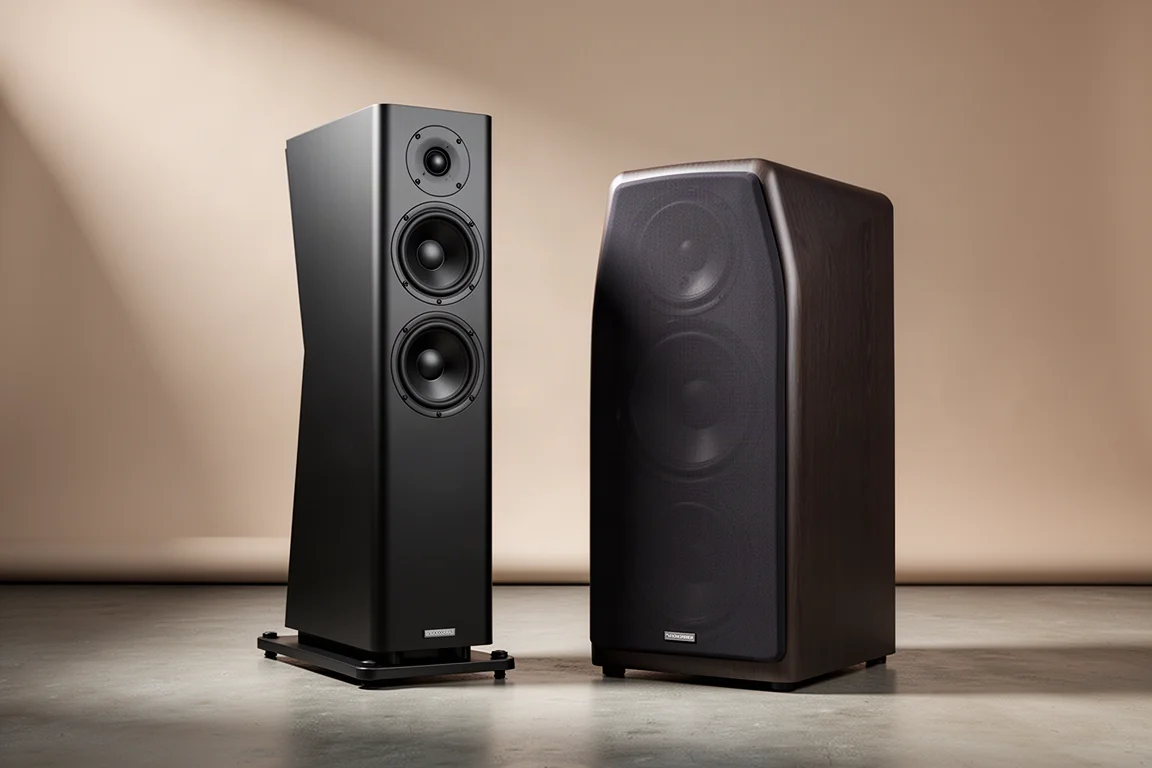
1723 THX Tower vs 1528 Bookshelf: Which Speaker Fits Your Room?
Two speakers at roughly the same price, built very differently. How the 1723 THX tower and the 1528 bookshelf compare on construction, bass, power needs, and sound.
Hi-Fi Speakers
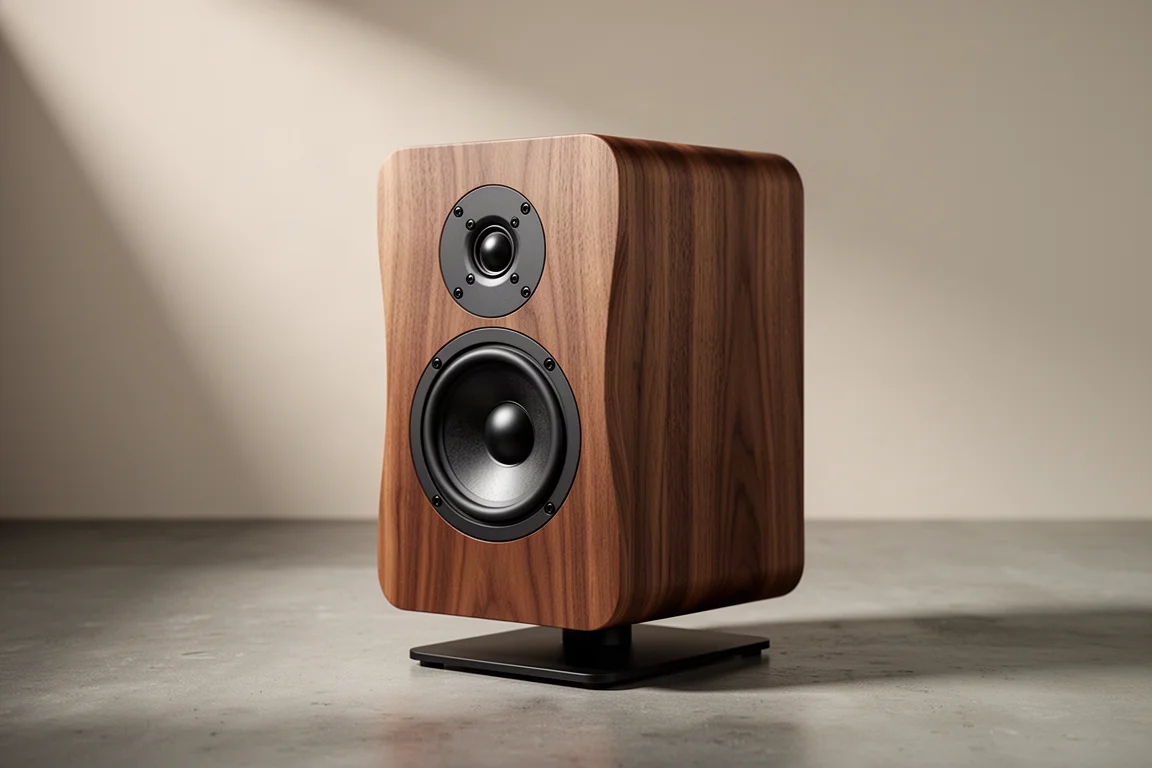
Acoustic Energy AE 300 Review: Deep Bass From a Compact Standmount
A two-way standmount with real wood veneer, surprising low-end weight, and a warm, easygoing character. Here is what to know before buying.
Hi-Fi Speakers
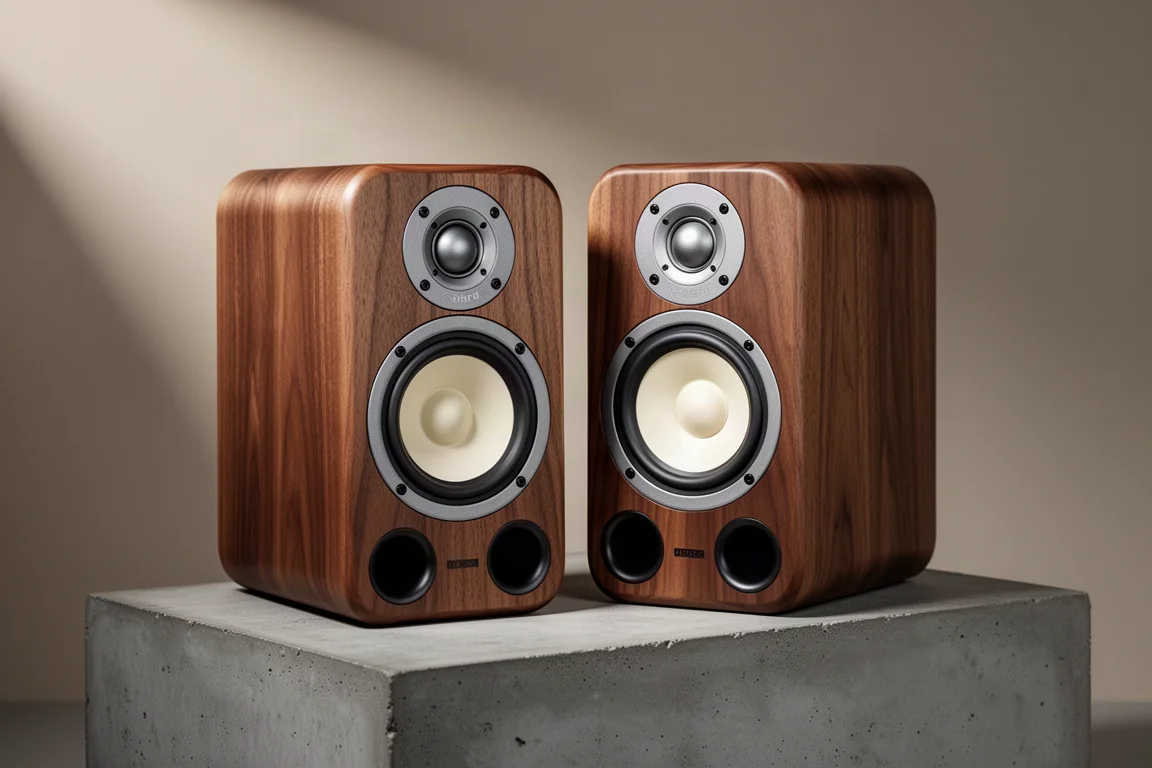
Acoustic Energy AE1 40th Anniversary Review: A Modern Take on a British Classic
A compact standmount that revives a 1980s favorite with all-new parts, a warm mid-centric balance, and a price of £1,499 per pair.