Hi-Fi Audio
Audiolab Omnia Review: An All-In-One Hi-Fi System With a Built-In CD Player
A practical look at the Audiolab Omnia, an all-in-one integrated amplifier that adds a modern DAC, a phono stage, a headphone amp, and a CD player to a familiar Class AB platform.
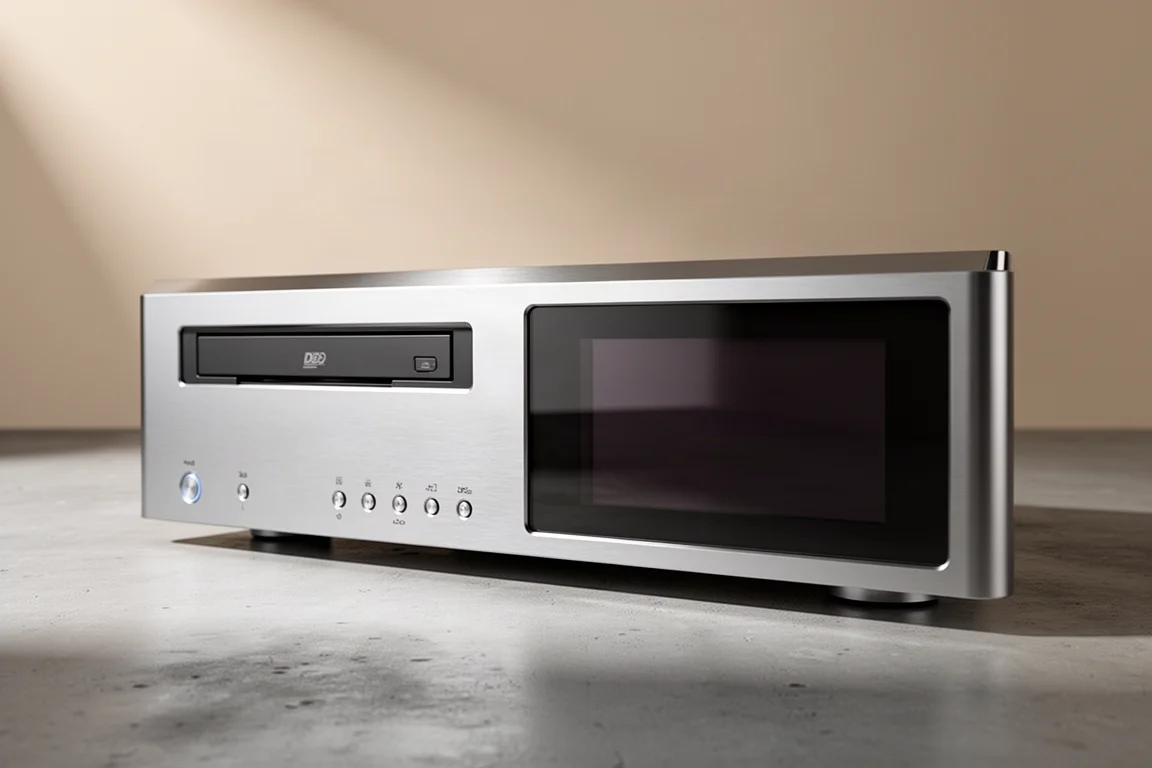
Introduction
The Audiolab Omnia is an all-in-one hi-fi system rather than a conventional stereo integrated amplifier. Inside a single chassis it combines an integrated amplifier, a digital to analog converter, a phono preamp, a headphone amp, and a CD player. It is available in black or silver, and it is built on the same amplifier platform as the Audiolab 6000A Play.
That combination is what makes the Omnia interesting. Many all-in-one systems ask you to give up physical media. The Omnia keeps the CD player and the phono stage while adding network streaming, Bluetooth, and a modern DAC.
Who the Audiolab Omnia Is For
The Omnia makes the most sense for listeners who still buy and play compact discs and also want vinyl playback and streaming from the same system. It removes the need for a separate transport, phono stage, streamer, and DAC, along with the cables and shelf space that come with them.
It is less compelling for anyone who has moved on from physical discs. A listener who streams everything would be paying for a CD transport and a phono stage that may never be used, and there are simpler, less expensive routes to comparable streaming features.
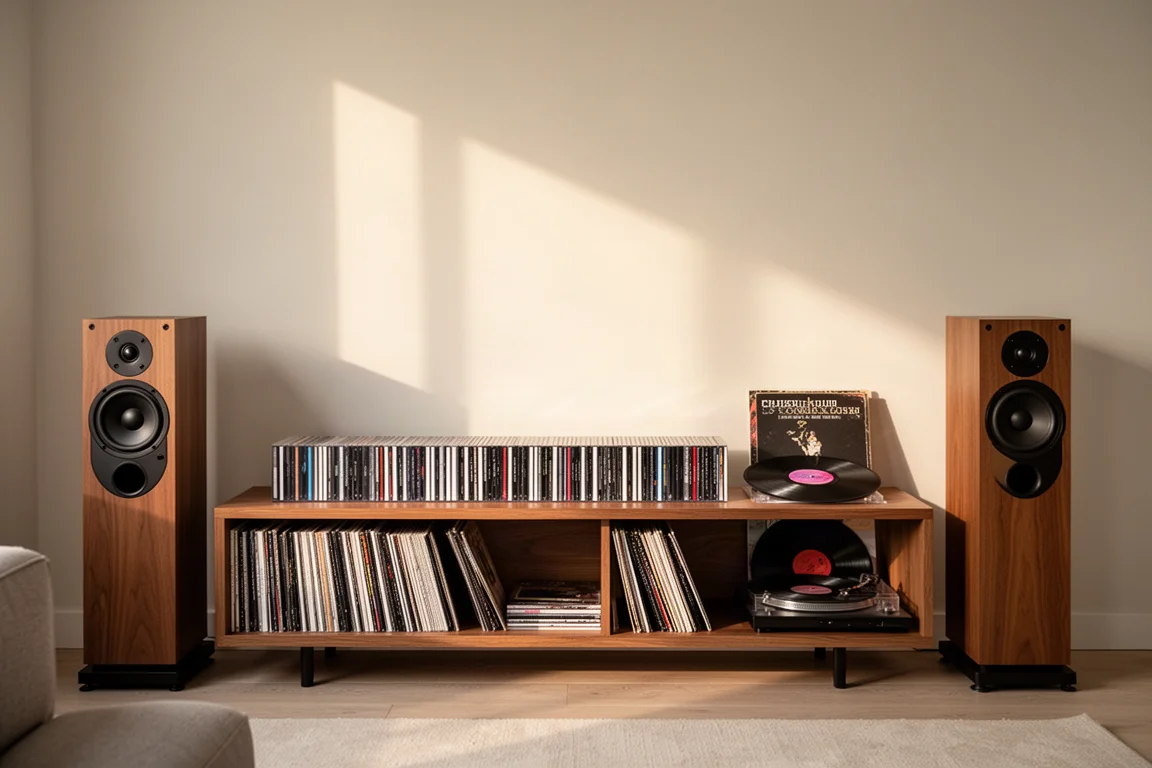
For a household that keeps a CD collection and a turntable in the same room as a television and a pair of speakers, though, the Omnia covers nearly every source in one box.
Main Strengths
The Omnia can be configured as a conventional integrated amplifier, as a preamp and power amp combination, or as a preamp on its own when feeding an outboard amplifier or powered speakers. At its core it is a 50 watt per channel Class AB integrated amplifier.
Analog and Vinyl Playback
With analog sources, the Omnia delivers the same full-bodied, nuanced, neutral sound as the 6000A Play, which is unsurprising given how much of the design the two share. Monitor Audio Silver series towers and Klipsch Forte IV both proved to be good matches, and the built-in phono preamp worked well with a turntable fitted with an Ortofon 2M Blue cartridge.
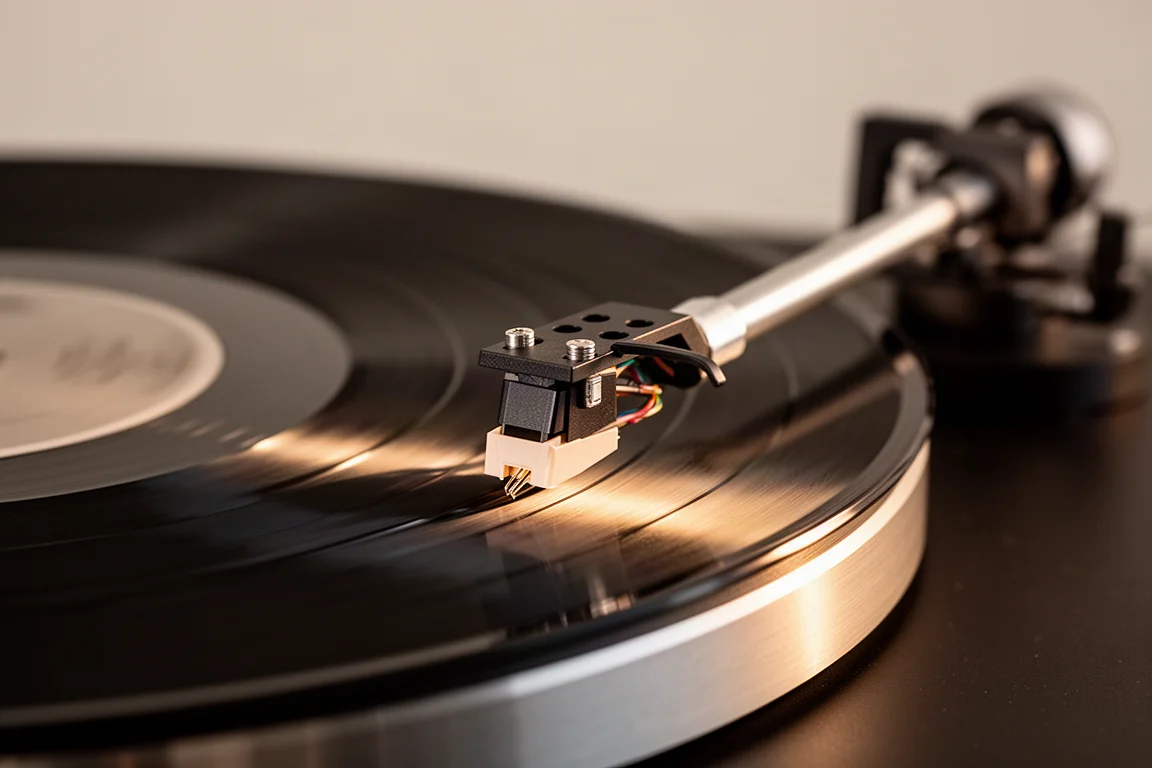
Listeners who already like the Audiolab house sound will find nothing here that pushes them away from it. The presentation stays even and uncoloured rather than leaning warm or bright, and the phono stage means one less box to buy and place.
Streaming and Digital Playback
The Omnia uses an ESS 9038Q2M DAC, a newer chipset than the one inside the 6000A Play. Digital connections include optical, coaxial, and USB, and those inputs support MQA from services such as Tidal as well as other high-resolution audio files.
Compared with the 6000A Play, streaming and digital playback are slightly more refined. The change is not tonal: the Omnia is not warmer or cooler. Instead there is a mildly lower noise floor, which makes the spaces between notes darker and gives a little more sonic contrast. Detail, texture retrieval, and spatial separation also come across as marginally stronger. It is not a dramatic difference, and in a room with higher ambient noise it may not be audible at all.
Network connectivity is available both wired and wirelessly, and setup through the free DTS Play-Fi app is straightforward. Bluetooth pairing was equally easy in practice.
CD Playback Quality
The built-in CD player draws on the technology of the Audiolab 6000 CDT, and it is the feature that separates the Omnia from most of its rivals. Disc playback is exemplary, with a nuanced presentation that holds on to every note and pulls the information off the disc as capably as considerably more expensive transports.
One limitation is worth stating plainly: the transport does not play SACDs, so anyone still invested in that format will need to look elsewhere.
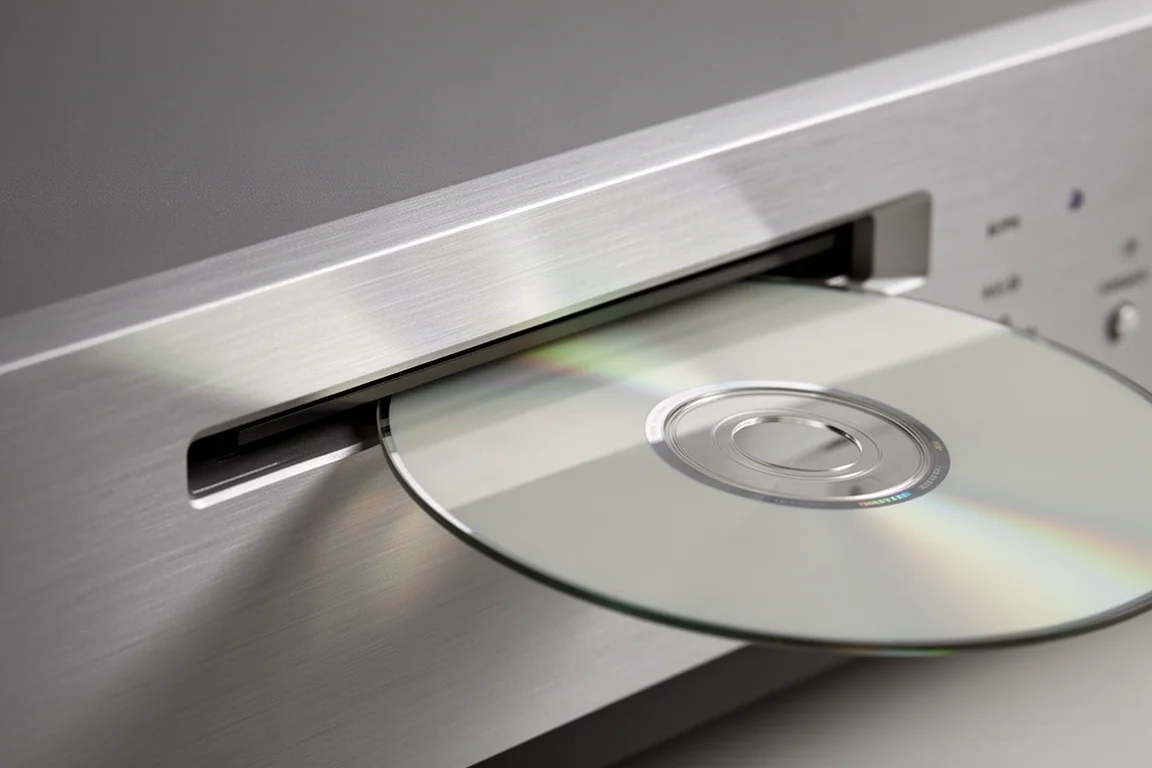
For a large CD collection, the transport is not a compromise. The overall sound still depends on the amplifier and preamplifier it feeds, but the player’s ability to read the disc and hand that information on is not the weak link.
Design, Screen, and Controls
The Omnia is a slick-looking component in either finish. The most distinctive element is the large colour screen, which by default shows input signal and volume information. It can also display analog or digital meters, or be switched off entirely. Album art is not available.
There are a handful of manual buttons on the front, mostly for the CD player, and a remote control is included. Volume is handled by two push buttons rather than a rotary dial, which is not always the best solution when adjustments need to be made quickly.
Things to Consider Before Buying
There is no tone control, so bass and treble cannot be adjusted, although balance control is provided.
The Omnia has preamp outputs but no dedicated subwoofer output with internal bass management. Adding a subwoofer means setting the crossover point, phase, and level on the subwoofer itself rather than inside the Omnia, which is workable but less tidy.
There is no HDMI input with ARC or eARC support, which is the omission most likely to matter in a living room system built around a television.
Roon compatibility needs careful reading. The DAC inside the Omnia is Roon tested and works with Roon software, but the Omnia is not a wireless Roon endpoint. It needs to be connected to a computer running Roon or to a separate device that is a wireless Roon endpoint.
Gapless playback is not available through the DTS Play-Fi app. The app is a third-party component rather than an Audiolab product, and gapless playback did work from other sources, including Apple Music through an Apple TV and Tidal over Bluetooth. The behaviour depends on the source and the service rather than on the amplifier itself.
How the Omnia Compares With Other All-In-One Systems
Against the NAD M10 V2, the Omnia gives up HDMI support and Dirac room correction and offers less power. It answers with a Class AB amplifier, a built-in CD player, and broadly similar digital and streaming capability for less money. The M10 V2 remains the more complete product if a capable CD player is already in the rack.
The NAD C700 covers similar ground without a CD player, adds HDMI, and costs less. Choosing between them usually comes down to whether the built-in CD player matters and whether a Class AB amplifier is preferred to a hybrid topology.
If budget is the main concern and the CD collection is gone, the Bluesound Power Node is hard to beat. It offers HDMI, solid power, and a well-regarded streaming app. Much of the same logic applies to the Cambridge Audio Evo series and the Naim Uniti Atom. The Evo series is technologically capable but can come across as a little sterile by comparison, while the Uniti Atom is a favourite that costs notably more without a large enough difference in overall sound quality, and without a CD player or a built-in phono preamp.
Buying Advice
Anyone who already owns the 6000A Play has little reason to change. The improvements in the Omnia are real but marginal, and not large enough to justify the spend on their own.
For a buyer who has not yet purchased the 6000A Play and knows that a CD player and a streaming device are both needed, the calculation is different. The Omnia is the better overall package, and it costs roughly $100 less than buying the 6000A Play and the matching 6000 CDT separately.
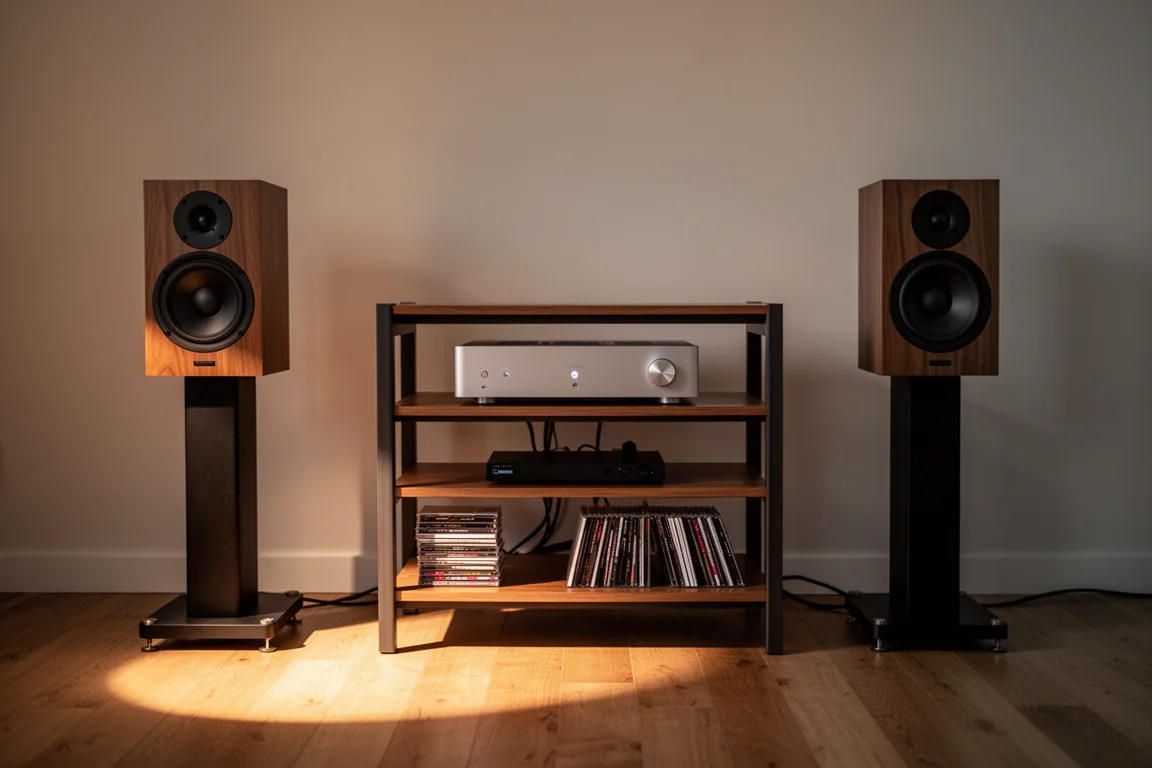
The practical test is simple. Count how often a disc goes into a player. If the answer is regularly, the Omnia is one of the most sensible all-in-one systems available. If it is never, the same money buys more power, more room correction, or a lower total outlay elsewhere.
Conclusion
The Audiolab Omnia is a marginal improvement over the 6000A Play, but it is a considerably more complete package for anyone who needs a CD player and streaming in one chassis. It pairs a familiar, neutral analog sound with a slightly more refined digital stage, a capable transport, and a long list of connections. Buy it for the sources you will actually use, and it will be a system that stays put for years.
Product link
View more details for Audiolab Omnia
This product is mentioned in the review. Check the specifications, options, and compatibility before buying.
View more details for Audiolab OmniaFurther reading
Related Reviews
Hi-Fi Audio
Accuphase C-57 vs Allnic H-7000V: Two High-End Phono Stages Compared
A fully balanced solid-state phono stage with a pitch-black noise floor meets a tube design built for well-loved records. Here is how to choose between them.
Hi-Fi Audio
Active vs Passive Hi-Fi: Five Components for a Modern System
Five components that define modern active and passive hi-fi systems, with the strengths, trade-offs and setup details worth weighing before you buy.
Hi-Fi Audio
Advance Paris A10 Apex Review: A Hybrid Integrated Amplifier That Covers a Lot of Ground
A French hybrid integrated amplifier with a class A tube preamp stage, analogue power meters, and an internal DAC and phono stage good enough to make extra boxes unnecessary.