Hi-Fi Amplifiers
Audiolab 6000A Play Review: Excellent Amplification, Streaming Trade-Offs
A close look at the Audiolab 6000A Play: strong amplification, a capable phono stage and DAC, and a DTS Play-Fi streaming layer that adds five second gaps between tracks.
Introduction
There is a piece of audio trivia that explains a great deal about modern streaming. A vinyl record carries one continuous groove per side. A CD carries one continuous audio track, with a table of contents at the start of the disc that tells the player when to advance the track number, creating the illusion of separate tracks. Both formats play seamlessly from start to finish, and so do cassette tapes. Streaming is the first format in the history of audio that has, in some implementations, moved listeners backwards to gapped playback.
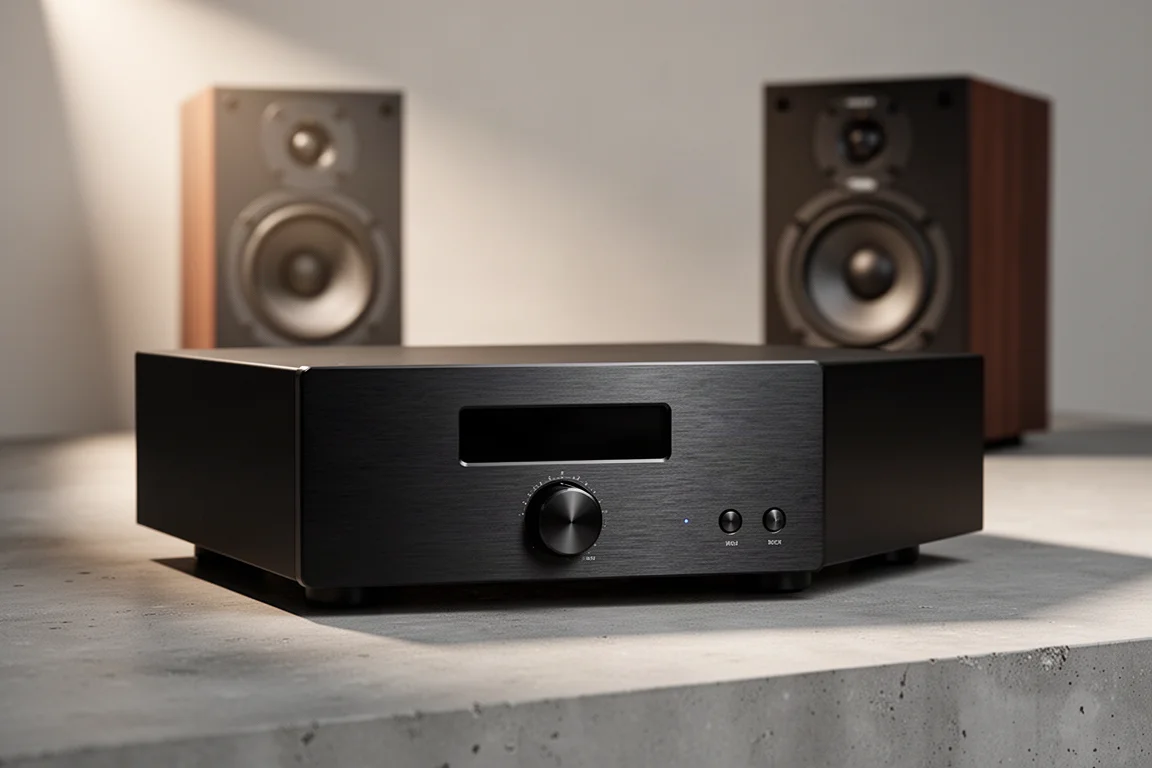
That background is worth keeping in mind with the Audiolab 6000A Play. It is a 1,000 euro integrated amplifier with a built-in DAC, a moving magnet phono stage, and network streaming built around DTS Play-Fi. The amplification is excellent. The streaming module is where the story becomes more complicated.
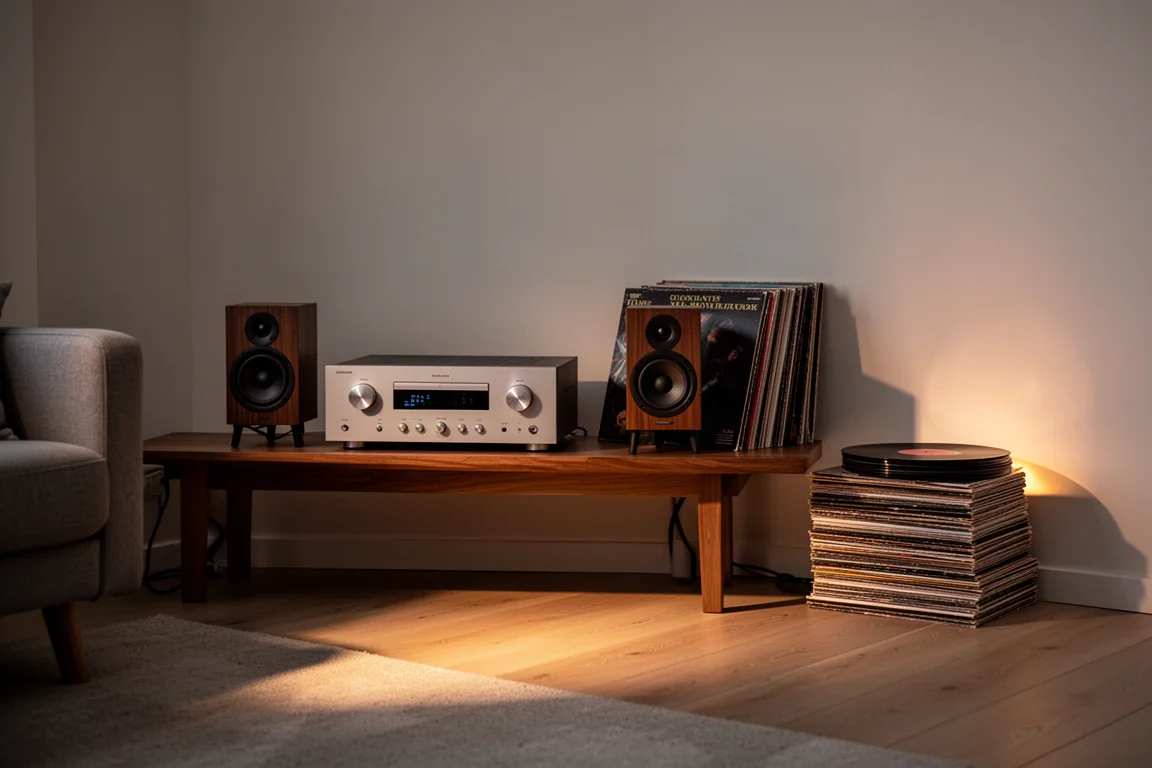
On paper, the 6000A Play delivers 50 watts per channel into 8 ohms and 75 watts per channel into 4 ohms. Three rotary controls sit on the front panel, a display shows volume level and input clearly enough to read from across the room, and a remote control is included. Network streaming can run wired or wirelessly. Everything above the streaming layer is put together with obvious care.
Who This Product Is For
The 6000A Play suits listeners who treat music as a sequence of separate songs rather than one continuous album. If your listening is built around multi-artist playlists, or if Spotify Connect is your main source, the limitations described further down will rarely touch your day.
It is also a strong option for vinyl listeners. The moving magnet phono stage gives nothing to complain about, and the internal DAC performs well at the price. Anyone who wants one solidly built integrated amplifier with a turntable input, digital inputs, and basic network streaming will find a lot to like here.
It is a less obvious choice for listeners who play albums from beginning to end and expect no gap between tracks. That group should read the streaming section carefully, because a five second pause between tracks changes how a continuous album feels.
Main Strengths
Sound quality is the headline. The 6000A Play is detailed, transparent, and gutsy, and it makes a superb match for the GoldenEar BRX speakers it was partnered with. The clearest separation from the more expensive NAD M10 V2 is that the Audiolab is not quite as detailed and not quite as robust with dynamics. It is also not as finessed as the Naim Uniti Atom. Both alternatives sell for roughly three times the price, which makes the gap feel small in practice.
The DAC is impressive for an amplifier at this price, and the phono stage stands up on its own merits. The mode switch is the unusual part: it moves the amplifier between integrated mode, pre-power mode for use as a power amplifier, and preamp mode for use as a preamplifier. That flexibility makes the 6000A Play a useful building block rather than a dead end.
Design and Everyday Usability
The chassis is chunky, solid, and beautifully made, and it produces a very satisfying clunk when switched on. The display is basic but good, showing volume and input clearly from a listening position.
The three rotary controls are the volume wheel, the source selector, and the mode switch, and all three feel good to use. The supplied remote covers the basics from the couch. The amplifier also drops into auto standby once playback stops.
Streaming works wired or wirelessly. Wired is the recommendation, not because the signal is more robust or sounds any different, but because an ethernet cable lets the wireless aerials be pushed out of sight for a much cleaner looking unit.
Streaming and Connectivity in Daily Use
Streaming here means Spotify Connect and DTS Play-Fi, and nothing else. There is no Roon Ready support, no Apple AirPlay, and no Chromecast. The “Play” in the model name refers to DTS Play-Fi.
Spotify Connect behaves exactly as expected. The stream does not travel through the phone: the phone hands the stream address to the amplifier and playback continues, and it is gapless. Setup is a one-time task, since Spotify Connect is not running out of the box. Installing the DTS Play-Fi app and adding Spotify Connect through it activates the feature, and it stays running afterwards.
Play-Fi itself supports major services including Tidal, Qobuz, and Amazon Music. The catch is that those streams travel through the phone before being handed off to the amplifier, so the phone must stay switched on and within range of the network. Put the phone into airplane mode and the music stops. Restart the phone, and the app does not remember the last track or the position within it.
Play-Fi can also run multi-room, as long as you accept a ceiling of 16-bit and 48 kHz. A critical listening mode inside the app raises support to 24-bit and 192 kHz, but gives up multi-room in exchange.
Things to Consider Before Buying
The central issue is gapless playback. Play-Fi playback on the 6000A Play inserts gaps of around five seconds between tracks, which is far larger than the fraction of a second typical elsewhere. Playlist listeners will barely notice. Album listeners will notice constantly, because live albums, DJ mixes, classical works, opera, and continuously mixed records all depend on seamless transitions.
Reliability varied in testing. Streams glitched frequently on one Android phone and less often on an iPhone, so results appear to depend partly on network conditions. Workarounds exist, including running a Squeezebox server or using BubbleUPnP on Android to stream gaplessly into the Play-Fi input, but both add a step to something that should simply work.
There is no USB port on the back, so adding a small single-board computer as a USB source is not an option. Audiolab also offers the 6000A, which keeps the phono stage and the DAC but leaves out the Play-Fi module and costs 250 euros less. That saving can go toward a separate streamer feeding the internal DAC, or a small network bridge, which sidesteps the gap issue while keeping the same amplification. It is worth noting that the gaps come from the Play-Fi implementation rather than the amplifier stage itself.
Buying Advice
Buy the 6000A Play if your listening is playlist-driven, if Spotify Connect is your primary source, or if vinyl is a major part of how you listen. The amplification, phono stage, and DAC make it an easy recommendation at this price, and the pre-power and preamp modes give it room to grow with the rest of a system.
If gapless album playback is essential, the 6000A paired with a third-party streamer is the more sensible path, since the same amplifier section sits underneath either way.
Either way, the decision comes down to one question: does a pause between tracks bother you? If the answer is no, the 6000A Play is a very good amplifier at a fair price. If the answer is yes, weigh the alternatives before committing.
Conclusion
The Audiolab 6000A Play is a beautifully made integrated amplifier with a strong phono stage, a capable DAC, and a genuinely enjoyable sound for the money. Its streaming layer is the caveat: a narrow set of services, phone-dependent Play-Fi playback, and five second gaps between tracks that will frustrate album listeners. Playlist listeners and vinyl fans can buy with confidence. Album listeners should weigh the alternatives first.
Product link
View more details for Audiolab 6000A Play
This product is mentioned in the review. Check the specifications, options, and compatibility before buying.
View more details for Audiolab 6000A PlayFurther reading
Related Reviews
Hi-Fi Amplifiers
Accuphase E-280 Review: Entry-Level Accuphase With Flagship Attention to Detail
A close look at the Accuphase E-280 integrated amplifier, covering its champagne build, AAVA volume control, sound quality, and the speakers and sources that suit it best.
Hi-Fi Amplifiers
Advance Paris A10 Classic vs Yamaha A-S301: Two Integrated Amplifiers Compared
A practical comparison of a $350 integrated amplifier and a $2,500 reference model, covering the differences that matter and the ones that do not.
Hi-Fi Amplifiers
Affordable Chinese Amplifiers Worth Buying: Five Budget Hi-Fi Amps Compared
A practical look at five affordable amplifiers, what each one does well, and the trade-offs to weigh before you buy.