Hi-Fi Amplifiers
Audio Note Tonmeister 300B Review: Musicality Above All
A $19,000 single-ended 300B integrated amplifier with a plain chassis and an exceptional sound. Here is what it does well and what to check before buying.
Introduction
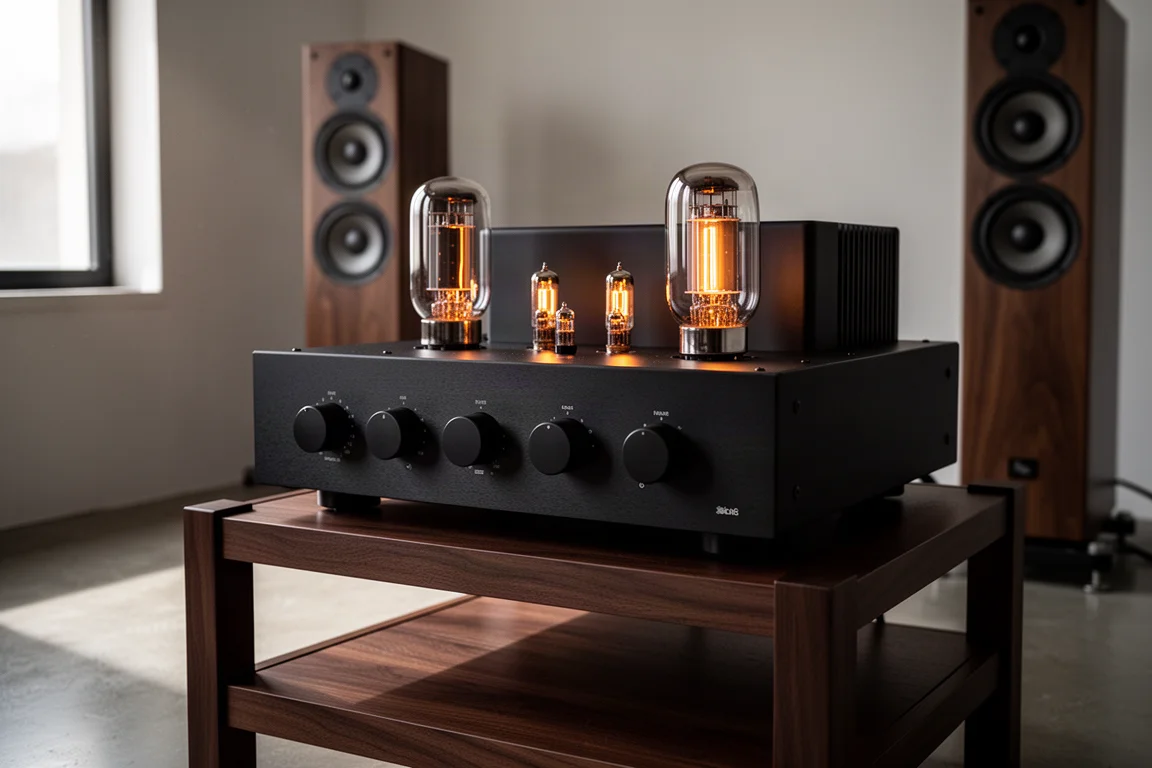
Audio Note has spent decades building a following in the UK, Japan and other markets, and the brand carries a reputation that follows it into every listening room: once you hear it, it is hard to go back. The Tonmeister 300B is a direct test of that idea. This line-level integrated amplifier sells for $19,000 in the US, delivers 8 watts per channel into 4 or 8 ohms, and uses a deliberately small tube complement. It also arrives in a heavy, plain chassis that makes almost no attempt to look like a luxury product.
The Tonmeister is a single-ended 300B tube integrated, which means it combines a preamp section with a power amplifier in one box. There is no DAC and no phono stage inside the standard line version, so a source with its own conversion or phono stage is part of the package. Audio Note also offers a phono version and a silver upgrade version, both at higher prices and both with additional tubes.
The short version is that the sound and the casework pull in opposite directions. That tension is what makes this amplifier worth a careful look rather than a quick verdict.
Who This Product Is For
Because the Tonmeister is line level only, it suits listeners who already own their sources: a streamer paired with a DAC, a CD player, or a turntable with a separate phono stage. The rear panel provides four single-ended RCA inputs plus a tape loop for recording devices, so several sources can stay connected at once. There are no balanced XLR inputs, which is typical for this kind of tube design.
Power output is where the buyer profile narrows. With 8 watts per channel, the Tonmeister is happiest with higher-sensitivity speakers, roughly 87 to 88 dB, in small to medium sized rooms. Less sensitive designs in the mid 80s dB range could still be driven to reasonable levels in a room of that size, but they will not reach party volume. Very large rooms and very inefficient speakers are the wrong pairing.
This amplifier is also a natural fit for anyone who enjoys tube rolling. Five tubes in total, two 300B output tubes, a 5U4GB rectifier, an ECC82 or 12AU7, and a 5687, means the cost of experimenting stays manageable compared with amplifiers that carry ten or more tubes.
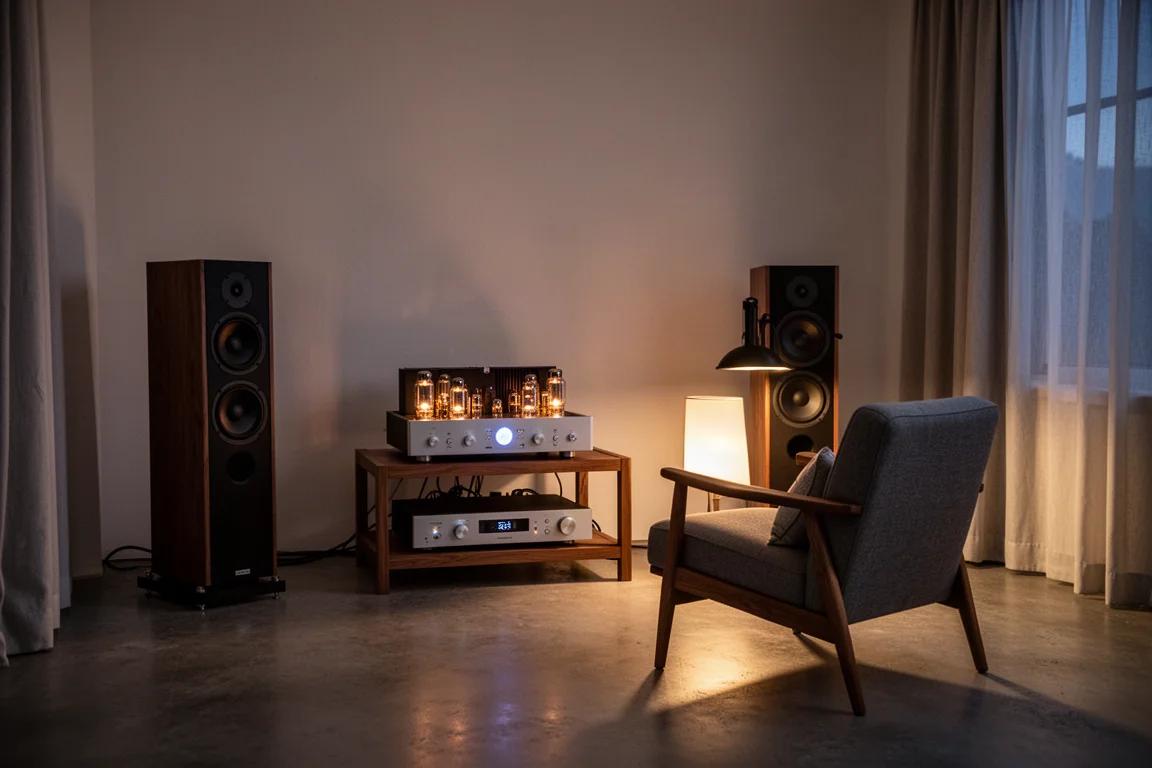
The trade-off here is philosophical rather than practical. Listeners who chase the lowest distortion figures and the most analytical presentation have plenty of solid state options to consider. The Tonmeister is aimed at people who want the performance to feel like music first.
Main Strengths
Three areas stand out on this amplifier, and they are closely related: the way it handles low frequencies, the way it renders the mid-range, and the way it fills a room.
Bass: Linear, Controlled, Room Filling
The bass is the part most likely to divide listeners. It is not a punchy, chest-pounding presentation, and anyone who wants visceral slam will not find it here. What the Tonmeister does instead is control and finesse low frequencies down to around 20 Hz with a smooth, linear, textured quality that loads the room rather than localizing at the speakers.
The character is closer to an open baffle subwoofer than a sealed box: bass that seems to come from everywhere, rumbling without muddiness, dissipating quickly while still being felt. That is a notable result from 8 watts per channel.
Mid-range: Texture and Holographic Imaging
The mid-range is where this amplifier makes its case. Voices and instruments arrive with texture, nuance and convincing tonal character, and the presentation stays smooth rather than bright or clinical. The result is a sense of a hologram in front of the listener, with a singer or a guitar occupying a defined space in the room instead of being flattened onto a plane between the speakers.
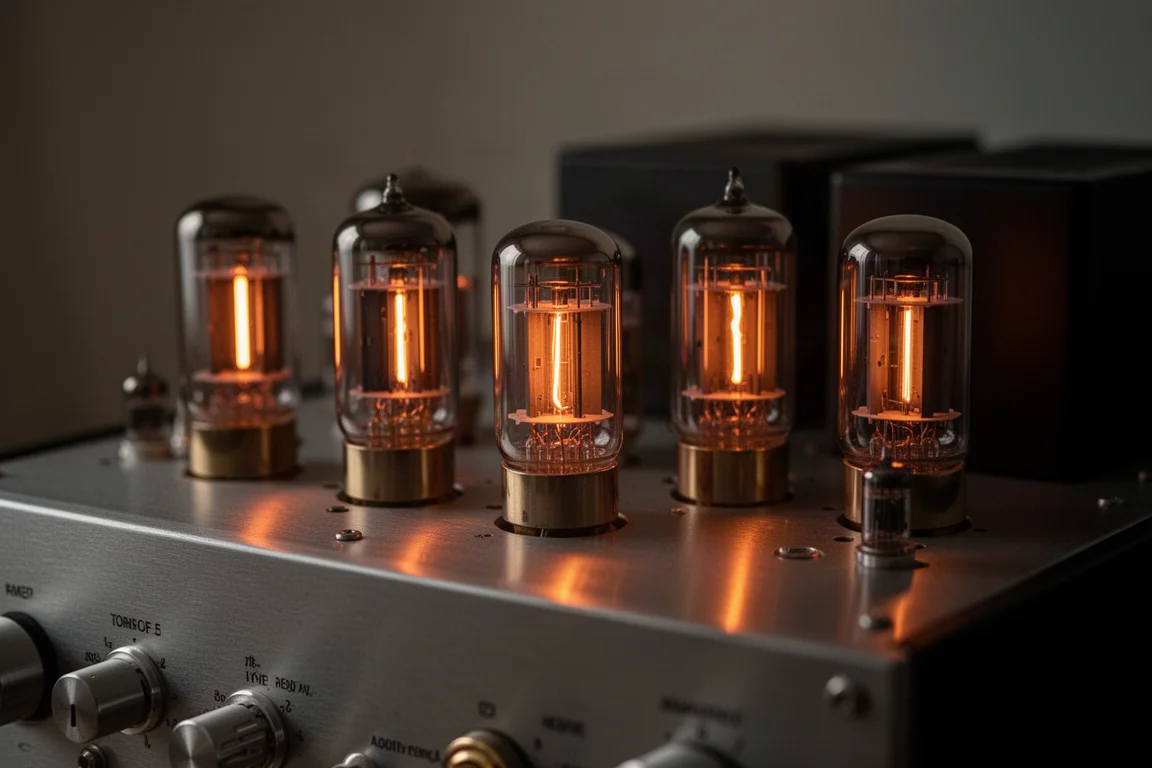
Detail is present without being pushed forward. Nothing sounds etched or over-lit, and instruments that live in this range, from acoustic guitar to saxophone to the human voice, come across as believable rather than merely reproduced.
High Frequencies: Sweetness Without Brightness
High frequencies are sweet and sparkly rather than forward. There is no glare and no hardness, and the space around high frequency events is rendered vividly enough that a snare can sound like a snare in the room rather than a note emerging from a driver. That is a rare quality, and it makes long listening sessions easy.
Soundstage and Room Filling Presentation
Soundstaging is the strongest argument for the Tonmeister. The presentation extends past the room boundaries, surrounds the listener and fills the space with air and atmosphere instead of building a localized wall of sound. Switching from a more measurement-focused amplifier to this one makes the change obvious almost immediately.
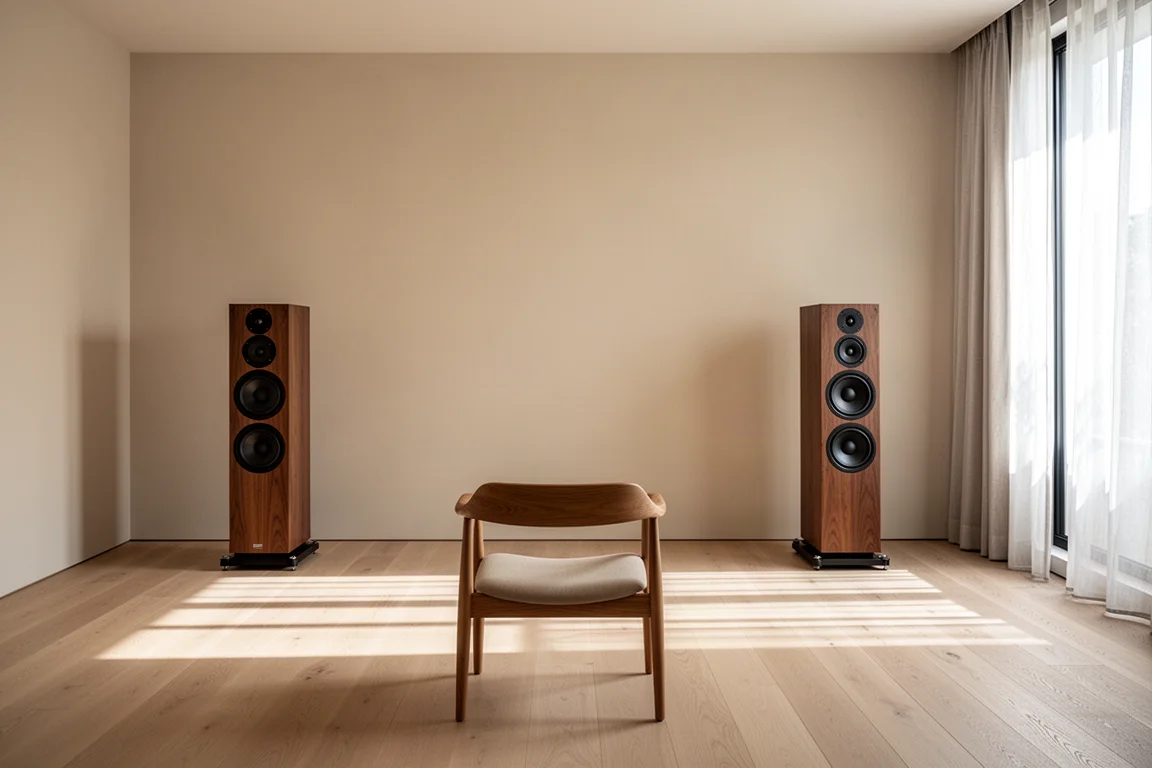
Because the effect is tied to the amplifier rather than to one particular speaker, it tends to follow the Tonmeister from system to system, adding mid-range body and opening up the stage of whatever it is driving.
Things to Consider Before Buying
The casework is the main compromise. The chassis is a large, heavy box with a plain black top cover, and the design gives little thought to how the amplifier will look in a living room. The rear panel carries a glossy piano-black finish that is arguably the most elegant part of the whole product, which is an odd place to put the polish.
There is no remote control. At $19,000 that is a genuine inconvenience, and the four front-panel knobs, volume, balance, input selection and record, are the only way to make adjustments. The volume and balance controls do feel smooth and well weighted, with a pleasing resistance, and the balance control is useful in systems where speaker placement is not perfectly symmetrical.
Removing the top cover takes 20 small screws, which is far more than necessary on a tube amplifier where owners will want regular access to the tubes. The internals themselves are a different story: in-house Audio Note transformers, capacitors, wiring and solder, with quality control marks on the boards. That level of vertical integration is unusual, and it is the strongest practical justification for the price.
Buying Advice
The Tonmeister is available in silver and black. The silver finish is the harder sell in a domestic setting; black is the more forgiving choice and the one most likely to sit quietly in a listening room.

Buyers who want a phono stage or the silver upgrade should budget for those versions, which cost more and add tubes. For tube rolling, a set of Western Electric style 300B tubes added roughly five to ten percent more openness and depth depending on the track, with slightly smoother edges in the mid-range. Spare tubes are easy to source, and the five-tube count keeps experimentation affordable.
Speaker matching should drive the decision more than anything else. A higher-sensitivity speaker in a small to medium room will let the amplifier do what it does best, and its ability to add body and stage depth tends to flatter coherent single-driver designs in particular.
Conclusion
The Audio Note Tonmeister 300B is a rare case where the sound and the object are almost unrelated. The chassis is plain, heavy and awkward to open, and the absence of a remote at this price is hard to defend. None of that matters once the music starts. The mid-range is textured and holographic, the bass is linear and room filling, the highs are sweet without brightness, and the soundstage extends well beyond the speakers.
For listeners with suitable speakers in a small to medium room who value musicality above measured performance, this amplifier makes a persuasive case for the following that surrounds the brand. Anyone who needs high output levels, a remote, or balanced connections should look elsewhere, but those who want music reproduced as music will understand the appeal quickly.
Product link
View more details for Audio Note Tonmeister 300B Integrated Amplifier
This product is mentioned in the review. Check the specifications, options, and compatibility before buying.
View more details for Audio Note Tonmeister 300B Integrated AmplifierFurther reading
Related Reviews
Hi-Fi Amplifiers
Accuphase E-280 Review: Entry-Level Accuphase With Flagship Attention to Detail
A close look at the Accuphase E-280 integrated amplifier, covering its champagne build, AAVA volume control, sound quality, and the speakers and sources that suit it best.
Hi-Fi Amplifiers
Advance Paris A10 Classic vs Yamaha A-S301: Two Integrated Amplifiers Compared
A practical comparison of a $350 integrated amplifier and a $2,500 reference model, covering the differences that matter and the ones that do not.
Hi-Fi Amplifiers
Affordable Chinese Amplifiers Worth Buying: Five Budget Hi-Fi Amps Compared
A practical look at five affordable amplifiers, what each one does well, and the trade-offs to weigh before you buy.