Hi-Fi Audio
Audio Note Kit 2.1 DAC Review: A Purist Tube DAC That Gets Close to the Audio Note Sound
A close look at the Audio Note Kit 2.1 DAC, a non-oversampling tube converter sold as a kit or pre-built, and how its sound compares with the Audio Note entry-level reference.
Introduction
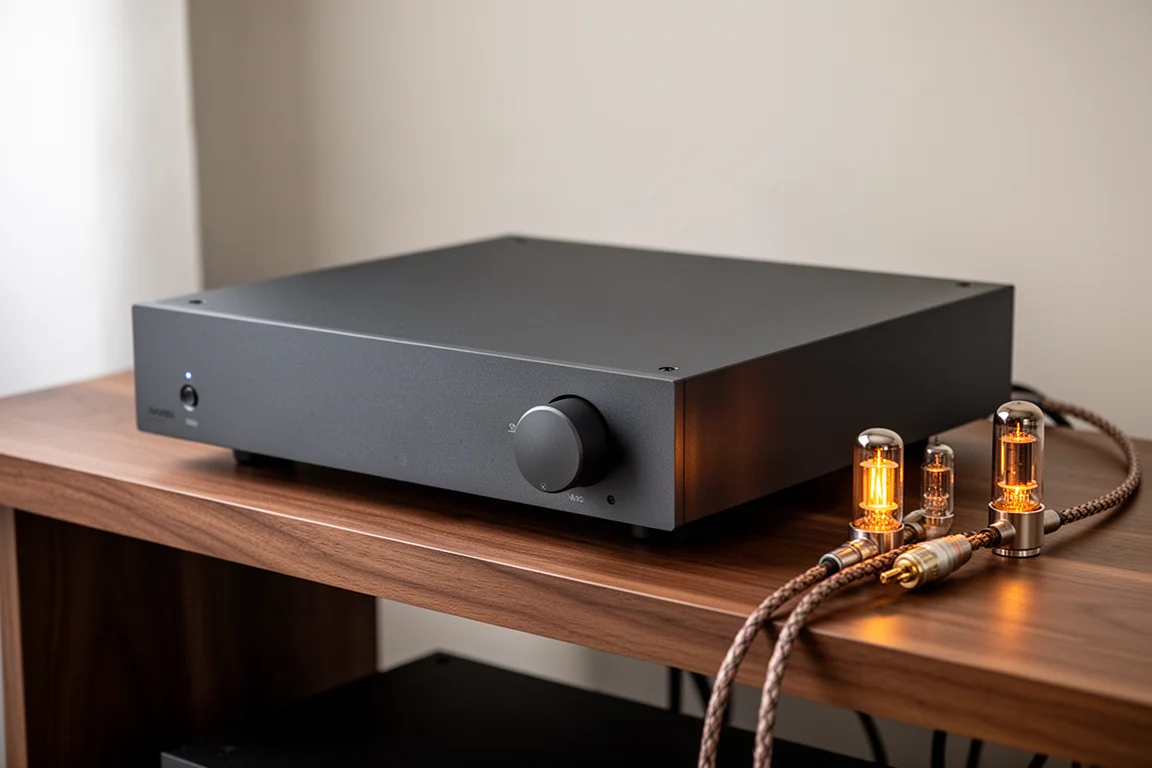
The Audio Note Kit 2.1 DAC is a tube digital-to-analog converter built around a deliberately old-school idea: leave the digital signal alone. There is no oversampling, no jitter correction, and no DSD support. What you get instead is Red Book playback through a resistor ladder design with a tube output stage, priced at $1,500 in standard form and $1,750 in the Signature version reviewed here.
The name deserves a moment of clarification, because it causes genuine confusion. Audio Note Kit is a separate company from Audio Note in the UK. The two shared an affiliation around 2004, and that relationship ended long ago. The 2.1 uses some Audio Note parts and follows a similar purist philosophy, but its circuitry and design are its own. This is not a rebadged Audio Note product, and it is not built to the same recipe.
What makes it worth a closer look is where it lands. It costs roughly half of the Audio Note entry-level DAC, yet its Signature version uses a copper foil Audio Note capacitor, a step above the tin foil capacitors found in that entry-level model. On paper that is an unusual combination. In practice it also gets remarkably close to the sound that makes those Audio Note converters so appealing.
Who the Audio Note Kit 2.1 DAC Is For
This converter is aimed at listeners who want a real taste of the Audio Note sound profile without paying the price of entry. If you are on a strict budget, if you do not need brand prestige, and if you are not concerned that every single component was meticulously selected in the UK, the 2.1 makes a strong case for itself. The Signature version in particular feels generous at its price point.
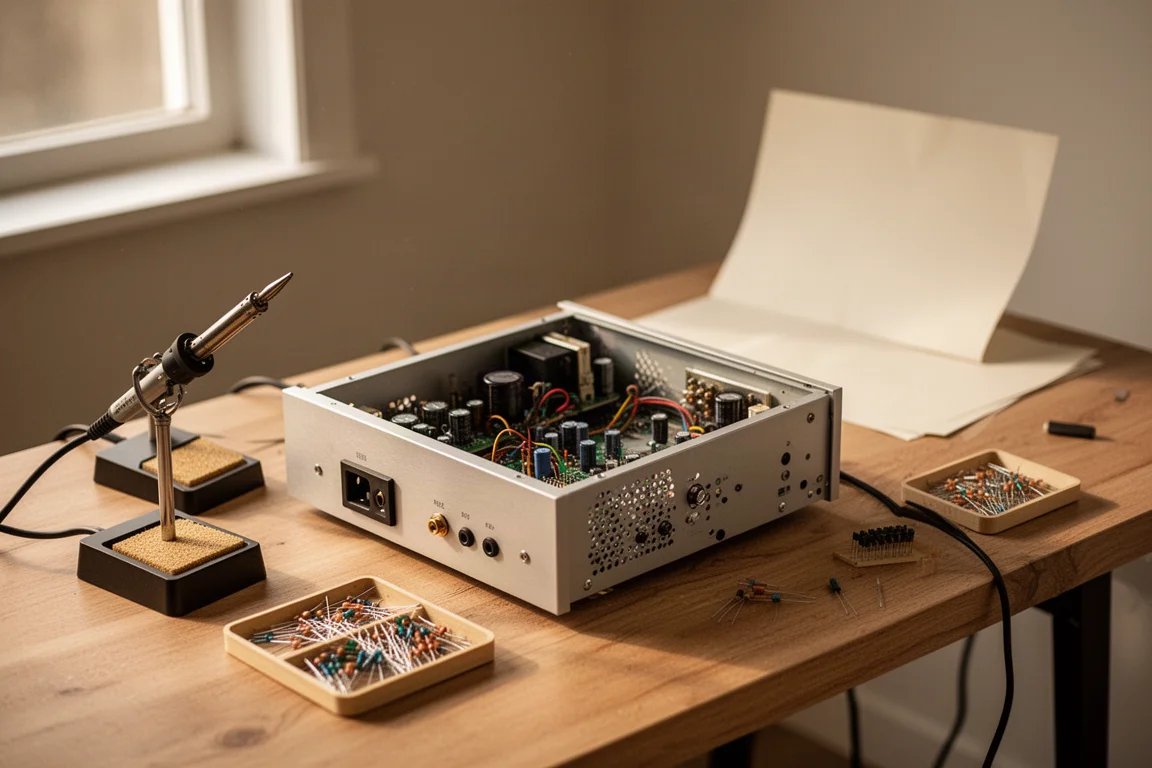
It also suits builders. The 2.1 is sold as a kit that you assemble yourself, or as a finished unit that the company builds for you for roughly $500 more. Either way it behaves like a plug-and-play component once it is running: one USB input and one coaxial input on the back, toggled with a small switch, plus a single set of RCA outputs. There are no sampling rate menus to navigate and no features to fiddle with.
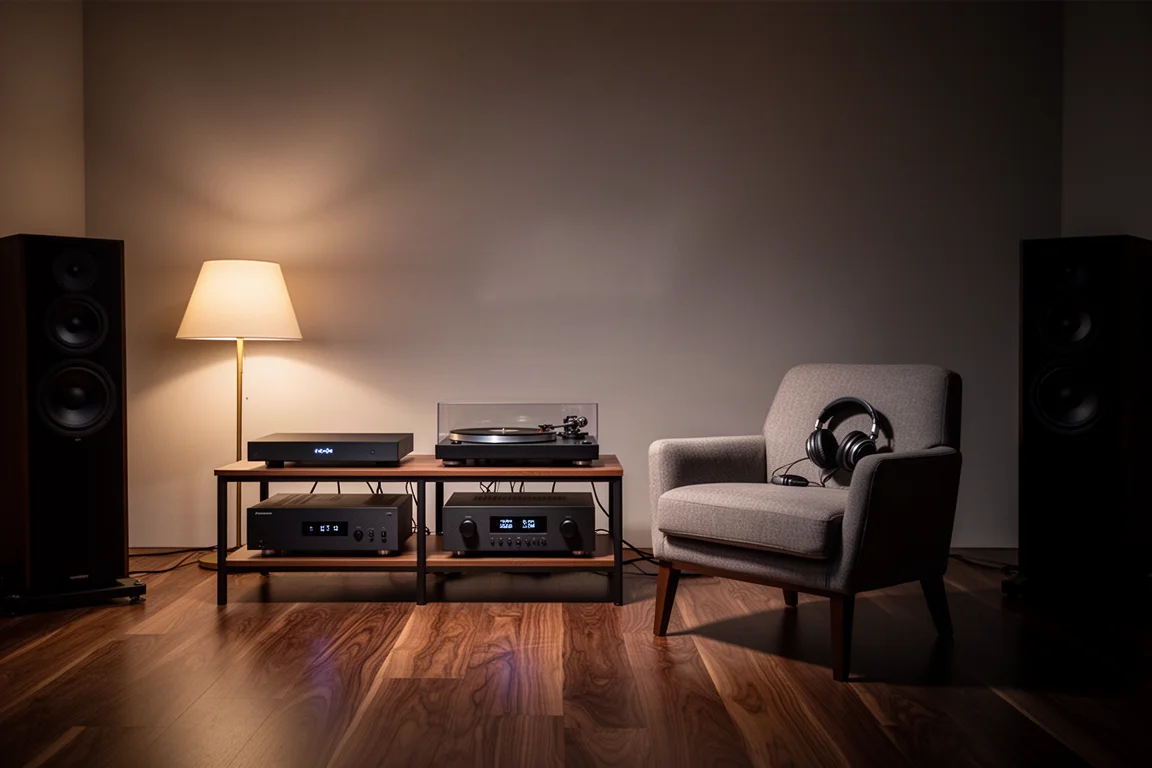
It is not a converter for people who want flexibility. If you like the idea of oversampling, DSD playback, jitter correction, or a stack of digital inputs and outputs to choose from, this is the wrong design for you, and the same is true of the Audio Note models it follows. The 2.1 does one job in one way, and everything about it reflects that choice.
Main Strengths: A Purist Tube DAC Done Well
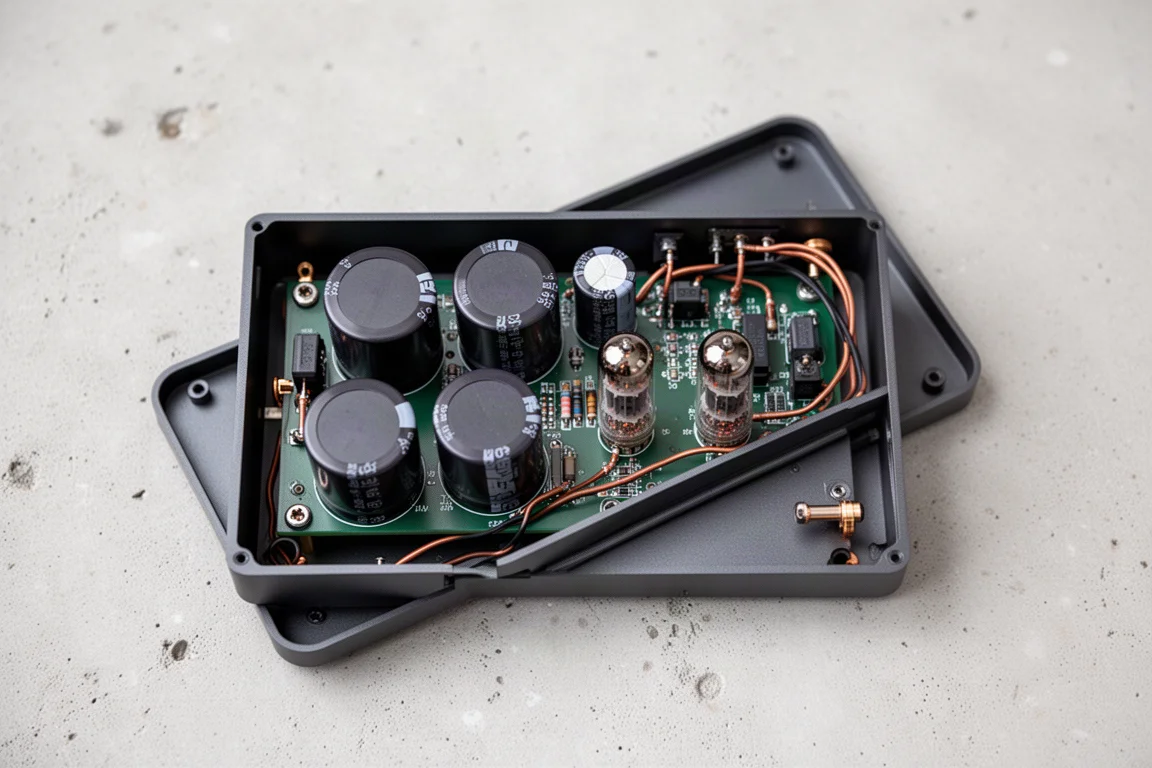
The design philosophy here is minimal intervention. Audio Note Kit and Audio Note both take the view that the less you do to a digital signal, the better, and the 2.1 follows that path with a resistor ladder converter and a tube output stage. Two 6922 tubes handle the output, while an E82 and a 6X5 serve as rectifier tubes. The “1X oversampling” marking on the unit is simply another way of saying there is no oversampling at all.
The parts selection is where the Signature version earns attention. Alongside Audio Note components, the chassis houses parts from Mundorf, Rubicon, Elna, and Takman. The standard version at $1,500 uses an Audio Note tin foil bypass capacitor, while the $250 Signature upgrade swaps in a copper foil Audio Note capacitor. Copper foil sits a step above tin foil in that hierarchy, which is notable in a converter that costs about half of the Audio Note entry-level DAC using the tin foil part.
Sonically, the 2.1 delivers the qualities that define this family of converters. It is smooth, with a wide and deep sound stage. The top end is refined and airy rather than bright, the midrange carries an unmistakable tube character, and string instruments and vocals come through with convincing body. Instrument separation holds up when the music gets busy, and nothing sounds crowded or compressed.
Compared directly with the Audio Note DAC 0.1x, the differences are small rather than dramatic. The 2.1 is a smidge sharper, and its midrange is a little clearer and less bloomed, while the 0.1x sounds slightly fuller and more generous through the middle. Both are easy to live with, and the gap is far narrower than the price difference would suggest.
Design, Connectivity, and What Is Inside the Chassis
The 2.1 looks like the converters it takes after: a plain rectangular box with a low, unremarkable profile. There is no red lettering on the front panel, and the badge reads ANK rather than Audio Note. Aesthetics are clearly not the priority here, and buyers who need a component to make a visual statement should look elsewhere.
Around the back, the layout is as simple as it gets. A USB input and a coaxial input sit side by side, with a switch to toggle between them, and a single set of RCA outputs handles the connection to your amplifier. Nothing else is provided, and nothing else is needed.
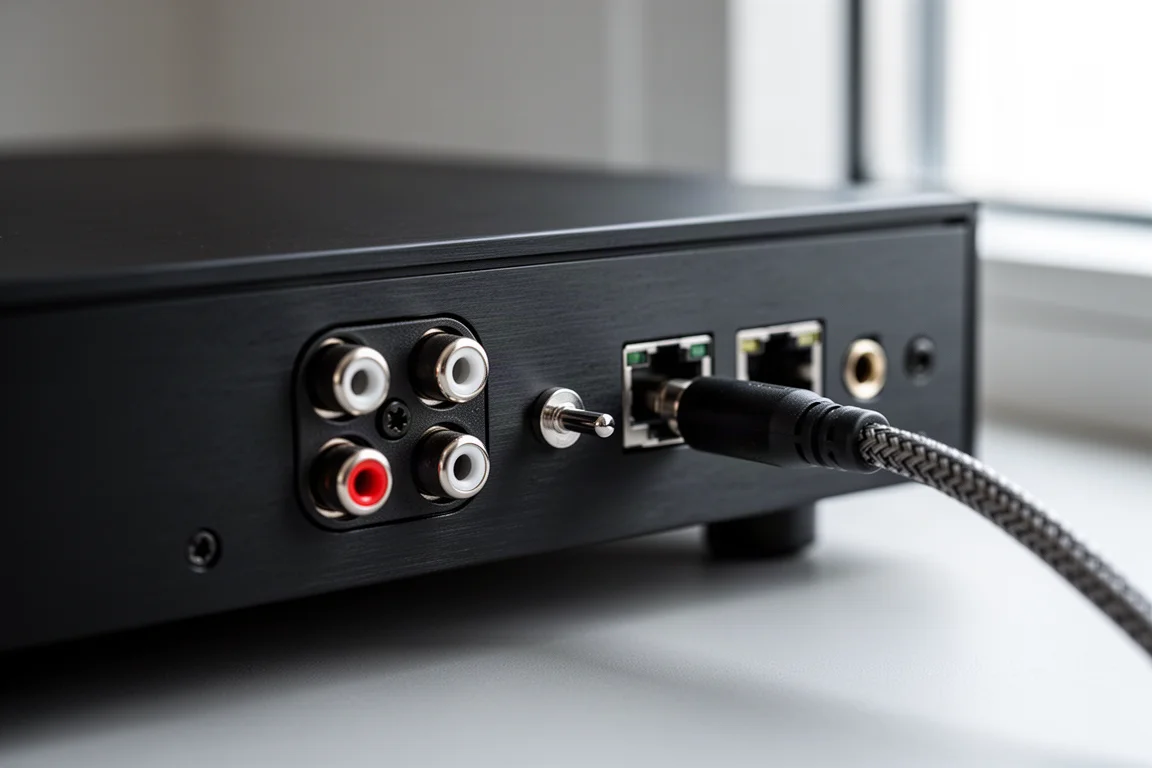
That restraint is the point. Once the unit is connected, there is nothing to configure. You plug in a source, choose the input, and listen. Whether that sound works in your system is the only decision left to make.
How the 2.1 Compares With the Audio Note Sound
Sound stage is the clearest point of overlap. Placed side by side with the Audio Note DAC 0.1x, the 2.1 matches it closely for width and depth, and it is genuinely difficult to say which one throws the larger image. The smoothness, the refinement in the treble, and the airiness up top all point in the same direction.
Detail retrieval is where the 2.1 takes its own path. It is not the sharpest or most forensic converter, and listeners who want every nuance drawn with pinpoint precision may find it too relaxed. Paired with speakers that already have a crisp, detailed top end, however, the 2.1 does something useful: it keeps the detail while removing the hard edge, so the presentation stays sweet and never turns aggressive. That quality is what makes strings, vocals, and acoustic instruments so enjoyable through it.
Bass follows a similar logic. Control and extension are excellent, and low notes come through with texture and nuance, extending deep and staying linear. What it does not deliver is punch, slam, or a tight, propulsive low end. If you want that kind of bass, plan on speakers that can generate it themselves, or add a subwoofer. A system without either will hear the 2.1’s bass as refined and deep, but not exciting.
Things to Consider Before Buying
The format limitations are the first thing to weigh. The 2.1 is a Red Book converter with no oversampling, no DSD, and no jitter correction. That purist approach is exactly what some listeners want, and it is a deal breaker for others. Decide which camp you are in before you order.
Connectivity is equally fixed. One USB input, one coaxial input, one pair of RCA outputs, and a toggle switch between the two digital sources. If you run several digital sources or want balanced outputs, this is not the right component.
Assembly is the other consideration. The 2.1 arrives as a kit unless you pay extra for a pre-built unit. Building it yourself is part of the appeal for many buyers, but it is a real commitment of time and attention, and the finished unit is only as good as the build.
Finally, keep expectations about branding in check. The 2.1 is not an Audio Note product, it does not use Audio Note parts exclusively, and it will not give you the pride of ownership that comes with a UK-built converter carrying that name. What it offers instead is a similar sound at roughly half the cost.
Matching the 2.1 to the Rest of Your System
The 2.1 rewards a specific kind of system. Speakers with a naturally crisp and detailed top end make the most of it, because the converter smooths the edges without hiding what is there. The result is detail that stays present but stops being forward, which is a difficult balance to strike with digital sources.
Bass expectations matter just as much. Because the 2.1 extends low and linear rather than punchy, the weight and drive in your system have to come from somewhere else. Speakers with real low-frequency authority, or a subwoofer, will let the converter show what it can do with texture and depth. Without that support, the sound will be clean and refined but short on impact.
Buying Advice: Kit or Pre-Built
Pricing is straightforward. The standard 2.1 costs $1,500, and the Signature version reviewed here costs $1,750. If you would rather not build it yourself, the company can assemble it for around $500 more, which is a reasonable trade for anyone without soldering experience or the time to take on a project.
Between the two versions, the Signature is the one to choose if the budget stretches. The copper foil Audio Note capacitor is a meaningful step up from the tin foil part in the standard version, and $250 is a small premium relative to the total cost of the converter.
The broader value case rests on comparison. The 2.1 delivers a sound that sits very close to the Audio Note house sound, including a sound stage that holds its own against the Audio Note DAC 0.1x, at roughly half the price. If you can live without the branding, the UK build, and the assurance that every part comes from one maker, that trade is unusually favourable.
Conclusion
The Audio Note Kit 2.1 DAC is a focused, purist converter that does one thing and does it well. Its resistor ladder design, tube output stage, and refusal to oversample will delight listeners who believe the shortest path to a musical signal is the best one. Its Signature version adds a copper foil Audio Note capacitor for $1,750, and its sound lands close enough to the Audio Note character that the price difference becomes hard to justify for anyone shopping on a budget.
The caveats are clear and worth repeating. There is no DSD, no oversampling, no jitter correction, and almost no connectivity. Bass is deep and textured rather than punchy, and the unit is not a detail-first design. If those limits match the way you listen, the 2.1 is a compelling way to get close to a much more expensive sound for about half the money.
Product link
View more details for Audio Note Kit 2.1 DAC
This product is mentioned in the review. Check the specifications, options, and compatibility before buying.
View more details for Audio Note Kit 2.1 DACFurther reading
Related Reviews
Hi-Fi Audio
Accuphase C-57 vs Allnic H-7000V: Two High-End Phono Stages Compared
A fully balanced solid-state phono stage with a pitch-black noise floor meets a tube design built for well-loved records. Here is how to choose between them.
Hi-Fi Audio
Active vs Passive Hi-Fi: Five Components for a Modern System
Five components that define modern active and passive hi-fi systems, with the strengths, trade-offs and setup details worth weighing before you buy.
Hi-Fi Audio
Advance Paris A10 Apex Review: A Hybrid Integrated Amplifier That Covers a Lot of Ground
A French hybrid integrated amplifier with a class A tube preamp stage, analogue power meters, and an internal DAC and phono stage good enough to make extra boxes unnecessary.