Hi-Fi Audio
Audio Note DAC 0.1x vs Denafrips Terminator Plus: Two DAC Approaches Compared
A tube and ladder chip converter against a discrete resistor ladder reference: how the Audio Note DAC 0.1x and Denafrips Terminator Plus differ in sound, features, and price.
Introduction
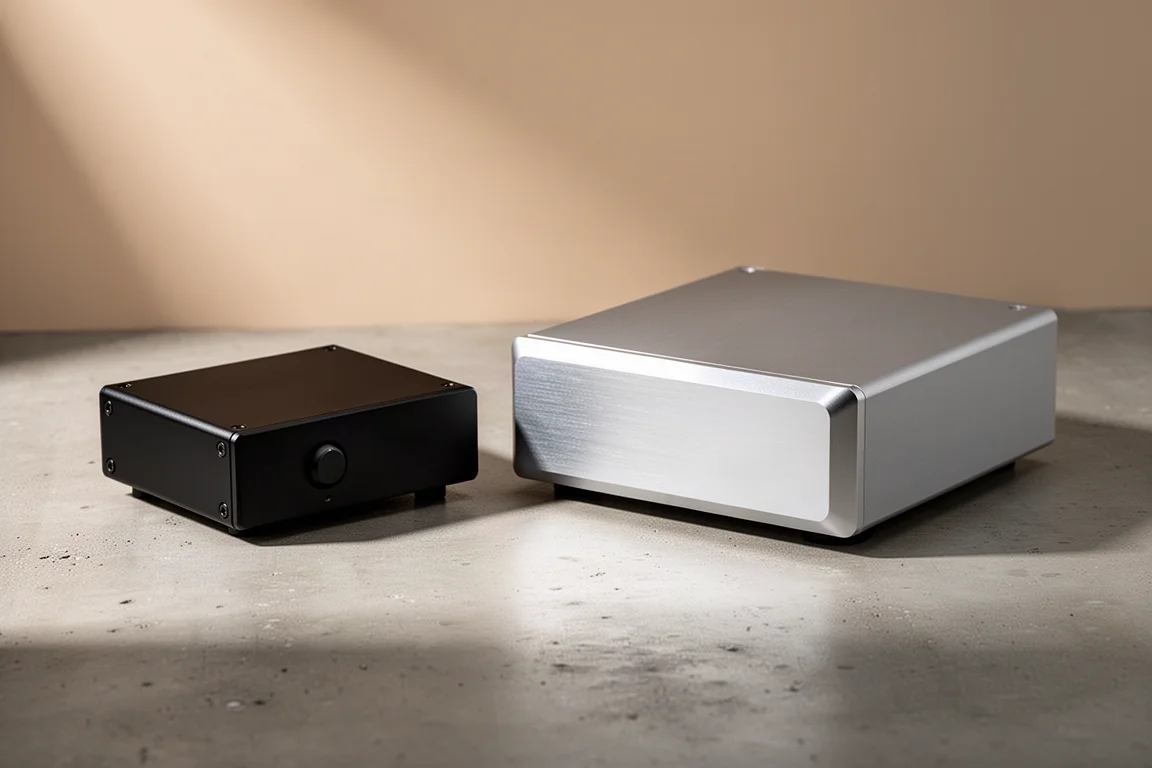
The Audio Note DAC 0.1x and the Denafrips Terminator Plus are both digital-to-analog converters built around ladder conversion, yet they sit at very different price points and take very different routes to the same goal. One is a compact tube converter using a classic ladder chip and a deliberately minimal signal path. The other is a larger resistor ladder design that has served as a long-term reference in a highly resolving system.
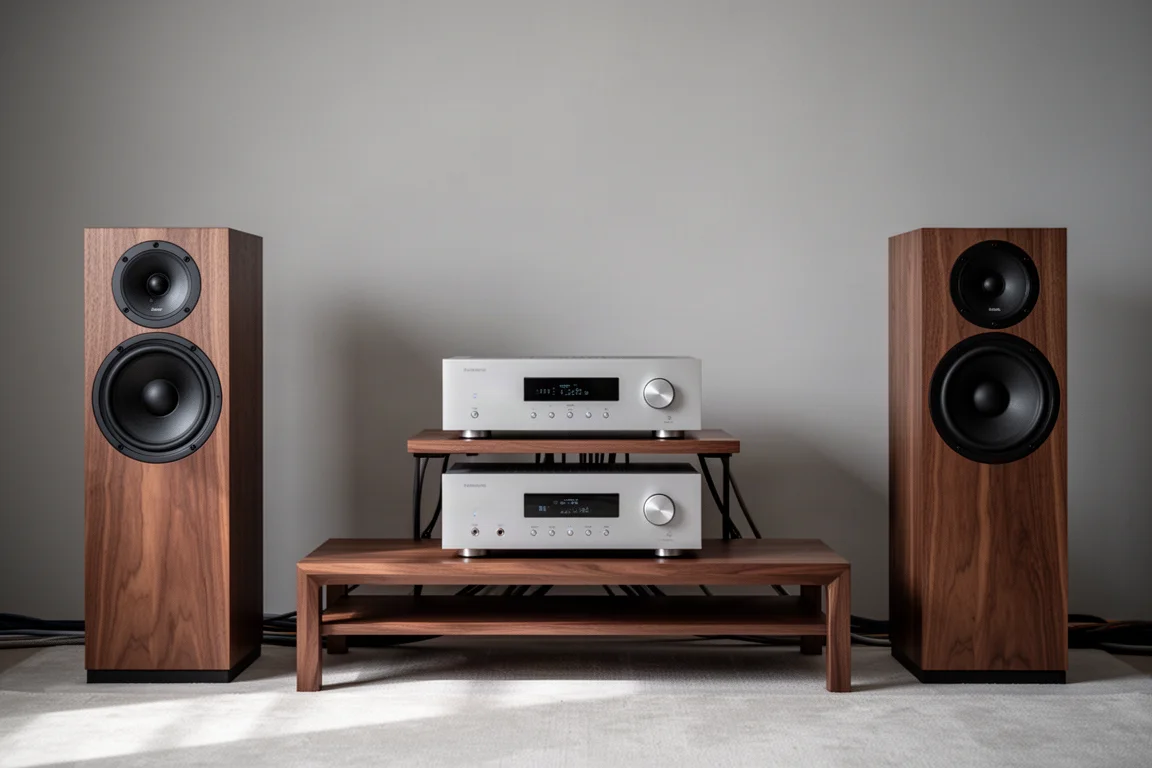
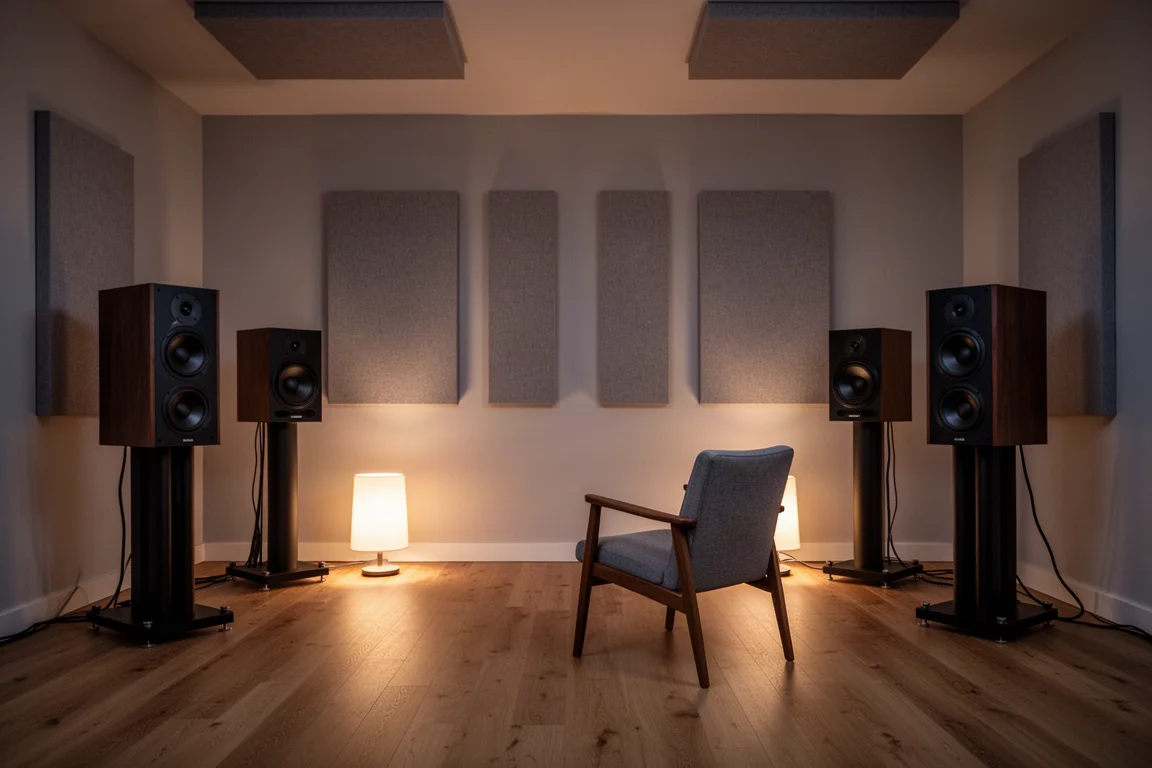
Both were heard in the same setup: a large high-end monitor speaker that reaches down to 30 Hz in the listening room, a high-current integrated amplifier, and a streamer feeding each converter over USB with its own internal conversion bypassed. Because the rest of the chain was already deeply familiar, the differences between the two converters were easy to identify and easy to describe.
That context matters. A converter is only as revealing as the system around it, and both units were evaluated in a room with settled acoustic treatment, which makes the comparison more useful than a quick swap between components.
How These Two DACs Differ
The two converters share a family resemblance in philosophy but almost nothing in execution.
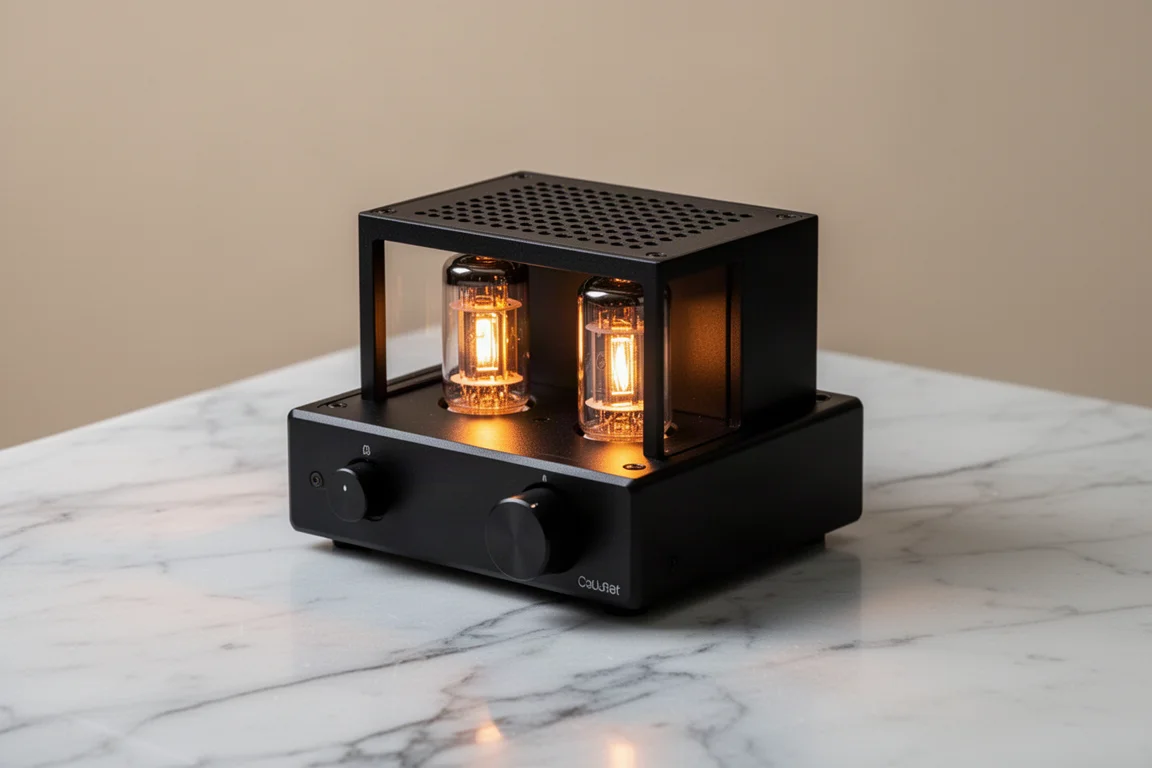
The Audio Note DAC 0.1x uses a Philips TDA 1543 ladder-based converter chip paired with a tube output stage. Audio Note deliberately omits oversampling, reclocking and jitter reduction, on the view that processing the signal can degrade it, and the aim is to stay faithful to the original recording. It also does not support MQA or DSD.
The Denafrips Terminator Plus takes the opposite structural approach. It is not a chip-based converter at all, but a resistor ladder design built from a large array of resistors, which is a more costly way to convert a digital signal. It is not an inexpensive component, though it is widely regarded as performing above its price point, including against considerably more expensive brands.
Both designs belong to a school of audio that does not necessarily measure as well on paper as modern sigma-delta converter chips, yet has a devoted following for its musicality. That is the shared premise, and everything that follows flows from it.
Audio Note DAC 0.1x: Tube Output Meets a Ladder Chip
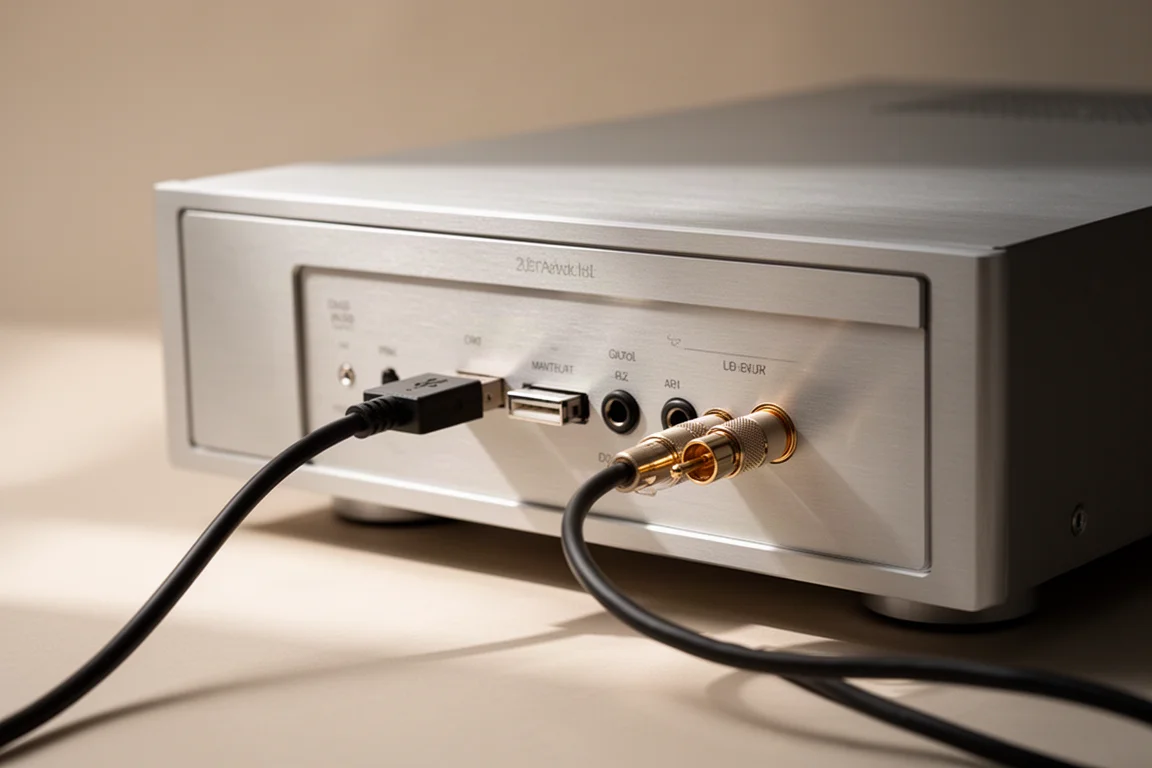
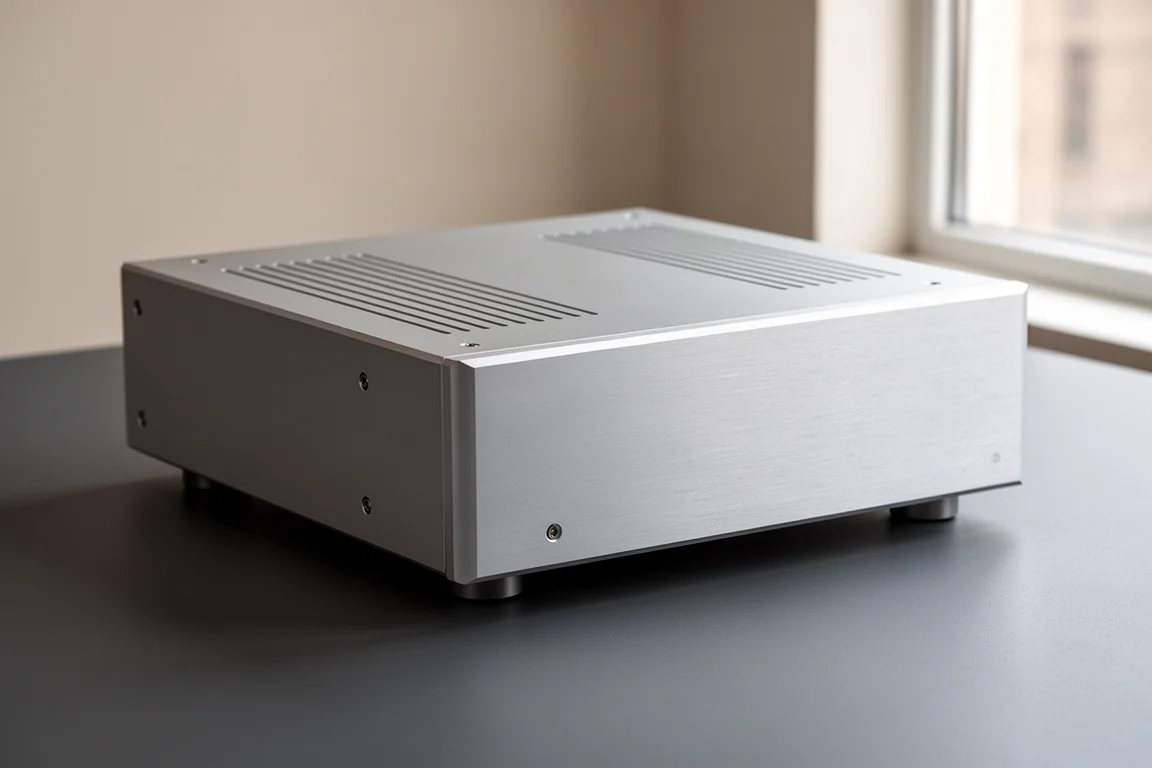
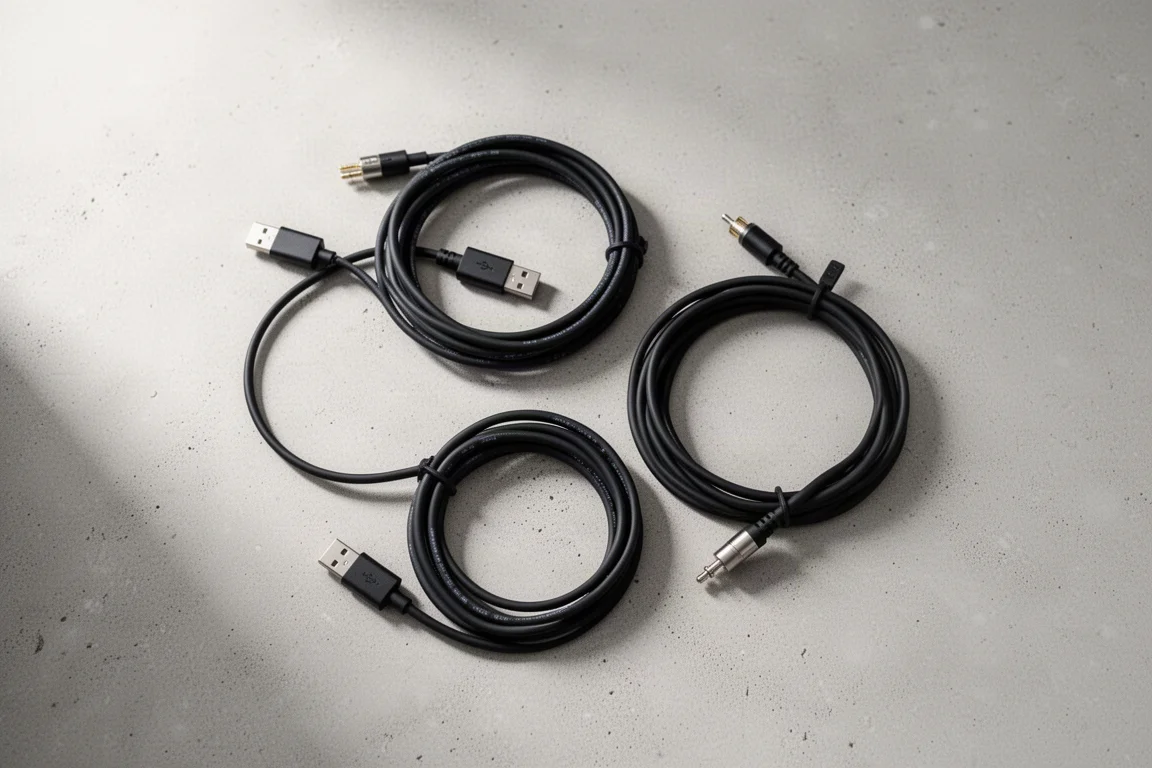
The DAC 0.1x is the more affordable of the two, positioned as a lower-end offering in Audio Note’s range and priced at roughly $1,800, with some variation depending on where you buy it. Physically it is a simple, elegant box with a very short feature list: a USB input and a coaxial input on the back, and a single button on the front that switches between the two. It does not support MQA or DSD.
The missing processing features are a deliberate choice rather than an oversight. Audio Note’s position is that oversampling, reclocking and jitter reduction can reduce signal quality, so the converter passes the signal through with as little intervention as possible in the interest of staying faithful to the original recording.
In listening, that approach produces a distinctive result. The DAC 0.1x sounds fuller than its price and technology might suggest, with a soundstage that wraps around the listener rather than sitting in front of them. Voices take on a holographic quality, and the presentation reads as three-dimensional. The top end is smoother than a typical modern converter, but it is not rolled off. It simply has more space around it.
The trade-off is precision. Individual instruments in the upper frequencies are harder to isolate and pin down, because that added spaciousness softens the edges slightly. For listeners who want to sit back and follow a performance rather than analyze it, that is a reasonable exchange.
Denafrips Terminator Plus: The Reference Resistor Ladder DAC
The Terminator Plus has been the reference converter in this system for about a year, chosen after a long run of comparisons aimed at finding the right match. The reasoning was straightforward: it is a resistor ladder design, it is not inexpensive but is widely considered to perform above its price point, and it sounds consistently good in a resolving system.
Its strengths are the ones that matter for critical listening. Detail separation is excellent, low-level nuances come through clearly, and the top end has a sweetness and sparkle that keeps long sessions comfortable without tipping into brightness. Instruments in the upper frequencies are easy to place precisely, which is exactly what makes it a useful reference when evaluating other components.
That combination of detail and warmth is a difficult balance to strike. A little more energy and the sound becomes forward and tiring, a little less and the detail disappears. The Terminator Plus lands on the right side of that line, which is why it has stayed in the system despite costing considerably more than the Audio Note.
Listening Notes: Detail Versus Holographic Presentation
Moving between the two converters was less a case of better and worse than a case of different priorities.
On raw performance, the Terminator Plus wins. Nuance, detail separation and the ability to depict the smallest elements of a recording are all stronger. It is the more analytical converter, and for anyone whose listening leans toward dissecting a mix, it is the more informative choice.
The DAC 0.1x gives up some of that precision but gains something else. The presentation is fuller and more enveloping, and the sense of depth is greater. Rather than hearing instruments in a line in front of the speakers, the listener hears them spread around the room. It does not add bass or midrange emphasis to achieve this, and the signal itself is not being colored in an obvious way.
The top end tells the same story. The Audio Note is smoother and more spacious, which makes it easier to listen to for long stretches, while the Terminator Plus is more explicit and easier to pick apart. Which one is preferable depends entirely on whether the goal is engagement or examination.
What Each DAC Does Well in a Resolving System
Tube converters are prized for a particular quality: a sparkle at the top end and an effortless, spacious presentation that produces a holographic, three-dimensional image. The DAC 0.1x delivers that, and it also carries the nuance and detail associated with ladder conversion, most likely because of the Philips TDA 1543 chip at its center. Enthusiasts have argued for years about which version of that chip is better, and in practice the implementation matters more than the part number.
The Terminator Plus plays to a different strength. Its resistor ladder architecture is built for precision, and the result is a converter that reveals what is on a recording. In a system that is already resolving, that transparency is valuable, and it is the main reason the converter has held its place as a long-term reference.
The practical takeaway is that both converters are capable, and the deciding factor is the character a listener wants from the rest of their system.
Buying Advice
Start with the source chain. The DAC 0.1x offers only USB and coaxial inputs and no MQA or DSD support, so it suits listeners whose library and streaming setup fit those limits. If your sources include formats or connections outside that set, the Audio Note will not accommodate them.
Price is the other obvious consideration. The Audio Note sits at roughly $1,800 depending on region, while the Terminator Plus is a considerably more expensive component. The Audio Note does a great deal of what the more expensive converter does in a familiar, resolving system, which makes it a compelling option for anyone who wants a fuller, more enveloping presentation without spending at the top of the market.
If, on the other hand, pinpoint detail and the ability to pick apart a recording are the priority, the Terminator Plus remains the stronger tool, and its price reflects that. Neither choice is a mistake. They simply serve different listening habits.
Conclusion
The Audio Note DAC 0.1x and the Denafrips Terminator Plus are two well-executed answers to the same question. One favors a simple tube and ladder chip path with a spacious, holographic result at a modest price. The other favors a discrete resistor ladder built for detail and precision at a much higher cost.
For listeners who value musicality, depth and an easy long-term listen, the Audio Note is the more interesting proposition, and it holds its own in a resolving system far above its price class. For those who want maximum resolution and a reliable reference, the Terminator Plus justifies its position. Choosing between them comes down to which of those two experiences matters more.
Further reading
Related Reviews
Hi-Fi Audio
Accuphase C-57 vs Allnic H-7000V: Two High-End Phono Stages Compared
A fully balanced solid-state phono stage with a pitch-black noise floor meets a tube design built for well-loved records. Here is how to choose between them.
Hi-Fi Audio
Active vs Passive Hi-Fi: Five Components for a Modern System
Five components that define modern active and passive hi-fi systems, with the strengths, trade-offs and setup details worth weighing before you buy.
Hi-Fi Audio
Advance Paris A10 Apex Review: A Hybrid Integrated Amplifier That Covers a Lot of Ground
A French hybrid integrated amplifier with a class A tube preamp stage, analogue power meters, and an internal DAC and phono stage good enough to make extra boxes unnecessary.