Hi-Fi Audio
Audio Note 0.1x DAC and CD0 Review: Two Zero Series Digital Sources Compared
A close look at two entry-level Audio Note digital sources, the valve-output 0.1x DAC and the red book CD0 CD player, and how to choose between them.
Introduction
Audio Note builds its catalogue in levels, from Level Zero up to Level Six, with each step bringing better quality components and circuit topology. The entry point is the Zero series, where a complete system of source, amplifier, speakers, speaker cables, and interconnects lands at roughly £7,000. At the far end of the range sit cost-no-object systems that can run past a million pounds.
The Zero series is where most listeners will start, and it is also where the brand’s design philosophy is easiest to see. Two of its digital sources, the 0.1x DAC and the CD0 CD player, sit close enough in price to invite a direct question: which one belongs in your system?
This article looks at both, covering what each one does, how they differ in character, and which listeners each is likely to suit.
Inside the Audio Note Zero Series
Audio Note’s approach rests on three ideas: that solid state devices such as transistors and op-amps are less linear than valves, that the signal should be manipulated as little as possible, and that the best components available at a given price should be used. The company also builds a great deal in house. Transformers are wound on site, capacitors for higher tier products are rolled from metals including tin and silver on specialist machines, and printed circuit boards are CNC machined within the facility.
Where components come from outside suppliers, they are specified to Audio Note’s own requirements, and the company holds substantial stock of parts that are no longer in production, including new old stock vacuum tubes collected over many years. That stock is what allows products to be manufactured and serviced for decades to come.
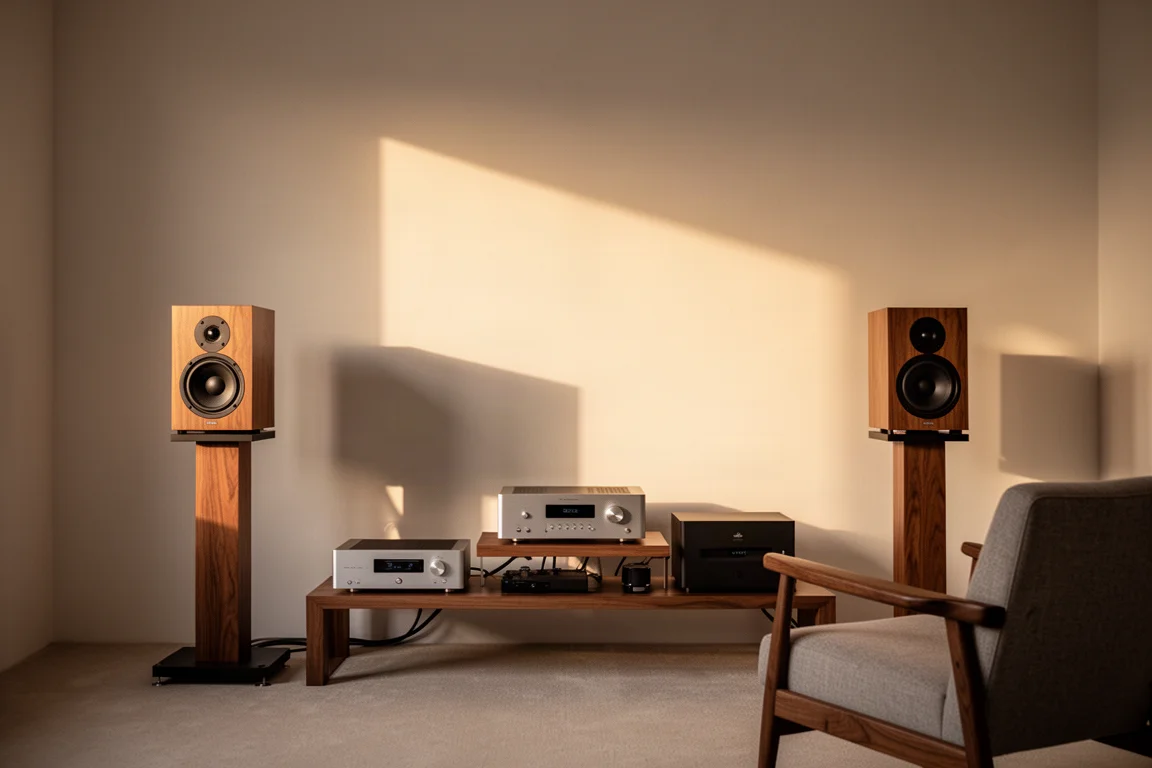
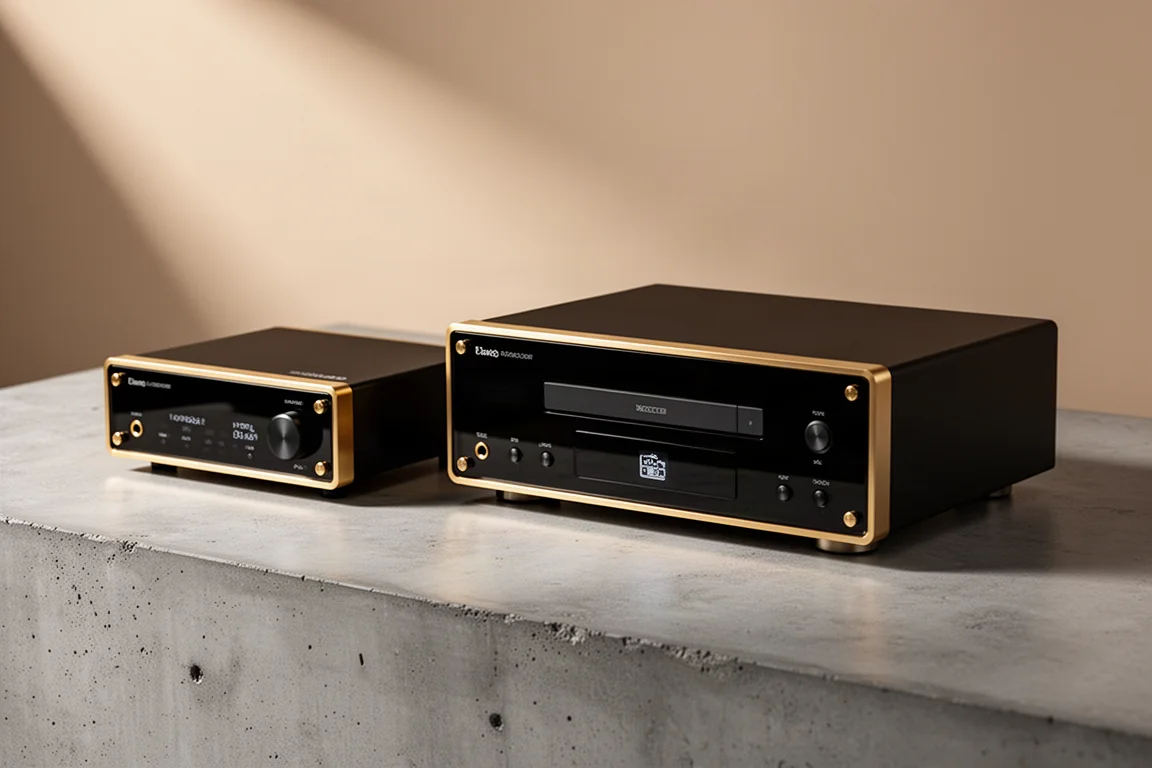
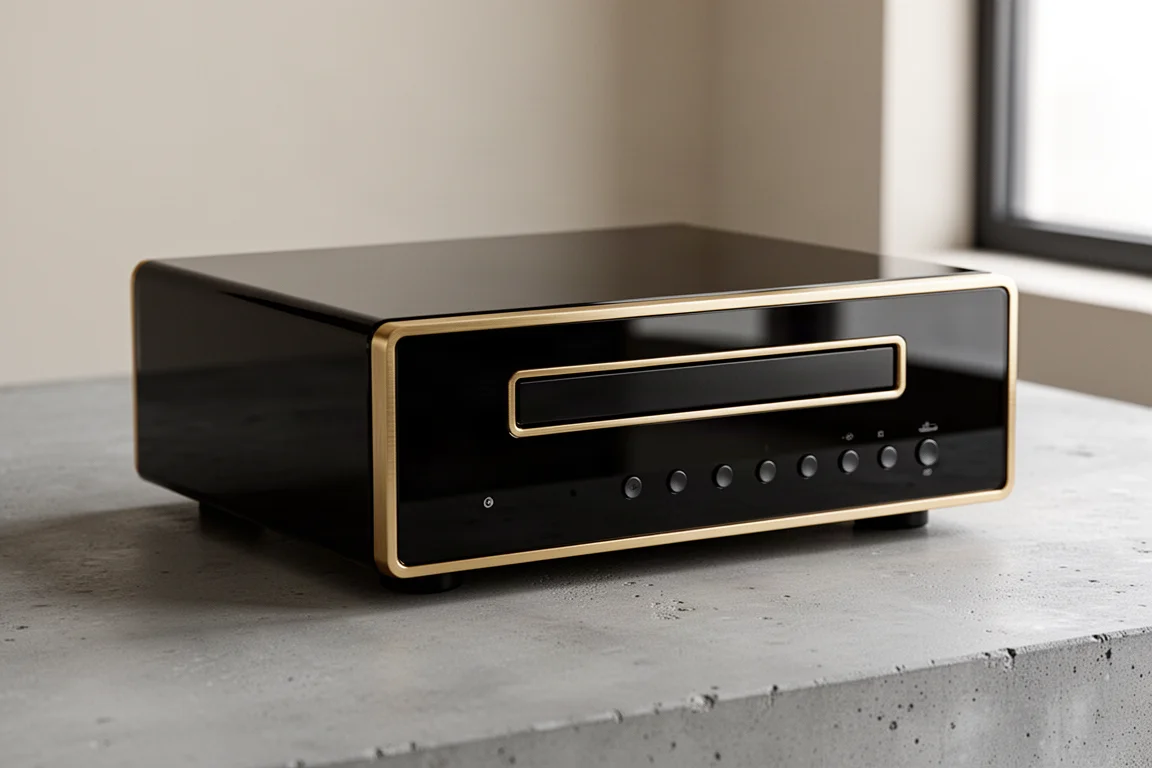
Zero series units share a common physical language. Each one is three-quarter rack width, and each is available with an anodized silver fascia, although the gold finish set against a black acrylic backdrop is the more distinctive option.
Audio Note 0.1x DAC: Design and Connectivity
The 0.1x DAC sells for £1,562 in the UK. Its industrial design is deliberately plain, with a single button toggling between the USB digital input and the coaxial input. There is no optical input, on the reasoning that converting optical signals into electrical ones can introduce noise unless the implementation is very good, and good converters are expensive.
The rear panel is equally spare. You get the two digital inputs and one set of single-ended RCA analog outputs. The power switch sits on the back, which is a mild inconvenience, but the unit has a valve output stage, so switching it off when not in use helps lengthen tube life.
Conversion is handled by the Philips TDA 1543 chip, an R2R ladder design that is no longer in production but is still prized for its natural sound next to modern delta-sigma chips that process the signal far more heavily. Audio Note digital products avoid oversampling, noise shaping, and digital filtering, and the 0.1x DAC has no analog filter on the output either. That absence of filtering can produce a form of digital distortion known as aliasing, which Audio Note treats as the lesser of two evils.
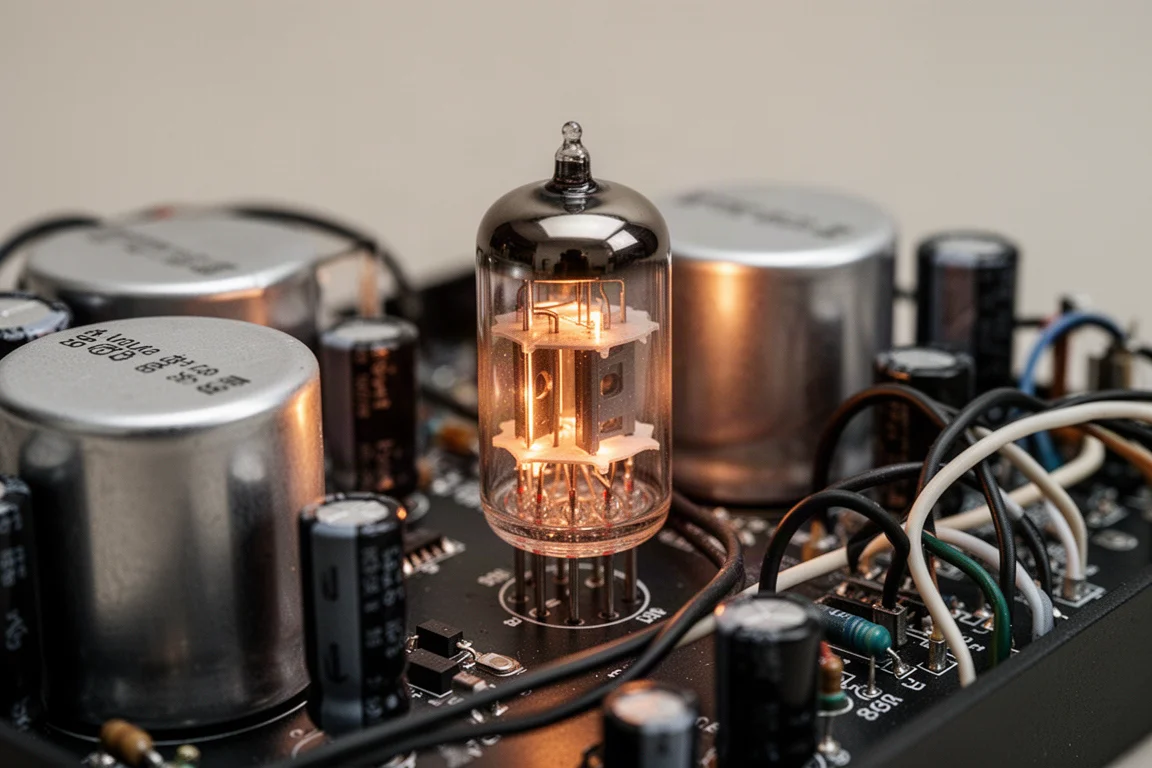
The output stage uses a 6111WA dual triode running with zero negative feedback. Triodes are the most linear voltage amplification devices available, more linear than pentodes or tetrodes, and considerably more linear than the op-amps and transistors used in most converters at this price. The board also carries a number of Audio Note branded capacitors, including two large tin foil types that appear to sit in the signal path for coupling between stages.
Audio Note 0.1x DAC: How It Sounds
Timing and natural tone are the 0.1x DAC’s strongest qualities. The valve output stage brings the harmonic richness and three-dimensional presentation that glowing glass tends to add, and the level of resolution is higher than the vintage converter chip might suggest. Micro details come through clearly, along with timbral inflections such as vibrato in a vocal line, the resonance of air escaping a brass instrument, and the vibration that follows a plucked string.
Input choice matters. Over USB the DAC is already convincing, but the coaxial input has clearly been the better optimized of the two, and it can widen the gap further. Because coaxial is not asynchronous the way USB is, results depend on the quality of the transport and the cable feeding it.
Against a reference converter costing roughly twice as much, the 0.1x DAC comes close. The more expensive unit presents a larger soundstage in every direction, places performers more accurately within it, and delivers stronger dynamic contrast. Those differences are real but relatively small, and they cost a great deal of money. A £1,890 streaming DAC matches the Audio Note for detail retrieval but does not sound as natural. A newly launched £2,000 streaming DAC with an analog volume control may edge ahead slightly on resolution, while the 0.1x DAC is the richer and more harmonically satisfying of the two. For around £1,500, it is a great sounding converter.
Audio Note CD0: Design and Connectivity
The CD0 retails at £2,169 in the UK and is a red book CD player. It will not play SACD or other high resolution formats, because Audio Note does not consider anything above 44.1kHz at 16 bit to be necessary.
A front-loading mechanism handles discs, with buttons for open and close, stop, play, pause, and skip, and the same functions are repeated on the Audio Note system remote. The rear panel follows the same philosophy as the DAC: one set of single-ended RCA analog outputs and a single digital coaxial output. No balanced XLR connections, no multiple digital outputs. The intention is to do one thing well.
Inside, a Philips transport feeds the same vintage Philips TDA 1543 R2R ladder chip used in the 0.1x DAC, again with no filtering, and the output stage is another 6111WA dual triode running with zero negative feedback.
Audio Note CD0: How It Sounds
Given the shared converter chip and output valve, the CD0 might be expected to sound like the 0.1x DAC. It does not. The CD player is warmer in tone and less resolving of information. Some of that is structural: the chassis is more densely packed, the circuit board layout is quite different, and the Audio Note branded capacitors found in the DAC are absent. The power supply has to feed the digital transport as well as the converter and analog sections, and tubes can be microphonic, so vibrations from the spinning disc mechanism can affect fidelity.
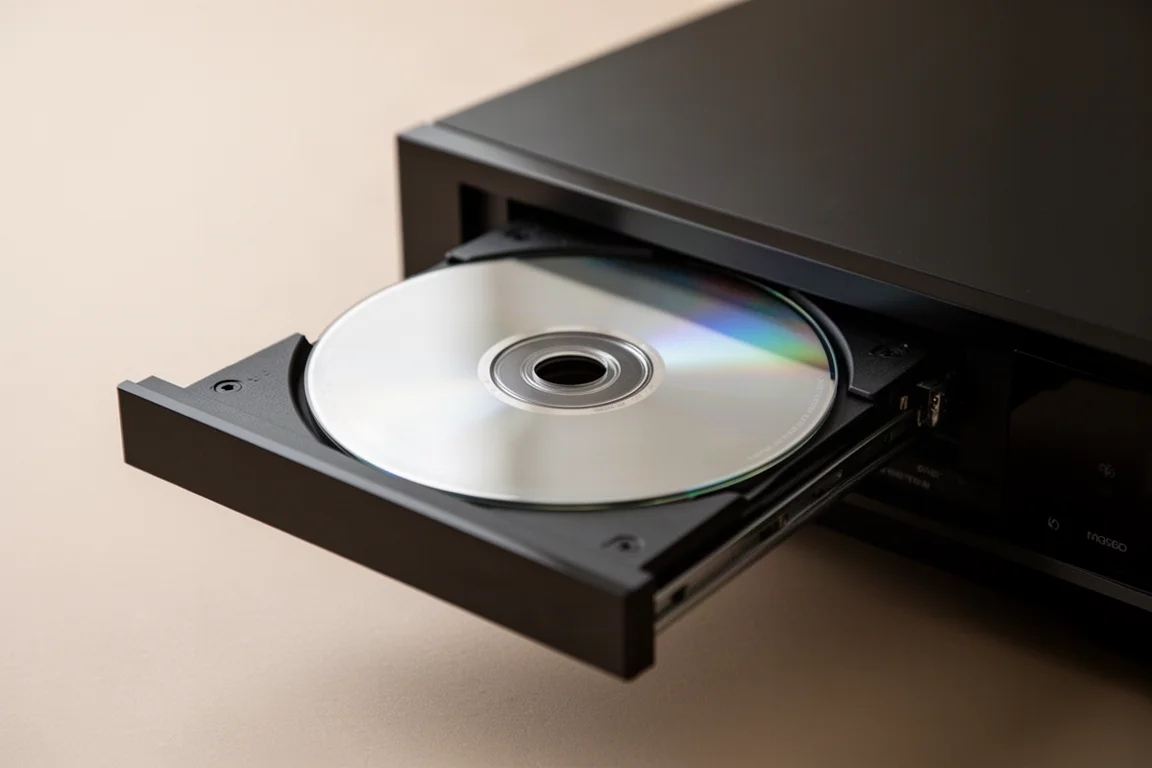
Even so, the CD0 is a very good player. Against the sub-£1,000 CD players it invites comparison with, it is a clear step up, which is reasonable at roughly three times the price. Streamers costing less can approach its sense of scale, but they tend to pull less information from recordings and to impose more of their own tonal character, even when used purely as transports. A £1,650 slot-loading player offers strong detail retrieval, a large soundstage, and a tone on the warm side of neutral, and the CD0 is probably the slightly better sounding of the two. The CD0’s drawer mechanism is also the more reassuring long term choice, since a slot loader’s gripping mechanism can eventually leave small marks on disc surfaces.
How the Two Sources Compare
Both units share a family sound: natural, unhurried, and more concerned with tone and timing than with the last word in analysis. The 0.1x DAC is the more transparent of the two. It resolves more, and its USB and coaxial inputs make it the natural partner for a streamer or a separate transport.
The CD0 is warmer and slightly softer in its presentation, and it plays only red book discs. What it offers in return is a self-contained source with a front-loading drawer, no computer or network in the signal path, and the simplicity that comes with a single purpose.
Which one makes sense depends less on sound quality than on where your music lives.
Buying Advice: Choosing Between the 0.1x DAC and the CD0
If your library is digital files or streaming, the 0.1x DAC is the stronger buy. At £1,562 it delivers resolution and tone that hold up against converters costing considerably more, and the coaxial input rewards a decent transport and a good digital cable.
If you have shelves of CDs and no interest in high resolution formats, the CD0 is the more complete answer. At £2,169 it costs more than the DAC and resolves a little less, but it removes the transport question entirely and its front-loading mechanism is kinder to discs over time.
Whichever you choose, the Zero series rewards a system that already leans toward tone and timing rather than clinical analysis. These are sources that let the character of the recording come through without adding unnecessary processing, and that is the whole point of the design.
Conclusion
The Audio Note 0.1x DAC and CD0 are built around the same vintage R2R ladder converter chip and the same zero-feedback triode output stage, yet they land in different places. The DAC is the more revealing and the more flexible of the two, and it is the one to choose if your music arrives over USB or coaxial. The CD0 trades a little resolution for a warmer tone and the convenience of a dedicated disc player.
Either way, the Zero series shows what Audio Note’s philosophy sounds like at its entry point, and both sources make a coherent case for the brand’s approach to digital playback.
Further reading
Related Reviews
Hi-Fi Audio
Accuphase C-57 vs Allnic H-7000V: Two High-End Phono Stages Compared
A fully balanced solid-state phono stage with a pitch-black noise floor meets a tube design built for well-loved records. Here is how to choose between them.
Hi-Fi Audio
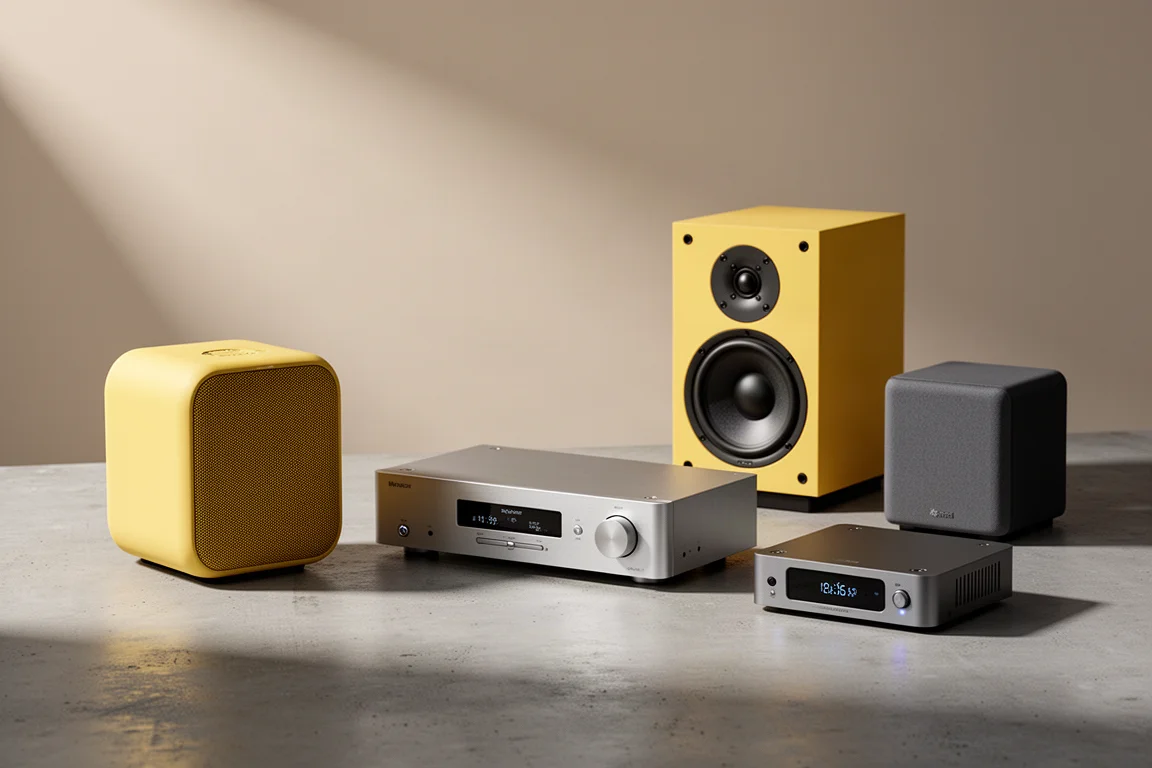
Active vs Passive Hi-Fi: Five Components for a Modern System
Five components that define modern active and passive hi-fi systems, with the strengths, trade-offs and setup details worth weighing before you buy.
Hi-Fi Audio
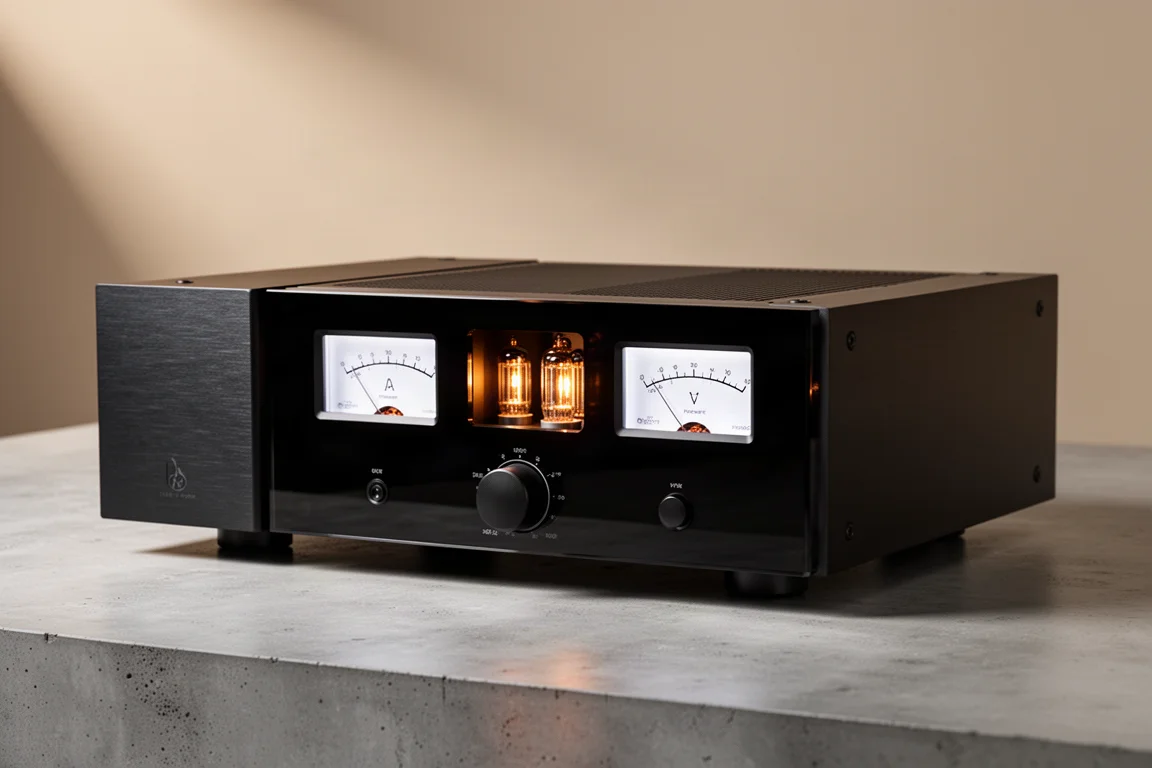
Advance Paris A10 Apex Review: A Hybrid Integrated Amplifier That Covers a Lot of Ground
A French hybrid integrated amplifier with a class A tube preamp stage, analogue power meters, and an internal DAC and phono stage good enough to make extra boxes unnecessary.