Integrated Amplifiers
Atoll IN400 Evolution Review: Warm Tonality With Serious Current Delivery
A close look at Atoll's flagship integrated amplifier, its revised Evolution circuit, its optional boards, and the speakers it drives best.
Introduction
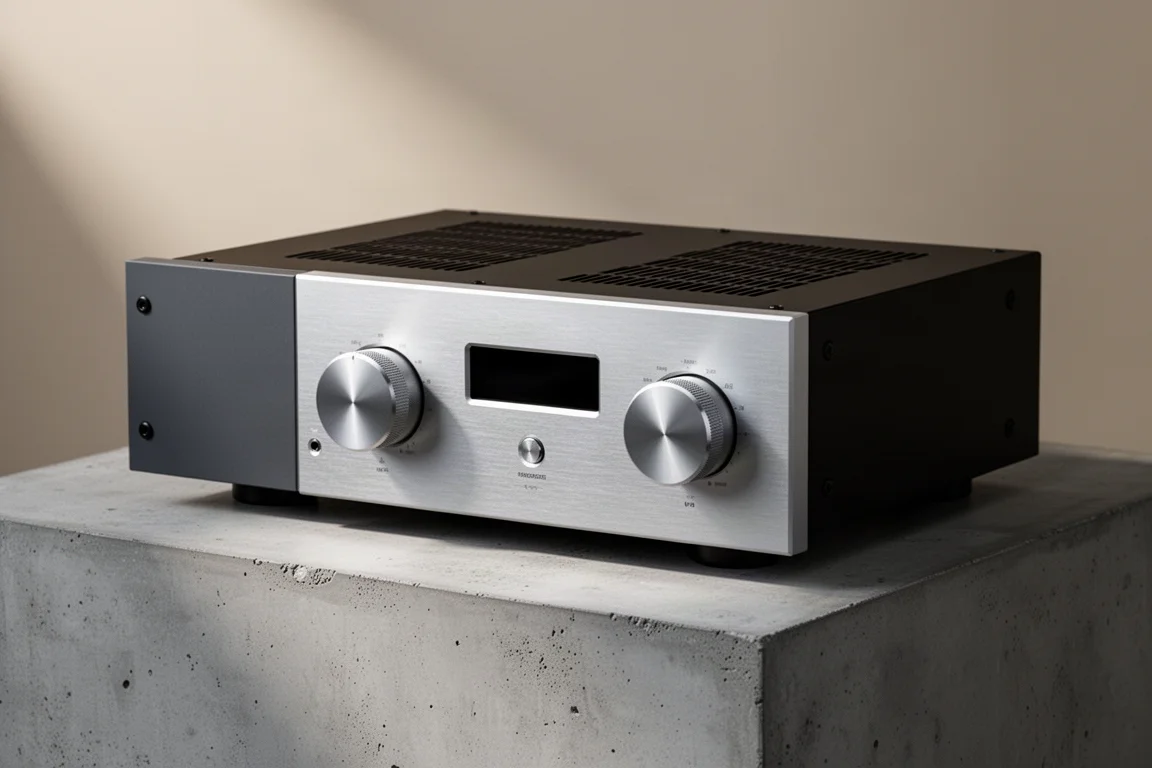
Atoll has revised its upper-range integrated amplifiers, adding the Evolution suffix to the 200, 300 and 400 models. The IN400 Evolution sits at the top of that group and retails for £5,500 in the UK, with a front panel anodised in either black or silver. It is a full-width design measuring 440 x 130 x 370 mm (17.3 x 5.1 x 14.6 inches) and weighing 19.5 kg, and it arrives in considerably more conventional casework than the outgoing IN400, whose curved side-panel heatsinks split opinion.
The pitch is straightforward: a very large power supply, a generous count of output devices and a revised circuit that reduces distortion, all housed in a chassis that does not shout about any of it. This review covers what the IN400 Evolution does well, where it makes compromises, and which listeners it will suit.
Who this product is for
This is an amplifier for listeners who want a big, warm presentation without giving up resolution. It suits owners of demanding speakers, including standmounts that ask a lot of current, and it fits systems where the source components are already settled and the amplifier is the last significant upgrade.

It also makes sense for anyone who prefers a single, well-built box to a stack of separate pre and power components. Atoll’s recent integrated designs have earned a reputation for value, and the IN400 Evolution continues that theme by placing substantial engineering inside a conventional chassis. Buyers who already own high-quality external digital and phono converters can specify the amplifier without the optional boards and keep the price focused on amplification alone.
Main strengths
The architecture is where much of the value sits. A single very large transformer feeds the amplifier, supported by twelve power supply filter capacitors rated at 6,800 microfarads each. Each channel uses eight MOSFET output devices, compared with six in the IN300, and the amplifier is rated at 160 watts per channel into an 8 ohm load. Peak current delivery should be significantly higher than the outgoing model. Atoll’s circuit boards remain neatly laid out with good-quality discrete through-hole components rather than tiny surface-mount parts, and the revised Evolution circuit improves the current polarisation stages to reduce intermodulation distortion and hold biasing more stable.
Sound quality and presentation
Tonality sits on the warm side of neutral, but it is noticeably less coloured than the IN300. The leading edges of notes are gently rounded rather than sharpened, which gives the presentation an organic quality without tipping into softness. Instrument separation is excellent, and everything is set inside a sound stage that is large in both width and depth.

The high frequencies are the biggest step forward. Where the IN300 could sound a little dark, the IN400 Evolution is considerably more open, and the top end is superbly refined. Compared with a highly regarded Norwegian integrated amplifier at a similar price, the Atoll offers a wider and deeper soundscape, and its overall resolution is close enough that separating the two would require hearing them side by side. Against a more expensive British integrated retailing at £6,670, the Atoll gives up some midrange richness but counters with better bass control, a more articulate top end and greater ability to drive difficult speakers.
Build, power supply, and connectivity
The front panel carries two rotary dials. A short press of the left dial takes the unit out of standby, while rotating it selects inputs. The right dial handles volume and gives access to the menus, which include left and right channel balance and standby timing, or no automatic standby at all. A 6.35 mm headphone jack sits below the dials, and the display can be switched off entirely. The dial backlighting offers blue or red, and can also be left off.
The rear panel is generous: four line-level single-ended RCA inputs, a tape loop for recording devices, and a bypass fixed-level input for using the power amplifier section on its own. There are two sets of preouts for external power amplifiers or powered subwoofers, plus two sets of balanced XLR inputs. All connectors are of very good quality, and the heavy-duty speaker terminals will accept even the thickest audiophile cables. A comprehensive multi-purpose remote control is supplied.
Optional boards and speaker matching
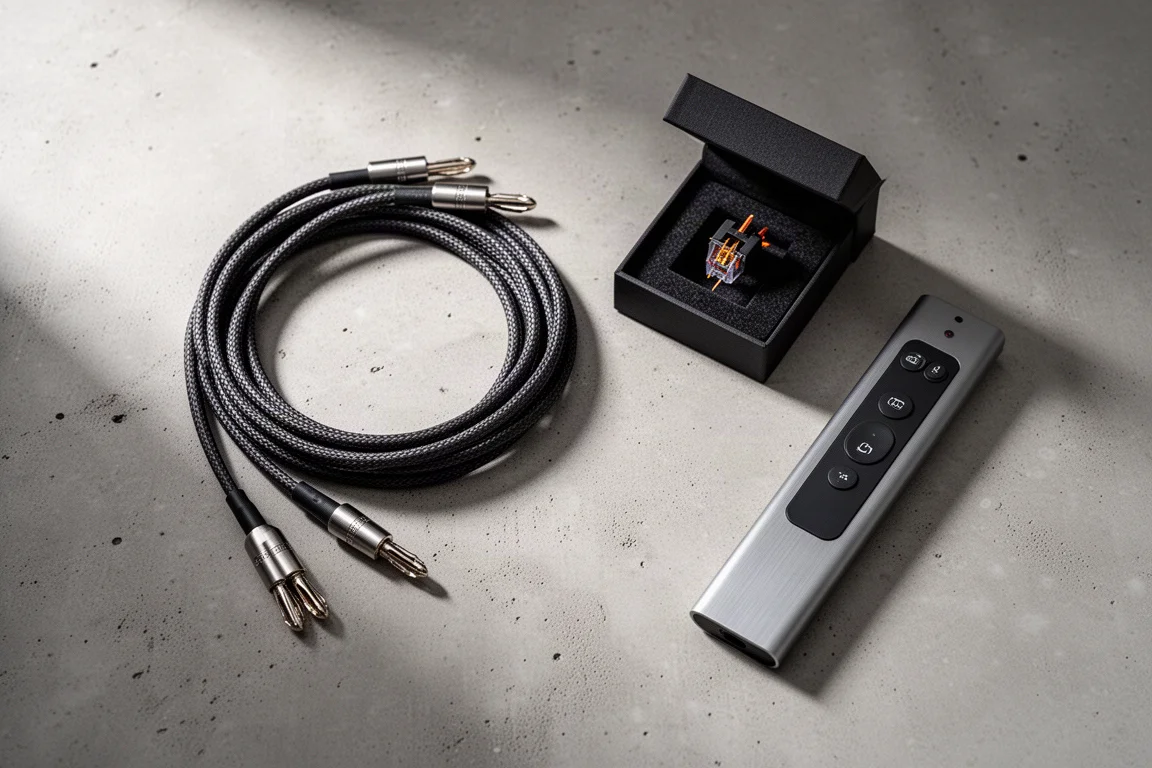
The amplifier can be specified with an optional moving magnet phono stage board for £100 or a moving coil board for £150, and an optional DAC board for £350. These are sensible prices, and offering them as options rather than fitting them as standard keeps the base price lower for buyers who already own external converters. Ports on the main board are ready to receive the boards, and the DAC implementation has performed well in Atoll’s smaller models.
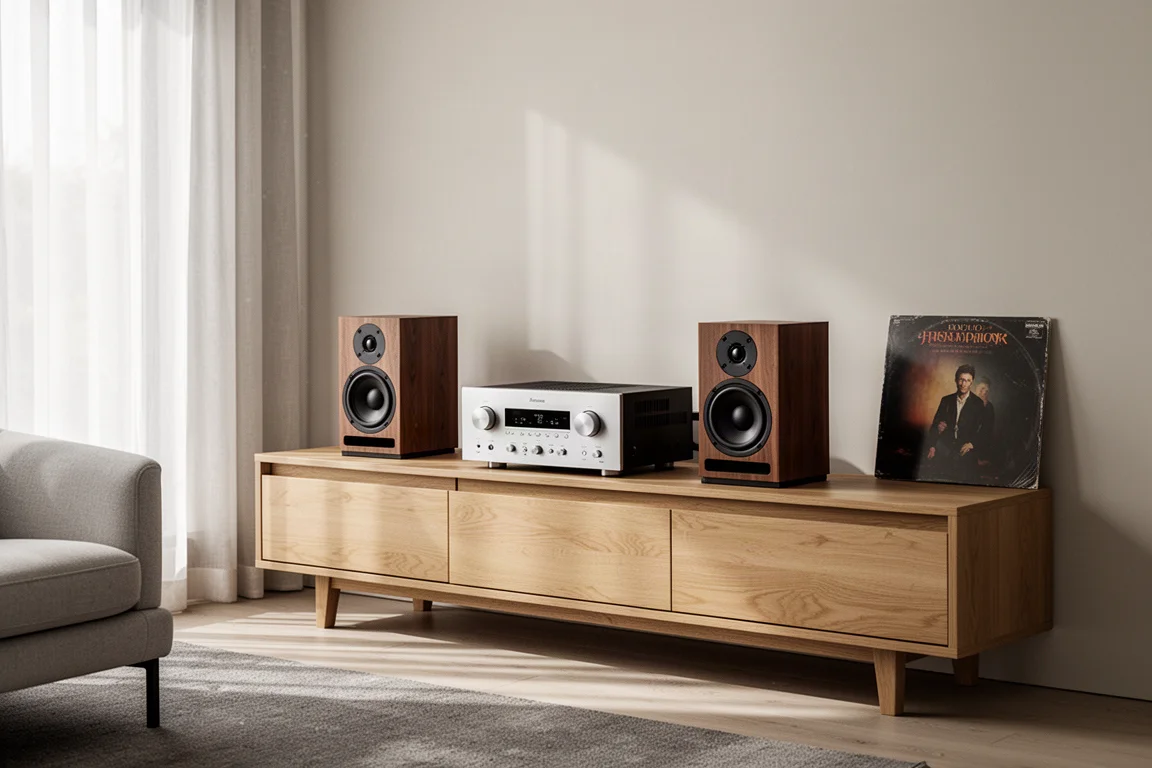
Speaker matching is a strong point. The amplifier drove every speaker it was paired with, including a pair of £1,500 Amphion Argon 1 standmounts, where the pairing was notably good: the Atoll removed any hint of dryness or leanness those speakers can show. It also kept firm control of demanding standmounts that frequently embarrass amplifiers with modest power supplies, and it added welcome warmth while still letting the fundamental character of each speaker come through. Very revealing speakers will expose a touch of bloom in the bass and a slight softening of midrange transients, but they will also show off the richness of tone, scale, dynamics and resolution on offer.
Things to consider before buying
The IN400 Evolution uses a single large transformer, whereas the IN200 Signature and IN300 separate the left and right channels with two transformers each. That change in architecture is worth knowing if the dual-mono layout of the smaller models was part of their appeal.
The optional phono and DAC boards are not fitted as standard, so a complete specification adds to the total cost. Buyers further up the range are more likely to rely on external converters anyway, but it is a decision to make at the point of order.
The dial backlighting is limited to blue or red and is best left switched off, and the unit is a substantial 19.5 kg, so it needs a shelf with real depth and strength. At £5,500 the amplifier competes in a crowded premium bracket, and its warm character is a deliberate choice rather than a neutral one.
Buying advice
Choose the IN400 Evolution if you want an integrated amplifier that combines a warm, natural harmonic presentation with the current delivery to control demanding speakers. It is one of the finest sounding amplifiers below £10,000, and it will see off the majority of separate pre and power combinations in its market segment. Buyers who prize absolute bass grip and a more forward, analytical presentation may prefer one of the highly controlled Norwegian designs at this price, while anyone chasing maximum midrange texture should listen to more expensive British alternatives before deciding.
If your system already includes a good external DAC and phono stage, order the amplifier without the optional boards. If you are building from scratch, the modest cost of adding the phono and DAC boards makes them a sensible starting point, with an upgrade path to external converters later. Either way, budget for speakers that let the amplifier show what it can do, since the pairing matters as much as the specification.
Conclusion
The Atoll IN400 Evolution is a well-built amplifier that stays understated on the shelf and delivers its value beneath the casework. A large transformer, extensive filter capacitance and a higher output device count than is typical at this price give it substantial current delivery, and the revised Evolution circuit is the likely reason it sounds so much cleaner than the IN300. The result is a distinctly warm tone that avoids softness and never sacrifices resolution, presented across a vast sound stage, with the ability to drive almost any speaker on the market. For listeners who want one box to do the work of several, it is a compelling proposition.
Product link
View more details for Atoll IN400 Evolution
This product is mentioned in the review. Check the specifications, options, and compatibility before buying.
View more details for Atoll IN400 EvolutionFurther reading
Related Reviews
Integrated Amplifiers
Advance Paris A10 Classic Review: Vintage Looks and a Lively, Punchy Sound
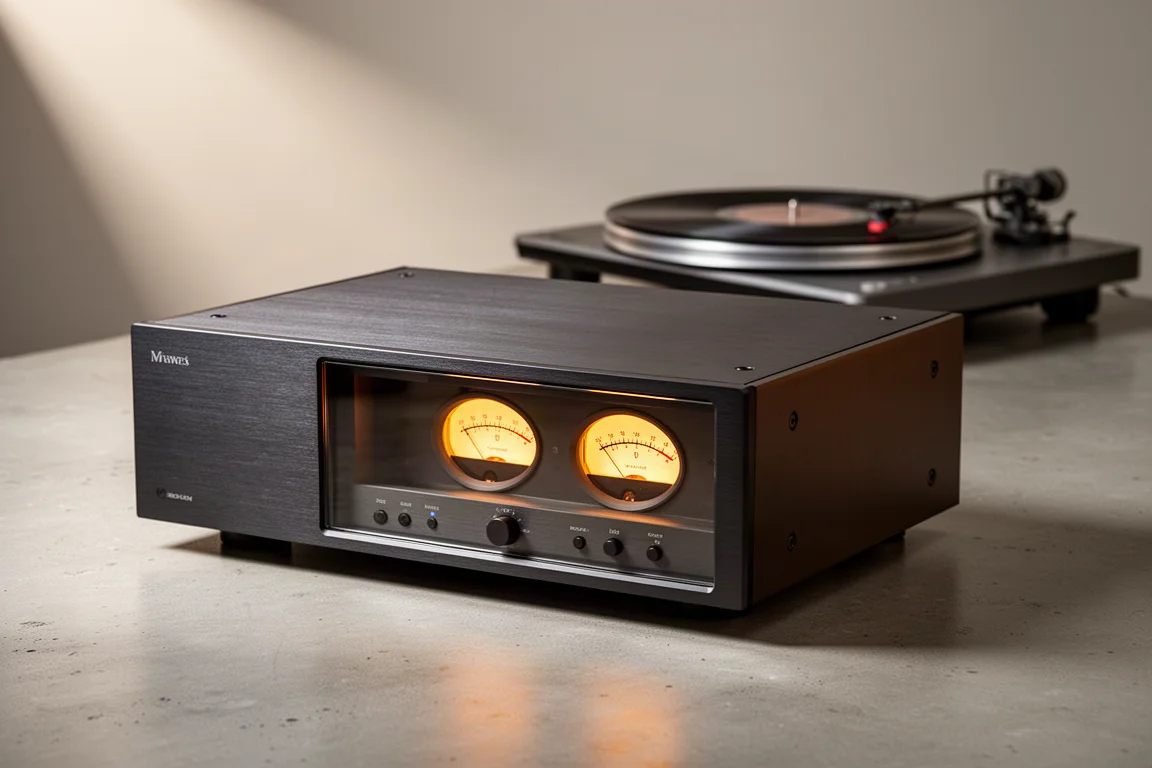
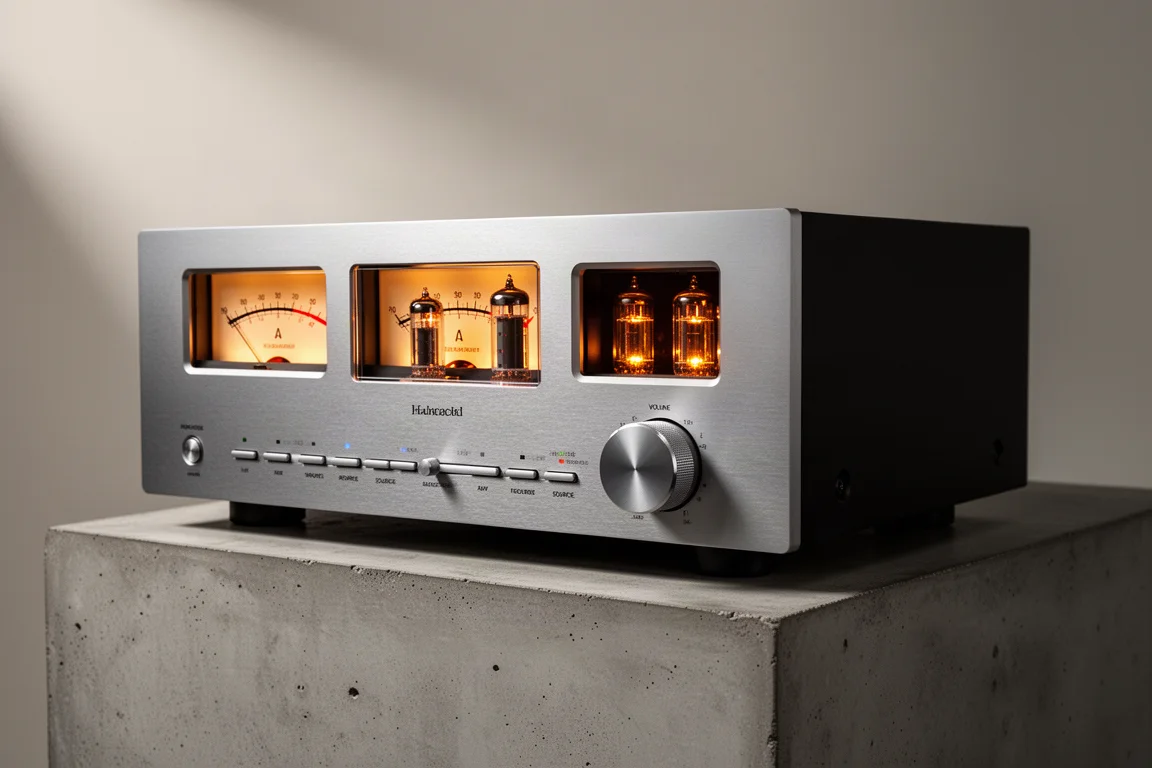
The Advance Paris A10 Classic pairs glowing blue VU meters and a tube stage with one of the widest input sets on any integrated amplifier. Here is what it does well and what to weigh before spending $2,500.
Integrated Amplifiers
Advance Paris A12 Apex Review: A Modern Integrated Amplifier With Vintage Character
A dual mono integrated amplifier with 180 watts per channel, a tube front end, VU meters, and a connectivity list that covers turntables, televisions, computers, and headphones.
Integrated Amplifiers
Advance Paris Nova Range Review: AI130, AI190 and Modular Upgrades
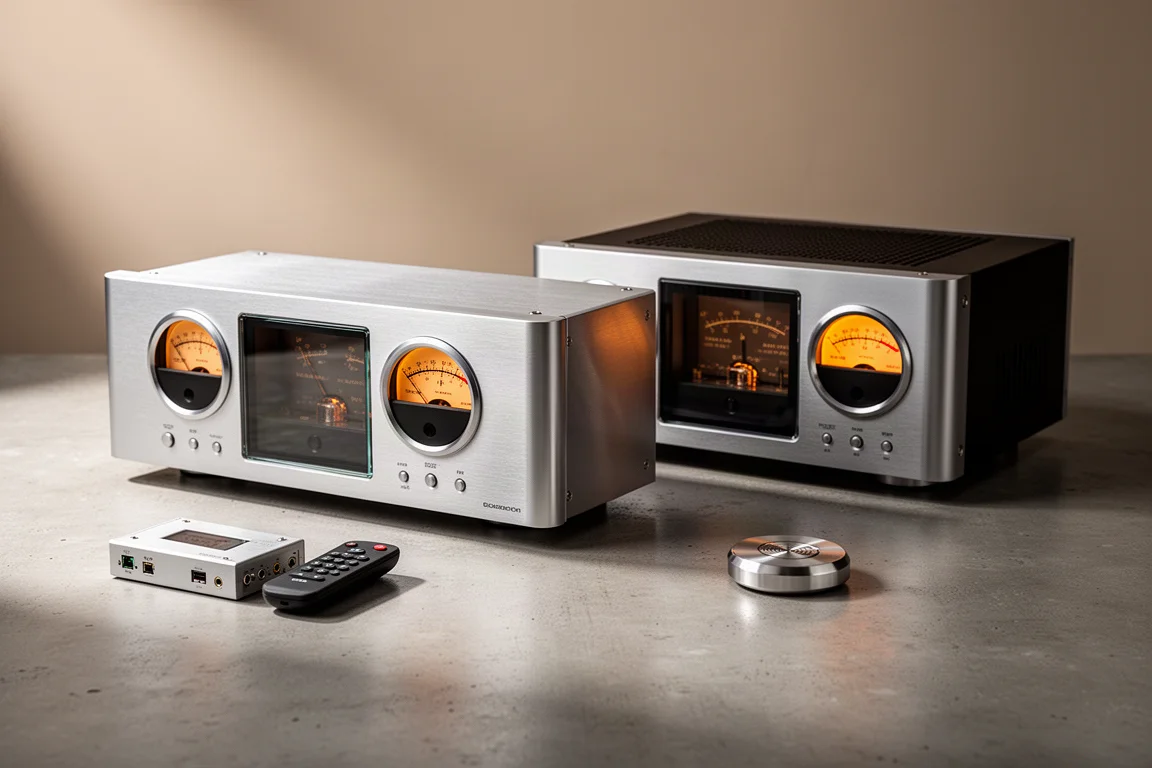
A practical look at the Advance Paris Nova range, including the AI130 and AI190 integrated amplifiers and the modular streaming, Bluetooth and remote accessories that expand them.