Hi-Fi Speakers
ATC SCM20 Review: A Flagship Two-Way Stand-Mount With a Class-Leading Mid-Range
A close look at ATC's flagship two-way stand-mount, from its SL midwoofer and dome mid-range to its sealed-cabinet bass limits, placement needs and amplification demands.
Introduction
ATC has spent more than 50 years building loudspeakers and developing its drivers in-house, and its active and passive designs are used by recording engineers and musicians around the world. That engineering-led reputation is the reason many listeners treat the brand with a certain reverence.
The SCM20 is ATC’s flagship two-way stand-mount. At £3,390 a pair it sits above the SCM19 at £2,595, the only model in the entry series to use the company’s premium SL-spec driver. The question is whether the extra outlay buys a meaningfully better speaker or simply a larger cabinet. Spend time with the SCM20 and the answer leans firmly toward the former, with one important caveat around bass.
Who the ATC SCM20 Is For
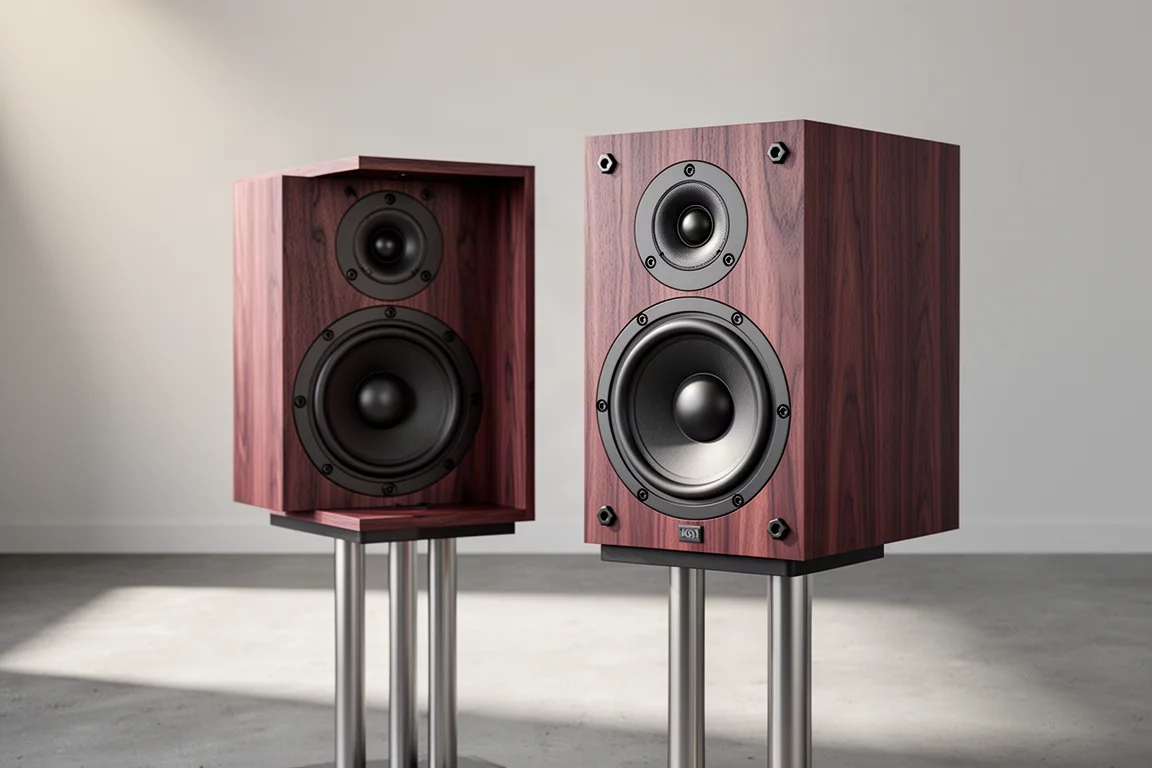
The SCM20 is a compact stand-mount with a 20 litre internal volume, which translates to external cabinet dimensions of 440 x 239 x 326 mm (17.3 x 9.4 x 12.8 inches). Each speaker weighs 18 kg (40 lb), and the build feels as though it could withstand far more than a domestic listening room. The protruding front baffle and visible Allen key screws make no attempt to disguise the industrial design, and the finish options include a range of painted and real wood veneers, with Rosewood shown here.
This is a speaker for listeners who place mid-range authenticity at the top of their priorities. It suits people who listen to vocal-led and acoustic material, who have stands and enough space to pull the speakers well clear of the walls, and who are willing to plan for a subwoofer rather than expecting a small sealed cabinet to deliver deep bass on its own.
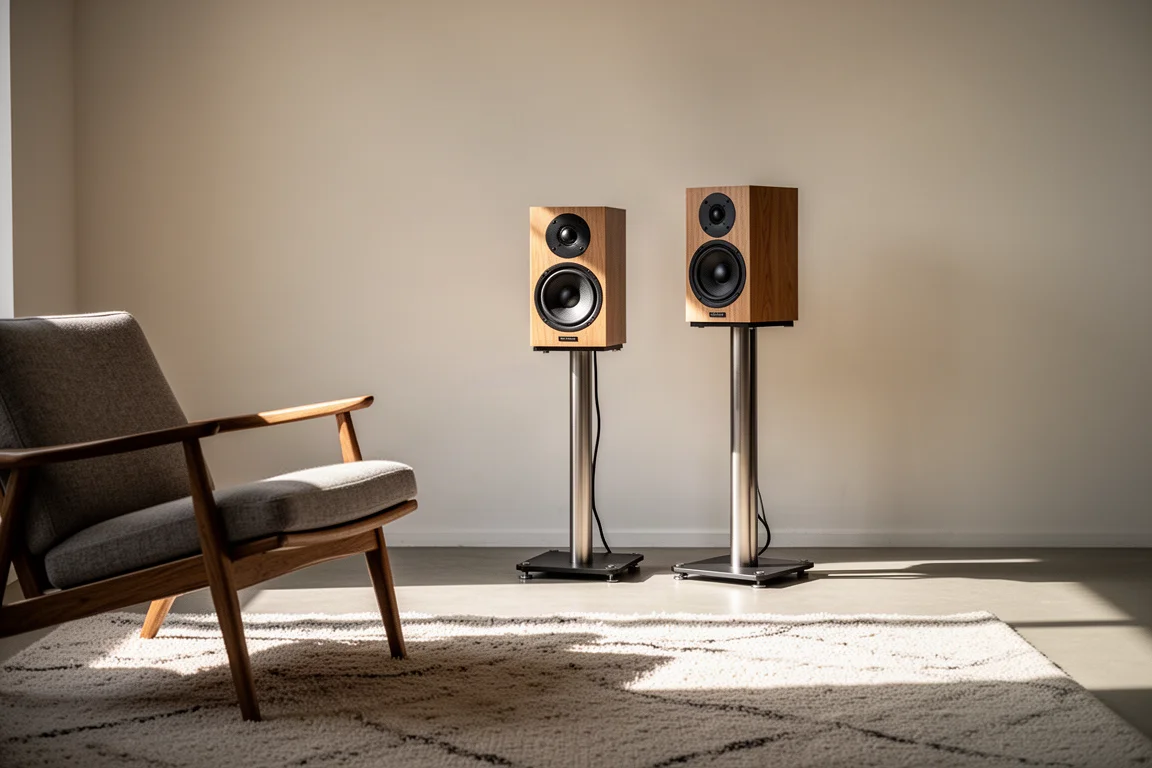
It is not a plug-and-play lifestyle speaker. It rewards careful setup and considered partnering equipment, and it asks for a genuine commitment to the rest of the system.
Main Strengths: Drivers and Mid-Range Authenticity
The drivers are the reason the SCM20 exists, and they are the reason it sounds the way it does.
Bass and mid-range duties are handled by a 150 mm (6 inch) soft dome SL driver, the same SL unit found in the more affordable SCM19 but freed here from the price constraints of the entry series. Its motor structure weighs 9 kg and is built from ATC’s proprietary superlinear magnetic material, chosen for high magnetic permeability, a high magnetic saturation point and low electrical conductivity to reduce eddy currents. The practical result is lower nonlinear distortion than drivers using traditional ferrite magnets, with third harmonic distortion reduced by as much as 15 dB according to ATC.
The driver also uses an underhung voice coil, a short coil operating in a long gap, rather than the overhung arrangement found in most drivers. An underhung coil requires a much larger motor structure to achieve the same excursion, but it always operates within the linear part of the magnetic field.
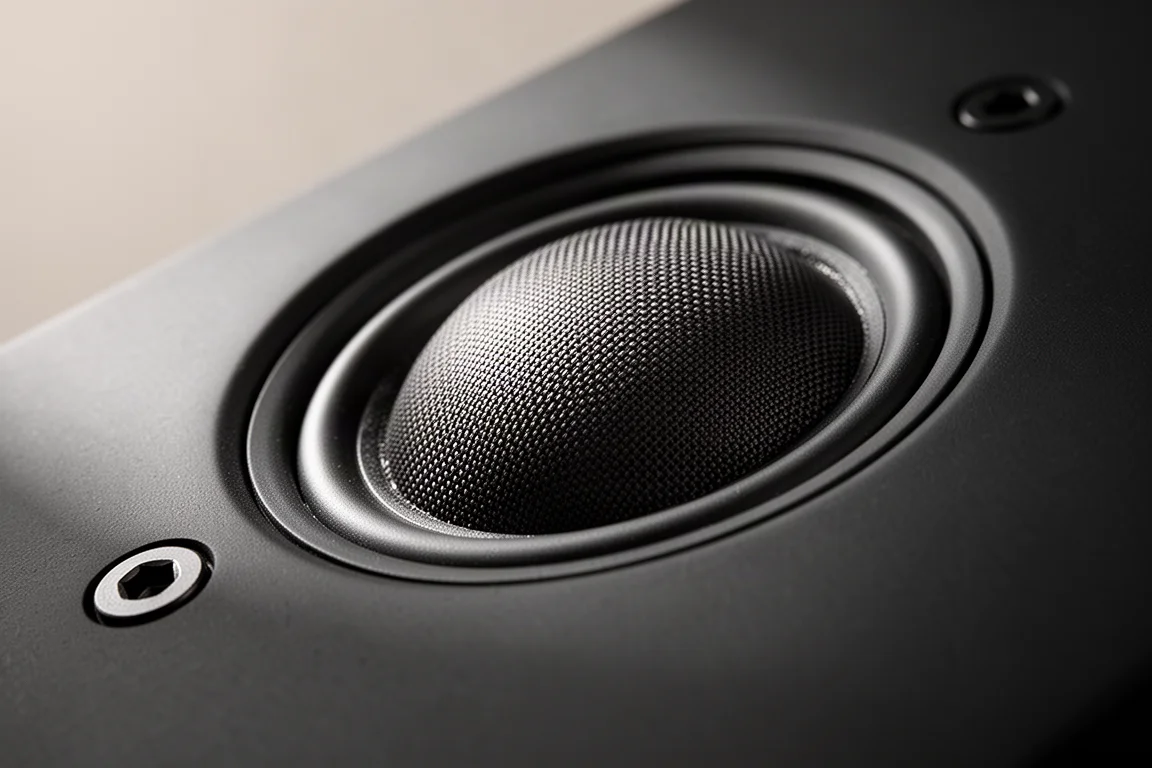
Then there is the detail that makes this driver unusual. Instead of a dust cap, the SL driver carries a 3 inch dome mid-range mounted in the centre of the woofer, a variant of the dome mid-range ATC’s founder first developed in 1976. At higher frequencies it mechanically decouples itself from the woofer, behaving like a dual concentric driver without the electrical crossover components that alter phase and waste energy. It is clever, complex to manufacture and expensive.
The tweeter is equally deliberate. It is made in-house around a 25 mm (1 inch) soft dome and is the higher specification version of the transducer used in the SCM19, deployed all the way up to the active SCM150s. A dual suspension design uses a second suspension component to reduce rocking modes, giving more pistonic motion, less distortion and less wasted energy. That allows high SPL capability without ferrofluid cooling, which matters because ferrofluids tend to dry out over time and affect performance. The classic range uses the SH76 tweeter, which has a more powerful magnet structure than the standard version, producing 2.1 Tesla of magnetic flux against 1.4 Tesla.
What all of this produces is a mid-range that is superbly articulate and natural with vocals and acoustic instruments. Performers feel present in the room in a way that is hard to find elsewhere. Even the £5,000 Alta Audio Alyssa, a speaker with glorious open mids of its own, comes very close but gives up a little texture and tone in the mid-range by comparison.
The Treble, Bass Extension, and Room Setup
The top end is about as good as a soft dome tweeter gets. It is refined and forgiving rather than attention-seeking. Ribbon tweeters, such as those used in the K Acoustics K300 Mark 3 and the Alta Audio Alyssa, still produce airier highs, and that is a technical advantage rather than a tuning preference: a ribbon diaphragm is typically around 50 times lighter than a soft dome, which is audible in the decay of cymbal hits and in subtle brush work on drums. The SCM20 does not reach that particular height, but it gives away less than most soft dome designs.
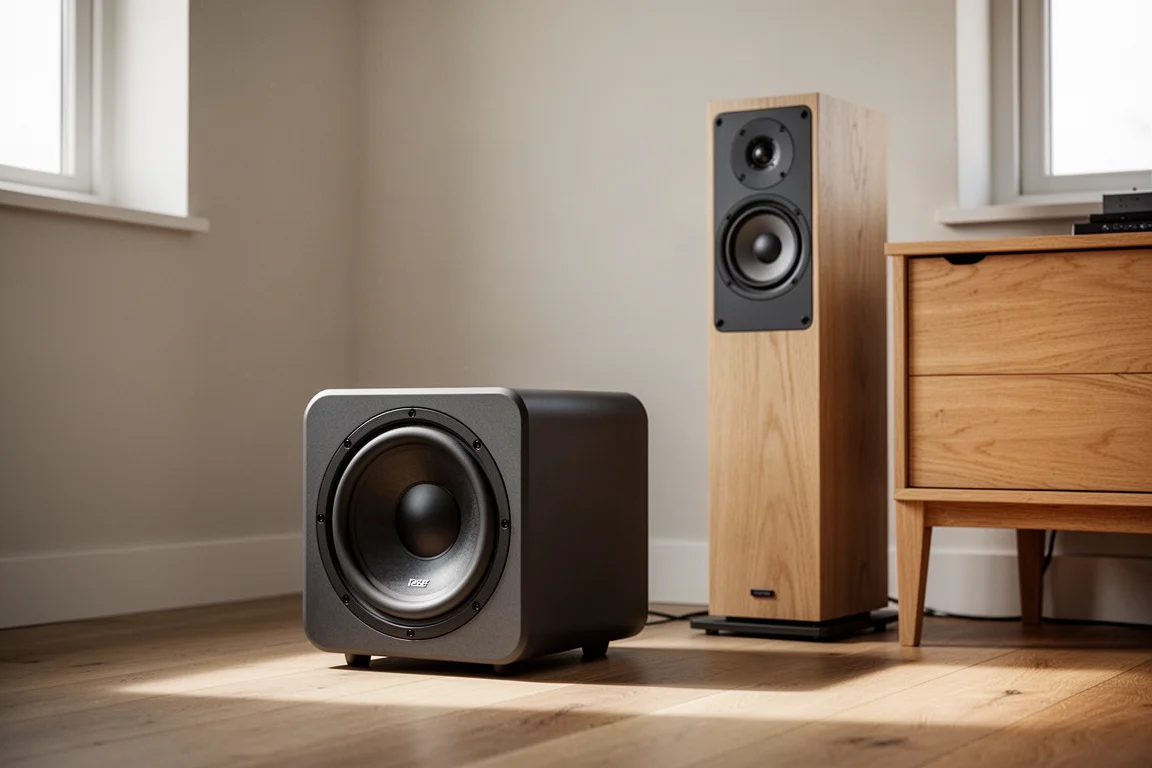
Bass is where the SCM20 asks for patience. The design is a sealed box with no port, and output is minus 6 dB down at 55 Hz. The bass that is there is clean, but some mini monitors extend almost as far, and the enclosure is a similar size to the Alta Audio Alyssa, which reaches down to 32 Hz through hybrid transmission line loading. Not many instruments play down into the 30s, but there is plenty of musical information between 40 and 60 Hz, and that is precisely the region where the SCM20 runs out of steam. Adding a subwoofer is close to essential: a well-integrated sub adds welcome bass weight and a little extra lower-mid warmth without undermining what the speaker does well.
Placement matters just as much. The temptation is to push the SCM20 close to a wall to gain bass through boundary reinforcement, but that comes at a considerable cost to sound staging and imaging. A better approach is to keep them clear of walls and add a subwoofer. The best results come with the speakers around 120 cm from the wall behind them, measured from the front baffle, roughly 180 cm apart, heavily toed in and aimed at the shoulders, with a listening position about 2.4 m away.
Things to Consider Before Buying
The first consideration is bass extension. The sealed cabinet rolls off early, and anyone unwilling to accommodate a subwoofer should think carefully about whether the SCM20’s strengths outweigh what it cannot do at the bottom end.
The second is low-volume listening. ATC speakers have a reputation for not performing at their best quietly, and the SCM20 is not bad in this respect, but the Quad Revela 1, the Alta Audio Alyssa and others all sound a little more engaging during late-night sessions at 50 to 60 dB.
The third is amplification. ATC recommends amplifiers capable of delivering at least 75 watts per channel, and the speaker does not flatter every partner. An Exposure 2510 at £1,950 struggled to keep the heavy midwoofer controlled to a satisfactory standard, while a £6,670 class A integrated amplifier with only 33 watts felt more at ease. Robustness of the power supply turns out to matter more than the headline wattage figure.
The fourth is setup itself. These speakers need care with positioning and partnering equipment to give of their best, and they need stands. In the other direction, they will play loud and clean, and they show no sign of dynamic compression before the listening level becomes a risk to your hearing.
Amplification and Partnering Equipment
Because the SCM20 imposes so little character of its own, it tends to reflect whatever you place around it, rather like a chameleon. That makes amplifier matching a genuinely creative decision rather than a technicality.
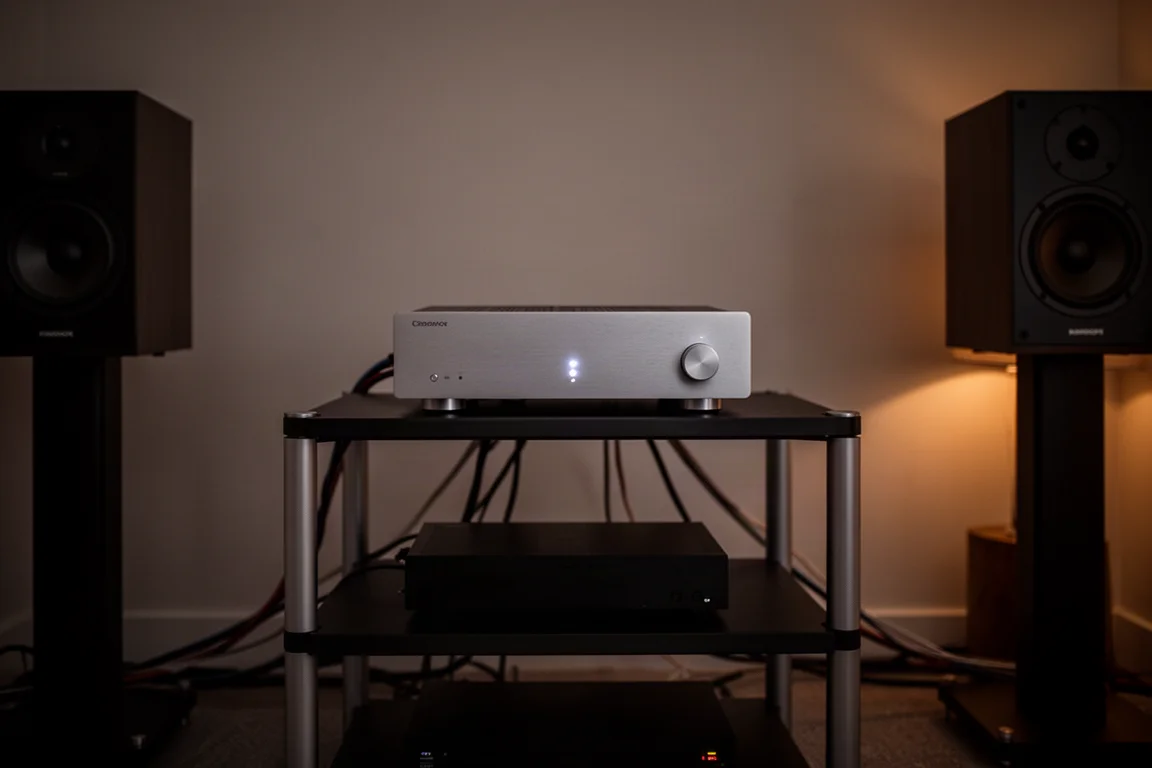
An Exposure 21 preamplifier with 18 super monoblocks delivered the widest sound stage of the amplifiers tried, with more apparent micro detail and subtlety, though the mid-range was not as rich as the class A alternative. A Hegel H190 produced tighter bass and crisper mid-range transients, at the cost of a smaller sound stage and slightly less resolution and tonal texture. A Moon River 404 Reference, with a power supply boasting 107,000 microfarads of capacitance, also played nicely with the SCM20.
For anyone stepping up from the SCM19, the differences are worth spelling out. The SCM20 is effectively a more capable version of that speaker, with more open highs. The extra money buys a more substantial cabinet with a double-layered front baffle, better quality speaker binding posts, better crossover components and a higher specification tweeter.
Placement, Subwoofers, and Value
The SCM20 works best when it is treated as part of a two-part bass solution. Place the speakers away from walls, accept the cleaner staging that comes with it, and hand the lowest octaves to a good quality, well-positioned subwoofer. Done properly, the result is one of the finest speaker packages available for the money.
Value is easier to judge in context. At £3,390 a pair, the SCM20 sits above the £2,595 SCM19 and below the £5,000 Alta Audio Alyssa and the £6,395 K Acoustics K300 Mark 3. The Quad Revela 1 remains an excellent reference below £3,000, with deeper bass and more open highs, but it does not match the clarity, texture and tone of the ATC. The SCM20 gives up some bass depth and some air at the very top, and in return it delivers the most convincing mid-range in its class.
Buying Advice: Is the ATC SCM20 Right for You?
Buy the SCM20 if the mid-range is the part of the music you care about most, if you listen to a great deal of vocal and acoustic material, and if you can place the speakers clear of walls. Budget for a subwoofer and for stands from the outset, and choose an amplifier with a stiff power supply rather than chasing a wattage number.
Look elsewhere if you want deep bass from a stand-mount alone, if most of your listening happens quietly late at night, or if you would rather not spend time on positioning. The SCM20 is not a speaker that flatters a casual setup.
For everyone else, the recommendation is straightforward. This is a very highly recommended speaker, and the drivers are the reason why.
Conclusion
The ATC SCM20 is a flagship two-way stand-mount that earns its position in the range. Its 150 mm SL midwoofer, the 3 inch dome mid-range at its centre and the dual suspension tweeter combine to produce a mid-range that is class leading, with a top end that is not far behind the best soft dome designs. The bass is light, and the sealed cabinet makes a subwoofer a practical necessity rather than an optional extra.
Add that subwoofer, take care with placement, partner it with an amplifier that has real power supply substance, and the SCM20 becomes one of the finest speaker packages you can buy for the money.
Product link
View more details for ATC SCM20
This product is mentioned in the review. Check the specifications, options, and compatibility before buying.
View more details for ATC SCM20Further reading
Related Reviews
Hi-Fi Speakers
1723 THX Tower vs 1528 Bookshelf: Which Speaker Fits Your Room?
Two speakers at roughly the same price, built very differently. How the 1723 THX tower and the 1528 bookshelf compare on construction, bass, power needs, and sound.
Hi-Fi Speakers
Acoustic Energy AE 300 Review: Deep Bass From a Compact Standmount
A two-way standmount with real wood veneer, surprising low-end weight, and a warm, easygoing character. Here is what to know before buying.
Hi-Fi Speakers
Acoustic Energy AE1 40th Anniversary Review: A Modern Take on a British Classic
A compact standmount that revives a 1980s favorite with all-new parts, a warm mid-centric balance, and a price of £1,499 per pair.