Monitor Reviews
ASUS ROG Swift PG27UCWM Review: A 27-Inch 4K WOLED With a Serious Price Problem
The ASUS ROG Swift PG27UCWM brings a new RGB stripe WOLED panel to 27 inches, but its $1,200 launch price is hard to justify against cheaper QD-OLED rivals.
Introduction
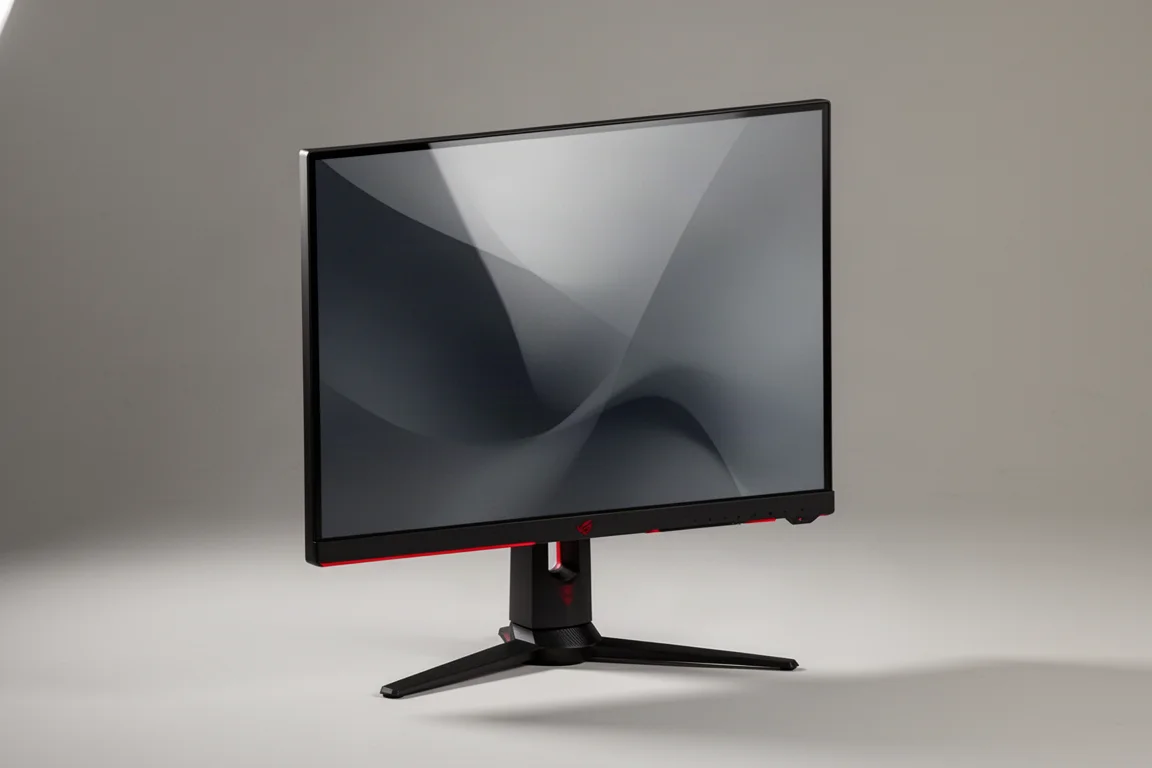
The ASUS ROG Swift PG27UCWM is the first 27-inch 4K WOLED gaming monitor, and it serves as the smaller sibling to the 32-inch PG32UCWM. Rather than a completely new design, this model brings the same core technology and feature set down to a more compact size. The result is a monitor that performs almost identically to its larger counterpart, but it enters a very different competitive landscape.
At 27 inches, this new RGB stripe WOLED panel from LG Display faces off against a single QD-OLED competitor. That changes the value equation considerably. The monitor delivers strong image quality, a useful dual-mode feature, and a glossy coating that preserves deep blacks in bright rooms. However, its launch price of $1,200 US puts it in a difficult position against QD-OLEDs that cost nearly half as much.
Design and Panel Technology
The PG27UCWM uses a 27-inch 4K WOLED panel from LG Display with a new RGB stripe sub-pixel layout. This is LG Display’s first 27-inch 4K OLED panel, and it uses the same emissive layer technology found in the 32-inch RGB stripe panel, with each pixel shrunk down to meet the higher density requirements of 27-inch 4K.
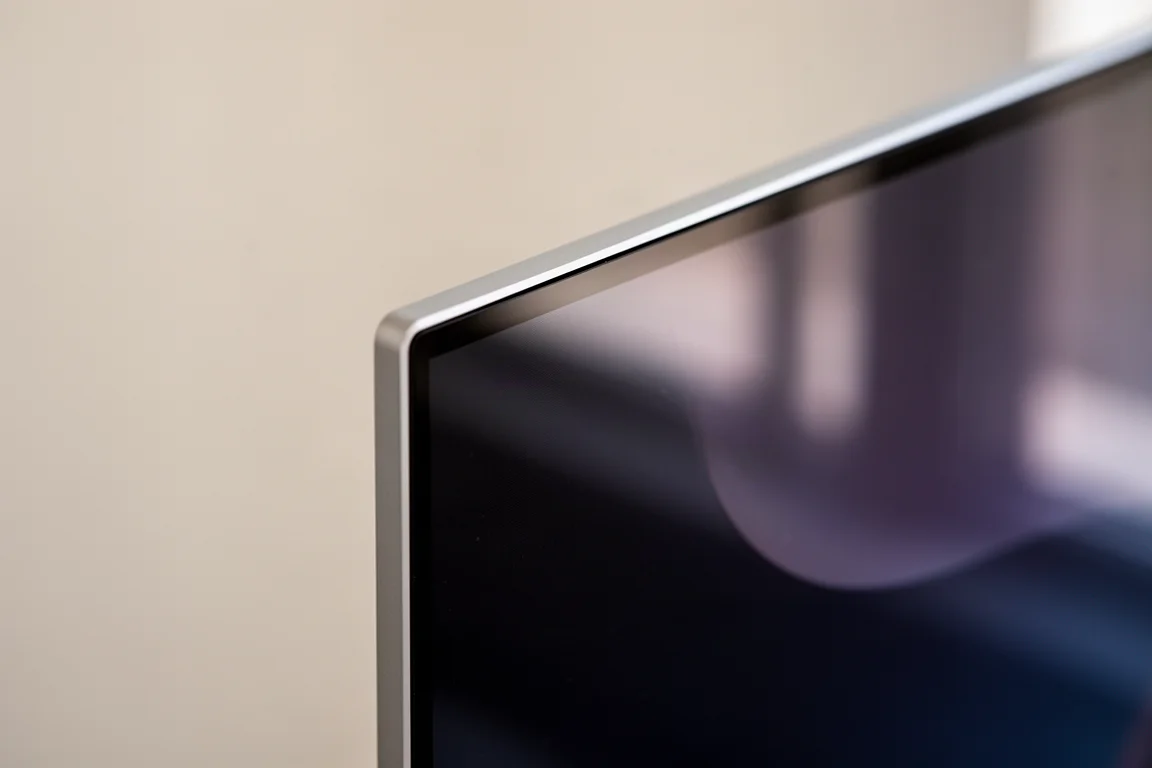
The monitor features the same glossy coating as the 32-inch model, branded as True Black Glossy. This coating is visually identical to the larger version and plays a significant role in how the monitor performs in different ambient lighting conditions. The design itself is essentially the same as the PG32UCWM, just reduced in size, with the same stand and overall aesthetic.
The RGB stripe sub-pixel layout is a notable inclusion for a 27-inch 4K panel. LG Display never made a 27-inch 4K panel using older layouts like RGWB, so this is their debut offering in this size. The main competition, QD-OLEDs, use a triangle RGB layout. RGB stripe is generally considered superior for text rendering because it is more compatible with sub-pixel font rendering techniques.
However, at 27 inches with a pixel density of 166 ppi, the differences between RGB stripe WOLED and triangle RGB QD-OLED become even less significant than at 32 inches. The higher pixel density means the sub-pixel layout has less influence on text quality. Realistically, whether a 27-inch 4K panel uses RGB stripe or triangle RGB, it does not make much difference to overall image quality. Text clarity is excellent on all of these 4K options.
Performance and Image Quality
The PG27UCWM delivers essentially identical performance to the PG32UCWM in most areas. Motion performance is the same, with both monitors offering 4K 240Hz and 1080p 480Hz modes. The dual-mode functionality works identically, and all OSD settings are the same.
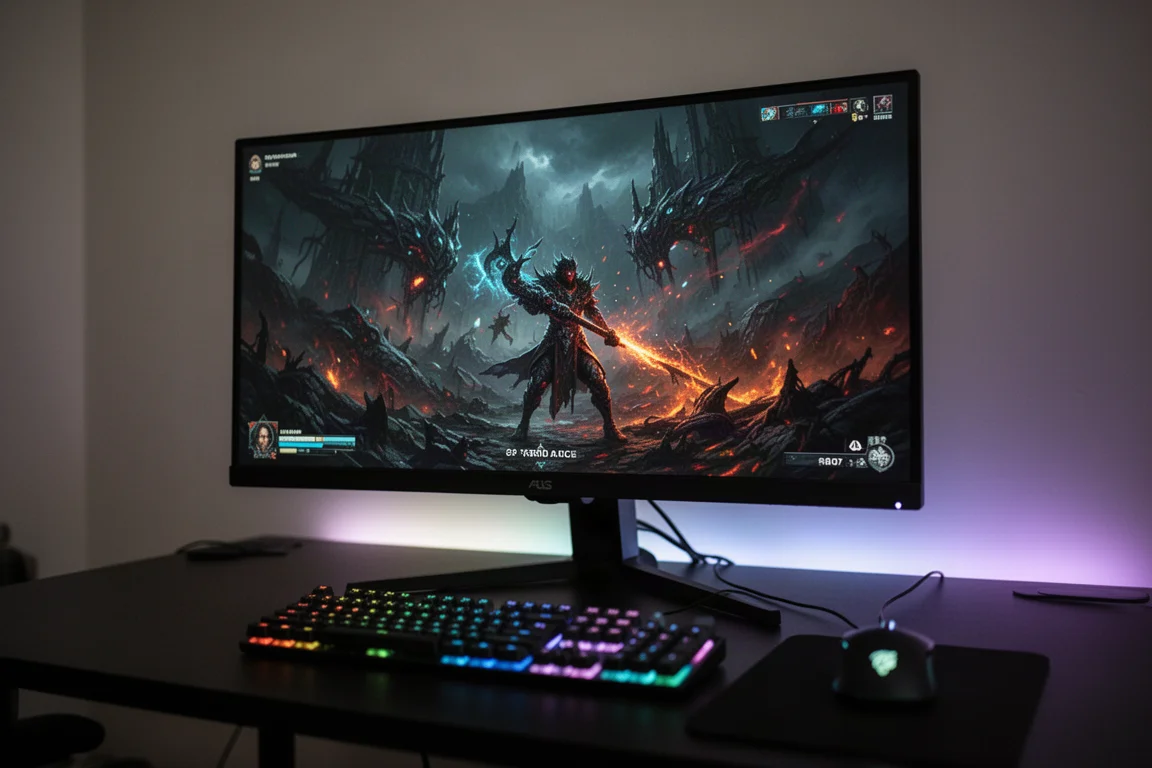
In SDR brightness, the 27-inch model offers the same 260 nits of full-white output as the 32-inch version. This ends up being more competitive with QD-OLEDs because the current crop of 27-inch variants top out at just over 250 nits. There are no 27-inch 4K QD-OLEDs that reach 300 nits, so whether you choose WOLED or QD-OLED here, you end up with similar output.
SDR accuracy is a strong point for the PG27UCWM. The 27-inch model was more accurate in the sRGB mode than the 32-inch version out of the box, with excellent delta E performance across grayscale and color checker tests. This makes the monitor extremely competitive with the best QD-OLEDs and a top-tier product that requires few, if any, tweaks out of the box.
HDR performance is essentially identical to the PG32UCWM. The HDR modes are configured in the same way, which means the same limitations apply. If you were disappointed with the lack of a standard peak mode with strong accuracy and dark content on the 32-inch model, you will also be disappointed with the PG27UCWM.
In HDR brightness, the 27-inch model showed some minor improvements over the 32-inch version. The 27-inch unit achieved 250 nits of 100% white brightness compared to 230 nits on the 32-inch model, a 9% increase. Peak brightness also pushed slightly higher, reaching 1,051 nits versus 985 nits, a 7% increase. For middle window sizes, both models offered the same performance.
In the True Black configuration, the PG27UCWM delivers very similar performance to the PG27UCDM, a 27-inch QD-OLED. In the high brightness modes, there can be a small difference depending on the model it is compared to. The 27-inch UCWM was brighter than the AW2725Q, which uses a 27-inch 4K QD-OLED, but not as bright as the PG27UCDM, XG27UCDMG, or the 272URX.
Uniformity on the 27-inch model was slightly better than the 32-inch version across both whites and grays. There was not as much fall-off along the edges, and the dirty screen effect was even harder to see. Dark gray banding is minimal and should not be a noticeable issue during everyday use.
Connectivity and Features
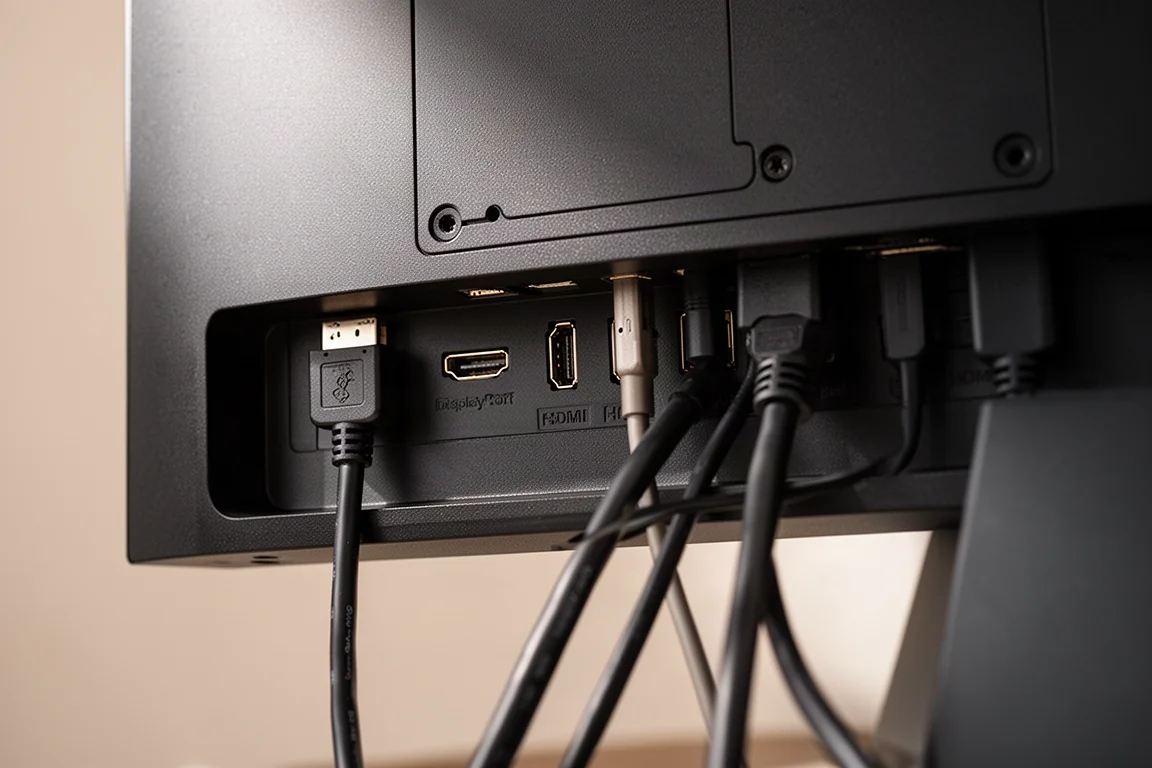
The PG27UCWM has exactly the same feature set as the PG32UCWM. This includes a 240Hz refresh rate with adaptive sync, a 1080p 480Hz dual mode, DisplayPort 2.1 UHDR20 connectivity, Dolby Vision support, and DisplayHDR True Black 400 certification.
The dual-mode functionality is a standout feature. The ability to switch to 1080p at 480Hz is useful for improving clarity and reducing input lag in competitive games. This is something that current QD-OLEDs do not offer at all, giving the WOLED panel a distinct advantage for gamers who play both single-player and competitive titles.
One issue that carries over from the 32-inch model is that auto color management does not work. However, the sRGB mode is fully customizable and unlocked, which mitigates this problem to some degree.
Power consumption is an interesting observation. The 27-inch panel appears to be less efficient than the 32-inch version. Displaying 200 nits of full white, the 27-inch UCWM clocked in at 86W compared to around 74W for a typical 2025 4K QD-OLED. That is 16% higher power consumption to show the exact same thing, and over double the power usage of a 27-inch IPS LCD. In a mid-app gaming test, the 27-inch model only used slightly less power than the 32-inch model. While this does not affect how enjoyable the monitor is to use, it is worth noting for those who are conscious of power draw.
How It Compares to 27-Inch QD-OLEDs
The 27-inch segment is very different from the 32-inch category. At 32 inches, there are multiple QD-OLED options, including original models from 2024 and updated versions from 2025, plus several WOLED options. At 27 inches, there is just the 2025 QD-OLED panel and this new RGB stripe WOLED. That is it.
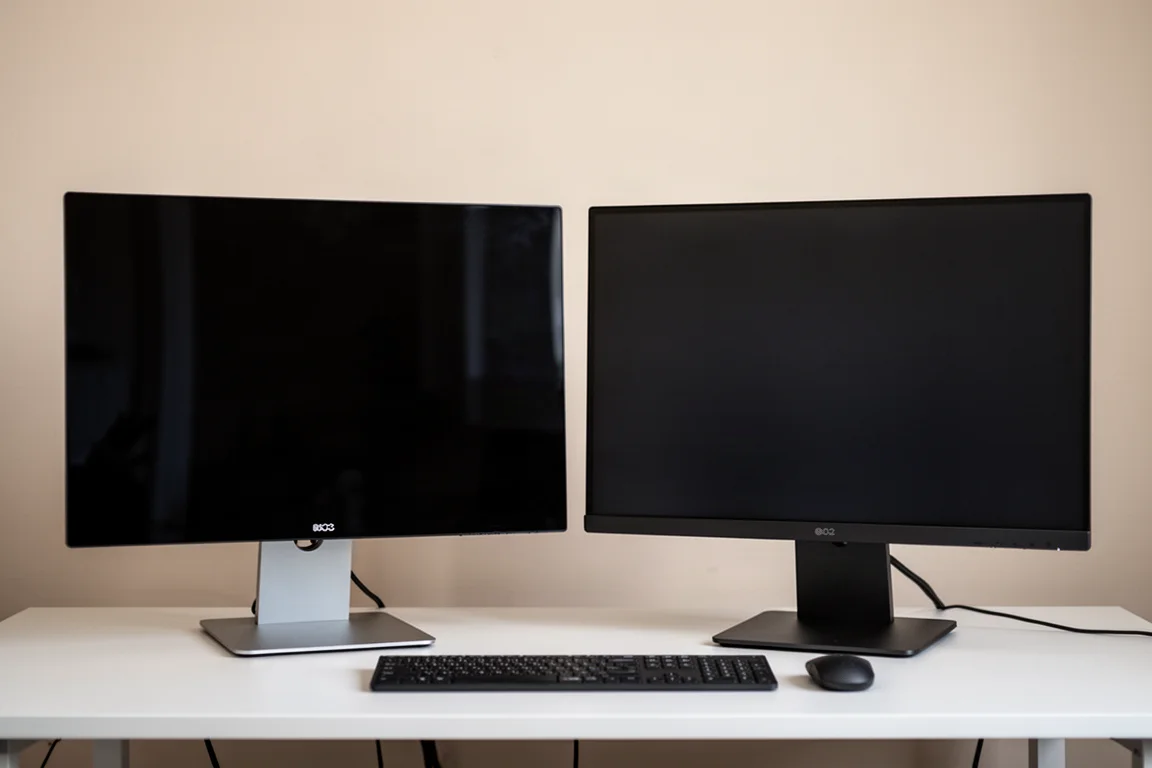
This limited competition works in favor of the PG27UCWM. Some of the criticisms of the 32-inch version do not apply to the 27-inch model. For example, there is no RGWB alternative at 27 inches, so the brightness regression compared to older WOLEDs is not a factor. There is also only one QD-OLED competitor, and it is True Black 400 class, offering similar brightness characteristics to this RGB stripe WOLED.
The glossy coating gives the WOLED a larger advantage in terms of black levels in brighter ambient environments relative to the best QD-OLED screens. Samsung Display has not updated their 27-inch 4K panel offering with the new film designed to reduce ambient light reflectance, so the 27-inch QD-OLED looks most similar to the original 2024 32-inch QD-OLED. This gives the glossy WOLED a clear edge in maintaining deep blacks in well-lit rooms.
The QD-OLED does have some unique strengths of its own, including reduced mirror reflections, better gray uniformity, and slightly higher color volume. However, the WOLED counters with a better screen coating, the 1080p 480Hz dual mode, and a true RGB stripe sub-pixel layout.
If the choice were between the PG27UCWM and a 27-inch 4K 240Hz QD-OLED at the same price, the PG27UCWM would be the better pick. The advantages of the WOLED panel put it ahead of the QD-OLED in overall package.
Buying Advice
The biggest problem with the PG27UCWM is its price. This new RGB stripe WOLED is entering the market at $1,200 US, which is absurdly expensive. While this is the same launch price as the PG27UCDM QD-OLED from 2025, the current market in mid-2026 makes it difficult to justify.
There are several 27-inch 4K 240Hz QD-OLEDs priced at just $650 US. The Gigabyte MO27U2, the MSI MAG272UPX24, and the Dell AW2725Q have all been seen at that price point. The flagship ASUS QD-OLED, the PG27UCDM, is currently $1,000 and has never dropped below $900, but even that is difficult to recommend at that price right now.
The QD-OLEDs start at $650 US, with $700 as a worst case for a panel of this size and spec. The PG27UCWM is debuting at $1,200 US, which is almost twice the price. The better screen coating and dual-mode functionality are not worth $550 extra. Even when factoring in some of the extra features ASUS offers, this is one of the most overpriced monitors in recent memory.
A small premium over a QD-OLED is justified here. A price around $800 would make sense. It is a cool product with some interesting technology, but the market has moved past the point where all OLEDs cost over $1,000. This panel type is getting cheaper and cheaper, and with the PG27UCWM, ASUS is not keeping up with the pack.
Conclusion
The ASUS ROG Swift PG27UCWM is a technically impressive monitor that delivers essentially the same performance as its 32-inch sibling. The RGB stripe WOLED panel offers excellent SDR accuracy, competitive HDR performance, and a glossy coating that preserves deep blacks in bright environments. The 1080p 480Hz dual mode is a genuinely useful feature for competitive gamers.
However, the launch price of $1,200 US is difficult to justify when comparable QD-OLEDs are available for nearly half the price. The advantages of the WOLED panel are real, but they are not worth the significant premium. If the price drops to around $800, this becomes a much more compelling option. Until then, most buyers would be better served by a cheaper QD-OLED or waiting for the price to come down.
Product link
View more details for ASUS ROG Swift PG27UCWM
This product is mentioned in the review. Check the specifications, options, and compatibility before buying.
View more details for ASUS ROG Swift PG27UCWMFurther reading
Related Reviews
Monitor Reviews
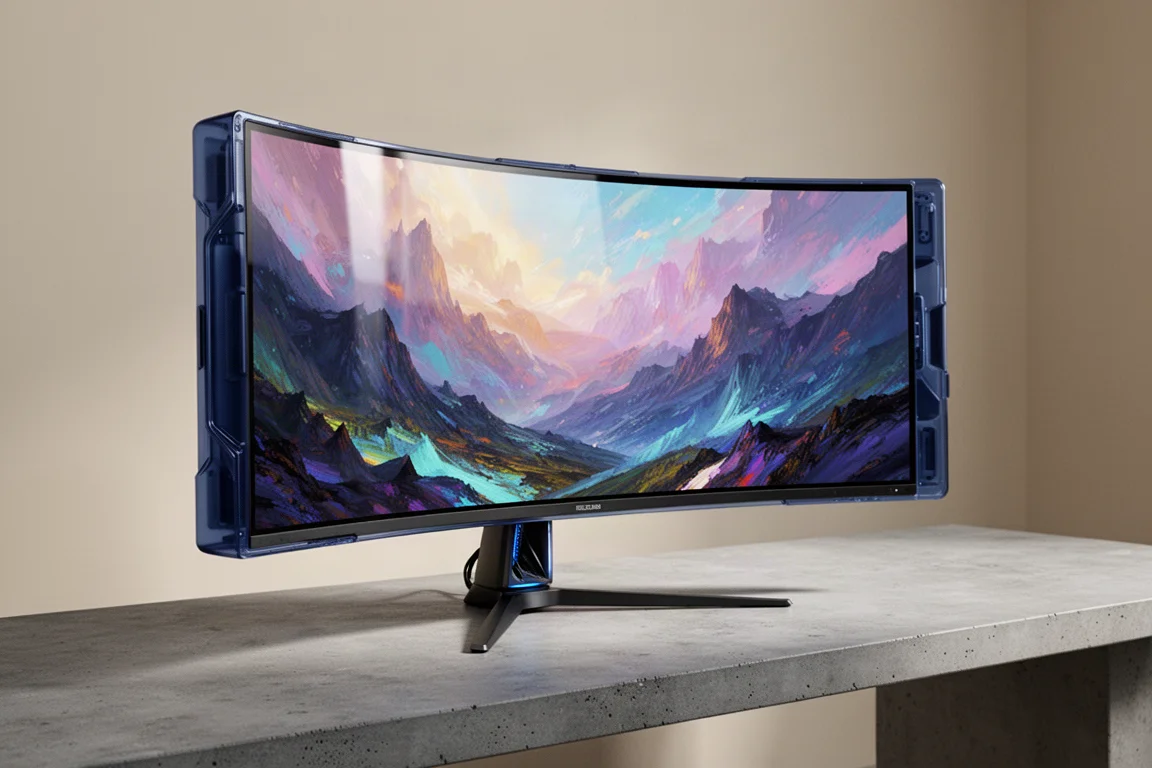
Dell Alienware AW3926QW Review: A 39-Inch 5K2K OLED That Redefines Value
Dell's first 39-inch OLED gaming monitor brings an RGB stripe panel, glossy finish, and a price that undercuts its main rival by a wide margin.
Monitor Reviews
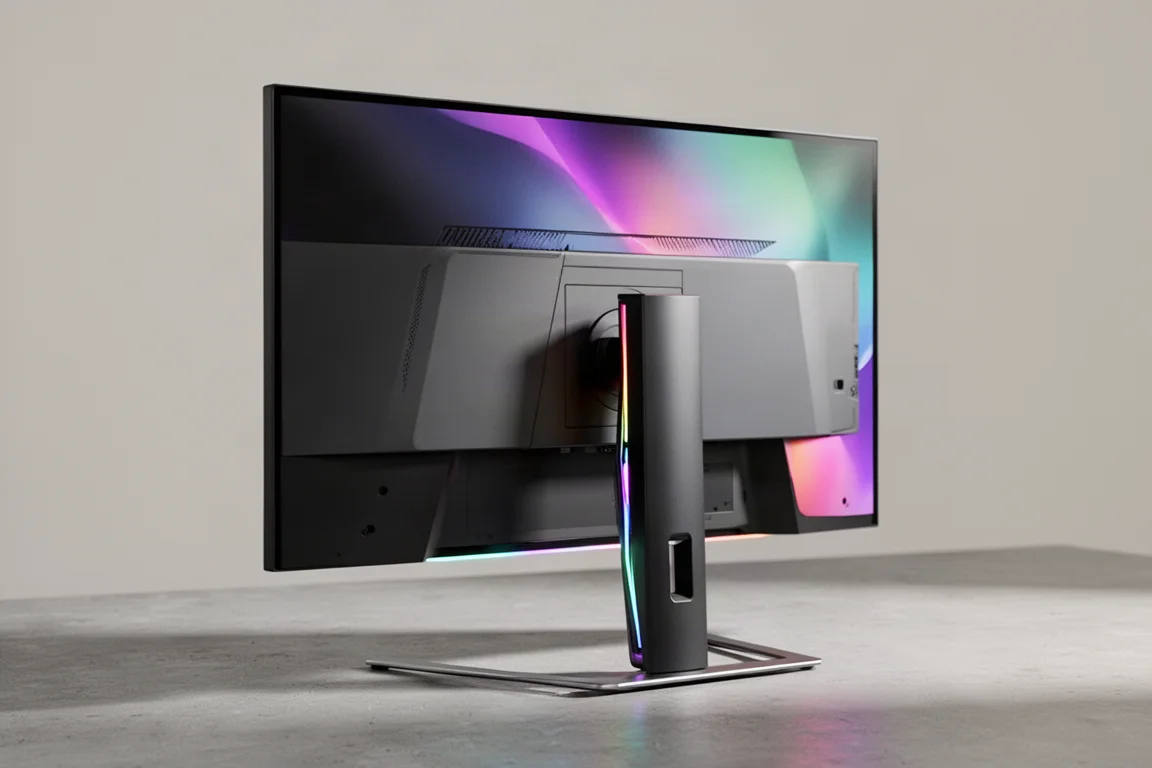
LG 27GM950B Review: A 5K Gaming Monitor That Tries to Do It All
The LG 27GM950B brings native 5K resolution, a 165Hz refresh rate, and a 1440p dual mode at 330Hz to a single 27-inch IPS panel. Here is how it performs.
Monitor Reviews
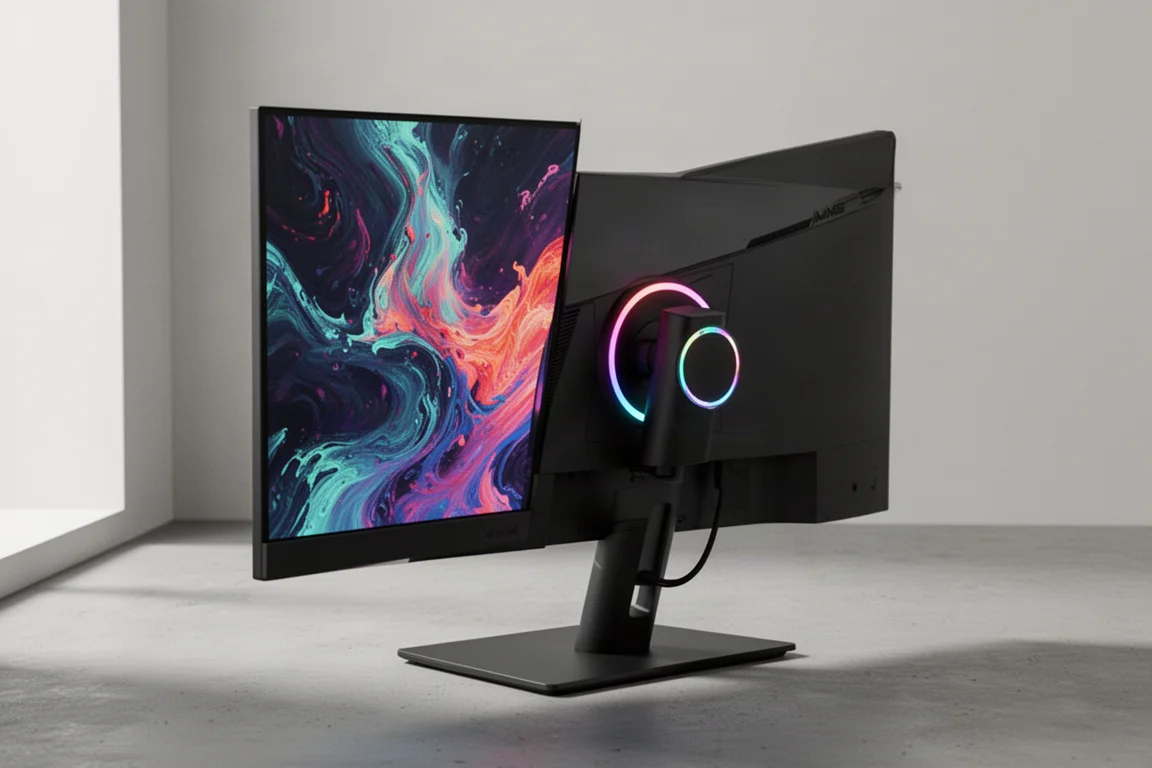
Samsung Odyssey G80HS Review: A 6K Gaming Monitor That Finally Makes Sense
The Samsung Odyssey G80HS pairs a sharp 6K productivity panel with a 3K 330Hz dual mode for gaming. We break down the strengths, trade-offs, and who should consider it.