Astrophotography
Three Computers for Controlling an Astrophotography Rig: ZWO ASIAir Plus, Prima Luce Lab Eagle 4S, and a Refurbished ThinkPad
A hands-on comparison of three computers for deep sky astrophotography, covering price, ports, camera and mount support, wireless reliability, and which rig each suits best.
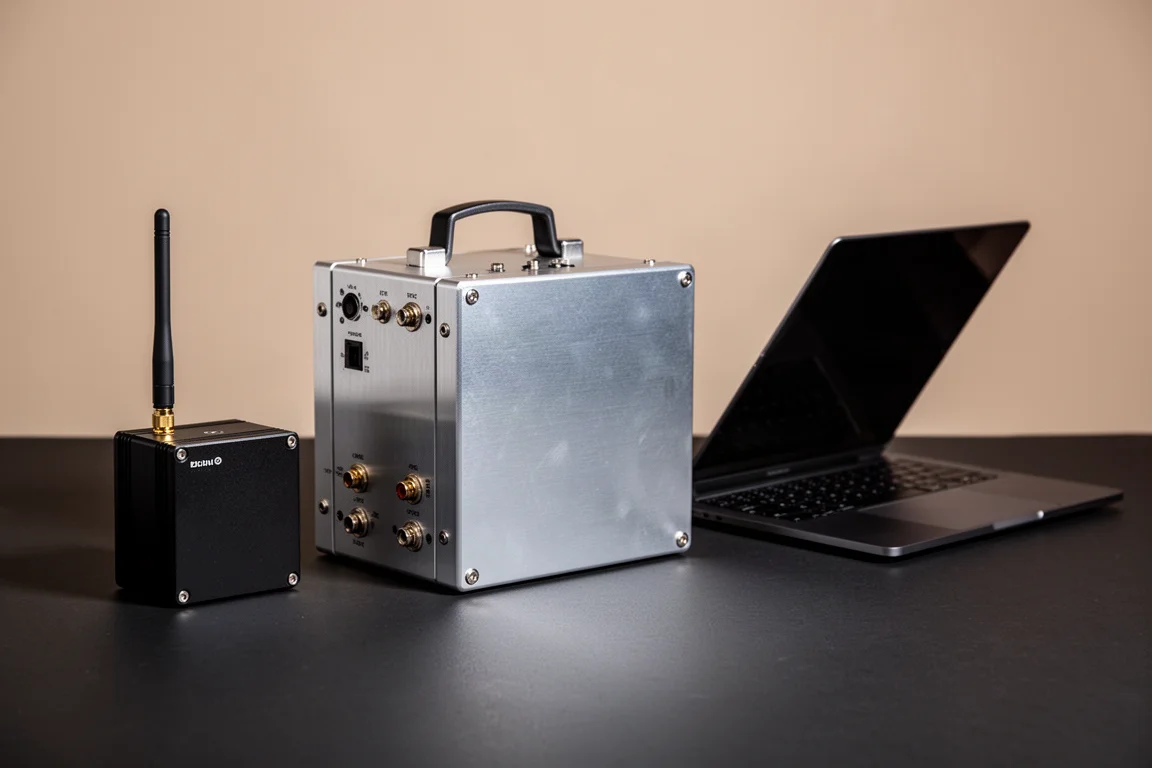
Introduction
Astrophotography rigs have grown into collections of powered accessories: cooled cameras, focusers, filter wheels, dew heaters, mounts. All of that gear needs a computer to run it, and the choice of computer shapes how the whole night of imaging goes. Three very different options were used side by side over the course of a month: the ZWO ASIAir Plus, the Prima Luce Lab Eagle 4S, and a refurbished Lenovo ThinkPad X1 Carbon paired with a Pegasus power box.
The ASIAir and the Eagle are custom built for astrophotography, with integrated power management and features aimed directly at telescope control. The laptop can do the same job, but it needs additional hardware like a Pegasus power box to match the feature set of the other two. Here is how they compare, and who each one is really for.
Why Dedicated Astro Computers Took Over
Not long ago, the standard approach was a Windows laptop cabled directly to the gear, left outside next to the telescope, often protected from the elements inside a plastic tub and powered by a heavy lead acid battery. Around 2017, mini computers like Raspberry Pis started appearing at star parties: log in over Wi-Fi, start a session, walk away, and use far less power without a screen.
Early attempts to combine a headless Windows machine with existing software often ended in frustration, with laggy performance and unreliable wireless. The devices tested here represent many iterations of that idea. The first ASIAir arrived in 2018, the ASIAir Pro added USB 3 and 12 volt power outputs in 2019, and the ASIAir Plus arrived in 2021 as a refinement, later joined by a lower-cost ASIAir mini without USB 3. Prima Luce Lab has iterated the Eagle since 2015, through the Eagle 2, 3, and 4, up to the recently released Eagle 5 family in several variants.
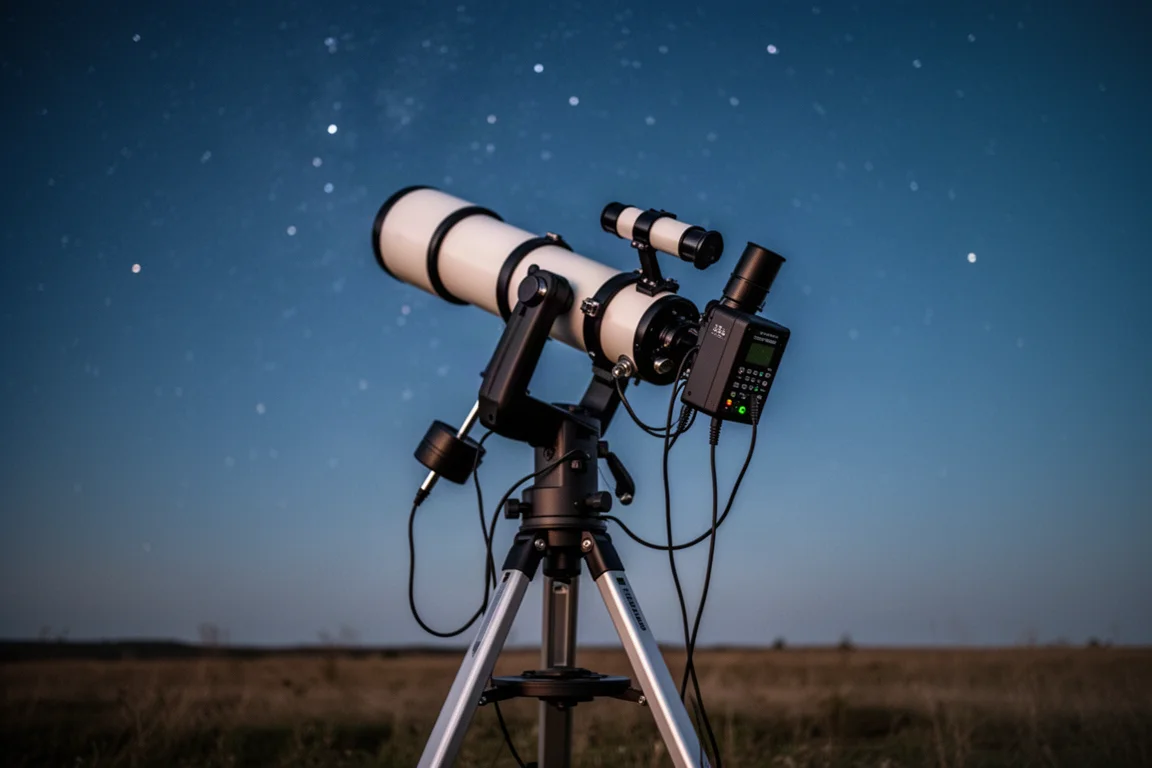
ZWO ASIAir Plus
The ASIAir Plus is the lightest of the three at about 240 grams, mounts to the telescope via a Synta-style finder shoe, and runs a customized Linux system controlled through the ASIAir app. It offers four 12 volt outputs at 3 amps, two USB 3 and two USB 2 ports, an ethernet jack, a micro SD slot for extra storage, and a USB-C port that presents the unit as an external drive for fast image transfer.
Camera and accessory support is the key limitation: it works with Canon, Nikon, and Sony cameras plus all current ZWO cameras, mounts with INDI drivers, and ZWO accessories only, such as the EAF focuser and ZWO filter wheels. Within that ecosystem, though, the experience is remarkably smooth for a $299 device. It leads you through the settings, streamlines the session, and wireless reliability was better than expected: it held a connection through a single wall from about 20 feet inside, and reached an estimated 100 feet outdoors with line of sight. Just note that powering a DSLR via dummy battery requires a step-down converter, and dew heater bands need a DC-to-RCA cable.
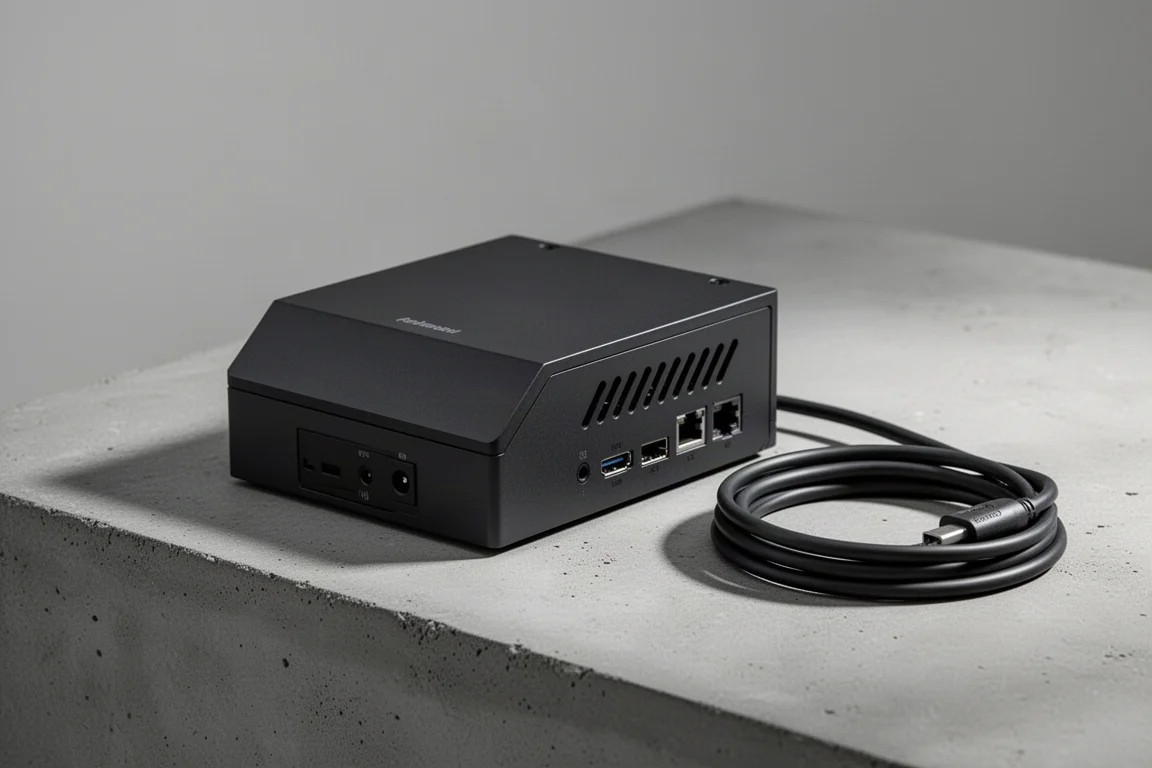
Prima Luce Lab Eagle 4S
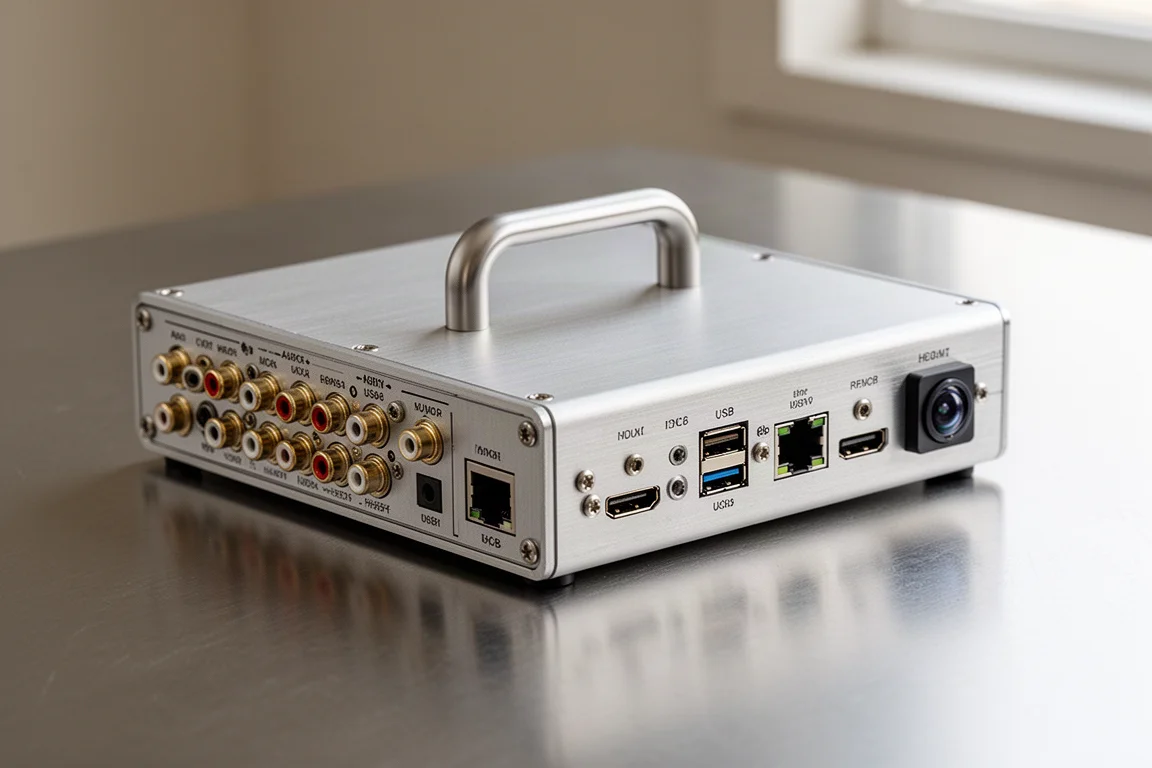
The Eagle 4S is a substantially heavier unit at about 1,270 grams, built into a durable aluminium chassis that bolts directly to the top of a telescope. It runs Windows 11 Enterprise with Prima Luce’s control software pre-installed, and because it is a full Windows machine, you can install anything: NINA, Sequence Generator Pro, APT, Voyager, or anything else with a Windows or ASCOM driver. That makes it compatible with virtually any camera, mount, and accessory on the market.
The port selection is extensive: two power outputs at 3 amps and two at 8 amps on locking M12 screw connectors, three adjustable 0-12 volt RCA ports for dew heaters, GPS, a Thunderbolt 3 port tested with an external SSD, dual HDMI for a dual-monitor setup, and nine USB ports in total. The integrated sky quality sensor gives a live reading in magnitude per square arc second, and readings matched a dedicated sky quality photometer exactly during testing. The GPS delivered correct coordinates and altitude every time.
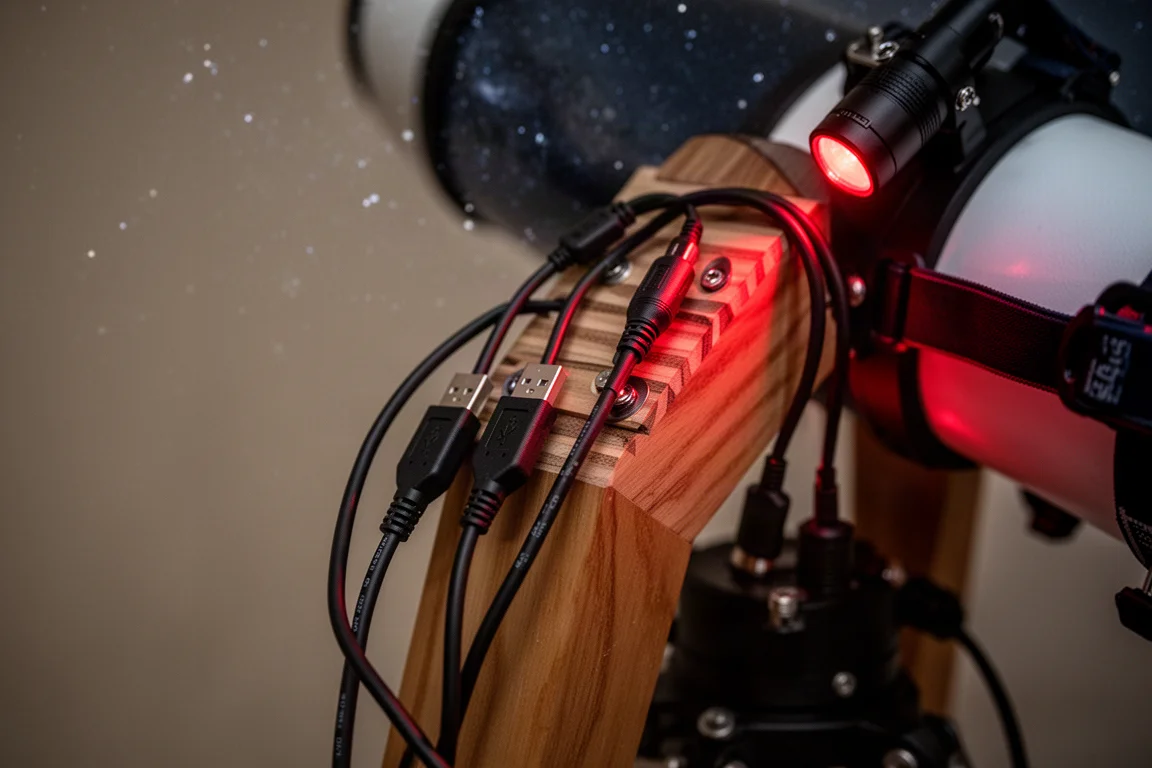
The Eagle also offers host mode and AP mode wireless, and it performed well in both, staying usable through a wall and reaching further than the ASIAir before performance degraded. Its main drawbacks are weight and price. It is discontinued now, but it sold for $1,595 and the closest current model, the Eagle 5S, sells for $1,695. For anyone building a permanent observatory with heavy automation, it is arguably the perfect brain for the whole system.
Lenovo ThinkPad X1 Carbon Plus Pegasus Power Box
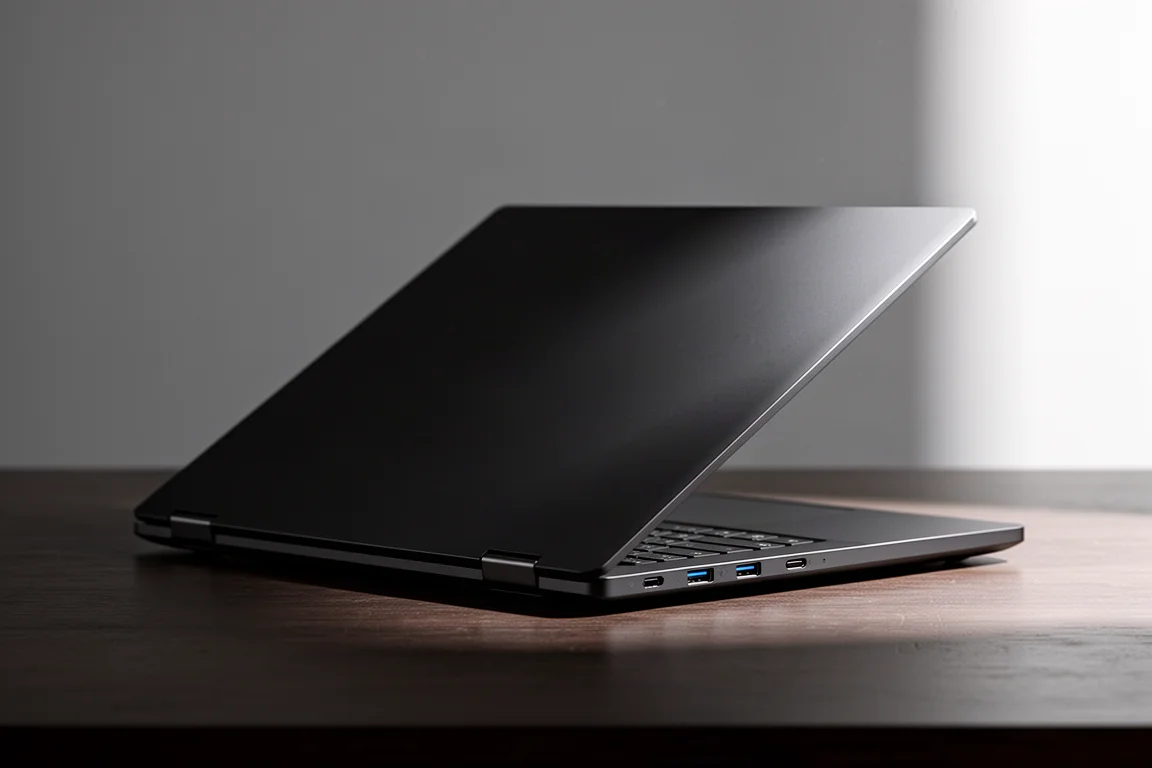
The third option is the familiar one: a general-purpose laptop. This refurbished ThinkPad X1 Carbon has 32 GB of RAM, an i7 processor, a 512 GB SSD, two Thunderbolt 4 ports, two USB 3 Type-A ports, and full-size HDMI. Its biggest advantage over both dedicated units is the internal battery, which lasted about six to seven hours in careful use with the display off between checks, and can be extended with a power bank through the Thunderbolt ports.
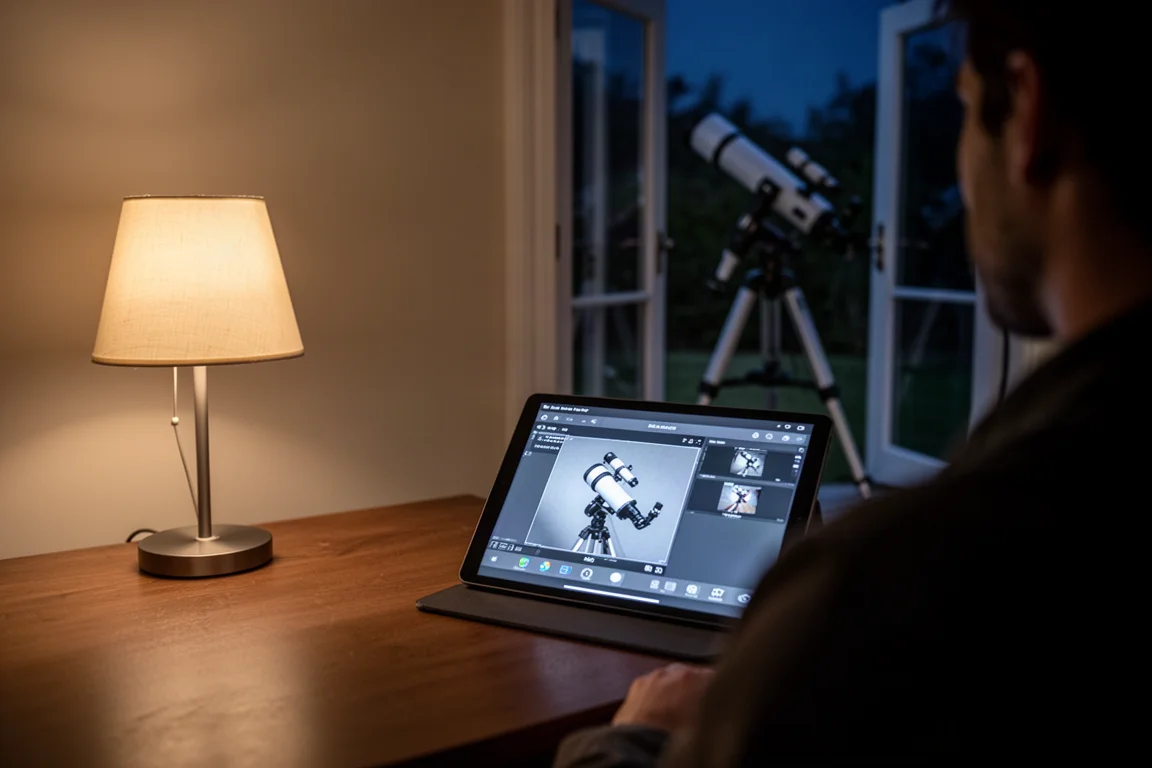
What the laptop lacks is astronomy-specific power management, which is where the Pegasus power box comes in. With an Ultimate or Pocket Power Box handling power distribution, independently switchable USB ports, dew heater control, and focuser control, the laptop setup matches most of the Eagle’s feature set, minus the GPS, sky quality sensor, and Thunderbolt ports. The total came to roughly $1,630 including the $1,000 refurbished laptop and a $630 Pegasus Ultimate. The practical limit is USB 3 cable length of about three meters, so you control the machine close to the rig via remote desktop from another device on the same network, which worked well in testing. As a bonus, the laptop also handles image preprocessing comfortably, something neither dedicated unit is really designed for at scale.
Which One Should You Buy?
If you want the most capable astronomy computer with all the bells and whistles and complete freedom to choose any hardware and software, the Eagle line is the clear pick. If you are just getting started, already own a Windows laptop, and do not want to go all-in on one brand, use that laptop with a power box and skip a dedicated unit for now. If you are comfortable committing to ZWO cameras and accessories, the ASIAir Plus is outstanding value: $300 for everything it does is hard to argue with.
Whichever path you choose, budget realistically. None of these prices include cables or power adapters, which can realistically add a couple hundred dollars depending on your needs, and Eagle-specific cables cost more than standard 12 volt barrel cables because they handle more current and lock in place.
Conclusion
Dedicated astronomy computers have genuinely matured. Both the ASIAir Plus and the Eagle worked better than expected over a month of side-by-side testing, with wireless reliability that no longer feels like a compromise. The right choice comes down to ecosystem: stay flexible with the Eagle or a laptop-plus-power-box, or embrace simplicity and value with the ASIAir if ZWO gear covers your needs.
Further reading
Related Reviews
Astrophotography
ASKAR FRA400C Review: A Versatile 400mm Refractor for Astrophotography and More
The ASKAR FRA400C is a compact 72mm refractor that balances reach, versatility, and portability for astrophotographers and visual observers.
Astrophotography
Askar SQA106 Review: A Premium 106mm Astrograph With Exceptional Optics
The Askar SQA106 is a premium 106mm quintuplet astrograph with impressive sharpness across full-frame sensors, though its price and weight demand careful consideration.
Astrophotography
Astro Imaging Gear 2026: Eight New Products Worth Watching
A look at the most interesting new astrophotography and astronomy products announced this year, from fast telescopes to smart cameras and wireless accessories.