Astrophotography
Askar V Review: A Modular Apo Triplet Built for Flexible Astrophotography
A close look at the Askar V modular refractor, its interchangeable objective lenses, reducer, flattener, and extender, and how each configuration performs.
Introduction
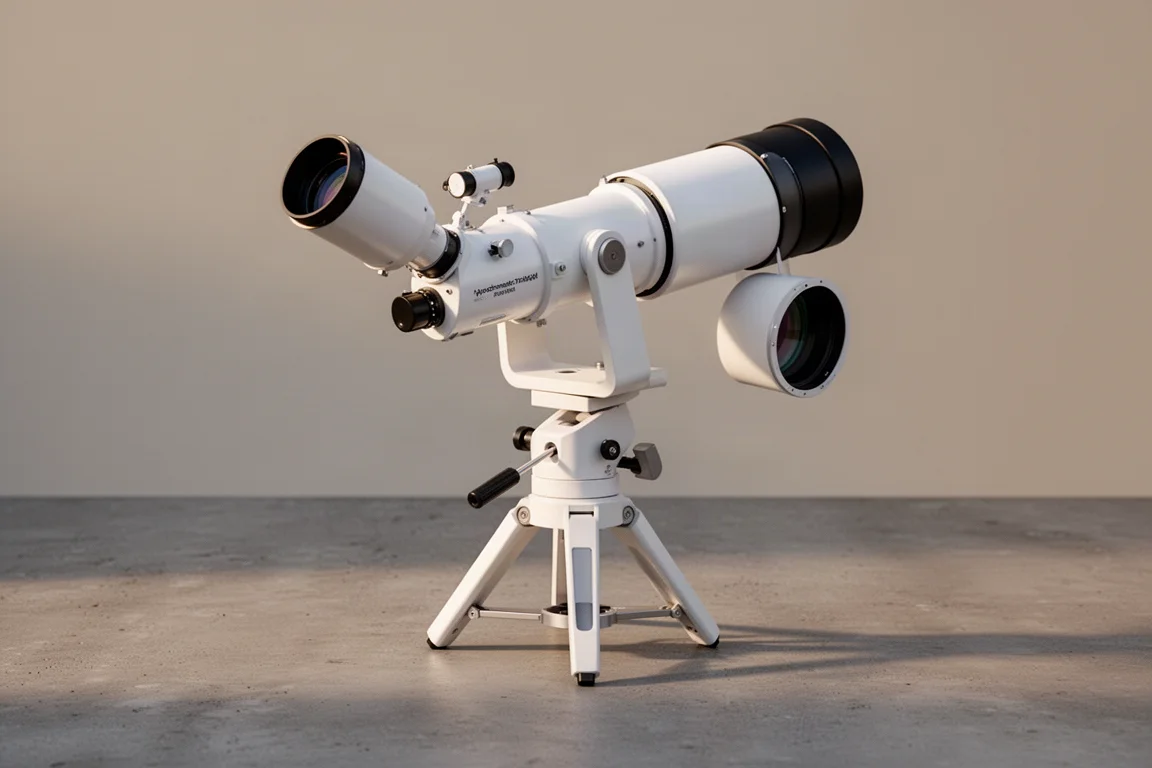
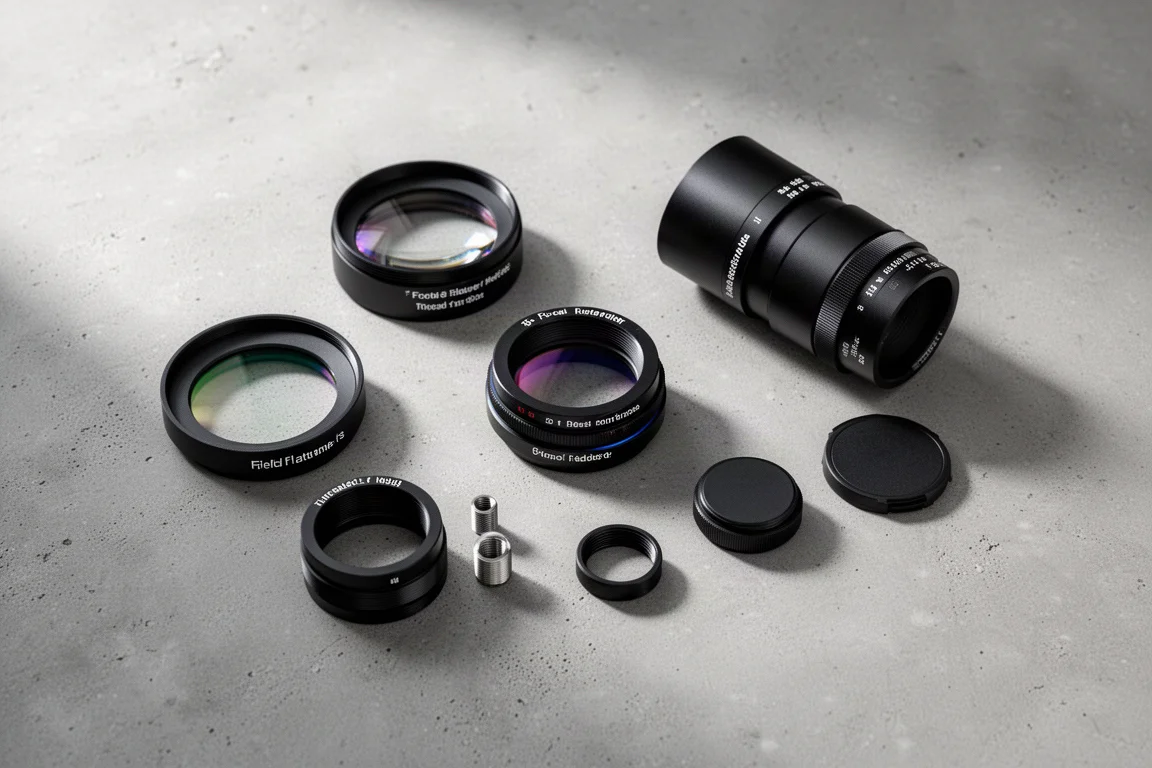
The Askar V is a modular apochromatic triplet refractor designed to change configuration depending on the target. Rather than locking you into one focal length, it ships with two interchangeable objective lenses, a focal reducer, a field flattener, and a focal extender, letting the same optical tube cover everything from wide nebula fields to medium-sized galaxies. This review walks through how the system goes together, what each combination delivers, and where the practical limits sit.
Configuration and Assembly
Out of the box, the Askar V arrives with the 80 millimeter objective already installed. Swapping to the 60 millimeter lens is straightforward: slide the dew shield fully upward, twist the lens cell following the indicator arrows, and it threads off easily so the 60 millimeter objective can take its place.
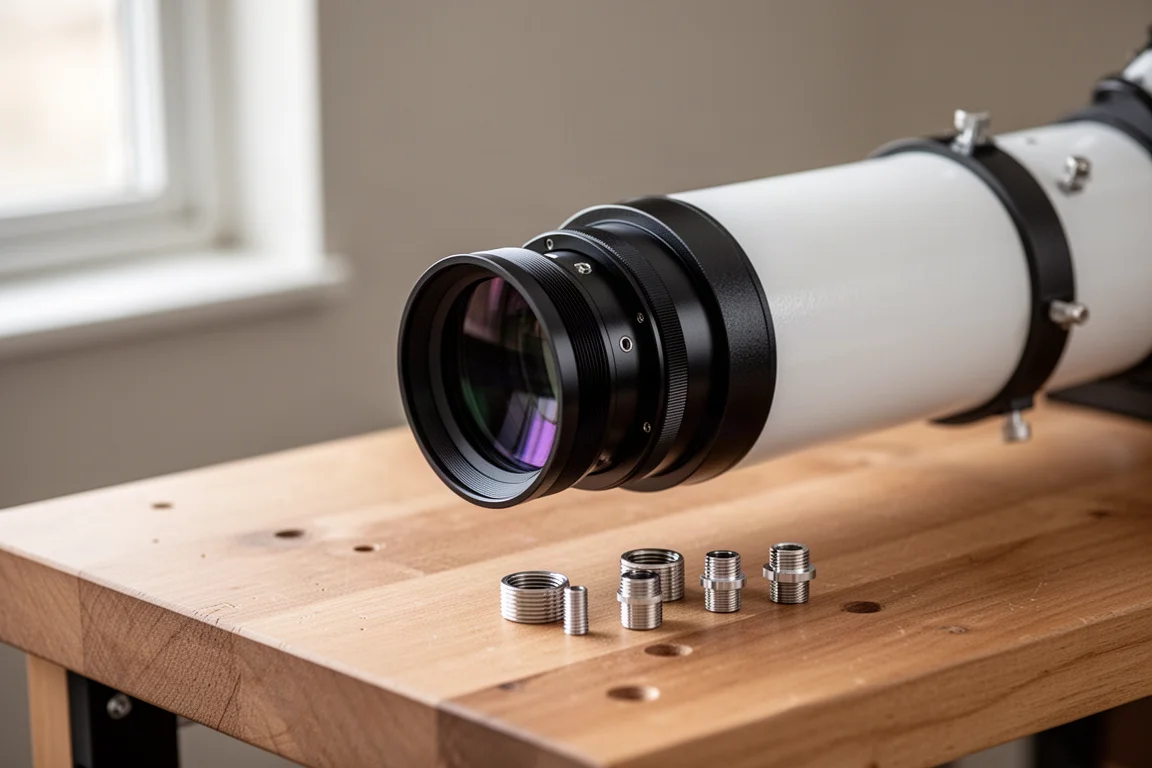
Attaching the field flattener, reducer, or focal extender follows the standard refractor routine. Remove the visual adapter at the very back of the scope, take the cap off the back of the accessory, and thread it in place. The camera side exposes M48 threads, and the same process applies to all three rear elements. Overall, assembly and disassembly are extremely easy.
Focal Lengths and Specifications
Both the 60 and 80 millimeter objective lenses are triplets, and the specifications change constantly depending on which components are installed. One detail worth noting: the reducer, flattener, and extender are each marked to match the objective lens in use, so the matching parameters need to be set correctly for your configuration.
With the 60 millimeter objective and the focal reducer, the shortest possible focal length is 270 millimeters. Paired with a full-frame camera, the other configurations break down as follows:
- 60 millimeter objective with flattener: 360 millimeters
- 80 millimeter objective with reducer: 384 millimeters
- 60 millimeter objective with extender: 446 millimeters
- 80 millimeter objective with flattener: 495 millimeters
- 80 millimeter objective with extender: 600 millimeters
Because the 80 millimeter with reducer (384mm) and the 60 millimeter with flattener (360mm) produce such similar fields of view, the 80 millimeter with reducer is the recommended pairing of the two. You get more light gathering power and more resolution at a faster focal ratio. The 600 millimeter configuration is a strong candidate for medium-sized galaxies and nebulae.
Image Quality at f/4.5
To evaluate real-world performance, a night of data was collected with the 60 millimeter objective and focal reducer at 270 millimeters on a full-frame camera. A focal reducer generally does not correct as well as a standard field flattener, so expectations should center on permissible edge results rather than perfect correction all the way to the frame edge.
Looking at a single four-minute subframe of the Lagoon and Trifid nebula, the stars in the center of the frame are perfectly round. Toward the very far corners they become slightly oblong, which is somewhat expected from a reducer at f/4.5 with a full-frame sensor, and it is not drastically different from other refractors used with reducers.

You really have to be pixel peeping to notice the oblong edges. With the flattener or focal extender at f/6 or f/7, stars are likely to look near perfect, and seen as a whole the final image is genuinely impressive.
Will It Work on a Small Mount?
A common question from beginner astrophotographers is whether this scope can run on a small mount like the Star Adventurer GTi, which has an 11 pound payload capacity. Weighing each component, including a full imaging train with a 533 mono camera, filter wheel, guide camera, and off-axis guider, leads to a few conclusions.

Any combination using the 60 millimeter objective should work on the GTi. The focal length stays short enough and the weight remains under the 11 pound limit, so there should be no problems. The 80 millimeter objective with the focal reducer may work, but at around 11.36 pounds it sits just slightly over the payload capacity, though the focal length is still reasonably wide. The 80 millimeter with the extender or flattener is likely too heavy and too long at up to 600 millimeters, pushing the GTi beyond its comfort zone for consistent results. These mount conclusions come from weighing rather than field testing, so real-world results may vary.
Should You Buy the Askar V?
The Askar V makes sense for astrophotographers who want multiple focal lengths without buying several telescopes. The modular design is genuinely easy to work with, the marked accessories reduce setup mistakes, and the range from 270 to 600 millimeters covers wide-field nebulae through medium-sized galaxies.
If you plan to image on a compact star tracker, favor the 60 millimeter configurations, which stay comfortably within typical payload limits. If you shoot on a larger mount, the 80 millimeter combinations with the reducer, flattener, or extender give you the flexibility to match the field of view to the target.
Conclusion
The Askar V delivers a rare level of versatility in a single refractor, with easy configuration changes, triplet optics in both objective sizes, and a spread of focal lengths that maps cleanly onto common deep sky targets. Edge performance at f/4.5 is acceptable rather than perfect, but the overall image quality and modular design make it a compelling choice for serious astrophotographers.
Product link
View more details for Askar V
This product is mentioned in the review. Check the specifications, options, and compatibility before buying.
View more details for Askar VFurther reading
Related Reviews
Astrophotography
ASKAR FRA400C Review: A Versatile 400mm Refractor for Astrophotography and More
The ASKAR FRA400C is a compact 72mm refractor that balances reach, versatility, and portability for astrophotographers and visual observers.
Astrophotography
Askar SQA106 Review: A Premium 106mm Astrograph With Exceptional Optics
The Askar SQA106 is a premium 106mm quintuplet astrograph with impressive sharpness across full-frame sensors, though its price and weight demand careful consideration.
Astrophotography
Astro Imaging Gear 2026: Eight New Products Worth Watching
A look at the most interesting new astrophotography and astronomy products announced this year, from fast telescopes to smart cameras and wireless accessories.