Astrophotography
Askar V Modular Telescope Review: One Telescope, Six Focal Lengths
The Askar V combines two front objectives with a reducer, flattener, and extender to cover 270mm to 600mm. Here is how it compares against Askar's dedicated astrographs.
Introduction
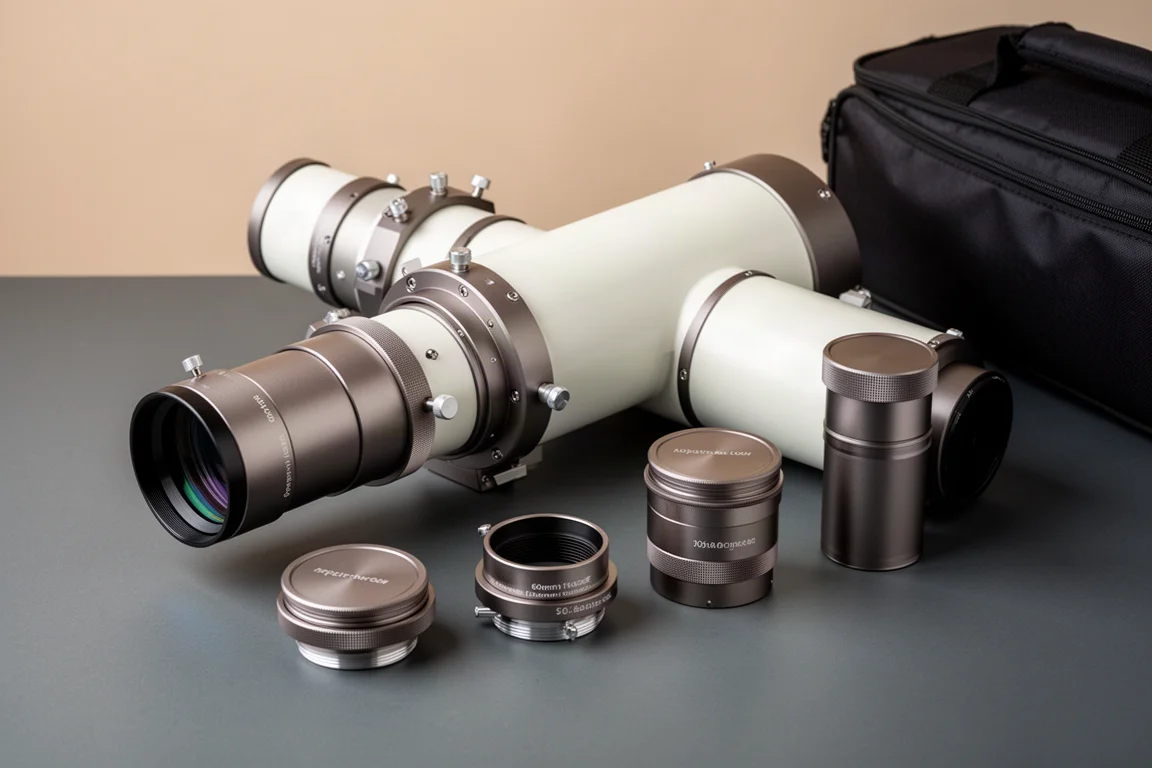
A typical imaging refractor works like a prime lens: one focal length, fixed. Reducers are usually available as optional extras, but very few telescopes offer a true multi-focal-length system. The Askar V takes that idea further than almost anything else on the market. Sold as a complete modular system rather than a telescope with optional add-ons, it includes an extender, a flattener, a reducer, and two different front objective lenses, a 60mm and an 80mm. Combined, these parts produce six different focal lengths ranging from 270mm at f/4.5 up to 600mm at f/7.5.
The obvious question is whether one modular scope can replace a set of dedicated refractors, and at what point the trade-offs start to matter. Changing configurations is not as quick as turning a zoom ring on a camera lens; it means carefully swapping screw-on components with exposed glass elements. Still, the purchasing decision resembles the classic zoom-versus-primes debate in photography, and this review looks at where the Askar V lands in that comparison.
Inside the Case: Design and Build
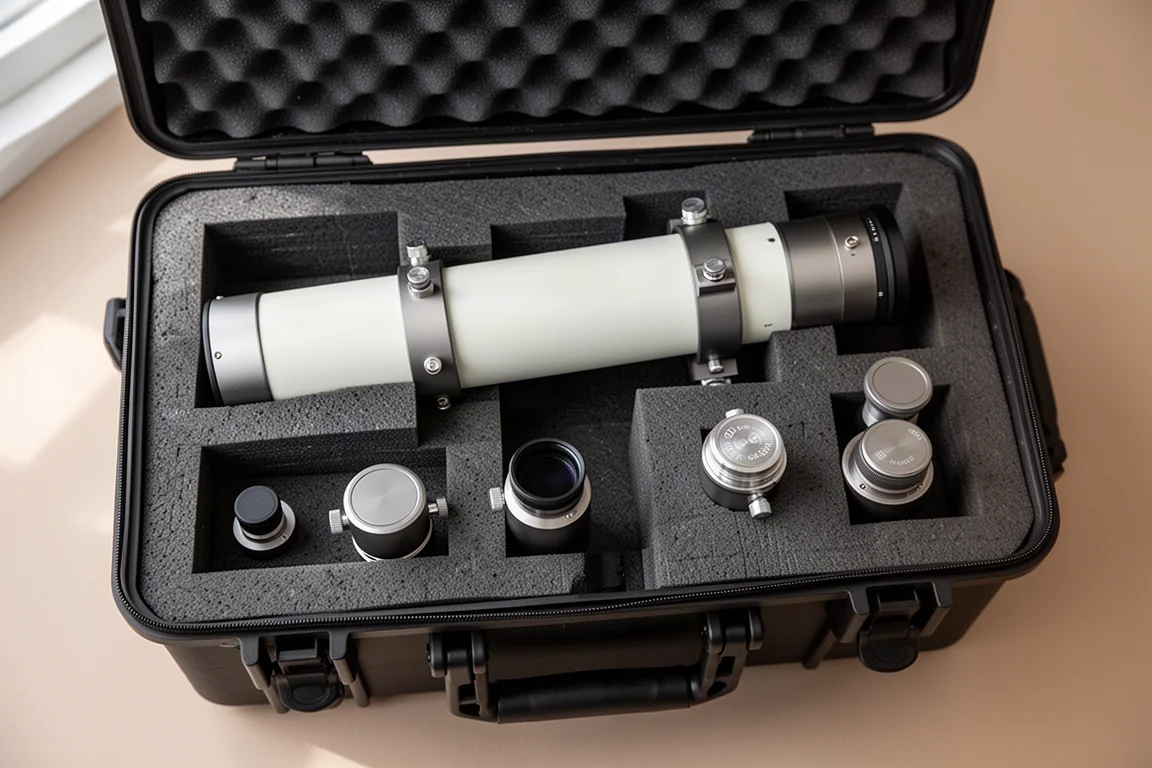
The Askar V ships in a rigid soft-sided case that feels like cloth on the outside with thick, high-density foam inserts shaped to each component. The full kit, including the telescope and all parts, weighs about 7.7 kilograms (17 pounds) and measures 54 x 27 x 23 centimeters, which falls within carry-on dimensions for most commercial flights.
Inside, the finish is an off-white body with gunmetal grey accents, with a minimalistic design that looks clean and intentional. All the optical components use metal screw-on caps, and the machining is tidy throughout. The package includes a clamshell mounting ring with a guide scope attachment on top, a Vixen-style dovetail plate on the bottom held by eight quarter-inch-20 screws, a Finder-style shoe that can carry a power box or ASI Air, and a 2-inch visual back with a compression ring for eyepieces and diagonals. That last item means the Askar V also works as a visual apochromatic triplet, and quick looks at the Moon and some open clusters showed nice views with no visible fringing.
Hardware and Focuser
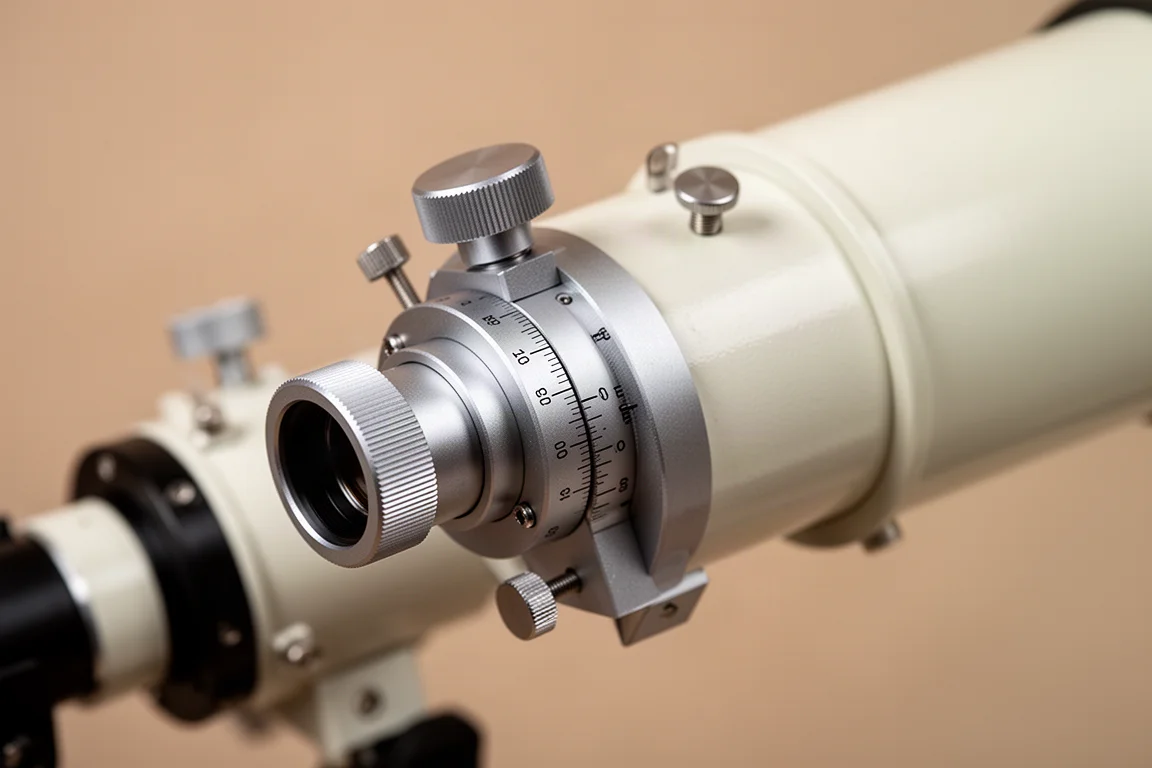
The focuser is a 2-inch dual-speed rack and pinion, similar to other Askar telescopes. It is not quite as silky as a premium focuser like a Feather Touch, but it is perfectly serviceable. It has a standard tension screw on the bottom, distance markings and detailed rotation markings along the focus travel, and a built-in manual rotator.
One practical note for the modular system: the reducer, flattener, and extender each have 60mm and 80mm markings, and you need to screw the glass element to the position matching whichever front objective you are using. It is a small extra step, but it is part of owning a modular system.
How the Focal Length Configurations Work
With two front lenses and three rear optical elements, the system covers six focal lengths from 270mm at f/4.5 to 600mm at f/7.5. In practice, two pairs of configurations overlap: the 80mm objective with the reducer is very similar to the 60mm with the flattener, and the 80mm with the flattener beats the 60mm with the extender thanks to its larger, faster aperture. Those 80mm combinations are the sensible default picks unless keeping weight and portability down is the top priority.
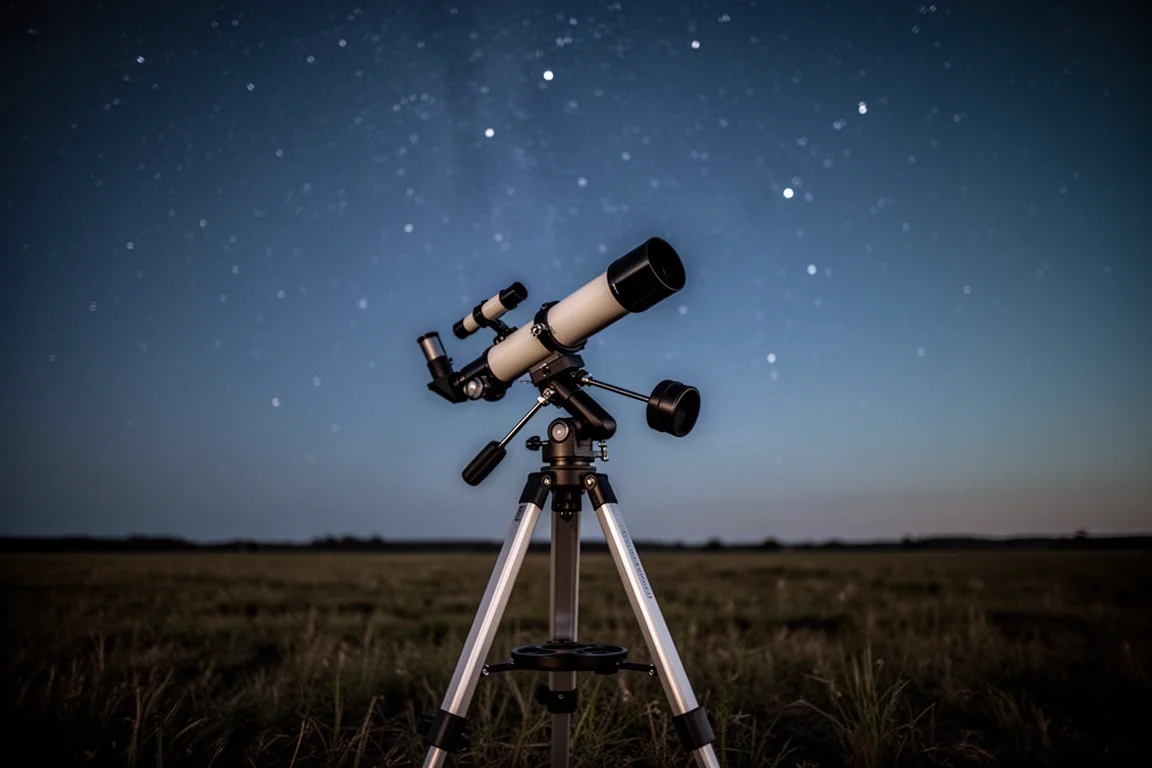
That leaves four genuinely useful configurations. The real appeal of this system is the extremes: 270mm in one case and 600mm in the same case. At 270mm with a crop sensor camera, large targets like the Heart and Soul nebulae fit in a single frame, or even the sprawling Spaghetti Nebula. At 600mm, smaller objects like M33 fill the frame nicely. Few objects work at every focal length, so this flexibility is the core value proposition.
How It Compares to Askar’s Dedicated Astrographs
The Askar 80PHQ matches the high end of the system exactly: 600mm at f/7.5 as a native astrograph. The Askar V reaches the same figure by combining the 80mm objective with the extender, with one caveat: the V requires precisely 55mm of back focus from the end of the extender to the sensor. The 80PHQ does not need that precision. You may still need spacers to reach focus on the 80PHQ, and you can even overshoot slightly and add optional accessories in the imaging train, but precise spacing is not required.
At the other end, the FRA300 Pro is a 300mm f/5 native astrograph, close to the V’s 270mm at f/4.5. Like the 80PHQ, it tolerates flexible back focus, while the V with its reducer requires the precise 55mm.
On price, the FRA300 Pro sells for $949 and the 80PHQ for $1,495, so together they cost $2,444. The Askar V sells for $1,695, saving roughly $750 versus those two scopes combined, with a guide scope thrown in during the launch pre-order promotion.
Optical Comparison: Askar V vs the Dedicated Astrographs
Real-world imaging tests used single 3-minute exposures of the M81/M82 galaxy pair from a dark site with the Moon absent, shot at 60 degrees altitude with a ZWO ASI2600MC crop-sensor camera on a ZWO AM5 mount. The small pixels of that camera reveal more optical detail than full-frame sensors, making it a good test camera.
Against the FRA300 Pro at the wide end, the fields of view are slightly different, and nothing odd stood out in either image. Both scopes show mild chromatic aberration toward the corners of a crop sensor, with fairly round stars and no major distortion. The FRA300 Pro shows more contrast and detail in the galaxy, partly from its larger aperture, while the V at f/4.5 produces a slightly brighter image. The more notable finding: the Askar V shows a small amount of magenta chromatic fringing around bright stars even in the center of the frame, where the FRA300 Pro shows none. It gets worse when stacking, but it is straightforward to remove with a de-fringe tool in Photoshop or simple steps in PixInsight, so it is not a dealbreaker, just something to handle in processing.

At 600mm, the Askar V against the 80PHQ looked very strong. Star sizes were identical, chromatic aberration and distortion were absent as expected at f/7.5, and contrast was very close, with perhaps a slight edge to the Askar V, though a single exposure means seeing conditions could account for that. In practice, the V at 600mm behaves like the 80PHQ, so there would be little reason to own both.
Which Should You Buy?
If you run multiple complete imaging rigs each clear night and have spare cameras and mounts, two dedicated telescopes still make more sense, because you can collect twice the data simultaneously. But if you have one primary camera and mount, the Askar V’s flexibility across focal lengths is hard to beat, especially at roughly $750 less than buying the FRA300 Pro and 80PHQ together.
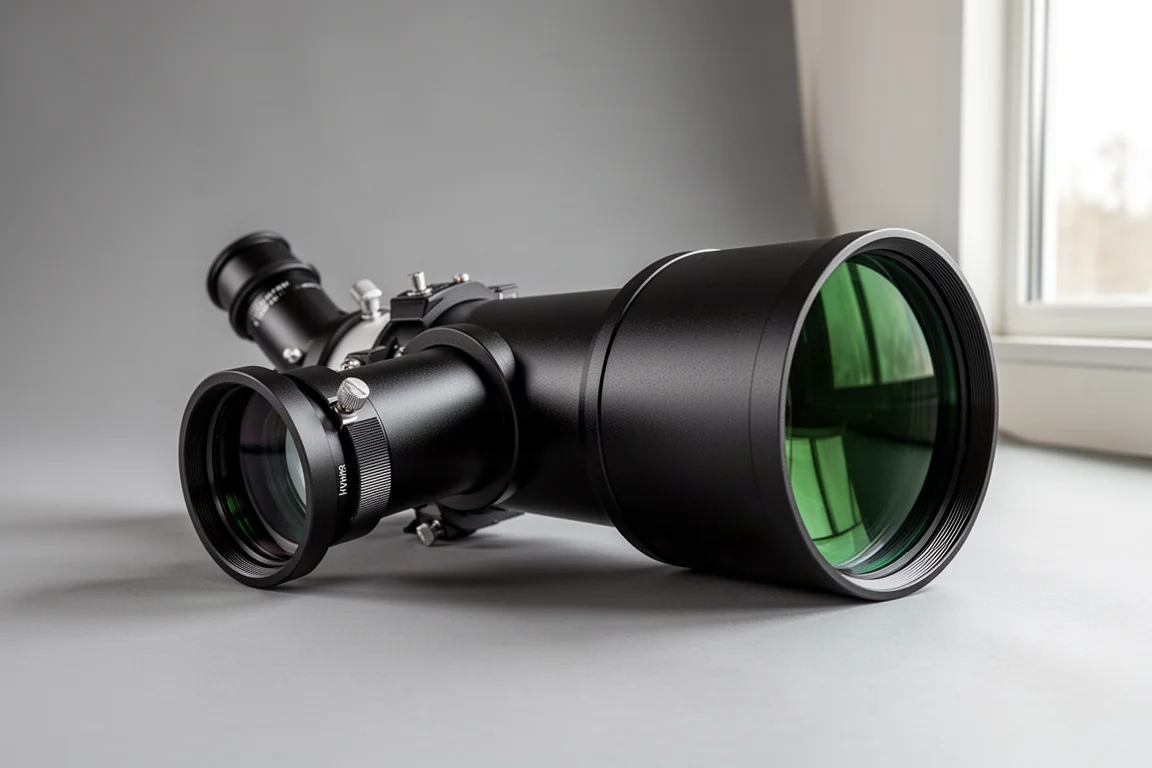
For a dedicated wide-field astrograph with a slightly wider field, more aperture, simpler back-focus requirements, and cleaner center-of-frame stars out of the box, the FRA300 Pro remains an excellent choice if you do not need the longer focal lengths.
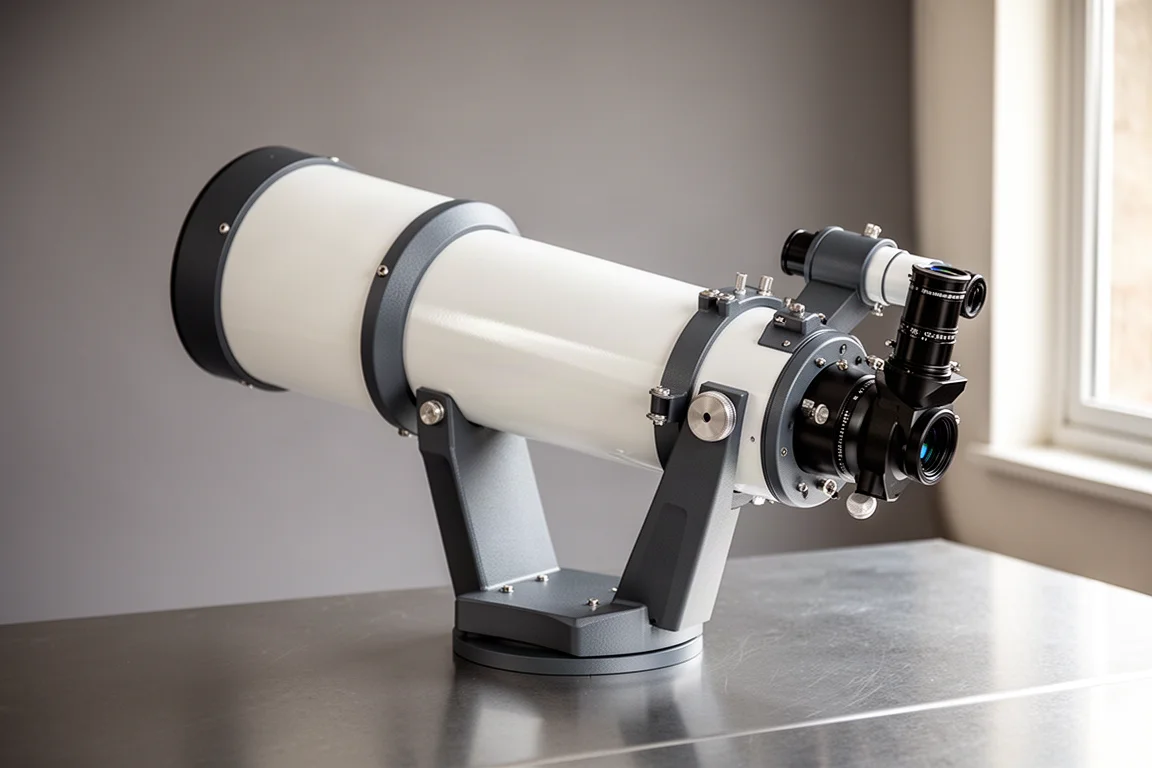
For imagers who only ever want 600mm and want maximum simplicity with native astrograph spacing, the 80PHQ delivers the same optical performance as the Askar V’s extended configuration without the component swapping.
Conclusion
The Askar V is a genuinely interesting proposition: six focal lengths, two apertures, and reducer, flattener, and extender capability in one portable case. Its one recurring flaw is mild central chromatic fringing at the fast wide-field configuration, which is correctable in processing. At the long end it matches the 80PHQ nearly perfectly, and at the wide end it stays competitive with the FRA300 Pro while saving a meaningful amount of money versus buying both. For anyone building a first serious deep-sky imaging kit around a single camera and mount, the modular approach makes a compelling case.
Further reading
Related Reviews
Astrophotography
ASKAR FRA400C Review: A Versatile 400mm Refractor for Astrophotography and More
The ASKAR FRA400C is a compact 72mm refractor that balances reach, versatility, and portability for astrophotographers and visual observers.
Astrophotography
Askar SQA106 Review: A Premium 106mm Astrograph With Exceptional Optics
The Askar SQA106 is a premium 106mm quintuplet astrograph with impressive sharpness across full-frame sensors, though its price and weight demand careful consideration.
Astrophotography
Astro Imaging Gear 2026: Eight New Products Worth Watching
A look at the most interesting new astrophotography and astronomy products announced this year, from fast telescopes to smart cameras and wireless accessories.