Astrophotography
Askar SQA130 Review: A Premium Astrograph for Serious Deep Sky Imaging
A close look at Askar's largest SQA refractor, a 130 mm quintuplet Petzval astrograph built for flat-field full frame imaging.
Introduction
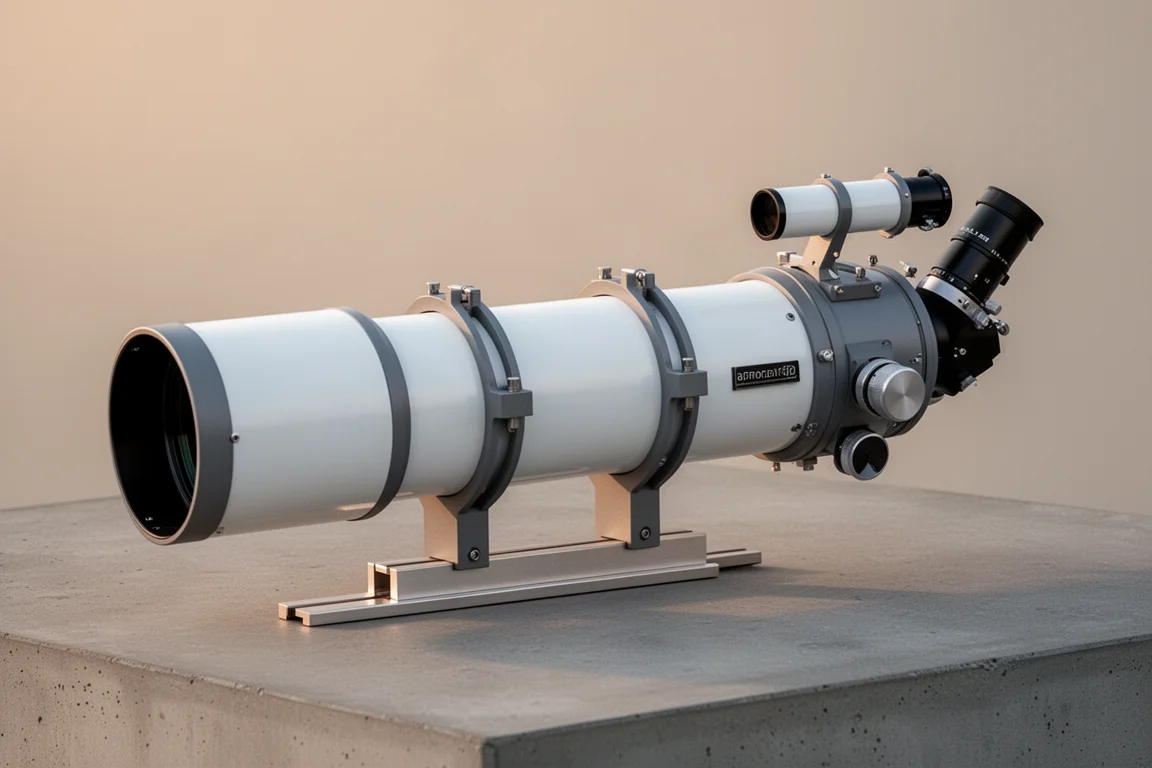
Askar’s SQA series has quietly become one of the most trusted lines of premium astrographs among deep sky imagers. After well-received portable and mid-size models, the lineup now tops out with the SQA130, the largest in the family. It is a 130 mm quintuplet Petzval apochromatic astrograph with a 624 mm focal length and a fast f/4.8 focal ratio, listed at $4,799 US. That is serious money for a refractor, so the real question is what that price actually buys you.
What the SQA130 Is Designed Around
Inside the tube are five optical elements, including two pieces of SD glass, and the design is built to cover full frame and even medium format sensors with a 55 mm image circle. That last point matters more than it might first appear. With many fast refractors you end up juggling flatteners, reducers, backspacing, adapters, and a certain amount of corner-of-frame anxiety. With the SQA130 the field correction is built in: attach your imaging train, reach focus, and the telescope is designed to handle the rest.
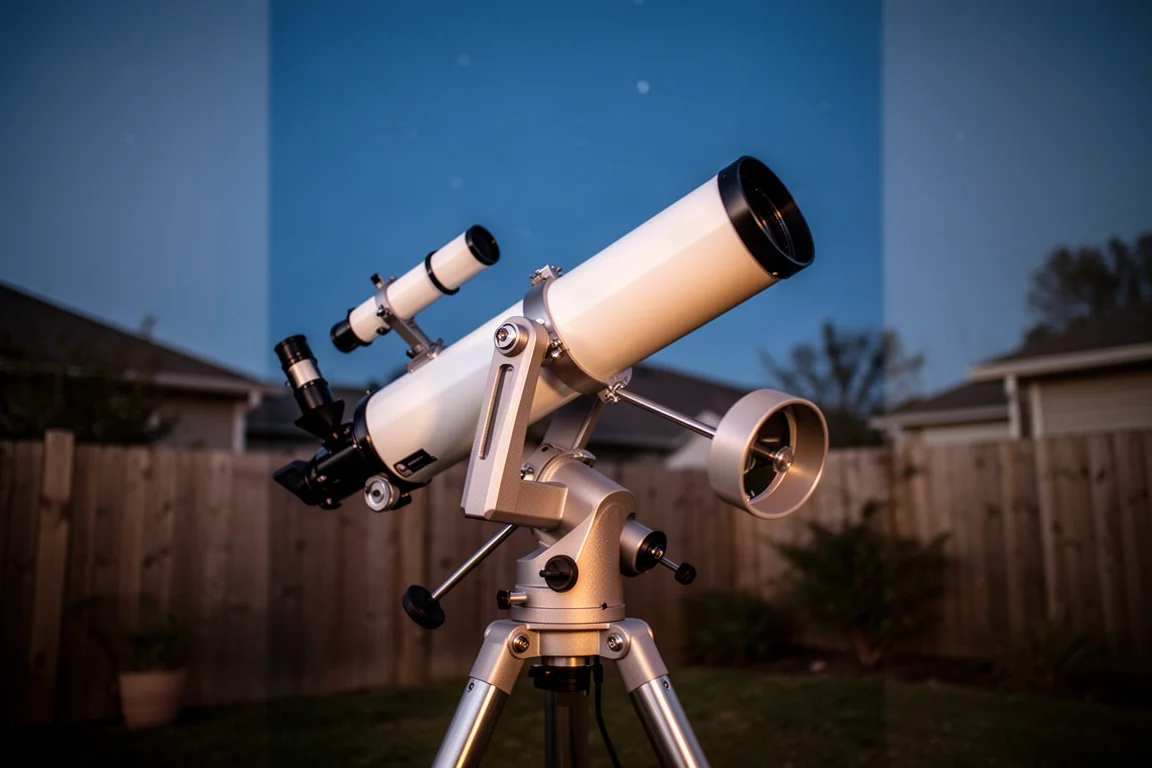
The 55 mm image circle is a big part of what you are paying for. Shooters using APS-C cameras like a 2600 series color or mono camera will under-utilize that coverage, but the telescope still delivers a generous, well-corrected field. To see the full benefit, pairing it with a full frame camera is where the design really shows its intent.
Build Quality and Mechanics
The build matches the series reputation. The grey anodized finish looks excellent, the tube rings are solid, and a 300 mm Losmandy-style dovetail provides a secure connection to the mount. There are threaded mounting points on the rings, dual finder bases near the focuser, and a very useful 360-degree rotator at the back for framing your target.
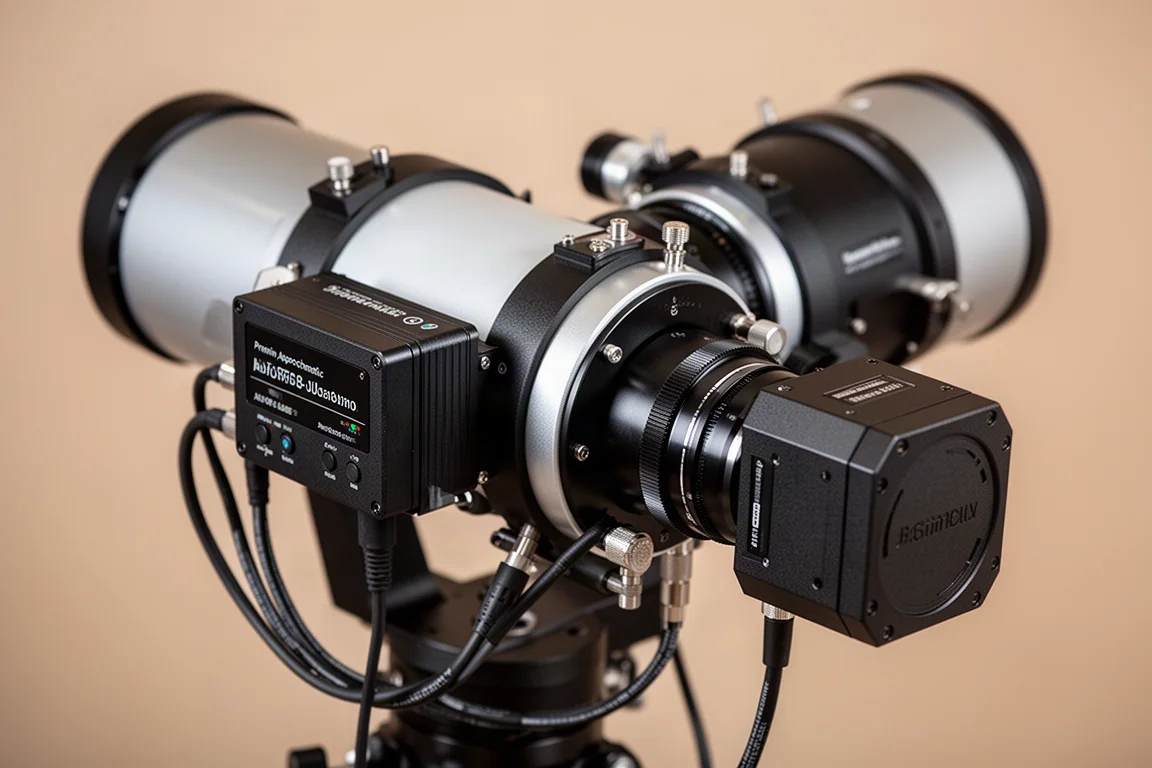
The focuser is a large 3.2-inch dual-speed rack and pinion unit that feels strong enough for a serious imaging train. The recommended connection length is 55 mm, but the system supports a range of 46 to 76 mm, which gives real flexibility when building out your imaging train. That leeway is genuinely useful, since filter drawers and adapters rarely stack to exactly the recommended distance. Adding a motor focuser is straightforward and requires no additional adapters, which is worth knowing because at f/4.8 the focus tolerance is tight and you do not want focus drift undermining an otherwise premium optical system.
Mount and Setup Considerations
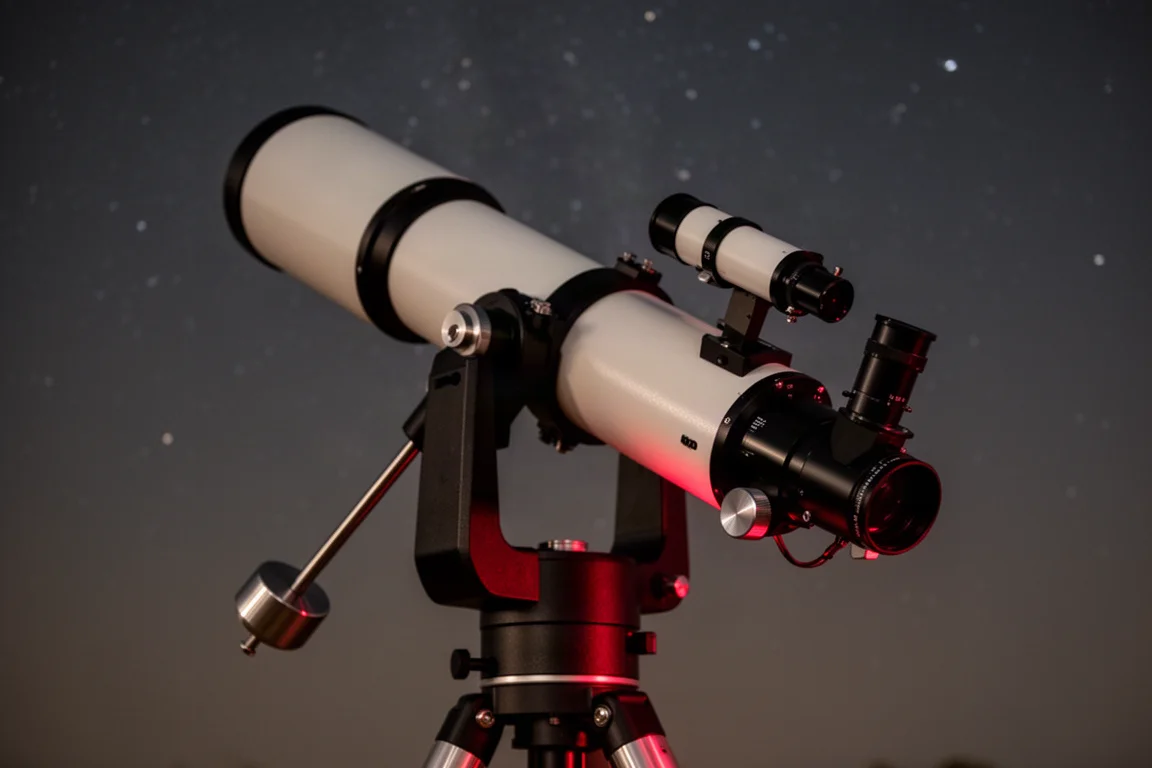
This is not a small telescope. The optical tube alone weighs about 20 lb, and with rings and dovetail you are at roughly 25 lb before adding a camera and accessories. Mounted on a capable equatorial mount with extra payload headroom, it feels appropriately planted. The SQA130 clearly belongs on a mount that inspires confidence, and even when it sits well within a mount’s rated payload, a counterweight is a reasonable peace-of-mind addition.

Optical Performance in Practice
At f/4.8 the telescope feels efficient, collecting signal quickly, and the 130 mm aperture delivers a noticeable step up in light gathering compared to smaller wide-field refractors. Testing over a stretch of clear spring nights, the scope ran nightly on projects including the Crescent Nebula in Cygnus with a dual narrowband filter, plus some broadband data on the Eagle Nebula and a first attempt at the Little Pinwheel Galaxy in Ursa Major.
At 624 mm this is not a small galaxy telescope, but paired with an APS-C one-shot color camera it produced a pleasing field of view. Image quality checks using the Aberration Inspector in PixInsight, which compares star shapes across the center and edges, showed nothing concerning. No corrective tools were applied to the narrowband data and no odd star shapes appeared. In plain broadband data, the stars look natural and premium, which is exactly what you want to see from a telescope in this class with nothing to hide behind.
Alternatives Worth Considering
Two telescopes come to mind in this price and performance range. The TS Optics 130 mm f/5 flat field apo is very close on paper, with 130 mm of aperture, 650 mm of focal length, and a corrected full frame design, making it probably the closest direct comparison in size, speed, and intent. The William Optics Pleiades 111 is smaller at 111 mm and 528 mm focal length, but it is also a premium fast f/4.8 astrograph designed for full frame imaging. The SQA130 offers more aperture and more reach than the Pleiades 111.
Buying Advice
The most common questions around this telescope are predictable: the price, and whether it works for visual observing. On the first point, $4,799 US buys a fast corrected Petzval design, a large image circle, premium mechanics, and the convenience of not needing a separate flattener or reducer before imaging. On the second, treat this as an astrograph first. It is clearly designed around imaging, and if visual observing is your priority, there are better values available. If flat-field astrophotography is the goal, this is where the SQA130 starts to make sense.
Conclusion
The SQA130 is not the cheapest way to get 130 mm of aperture, and it is not the most portable refractor around, but it feels refined, purposeful, and very capable. It takes the concept established by the smaller SQA models and scales it up into a more powerful imaging platform. For the astrophotographer who already knows they want a premium refractor, values sharp stars across a large field, and wants a fast dedicated imaging scope without separate correctors, this is a serious astrograph for serious imagers.
Product link
View more details for Askar SQA130
This product is mentioned in the review. Check the specifications, options, and compatibility before buying.
View more details for Askar SQA130Further reading
Related Reviews
Astrophotography
ASKAR FRA400C Review: A Versatile 400mm Refractor for Astrophotography and More
The ASKAR FRA400C is a compact 72mm refractor that balances reach, versatility, and portability for astrophotographers and visual observers.
Astrophotography
Askar SQA106 Review: A Premium 106mm Astrograph With Exceptional Optics
The Askar SQA106 is a premium 106mm quintuplet astrograph with impressive sharpness across full-frame sensors, though its price and weight demand careful consideration.
Astrophotography
Astro Imaging Gear 2026: Eight New Products Worth Watching
A look at the most interesting new astrophotography and astronomy products announced this year, from fast telescopes to smart cameras and wireless accessories.