Astrophotography
Askar FRA500 Review: A No-Fuss Quintuplet Astrograph for Astrophotographers
A 90mm quintuplet refractor with a 55mm corrected imaging circle, tested under the night sky on the Sadr region and the Butterfly Nebula.
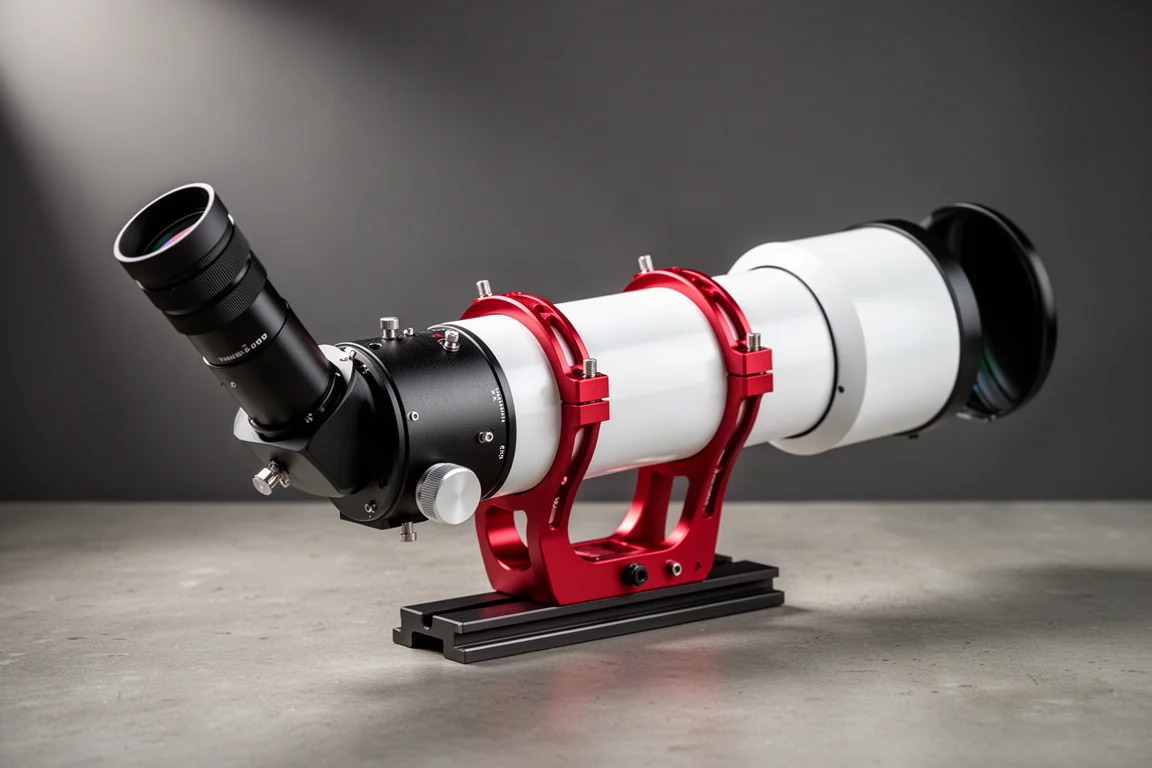
Introduction
The Askar FRA500 is a no-fuss quintuplet refractor designed with the astrophotographer in mind. Askar has built a strong reputation in the wide-field astrograph market, and this scope makes that case through sheer performance. We put it to work under the night sky on the Sadr region to see how it holds up in real imaging conditions.
Who This Product Is For
The FRA500 suits astrophotographers who want a portable, wide-field imaging system that works without tinkering. At just 10.3 lbs, it pairs comfortably with some of the lightest and smallest equatorial mounts on the market. It is also a compelling upgrade for anyone moving from a camera lens to a dedicated refractor, or stepping up from a smaller scope.
What Makes the FRA500 Stand Out
As a quintuplet refractor, the FRA500 uses five glass elements, two of which are ED (extra-low dispersion) glass. The result is extremely sharp, well color-corrected images. The 90mm aperture delivers a 500mm native focal length at f/5.6, and the 55mm corrected imaging circle works right out of the box with no additional flatteners or reducers required.
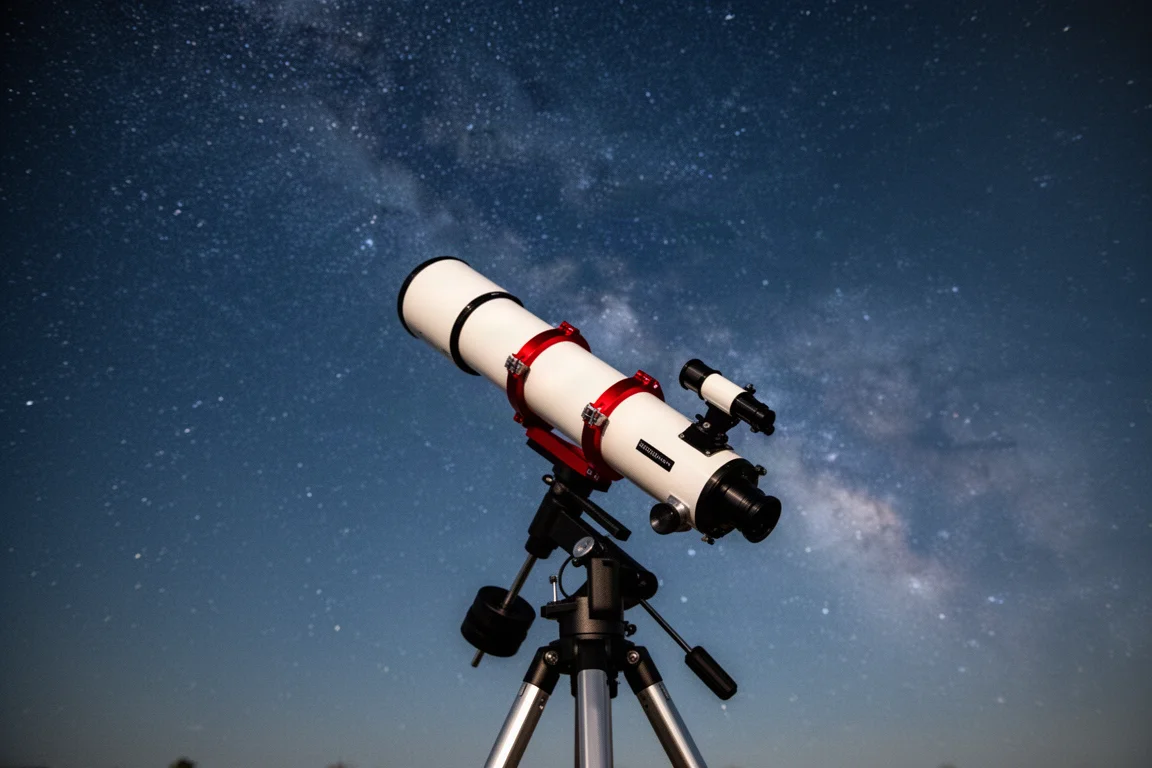
That no-fuss design is one of its biggest advantages. At native focal length, no specific back focus or spacing is needed: as long as you can achieve focus, you get a flat field across the entire 55mm corrected imaging circle.
The optional 0.7x focal reducer brings the focal length down to 350mm and the focal ratio to a fast f/3.9, with a corrected imaging circle of 44mm for full-frame cameras. We highly recommend it as an optional accessory.
Key Features and Build
The focuser is a dual-speed 10:1 ratio, 3.5-inch rack and pinion design with a built-in rotator plus tension and locking thumb screws. The scope comes fitted with CNC-machined retro red anodized rings, a D-style dovetail, an ergonomic handlebar for simple transport and accessory mounting, and a finder shoe adapter for additional equipment.
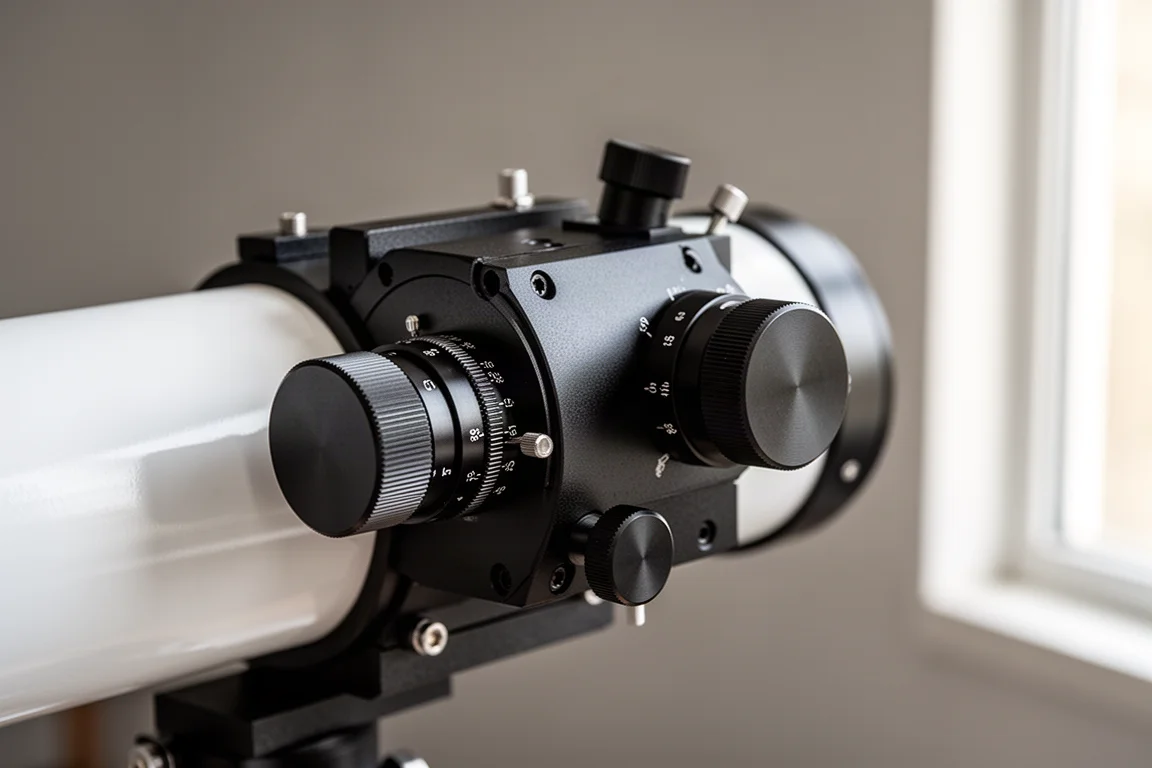
The adjustable dew shield comes with a matching anodized red dust cap to protect the optics, and Askar includes a comprehensive set of threaded adapters: M48, M52, M54, and M68, ensuring broad compatibility with a wide variety of camera systems right out of the box. The required adapter for attaching the optional 0.7x reducer is included as well.
The Imaging Setup
We paired the FRA500 with modern accessories to streamline the imaging workflow: a ZWO EAF Pro with Bluetooth and an internal battery, a ZWO camera angle adjuster for precise framing across multiple nights, an ASI2600MC Air cooled camera for complete system automation, all riding on a ZWO AM5 mount. The result was a simple yet advanced setup.
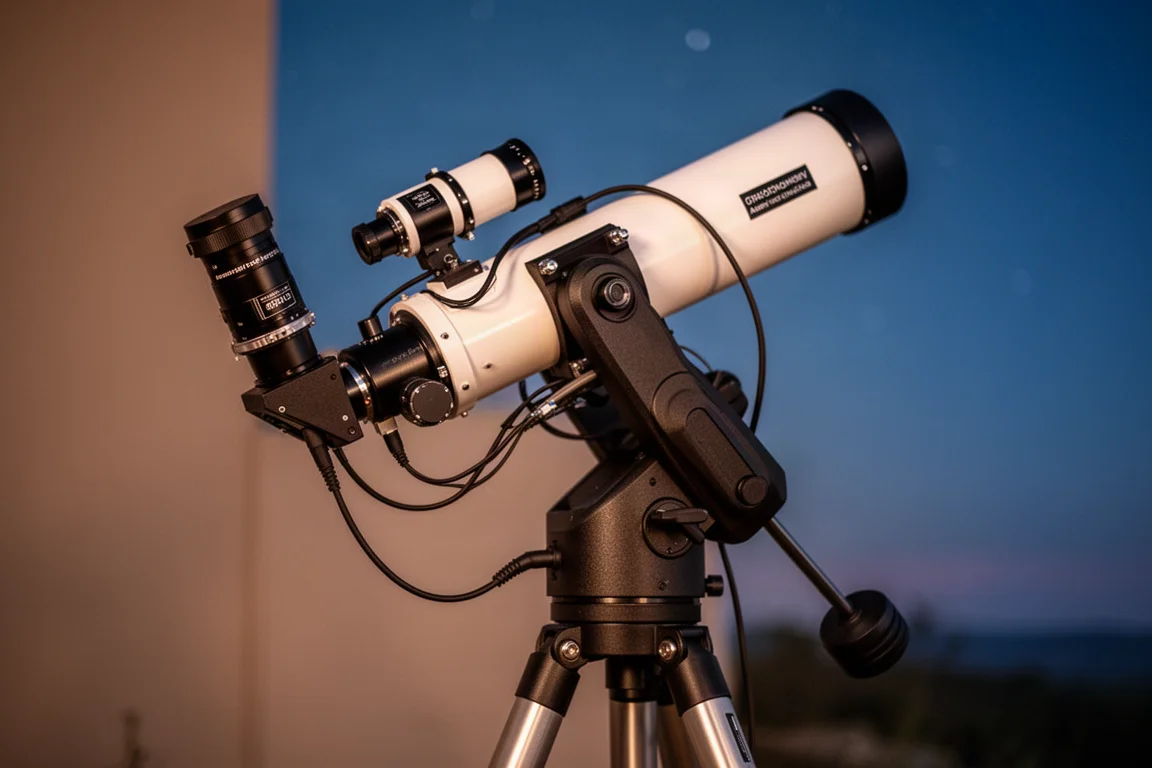
For the test target we chose the Butterfly Nebula in the constellation Cygnus, right near the bright star Sadr, during Milky Way season. Under Bortle 7 skies we imaged with Askar Series Colour Magic Ha O3 and O3 S2 dual-band filters, which cut through light pollution and maximized O3 and the elusive S2 data that defines an SHO-style image.
Image Quality and Test Results
Over two nights we collected 13 hours of data on the Butterfly Nebula, shooting 15-minute subexposures to take advantage of clear skies and the optics. With the 0.7x reducer at f/3.9, five-minute exposures showed very well-corrected corners with hardly any noticeable eccentricity across an APS-C sensor, which is very impressive at that focal ratio. We were not able to test the reducer with a full-frame camera, but based on the APS-C results it would likely correct quite well for full-frame bodies.

At the native 500mm focal length, with no correctors and no reducers, the stars were perfectly corrected around the edges of an APS-C field of view. The 55mm corrected imaging circle should allow full-frame cameras to look just as pristine. The final Butterfly Nebula image was among the most impressive data collected through a refractor, thanks to the scope’s optics, the well-corrected reducer, and the four-nanometer Colour Magic filters.
Buying Advice
If you are upgrading from your current refractor or making the switch from a camera lens, a 90mm refractor deserves a place in every astrophotographer’s collection, and the FRA500 is a fantastic option. Its combination of a large corrected imaging circle, zero-spacing native operation, and low weight makes it easy to live with. If you plan on wide-field work with full-frame sensors, budget for the optional 0.7x reducer and the correct spacers for your imaging train, as the reducer requires the standard 55mm of back focus.
Conclusion
The Askar FRA500 exceeded expectations in every test we threw at it. Sharp, well color-corrected stars across a large field, a genuinely no-fuss design, and light weight make it one of the strongest wide-field astrographs in its class. For astrophotographers who want to spend their clear nights imaging rather than adjusting spacing, it is an easy recommendation.
Product link
View more details for Askar FRA500
This product is mentioned in the review. Check the specifications, options, and compatibility before buying.
View more details for Askar FRA500Further reading
Related Reviews
Astrophotography
ASKAR FRA400C Review: A Versatile 400mm Refractor for Astrophotography and More
The ASKAR FRA400C is a compact 72mm refractor that balances reach, versatility, and portability for astrophotographers and visual observers.
Astrophotography
Askar SQA106 Review: A Premium 106mm Astrograph With Exceptional Optics
The Askar SQA106 is a premium 106mm quintuplet astrograph with impressive sharpness across full-frame sensors, though its price and weight demand careful consideration.
Astrophotography
Astro Imaging Gear 2026: Eight New Products Worth Watching
A look at the most interesting new astrophotography and astronomy products announced this year, from fast telescopes to smart cameras and wireless accessories.