Astrophotography
Askar 185 APO Review: A Big Refractor for Serious Deep Sky Imaging
A hands-on look at Askar's 185mm APO triplet refractor, covering build quality, imaging performance, handling, and whether it earns its price tag.
Introduction
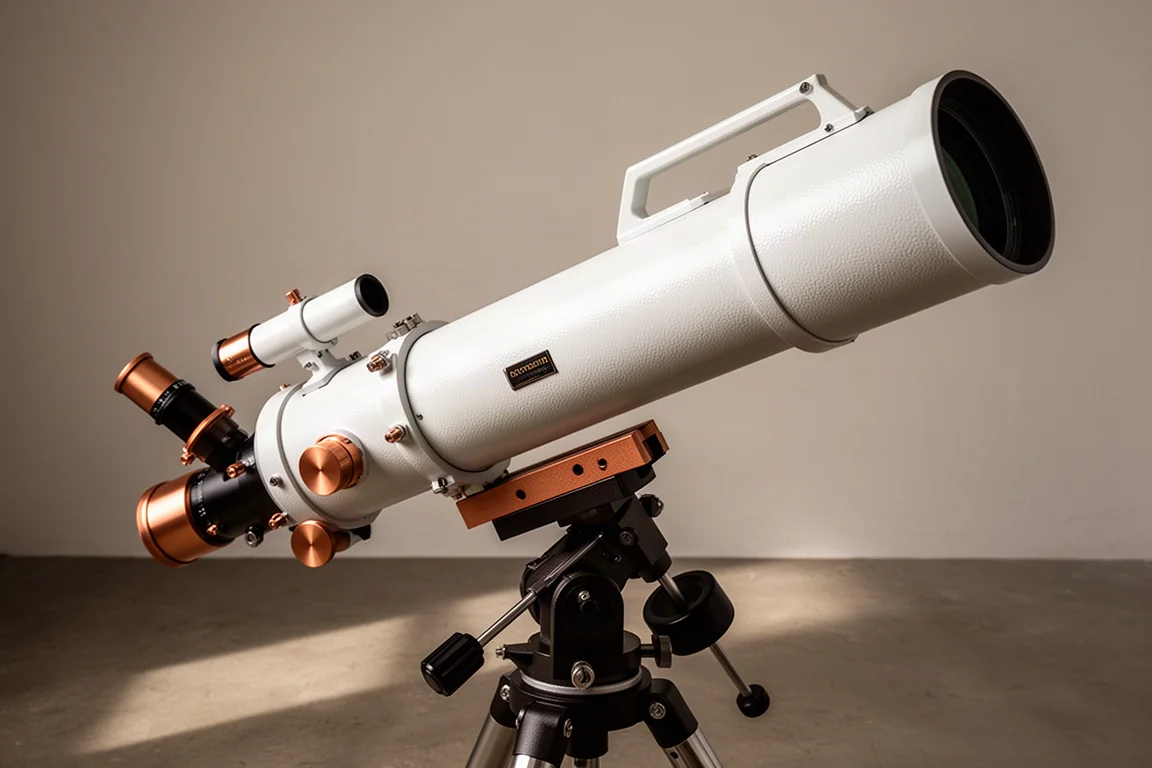
The Askar 185 APO is a 7-inch apochromatic triplet refractor aimed squarely at deep sky imagers, and it arrives with a compelling pitch: triplet APO performance at an aperture class where refractors usually cost far more. The telescope was still a pre-order item at the time of testing, with availability expected soon, and it retails at roughly $4,800 to $5,000 depending on market. After several nights of imaging with it, this review covers the design, the handling realities of such a large scope, and how the optics actually perform on a full-frame sensor.
A quick note on transparency: the review unit was provided by Askar, and the full-frame camera used for testing was lent by ZWO. Neither company had any input into the findings, and the ZWO 6200 series cameras, with their small pixels on a full-frame sensor, are a genuinely demanding test for any optic.
Who This Telescope Is For
This is a telescope for astrophotographers who want refractor-quality star fields at a serious aperture, and who have the mount and observing setup to support it. Askar positions its APO triplet line, which includes 103mm, 120mm, 140mm, and now 185mm models, as affordable triplets with matched flatteners and reducer flatteners, usable both for imaging and visually.
The word “affordable” needs context. At around $5,000 this is not an inexpensive telescope, but compared with other APO triplet refractors at 7 inches of aperture, the price is dramatically lower than the competition. Other telescope types, like Newtonians or Schmidt-Cassegrains, can reach similar apertures for less money, but it is genuinely difficult to find a less expensive design at this aperture that is well corrected for imaging across a full-frame sensor. That is the specific gap the 185 APO is trying to fill.
Size, Build, and Handling
Make no mistake, this is a massive refractor. Its front aperture dwarfs the Askar 130PHQ, previously the largest refractor in regular use here, and with the camera attached in the right focal position it barely clears the observatory floor when pointed at the zenith. Anyone doing visual observing would need a much taller pier to reach a comfortable seated viewing position.
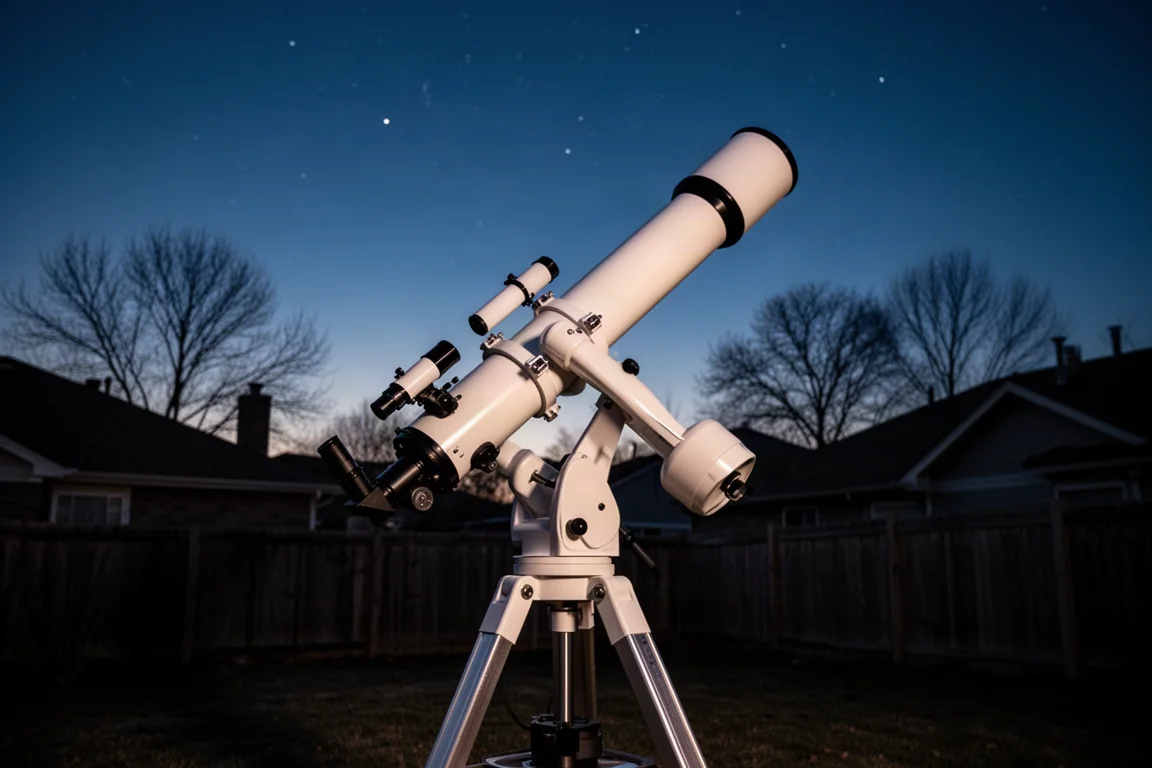
The package itself is well thought out. It ships in a hard-sided case with external wheels and custom-cut foam, and the included hardware covers the essentials: a top handle that doubles as an accessory attachment point, nicely machined tube rings, and a substantial 400mm Losmandy-style plate. The focuser is a 3.5-inch rack-and-pinion unit with dual-speed 10:1 fine focus, mounting holes for an electronic focuser, focus travel markings, and a manual rotator with rotational markings. A retractable rear tube section shortens the scope for storage and allows binoviewer use, extending fully for imaging.
Weight is the number to plan around. With rings and dovetail the telescope comes in at about 38 lb (17 kg), and with a guide scope, flattener, and imaging camera attached it reaches 43 lb (19 kg). That is right at the payload limit of the Sky-Watcher EQ6-R used for testing, which is rated at 44 lb. Four 11 lb counterweights were needed for balance.
Things to Consider Before Buying
The mount question deserves honest treatment. A good rule of thumb is never to max out an equatorial mount’s payload for imaging, so the EQ6-R is not the right mount for this telescope in principle. Results were still solid, but a large part of that came from the observing environment: imaging from a concrete pier inside an observatory with seven-foot walls, wind block, and concrete extending four feet into the ground. Without that stable foundation, a beefier mount and likely a portable pier would be necessary.
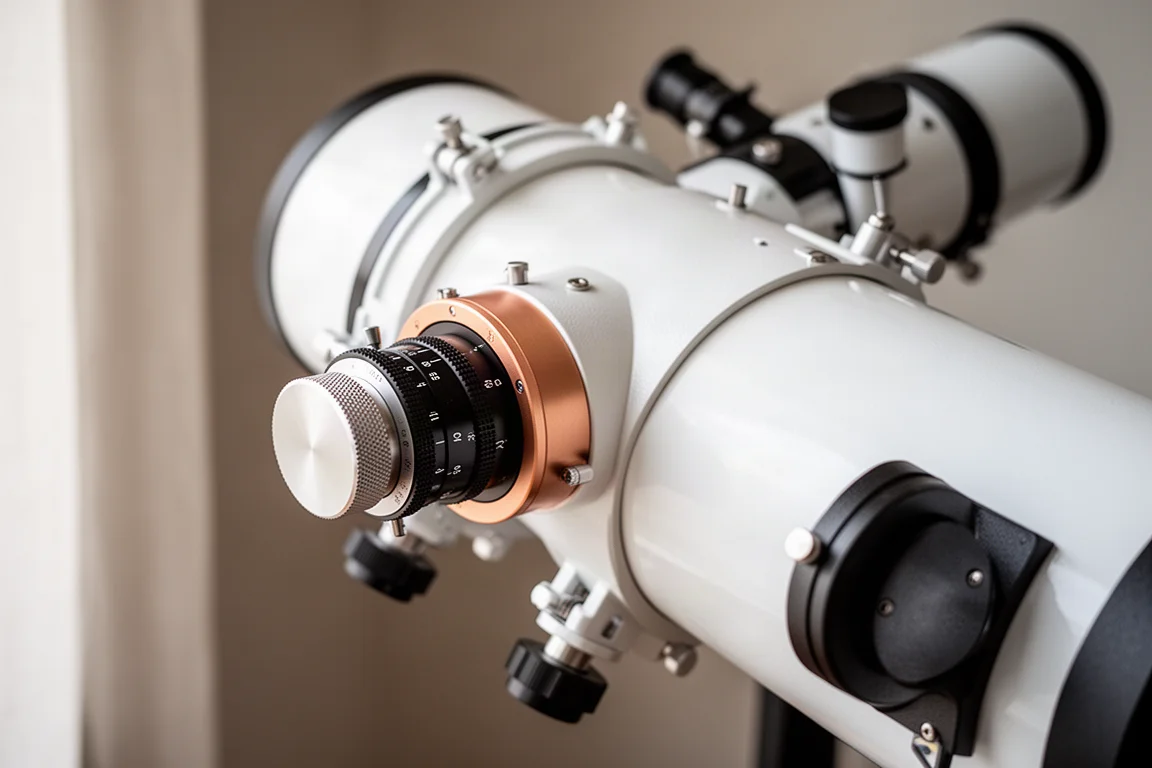
A portable pier matters for another reason: with a telescope this long, tube clearance problems with a normal tripod are almost guaranteed. Visual observers face the same height issue, since the scope needs to sit quite high even for seated viewing.
One more practical note: the included case measures 47 by 14 by 15 inches, and it fits in the back of a Subaru Crosstrek with one rear seat folded. Total length with the flattener, camera, and dew shield extended is 5 feet 2 inches (157 cm).
Optics and Accessories
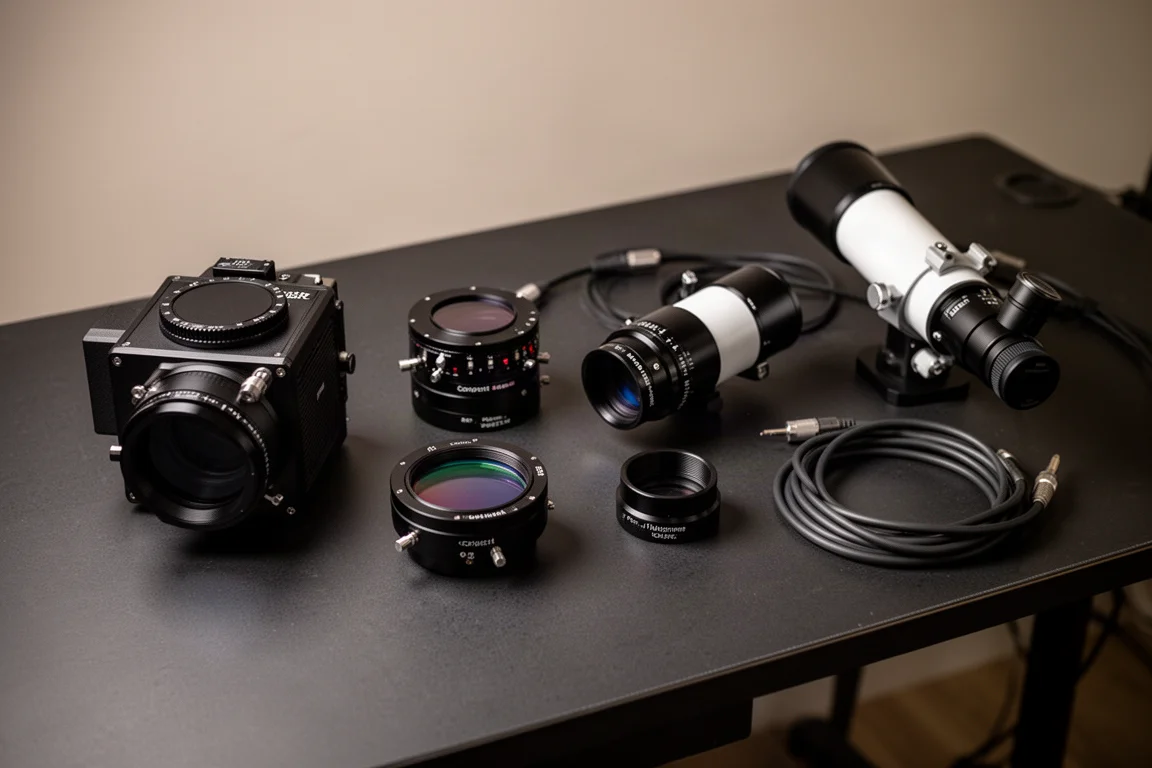
Imaging specifications are 1,295mm focal length at f/7 with the optional 1x flattener, and 1,036mm at f/5.6 with the optional 0.8x reducer flattener. Both accessories cost $300 each and are strongly recommended for imaging; visual users can skip them. Installation is straightforward: remove the visual back, screw in the flattener, and use the 48mm rear threads, with 55mm of back focus to the camera sensor. Most cameras include the spacers or connection diagrams needed to hit that spacing.
What the Imaging Tests Showed
The imaging results are where this telescope makes its case. Even a quick visual session through the eyepiece produced one of the best lunar views experienced with any refractor, and a spontaneous 4K video of the Moon at full 1,295mm focal length showed rich detail with no visible false color or fringing.
On the deep sky side, single 4-minute subexposures with the 1x flattener and the full-frame ASI 6200 MC showed vignetting that a flat frame removes completely. Star shapes in the corners looked good even in single frames. Measured values from the stacked data were reasonable: a median full width half maximum around 2.6 arcseconds at the native 0.6 arcseconds per pixel image scale, and a median eccentricity of 0.39, comfortably under the roughly 0.42 threshold where stars start looking noticeably out of round. With the 0.8x reducer, vignetting increases as expected, and the effective FWHM was around 3 arcseconds at the new image scale, while eccentricity improved slightly to 0.37.
The standout result is field consistency. Across a 10-sub stack, star shapes in the extreme corners match the center remarkably well on a full-frame sensor with small pixels, which is exactly the correction challenge that separates good wide-field refractors from great ones. There is a very slight flare effect on some bright corner stars, a little more noticeable with the reducer than the flattener, but it is minimal.
Chromatic aberration requires some pixel peeping to find. At normal saturation there is essentially nothing to see, and even heavily saturated stars show clean color at 100% zoom. Only under an extreme test, heavily saturating the stack and zooming deep into individual stars, does a slight blue-to-warm color split appear on stars with both the flattener and the reducer. Anyone not deliberately pushing saturation this far may never encounter it.
What It Can Produce
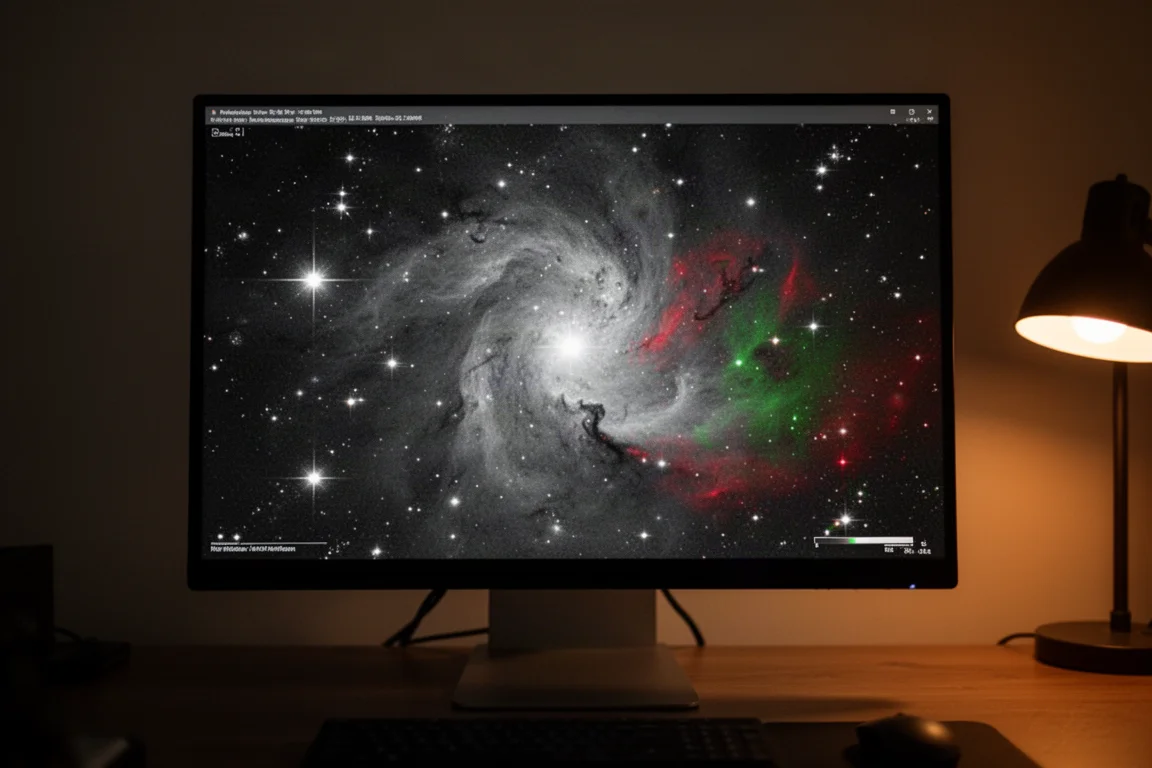
The real payoff showed up in the final images. A tight crop on the core of the Elephant Trunk Nebula revealed detail in the small reflection nebulae that has simply not been visible at shorter focal lengths: the contours and ridges of a blue reflection nebula that usually reads as a featureless blob, with H-alpha emission peeking through the keyhole structure. A full HaRGB image came together from about two and a half hours of total integration, one hour of H-alpha plus an hour and twenty minutes with the one-shot-color camera, and a narrowband Ha, S2, O3 version was also captured at f/7.
Shooting familiar targets at this image scale is genuinely a different experience. Targets imaged dozens of times before become new again, and that alone justifies the format for imagers who want to go deep on small structures.
Buying Advice
If you are a deep sky imager with a sturdy mount, a stable pier or well-built tripod, and a desire for refractor star quality at 7 inches of aperture, the Askar 185 APO is currently the most affordable option in its class by a wide margin. Budget for one of the $300 focal reducer or flattener accessories, plan around the 43 lb fully rigged weight, and be realistic about whether your mount and setup can handle a telescope this long. If your observing situation involves a standard tripod and marginal payload headroom, solve that problem first or choose a smaller instrument.
For visual observers, the calculus is different: the height requirements are significant, and the flattener and reducer are unnecessary, so the value proposition depends heavily on how much you want a large aperture refractor view.
Conclusion
The Askar 185 APO delivers impressive optical performance for its price class, with excellent star shape across a full-frame field, minimal chromatic aberration under normal processing, and the kind of focal length that makes familiar targets feel new. It demands a serious mount and a stable setup in return, and at this size it is not a casual purchase in any sense. For deep sky imagers who can support it, though, it opens up an aperture and image scale that has traditionally cost far more.
Product link
View more details for Askar 185 APO
This product is mentioned in the review. Check the specifications, options, and compatibility before buying.
View more details for Askar 185 APOFurther reading
Related Reviews
Astrophotography
ASKAR FRA400C Review: A Versatile 400mm Refractor for Astrophotography and More
The ASKAR FRA400C is a compact 72mm refractor that balances reach, versatility, and portability for astrophotographers and visual observers.
Astrophotography
Askar SQA106 Review: A Premium 106mm Astrograph With Exceptional Optics
The Askar SQA106 is a premium 106mm quintuplet astrograph with impressive sharpness across full-frame sensors, though its price and weight demand careful consideration.
Astrophotography
Astro Imaging Gear 2026: Eight New Products Worth Watching
A look at the most interesting new astrophotography and astronomy products announced this year, from fast telescopes to smart cameras and wireless accessories.