Bookshelf Speakers
Ascilab F6B Review: A Sub-$1,000 Standmount With Serious Measured Performance
A practical look at the Ascilab F6B: tonal balance, bass extension, headroom limits, directivity, and what to weigh before buying.
Introduction
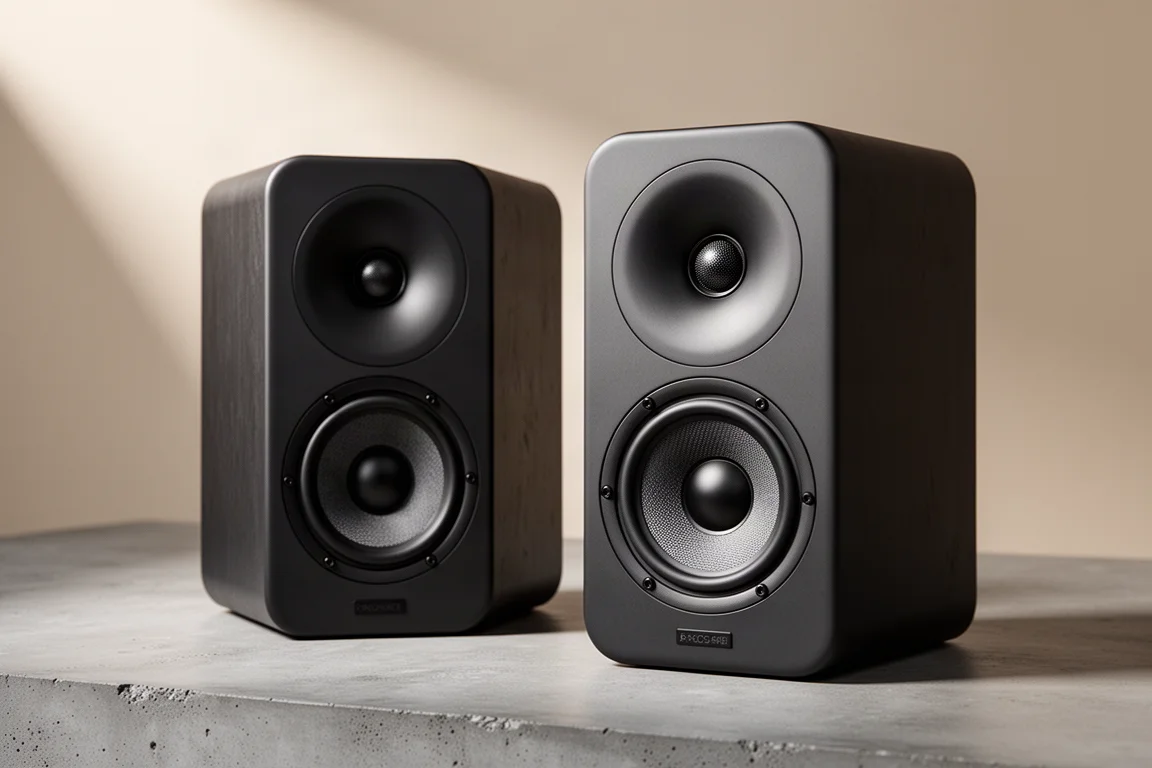
The Ascilab F6B is a compact two-way standmount speaker that sells for approximately $980 per pair, which places it squarely in one of the most competitive price bands in hi-fi. The design pairs a 1-inch aluminum dome tweeter with a large waveguide, adds a 6-inch fiber woofer, and uses a passive radiator instead of a conventional port. Nominal impedance is specified at 4 ohms, recommended amplifier power is 50 to 125 watts, and sensitivity measures around 85 dB.
That combination points to a speaker intended for real rooms rather than dedicated listening spaces. This review looks at how the F6B behaves in practice: its tonal balance, how much bass it actually delivers, how loud it can play before it starts to compress, and how its radiation pattern shapes what reaches your ears.
Who the Ascilab F6B Is For
The F6B is aimed at listeners who want strong measured performance and controlled directivity from a standmount that costs under $1,000 for the pair, and who are willing to spend a little time on placement and equalization.
It is a good fit for:
- Two-channel listeners in small to medium rooms who mostly play at moderate levels.
- Anyone comfortable applying a few bands of EQ through a streamer, a DSP, or room correction software.
- Buyers who value a neutral tonal balance and tidy directivity over maximum output.
It is a less obvious choice for listeners who need to fill a large room at high volume, or who want deep bass extension without adding a subwoofer.
Design and Specifications
The F6B is a two-way design built around a 1-inch aluminum dome tweeter set into a large, carefully shaped waveguide. That waveguide is doing real work: it controls how the tweeter’s energy spreads into the room and helps the tweeter and woofer hand over to each other cleanly. Below it sits a 6-inch fiber woofer, and the cabinet is loaded by a passive radiator rather than a visible port.
The crossover point sits at approximately 1 kHz, which is low for a two-way of this size and places the transition in a region where a well-behaved waveguide matters. Nominal impedance is specified at 4 ohms and recommended amplification is 50 to 125 watts.
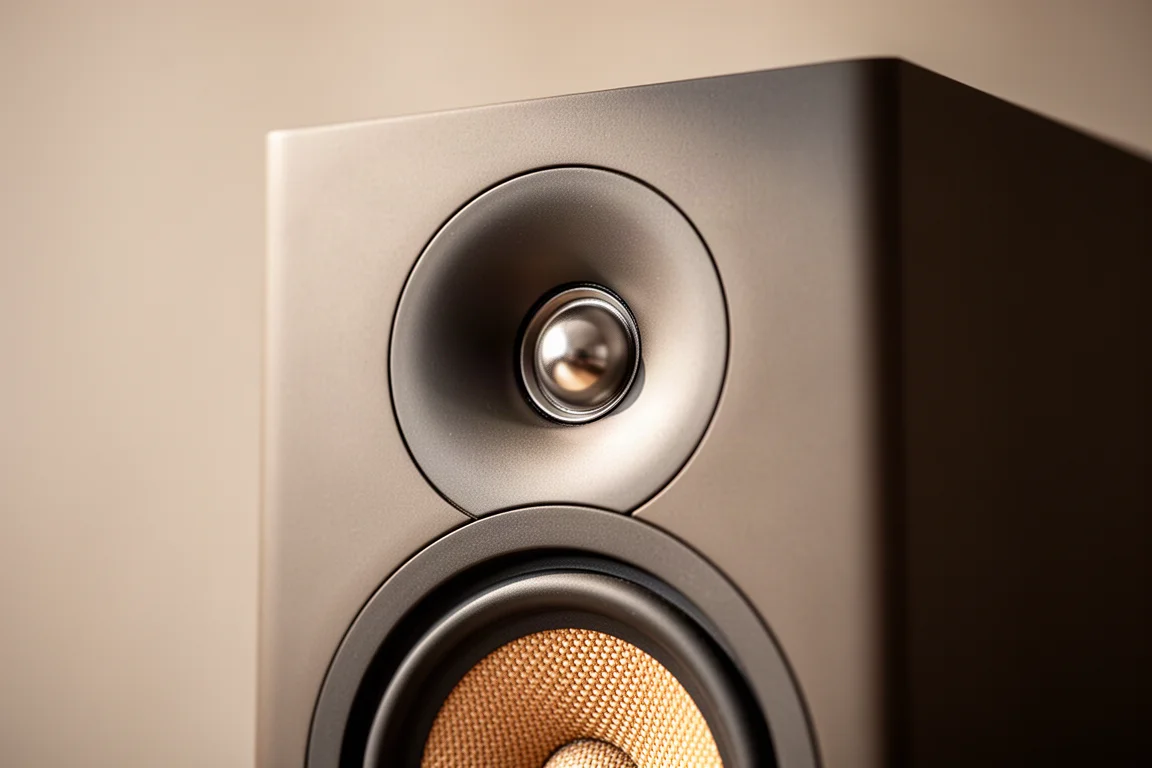
Measured sensitivity comes in at roughly 85 dB, which is typical for a standmount with a 6-inch woofer, and the cabinet finish is matte.
Tonal Balance and Detail
Tonal balance is very good overall. The most visible deviation is a mild resonance around 700 Hz, roughly 1.5 dB in amplitude with a fairly narrow Q. It is unlikely to draw attention during normal listening, though a test tone at that frequency would expose it.
Higher up, there is a lift in the upper treble somewhere around 6 to 8 kHz, which shows up most clearly as sibilance on female vocals, where the S sounds step forward. Above that, the upper treble sits about 1.5 dB below the rest of the response, with a bump around 5 to 6 kHz.
Detail retrieval is a genuine strength. Percussive elements such as shakers and the small click-clack accents that sit on the right side of a busy mix come through cleanly and are easy to follow.
Bass, Dynamics, and Headroom
Anechoic measurements put F3 at 56 Hz and F10 at 38 Hz. In a normal room, usable extension lands closer to 50 to 60 Hz, so kick drums have punch but not much weight below that.
Measured data also shows a lift through the lower midbass that adds apparent punch, most likely from an enclosure tuned slightly on the small side rather than to a maximally flat alignment. Handled with restraint, that lift makes the bass sound fuller than the extension figure alone would suggest. Pushed too far, the same approach produces a resonant, one-note character; the F6B stays on the sensible side of that line.
Headroom is where the speaker reveals its limits. As levels move into the mid-80s dB, vocals begin to take on a grainy quality. At upper 80s to low 90s dB at roughly 10 feet, compression and distortion become clearly audible. Multi-tone distortion measurements point to the same region as the source of that graininess, and handing the lowest octaves to a subwoofer reduces it. Instantaneous compression data shows dynamics tightening as levels climb from 76 dB to 102 dB, although performance holds up well at around 96 dB at one meter for a single speaker.
Directivity, Soundstage, and Room Interaction
Horizontal radiation is about plus or minus 50 degrees, with vertical coverage around plus or minus 30 degrees. That is a controlled pattern, and it is noticeably narrower than the widest-radiating standmounts; a design with roughly plus or minus 70 degrees of radiation produces more envelopment and a larger sense of recorded space.
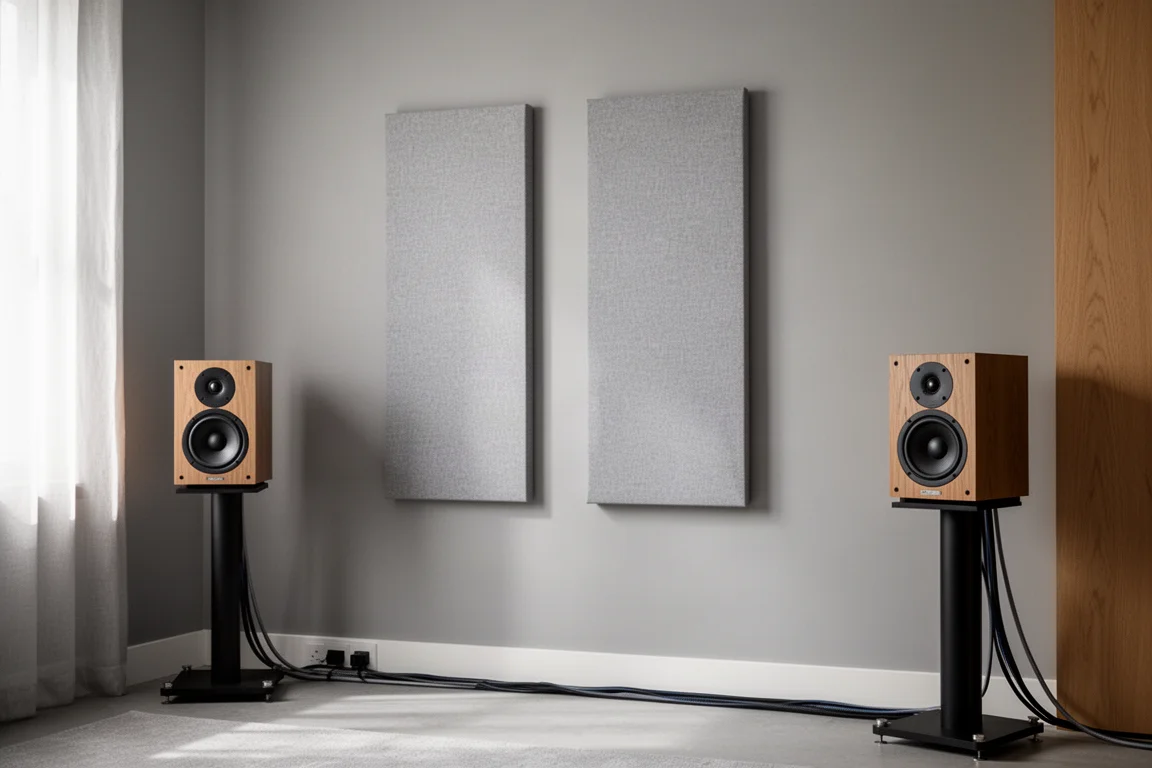
Because the F6B radiates fairly widely in the upper frequencies, a reflective room with nearby sidewalls fills in the upper midrange dip and produces a more even result. In a room without close sidewalls, that reinforcement is missing and the top end can sound slightly dark, in which case a modest EQ lift is worth trying.
Impedance measurements show a minimum EPDR of about 1.7 ohms. Class AB amplifiers should be given plenty of ventilation, while class D designs see roughly 3.5 ohms and will be comfortable.
How It Compares With Other Standmounts
Within the same range, the Ascilab C6B measures with better on-axis linearity and slightly higher sensitivity, and it adds a little fullness through the midrange, so the decision between the two comes down to whether you prefer the F6B’s tighter presentation or the C6B’s smoother response. Against the widely recommended ELAC DBR62, the F6B is the more linear speaker on axis; the ELAC benefits from being toed away from the listening position and from absorption at the first reflection point, and its multi-tone distortion runs higher across a wider band, particularly between 1 and 3 kHz where hearing is most sensitive. The Audio First Cadencia 3 remains the wider-radiating design with greater envelopment, which is audible when moving between the two.
The broader point is that none of these speakers wins on every axis. The F6B’s advantage is linearity and directivity control at its price, while its disadvantages are extension and headroom.
Things to Consider Before Buying
- Headroom: the F6B compresses and distorts at high playback levels, so it is not the right choice for very loud listening in a large room.
- Bass extension: usable output stops around 50 to 60 Hz in room, and deep bass content benefits from a subwoofer.
- Treble balance: the lift around 6 to 8 kHz can emphasize sibilance, while the upper treble shelf can read as slightly dark in rooms without nearby sidewalls.
- Amplification: nominal impedance is 4 ohms with a minimum EPDR near 1.7 ohms, so class AB amplifiers need ventilation.
- Equalization: the speaker responds well to a few bands of EQ, and buyers who avoid EQ entirely will hear more of the stock deviations.
Buying Advice
Three bands of equalization applied to the upper midrange and the 5 to 6 kHz lift smooth out the response considerably, and the upper treble shelf can be adjusted to taste. Crossing over to a subwoofer reduces the graininess that appears at higher levels, and a class D amplifier is an easy match given the impedance curve.
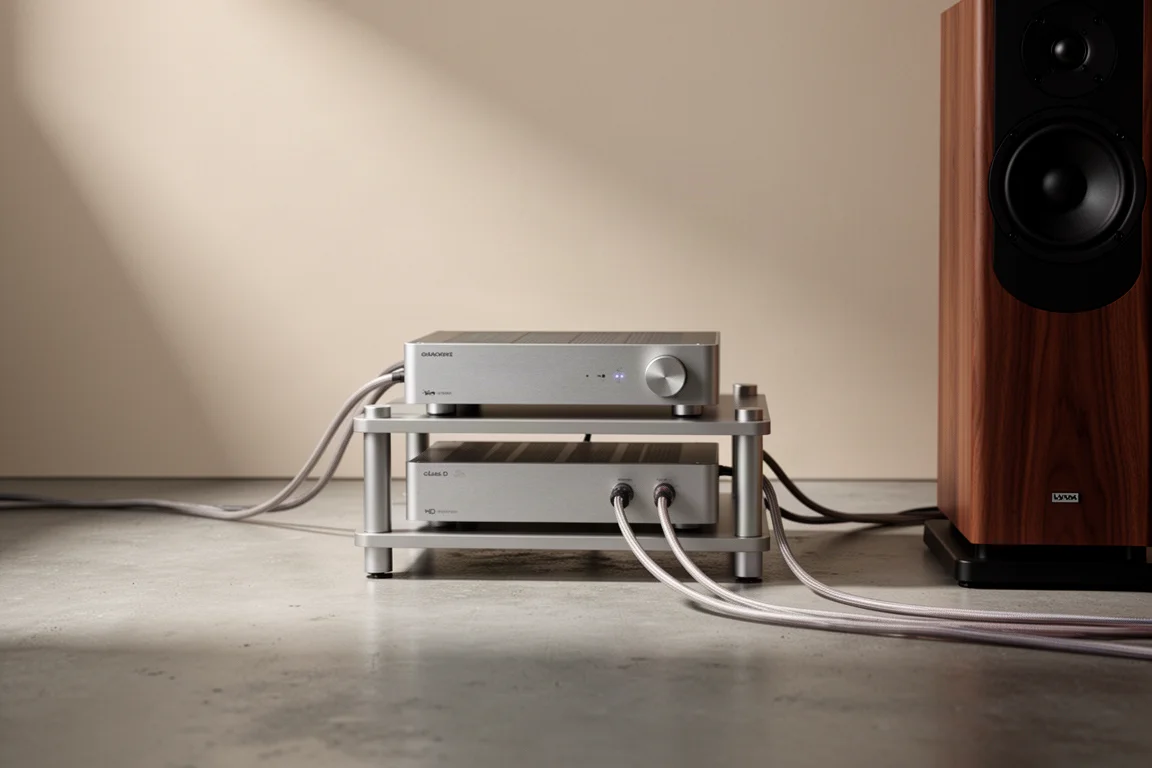
At approximately $980 per pair, the F6B combines on-axis linearity and directivity control that is uncommon at this price. For listeners who mostly play at moderate levels in a small to medium room and are willing to make a few EQ adjustments, it is one of the strongest options available under $1,000 per pair.
Conclusion
The Ascilab F6B gets the fundamentals right. Tonal balance is strong, the waveguide keeps directivity tidy, and the measured performance is excellent for the money. Its limits are real but predictable: bass extension stops around 50 to 60 Hz in room, and the speaker compresses at high levels. Add a subwoofer, apply a few bands of EQ, and those limits matter far less. If you want a linear, well-controlled standmount under $1,000 per pair and are willing to work with your room, the F6B deserves a serious look.
Product link
View more details for Ascilab F6B
This product is mentioned in the review. Check the specifications, options, and compatibility before buying.
View more details for Ascilab F6BFurther reading
Related Reviews
Bookshelf Speakers
Acoustic Energy A100 Mark II Review: A Compact Standmount With an Expansive Soundstage
The Acoustic Energy A100 Mark II brings clarity, natural tonality and a wide soundstage to an entry-level standmount, with a few setup details worth knowing first.
Bookshelf Speakers
Acoustic Energy AE-100 Mark II Review: Compact Bookshelf Speakers With Standout Imaging
A compact British two-way bookshelf speaker with deep, layered imaging, fast bass, and a slight treble lift to weigh against a crowded $500 field.
Bookshelf Speakers
Acoustic Energy AE100 MK2 Review: Measured Performance and Four Alternatives
A close look at the Acoustic Energy AE100 MK2 bookshelf speaker, what its measured performance reveals, and four alternatives with different trade-offs.