Bookshelf Speakers
AsciLab C6B Review: A Bookshelf Speaker That Competes Far Above Its Price
A close look at the AsciLab C6B passive bookshelf speaker, covering its neutral tonality, wide and consistent radiation, amplifier demands, and the case for adding a subwoofer.
Introduction
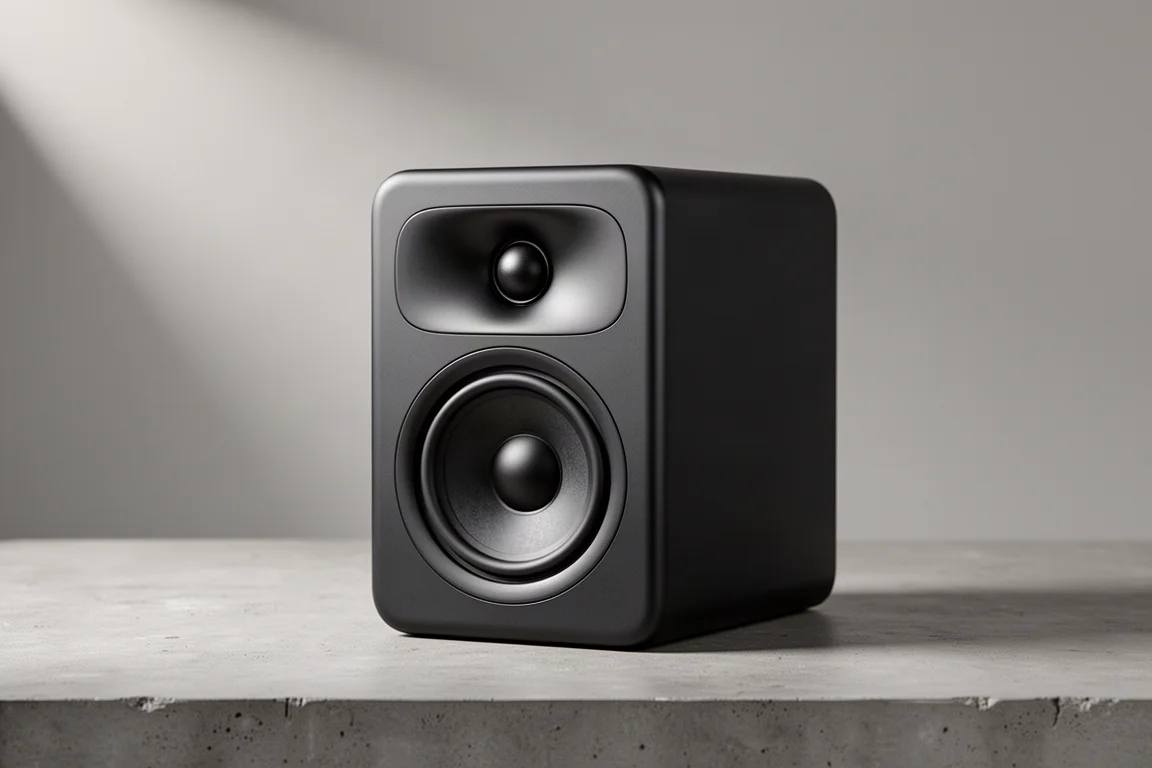
The AsciLab C6B is a passive two-way bookshelf speaker with a passive radiator on the back. Up front sits a 6-inch aluminum ceramic cone woofer and a 1-inch aluminum ceramic dome tweeter loaded by a large waveguide, with the crossover set at 1.1 kHz. Sensitivity is rated at 85 dB and nominal impedance at 4 ohms. Each cabinet measures 40 x 20.3 x 26.5 cm (15.7 x 8 x 10.4 inches) and weighs 8.4 kg.
Pricing is where the C6B becomes interesting. The standard black and white finishes cost about $935 per pair, and shipping to the United States adds roughly $200, bringing the delivered total to about $1,135 per pair. Different waveguide colors are available at no extra cost, while the gloss gray finish adds $200. At that delivered price the C6B is a genuinely strong value, and its measured behavior supports the impression it makes in a room.
Who This Speaker Is For
The C6B suits listeners who want a neutral, uncolored speaker and are prepared to pair it with a subwoofer. It is a compact passive design, so it will not deliver deep bass on its own, and low-frequency output is the one area where its limits are clear.
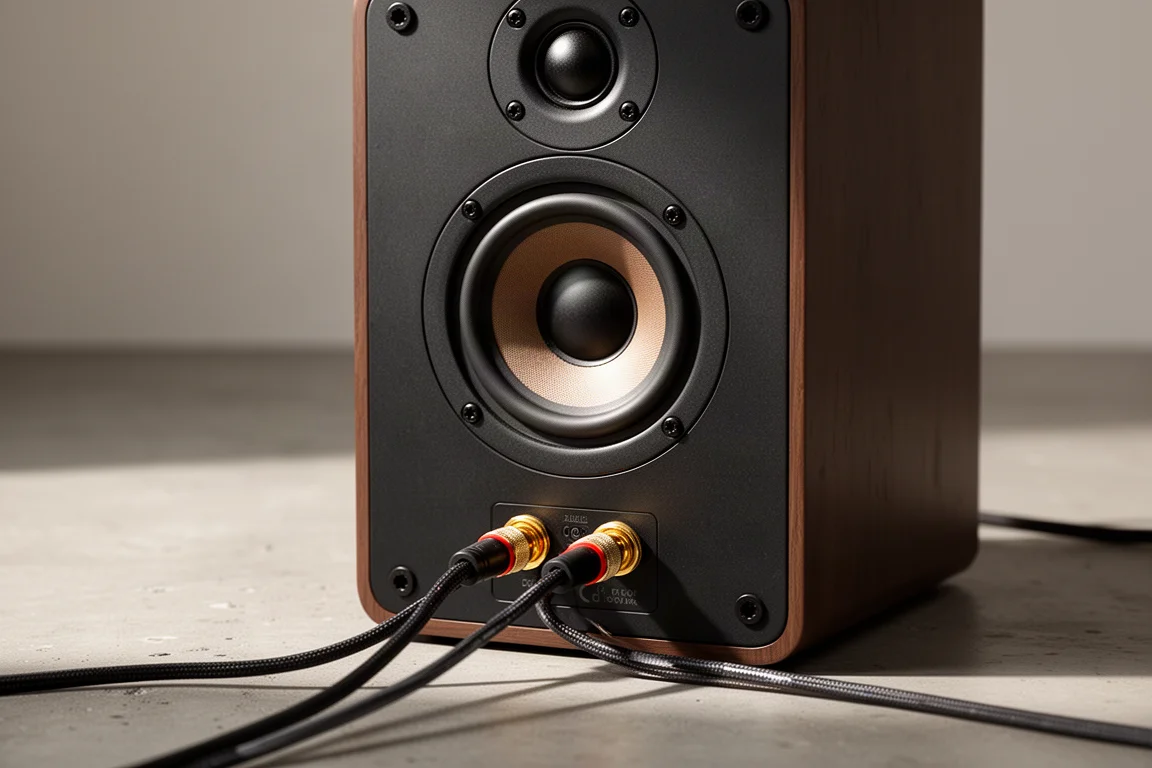
It also rewards careful amplifier matching. With a minimum impedance of 2.6 ohms and a minimum EPDR of 1.2 ohms, it wants an amplifier that is comfortable driving a 4-ohm load, ideally with 100 watts or more available.
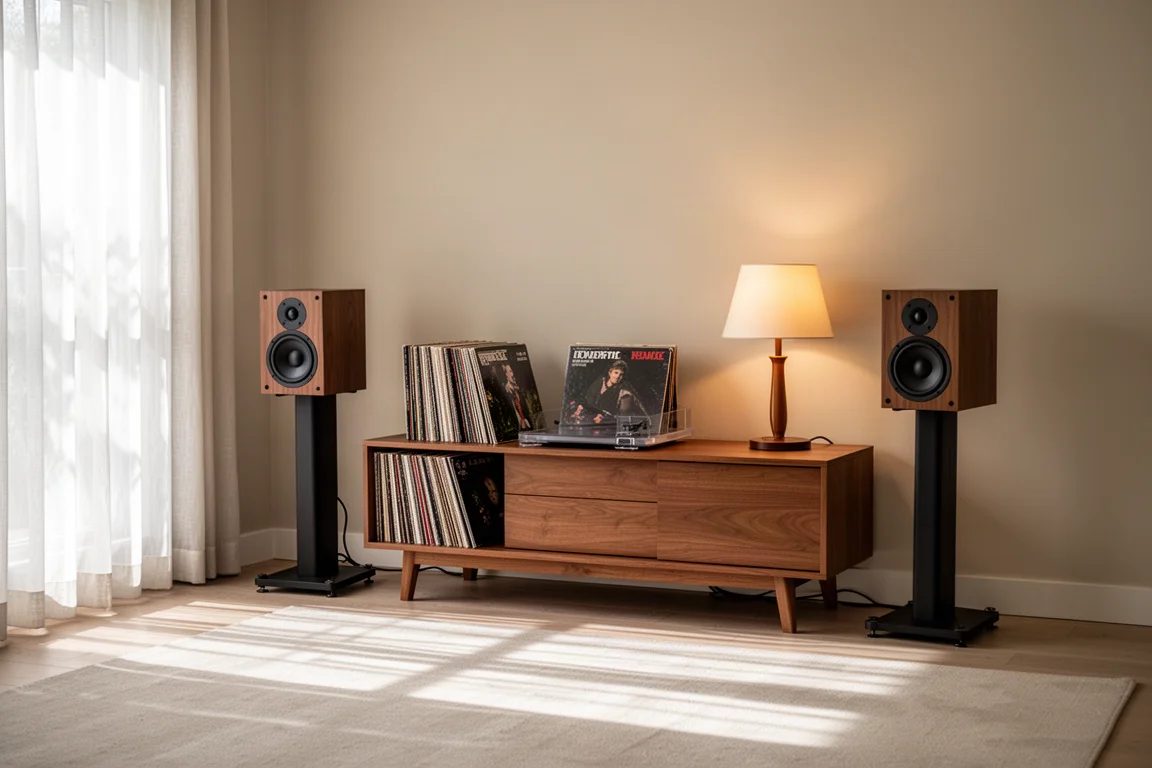
Listeners who value a wide, stable sound stage more than a bass-heavy presentation will get the most from this speaker. Those who want a single pair of boxes to cover a full-range signal without help should either budget for a subwoofer or look at a larger design.
Main Strengths
Neutral Tonality and Consistent Timbre
The C6B’s frequency response is smooth and its overall timbre is neutral. Across jazz, rock, pop, and rap material, it does not impose a character of its own, and the listening window, early reflections, and sound power behavior all stay well controlled. The top end rolls off gently by design, which compensates for the way the speaker’s radiation expands toward the top of its range.
That neutrality has a practical benefit. A smooth speaker is easy to shape with EQ when a particular album calls for a different balance, and just as easy to return to neutral afterwards. A speaker with built-in coloration does not offer that flexibility.
Sound Stage Width and Imaging Focus
The most distinctive trait of the C6B is what happens in the upper frequencies. Instead of narrowing as it approaches the top of its range, its radiation expands slightly. The result is that an instrument panned hard to one side keeps its position across its entire range, rather than drifting inward at some frequencies and outward at others. Images also layer unusually well in depth.
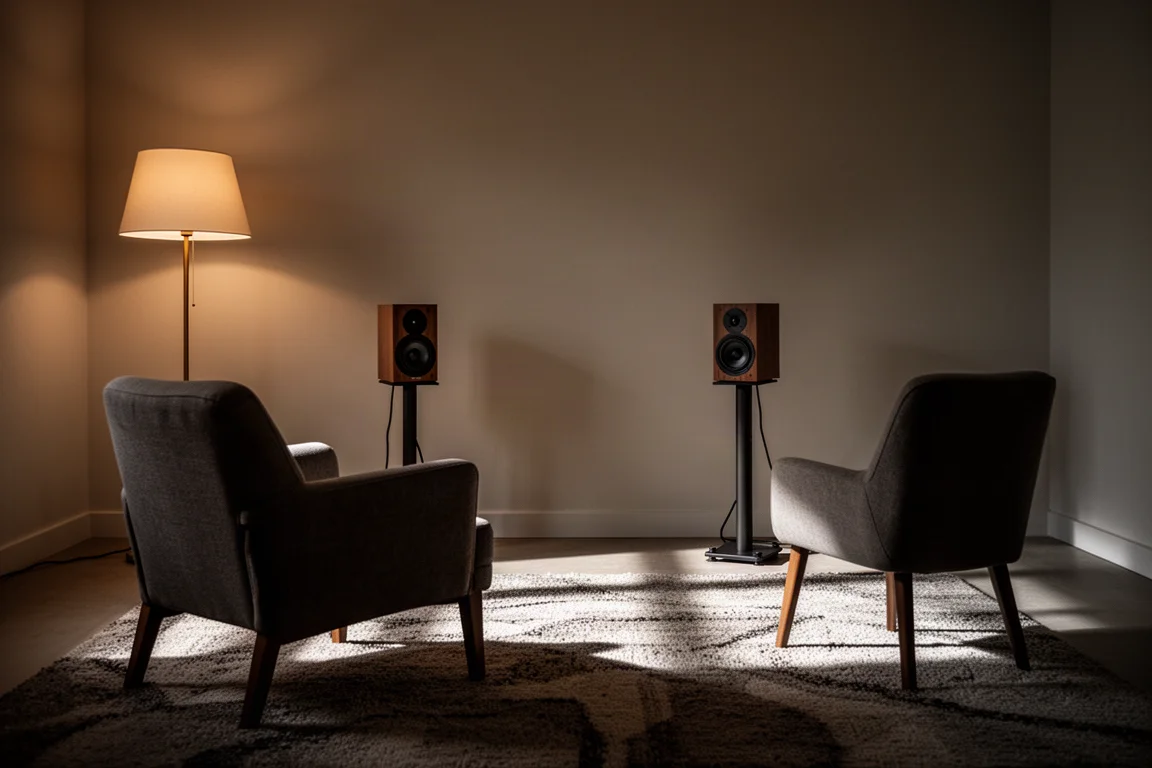
That behavior removes the usual trade-off between stage width and image focus. Toeing speakers outward normally widens the stage at the cost of pinpoint imaging, while toeing them inward sharpens images and shrinks the stage. The C6B holds both at once. In practice, roughly 5 to 10 degrees off axis gives the best balance between high-frequency energy and stage width without any loss of precision.
Vertical Radiation Through the Crossover
Many two-way designs have narrow radiation around the crossover region, roughly 2 kHz plus or minus an octave, which is why standing up can make the sound collapse. The C6B’s crossover sits at 1.1 kHz and its radiation stays wide through that area, so vocals keep their clarity, attack, and dynamics even when you are not seated at exactly the right height. Less time is spent locking your head into one position.
How It Compares With Other Speakers
Two comparisons help put the C6B in context. Against the Audio First Fidelia kit, which sells for about $1,150 plus roughly $50 shipping, the C6B sounds very similar overall: the Fidelia carries slightly more weight in the lower midrange and sounds larger in space, while the C6B offers a little more air in female vocals and on cymbals and hi-hats. Against the KEF Q Concerto Meta, the C6B comes across as the more detailed and brighter of the two, with the Q Concerto Meta taking on a darker tonal balance. Those differences are relative and small, and the C6B’s own balance stays neutral rather than forward.
At higher playback levels the C6B’s low-frequency harmonic distortion rises, and a reference design priced near $5,900 per pair shows noticeably lower distortion through the bass and lower midrange. The C6B’s midrange and tweeter distortion remain very low, which is impressive for a crossover at 1.1 kHz, but the bass region is where the price gap becomes visible.
Things to Consider Before Buying
- Bass extension is modest. The F3 is 54 Hz and the F10 is 35 Hz, with in-room roll-off around 50 Hz, which is typical for a bookshelf speaker at this price but not enough for genuinely deep low-frequency content.
- Output has limits. At 96 dB the low-frequency harmonic distortion is elevated, and multi-tone distortion sits near a practical threshold. At 102 dB the speaker gives up some midrange, bass, and treble.
- The load is demanding. Minimum impedance of 2.6 ohms and minimum EPDR of 1.2 ohms mean a 4-ohm-capable amplifier is required.
- Finish pricing varies. Black and white are standard at $935, waveguide color options add nothing, and the gloss gray finish adds $200.
- Shipping is part of the budget. Roughly $200 to the United States on top of the base price.
Buying Advice
If you want a neutral, wide-sounding bookshelf speaker and you are willing to add a subwoofer, the C6B is an easy recommendation at about $1,135 per pair delivered. Plan for an amplifier that handles 4-ohm loads comfortably with 100 watts or more, and hand the lowest octaves to a subwoofer rather than asking the C6B to produce them alone.
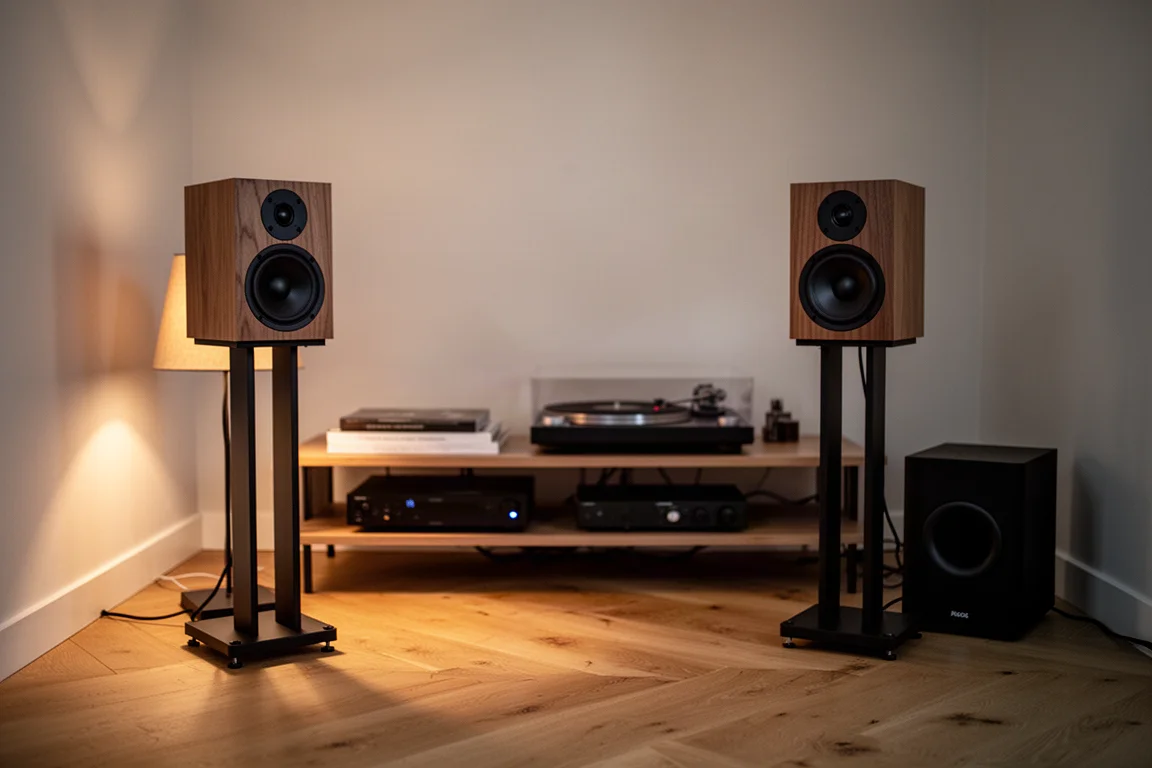
Finish choice is straightforward: black or white keeps the price at its standard level, the waveguide color options cost nothing extra, and the gloss gray finish adds $200 if you prefer it. If you listen at very high levels in a large room, or you want a speaker that carries bass without help, the C6B’s limits will show sooner, and a subwoofer becomes essential rather than optional.
Conclusion
The AsciLab C6B behaves like a considerably more expensive speaker across most of its range. Neutral timbre, unusually consistent horizontal and vertical radiation, and the ability to hold image focus while still throwing a wide stage make it stand out at roughly $1,135 per pair delivered. Its limits are just as clear: bass extension is modest and low-frequency distortion rises at high levels, so a capable amplifier and a subwoofer belong in the plan. Buyers who accept those conditions get a bookshelf speaker that is very hard to beat for the money.
Product link
View more details for AsciLab C6B
This product is mentioned in the review. Check the specifications, options, and compatibility before buying.
View more details for AsciLab C6BFurther reading
Related Reviews
Bookshelf Speakers
Acoustic Energy A100 Mark II Review: A Compact Standmount With an Expansive Soundstage
The Acoustic Energy A100 Mark II brings clarity, natural tonality and a wide soundstage to an entry-level standmount, with a few setup details worth knowing first.
Bookshelf Speakers
Acoustic Energy AE-100 Mark II Review: Compact Bookshelf Speakers With Standout Imaging
A compact British two-way bookshelf speaker with deep, layered imaging, fast bass, and a slight treble lift to weigh against a crowded $500 field.
Bookshelf Speakers
Acoustic Energy AE100 MK2 Review: Measured Performance and Four Alternatives
A close look at the Acoustic Energy AE100 MK2 bookshelf speaker, what its measured performance reveals, and four alternatives with different trade-offs.