Bookshelf Speakers
Ascend Acoustics Sierra LX Review: Neutral Sound, Deep Bass, and Real Setup Demands
A two-way bookshelf speaker with a bamboo cabinet, neutral tonality, and bass that reaches far lower than its size suggests, plus the amplifier and setup requirements that come with it.
Introduction
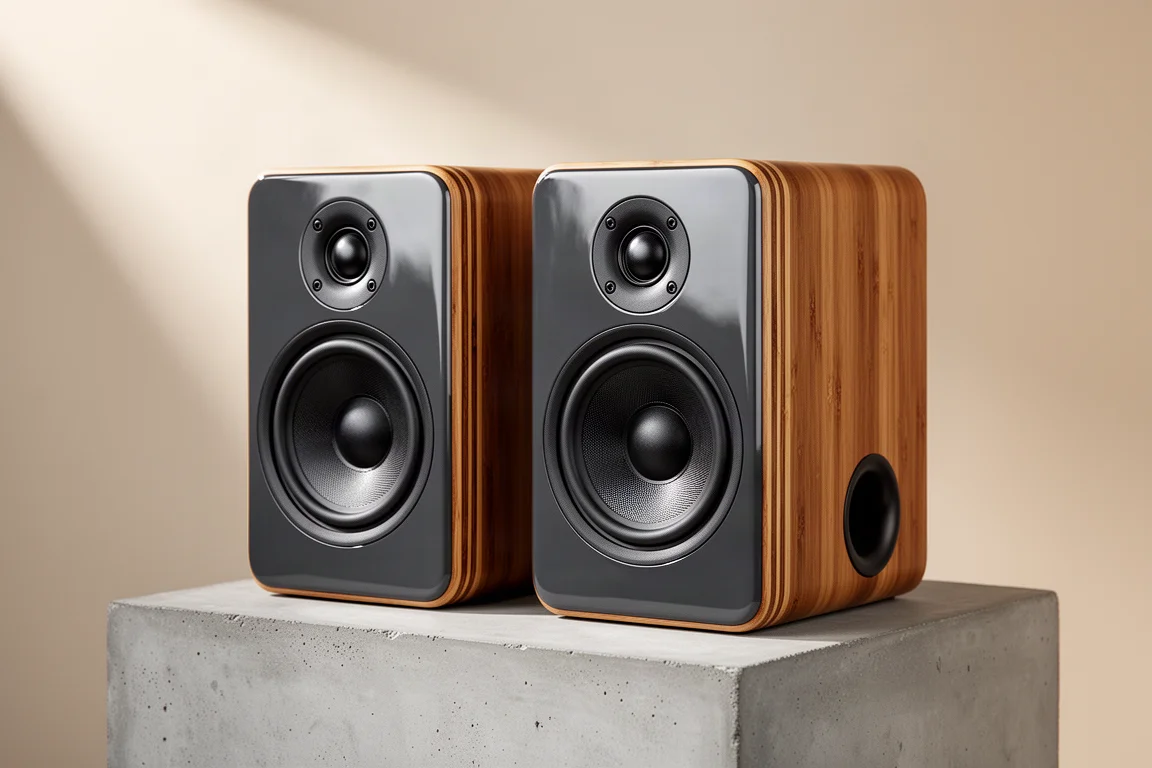
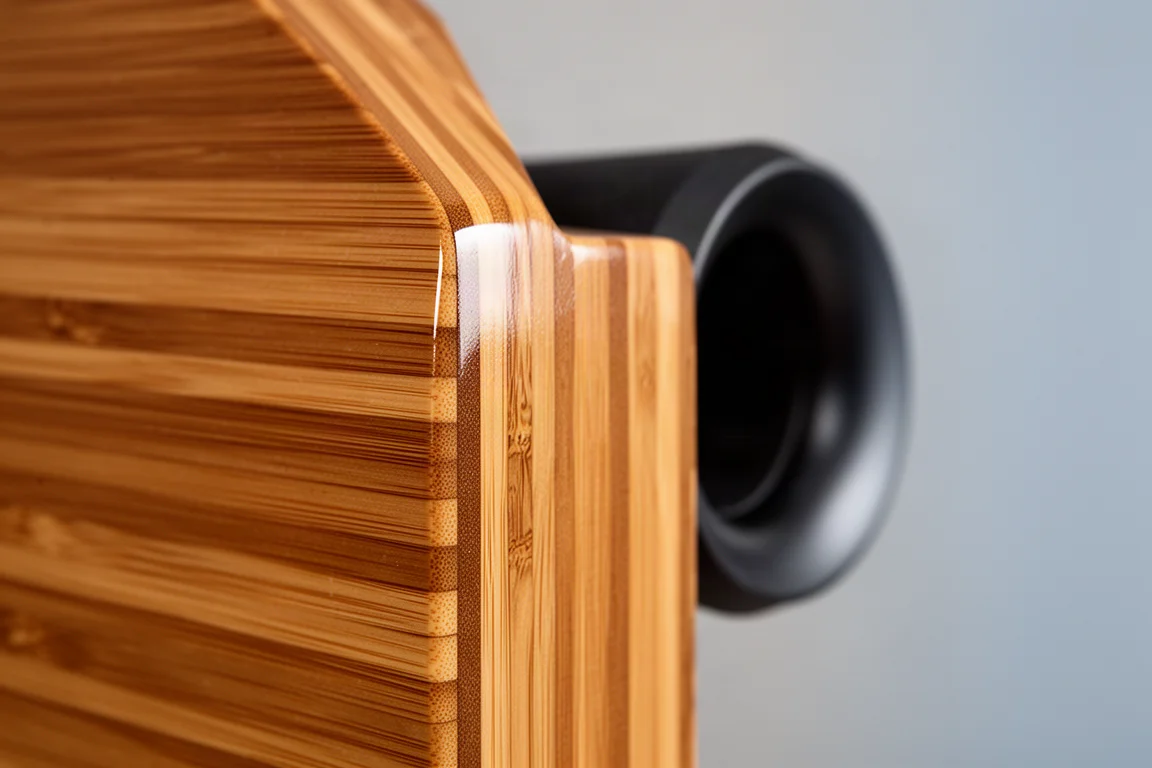
The Ascend Acoustics Sierra LX is a two-way passive bookshelf speaker that sells for around $1,600 per pair. It arrives with a specification sheet that reads more like a small floorstander than a stand-mount: a nominal 8 ohm load, a maximum continuous power rating of 350 watts, and a cabinet built from 20 mm laminated bamboo with internal bracing and a flared rear port tube. The tweeter is a customized dome design, and the woofer is a proprietary 6 inch unit.
What makes the Sierra LX interesting is not any single number but the trade-off baked into its design. It reaches meaningfully lower in the bass than most speakers of its size, and it does so by giving up sensitivity. That decision shapes almost everything about how it should be bought, amplified, and positioned.
Who the Ascend Acoustics Sierra LX Is For
This speaker suits listeners who put a premium on tonal neutrality and bass depth in a compact cabinet, and who are willing to spend a little time on placement. The measured response is impressively flat, sitting within roughly plus or minus 3 dB, and closer to plus or minus 1.5 dB if you set aside a narrow dip centered near 3.5 kHz. Bass extension is the headline: F3 lands at about 47 Hz and F10 at about 38 Hz, with usable in-room output down to roughly 40 Hz. For a two-way bookshelf, that is genuinely deep.
It is also a speaker for people who listen at moderate levels rather than pushing a small room to party volume. Owners with a larger room and plenty of power on tap will get the most from it, while anyone expecting high output from a modest amplifier should look carefully at the sensitivity figure first.
Main Strengths: Neutral Tonality and Deep Bass
Neutrality is the Sierra LX’s strongest card. Across the midrange and into the treble, the response stays disciplined, and the overall balance reads as honest rather than flattering. Voices and acoustic instruments come across without a pronounced tilt in either direction, which is exactly what you want from a speaker that is meant to disappear into the music.
The bass is the other standout. Reaching down toward 40 Hz in room from a cabinet this size is a real achievement, and it gives the speaker a sense of weight that most stand-mounts simply cannot produce. A subwoofer is not a requirement here, though crossing over at 80 Hz does improve the speaker’s output capability considerably by handing the lowest octaves to a dedicated driver.
Soundstage presentation is wide and even. Radiation holds together across roughly plus or minus 60 degrees, which is a practical sweet spot: wide enough to feel enveloping, narrow enough that imaging does not smear into a diffuse blur. The load itself is friendly, with a nominal 8 ohm rating and a minimum impedance of about 5.5 ohm, so the electrical demand is not what makes this speaker fussy.
Setup and Amplifier Pairing
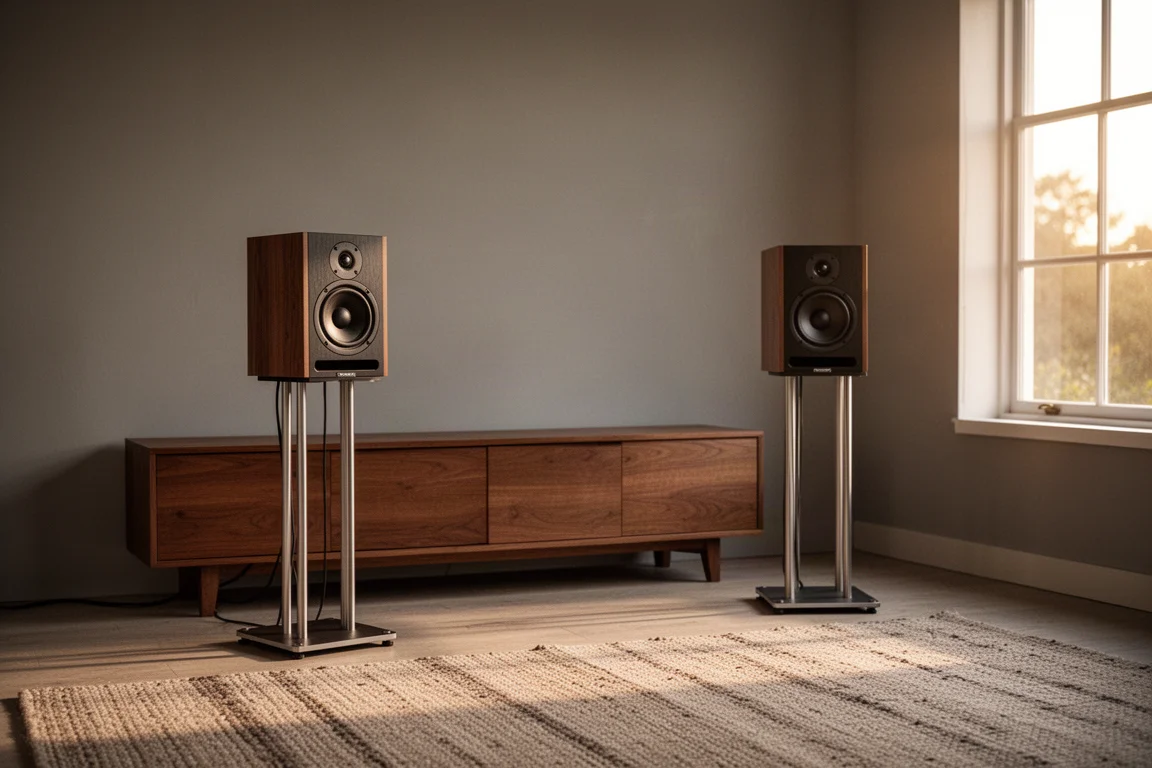
Placement matters more here than with many two-way bookshelf designs, and the reason is measurable. Pointed directly at the listening position in a large room with distant sidewalls, the upper midrange and lower treble lose a little attack. Toeing the speakers out so they aim roughly 10 to 20 degrees behind the listening position fills that region in, at the cost of some energy above about 10 kHz. Aiming them a full 30 degrees out into the room is too extreme. In a smaller room with nearby reflective sidewalls, the upper midrange fills in naturally, but the 4 to 8 kHz range can become more pronounced, which is another argument for a modest amount of toe-out.
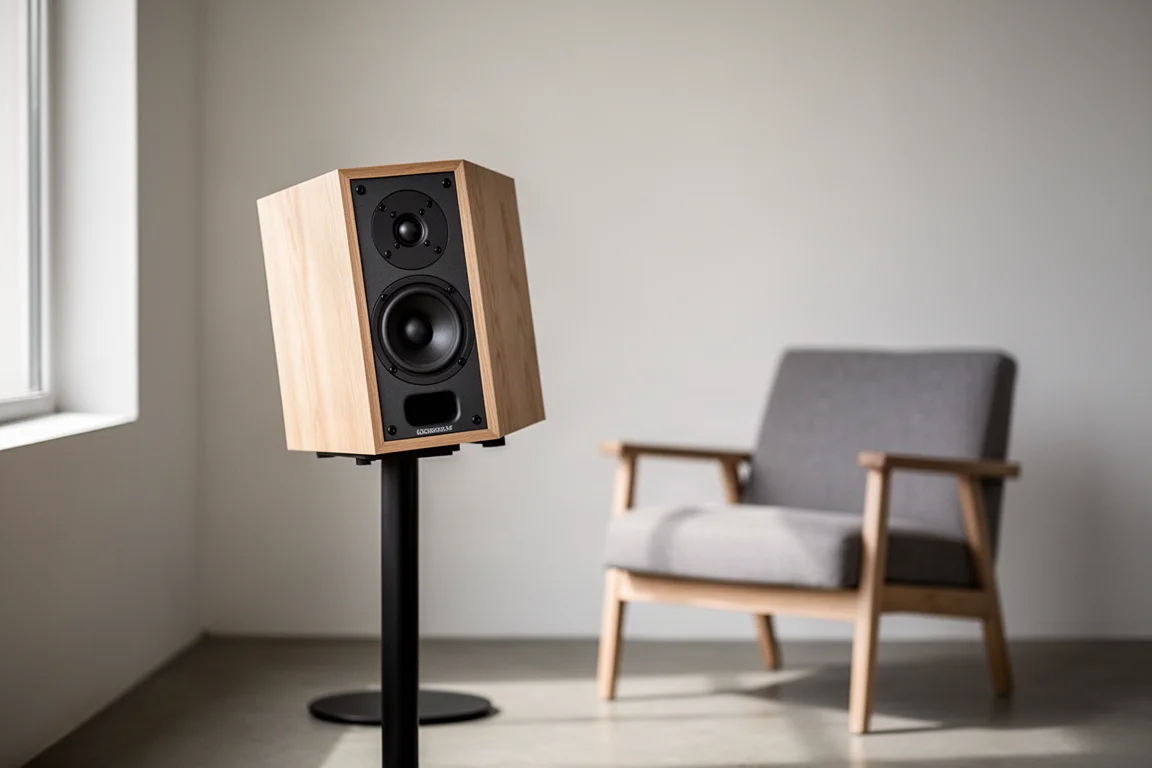
Vertical alignment deserves attention too. Ears should sit level with the tweeter. Standing up, or dropping noticeably below that axis, shifts the tonality enough to be obvious, which is typical of a two-way stand-mount but worth planning for with stand height and seating.
Amplifier choice is unusually consequential. With a high output impedance or low damping factor, the speaker’s response can shift by as much as about 2 dB through the midrange and roughly 1.5 dB at the top end. Older tube designs and earlier load-dependent switching amplifiers are the ones most likely to introduce that variation. A modern amplifier with low output impedance and a high damping factor will give you the response the speaker was designed to produce.
Then there is the sensitivity question. Measured sensitivity is about 81 dB at 2.83 volts at 1 meter, well below the roughly 85 dB typical of conventional bookshelf speakers. The reward for that sacrifice is the extra bass extension. The cost is that you need a genuinely powerful amplifier to reach familiar volume levels, and the speaker will not play as loudly as its 350 watt rating might suggest.
Things to Consider Before Buying
The main limitation is distortion behavior in the midrange at higher levels. At roughly 10 feet from a pair, audible midrange distortion begins to appear around 82 to 83 dB, and it presents as a loss of detail and a sense of congestion rather than obvious harshness. Short-term compression measurements also show stress at very high output, though staying around 96 dB of instantaneous short-term output keeps things within reasonable bounds.
Two further details are worth knowing. There is a visible resonance in the region of 600 to 700 Hz in the measured data, which lines up with some extended decay in the upper midrange. And unit-to-unit tolerance exists: two samples measured about 3 dB apart at 20 kHz, which is within the realm of expectation for a pair of gloss-finished speakers at this price, but it does mean the last octave can vary slightly from pair to pair. During the evaluation of the sample here, a woofer issue was identified and the manufacturer supplied replacement drivers, so buyers dealing with an anomaly should not hesitate to contact Ascend Acoustics directly.
Buying Advice
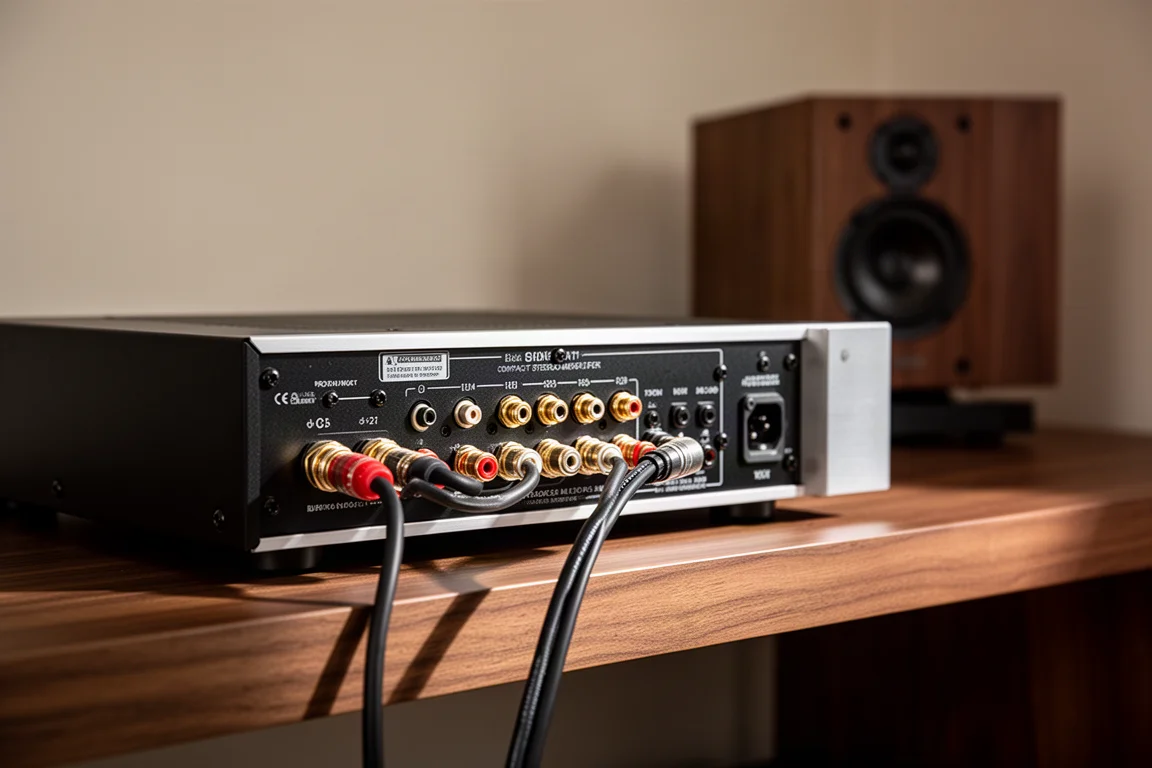
The Sierra LX rewards a specific kind of buyer: someone with a solid-state amplifier that has low output impedance and plenty of current delivery, a room where the speakers can be toed in a modest 10 to 20 degrees, and a listening position with ears at tweeter height. If you typically listen at moderate levels and value neutrality and bass depth over maximum loudness, this is a well-judged design that will not need a subwoofer to feel complete.
If you like to listen loud, sit far back, or run a lower-powered or high output impedance amplifier, plan around those constraints. Budget for adequate power, consider crossing over to a subwoofer at 80 Hz to relieve the woofer, and treat toe-in and stand height as setup variables rather than afterthoughts. Buy on the assumption that the speaker’s strengths, its flat midrange and its unusually deep bass, are exactly the qualities you are shopping for.
Conclusion
The Ascend Acoustics Sierra LX is a neutral, wide-sounding bookshelf speaker with bass extension that defies its cabinet size, built around a braced bamboo enclosure and a low-sensitivity design philosophy. It asks for a capable amplifier, careful toe-in, and a listening position level with the tweeter, and it will not play at very high levels without midrange distortion creeping in. Buy it for tonal honesty and deep bass at realistic volumes, and it delivers in a way few compact speakers at this price manage.
Product link
View more details for Ascend Acoustics Sierra LX
This product is mentioned in the review. Check the specifications, options, and compatibility before buying.
View more details for Ascend Acoustics Sierra LXFurther reading
Related Reviews
Bookshelf Speakers
Acoustic Energy A100 Mark II Review: A Compact Standmount With an Expansive Soundstage
The Acoustic Energy A100 Mark II brings clarity, natural tonality and a wide soundstage to an entry-level standmount, with a few setup details worth knowing first.
Bookshelf Speakers
Acoustic Energy AE-100 Mark II Review: Compact Bookshelf Speakers With Standout Imaging
A compact British two-way bookshelf speaker with deep, layered imaging, fast bass, and a slight treble lift to weigh against a crowded $500 field.
Bookshelf Speakers
Acoustic Energy AE100 MK2 Review: Measured Performance and Four Alternatives
A close look at the Acoustic Energy AE100 MK2 bookshelf speaker, what its measured performance reveals, and four alternatives with different trade-offs.