Bookshelf Speakers
Ascend Acoustics Sierra 1 V2 Review: A Neutral Bookshelf Speaker Done Right
A close look at the Ascend Acoustics Sierra 1 V2, a bookshelf speaker priced just under $1,000 per pair, built around tonal neutrality, a bamboo ply cabinet, and a fourth-order acoustic crossover.
Introduction
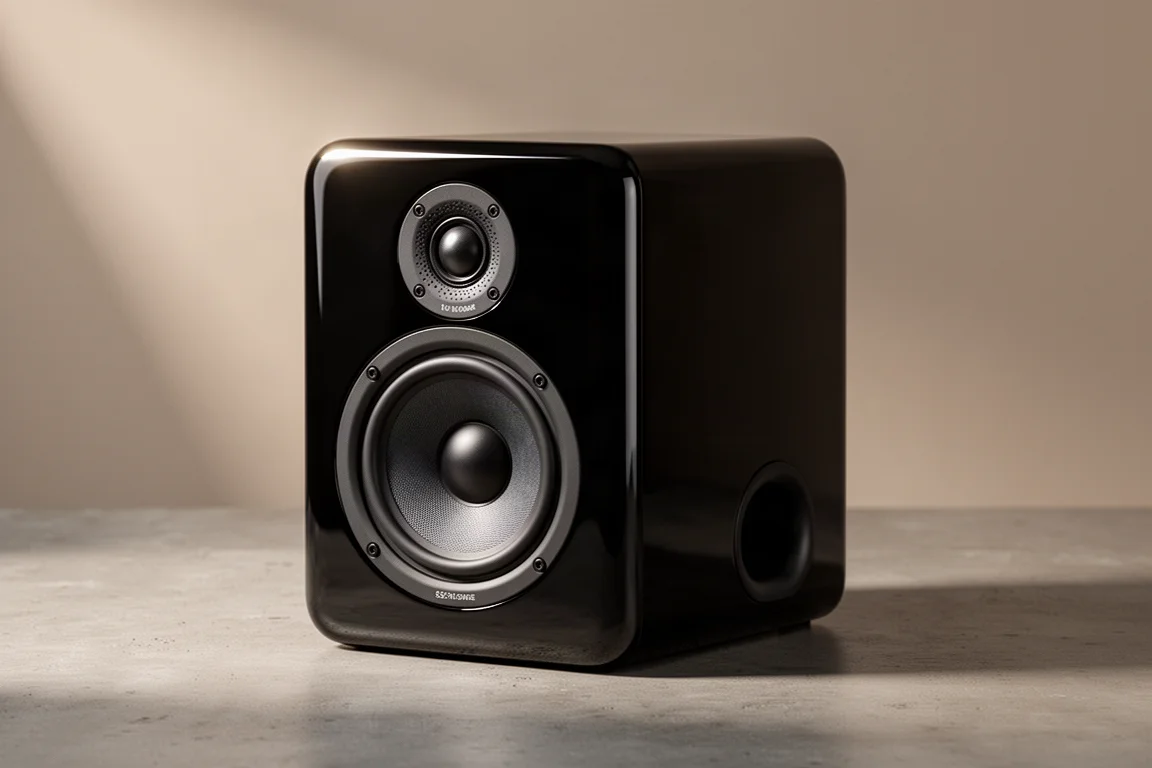
The Ascend Acoustics Sierra 1 V2 is a two-way bookshelf speaker priced just under $1,000 per pair. It pairs a 1-inch dome tweeter with a 5.25-inch midwoofer inside a cabinet built from layered bamboo ply, and its crossover is designed around a fourth-order acoustic slope rather than a textbook electrical layout.
Those are ordinary ingredients on paper. What separates the Sierra 1 V2 is how the finished package measures and, more importantly, how it behaves across long listening sessions with a wide range of music.
Who This Speaker Is For
The Sierra 1 V2 is for listeners who put tonal accuracy first. Across genres as varied as rap, jazz and rock, the speaker held a neutral character without anything in the midrange or lower treble pulling attention away from the recording. If your priority is a speaker that stays out of the way of the music, that is the core appeal here.
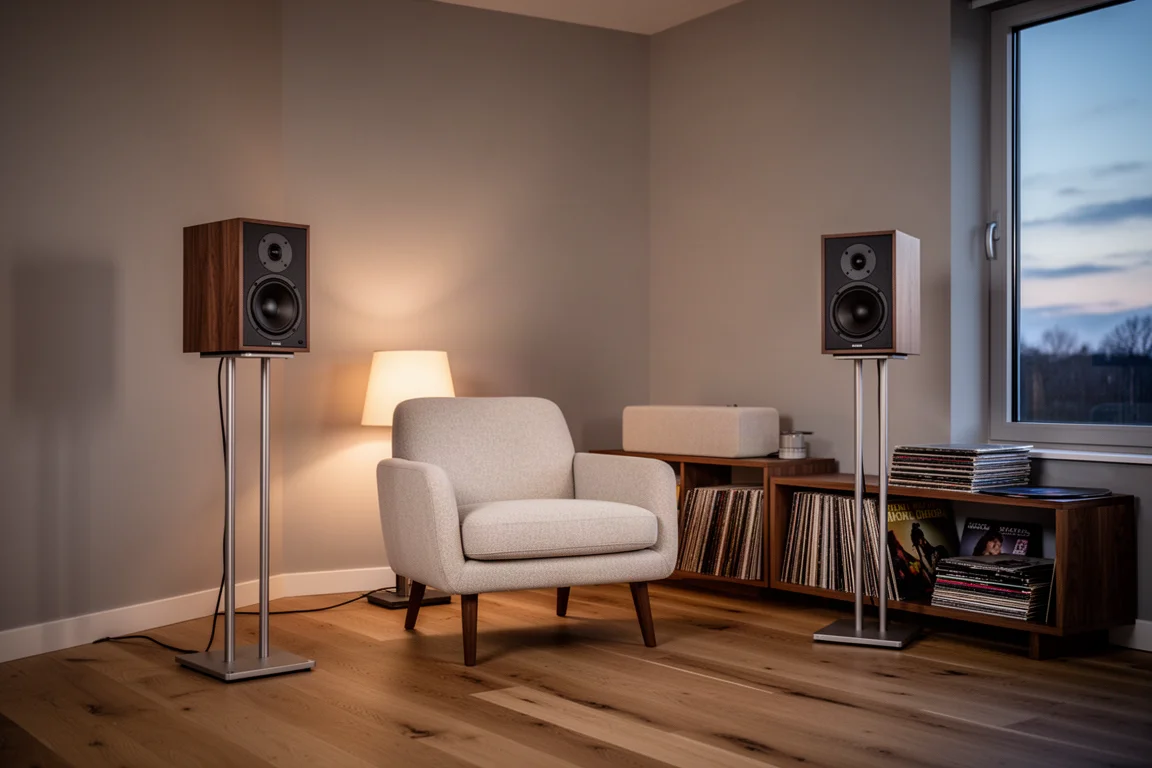
It also suits small and mid-sized rooms. In a roughly 17 by 17 foot space, with the speakers about three feet from the side walls and two and a half feet from the wall behind them, the presentation stayed coherent at listening distances between six and ten feet.
Buyers who expect deep bass from a bookshelf cabinet with no help at all should read the limitations section below carefully. Buyers who already own a subwoofer, or who plan to add one, have a much simpler decision.
Cabinet, Drivers and Crossover
The cabinet is made from layered bamboo ply and is described as environmentally friendly. The unit tested came in a piano black gloss finish, and the speaker is also offered in satin espresso, satin dark cherry and natural.
The driver complement is a 1-inch dome tweeter paired with a 5.25-inch midwoofer. Inside, the crossover parts look like quality components, and the design targets a fourth-order acoustic slope. That distinction matters, because acoustic and electrical crossovers are not the same thing: the natural rolloff of the drivers is built into the final result.
The payoff shows up in the vertical behaviour. Even with a fairly wide spacing between the tweeter and the midwoofer below it, the targeted crossover slopes help keep vertical directivity more consistent than many bookshelf designs manage.
Main Strengths
Neutrality is the headline. This is one of the most neutral bookshelf speakers in its price class, and that consistency holds across genres. Nothing in the male vocal range sounded resonant, and there was no piercing quality in the upper midrange.
The on-axis frequency response sits within roughly plus or minus 3 dB, and the estimated in-room response is extremely smooth, close to textbook. The upper frequencies appear to be shelved down by about 1 dB, which likely targets a more linear in-room result.
Build quality and part quality both come across as solid, and the price is reasonable for what the speaker delivers. The V2 revision is also a meaningful step over the original version, which showed a somewhat hollowed-out midrange with boxiness in the 700 Hz to 1 kHz region and a brighter character in the 4 to 6 kHz range. The V2 measures and sounds far more linear.
Practical details held up too. No mechanical noises, no driver plopping and no port chuffing showed up during listening.
Measurements and Room Behaviour
Minimum impedance lands around 7 ohms, which should be an easy load for most amplifiers. Average sensitivity sits in the low 80s dB range.
Published preference scores come in at 6.8 without a subwoofer and 8.4 with one. Bass extension figures put F3 at 55 Hz and F10 at 39 Hz, which means usable in-room output into the 40s, with little meaningful output below that.
Horizontal radiation stays wide through the lower midrange, the upper midrange and into the lower treble, then narrows above roughly 6 to 7 kHz. That is normal behaviour for a 1-inch dome tweeter on a flat baffle, where output begins to narrow at around half a wavelength.
At high output the picture changes. Measured at 96 dB at one meter, the 5.25-inch midwoofer shows rising midrange distortion, and compression appears at the highest levels. Treating the speaker as though it were crossed over at about 80 Hz reduces that midrange distortion considerably, which points to the motor topology as the cause. At ordinary listening levels and distances, none of this surfaced as an audible problem.
Things to Consider Before Buying
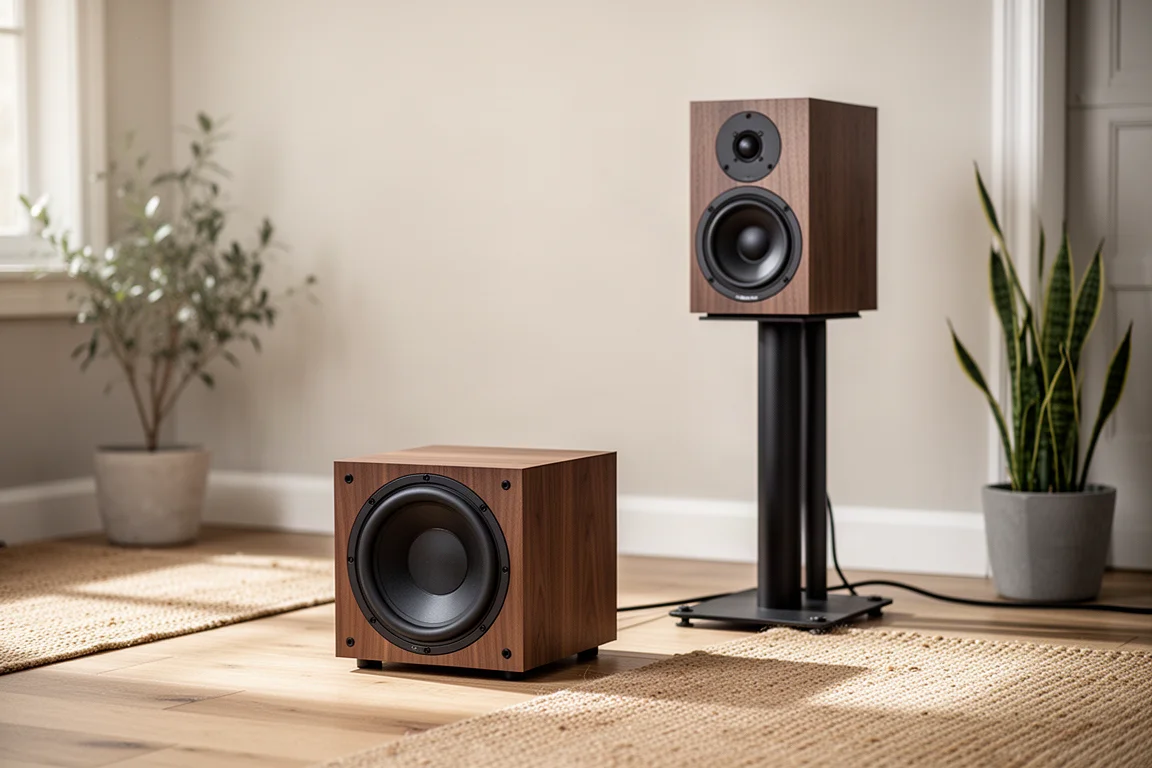
Bass extension is the first trade-off. A cabinet this size will typically start rolling off around 50 Hz, and the Sierra 1 V2 follows that pattern. There is enough kick and punch to be satisfying, but a subwoofer is the sensible addition if you want a system that reaches down to about 30 Hz. The jump in preference score from 6.8 to 8.4 with a subwoofer supports that approach.
The second consideration is treble dispersion. Soundstage radiation is not uniform all the way to 20 kHz. Wider, more uniform treble radiation would require a waveguide, and waveguides generally narrow the overall radiation pattern, so this is a trade-off rather than a defect.
Third, output capability has limits. This is not a speaker built to play extremely loud, and the distortion and compression measurements at high levels reflect that. At typical listening distances and reasonable volumes, output was never an issue.
Finally, the finish options and the cabinet material are worth checking against your room. The piano black gloss is the most reflective of the available finishes, while the satin and natural options are more subdued.
How It Compares With Close Alternatives
At the same roughly $1,000 per pair level, two alternatives come up repeatedly. The Dynaudio Emit 20 digs lower, with bass extension around 30 Hz and roughly 5 dB more output, but it carries a resonance around 600 Hz and some nonlinearity in the higher frequencies. The Revel M16 tracks reasonably close to the Sierra in overall linearity and adds a mid-bass bump around 100 Hz that gives it a little more bass weight, though its high-frequency response rolls off somewhat sooner.
Measured against both, the Sierra 1 V2 is the most linear of the three, and its build quality stands out. For listeners who want a speaker that sounds right without equalization, that linearity is the deciding factor. Those who want more bass weight or more headroom may prefer one of the others. All three are capable designs, and the right answer depends on the room and the priorities.
Buying Advice
If neutrality and build quality are your priorities, and you are willing to pair the speaker with a subwoofer for full-range bass, the Sierra 1 V2 is an easy recommendation at its price. It is the kind of speaker that lets you work through an entire music collection without wanting to adjust anything.
Plan the room first. Give the speakers some distance from the side walls and from the wall behind them, and aim for a listening distance somewhere between six and ten feet in a mid-sized space. The smooth in-room response rewards a reasonably conventional setup.
Budget for the subwoofer as part of the system rather than as an afterthought, since the measured preference scores make the case plainly. If deep bass without a subwoofer is non-negotiable, the Dynaudio Emit 20 is the more natural fit. If you want a slightly warmer low end in a compact footprint, the Revel M16 is worth auditioning.
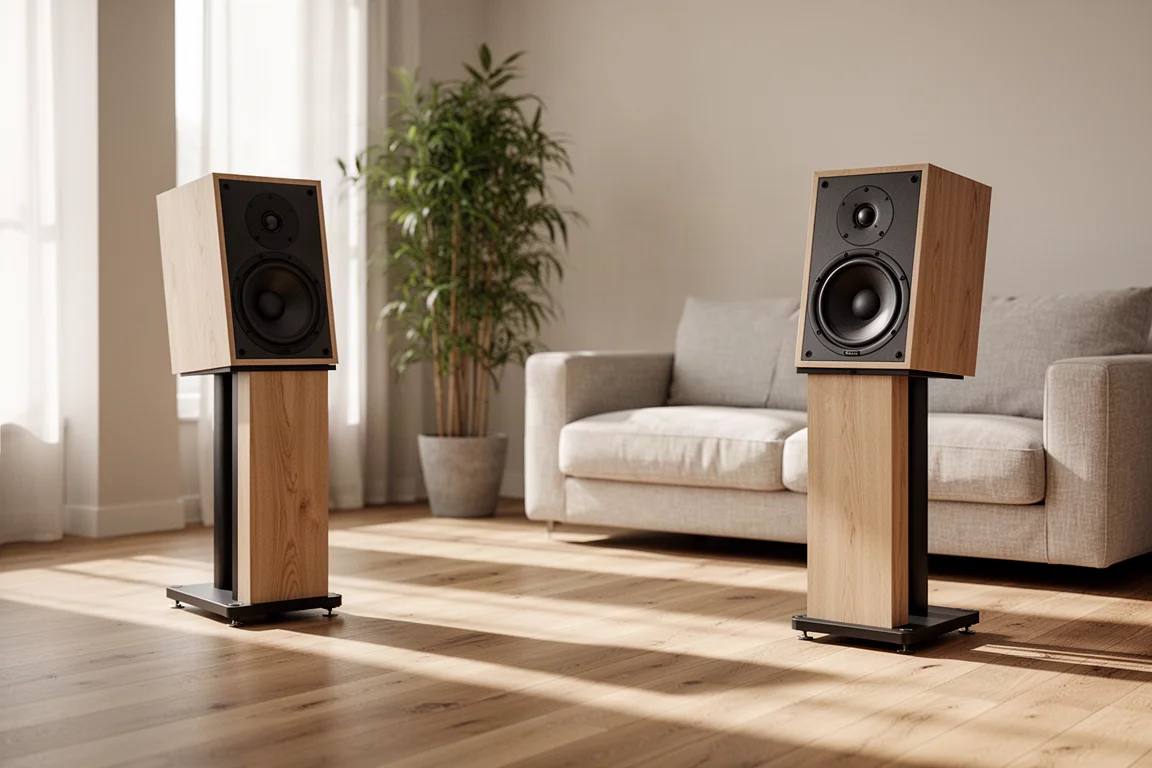
Finish choice is the last decision. Piano black gloss makes the strongest visual statement, while the satin and natural finishes blend more easily into a living space.
Conclusion
The Ascend Acoustics Sierra 1 V2 gets the fundamentals right. A bamboo ply cabinet, a well-executed fourth-order acoustic crossover, a smooth and highly linear response, and a price just under $1,000 per pair add up to a bookshelf speaker that is easy to live with. Its limits are predictable ones: bass that rolls off around 50 Hz, treble dispersion that narrows above roughly 6 to 7 kHz, and output headroom that tops out earlier than larger designs. Add a subwoofer, place it sensibly, and those limits stop mattering.
Product link
View more details for Ascend Acoustics Sierra 1 V2
This product is mentioned in the review. Check the specifications, options, and compatibility before buying.
View more details for Ascend Acoustics Sierra 1 V2Further reading
Related Reviews
Bookshelf Speakers
Acoustic Energy A100 Mark II Review: A Compact Standmount With an Expansive Soundstage
The Acoustic Energy A100 Mark II brings clarity, natural tonality and a wide soundstage to an entry-level standmount, with a few setup details worth knowing first.
Bookshelf Speakers
Acoustic Energy AE-100 Mark II Review: Compact Bookshelf Speakers With Standout Imaging
A compact British two-way bookshelf speaker with deep, layered imaging, fast bass, and a slight treble lift to weigh against a crowded $500 field.
Bookshelf Speakers
Acoustic Energy AE100 MK2 Review: Measured Performance and Four Alternatives
A close look at the Acoustic Energy AE100 MK2 bookshelf speaker, what its measured performance reveals, and four alternatives with different trade-offs.