Hi-Fi Preamps
Arylic BP50 Review: A Compact $100 Preamp With HDMI ARC
A compact preamp that brings HDMI ARC, a phono stage, USB playback, and two-way Bluetooth to a small system for around $100.
Introduction
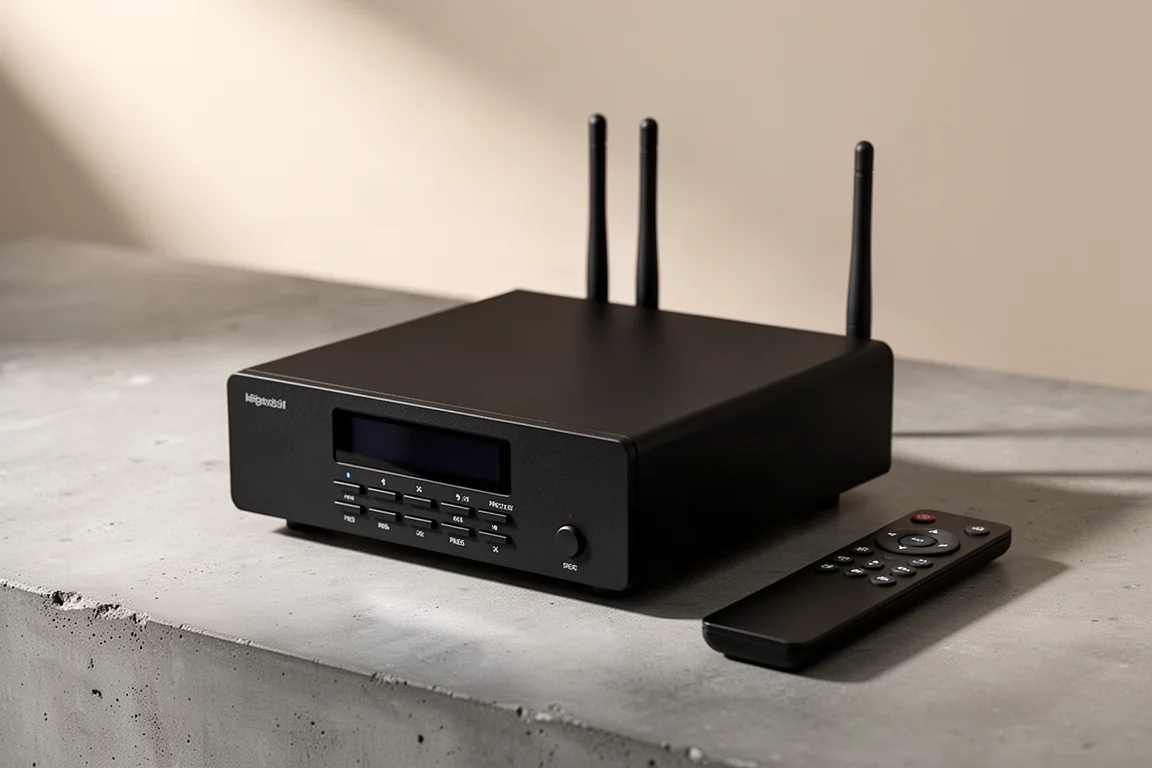
The Arylic BP50 is a compact preamp built around an HDMI ARC input, and it sells for around $100. That combination is genuinely uncommon at this price. HDMI ARC switching is usually a feature of full-size AV receivers, and the BP50 fits it into a small chassis that occupies a fraction of the space on a media console. Around the back you also get a phono stage, a USB DAC input, a USB port for drives, optical and coaxial digital outputs, and Bluetooth that works in both directions.
It is not a high-end component and it does not pretend to be one. The appeal is flexibility: one small box that can take audio from a television, a turntable, a disc player, and a USB drive, then feed an affordable amplifier and a pair of speakers. For listeners moving from a soundbar to real speakers on a modest budget, that is a useful thing to have.
Who the Arylic BP50 Is For
This is a product for someone who wants a single hub rather than a stack of separate boxes. If you have a television, a turntable, an older disc player, and a pair of bookshelf speakers with an inexpensive amplifier, the BP50 can tie all of it together and let you switch between sources from one remote or from a phone.
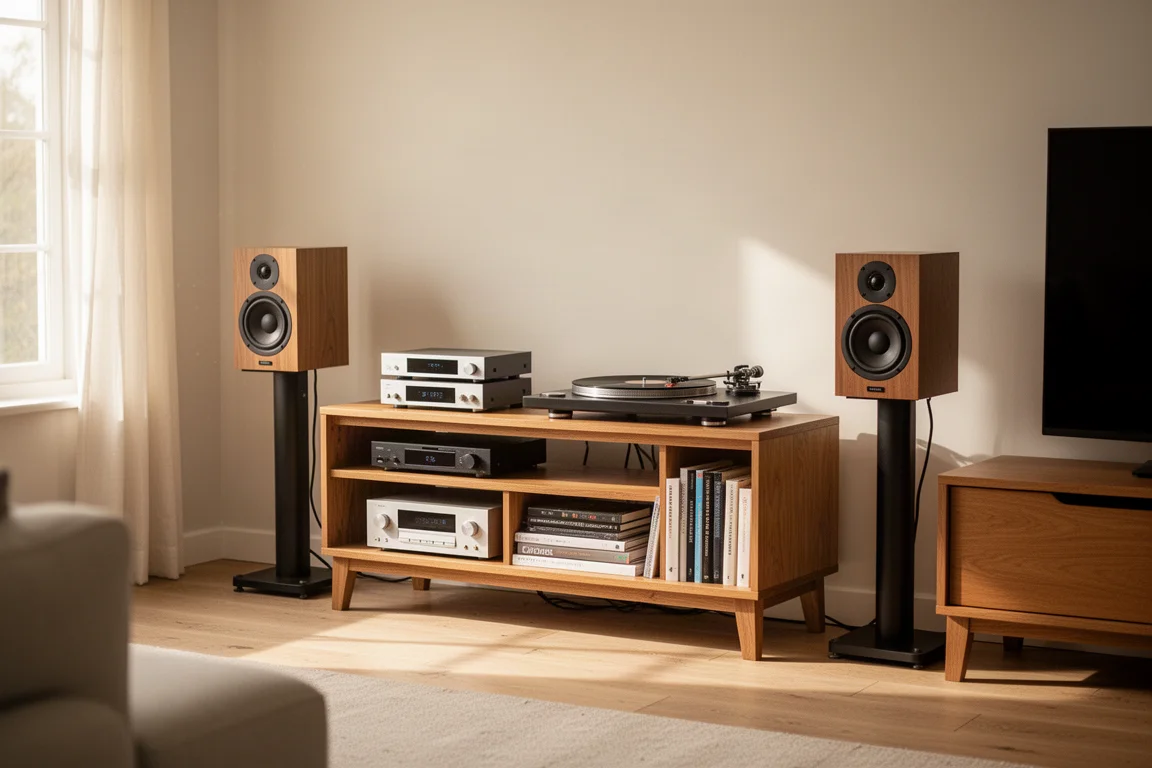
It is also a practical add-on for a vintage receiver. If you own an older amplifier that has no digital inputs, the BP50 can handle HDMI ARC from a television, play files from a USB drive, and send analog audio out to the receiver over RCA.
What it is not aimed at is critical listening. Buyers who want the best possible resolution, the widest dynamics, and the cleanest instrument separation per dollar should expect to build that from separate components instead. The BP50 is a convenience product, and it should be judged on that basis.
Main Strengths
The input and output count is the headline. On the digital side there is HDMI ARC, an optical S/PDIF input, a USB-C DAC input, and a USB-A port that plays music from a thumb drive or hard drive, covering MP3, FLAC, and WAV files. On the analog side there is a line input on full-size RCA sockets and a phono input with a ground terminal. Outputs include a subwoofer out, optical and coaxial S/PDIF out, and RCA out, and the internal DAC can be bypassed so the BP50 acts purely as a switcher.
Bluetooth runs in both directions. Two antennas are fitted, one for transmitting and one for receiving, so you can send a television or turntable signal to a pair of wireless headphones late at night, or stream from a phone into the system.
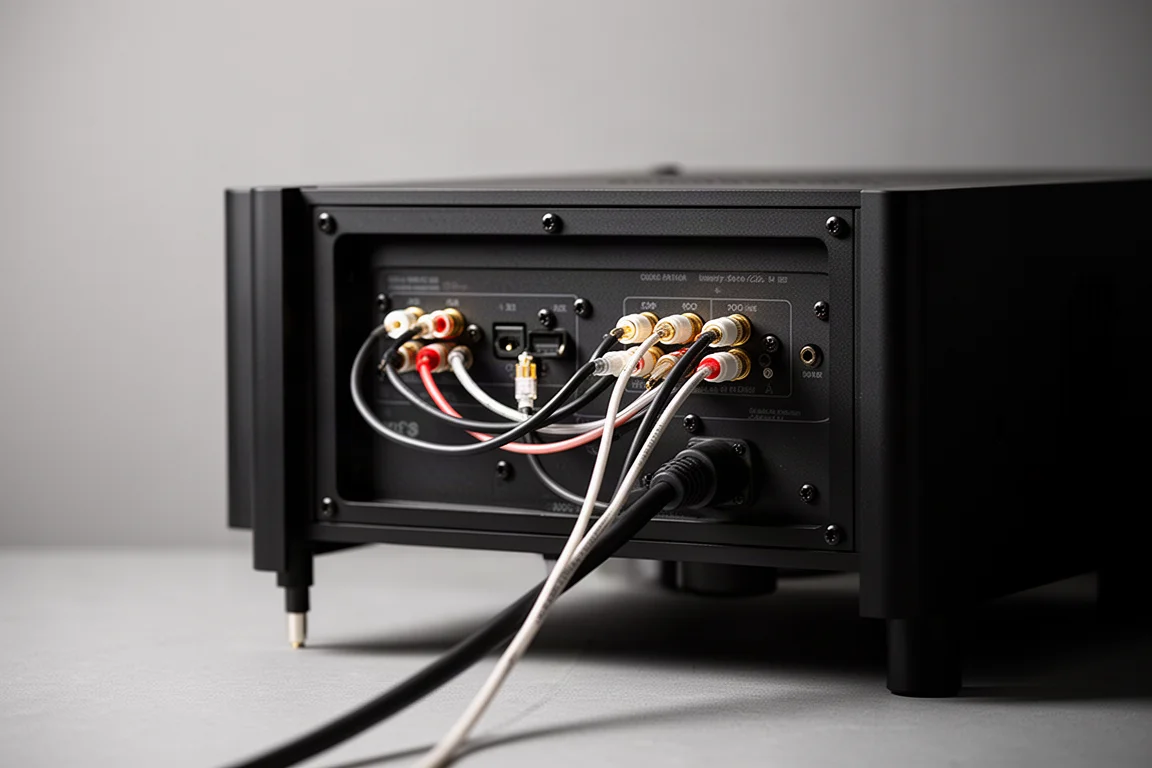
Inside, the BP50 uses an ESS Saber 9023P chipset with a claimed 112 dB of dynamic range and a 2 volt output level. The supplied power adapter is a 12 volt, 1 amp switching unit, and the draw is low enough that leaving the unit powered on is a reasonable option. A remote control is included, and the front panel offers one-touch preset EQ modes: flat, classic, pop, jazz, rock, and vocal.
Add up the individual pieces and the value case becomes clear. A phono stage, an HDMI ARC input, an internal DAC, two-way Bluetooth, an app with tone controls, and a remote, all in one chassis for around $100, is a lot of function for the money.
App Control, EQ, and Setup Notes
The Go Control app handles input selection, equalization, bass management, and subwoofer level. On the hardware itself you also get treble, midrange, and bass tone controls, which is where most of the tuning will happen when a room or a pair of speakers needs correction.
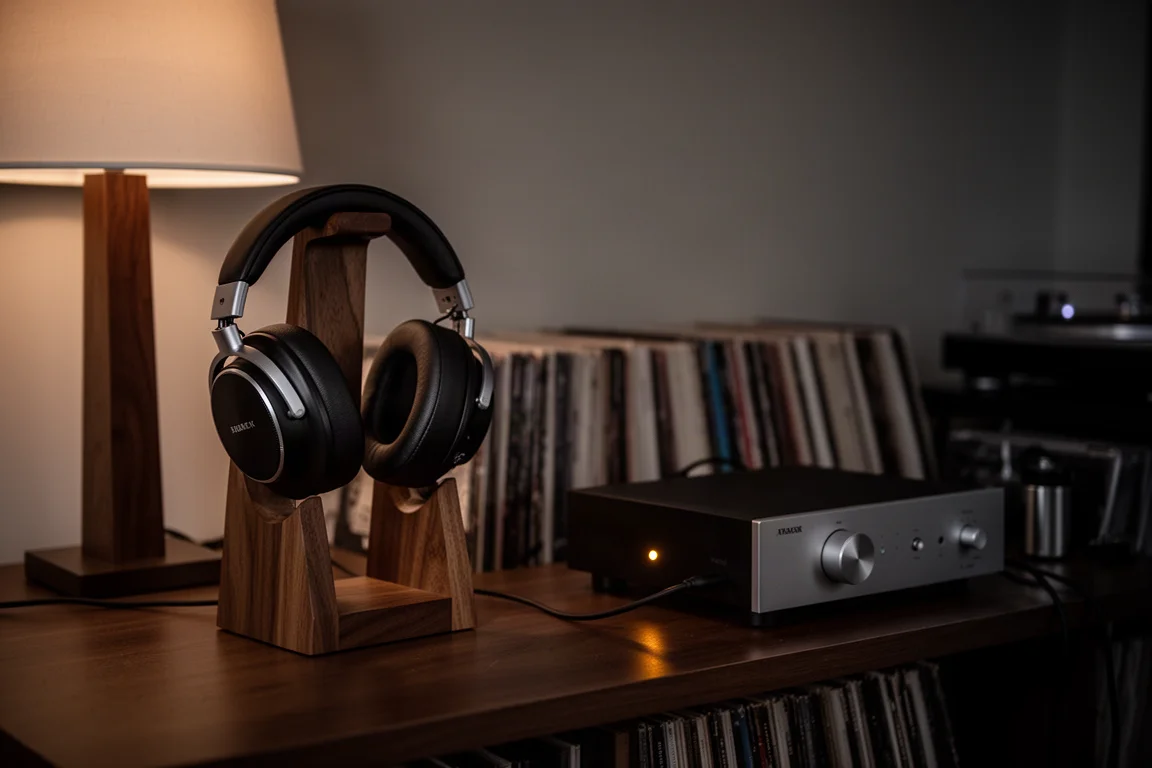
Two features deserve a closer look. Bass management is only really useful at its 50 Hz setting and the single step above it; beyond that, too much low frequency is sent to the subwoofer, and it is better to set the crossover on the subwoofer itself if it offers one. The bass boost option is best left alone. The phono stage is functional rather than impressive, and a record will usually need some tone adjustment to sound lively, but for a second system or a spare turntable it does the job.
Things to Consider Before Buying
The most important thing to know is that the BP50 pops audibly when it is switched off. The workaround is simple: turn off the amplifier first, or leave the BP50 powered on, which its low consumption allows. It is worth planning for one of those habits before the unit goes into a system.
The internal DAC is the other compromise. In a direct comparison with a dedicated desktop DAC selling for around $80, the separate unit delivered more dynamic range, a more natural vocal presentation, and cleaner definition, while the built-in conversion sounded flatter and slightly bright at the top end. The difference is not dramatic, but it is audible, and it explains why a separate DAC remains worthwhile for listeners who care about that.
Speaker matching matters too. A forward-sounding bookshelf speaker with a lifted lower midrange can be leveled out using the app EQ, and the tone controls make it possible to bring vocals forward or pull excess bass back. Buyers who expect a plug-and-play result from any speaker may be disappointed; buyers willing to spend twenty minutes with the EQ will not be.
Finally, the chassis is light. Handle it carefully, and do not drop it.
Buying Advice
At $99 to $100, the BP50 is a strong value for what it does, and promotional pricing near $80 makes it an easy recommendation for the right buyer. The honest framing is that no single section inside it will beat a dedicated component at half the price: a $50 phono preamp will likely outperform the built-in phono stage, and an $80 dedicated DAC will outperform the internal conversion. What you are buying is one box, one remote, and one app that covers a television, a turntable, a disc player, and a USB drive.
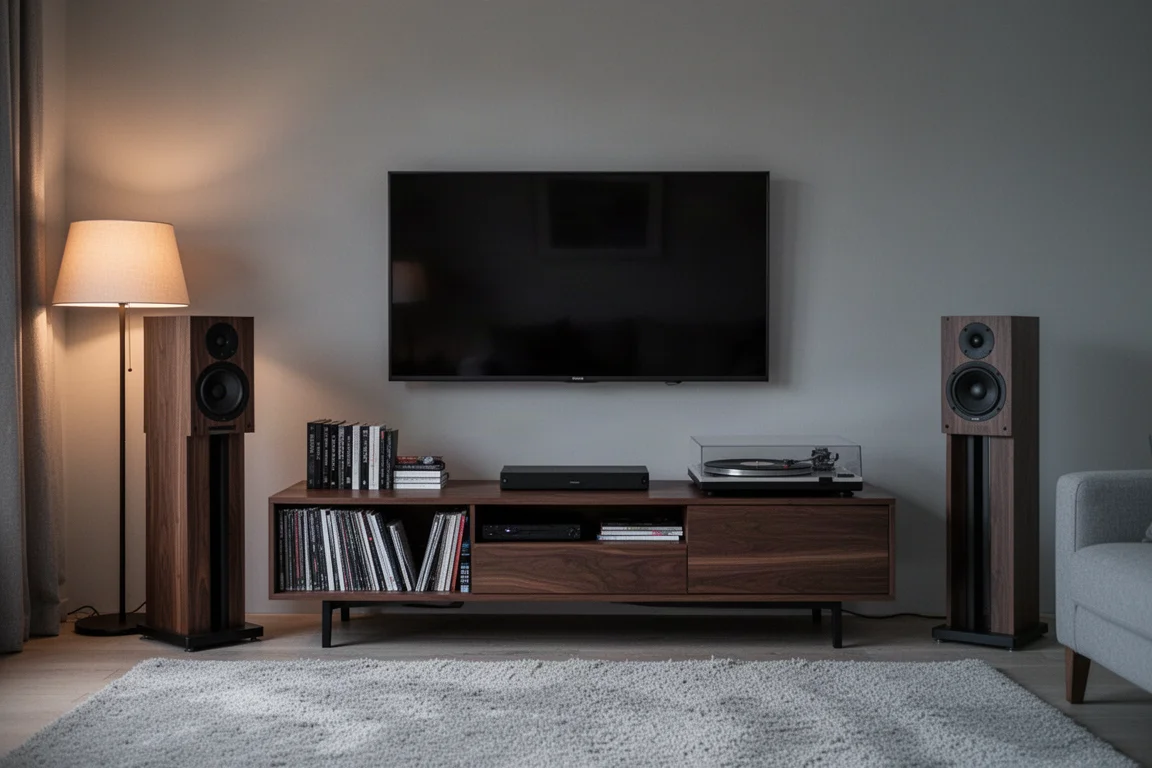
That makes the most sense in a system built around an affordable class-D amplifier and a pair of bookshelf speakers, where the BP50 becomes the switching hub for everything else. It also makes sense for anyone who wants television audio and vinyl in the same setup without buying a receiver. If you already own a good DAC and a good phono preamp, adding the BP50 will not raise the ceiling of your system, and you should spend the money elsewhere.
Conclusion
The Arylic BP50 is a multi-tool rather than a specialist. It handles HDMI ARC, USB playback, Bluetooth in both directions, a turntable, and a subwoofer, and it gives you enough equalization to shape the result to your room. It pops when powered off, its phono stage and internal DAC are ordinary, and its bass management is only useful in a narrow range, but at this price those are acceptable trade-offs. If your goal is one compact, affordable hub for a television-based hi-fi system, the BP50 delivers far more than its price suggests.
Product link
View more details for Arylic BP50
This product is mentioned in the review. Check the specifications, options, and compatibility before buying.
View more details for Arylic BP50Further reading
Related Reviews
Hi-Fi Preamps
Best Budget Preamps for a Separates System: Schiit Saga S and Akitika PR-102
A practical look at two entry points into separate components, the $300 Schiit Saga S and the kit-built Akitika PR-102, and how to choose between them.
Stereo Power Amplifiers
Amped 2400 Review: A 17 lb Class D Stereo Amplifier Rated at 400 W and 800 W
A compact 17 lb class D stereo amplifier rated at 400 W per channel into 8 ohms and 800 W into 4 ohms, with strong low-level noise performance and clear limits under sustained output.
Audio
Best Audio Deals Between $350 and $650: Speakers and Integrated Amps Worth Buying
Eight discounted hi-fi components between $350 and $650, with what each one does well and where it asks for a compromise.