Stereo Power Amplifiers
Amped 2400 Review: A 17 lb Class D Stereo Amplifier Rated at 400 W and 800 W
A compact 17 lb class D stereo amplifier rated at 400 W per channel into 8 ohms and 800 W into 4 ohms, with strong low-level noise performance and clear limits under sustained output.
Introduction
The Amped 2400 is a stereo class D power amplifier that weighs 17 lb and is rated at 400 W per channel into 8 ohms and 800 W per channel into 4 ohms. It sells for $6,000, up from the $5,000 MSRP it launched at. Those numbers are striking for a chassis this small, so the useful question is not whether it plays loudly, but whether it holds its ratings once the load gets harder and the signal stops being a short burst.
Amped describes the design as AUSP class D technology, a hybrid approach that pairs a class A analog input stage with a high-efficiency class D output stage. The output stage is built around a Pascal amplifier module, one of the longest-running class D platforms on the market. The amplifier is assembled in the US using globally sourced parts, including the module itself, and it carries a 5-year manufacturer warranty.
This review looks at what the amplifier does well, where it asks for compromises, and who it makes sense for.
Who the Amped 2400 Is For
The 2400 suits listeners who want substantial power without a heavy, heat-generating box. At 17 lb it is easy to place, move, and rack, and the regulated switch-mode supply runs cool compared with a large linear design.
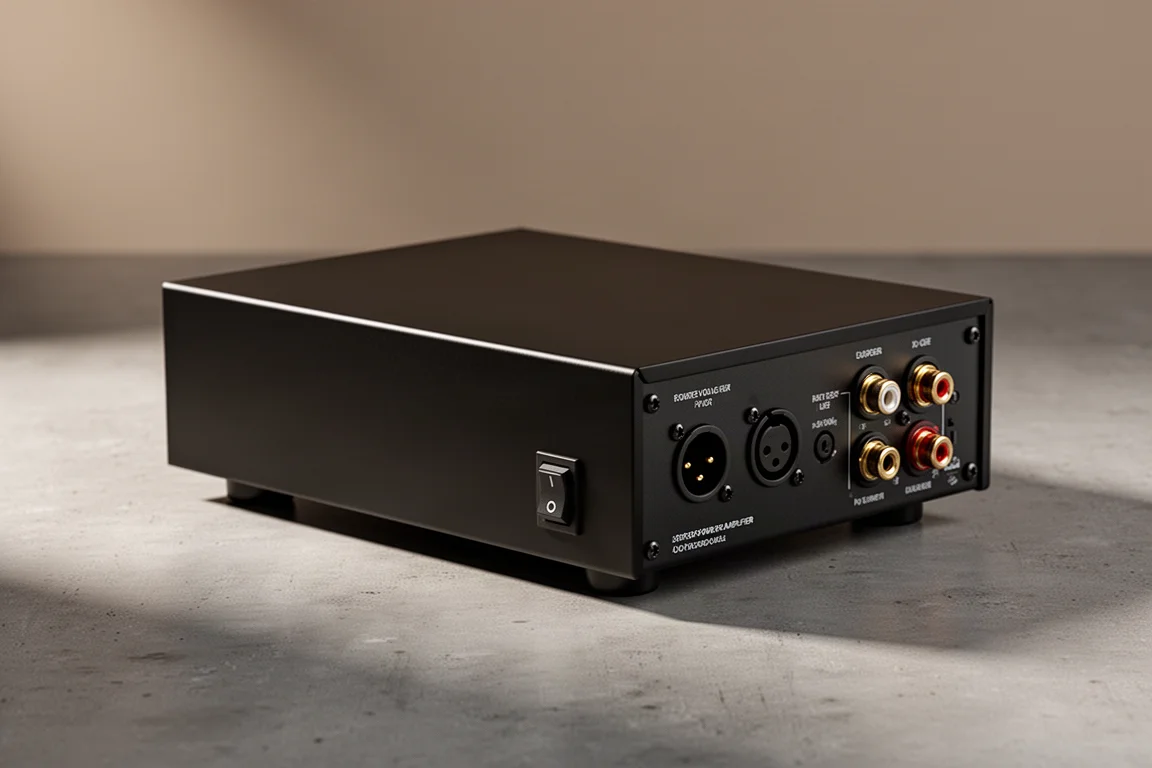
The rear panel keeps things simple: one pair of speaker terminals, XLR and unbalanced inputs, trigger outputs, and a power switch. That single pair of terminals is worth noting before you buy, because it means you cannot run two pairs of speakers from this amplifier at the same time. One preamp and one pair of speakers is the intended configuration.
Aesthetically, the chassis is functional rather than luxurious. It reads as a plain metal enclosure rather than a sculpted statement piece, which is worth knowing if presentation matters as much as performance at this price.
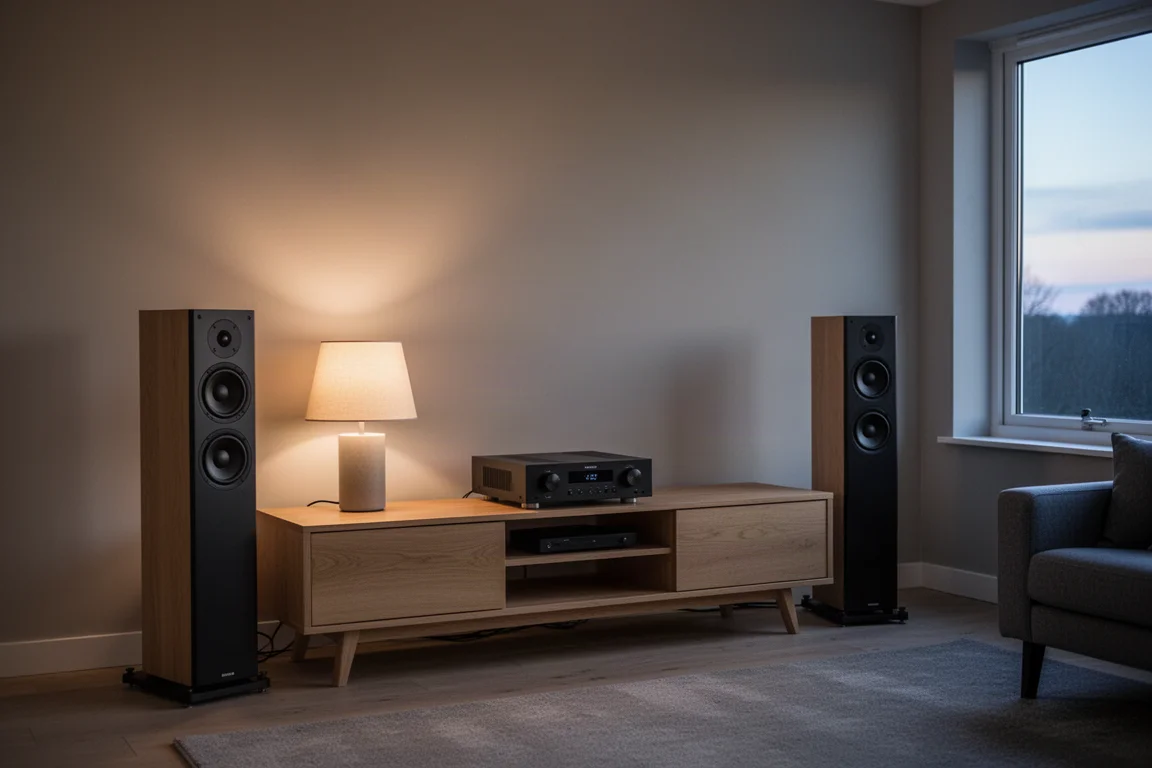
In practical terms, that plain enclosure is also part of the point: the investment goes into the module, the input stage, and the protection circuitry rather than into machined faceplates. If you are shopping for a component that disappears into a rack and drives one good pair of speakers, the form factor works in its favor.
Main Strengths
A clean, quiet low-level signal
At 1 W the noise floor measured roughly 89 dB below the signal, just short of 90 dB, which is a strong result at the level where most listening actually happens. A 1 W FFT showed the second-order harmonic 104 dB below the fundamental, with no ground loops and no transformer hum, because the regulated switch-mode supply avoids the 60 Hz artefacts a linear supply can introduce. Scaled to full power, signal-to-noise works out to about 115 dB against a 118 dB specification.
A character that favors bite over smoothness
In listening sessions with large tower speakers, lower-sensitivity bookshelf speakers, and a theater system, the amplifier sounded consistently good. Set against a Denon A110 integrated amplifier, the Amped 2400 came across as slightly more dynamic, with more edge to transients, while the Denon stayed calmer and smoother. Neither presentation is automatically better; the difference was simply easier to hear on the harder-to-drive speakers.
A proven module and a long warranty
Pascal modules are among the most time-tested class D designs available and are not known for failing. Combined with the 5-year warranty, that gives the 2400 a reasonable long-term story, even though the protection behavior described below limits how it can be measured.
Listening Impressions and Real-World Behavior
The bookshelf speakers used in testing present a harder load than the towers: lower sensitivity and deeper bass extension, which gives an amplifier more room to misbehave. Driving them at full reference volume with bass-heavy material, a Cambridge Audio Evo 150 clipped. A Denon A110, rated at only 90 W per channel into 8 ohms, handled the same speakers without trouble, because it doubles its output as impedance drops, stays stable to 2 ohms, and delivers close to 350 W at 2 ohms.
The Amped 2400 kept its composure in these sessions. Its extra power showed up as a livelier, more forward character, and it never stumbled during normal music playback. On the dynamic peaks in real recordings, which last a fraction of a second, the amplifier had plenty in reserve.
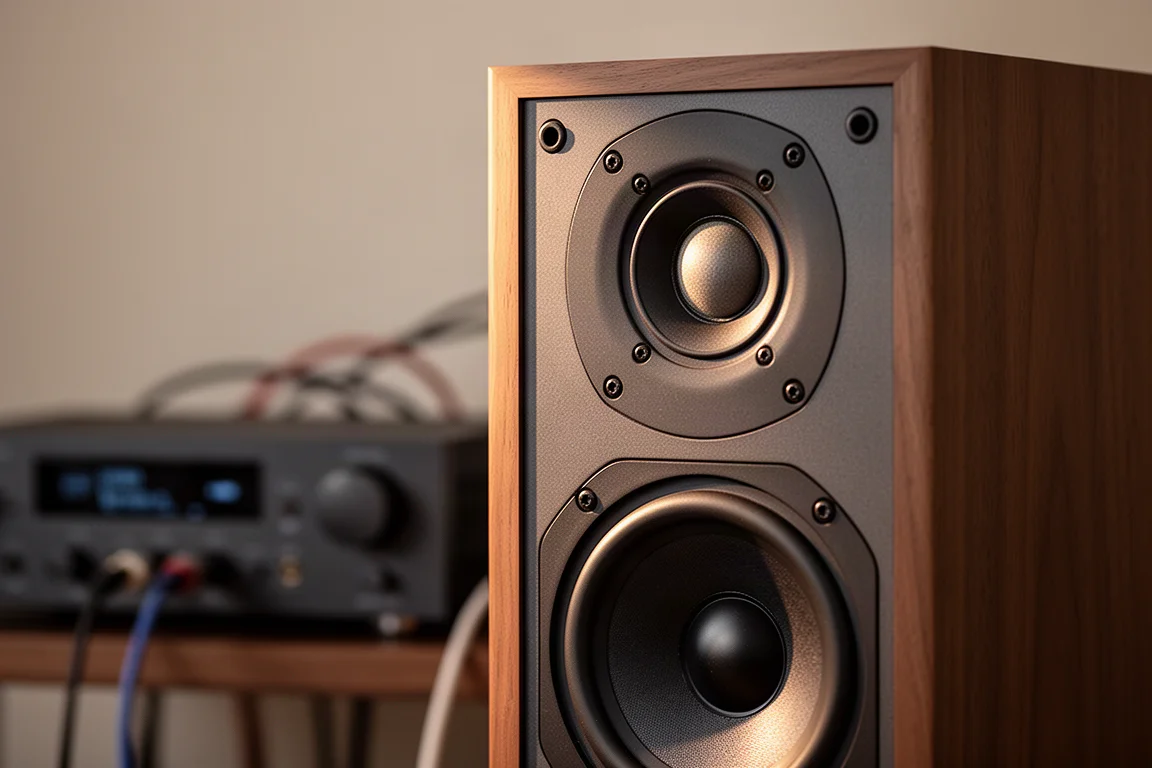
What this suggests is that measured limits under continuous tones and the experience of listening to music are two different stories. For most listeners in most rooms, the 2400 behaves like a capable, energetic amplifier; the constraints appear when the signal stops being musical.
Things to Consider Before Buying
Headline power ratings describe short bursts. Sustained output, the kind of load a continuous test tone represents, tells a different story, and that is where this amplifier’s design choices become visible.
Sustained Power and Protection Behavior
At 8 ohms, a short 500 ms sweep produced 384 W under 1% THD+N, essentially at the 400 W rating. Extending the sweep to the longer window normally used for measurements dropped the figure to about 283 W, and under a strict five-minute sustained test the amplifier delivered about 190 W per channel. A 1 kHz sweep gave 330 W at 0.1% distortion and 416 W at 1% into 8 ohms, which sits within the published rating for brief bursts.
At 4 ohms the picture is weaker. The amplifier current-limited hard near 350 W, with 0.1% and 1% distortion points at 230 W and 280 W. Channel-to-channel matching was also loose, at roughly 540 W on one channel and 625 W on the other, a spread of about 80 W. Dynamic burst testing came closest to the specification, at 360 W into 8 ohms and about 724 W into 4 ohms, but those figures last milliseconds. Protection engaged after a couple hundred milliseconds of continuous tone.
Context matters here. A Storm Audio PA16 Mark I, also built on a Pascal module but a different one, ran full power bandwidth for five minutes without shutting down, and a Yamaha RN2000 receiver rated at 90 W per channel held its rated output for six hours. Sustained behavior depends heavily on how the module is implemented.
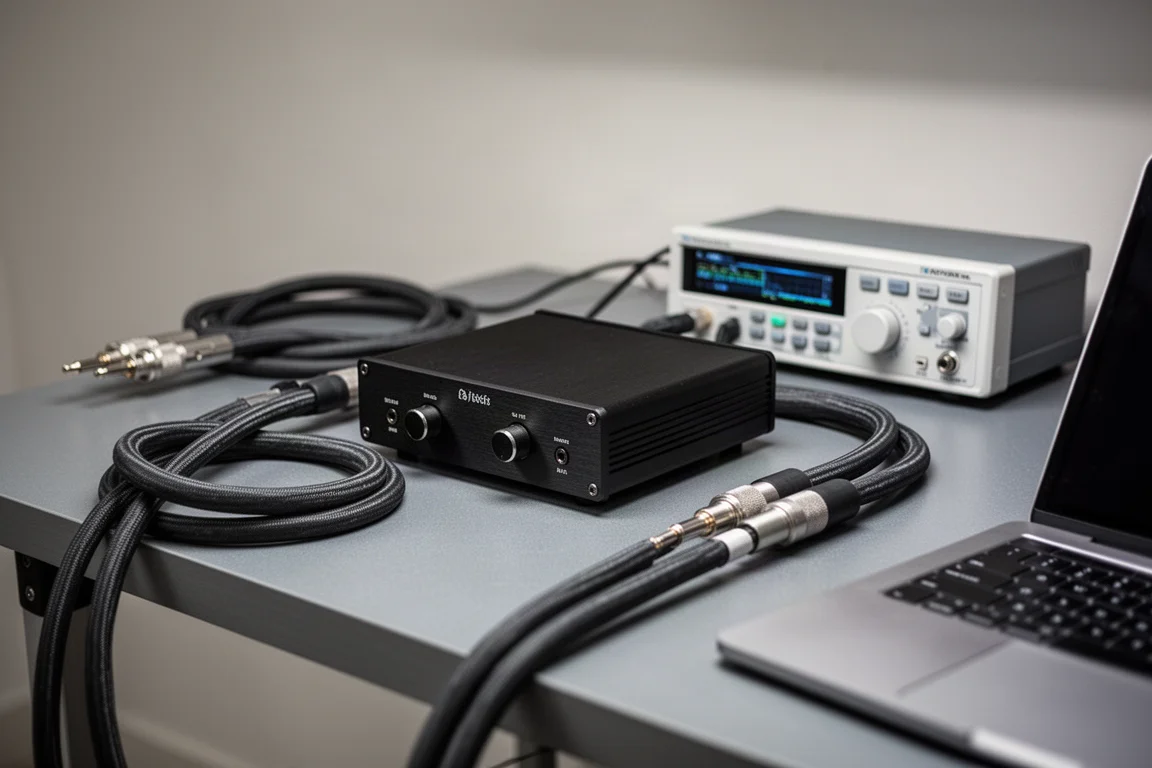
None of this means the amplifier is fragile. The protection circuit is doing what it was designed to do, and it is part of why Pascal-based designs tend to last. It does mean that the 400 W and 800 W figures describe short peaks rather than a continuous ceiling, and that the honest comparison point for a hard, continuous load is closer to 190 W per channel with roughly 3 dB of headroom.
Inputs, Gain Structure, and Value at the Asking Price
Both input types run at 29 dB of gain, which is unusual; balanced inputs normally sit at lower gain to match the higher output of balanced preamp stages. Here, using XLR made distortion 3 to 4 dB worse and channel matching slightly looser, so balanced connections are a convenience rather than an upgrade. Full-power signal-to-noise comes out around 115 dB against a 118 dB specification.
Price is the other consideration. The 2400 launched at $5,000 and now sells for $6,000, and at that level buyers reasonably expect the sustained performance and the finish of a premium component.
Buying Advice
The 2400 makes sense if you want a light, compact amplifier with genuine dynamic punch, you listen to music rather than continuous test tones, you are driving a single pair of speakers from a preamp, and you value the 5-year warranty behind a well-proven module. It is also worth considering if you prefer a livelier, more forward presentation to a relaxed one.
It is harder to recommend if you need sustained output into punishing loads, if you expect balanced inputs to improve measured performance, or if the look of the enclosure matters at this price.
Several alternatives sit in the same conversation. The NAD M23 costs under $5,000, uses a Purify class D module, measures more cleanly, and held full power bandwidth for five minutes without stability problems. The Anthem STR is more powerful than the Amped 2400 and stays stable down to 2 ohms. The Legacy IV7 uses Ice Edge topology, is rated at 600 W per channel into 8 ohms with up to 1000 W peak, and is built to pass sustained five-minute testing. The Storm Audio PA16 Mark I, a 16-channel Pascal-based design rated at 200 W per channel, delivered 250 W at 1% distortion into 8 ohms and doubled into 4 ohms without ever shutting down.
If your priorities are compact size, strong dynamic character, and a proven module with a long warranty, the Amped 2400 is a defensible purchase. If your priorities are sustained power delivery per dollar or premium industrial design, the alternatives above deserve a look first.
Conclusion
The Amped 2400 is a competent class D stereo amplifier that sounds better than its bench behavior might suggest. It is quiet at low levels, energetic with real music, and built around a module with a strong reliability record and a 5-year warranty behind it.
The caveats are equally clear. Sustained output falls well short of the headline ratings, the 4 ohm measurements show heavy current limiting and loose channel matching, the balanced inputs offer no measurable advantage, and $6,000 is a lot for a plain enclosure when strong alternatives sit below it. Buy it for the compact form factor and the character, not for the numbers on the spec sheet.
Product link
View more details for Amped 2400
This product is mentioned in the review. Check the specifications, options, and compatibility before buying.
View more details for Amped 2400Further reading
Related Reviews
Stereo Power Amplifiers
Adcom 545 Mark II vs Adcom 555 MS: Vintage Value or Modern Reliability
A side-by-side look at the vintage Nelson Pass-designed Adcom 545 Mark II and the current Adcom 555 MS, including what real ownership actually costs.
Hi-Fi Preamps
Arylic BP50 Review: A Compact $100 Preamp With HDMI ARC
A compact preamp that brings HDMI ARC, a phono stage, USB playback, and two-way Bluetooth to a small system for around $100.
Hi-Fi Amplifiers
Best Affordable Hi-Fi Amplifiers: Four Standout Picks Compared
Four affordable amplifiers compared on sound, flexibility, and value, from a budget class D bargain to a versatile integrated amp that grows with your system.